1. Search Result
Search Result
Results for "

Preservative

" in MedChemExpress (MCE) Product Catalog:

186

Inhibitors & Agonists

38

Biochemical Assay Reagents

1

Peptides

39

Natural
Products

41

Isotope-Labeled Compounds

11

Oligonucleotides

Cat. No. Product Name Target Research Areas Chemical Structure
  • HY-B0133
    Natamycin
    5+ Cited Publications

    Pimaricin

    Environmental Pollutants Antibiotic Endogenous Metabolite Fungal Bacterial Infection
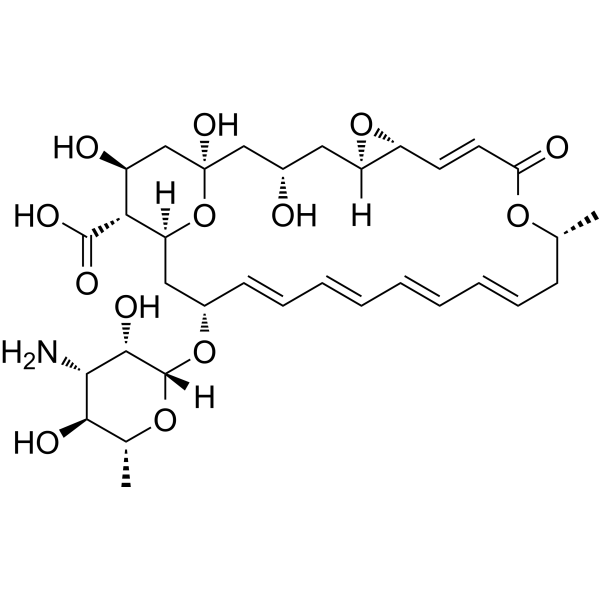
    Natamycin (Pimaricin) is a macrolide antibiotic agent produced by several Streptomyces strains. Natamycin inhibits the growth of fungi via inhibition of amino acid and glucose transport across the plasma membrane. Natamycin is a food preservative, an antifungal agent in agriculture, and is widely used for fungal keratitis research .
    Natamycin
  • HY-Y1326

    Environmental Pollutants Biochemical Assay Reagents Bacterial Infection
    Sodium metabisulfite, a sulfite salt, is used as an antioxidant and antimicrobial agent in a variety of drugs and functions as a preservative in many food preparations .
    Sodium metabisulfite
  • HY-N0216
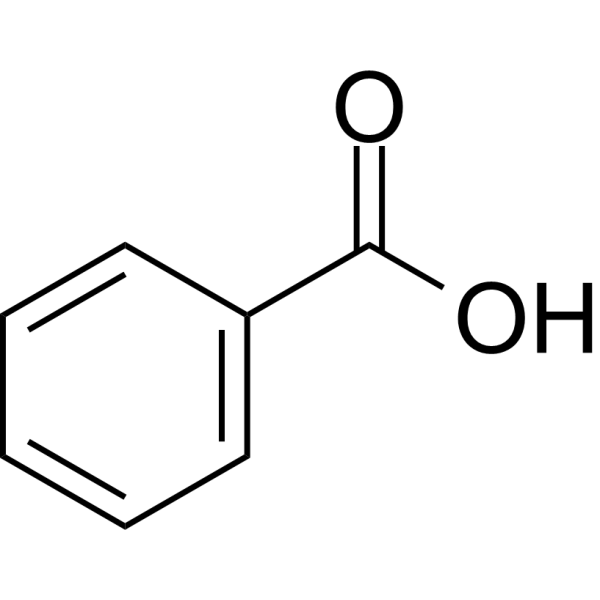
    Benzoic acid
    2 Publications Verification

    Environmental Pollutants Endogenous Metabolite Fungal Bacterial Infection
    Benzoic acid is an aromatic alcohol existing naturally in many plants and is a common additive to food, drinks, cosmetics and other products. It acts as preservatives through inhibiting both bacteria and fungi .
    Benzoic acid
  • HY-N0349
    Methyl paraben
    5+ Cited Publications

    Methyl 4-hydroxybenzoate

    Environmental Pollutants Endogenous Metabolite Bacterial Infection Inflammation/Immunology
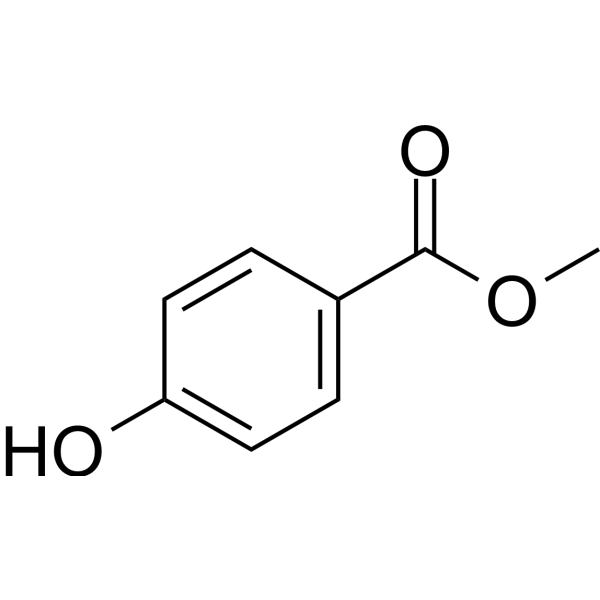
    Methyl Paraben is a standardized methyl paraben allergen isolated from Yunnan hemlock (Tsuga dumosa). Methyl Paraben is commonly used as a stable, non-volatile preservative. Methyl Paraben increases histamine release and cellular regulation of immunity, blocks sodium channels, and prevents ischemia-reperfusion injury .
    Methyl paraben
  • HY-W010629
    2-Chloroacetamide
    2 Publications Verification

    Bacterial Infection
    2-Chloroacetamide is a preservative and is a herbicide for both uplands and paddy fields. 2-Chloroacetamide is a biocide in agriculture, glues, paints and coatings. 2-Chloroacetamide inhibits very-long-chain fatty acid elongase .
    2-Chloroacetamide
  • HY-B1066
    Butylhydroxyanisole
    5 Publications Verification

    Butylated hydroxyanisole; E320

    Environmental Pollutants Reactive Oxygen Species (ROS) Ferroptosis Neurological Disease Inflammation/Immunology
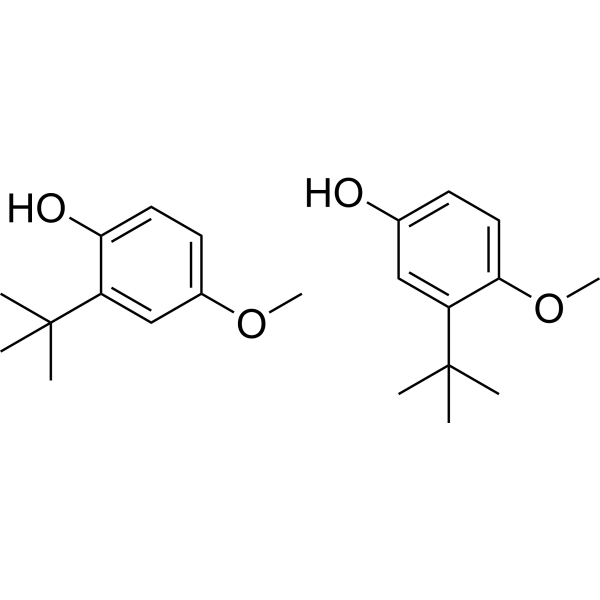
    Butylhydroxyanisole (Butylated hydroxyanisole) is an antioxidant used as a food additive preservative. Butylhydroxyanisole mediates liver toxicity, retardation in reproductive organ development and learning, and sleep deficit. Butylhydroxyanisole exerts neurotoxic effects and leads to disruption of the brain and nerve development . Butylhydroxyanisole is a ferroptosis inducer .
    Butylhydroxyanisole
  • HY-B2232
    Benzalkonium chloride (51% in water)
    2 Publications Verification

    Alkyldimethylbenzylammonium chloride

    Bacterial Biochemical Assay Reagents Infection
    Benzalkonium (Alkyldimethylbenzylammonium) chloride (51% in water) is a quaternary ammonium preservative, cationic surfactant, and antimicrobial (Antimicrobial) agent. Benzalkonium chloride (51% in water) is toxic .
    Benzalkonium chloride (51% in water)
  • HY-N2026
    Propylparaben
    1 Publications Verification

    Propyl parahydroxybenzoate; Propyl 4-hydroxybenzoate

    Environmental Pollutants Endogenous Metabolite Apoptosis Bacterial Infection
    Propylparaben (Propyl parahydroxybenzoate) is an antibacterial preservative that can be produced by plants and bacteria. Propylparaben is commonly used in cosmetics, pharmaceuticals and foods. Propylparaben disrupts follicular growth and steroidogenic function by altering cell cycle, apoptosis and steroidogenic pathways. Propylparaben also reduced sperm count and motility in rats .
    Propylparaben
  • HY-B1729

    Environmental Pollutants Bacterial Fungal Oxidative Phosphorylation Infection
    Phenoxyethanol has a broad spectrum of antimicrobial agent. Phenoxyethanol is an uncouple agent in oxidative phosphorylation from respiration and competitively inhibits malate dehydrogenase. Phenoxyethanol is used as a preservative in cosmetic, vaccine, and textile, et al .
    Phenoxyethanol
  • HY-W012788
    Maltol
    2 Publications Verification

    Environmental Pollutants Endogenous Metabolite Apoptosis Infection Neurological Disease
    Maltol, a type of aromatic compound, is an antioxidant agent. Maltol enhances neural function by mitigating oxidative stress and cell apoptosis. Maltol is an inhibitor of oxidative damage in nerve cells and is effective in preventing diabetic peripheral neuropathy (DPN). Maltol is used extensively as a safe flavoring agent and food preservative. Maltol is a metal ion chelator that can be used in the field of catalysis, cosmetics, and medicine .
    Maltol
  • HY-B1431
    Butylparaben
    2 Publications Verification

    Butyl parahydroxybenzoate; Butyl paraben; Butyl 4-hydroxybenzoate

    Environmental Pollutants Endogenous Metabolite Bacterial DNA/RNA Synthesis Infection
    Butylparaben is an organic compound that has proven to be a very successful antimicrobial preservative in cosmetics, can also be used in active molecule suspensions, and as a food flavoring additive .
    Butylparaben
  • HY-B0934

    Ethyl parahydroxybenzoate; Ethyl 4-hydroxybenzoate

    Environmental Pollutants Bacterial Fungal Others
    Ethylparaben is the ethyl ester of paraben and is used as an antifungal preservative and food additive .
    Ethylparaben
  • HY-B1610E

    Trisodium citrate dihydrate, meets USP testing specifications

    Environmental Pollutants Biochemical Assay Reagents Cardiovascular Disease
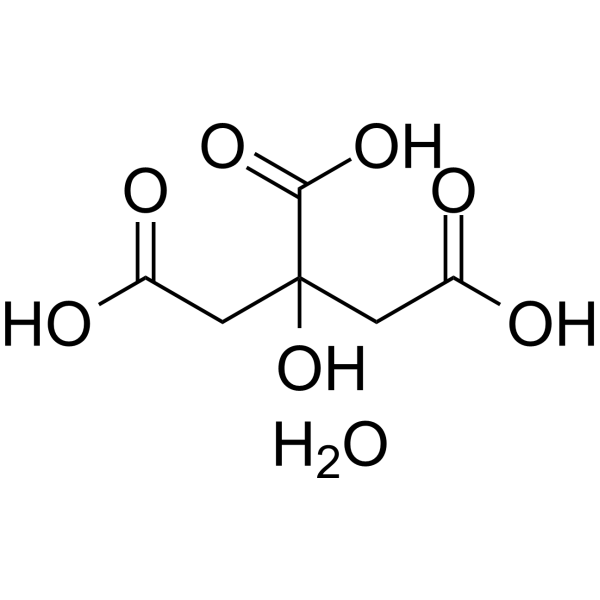
    Sodium citrate dihydrate, meets USP testing specifications is an anticoagulant and also used as a buffer and food preservatives .
    Sodium citrate dihydrate, meets USP testing specifications
  • HY-N0626A

    Sorbic acid potassium

    Environmental Pollutants Endogenous Metabolite Antibiotic Bacterial Fungal Infection
    Potassium sorbate (Sorbic acid potassium) is an antibacterial preservative effective against most molds, yeasts, and some bacterial species. Potassium sorbate inhibits microbial growth. Potassium sorbate suppresses the activity of intestinal microorganisms in zebrafish, alters the composition of intestinal flora, and reduces the levels of intestinal immune biomarkers, including IgG, IL-1β, and TNF-α. Potassium sorbate can be used in research on the prevention and treatment of mold, yeast, and bacterial infections .
    Potassium sorbate
  • HY-N0626

    Environmental Pollutants Bacterial Endogenous Metabolite Fungal Antibiotic Infection Neurological Disease Cancer
    Sorbic acid is an antibacterial preservative effective against most molds, yeasts, and some bacterial species. Sorbic acid inhibits microbial growth. Sorbic acid suppresses the activity of intestinal microorganisms in zebrafish, alters the composition of intestinal flora, and reduces the levels of intestinal immune biomarkers, including IgG, IL-1β, and TNF-α. Sorbic acid can be used in research on the prevention and treatment of mold, yeast, and bacterial infections .
    Sorbic acid
  • HY-B1263

    Environmental Pollutants Bacterial Fungal Infection Neurological Disease
    Chlorobutanol is an orally active and potent inhibitor of platelet aggregation and release and a pharmaceutical preservative with antibacterial activity. Chlorobutanol inhibits thromboxane B2 formation, ATP release, and elevation of cytosolic free calcium caused by collagen, ADP, epinephrine, arachidonic acid and thrombin. Chlorobutanol is active against a wide variety of Gram-positive and Gram-negative bacteria, and several mold spores and fungi. Chlorobutanol is widely used in food and cosmetic industry .
    Chlorobutanol
  • HY-N1394
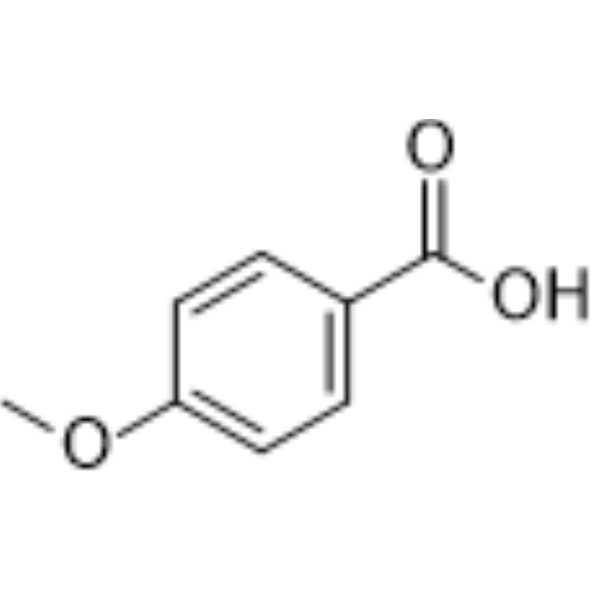
    p-Anisic acid
    3 Publications Verification

    4-Methoxybenzoic acid; Draconic acid

    Bacterial Endogenous Metabolite Tyrosinase Infection Neurological Disease Cancer
    p-Anisic acid (4-Methoxybenzoic acid) is an orally available tyrosinase inhibitor that has antioxidant, anti-anxiety, anti-inflammatory, anti-tumor, anti-diabetic, and preservative properties. p-Anisic acid can be used as a preservative in the cosmetics field .
    p-Anisic acid
  • HY-138650

    Glyceryl monocaprylate; Sefsol 318

    Environmental Pollutants Bacterial Inflammation/Immunology
    Monocaprylin (Glyceryl monocaprylate), a monoglyceride of caprylic acid, exhibits an excellent antibacterial activity. Monocaprylin inhibits a variety of foodborne pathogenic and spoilage microorganisms and has the potential for an alternative food preservative research .
    Monocaprylin
  • HY-B1290
    2-Phenylethanol
    2 Publications Verification

    Phenylethyl alcohol; Phenethyl alcohol; Benzyl carbinol

    Environmental Pollutants Bacterial Virus Protease Infection
    2-Phenylethanol (Phenethyl alcohol) is an aromatic alcohol with a rose-like odour. 2-Phenylethanol is a flavour and fragrance compound, and can be used as a preservative and anti-microbial agent. 2-Phenylethanol has antityrosinase and antimicrobial activities .
    2-Phenylethanol
  • HY-127032

    Polidronium chloride

    Biochemical Assay Reagents Infection
    Polyquaternium-1 (Polidronium chloride; PQ-1) is an antimicrobial preservative and an activator of NF-κB. Polyquaternium-1 targets bacterial cell membranes, commonly used in ophthalmic surgery. Polyquaternium-1 adsorbs to the surface of microbial membranes through its polycationic properties, destroying membrane integrity and inducing potassium ion leakage, leading to bacterial death. Polyquaternium-1 exerts antimicrobial effects at a concentration of 0.001% and has low toxicity to mammalian cells. Polyquaternium-1 can be used to prepare products such as glaucoma eye drops (Travoprost preparations containing PQ-1), artificial tears, and contact lens solutions to reduce the ocular surface toxicity of traditional preservatives such as benzalkonium chloride (HY-B2232) .
    Polyquaternium-1
  • HY-N0216S1

    Bacterial Fungal Endogenous Metabolite Infection
    Benzoic acid- 13C6 is the 13C-labeled Benzoic acid. Benzoic acid is an aromatic alcohol existing naturally in many plants and is a common additive to food, drinks, cosmetics and other products. It acts as preservatives through inhibiting both bacteria and fungi.
    Benzoic acid-13C6
  • HY-W009335

    IPBC

    Environmental Pollutants Fungal Infection
    Iodopropynyl butylcarbamate (IPBC) is a potent fungicide and preservative, which has been used in the paints, coatings, wood preservatives, personal care, and cosmetics industries .
    Iodopropynyl butylcarbamate
  • HY-W009823

    Chloride Channel Others
    Phenyl benzoate is a benzoate ester obtained by the formal condensation of phenol with benzoic acid. Phenyl benzoate is a chloride transport blocker, inhibits Cl --dependent Glu accumulation into vesicles. Phenyl benzoate can be used as preservative in cosmetic products .
    Phenyl benzoate
  • HY-N0216S
    Benzoic acid-d5
    1 Publications Verification

    Bacterial Fungal Endogenous Metabolite Infection
    Benzoic acid-d5 is a deuterium substitute for Benzoic acid. Benzoic acid is an aromatic alcohol that occurs naturally in many plants and is a common additive in food, beverages, cosmetics and other products. Benzoic acid can act as a preservative by inhibiting bacteria and fungi .
    Benzoic acid-d5
  • HY-W010164

    Biochemical Assay Reagents Others
    4-Hydroxybenzoate sodium, also known as sodium p-hydroxybenzoate or sodium paraben, is commonly used as a food preservative and cosmetic preservative. It can also be used as an additive in a variety of other products, including pharmaceuticals, personal care products, and industrial products. Additionally, 4-Hydroxybenzoate sodium has the potential to function as xenoestrogens, which may mimic the effects of estrogen in the body and affect hormonal balance.
    4-Hydroxybenzoate sodium
  • HY-W019696
    Monoethyl fumarate
    1 Publications Verification

    Keap1-Nrf2 Inflammation/Immunology
    Monoethyl fumarate is the monoethyl ester form of Fumaric acid (HY-W015883). Monoethyl fumarate is the activator for Nrf2. Monoethyl fumarate is a kind of effective preservative and polymerization agent for macromolecular material .
    Monoethyl fumarate
  • HY-Y0319B1
    Potassium acetate, for molecular biology
    1 Publications Verification

    Environmental Pollutants Biochemical Assay Reagents Others
    Potassium acetate, for molecular biology is an acetate salt commonly used as a deicing agent, food preservative and potassium source. Potassium acetate, for molecular biology can serve as an activator for preparing waste tea-based activated carbon, and is applied to the adsorption of Acid Blue 25 dye .
    Potassium acetate, for molecular biology
  • HY-W005355
    Sodium 2-oxobutanoate
    1 Publications Verification

    Biochemical Assay Reagents Others
    Sodium 2-oxobutanoate is an organic compound commonly used as a food additive and industrial raw material. It can be used as an acidity regulator, leavening agent and preservative, and is often used in the fields of bread, baked goods and canning. In addition, the compound is used in the production of certain industrial products, such as in plastics, textiles and dyes.
    Sodium 2-oxobutanoate
  • HY-W267444

    Amylparaben

    Bacterial Infection
    Pentyl 4-hydroxybenzoate (Amylparaben) is a type of paraben compound commonly used as a preservative, it has antibacterial properties and is related to the inhibition of induced oxygen consumption .
    Pentyl 4-hydroxybenzoate
  • HY-158761

    PAPB

    Bacterial Infection
    Polyaminopropyl biguanide (PAPB), a propyl analogue of polyhexamethylene biguanide, is a broad spectrum, fast acting bactericide with antibacterial activity. Polyaminopropyl biguanide can be used as a preservative in cosmetic products .
    Polyaminopropyl biguanide
  • HY-W250302

    Environmental Pollutants Biochemical Assay Reagents Others
    Methylbenzethonium chloride is a quaternary ammonium compound commonly used as a preservative and disinfectant in a variety of personal care and healthcare products. Methylbenzethonium chloride has several properties that make it suitable for these applications, including its broad-spectrum antibacterial activity against bacteria, viruses and fungi. In addition, it is used as a preservative in cosmetic and pharmaceutical formulations to prevent the growth of microorganisms.
    Methylbenzethonium chloride
  • HY-B1731

    Bacterial Neurological Disease
    Phenyl salicylate (PS) has antibacterial activity when hydrolyzed in small intestine and is often used as nervous system inhibitor and intestinal preservative .
    Phenyl salicylate
  • HY-W133894

    Oils, cedarwood

    Environmental Pollutants Parasite Others
    Cedar oil is an essential oil that can be extracted from numerous types of conifers. Cedar oil possesses some pesticidal properties. As a food additive and preservative, cedarwood oil is a blend of organic chemicals classified as safe compounds by the FDA.
    Cedar oil
  • HY-N0216R

    Reference Standards Bacterial Fungal Endogenous Metabolite Infection
    Benzoic acid (Standard) is the analytical standard of Benzoic acid. This product is intended for research and analytical applications. Benzoic acid is an aromatic alcohol existing naturally in many plants and is a common additive to food, drinks, cosmetics and other products. It acts as preservatives through inhibiting both bacteria and fungi .
    Benzoic acid (Standard)
  • HY-B1729R

    Oxidative Phosphorylation Reference Standards Bacterial Fungal Infection
    Phenoxyethanol (Standard) is the analytical standard of Phenoxyethanol. This product is intended for research and analytical applications. Phenoxyethanol has a broad spectrum of antimicrobial agent. Phenoxyethanol is an uncouple agent in oxidative phosphorylation from respiration and competitively inhibits malate dehydrogenase. Phenoxyethanol is used as a preservative in cosmetic, vaccine, and textile, et al .
    Phenoxyethanol (Standard)
  • HY-75828

    Dibenzalacetone

    Bacterial Infection
    Dibenzylideneacetone (Dibenzalacetone) is a potent inhibitor of chitinase with an IC50 value of 13.10 μM. The MIC value of Dibenzylideneacetone against Botrytis cinerea is 32 μg/mL, and the EC50 values for inhibiting mycelium growth and spore germination are 16.29 and 14.64 μg/mL, respectively. Dibenzylideneacetone can be used in research on fruit and vegetable preservatives .
    Dibenzylideneacetone
  • HY-W414898

    Biochemical Assay Reagents Others
    Zinc dihydrogen phosphate can be used as an analytical reagent and preservative. Zinc dihydrogen phosphate is a kind of biological materials or organic compounds that are widely used in life science research .
    Zinc dihydrogen phosphate
  • HY-W009350

    Environmental Pollutants Bacterial Infection
    Diazolidinyl urea is a broad-spectrum preservative commonly used in cosmetics. Diazolidinyl urea exerts antibacterial effects by decomposing and releasing formaldehyde. Diazolidinyl urea is effective against most contaminating microorganisms, especially Pseudomonas .
    Diazolidinyl urea
  • HY-W144037

    Pentanimidic acid

    Biochemical Assay Reagents Others
    Valeramide (Pentanimidic acid) is an important raw material for organic synthesis, which is produced by ammonolysis of Caproamide. Valeramide can be used to make polyamides, amide resins, preservatives and nylon fibers .
    Valeramide
  • HY-B1431S

    Butyl parahydroxybenzoate-d4; Butyl paraben-d4; Butyl 4-hydroxybenzoate-d4

    Isotope-Labeled Compounds Bacterial Endogenous Metabolite Infection
    Butylparaben-d4 is the deuterium labeled Butylparaben. Butylparaben is an organic compound, has proven to be a highly successful antimicrobial preservative in cosmetics, also used in medication suspensions, and as a flavoring additive in food.
    Butylparaben-d4
  • HY-W127452

    Environmental Pollutants Biochemical Assay Reagents Others
    Undecylenate SodiumIt is an organic compound belonging to the class of carboxylates. It is formed by the reaction of undecylenic acid and sodium hydroxide. Undecylenate SodiumIt has a variety of applications in the cosmetic and personal care industries, especially as an antifungal agent in products such as face creams, lotions and shampoos. In addition, it can be used as a preservative in various formulations.
    Undecylenate sodium
  • HY-119669

    Bacterial Others
    Furylfuramide is a food preservative that exhibits mutagenic activity. Furylfuramide can be degraded through the aerobic metabolism by liver microsomes .
    Furylfuramide
  • HY-W089856

    Bacterial Fungal Antibiotic Infection Neurological Disease
    Chlorobutanol hemihydrate is an antimicrobial agent with oral activity, also possessing preservative effects. Chlorobutanol hemihydrate exhibits resistance to a variety of Gram-positive and Gram-negative bacteria, as well as several fungal spores and fungi, and is widely used in the food and cosmetics industries .
    Chlorobutanol hemihydrate
  • HY-N0626R

    Reference Standards Environmental Pollutants Bacterial Endogenous Metabolite Fungal Antibiotic Infection
    Sorbic acid (Standard) is the analytical standard of Sorbic acid (HY-N0626). This product is intended for research and analytical applications. Sorbic acid is an antibacterial preservative effective against most molds, yeasts, and some bacterial species. Sorbic acid inhibits microbial growth. Sorbic acid suppresses the activity of intestinal microorganisms in zebrafish, alters the composition of intestinal flora, and reduces the levels of intestinal immune biomarkers, including IgG, IL-1β, and TNF-α. Sorbic acid can be used in research on the prevention and treatment of mold, yeast, and bacterial infections .
    Sorbic acid (Standard)
  • HY-W015761

    Benzoic acid, ammonium

    Environmental Pollutants Biochemical Assay Reagents Others
    Ammonium benzoate is the ammonium salt of benzoic acid, which is used as a preservative in some adhesives and rubber emulsions, and is also a commonly used chemical synthesis intermediate.
    Ammonium benzoate
  • HY-B0934R

    Ethyl parahydroxybenzoate (Standard); Ethyl 4-hydroxybenzoate (Standard)

    Reference Standards Bacterial Fungal Others
    Ethylparaben (Standard) is the analytical standard of Ethylparaben. This product is intended for research and analytical applications. Ethylparaben is the ethyl ester of paraben and is used as an antifungal preservative and food additive .
    Ethylparaben (Standard)
  • HY-B1431R

    Butyl parahydroxybenzoate (Standard); Butyl paraben (Standard); Butyl 4-hydroxybenzoate (Standard)

    Reference Standards Bacterial Endogenous Metabolite DNA/RNA Synthesis Infection
    Butylparaben (Standard) is the analytical standard of Butylparaben. This product is intended for research and analytical applications. Butylparaben is an organic compound that has proven to be a very successful antimicrobial preservative in cosmetics, can also be used in active molecule suspensions, and as a food flavoring additive .
    Butylparaben (Standard)
  • HY-117451

    Bacterial Infection
    Dodine is a fungicide with plant disease suppressive activity. Dodine is used to control black spot on apples, pears and pecans, brown rot on peaches, and a variety of foliar diseases of peaches, strawberries, cherries, jacaranda and black walnuts. Dodine is also used as an industrial biocide and preservative .
    Dodine
  • HY-B1290R
    2-Phenylethanol (Standard)
    2 Publications Verification

    Phenylethyl alcohol (Standard); Phenethyl alcohol (Standard); Benzyl carbinol (Standard)

    Virus Protease Bacterial Reference Standards Infection
    2-Phenylethanol (Standard) is the analytical standard of 2-Phenylethanol. This product is intended for research and analytical applications. 2-Phenylethanol (Phenethyl alcohol) is an aromatic alcohol with a rose-like odour. 2-Phenylethanol is a flavour and fragrance compound, and can be used as a preservative and anti-microbial agent. 2-Phenylethanol has antityrosinase and antimicrobial activities .
    2-Phenylethanol (Standard)
  • HY-B1066R

    Butylated hydroxyanisole (Standard); E320 (Standard)

    Reference Standards Reactive Oxygen Species (ROS) Ferroptosis Neurological Disease Inflammation/Immunology
    Butylhydroxyanisole (Standard) is the analytical standard of Butylhydroxyanisole. This product is intended for research and analytical applications. Butylhydroxyanisole (Butylated hydroxyanisole) is an antioxidant used as a food additive preservative. Butylhydroxyanisole mediates liver toxicity, retardation in reproductive organ development and learning, and sleep deficit. Butylhydroxyanisole exerts neurotoxic effects and leads to disruption of the brain and nerve development . Butylhydroxyanisole is a ferroptosis inducer .
    Butylhydroxyanisole (Standard)

Inquiry Online

Your information is safe with us. * Required Fields.

Salutation


Country or Region *

Applicant Name *


Organization Name *

Department *


Email Address *


Product Name *

Cat. No.


Requested quantity *

Phone Number *


Remarks

Inquiry Online

Inquiry Information

Product Name:
Cat. No.:
Quantity:
MCE Japan Authorized Agent:

