607 Results for "

S2

" in MedChemExpress (MCE) Product Catalog:
Products (607)

607 Results for "S2" in MCE Product Catalog:

91
91 Publications Verification
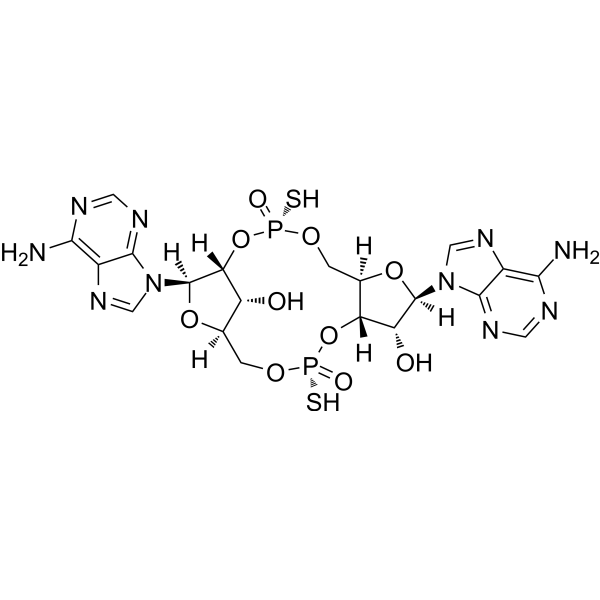
Cat. No.: HY-12885
CAS No.: 1638241-89-0
Purity:  99.40%
Synonyms: ADU-S100; MIW815; ML RR-S2 CDA
Target:  

STING

Research Areas:  

Inflammation/Immunology Cancer

2’3’-c-di-AM(PS)2 (Rp,Rp) (ADU-S100), an activator of stimulator of interferon genes (STING), leads to potent and systemic tumor regression and immunity .
loading...
    loading...
91
91 Publications Verification
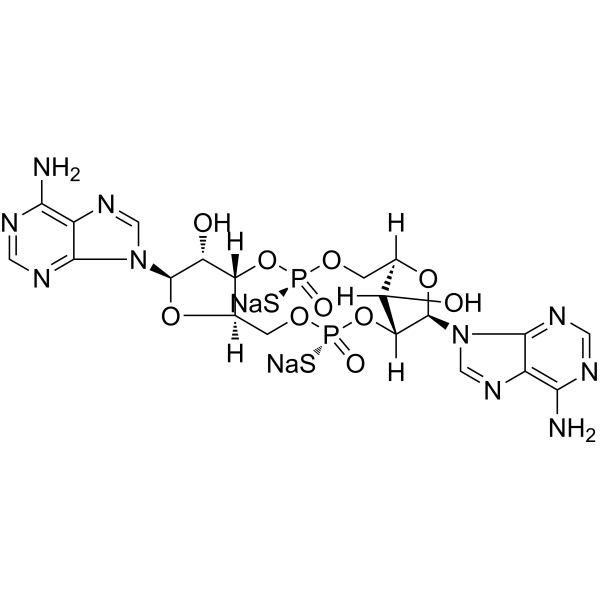
Cat. No.: HY-12885A
CAS No.: 1638750-95-4
Purity:  99.43%
Synonyms: ADU-S100 disodium salt; MIW815 disodium salt; ML RR-S2 CDA disodium salt
Target:  

STING

Research Areas:  

Inflammation/Immunology Cancer

2’3’-c-di-AM(PS)2 (Rp,Rp) disodium salt (ADU-S100 disodium salt) is an activator of stimulator of interferon genes (STING).
loading...
    loading...
91
91 Publications Verification
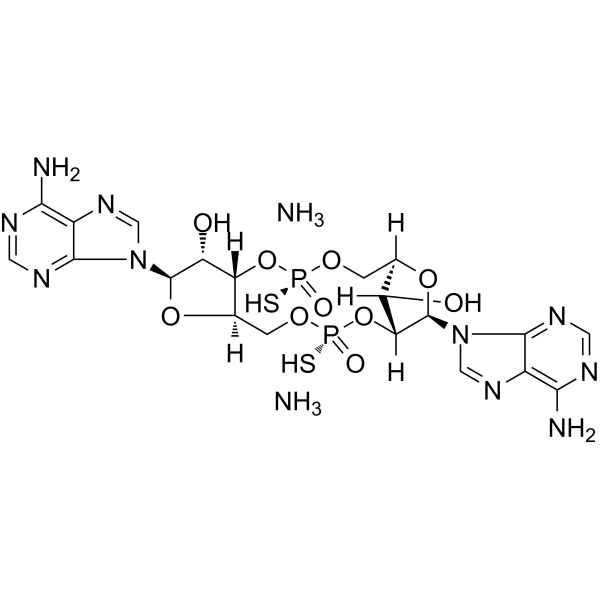
Cat. No.: HY-12885B
CAS No.: 1638750-96-5
Purity:  99.60%
Synonyms: ADU-S100 ammonium salt; MIW815 ammonium salt; ML RR-S2 CDA ammonium salt
Target:  

STING

Research Areas:  

Inflammation/Immunology Cancer

2’3’-c-di-AM(PS)2 (Rp,Rp) ammonium salt (ADU-S100 ammonium salt), an activator of stimulator of interferon genes (STING), leads to potent and systemic tumor regression and immunity .
loading...
    loading...
17
17 Cited Publications
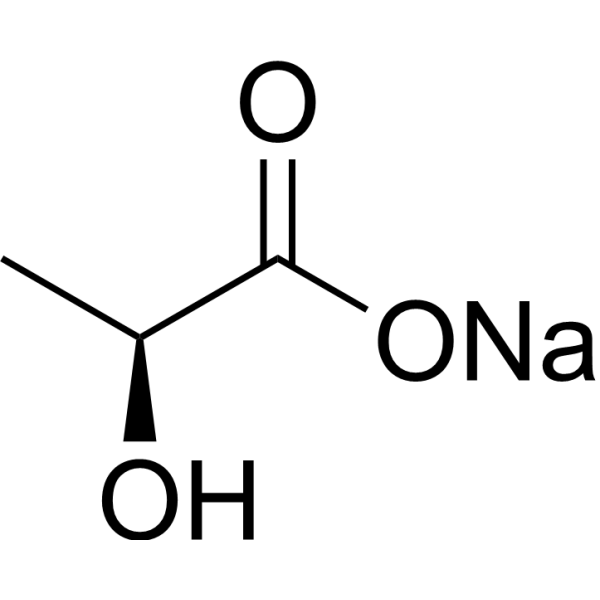
Cat. No.: HY-W040233
CAS No.: 867-56-1
Synonyms: (S)-2-Hydroxypropanoic acid sodium
L-lactate Sodium (Sodium (S)-2-hydroxypropanoate) is a buildiing block which can be used as a precursor for the production of the bioplastic polymer poly-lactic acid. L-Lactic acid Sodium has antiproliferative activity [2] .
loading...
    loading...
17
17 Cited Publications
Cat. No.: HY-Y0479
CAS No.: 79-33-4
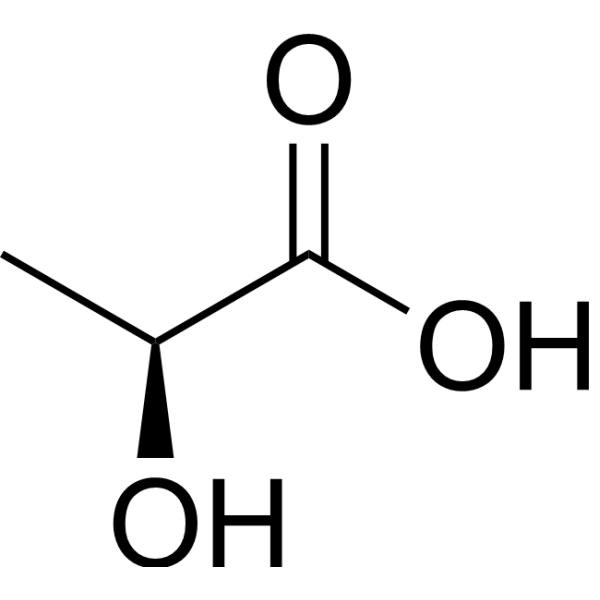
Synonyms: (S)-2-Hydroxypropanoic acid
L-Lactic acid is a buildiing block which can be used as a precursor for the production of the bioplastic polymer poly-lactic acid. L-Lactic acid has antiproliferative activity [2] .
loading...
    loading...
13
13 Cited Publications
Cat. No.: HY-W016319
CAS No.: 138-15-8
Research Areas:  

Others

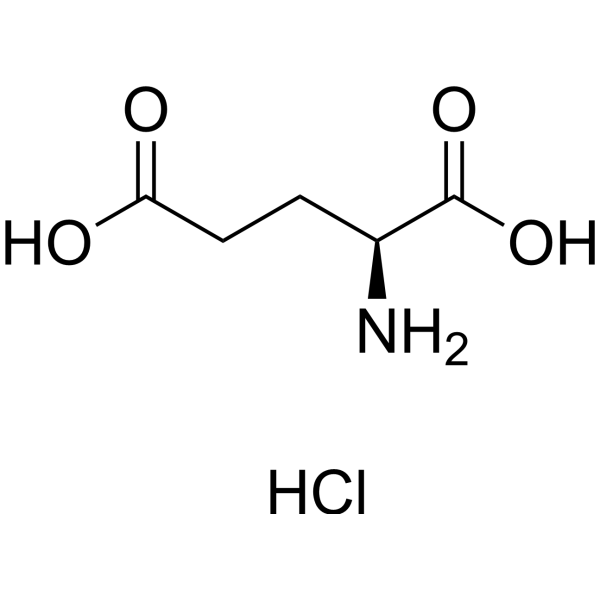
(S)-2-aminopentanedioic acid hydrochloride is a glutamic acid derivative .
loading...
    loading...
12
12 Cited Publications
Cat. No.: HY-D0884
CAS No.: 27848-80-2
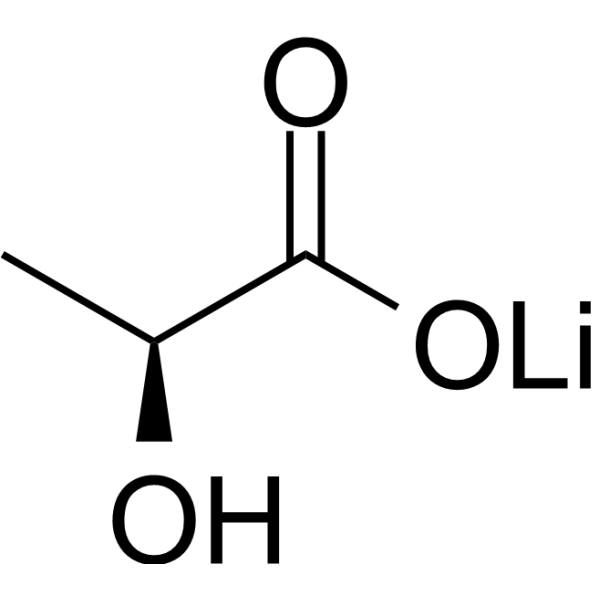
Synonyms: (S)-2-Hydroxypropanoic acid lithium
L-Lactic acid lithium ((S)-2-Hydroxypropanoic acid lithium) is a buildiing block which can be used as a precursor for the production of the bioplastic polymer poly-lactic acid. L-Lactic acid lithium has antiproliferative activity [2] .
loading...
    loading...
11
11 Cited Publications
Cat. No.: HY-W074143
CAS No.: 36309-88-3
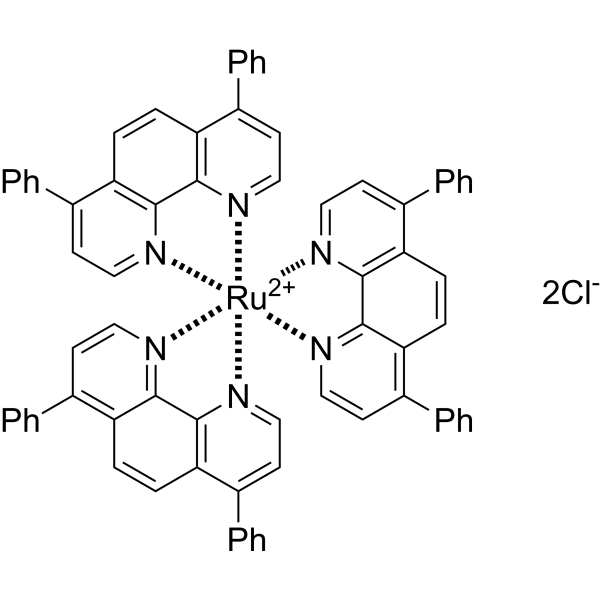
Synonyms: [Ru(DPP)3]Cl2
Tris(4,7-diphenyl-1,10-phenanthroline)ruthenium(II) dichloride ([Ru(dpp)3] 2+) is an electrochemiluminescent (ECL) probe and oxygen-sensitive sensor. Tris(4,7-diphenyl-1,10-phenanthroline)ruthenium(II) dichloride can be used to modify electrode surfaces for the detection of sulfates (S2O8 2-) and oxalates, based on electrochemical reactions that generate excited-state species, releasing photons through irreversible redox reactions. Tris(4,7-diphenyl-1,10-phenanthroline)ruthenium(II) dichloride utilizes the oxygen quenching of fluorescence mechanism, where fluorescence intensity reflects the metabolic rate of living microorganisms or oxygen levels within cells/tumors, allowing for real-time detection. Tris(4,7-diphenyl-1,10-phenanthroline)ruthenium(II) dichloride's main applications include microbial detection, antibacterial activity studies, and tumor microenvironment research [2].
loading...
    loading...
9
9 Cited Publications
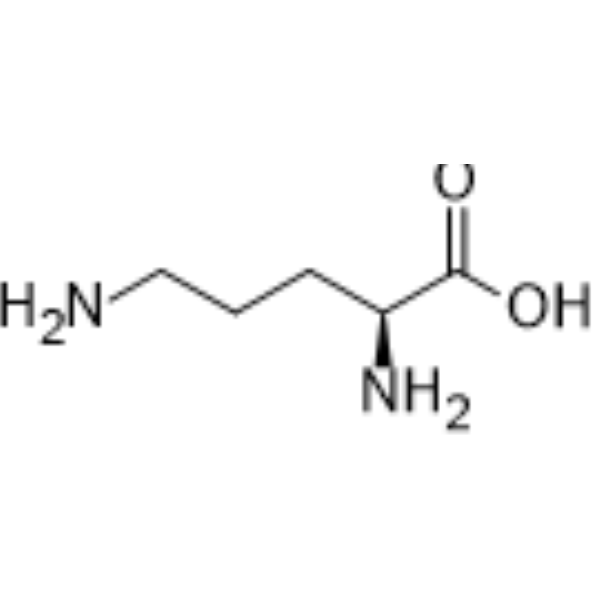
Cat. No.: HY-B1352
CAS No.: 70-26-8
Synonyms: (S)-2,5-Diaminopentanoic acid
L-Ornithine ((S)-2,5-Diaminopentanoic acid) is a non-proteinogenic amino acid, is mainly used in urea cycle removing excess nitrogen in vivo. L-Ornithine shows nephroprotective [2].
loading...
    loading...
9
9 Cited Publications
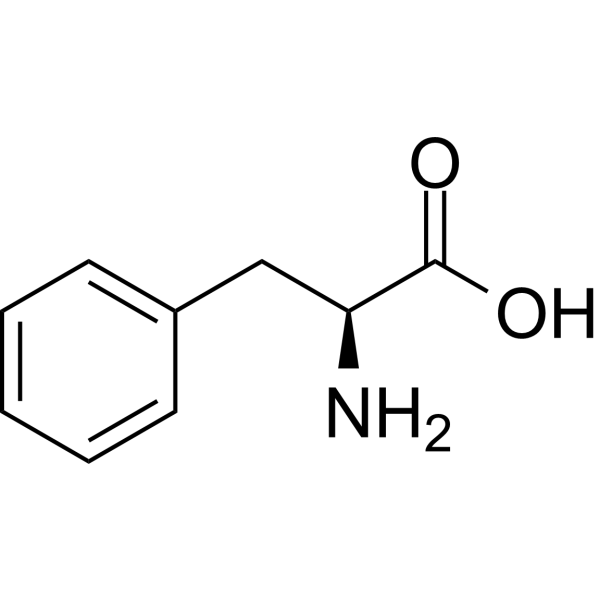
Cat. No.: HY-N0215
CAS No.: 63-91-2
Synonyms: (S)-2-Amino-3-phenylpropionic acid
L-Phenylalanine ((S)-2-Amino-3-phenylpropionic acid) is an essential amino acid isolated from Escherichia coli. L-Phenylalanine is a α2δ subunit of voltage-dependent Ca + channels antagonist with a Ki of 980 nM. L-phenylalanine is a competitive antagonist for the glycine- and glutamate-binding sites of N-methyl-D-aspartate receptors (NMDARs) (KB of 573 μM ) and non-NMDARs, respectively. L-Phenylalanine is widely used in the production of food flavors and pharmaceuticals [2] .
loading...
    loading...
4
4 Cited Publications
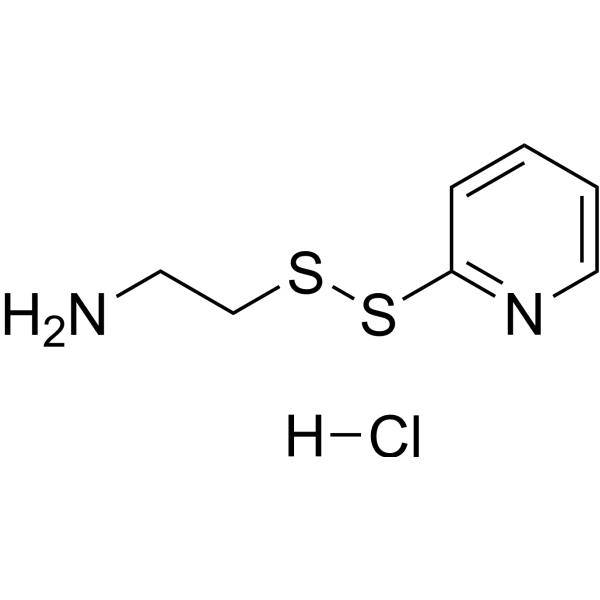
Cat. No.: HY-101794
CAS No.: 106139-15-5
Purity:  99.93%
Synonyms: (S)-2-Pyridylthio Cysteamine Hydrochloride
2-(Pyridyldithio)ethylamine hydrochloride is a novel disulfide intercalating cross-linking reagent.
loading...
    loading...
2
2 Cited Publications
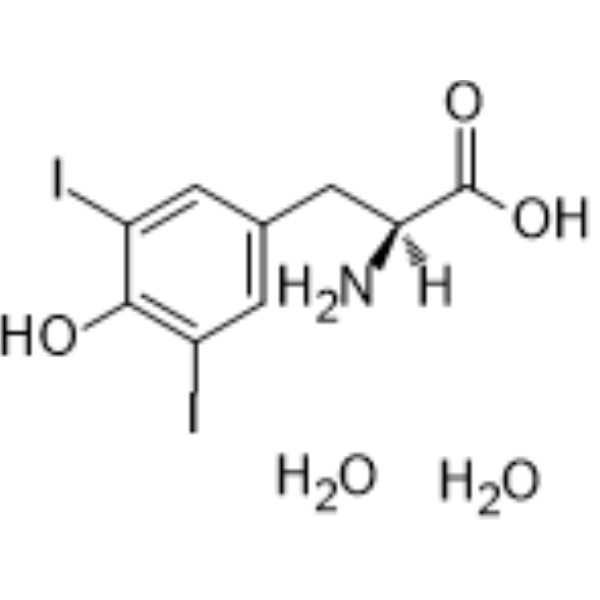
Cat. No.: HY-W008437
CAS No.: 18835-59-1
(S)-2-Amino-3-(4-hydroxy-3,5-diiodophenyl)propanoic acid dihydrate is an endogenous metabolite.
loading...
    loading...
2
2 Cited Publications
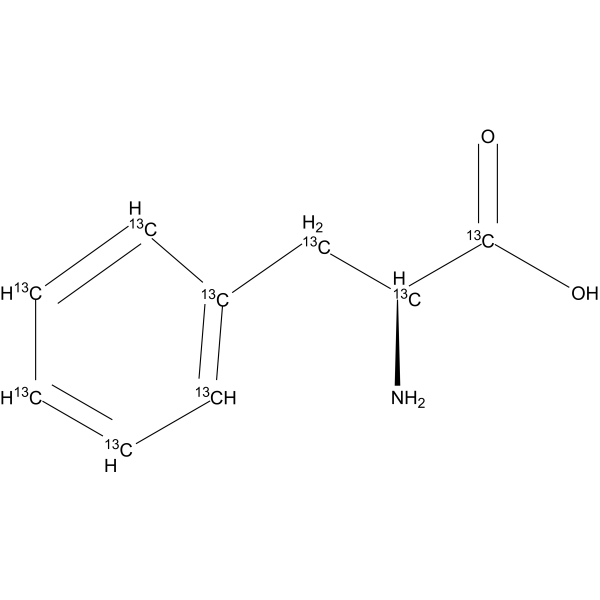
Cat. No.: HY-N0215S10
CAS No.: 439685-11-7
Synonyms: (S)-2-Amino-3-phenylpropionic acid-13C9
L-Phenylalanine- 13C9 is the 13C-labeled L-Phenylalanine. L-Phenylalanine ((S)-2-Amino-3-phenylpropionic acid) is an essential amino acid isolated from Escherichia coli. L-Phenylalanine is a α2δ subunit of voltage-dependent Ca+ channels antagonist with a Ki of 980 nM. L-phenylalanine is a competitive antagonist for the glycine- and glutamate-binding sites of N-methyl-D-aspartate receptors (NMDARs) (KB of 573 μM ) and non-NMDARs, respectively. L-Phenylalanine is widely used in the production of food flavors and pharmaceuticals [2] .
loading...
    loading...
2
2 Cited Publications
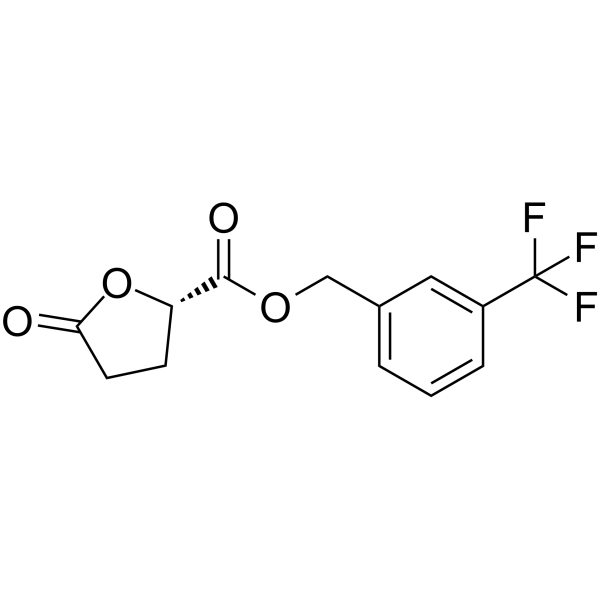
Cat. No.: HY-129079A
CAS No.: 1445703-64-9
Purity:  99.79%
Research Areas:  

Endocrinology Cancer

TFMB-(S)-2-HG is a potent TET2 inhibitor. TFMB-(S)-2-HG also inhibits the EglN prolyl hydroxylases. TFMB-(S)-2-HG downregulates Wnt3a, β-catenin (intranuclear) protein expression. TFMB-(S)-2-HG inhibits osteogenic differentiation of cells. TFMB-(S)-2-HG has the potential for the research of acute myeloid leukemia (AML) [2].
loading...
    loading...
2
2 Cited Publications
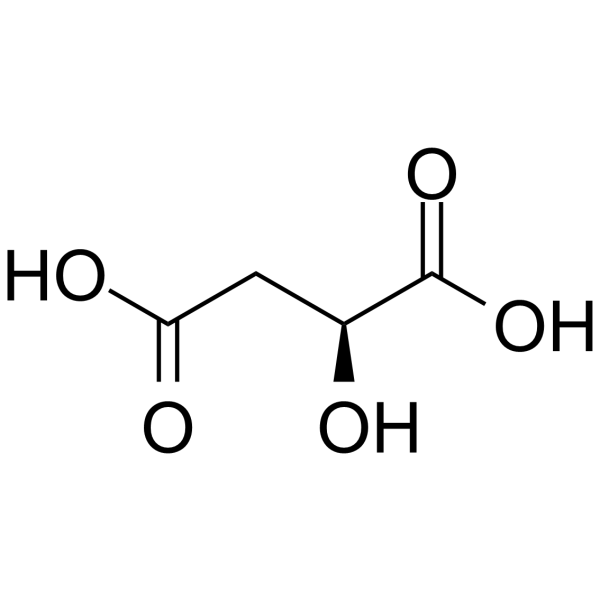
Cat. No.: HY-Y1069
CAS No.: 97-67-6
Synonyms: (S)-Hydroxybutanedioic acid; (S)-E 296; L-Malic acid
(S)-Malic acid ((S)-2-Hydroxysuccinic acid) is a dicarboxylic acid in naturally occurring form, contributes to the pleasantly sour taste of fruits and is used as a food additive.
loading...
    loading...
2
2 Cited Publications
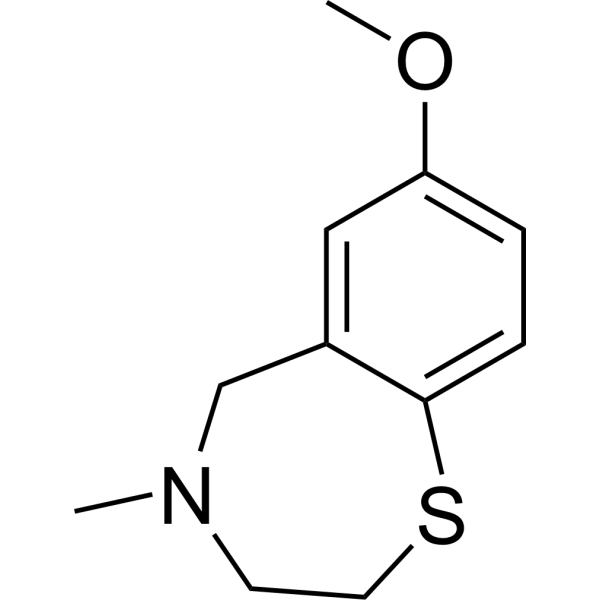
Cat. No.: HY-15292
CAS No.: 927871-76-9
Purity:  99.77%
Target:  

Calcium Channel

Research Areas:  

Cardiovascular Disease

S107 is an orally available, blood brain barrier-permeable compound, which stabilizes RyR2 channels by enhancing the binding of calstabin 2 to the mutant Ryr2-R2474S channel. S107 inhibits Ca 2+ leakage from the sarcoplasmic reticulum (SR) and prevents cardiac arrhythmias and raises the seizure threshold [2].
loading...
    loading...
1
1 Cited Publications
Cat. No.: HY-W018499
CAS No.: 3347-90-8
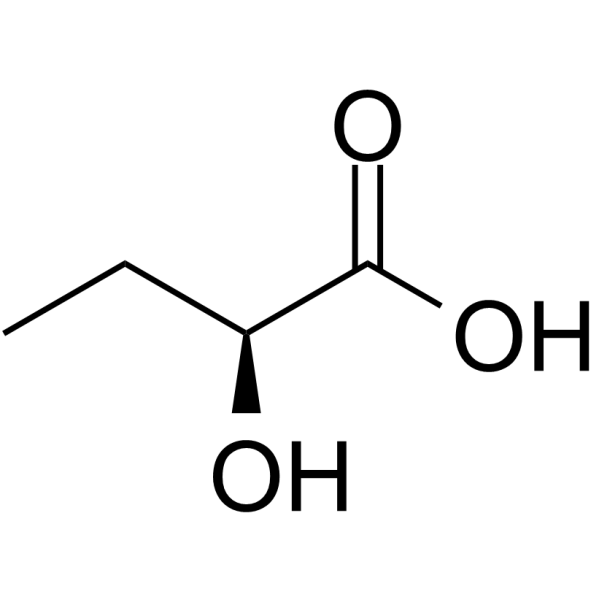
(S)-2-Hydroxybutanoic acid is the S-enantiomer of 2-Hydroxybutanoic acid. 2-Hydroxybutanoic acid, a coproduct of protein metabolism, is an insulin resistance (IR) biomarker .
loading...
    loading...
1
1 Cited Publications
Cat. No.: HY-W006064
CAS No.: 23235-01-0
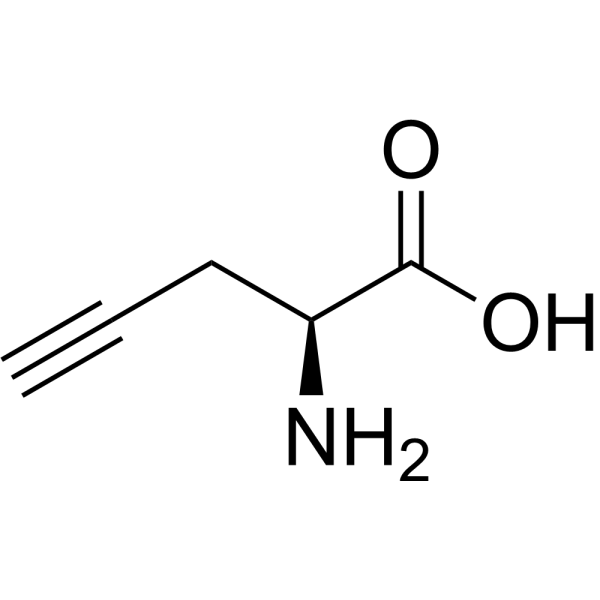
Synonyms: (S)-2-Aminopent-4-ynoic acid
Research Areas:  

Others

(S)-2-Aminopent-4-ynoic acid is a synthetic amino acid. (S)-2-Aminopent-4-ynoic acid can be used in synthesis of folate-conjugates and corresponding metal-chelate complexes . (S)-2-Aminopent-4-ynoic acid is a click chemistry reagent, it contains an Alkyne group and can undergo copper-catalyzed azide-alkyne cycloaddition (CuAAc) with molecules containing Azide groups.
loading...
    loading...
1
1 Cited Publications
Cat. No.: HY-W008467
CAS No.: 16820-18-1
Research Areas:  

Others

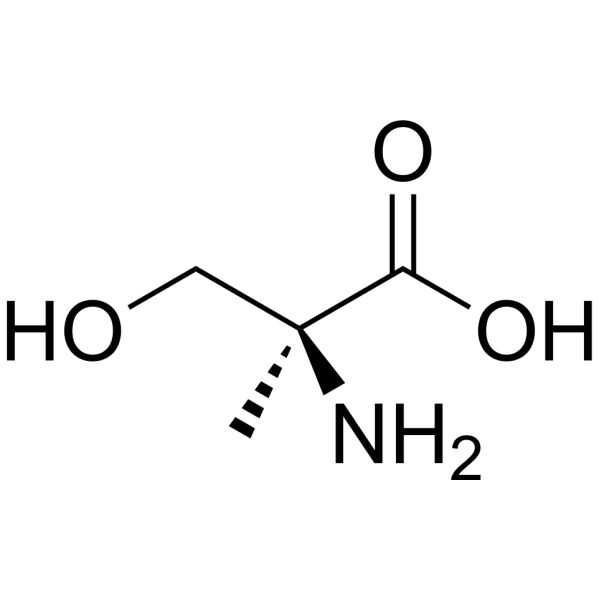
(S)-2-amino-3-hydroxy-2-methylpropanoic acid is a serine derivative .
loading...
    loading...
1
1 Cited Publications
Cat. No.: HY-30220
CAS No.: 20312-36-1
Synonyms: L-(-)-3-Phenyllactic Acid
(S)-2-Hydroxy-3-phenylpropanoic acid is the L-configuration of 2-Hydroxy-3-phenylpropanoic acid, and its level is closely related to some diseases, such as phenylketonuria .
loading...
    loading...

