1. Search Result
Search Result
Results for "

T-type

" in MedChemExpress (MCE) Product Catalog:

81

Inhibitors & Agonists

4

Peptides

2

Natural
Products

11

Isotope-Labeled Compounds

1

Antibodies

Cat. No. Product Name Target Research Areas Chemical Structure
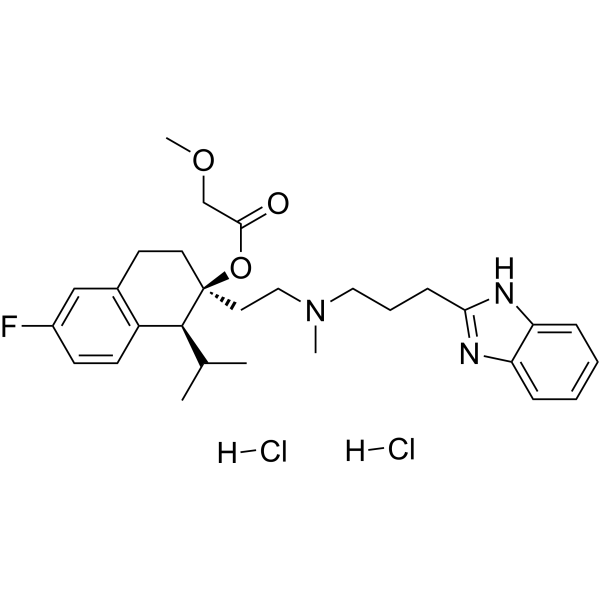
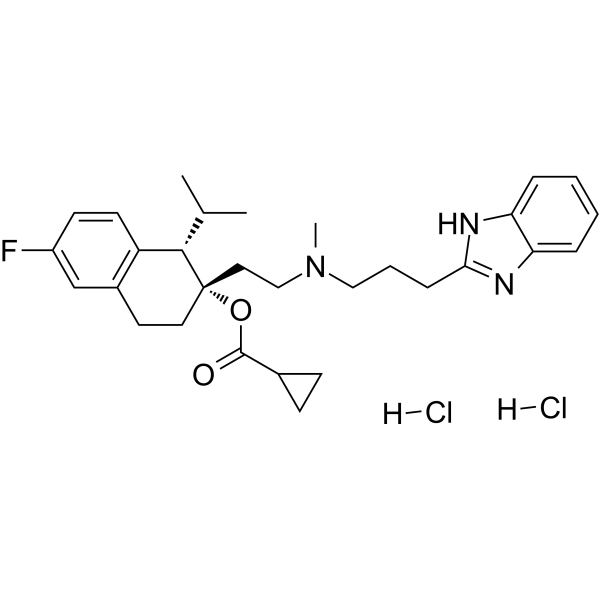
  • HY-15553A
    Mibefradil dihydrochloride
    Maximum Cited Publications
    14 Publications Verification

    Ro 40-5967 dihydrochloride

    Calcium Channel Cardiovascular Disease Cancer
    Mibefradil dihydrochloride (Ro 40-5967 dihydrochloride) is a calcium channel blocker with moderate selectivity for T-type Ca 2+ channels (IC50s of 2.7 μM and 18.6 μM for T-type and L-type currents, respectively) .
    Mibefradil dihydrochloride
  • HY-B1378
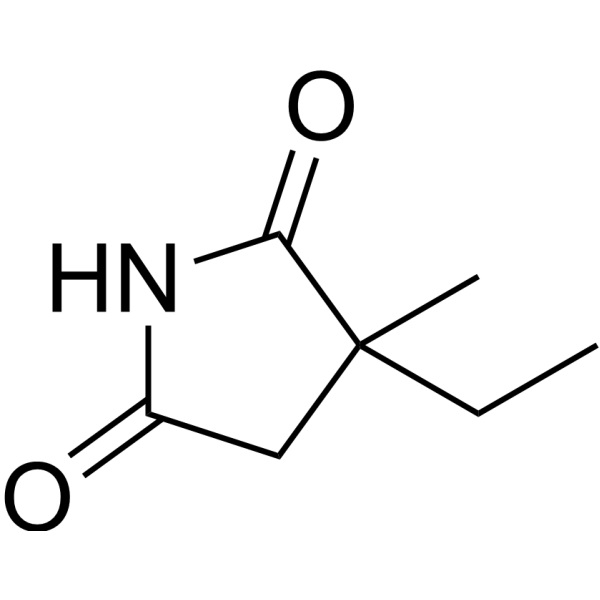
    Ethosuximide
    1 Publications Verification

    Calcium Channel Neurological Disease Cancer
    Ethosuximide, a widely prescribed anti-epileptic agent, improves the phenotypes of multiple neurodegenerative disease models and blocks the low voltage activated T-type calcium channel.
    Ethosuximide
  • HY-50722
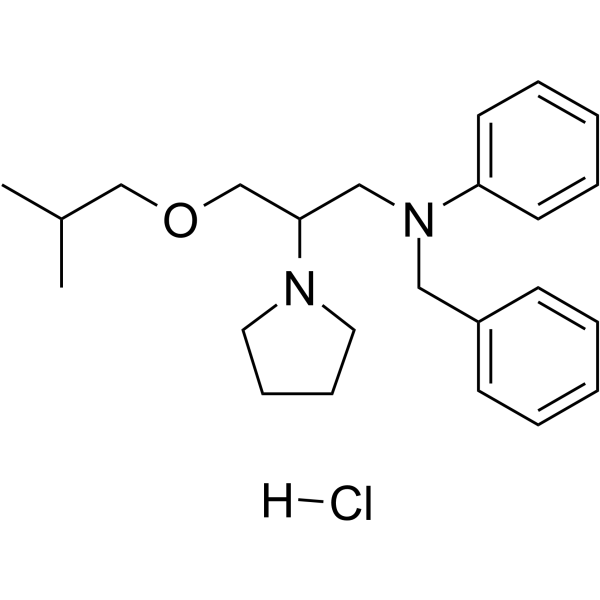
    NNC 55-0396
    5 Publications Verification

    NNC 55-0396 dihydrochloride

    Calcium Channel Cytochrome P450 Cardiovascular Disease Neurological Disease Cancer
    NNC 55-0396 (NNC 55-0396 dihydrochloride) is a blood-brain-barrier-permeable T-type Ca 2+ channel inhibitor and pan-P450 inhibitor. NNC 55-0396 selectively inhibits T-type Ca 2+ channels, suppresses HIF-1α expression and stability and inhibits Kv currents. NNC 55-0396 reduces brain infarct and attenuates neurological dysfunction. NNC 55-0396 inhibits the activity of multiple P450 enzymes. NNC 55-0396 (free base) can be used for the research of brain injury, hypertension, and glioblastoma .
    NNC 55-0396
  • HY-10035
    TTA-P2
    2 Publications Verification

    T-type calcium channel inhibitor

    Calcium Channel Neurological Disease
    TTA-P2 (T-Type calcium channel inhibitor) is a selective, orally active, and BBB-penetrant T-type calcium channel blocker (IC50 = 22 nM). TTA-P2 reduces mechanical hypersensitivity and alleviates acute as well as chronic pain. TTA-P2 significantly reduces firing rates in temporal lobe epilepsy (TLE) neurons to control levels and suppresses synaptically evoked burst firing. TTA-P2 can be studied in research for neurological diseases such as tremor and absence epilepsy < sup>[4] .
    TTA-P2
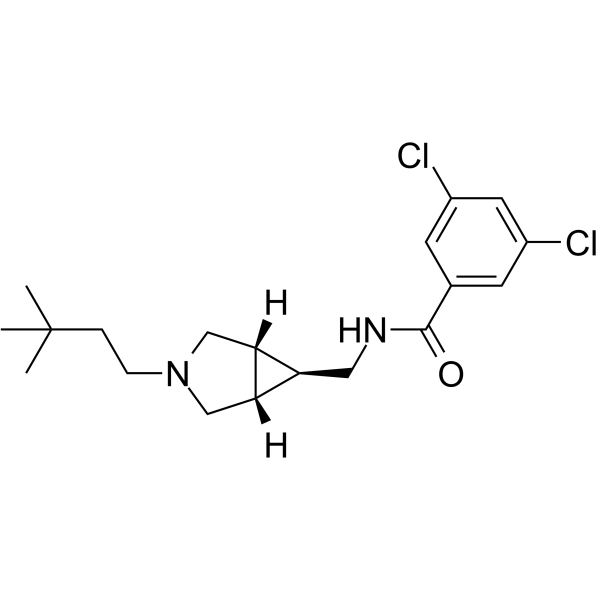
  • HY-111828
    TTA-A2
    1 Publications Verification

    Calcium Channel Neurological Disease
    TTA-A2 is a potent, selective and orally active t-type voltage gated calcium channel antagonist with reduced pregnane X receptor (PXR) activation. TTA-A2 is equally potent against the Cav3.1 (a1G) and Cav3.2 (a1H) channels with IC50 values of 89 nM and 92 nM, respectively, at -80 and -100 mV holding potentials. TTA-A2 can be used for the research of a variety of human neurological diseases, including sleep disorders and epilepsy .
    TTA-A2
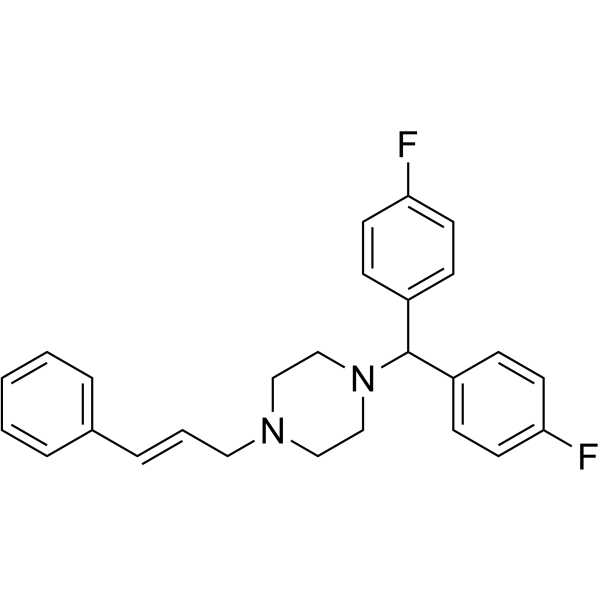
  • HY-B0358
    Flunarizine
    5+ Cited Publications

    Calcium Channel Sodium Channel Dopamine Receptor Cardiovascular Disease Neurological Disease
    Flunarizine is a potent dual Na +/Ca 2+ channel (T-type) blocker. Flunarizine is a D2 dopamine receptor antagonist. Flunarizine shows anticonvulsive and antimigraine activity, and peripheral vasodilator effects .
    Flunarizine
  • HY-112723

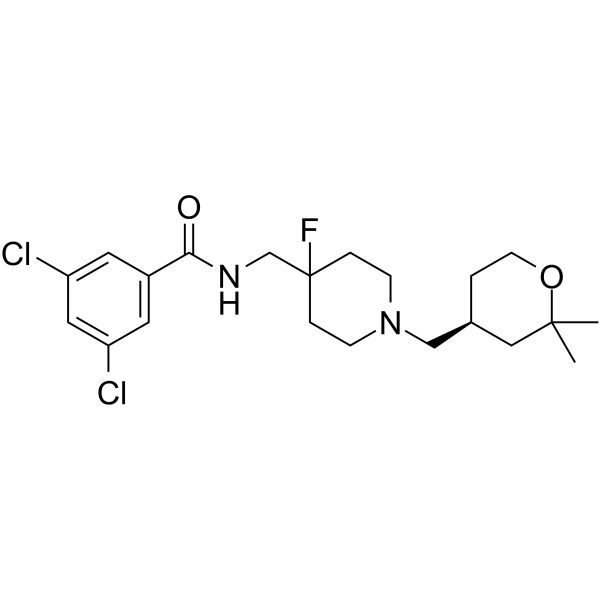
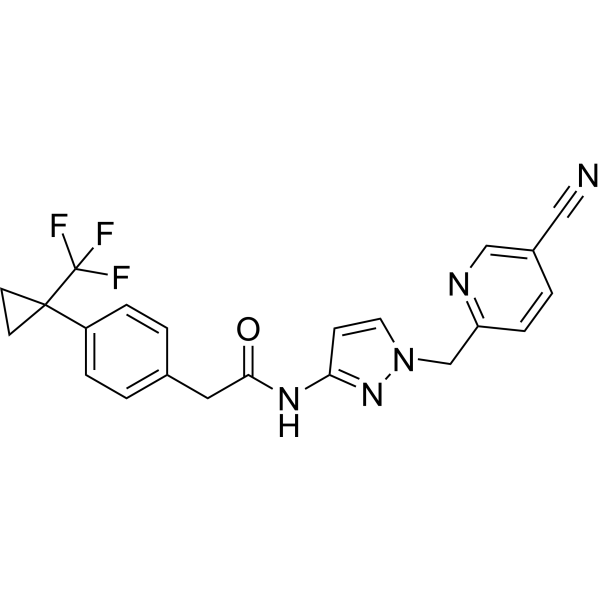
    ACT-709478

    Calcium Channel Neurological Disease
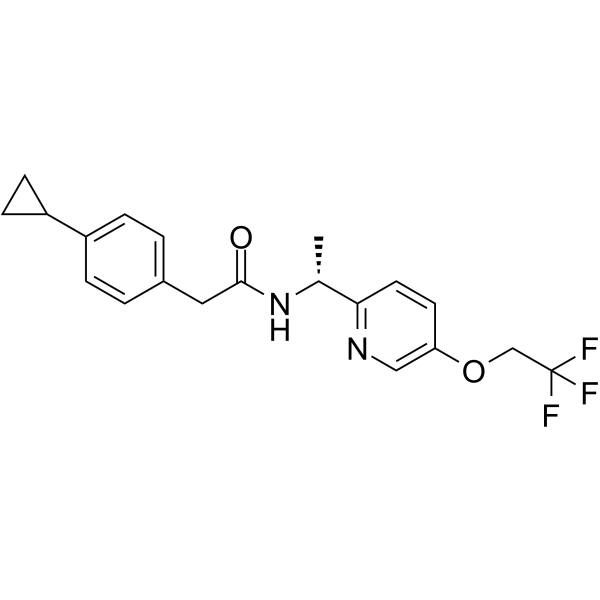
    Apinocaltamide (ACT-709478) is a potent, selective, orally active, and brain penetrating T-type calcium channel blocker. ACT-709478 is used in the research of generalized epilepsies .
    Apinocaltamide
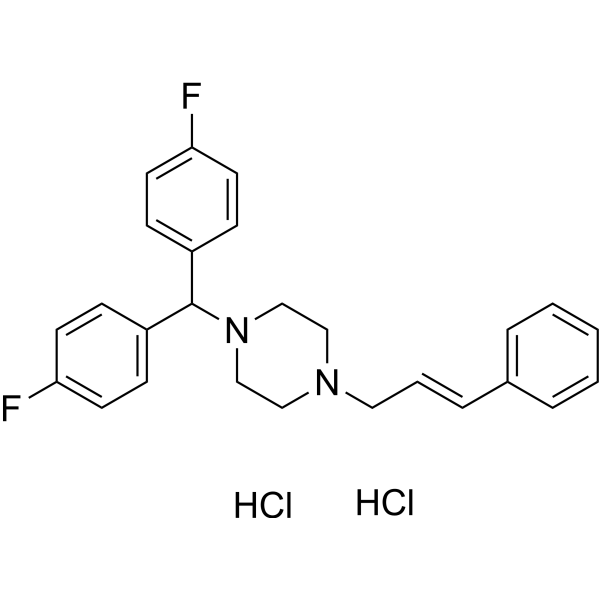
  • HY-B0358A
    Flunarizine dihydrochloride
    5+ Cited Publications

    Calcium Channel Sodium Channel Dopamine Receptor Cardiovascular Disease Neurological Disease
    Flunarizine dihydrochloride is a potent dual Na +/Ca 2+ channel (T-type) blocker. Flunarizine dihydrochloride is a D2 dopamine receptor antagonist. Flunarizine dihydrochloride shows anticonvulsive and antimigraine activity, and peripheral vasodilator effects .
    Flunarizine dihydrochloride
  • HY-W032013
    1-Octanol
    1 Publications Verification

    Octanol

    Environmental Pollutants Endogenous Metabolite Calcium Channel Neurological Disease Metabolic Disease
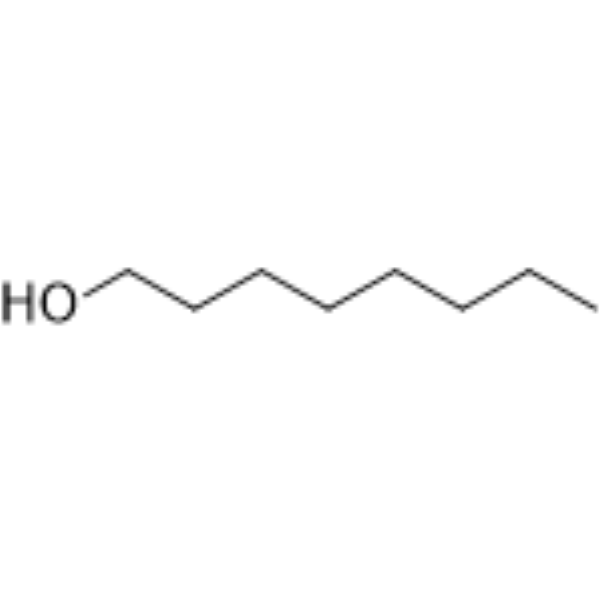
    1-Octanol (Octanol), a saturated fatty alcohol, is a T-type calcium channels (T-channels) inhibitor with an IC50 of 4 μM for native T-currents . 1-Octanol is a highly attractive biofuel with diesel-like properties .
    1-Octanol
  • HY-120546
    Ulixacaltamide
    1 Publications Verification

    Z944; PRAX-944

    Calcium Channel Neurological Disease Inflammation/Immunology
    Ulixacaltamide (Z944) is an orally available T-type calcium channel antagonist that can slow the progression of epilepsy. Ulixacaltamide effectively reduces tremor in a normal alkaline tremor animal model. Ulixacaltamide reverses thermal hyperalgesia and mediates pain relief .
    Ulixacaltamide
  • HY-A0092

    3,5,5,-Trimethyloxazolidine-2,4-dione

    Calcium Channel Neurological Disease
    Trimethadione (3,5,5,-Trimethyloxazolidine-2,4-dione) is an oxazolidinedione anticonvulsant agent widely used against absences seizures. Trimethadione also is a T-type calcium channel blocker which has antihyperalgesic effects .
    Trimethadione
  • HY-12502A
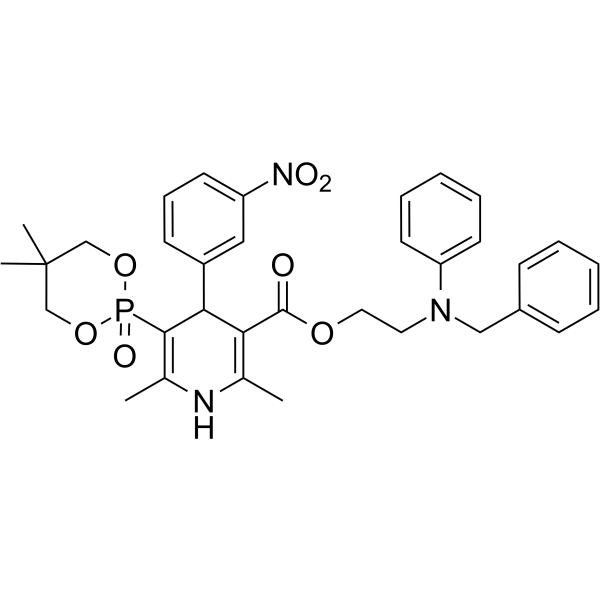
    Efonidipine hydrochloride monoethanolate
    1 Publications Verification

    NZ-105 hydrochloride monoethanolate; (±)-Efonidipine hydrochloride monoethanolate

    Calcium Channel SARS-CoV Cardiovascular Disease Neurological Disease Cancer
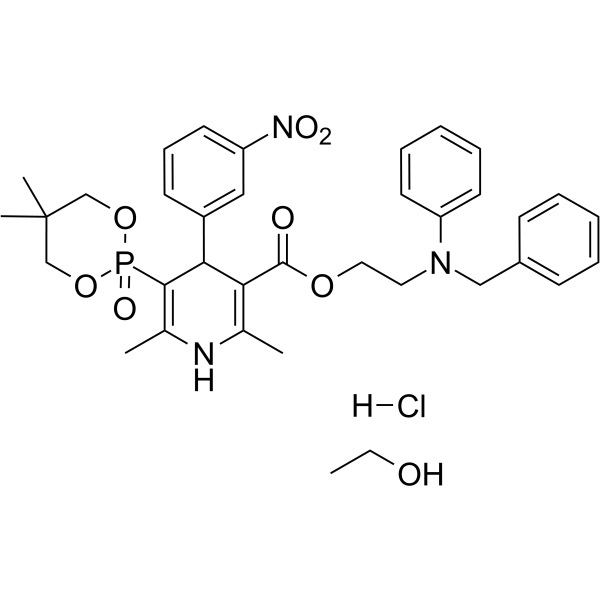
    Efonidipine (NZ-105) hydrochloride monoethanolate is an orally active dual L-type and T-type calcium channel blocker (CCB) with IC50 values of 1.8 and 350 nM, respectively. Efonidipine hydrochloride monoethanolate inhibits SARS-CoV-2 main protease. Efonidipine hydrochloride monoethanolate modulates adrenal steroidogenesis by increasing the expression of steroidogenic acute regulatory protein (StAR), dbcAMP-or angiotensin II-induced StAR mRNA expression and DHEA-S production, while suppressing the biosynthesis of aldosterone and cortisol. Efonidipine hydrochloride monoethanolate reduces plasma aldosterone levels in vivo. Efonidipine hydrochloride monoethanolate improves cardiac function in heart failure models by inhibiting T-type calcium channels (via both tonic and use-dependent blockade), independently of blood pressure reduction. Efonidipine hydrochloride monoethanolate can be used for research in hypertension, heart failure, and disorders involving dysregulated steroid hormone synthesis .
    Efonidipine hydrochloride monoethanolate
  • HY-B0768A
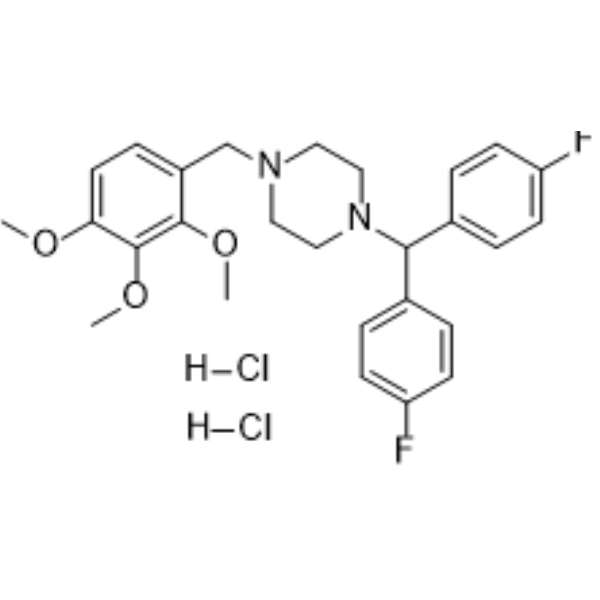
    Lomerizine dihydrochloride
    1 Publications Verification

    KB-2796

    Calcium Channel Neurological Disease
    Lomerizine dihydrochloride is an antagonist of L- and T-type voltagegated calcium channels.
    Lomerizine dihydrochloride
  • HY-103309
    ML218
    2 Publications Verification

    Calcium Channel Neurological Disease
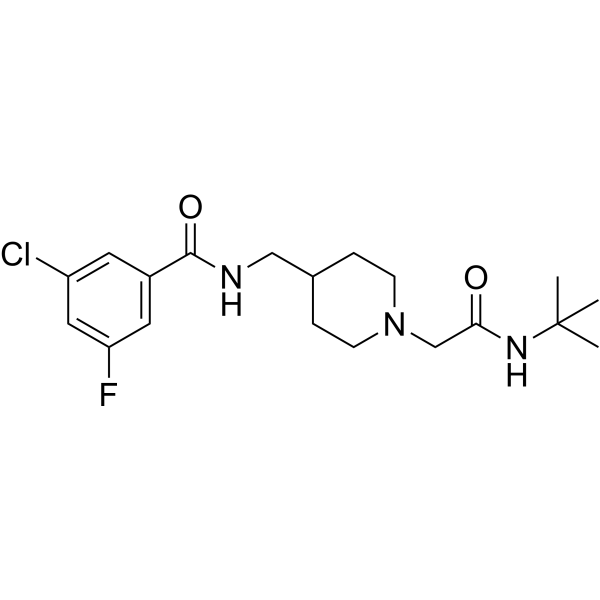
    ML218 is a potent, selective and orally active T-type Ca 2+ channels (Cav3.1, Cav3.2, Cav3.3) inhibitor with IC50s of 310 nM and 270 nM for Cav3.2 and Cav3.3, respectively. ML218 inhibits the burst activity in subthalamic nucleus (STN) neurons. ML218 has no significant inhibition of L- or N-type calcium channels, KATP or hERG potassium channels. ML218 can penetrate the blood-brain barrier .
    ML218
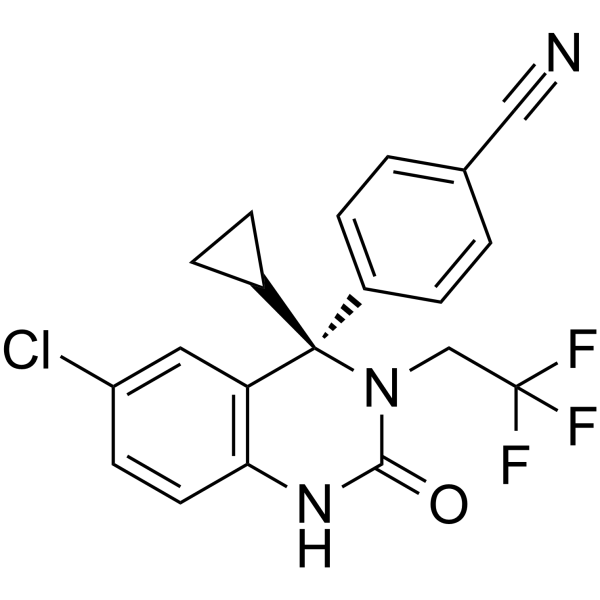
  • HY-101096

    MK-8998; CX-8998; JZP385

    Calcium Channel Neurological Disease Cancer
    Suvecaltamide (MK-8998) is a selective T-type calcium channel inhibitor with oral efficacy. Suvecaltamide exhibits no cytotoxicity in myeloma cell lines and does not affect the antitumor efficacy of Bortezomib (BTZ). Suvecaltamide reverses BTZ-induced peripheral neuropathy (CIPN) in mouse and rat models, and helps inhibit myeloma growth .
    Suvecaltamide
  • HY-132184

    5,6-EET; (±)5,6-EpETrE

    Adrenergic Receptor Calcium Channel Endocrinology
    5,6-Epoxyeicosatrienoic acid (5,6-EET; (±)5,6-EpETrE) is a fully racemic version of the enantiomeric forms biosynthesized from arachidonic acid by cytochrome P450 enzymes. In solution, 5,6-Epoxyeicosatrienoic acid degrades into 5,6-DiHET and 5,6-δ-lactone, which can be converted to 5,6-DiHET and quantified by GC-MS. In neuroendocrine cells, such as the anterior pituitary and pancreatic islets, 5,6-Epoxyeicosatrienoic acid has been implicated in the mobilization of calcium and hormone secretion. 5,6-Epoxyeicosatrienoic acid is an inhibitor of T-type voltage-gated calcium channels (Cav3) that inhibits isoforms Cav3.1, Cav3.2 (IC50=0.54 μM), and Cav3. and decreases nifedipine-resistant phenylephrine-induced vasoconstriction in isolated mouse mesenteric arteries via Cav3.2 blockade when used at a concentration of 3 μM. In addition, it is a substrate of COX-1 and COX-2.
    5,6-Epoxyeicosatrienoic acid
  • HY-15553

    Ro 40-5967

    Calcium Channel Cardiovascular Disease Cancer
    Mibefradil (Ro 40-5967) is a calcium channel blocker with moderate selectivity for T-type Ca 2+ channels displaying IC50s of 2.7 μM and 18.6 μM for T-type and L-type currents, respectively .
    Mibefradil
  • HY-120597

    Calcium Channel Neurological Disease
    SAK3 is a potent T-type voltage-gated Ca 2+ channels (T-VGCCs) enhancer. SAK3 enhances Cav3.1 and Cav3.3 T-type Ca 2+ channel currents. Acute SAK3 administration improves memory deficits in olfactory-bulbectomized mice . SAK3 inhibits amyloid β plaque formation in APP-KI mice by activating the proteasome activity .
    SAK3
  • HY-12502
    Efonidipine
    1 Publications Verification

    NZ-105; (±)-Efonidipine

    Calcium Channel SARS-CoV Cardiovascular Disease Neurological Disease Cancer
    Efonidipine (NZ-105) is an orally active dual L-type and T-type calcium channel blocker (CCB) with IC50 values of 1.8 and 350 nM, respectively. Efonidipine inhibits SARS-CoV-2 main protease. Efonidipine modulates adrenal steroidogenesis by increasing the expression of steroidogenic acute regulatory protein (StAR), dbcAMP-or angiotensin II-induced StAR mRNA expression and DHEA-S production, while suppressing the biosynthesis of aldosterone and cortisol. Efonidipine reduces plasma aldosterone levels in vivo. Efonidipine improves cardiac function in heart failure models by inhibiting T-type calcium channels (via both tonic and use-dependent blockade), independently of blood pressure reduction. Efonidipine can be used for research in hypertension, heart failure, and disorders involving dysregulated steroid hormone synthesis .
    Efonidipine
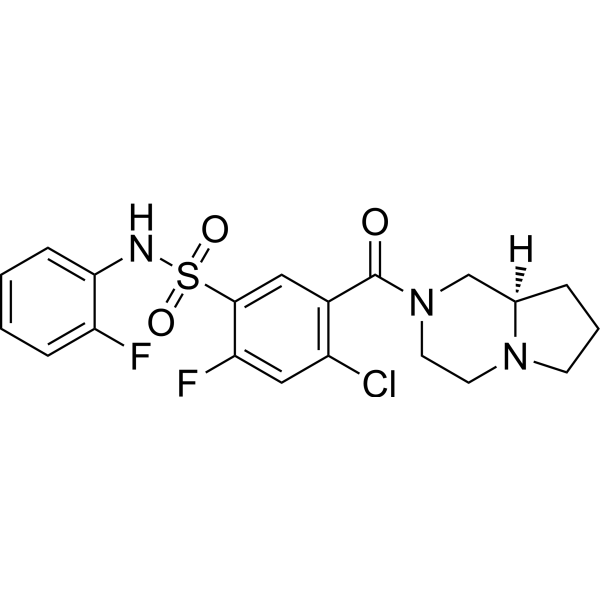
  • HY-19721
    ABT-639
    3 Publications Verification

    Calcium Channel Neurological Disease
    ABT-639 is a novel, peripherally acting, selective T-type Ca 2+ channel blocker.
    ABT-639
  • HY-136909

    Calcium Channel Cardiovascular Disease
    SR33805 is a potent Ca 2+ channel antagonist, with EC50s of 4.1 nM and 33 nM in depolarized and polarized conditions, respectively. SR33805 blocks L-type but not T-type Ca 2+ channels. SR33805 can be used for the research of acute or chronic failing hearts .
    SR33805
  • HY-P1079

    Calcium Channel Neurological Disease
    ω-Agatoxin TK, a peptidyl toxin of the venom of Agelenopsis aperta, is a potent and selective P/Q type Ca 2+ channel blocker. ω-Agatoxin TK inhibits the high K + depolarisation-induced rise in internal Ca 2+ in cerebral isolated nerve endings with an IC50 of of 60 nM. ω-Agatoxin TK has no effect on L-type, N-type, or T-type calcium channels .
    ω-Agatoxin TK
  • HY-147638

    Calcium Channel Neurological Disease
    MONIRO-1 is a T-type and N-type calcium channel blocker with IC50 values of 34, 3.3, 1.7 and 7.2 µM against hCav2.2, hCav3.1, hCav3.2 and hCav3.3, respectively. MONIRO-1 has low activity against L-type calcium channels. MONIRO-1 can be used for the study of pain and epilepsy .
    MONIRO-1
  • HY-115681
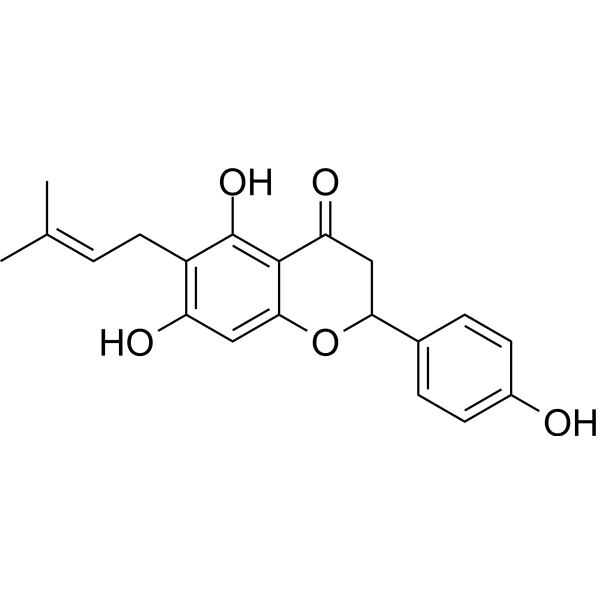
    (2R/S)-6-PNG
    1 Publications Verification

    6-Prenylnaringenin; (±)-6-Prenylnaringenin

    Calcium Channel Neurological Disease
    (2R/S)-6-PNG (6-Prenylnaringenin) is a potent and reversible Cav3.2 T-type Ca 2+ channels (T-channels) blocker. (2R/S)-6-PNG can penetrate the blood-brain barrier (BBB). (2R/S)-6-PNG suppresses neuropathic and visceral pain in mice .
    (2R/S)-6-PNG
  • HY-50707

    (Rac)-T-type calcium channel inhibitor

    Calcium Channel Drug Isomer Neurological Disease
    (Rac)-TTA-P2 is the isomer of TTA-P2 (HY-10035), and can be used as an experimental control. TTA-P2 (T-Type calcium channel inhibitor) is a potent inhibitor of T-Type calcium channel. TTA-P2 penetrates well the CNS and blocks the native T-type currents in deep cerebellar nuclear neurons, the window current is completely abolished both for wild-type and mutant Cav3.1 channels. TTA-P2 has the potential for the research of neurology disease .
    (Rac)-TTA-P2
  • HY-10388A

    Calcium Channel Others
    TTA-Q6(isomer) is an isomer of TTA-Q6. TTA-Q6 is a selective T-type Ca 2+ channel antagonist.
    TTA-Q6(isomer)
  • HY-Z8176

    Sodium Channel Neurological Disease
    (Z)-Flunarizine is the (Z)-isomer of Flunarizine (HY-B0358). Flunarizine is a potent dual Na +/Ca 2+ channel (T-type) blocker. Flunarizine is a D2 dopamine receptor antagonist. Flunarizine shows anticonvulsive and antimigraine activity, and peripheral vasodilator effects .
    (Z)-Flunarizine
  • HY-B0358AR

    Reference Standards Calcium Channel Sodium Channel Dopamine Receptor Neurological Disease
    Flunarizine (dihydrochloride) (Standard) is the analytical standard of Flunarizine (dihydrochloride). This product is intended for research and analytical applications. Flunarizine dihydrochloride is a potent dual Na +/Ca 2+ channel (T-type) blocker. Flunarizine dihydrochloride is a D2 dopamine receptor antagonist. Flunarizine dihydrochloride shows anticonvulsive and antimigraine activity, and peripheral vasodilator effects .
    Flunarizine dihydrochloride (Standard)
  • HY-W032013S1

    Octanol-d2

    Calcium Channel Endogenous Metabolite Metabolic Disease
    1-Octanol-d2 is the deuterium labeled 1-Octanol . 1-Octanol (Octanol), a saturated fatty alcohol, is a T-type calcium channels (T-channels) inhibitor with an IC50 of 4 μM for native T-currents . 1-Octanol is a highly attractive biofuel with diesel-like properties .
    1-Octanol-d2
  • HY-147708

    Calcium Channel Cancer
    T-Type calcium channel inhibitor 2 (compound 6g) is a potent T-type calcium channel inhibitor with IC50s of 31.0, 83.1, 69.3 µM for Cav3.1 (α1G), Cav3.2 (α1H), Cav3.3 (α1I) (α1H), respectively. T-Type calcium channel inhibitor 2 shows cytotoxicity for A549, HCT-116 cells with IC50s of 5.0, 6.4 µM, respectively .
    T-Type calcium channel inhibitor 2
  • HY-150541

    Calcium Channel Neurological Disease
    IAA65 is a potent T-type calcium channel inhibitor with a IC50 value of 18.9 µM. IAA65 can be used for epilepsy research .
    IAA65
  • HY-151452

    Calcium Channel Neurological Disease
    Cav 3.2 inhibitor 3 (Compound 4) is a potent Cav3.2 T-type Ca 2+ channel inhibitor with an IC50 of 0.1534 μM, and has little binding affinity to D2 receptors .
    Cav 3.2 inhibitor 3
  • HY-126336

    Calcium Channel Cardiovascular Disease Neurological Disease
    HM12 is a covalent inhibitor of L-/T-type calcium channels. HM12 can strongly inhibit the Cav1.2 (L-type) and Cav3.2 (T-type) calcium channels, and has selectivity for the N-type channels. HM12 produces an irreversible inhibition that persisted after washout. HM12 can be used to study diseases such as hypertension, pain, epilepsy, etc .
    HM12
  • HY-10035R

    T-type calcium channel inhibitor (Standard)

    Calcium Channel Reference Standards Neurological Disease
    TTA-P2 (Standard) is the analytical standard of TTA-P2 (HY-10035). This product is intended for research and analytical applications. TTA-P2 (T-Type calcium channel inhibitor) is a selective, orally active, and BBB-penetrant T-type calcium channel blocker (IC50 = 22 nM). TTA-P2 reduces mechanical hypersensitivity and alleviates acute as well as chronic pain. TTA-P2 significantly reduces firing rates in temporal lobe epilepsy (TLE) neurons to control levels and suppresses synaptically evoked burst firing. TTA-P2 can be studied in research for neurological diseases such as tremor and absence epilepsy < sup> .
    TTA-P2 (Standard)
  • HY-B0358AS

    Sodium Channel Dopamine Receptor Calcium Channel Isotope-Labeled Compounds Neurological Disease
    Flunarizine-d8 dihydrochloride is deuterated labeled Flunarizine dihydrochloride (HY-B0358A). Flunarizine dihydrochloride is a potent dual Na +/Ca 2+ channel (T-type) blocker. Flunarizine dihydrochloride is a D2 dopamine receptor antagonist. Flunarizine dihydrochloride shows anticonvulsive and antimigraine activity, and peripheral vasodilator effects .
    Flunarizine-d8 dihydrochloride
  • HY-12502B

    NZ-105 hydrochloride; (±)-Efonidipine hydrochloride

    Calcium Channel SARS-CoV Cardiovascular Disease Cancer
    Efonidipine (NZ-105) hydrochloride is an orally active dual L-type and T-type calcium channel blocker (CCB) with IC50 values of 1.8 and 350 nM, respectively. Efonidipine hydrochloride inhibits SARS-CoV-2 main protease. Efonidipine hydrochloride modulates adrenal steroidogenesis by increasing the expression of steroidogenic acute regulatory protein (StAR), dbcAMP-or angiotensin II-induced StAR mRNA expression and DHEA-S production, while suppressing the biosynthesis of aldosterone and cortisol. Efonidipine hydrochloride reduces plasma aldosterone levels in vivo. Efonidipine hydrochloride improves cardiac function in heart failure models by inhibiting T-type calcium channels (via both tonic and use-dependent blockade), independently of blood pressure reduction. Efonidipine hydrochloride can be used for research in hypertension, heart failure, and disorders involving dysregulated steroid hormone synthesis .
    Efonidipine hydrochloride
  • HY-W032013R

    Octanol (Standard)

    Reference Standards Calcium Channel Endogenous Metabolite Neurological Disease Metabolic Disease
    1-Octanol (Standard) is the analytical standard of 1-Octanol. This product is intended for research and analytical applications. 1-Octanol (Octanol), a saturated fatty alcohol, is a T-type calcium channels (T-channels) inhibitor with an IC50 of 4 μM for native T-currents . 1-Octanol is a highly attractive biofuel with diesel-like properties .
    1-Octanol (Standard)
  • HY-120484

    Calcium Channel Neurological Disease
    A-1048400 is an orally active and selective calcium channel inhibitor with an IC50 value of 1.4 μM for N-type channels, 1.2 μM for T-type channel. A-1048400 inhibits neurotransmitter release and reduces membrane hyperexcitability, exerting potent analgesic activity. A-1048400 is promising for research of neuropathic pain (e.g., pain induced by spinal nerve ligation and chronic constriction injury) .
    A-1048400
  • HY-150539

    Calcium Channel Neurological Disease
    IAB15 is a potent T-type calcium channel inhibitor. IAB15 can be used for epilepsy research .
    IAB15
  • HY-10035A

    Calcium Channel Neurological Disease
    (R)-TTA-P2 is the isomer of TTA-P2 (HY-10035), and can be used as an experimental control. TTA-P2 (T-Type calcium channel inhibitor) is a potent inhibitor of T-Type calcium channel. TTA-P2 penetrates well the CNS and blocks the native T-type currents in deep cerebellar nuclear neurons, the window current is completely abolished both for wild-type and mutant Cav3.1 channels. TTA-P2 has the potential for the research of neurology disease .
    (R)-TTA-P2
  • HY-P5869

    Calcium Channel Sodium Channel Neurological Disease
    Kurtoxin is a selective Cav3 (T-type) voltage-gated Ca 2+ channel gating inhibitor with a Kd of 15 nM for Cav3.1 (α1G T-type) Ca 2+ channel. Kurtoxin can interact with high affinity with native neuronal high-threshold L-type, N-type, and P-type Ca 2+ channels in central and peripheral neurons. Kurtoxin also shows cross-reactivity with voltage-gated Na + channel .
    Kurtoxin
  • HY-10955

    Calcium Channel Neurological Disease
    TTA-P1 is a potent state-independent compound inhibiting human T-type calcium channel. T-type calcium channels play a role in diverse physiological responses including neuronal burst firing, hormone secretion, and cell growth. TTA-P1 has the potential for the research of absence epilepsy .
    TTA-P1
  • HY-154832

    Calcium Channel Cardiovascular Disease
    Cav 3.2 inhibitor 4 (compound 21) is a potent, peripherally restricted, selective T-type calcium channel (Cav3.2) inhibitor, with an IC50 of 0.6 μM. Cav 3.2 inhibitor 4 can be used for the research of atrial fibrillation .
    Cav 3.2 inhibitor 4
  • HY-151450

    Calcium Channel Neurological Disease Inflammation/Immunology
    Cav 3.2 inhibitor 1 is a T-type calcium channel inhibitor with little binding affinity to dopamine D2 receptors. Cav 3.2 inhibitor 1 can be used for the research of somatic and visceral pain .
    Cav 3.2 inhibitor 1
  • HY-14232

    Calcium Channel Neurological Disease
    TTA-A8 (Compound 13) is a short-acting T-type calcium channel antagonist with oral activity, exhibiting an IC50 value of 31.3 nM in the FLIPR depolarization assay. TTA-A8 possesses favorable pharmacokinetic properties, making it suitable for research on epilepsy and sleep .
    TTA-A8
  • HY-A0092R

    3,5,5,-Trimethyloxazolidine-2,4-dione (Standard)

    Reference Standards Calcium Channel Neurological Disease
    Trimethadione (Standard) is the analytical standard of Trimethadione. This product is intended for research and analytical applications. Trimethadione (3,5,5,-Trimethyloxazolidine-2,4-dione) is an oxazolidinedione anticonvulsant agent widely used against absences seizures. Trimethadione also is a T-type calcium channel blocker which has antihyperalgesic effects .
    Trimethadione (Standard)
  • HY-B0768

    KB-2796 free base

    Calcium Channel Neurological Disease
    Lomerizine is an antagonist of L- and T-type voltagegated calcium channels.
    Lomerizine
  • HY-101616

    Calcium Channel Neurological Disease
    ABT-639 hydrochloride is a novel, peripherally acting, selective T-type Ca 2+ channel blocker.
    ABT-639 hydrochloride
  • HY-B0768AR

    KB-2796 (Standard)

    Reference Standards Calcium Channel Neurological Disease
    Lomerizine dihydrochloride (Standard) is the analytical standard of Lomerizine dihydrochloride. This product is intended for research and analytical applications. Lomerizine dihydrochloride is an antagonist of L- and T-type voltagegated calcium channels.
    Lomerizine dihydrochloride (Standard)
  • HY-10388
    TTA-Q6
    1 Publications Verification

    Calcium Channel Neurological Disease
    TTA-Q6 is a selective T-type Ca 2+ channel antagonist, which can be used in the research of neurological disease .
    TTA-Q6

Inquiry Online

Your information is safe with us. * Required Fields.

Salutation


Country or Region *

Applicant Name *


Organization Name *

Department *


Email Address *


Product Name *

Cat. No.


Requested quantity *

Phone Number *


Remarks

Inquiry Online

Inquiry Information

Product Name:
Cat. No.:
Quantity:
MCE Japan Authorized Agent:

