1. Search Result
Search Result
Results for "

Y4

" in MedChemExpress (MCE) Product Catalog:

46

Inhibitors & Agonists

2

Biochemical Assay Reagents

11

Peptides

4

Antibodies

5

Oligonucleotides

Cat. No. Product Name Target Research Areas Chemical Structure
  • HY-13104
    MRS 2578
    Maximum Cited Publications
    12 Publications Verification

    P2Y Receptor Apoptosis Cardiovascular Disease
    MRS 2578 is a selective and potent P2Y6 receptor antagonist with IC50s of 37 nM (human) and 98 nM (rat). MRS 2578 exhibits insignificant activity at P2Y1, P2Y2, P2Y4, and P2Y11 receptors .
    MRS 2578
  • HY-101044
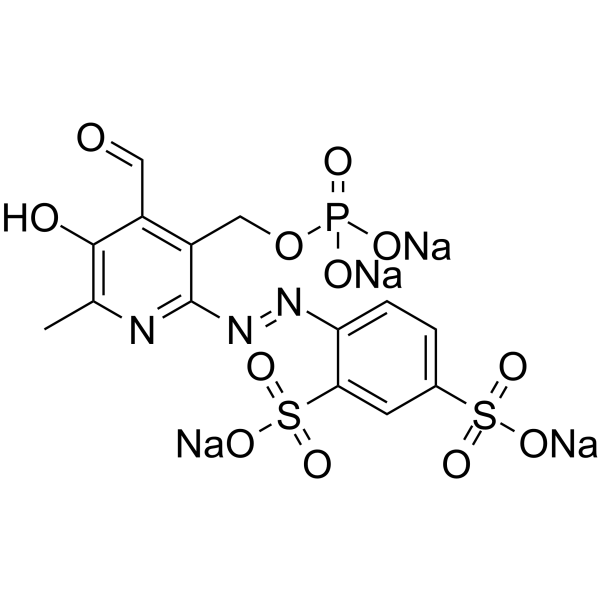
    PPADS tetrasodium
    5+ Cited Publications

    P2X Receptor Na+/Ca2+ Exchanger Neurological Disease
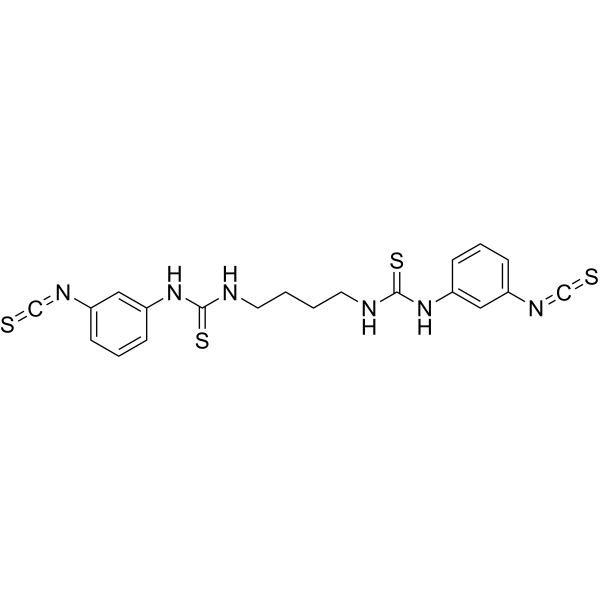
    PPADS tetrasodiuma is a non-selective P2X receptor antagonist. PPADS tetrasodiuma blocks recombinant P2X1, -2, -3, -5 with IC50s ranging from 1 to 2.6 μM. PPADS tetrasodiuma blocks native P2Y2-like (IC50~0.9 mM) and recombinant P2Y4 (IC50~15 mM) receptors. PPADS tetrasodiuma is an inhibitor of the reverse mode of the Na/Ca 2+ exchanger in guinea pig airway smooth muscle .
    PPADS tetrasodium
  • HY-110322A
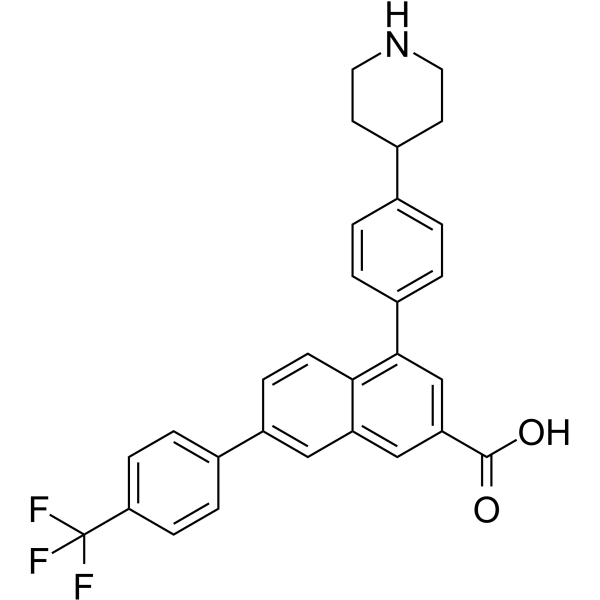
    PPTN
    4 Publications Verification

    P2Y Receptor Inflammation/Immunology
    PPTN, a chemical probe, is a potent, high-affinity, competitive and highly selective P2Y14 receptor antagonist with a KB value of 434 pM. PPTN exhibits no agonist or antagonist effect at the P2Y1, P2Y2, P2Y4, P2Y6, P2Y11, P2Y12, or P2Y13 receptors. Anti-inflammatory and immune activity .
    PPTN
  • HY-110322
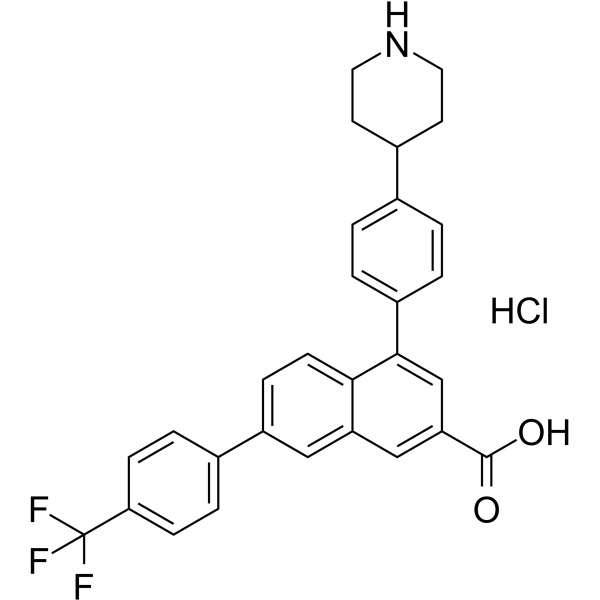
    PPTN hydrochloride
    4 Publications Verification

    P2Y Receptor Inflammation/Immunology
    PPTN hydrochloride is a potent, high-affinity, competitive and highly selective P2Y14 receptor antagonist with a KB value of 434 pM. PPTN hydrochloride exhibits no agonist or antagonist effect at the P2Y1, P2Y2, P2Y4, P2Y6, P2Y11, P2Y12, or P2Y13 receptors. Anti-inflammatory and anti-immune activity .
    PPTN hydrochloride
  • HY-P0199

    Human pancreatic polypeptide

    Neuropeptide Y Receptor Metabolic Disease Endocrinology
    Pancreatic Polypeptide, human is a C-terminally amidated 36 amino acid peptide, which acts as a neuropeptide Y (NPY) Y4/Y5 receptor agonist.
    Pancreatic Polypeptide, human
  • HY-W250153

    P2Y Receptor Cardiovascular Disease
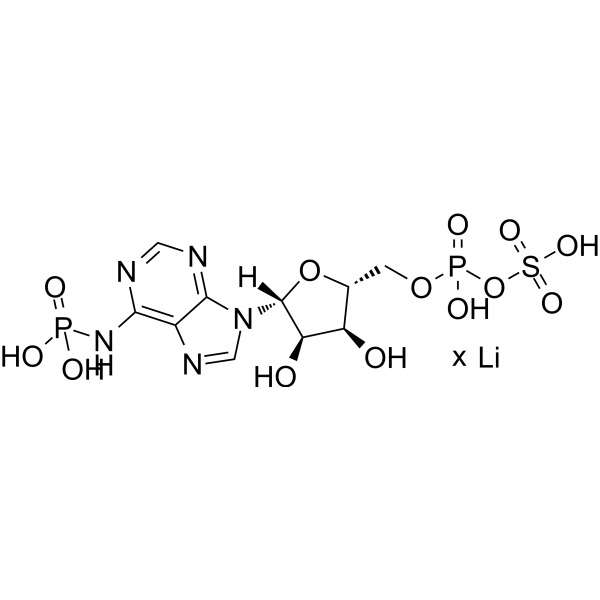
    Adenosine 3'-phosphate 5'-phosphosulfate lithium, an adenine nucleotide derivative, is a selective P2Y1 antagonist with no effect on P2Y2, P2Y4, or P2Y6 receptors. Adenosine 3'-phosphate 5'-phosphosulfate lithium can competitive inhibit ADP-induced platelet aggregation, as well as the ability of ADP to cause shape change and increases in Ca 2+ in platelets, but had no effect on the inhibition of stimulated adenylate cyclase by ADP. Adenosine 3'-phosphate 5'-phosphosulfate lithium is a co-substrate used for the sulfonation of glycans. Adenosine 3'-phosphate 5'-phosphosulfate lithium can be used for Golgi-resident PAP-specific 3'-phosphatase-coupled sulfotransferase assays, which as donor substrate to transfer a sulfonate group .
    Adenosine 3'-phosphate 5'-phosphosulfate lithium
  • HY-134807

    P2X Receptor 5-HT Receptor Autophagy Cancer
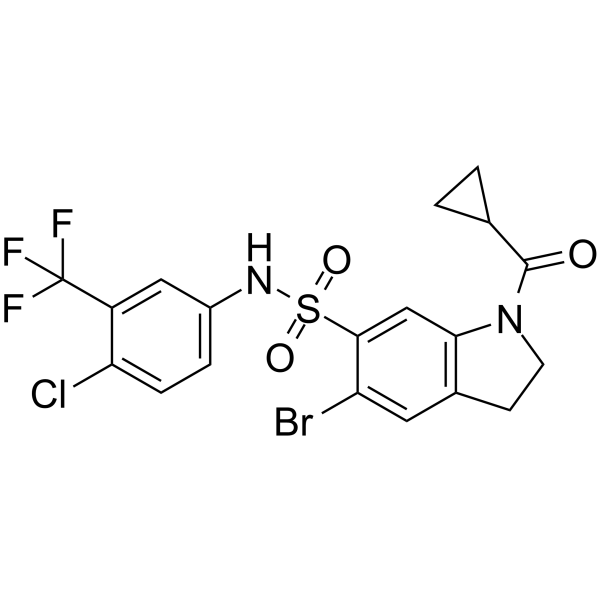
    Indophagolin is a potent, indoline-containing autophagy inhibitor (IC50=140 nM). Indophagolin antagonizes the purinergic receptor P2X4 as well as P2X1 and P2X3 with IC50s of 2.71, 2.40 and 3.49 μM, respectively. Indophagolin also antagonizes the Gq-protein-coupled P2Y4, P2Y6, and P2Y11 receptors (IC50s =3.4~15.4 μM). Indophagolin has a strong antagonistic effect on serotonin receptor 5-HT6 (IC50=1.0 μM) and a moderate effect on receptors 5-HT1B, 5-HT2B, 5-HT4e, and 5-HT7 .
    Indophagolin
  • HY-P1322

    Neuropeptide Y Receptor Neurological Disease
    [D-Trp34]-Neuropeptide Y is a potent and selective neuropeptide Y (NPY) Y5 receptor agonist. [D-Trp34]-Neuropeptide Y is a significantly less potent agonist at the NPY Y1, Y2, Y4, and y6 receptors. [D-Trp34]-Neuropeptide Y markedly increases food intake in rats .
    [D-Trp34]-Neuropeptide Y
  • HY-P1323A

    Neuropeptide Y Receptor Cardiovascular Disease Neurological Disease
    [Leu31,Pro34]-Neuropeptide Y(human,rat) TFA is a specific neuropeptide Y Y1 receptor agonist. [Leu31,Pro34]-Neuropeptide Y(human,rat) TFA slao activates Y4, Y5. [Leu31,Pro34]-Neuropeptide Y(human,rat) TFA can increase blood pressure in anesthetized rats and increases food intake .
    [Leu31,Pro34]-Neuropeptide Y(human,rat,mouse) TFA
  • HY-101308A
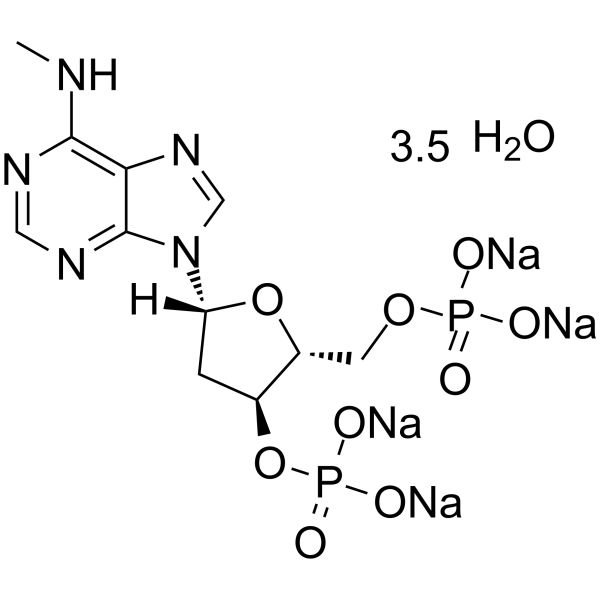
    MRS2179 tetrasodium hydrate
    2 Publications Verification

    P2Y Receptor Cardiovascular Disease
    MRS2179 tetrasodium hydrate is a competitive P2Y1 receptor antagonist, with a Kb of 102 nM and a pA2 of 6.99 for turkey P2Y1 receptor. MRS2179 tetrasodium hydrate is selective for P2Y1 over P2X1 (IC50=1.15 µM), P2X3 (12.9 µM), P2X2, P2X4, P2Y2, P2Y4, and P2Y6 receptors . MRS2179 tetrasodium hydrate inhibits platelet aggregation .
    MRS2179 tetrasodium hydrate
  • HY-164090

    P2Y Receptor Cardiovascular Disease
    Adenosine 3'-phosphate 5'-phosphosulfate, an adenine nucleotide derivative, is a selective P2Y1 antagonist with no effect on P2Y2, P2Y4, or P2Y6 receptors. Adenosine 3'-phosphate 5'-phosphosulfate can competitive inhibit ADP-induced platelet aggregation, as well as the ability of ADP to cause shape change and increases in Ca 2+ in platelets, but had no effect on the inhibition of stimulated adenylate cyclase by ADP. Adenosine 3'-phosphate 5'-phosphosulfate is a co-substrate used for the sulfonation of glycans. Adenosine 3'-phosphate 5'-phosphosulfate can be used for Golgi-resident PAP-specific 3'-phosphatase-coupled sulfotransferase assays, which as donor substrate to transfer a sulfonate group .
    Adenosine 3'-phosphate 5'-phosphosulfate
  • HY-P11291A

    Neuropeptide Y Receptor Metabolic Disease
    NNC0165-1273 (TFA) is the trifluoroacetic acid of NNC0165-1273 (HY-P11291). NNC0165-1273 is an analog of gut hormone peptide YY (PYY3-36). NNC0165-1273 has a superior affinity for Y2 receptor over Y1, Y4, and Y5 receptor. NNC0165-1273 has a potent anorectic effect and significantly reduces nighttime and ghrelin-induced food intake by producing early satiety. NNC0165-1273 inhibits ghrelin-induced cFos expression in NPY/AgRP neurons. NNC0165-1273 can be used for antiobesity therapies research .
    NNC0165-1273 TFA
  • HY-115575

    Neuropeptide Y Receptor Metabolic Disease
    tBPC is a selective positive allosteric modulator for human Y4 receptor (Y4R), which enhances the activation of Y4R in G protein signaling and arrestin3 recruitment .
    tBPC
  • HY-P1323

    Neuropeptide Y Receptor Cardiovascular Disease Neurological Disease
    [Leu31,Pro34]-Neuropeptide Y(human,rat) is a specific neuropeptide Y Y1 receptor agonist. [Leu31,Pro34]-Neuropeptide Y(human,rat) slao activates Y4, Y5. [Leu31,Pro34]-Neuropeptide Y(human,rat) can increase blood pressure in anesthetized rats and increases food intake .
    [Leu31,Pro34]-Neuropeptide Y (human,rat)
  • HY-P4060A

    Neuropeptide Y Receptor Others
    Pancreatic polypeptide TFA is a neuropeptide Y (NPY) Y4/Y5 receptor agonist.
    Pancreatic polypeptide TFA
  • HY-165125

    Neuropeptide Y Receptor Metabolic Disease
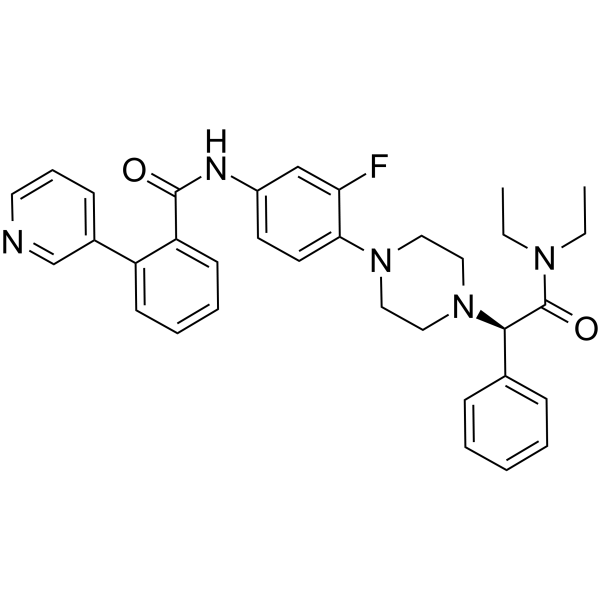
    (S)-VU0637120 is a Y4R antagonist that effectively reduces the binding response of its endogenous ligand, pancreatic polypeptide (PP), on Y4R, with an IC50 value of 2.7 μM. (S)-VU0637120 binds to the allosteric site of Y4R, which is located in the core region of the Y4R transmembrane structure, near the binding pocket of pancreatic polypeptide (PP), with a KB value of 300-400 nM. (S)-VU0637120 holds potential for research in the field of metabolic diseases .
    (S)-VU0637120
  • HY-154840

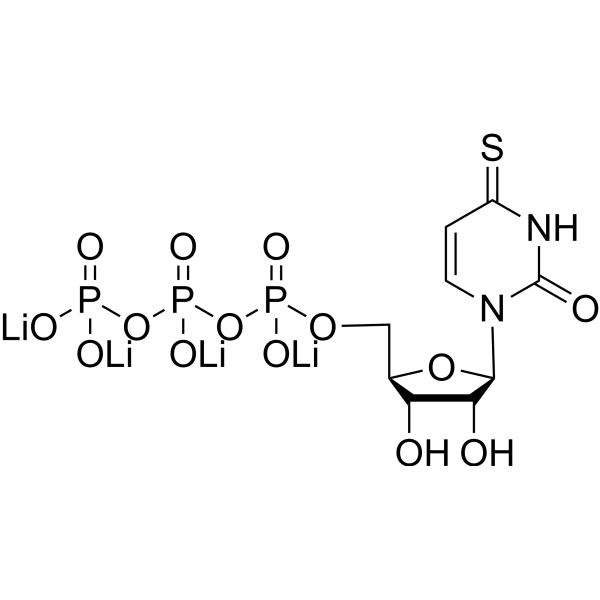
    4-Thio-UTP tetralithium

    P2Y Receptor Inflammation/Immunology
    4-Thiouridine 5′-triphosphate (4-Thio-UTP) tetrasodium (Compound 15) is a UTP analog and potent P2Y2 and P2Y4 agonist with EC50 values of 35 and 350 nM for hP2Y2 and hP2Y4, respectively. 4-Thiouridine 5′-triphosphate tetrasodium can be used in cross-linking experiments and transcriptional complex labeling studies .
    4-Thiouridine 5′-triphosphate tetralithium
  • HY-110089

    P2Y Receptor Inflammation/Immunology
    mrs 4062 (TEA) is a selective P2Y4 receptor agonist with an EC50 of 23 nM. mrs 4062 (TEA) has EC50s of 640 nM and 740 nM for P2Y2 and P2Y6, respectively .
    mrs 4062 TEA
  • HY-107479

    Neuropeptide Y Receptor Neurological Disease
    (R)-JNJ-31020028 is a high affinity, selective brain penetrant neuropeptide Y Y2 receptor antagonist, with pIC50 values of 8.07, 8.22 and 8.21 for human, rat, and mouse Y2 receptor, respectively. (R)-JNJ-31020028 shows >100-fold selective versus human Y1, Y4, and Y5 receptors. (R)-JNJ-31020028 has antidepressant like effects .
    (R)-JNJ-31020028
  • HY-P1321

    1229U91; GW1229

    Neuropeptide Y Receptor Neurological Disease
    GR231118, an analogue of the C-terminus of neuropeptide Y, is a potent , competitive and relative seletive antagonist at human neuropeptide Y Y receptor with a pKi of 10.4. GR231118 a potent agonist at the human neuropeptide Y Y4 receptor (pEC50=8.6; pKi=9.6) and a weak agonist at the human and rat neuropeptide YY2 and Y5 receptors. GR231118 also has high affinity for the mouse neuropeptide Y Y6 receptor (pKi= 8.8) .
    GR231118
  • HY-101308

    P2Y Receptor Cardiovascular Disease
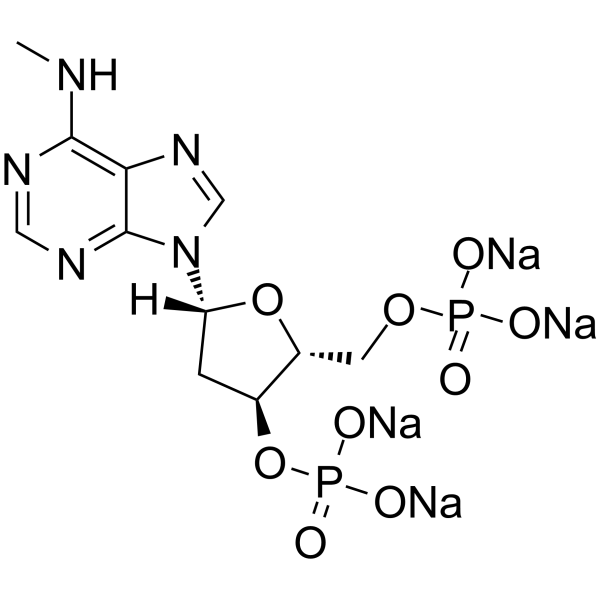
    MRS2179 tetrasodium is a competitive P2Y1 receptor antagonist, with a Kb of 102 nM and a pA2 of 6.99 for turkey P2Y1 receptor. MRS2179 tetrasodium is selective for P2Y1 over P2X1 (IC50=1.15 µM), P2X3 (12.9 µM), P2X2, P2X4, P2Y2, P2Y4, and P2Y6 receptors . MRS2179 tetrasodium inhibits platelet aggregation .
    MRS2179 tetrasodium
  • HY-179133

    P2Y Receptor PKA Raf MEK ERK Inflammation/Immunology
    HDB-1 is a selective inhibitor of the P2Y14 receptor (P2Y14R) with an IC50 of 26 pM. HDB-1 shows no significant inhibition on P2Y1R, P2Y2R, P2Y4R, P2Y6R, and P2Y12R. HDB-1 blocks the activation of hepatic stellate cells (HSC) by inhibiting the PKA/Raf1/MEK/ERK signaling pathway mediated by P2Y14R, thereby alleviating the core pathological process of liver fibrosis. HDB-1 can be used for the study of liver fibrosis .
    HDB-1
  • HY-N9422

    P2Y Receptor Cardiovascular Disease
    Adenosine 3'-phosphate 5'-phosphosulfate triethylamine, an adenine nucleotide derivative, is a selective P2Y1 antagonist with no effect on P2Y2, P2Y4, or P2Y6 receptors. Adenosine 3'-phosphate 5'-phosphosulfate triethylamine can competitive inhibit ADP-induced platelet aggregation, as well as the ability of ADP to cause shape change and increases in Ca 2+ in platelets, but had no effect on the inhibition of stimulated adenylate cyclase by ADP. Adenosine 3'-phosphate 5'-phosphosulfate triethylamine is a co-substrate used for the sulfonation of glycans. Adenosine 3'-phosphate 5'-phosphosulfate triethylamine can be used for Golgi-resident PAP-specific 3'-phosphatase-coupled sulfotransferase assays, which as donor substrate to transfer a sulfonate group .
    Adenosine 3'-phosphate 5'-phosphosulfate triethylamine
  • HY-P1322A

    Neuropeptide Y Receptor Neurological Disease
    [D-Trp34]-Neuropeptide Y TFA is a potent and selective neuropeptide Y (NPY) Y5 receptor agonist. [D-Trp34]-Neuropeptide Y TFA is a significantly less potent agonist at the NPY Y1, Y2, Y4, and y6 receptors. [D-Trp34]-Neuropeptide Y TFA markedly increases food intake in rats .
    [D-Trp34]-Neuropeptide Y TFA
  • HY-107732

    Neuropeptide Y Receptor Neurological Disease
    JNJ-5207787 is a nonpeptidic, selective and penetrate the blood-brain barrier neuropeptide Y Y2 receptor (Y2) antagonist. JNJ-5207787 inhibits the binding of peptide YY (PYY) with pIC50s of 7.0 and 7.1 for human Y2 receptor and rat Y2 receptor, respectively. JNJ-5207787 is >100-fold selective versus human Y1, Y4, and Y5 receptors .
    JNJ-5207787
  • HY-154840A

    4-Thio-UTP tetrasodium

    P2Y Receptor Inflammation/Immunology
    4-Thiouridine 5′-triphosphate (4-Thio-UTP) tetralithium (Compound 15) is a UTP analog and potent P2Y2 and P2Y4 agonist with EC50 values of 35 and 350 nM for hP2Y2 and hP2Y4, respectively. 4-Thiouridine 5′-triphosphate tetralithium can be used in cross-linking experiments and transcriptional complex labeling studies .
    4-Thiouridine 5′-triphosphate tetrasodium
  • HY-108650

    2-Thiouridine 5′-triphosphate tetrasodium

    P2Y Receptor Cancer
    2-Thio-UTP tetrasodium is a potent P2Y2, P2Y4 and P2Y6 agonist, which an be used for the research of cancer .
    2-Thio-UTP tetrasodium
  • HY-110092

    P2Y Receptor Metabolic Disease
    PSB-1114 tetrasodium is a potent, enzymatically stable, and subtype-selective P2Y2 receptor agonist with an EC50 of 134 nM. PSB-1114 tetrasodium displays >50-fold selectivity versus the P2Y4 (EC50 of 9.3 μM) and P2Y6 (EC50 of 7.0 μM) receptors .
    PSB-1114 tetrasodium
  • HY-P11291

    Neuropeptide Y Receptor Endocrinology
    NNC0165-1273 is an analog of gut hormone peptide YY (PYY3-36). NNC0165-1273 has a superior affinity for Y2 receptor over Y1, Y4, and Y5 receptor. NNC0165-1273 has a potent anorectic effect and significantly reduces nighttime and ghrelin-induced food intake by producing early satiety. NNC0165-1273 inhibits ghrelin-induced cFos expression in NPY/AgRP neurons. NNC0165-1273 can be used for antiobesity therapies research .
    NNC0165-1273
  • HY-W250153A

    P2Y Receptor Cardiovascular Disease
    Adenosine 3'-phosphate 5'-phosphosulfate lithium hydrate, an adenine nucleotide derivative, is a selective P2Y1 antagonist with no effect on P2Y2, P2Y4, or P2Y6 receptors. Adenosine 3'-phosphate 5'-phosphosulfate lithium hydrate can competitive inhibit ADP-induced platelet aggregation, as well as the ability of ADP to cause shape change and increases in Ca 2+ in platelets, but had no effect on the inhibition of stimulated adenylate cyclase by ADP. Adenosine 3'-phosphate 5'-phosphosulfate lithium hydrate is a co-substrate used for the sulfonation of glycans. Adenosine 3'-phosphate 5'-phosphosulfate lithium hydrate can be used for Golgi-resident PAP-specific 3'-phosphatase-coupled sulfotransferase assays, which as donor substrate to transfer a sulfonate group .
    Adenosine 3'-phosphate 5'-phosphosulfate lithium, hydrate
  • HY-P3359

    Neuropeptide Y Receptor Others
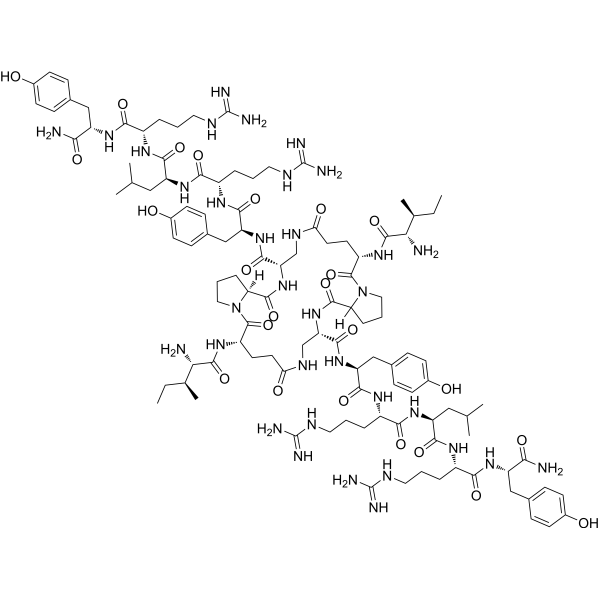
    Y4R agonist-1 is a Y4R agonist with a Ki of 0.048 nM.
    Y4R agonist-1
  • HY-P3360

    Neuropeptide Y Receptor Others
    Y4R agonist-2 is a Y4R agonist with a Ki of 0.033 nM.
    Y4R agonist-2
  • HY-RS09517

    Small Interfering RNA (siRNA) Neuropeptide Y Receptor Others

    NPY4R Human Pre-designed siRNA Set A contains three designed siRNAs for NPY4R gene (Human), as well as a negative control, a positive control, and a FAM-labeled negative control.

    NPY4R Human Pre-designed siRNA Set A
    NPY4R Human Pre-designed siRNA Set A
  • HY-RS09518

    Small Interfering RNA (siRNA) Neuropeptide Y Receptor Others

    Npy4r Mouse Pre-designed siRNA Set A contains three designed siRNAs for Npy4r gene (Mouse), as well as a negative control, a positive control, and a FAM-labeled negative control.

    Npy4r Mouse Pre-designed siRNA Set A
    Npy4r Mouse Pre-designed siRNA Set A
  • HY-149593

    Neuropeptide Y Receptor Metabolic Disease
    VU0506013 is a selective positive allosteric modulator of Y4R (KB = 34.9 nM). VU0506013 can be used in the development of anti-obesity agents targeting Y4R .
    VU0506013
  • HY-137612C

    Rp-Uridine 5'-O-1-thiotriphosphate tetrasodium

    P2Y Receptor Cancer
    Rp-UTP-α-S (Rp-Uridine 5'-O-(1-thiotriphosphate)) tetrasodium is a nucleotide agonist of purinergic P2Y2 and P2Y4 receptors. Rp-UTP-α-S (tetrasodium) can induce inositol phosphate accumulation in P2Y2 or P2Y4 expressing 1321N1 cells with EC50 values of 5.4 and 27 μM .
    Rp-UTP-α-S tetrasodium
  • HY-108651

    UTPγS trisodium

    P2Y Receptor Metabolic Disease
    Uridine-5'-O-(3-thiotriphosphate) trisodium, a stable analogue of UTP, is a potent agonist of the P2Y2 and P2Y4 receptors with increased metabolic stability .
    Uridine-5'-O-3-thiotriphosphate trisodium
  • HY-137612

    Uridine 5'-O-1-thiotriphosphate

    P2Y Receptor Cancer
    Sp-UTP-α-S (Uridine 5-0-1-thiotrirhosphate) is a P2Y2 and P2Y4 receptor activator. Sp-UTP-α-S can be used in cancer research .
    Sp-UTP-α-S
  • HY-137606

    UP4A

    P2X Receptor Cardiovascular Disease
    Uridine adenosine tetraphosphate (UP4A) is an endothelium-derived vasoconstrictor that primarily acts through the P2X1 receptor and possibly through the P2Y2 and P2Y4 receptors. Uridine adenosine tetraphosphate can be used in the study of cardiovascular diseases .
    Uridine adenosine tetraphosphate
  • HY-110092A

    P2Y Receptor Cancer
    PSB-1114 triethylamine is a potent, enzymatically stable, and subtype-selective P2Y2 receptor agonist with an EC50 of 134 nM. PSB-1114 triethylamine displays >50-fold selectivity versus the P2Y4 (EC50 of 9.3 μM) and P2Y6 (EC50 of 7.0 μM) receptors .
    PSB-1114 triethylamine
  • HY-134369

    P2Y Receptor Others Inflammation/Immunology
    Ap4C tetrasodium is a dinucleoside polyphosphate containing purine and pyrimidine base moieties. Ap4C tetrasodium acts as a signaling molecule by binding to specific P2Y receptors, activating P2Y2 and P2Y4 receptors in platelets, leading to platelet aggregation and other cellular responses. Ap4C tetrasodium can be used for research in inflammation and blood coagulation .
    Ap4C tetrasodium
  • HY-13104R

    P2Y Receptor Apoptosis Cardiovascular Disease
    MRS 2578 (Standard) is the analytical standard of MRS 2578. This product is intended for research and analytical applications. MRS 2578 is a selective and potent P2Y6 receptor antagonist with IC50s of 37 nM (human) and 98 nM (rat). MRS 2578 exhibits insignificant activity at P2Y1, P2Y2, P2Y4, and P2Y11 receptors .
    MRS 2578 (Standard)
  • HY-103055

    P2Y Receptor Inflammation/Immunology
    PPTN mesylate is a potent, high-affinity, competitive and highly selective P2Y14 receptor antagonist with a KB value of 434 pM. PPTN mesylate exhibits no agonist or antagonist effect at the P2Y1, P2Y2, P2Y4, P2Y6, P2Y11, P2Y12, or P2Y13 receptors. Anti-inflammatory and immune activity .
    PPTN mesylate
  • HY-137603

    UTPγS

    P2Y Receptor Metabolic Disease
    Uridine-5'-O-(3-thiotriphosphate) (UTPγS), a stable analogue of Uridine triphosphate (UTP) (HY-107372), is a potent agonist of the P2Y2 and P2Y4 receptors with increased metabolic stability. Uridine-5'-O-(3-thiotriphosphate) stimulates inositol phosphate formation in human 1321N1 astrocytoma cells stably expressing the phospholipase C-coupled human P2U-purinoceptor (EC50 = 240 nM) .
    Uridine-5'-O-3-thiotriphosphate
  • HY-137612A

    Uridine 5'-O-1-thiotriphosphate tetrasodium

    P2Y Receptor Cancer
    Sp-UTP-α-S (Uridine 5-0-1-thiotrirhosphate) tetrasodium is a P2Y2 and P2Y4 receptor activator. Sp-UTP-α-S tetrasodium can be used in cancer research .
    Sp-UTP-α-S tetrasodium
  • HY-137603A

    UTPγS tetrasodium

    P2Y Receptor Neurological Disease Metabolic Disease
    Uridine-5'-O-(3-thiotriphosphate) (UTPγS) tetrasodium, a stable analogue of Uridine triphosphate (UTP) (HY-107372), is a potent agonist of the P2Y2 and P2Y4 receptors with increased metabolic stability. Uridine-5'-O-(3-thiotriphosphate) tetrasodium stimulates inositol phosphate formation in human 1321N1 astrocytoma cells stably expressing the phospholipase C-coupled human P2U-purinoceptor (EC50 = 240 nM) .
    Uridine-5'-O-3-thiotriphosphate tetrasodium

Inquiry Online

Your information is safe with us. * Required Fields.

Salutation


Country or Region *

Applicant Name *


Organization Name *

Department *


Email Address *


Product Name *

Cat. No.


Requested quantity *

Phone Number *


Remarks

Inquiry Online

Inquiry Information

Product Name:
Cat. No.:
Quantity:
MCE Japan Authorized Agent: