43 Results for "

amyloid-β aggregation

" in MedChemExpress (MCE) Product Catalog:
Products (43)

43 Results for "amyloid-β aggregation" in MCE Product Catalog:

12
12 Cited Publications
Cat. No.: HY-N0373
CAS No.: 58749-23-8
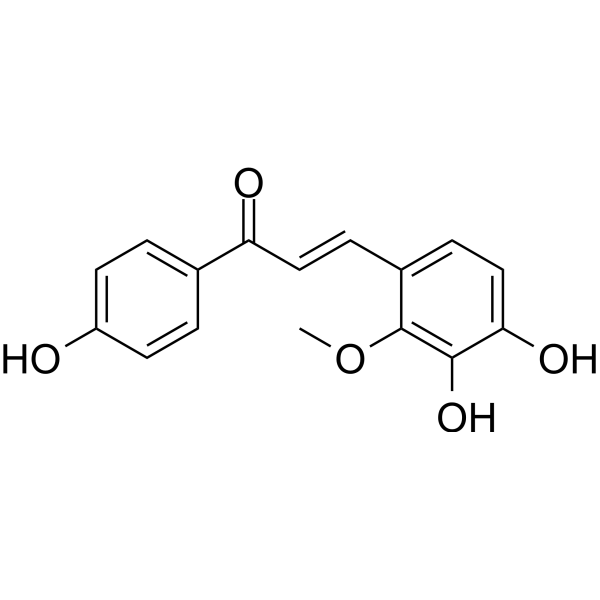
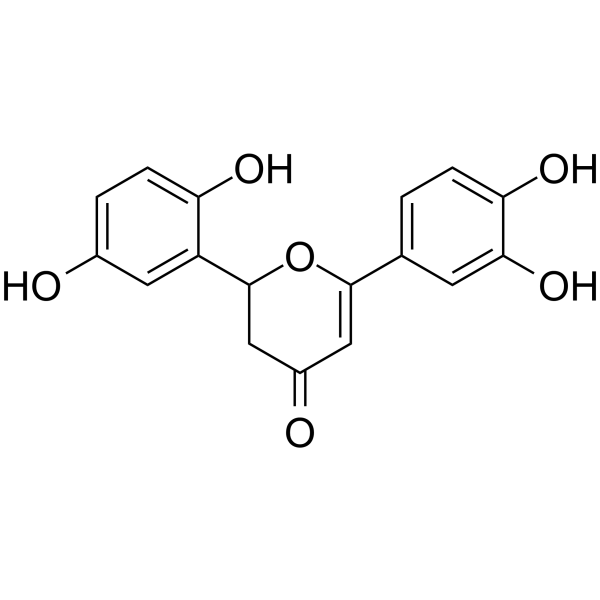
Licochalcone B is an extract from the root of Glycyrrhiza uralensis. Licochalcone B inhibits amyloid β (42) self-aggregation (IC50=2.16 μM) and disaggregate pre-formed Aβ42 fibrils, reduce metal-induced Aβ42 aggregation through chelating metal ionsLicochalcone B inhibits phosphorylation of NF-κB p65 in LPS signaling pathway. Licochalcone B inhibits growth and induces apoptosis of NSCLC cells. Licochalcone B specifically inhibits the NLRP3 inflammasome by disrupting NEK7‐NLRP3 interaction .
loading...
    loading...
Cat. No.: HY-N7046
CAS No.: 142797-34-0
Synonyms: Silibinin B
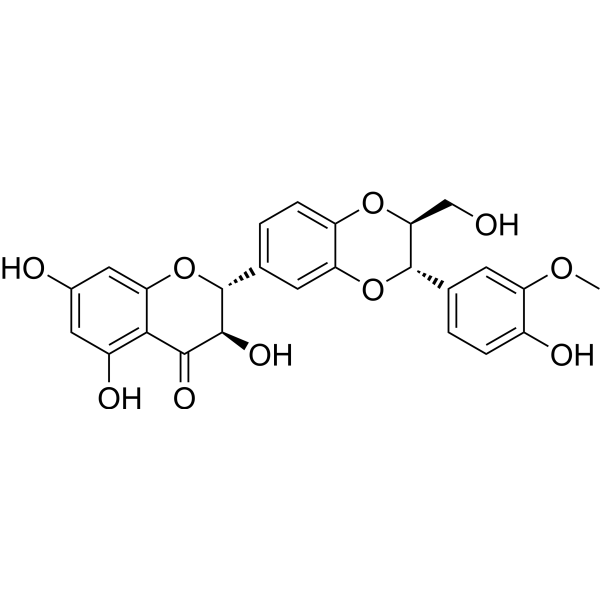
Silybin B (Silibinin B) is an orally active amyloid-β aggregation inhibitor and ATR pathway activator that can cross the blood-brain barrier. Silybin B inhibits Aβ fibril formation and promotes amorphous aggregate formation, while activating the ATR-mediated DNA damage repair pathway and inhibiting JNK/p38 MAPK signaling. Silybin B can reduce Cisplatin (HY-17394)-induced neuronal DNA damage and apoptosis. Silybin B has anti-oxidative stress, cell cycle regulation and neuroprotective activities. Silybin B is mainly used in the study of Alzheimer's disease and Cisplatin chemotherapy-related neurotoxicity .
loading...
    loading...
Cat. No.: HY-W010041
CAS No.: 488-59-5
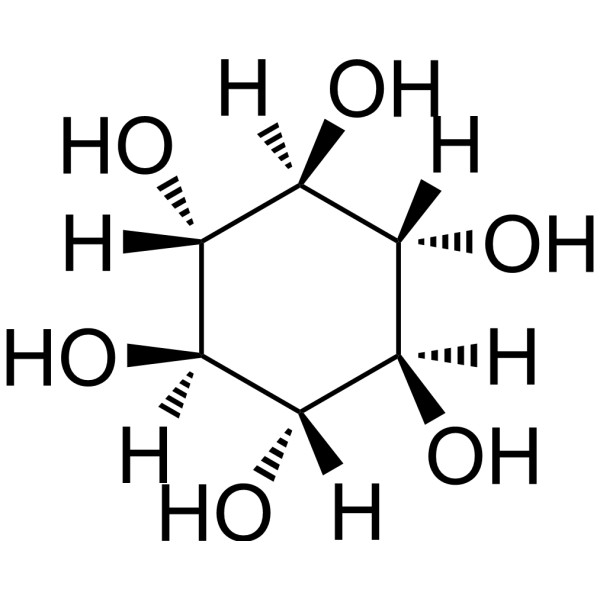
Scyllo-Inositol is an inhibitor that targets the aggregation of misfolded proteins (such as α-synuclein and Amyloid-β), is orally effective, and can cross the blood-brain barrier. Scyllo-Inositol can selectively bind to and stabilize non-toxic oligomers, preventing them from converting into toxic fibers, exerting protein homeostasis regulation and neuroprotective activity. Scyllo-Inositol binds to the hydrophobic region of pathogenic proteins, inhibits protein aggregation, and promotes lysosome- and proteasome-mediated degradation pathways, thereby reducing neurotoxicity. Scyllo-Inositol can be used in the study of neurodegenerative diseases such as Parkinson's disease, Alzheimer's disease, and Huntington's disease .
loading...
    loading...
Cat. No.: HY-125616
CAS No.: 299157-54-3
Purity:  99.69%
Synonyms: Biotinyl-GHK; Bio-GHK
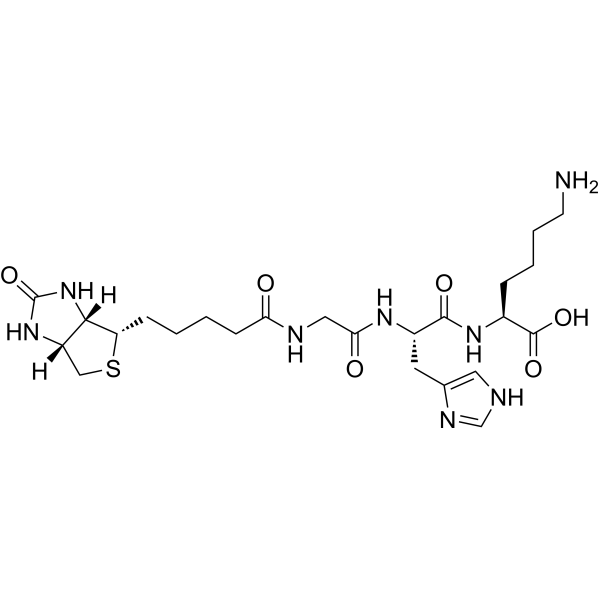
Biotinoyl tripeptide-1 (Biotinyl-GHK) is a biotinylating reagent linked to a GHK (glycyl-L-histidyl-L-lysine) tripeptide. Biotin tripeptide-1 is a bioactive peptide with hair care (improves the appearance and feel of hair) and hair growth effects. Biotinoyl tripeptide-1 has a certain affinity for streptavidin. Biotinoyl tripeptide-1 inhibits the production of ROS and has antioxidant effects. Biotinoyl tripeptide-1 reduces the production of carbonylated amyloid-β (Aβ) and inhibits Aβ aggregation. Biotinoyl tripeptide-1 can be used in the study of neurodegenerative diseases .
loading...
    loading...
Cat. No.: HY-159083
CAS No.: 937012-09-4
Purity:  99.01%
Target:  

Amyloid-β

Research Areas:  

Neurological Disease

DN5355 is a small molecule compound that targets amyloid β protein (Aβ) and hyperphosphorylated tau protein. DN5355 can inhibit the aggregation of Aβ and tau protein and disaggregate the formed Aβ and tau protein fibers. DN5355 can be used in the study of Alzheimer's disease .
loading...
    loading...
Cat. No.: HY-117710B
CAS No.: 1531586-64-7
AD-35 is an orally active, blood-brain barrier-permeable acetylcholinesterase inhibitor with an IC50 of 793 nM. AD-35 inhibits metal-induced amyloid-β aggregation and disassembles preformed amyloid-β aggregates. In rat models of cognitive impairment, AD-35 attenuates Aβ25-35-induced astrocyte activation, TNF-α and IL-1β release, inhibits ERK phosphorylation, and alleviates learning and memory deficits. AD-35 can be used for research on Alzheimer's disease .
loading...
    loading...
Cat. No.: HY-177854
CAS No.: 603113-07-1
Target:  

Amyloid-β

Research Areas:  

Neurological Disease

Aβ aggregation-IN-4 can alleviate the neurotoxicity of amyloid-β protein (Aβ) and significantly reduce the level of oligomeric complexes of Aβ (Aβ-OCs). Aβ aggregation-IN-4 does not decrease the level of amyloid-β protein (Aβ). Aβ aggregation-IN-4 attenuates Aβ oligomerization and prevents oligomer-induced death of primary cortical neurons. Aβ aggregation-IN-4 can be used for the study of Alzheimer’s disease (AD) .
loading...
    loading...
Cat. No.: HY-N2898
CAS No.: 96917-26-9
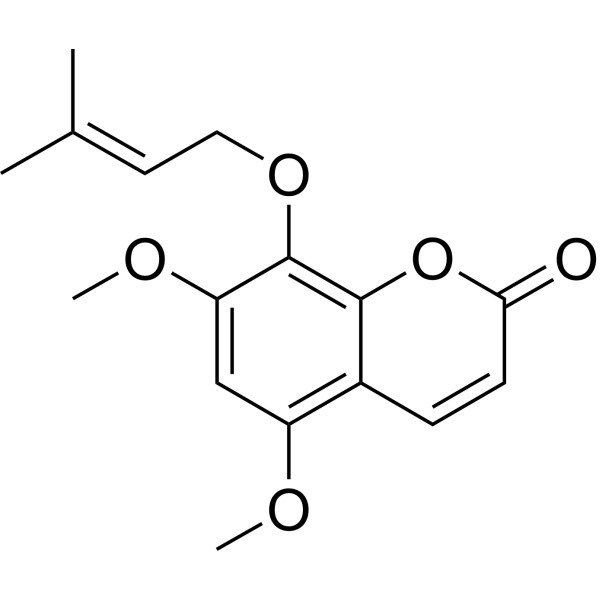
Artanin is a coumarin, has biological activities related to Alzheimer’s disease. Artanin exerts function including AChE inhibitory and AChE- and self-induced amyloid beta (Aβ) aggregation inhibitory activities, with IC50s of 51 μM, 98 μM, and 124 μM, respectively .
loading...
    loading...
Cat. No.: HY-N15572
CAS No.: 84297-49-4
1,2,4,6-Tetra-O-galloyl-β-D-glucose is an acetylcholinesterase inhibitor with an IC50 of 1.5 μM against human targets. 1,2,4,6-Tetra-O-galloyl-β-D-glucose inhibits the aggregation of amyloid-β. 1,2,4,6-Tetra-O-galloyl-β-D-glucose exhibits anti-herpesvirus activity against both HSV-1 and HSV-2 in vitro. 1,2,4,6-Tetra-O-galloyl-β-D-glucose possesses superoxide dismutase-like antioxidant activity, and also inhibits tyrosinase and hyaluronidase. 1,2,4,6-Tetra-O-galloyl-β-D-glucose can be used in studies related to Alzheimer's disease, herpesvirus infection and antioxidation .
loading...
    loading...
Cat. No.: HY-179167
K2V-9 is an AChE and MAO-B inhibitor with IC50 values of 1.72 μM and 0.950 μM against AChE and MAO-B, respectively. K2V-9 inhibits amyloid β self-aggregation and reduces ROS. K2V-9 has neuroprotective effects .
loading...
    loading...
Cat. No.: HY-N8693
CAS No.: 362472-81-9
Withanoside IV is an orally active, blood-brain barrier-permeable withanolide derivative. Withanoside IV specifically binds to the Sudlow I site of HSA, induces secondary structural changes in HSA, and forms stable HSA complexes. Withanoside IV inhibits the enzymatic activity of COX-2. Withanoside IV induces axonal regeneration, peripheral nervous system myelination and increased axonal density in spinal cord tissue, reduces reactive gliosis-related changes, and improves hindlimb motor function. Withanoside IV binds to amyloid-β 1-42 to inhibit its aggregation, induces neurite outgrowth and synapse reconstruction, repairs damaged axons and dendrites, enhances mitochondrial biogenesis, exerts neuroprotective effects via the BDNF and SIRT1 signaling pathways, reduces ROS production and neuronal apoptosis, and ameliorates memory deficits. Withanoside IV inhibits the activity of the SARS-CoV-2 main protease. Withanoside IV can be used in research related to spinal cord injury, Alzheimer's disease, and coronavirus disease 2019 (COVID-19) .
loading...
    loading...
Cat. No.: HY-153431
CAS No.: 1569645-63-1
Target:  

Tau Protein Amyloid-β

Research Areas:  

Neurological Disease

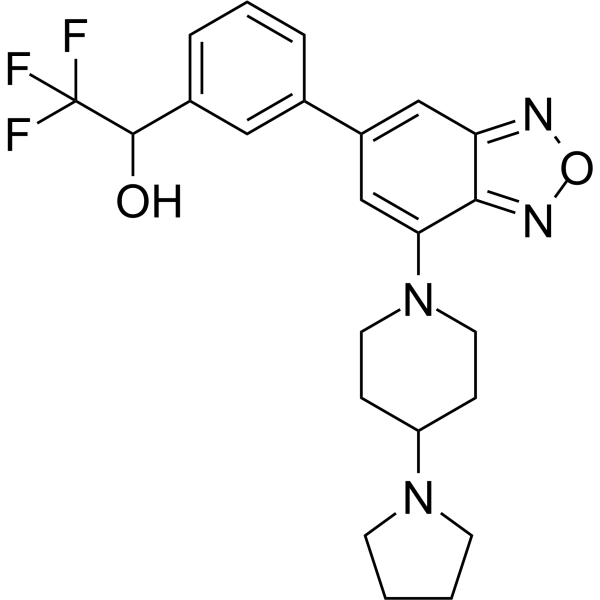
TRV-1387 is a benzofurazan that inhibits the aggregation of tau and amyloid-β .
loading...
    loading...
Cat. No.: HY-163441
Target:  

Cholinesterase (ChE)

Research Areas:  

Neurological Disease

BChE-IN-31 (Compound 14d) is a selective BChE inhibitor with an IC50 of 65 nM. BChE-IN-31 inhibits the self-induced aggregation of neurotoxic amyloid-β (Aβ) peptide .
loading...
    loading...
Cat. No.: HY-163320
CAS No.: 181114-32-9
Research Areas:  

Neurological Disease

AChE/Aβ-IN-5 (compound AV-2) is a bifunctional inhibitor that targets AChE and auto-induced Aβ (Amyloid-β) aggregation. AChE/Aβ-IN-5 can significantly improve scopolamine- and Aβ-induced cognitive impairment in mice .
loading...
    loading...
Cat. No.: HY-P10876
Target:  

Amyloid-β

Research Areas:  

Neurological Disease

mcK6A1 is an inhibitor for the aggregation of amyloid-β (Aβ), that selectively binds to the 16KLVFFA21 segment of Aβ42, forms an extended β-folded structure, and inhibits the formation of Aβ42 oligomers. mcK6A1 can be used in research of Alzheimer's disease and other amyloid-related diseases .
loading...
    loading...
Cat. No.: HY-13325
CAS No.: 71939-12-3
Research Areas:  

Neurological Disease

Aβ aggregation modulator-1 is a stimulator of amyloid-β (Aβ) fibrillogenesis. Aβ aggregation modulator-1 binds hydrophobic residues in Aβ peptides and stabilizes β-sheet-rich protofibrils and fibrils. Aβ aggregation modulator-1 accelerates Aβ polymerization and reduces concentrations of small, toxic Aβ oligomers in heterogeneous aggregation reactions. Aβ aggregation modulator-1 suppresses long-term potentiation (LTP) inhibition by Aβ oligomers in hippocampal brain slices. Aβ aggregation modulator-1 can be used for the study of Alzheimer's disease (AD) .
loading...
    loading...
Cat. No.: HY-147820
CAS No.: 2559709-99-6
Target:  

Amyloid-β

Research Areas:  

Neurological Disease

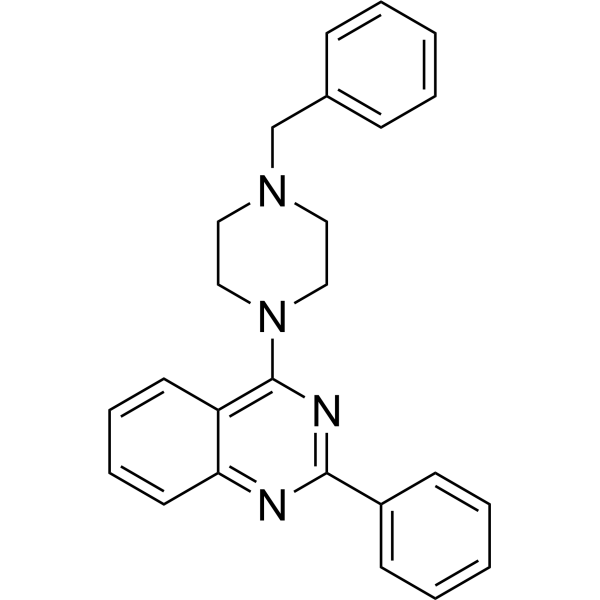
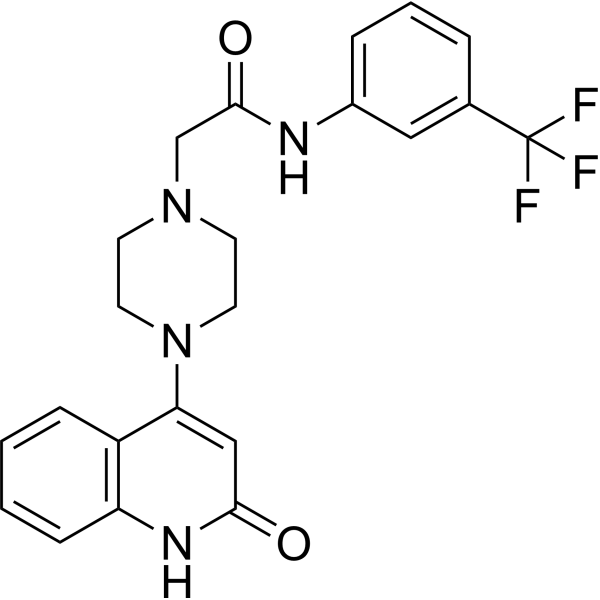
AY1511 is an amyloid β (Aβ) aggregation inhibitor with low cytotoxicity .
loading...
    loading...
Cat. No.: HY-175658
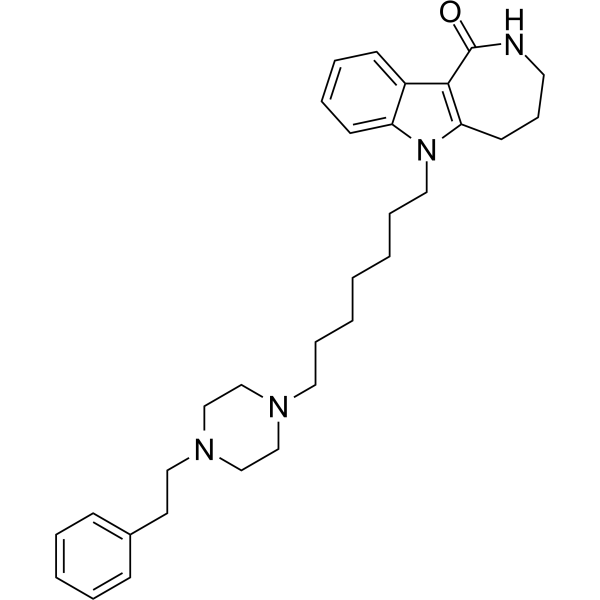
AChE/BChE-IN-29 is an AChE/BChE inhibitor. AChE/BChE-IN-29 exhibits balanced dual cholinesterase inhibitory activity with IC50 values of 2.1 μM for Electrophorus electricus AChE (eeAChE) and 6.3 μM for equine serum butyrylcholinesterase (eqBChE). AChE/BChE-IN-29 effectively inhibits amyloid-β (Aβ42) aggregation and tau protein aggregation in E. coli cell models. AChE/BChE-IN-29 can be used for the study of Alzheimer’s disease (AD) .
loading...
    loading...
Cat. No.: HY-157440
AChE/Aβ-IN-3 (compound AM5) is a dual inhibitor of AChE and Amyloid-β aggregation with IC50<.sub> values of 1.29 and 4.93 μM, respectively. AChE/Aβ-IN-3 has antioxidant properties that scavenge ROS and restore their normal levels. AChE/Aβ-IN-3 can be used in the study of neurological diseases, such as Alzheimer's disease .
loading...
    loading...
Cat. No.: HY-W010041R
CAS No.: 488-59-5
Scyllo-Inositol is an inhibitor that targets the aggregation of misfolded proteins (such as α-synuclein and Amyloid-β), is orally effective, and can cross the blood-brain barrier. Scyllo-Inositol can selectively bind to and stabilize non-toxic oligomers, preventing them from converting into toxic fibers, exerting protein homeostasis regulation and neuroprotective activity. Scyllo-Inositol binds to the hydrophobic region of pathogenic proteins, inhibits protein aggregation, and promotes lysosome- and proteasome-mediated degradation pathways, thereby reducing neurotoxicity. Scyllo-Inositol can be used in the study of neurodegenerative diseases such as Parkinson's disease, Alzheimer's disease, and Huntington's disease .
loading...
    loading...

