1. Search Result
Search Result
Results for "

apoptotic inducer

" in MedChemExpress (MCE) Product Catalog:

345

Inhibitors & Agonists

1

Screening Libraries

5

Fluorescent Dyes

3

Biochemical Assay Reagents

10

Peptides

2

Inhibitory Antibodies

102

Natural
Products

6

Isotope-Labeled Compounds

1

GMP Molecules

Cat. No. Product Name Target Research Areas Chemical Structure
  • HY-B0015
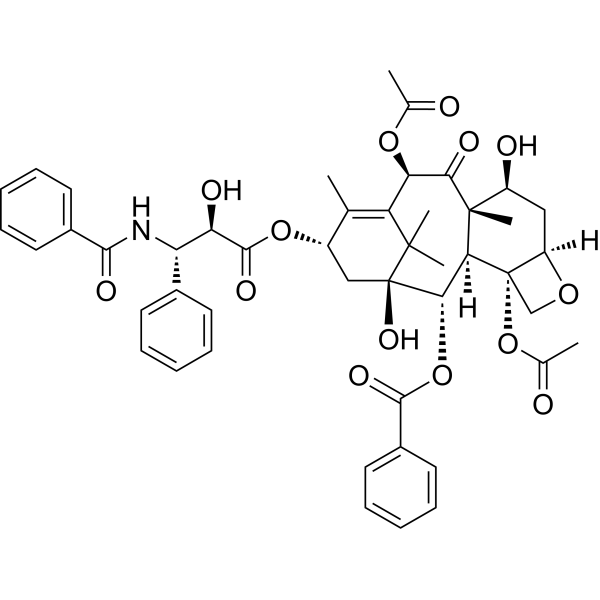
    Paclitaxel
    Maximum Cited Publications
    354 Publications Verification

    Microtubule/Tubulin ADC Payload Apoptosis Autophagy Cardiovascular Disease Cancer
    Paclitaxel is a naturally occurring antineoplastic agent and stabilizes tubulin polymerization. Paclitaxel can cause both mitotic arrest and apoptotic cell death. Paclitaxel also induces autophagy .
    Paclitaxel
  • HY-W050044
    L-Azetidine-2-carboxylic acid
    1 Publications Verification

    Endogenous Metabolite PERK Atg8/LC3 Autophagy Bcl-2 Family Apoptosis Eukaryotic Initiation Factor (eIF) ATF6 Cardiovascular Disease Neurological Disease Metabolic Disease Endocrinology Cancer
    L-Azetidine-2-carboxylic acid is a proline analog. L-Azetidine-2-carboxylic acid upregulates the lipid autophagy marker LC3-II via activation of the PERK pathway. L-Azetidine-2-carboxylic acid increases pro-apoptotic BAX protein. L-Azetidine-2-carboxylic acid induces ATF6 cleavage and upregulates phosphorylated eIF2α levels. L-Azetidine-2-carboxylic acid induces ER stress, inducing protein misfolding and aggregation. L-Azetidine-2-carboxylic acid shows teratogenic, pro-inflammatory and pro-apoptotic effects .
    L-Azetidine-2-carboxylic acid
  • HY-N0848
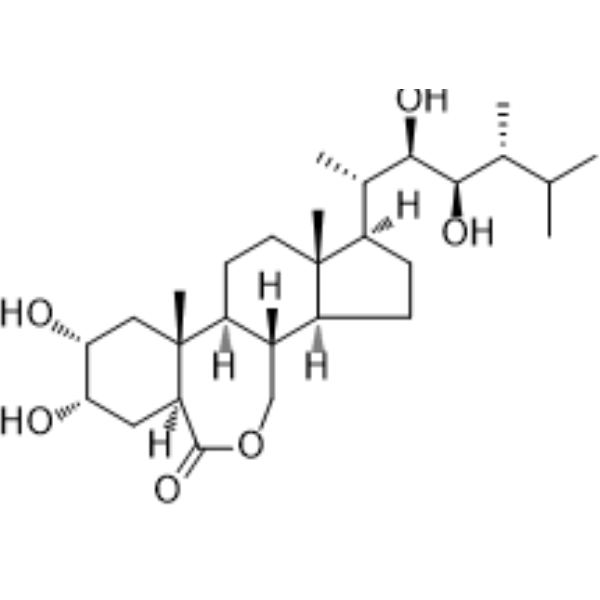
    Epibrassinolide
    15+ Cited Publications

    24-Epibrassinolide; B1105; BP55

    Environmental Pollutants Apoptosis Cancer
    Epibrassinolide (24-Epibrassinolide) is a ubiquitously occurring plant growth hormone which shows great potential to alleviate heavy metals and pesticide stress in plants . Epibrassinolide is a potential apoptotic inducer in various cancer cells without affecting the non-tumor cell growth .
    Epibrassinolide
  • HY-50868
    Bafetinib
    10+ Cited Publications

    INNO-406; NS-187

    Bcr-Abl Src Apoptosis Cancer
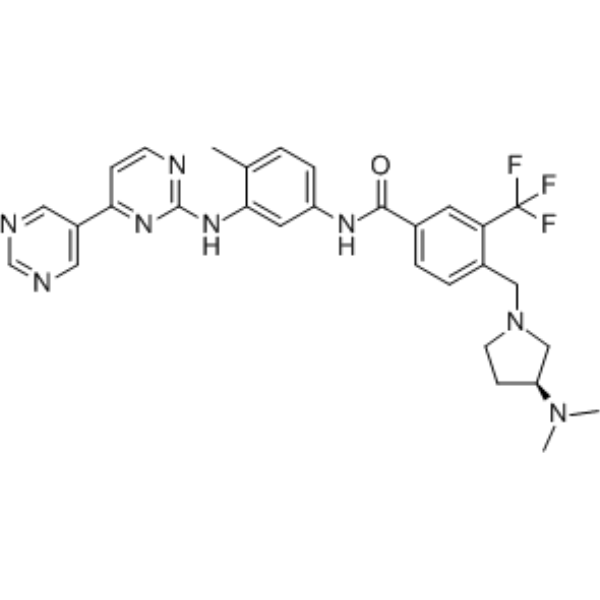
    Bafetinib is an orally active Lyn/Bcr-Abl tyrosine kinase inhibitor. Bafetinib enhances the activity of several pro-apoptotic Bcl-2 homology (BH) 3-pure proteins (Bim, Bad, Bmf, and Bik) through intrinsic apoptotic pathways regulated by the Bcl-2 family, and induces apoptosis of Ph + leukemia cells. Bafetinib has antitumor activity .
    Bafetinib
  • HY-10454
    Delanzomib
    4 Publications Verification

    CEP-18770

    Proteasome NF-κB Apoptosis Cancer
    Delanzomib (CEP-18770) is a potent and orally active chymotrypsin-like activity of the proteasome inhibitor with an IC50 of 3.8 nM. Delanzomib inhibits NF-κB activity, induces cancer cell apoptotic, and has strong antiangiogenic and anti-cancer activities .
    Delanzomib
  • HY-B0015R

    Reference Standards Microtubule/Tubulin ADC Payload Apoptosis Autophagy Cancer
    Paclitaxel (Standard) is the analytical standard of Paclitaxel. This product is intended for research and analytical applications. Paclitaxel is a naturally occurring antineoplastic agent and stabilizes tubulin polymerization. Paclitaxel can cause both mitotic arrest and apoptotic cell death. Paclitaxel also induces autophagy .
    Paclitaxel (Standard)
  • HY-10982
    Amonafide
    4 Publications Verification

    AS1413

    Topoisomerase Cancer
    Amonafide is a topoisomerase II inhibitor and DNA intercalator that induces apoptotic signaling by blocking the binding of Topo II to DNA.
    Amonafide
  • HY-106014

    DNA/RNA Synthesis Nucleoside Antimetabolite/Analog Apoptosis Cancer
    Tezacitabine is a cytostatic and cytotoxic antimetabolite and a nucleoside analogue. Tezacitabine irreversibly inhibits the ribonucleotide reductase and interferes with DNA replication and repair. Tezacitabine effectively induces cells apoptotic. Tezacitabine has the potential for leukemias and solid tumors (carcinomas) treatment .
    Tezacitabine
  • HY-N7072
    Grape seed extract
    2 Publications Verification

    Apoptosis Metabolic Disease Inflammation/Immunology Cancer
    Grape seed extract is a natural product, with anti-inflammatory and anti-proliferative effects. Grape seed extract shows inhibitory activity on the fat-metabolizing enzymes pancreatic lipase and lipoprotein lipase. Grape seed extract induces apoptotic in human colorectal cancer cells .
    Grape seed extract
  • HY-14658A

    (S)-(-)-Thalidomide

    Molecular Glues Ligands for E3 Ligase Autophagy Apoptosis Metabolic Disease Inflammation/Immunology
    (S)-Thalidomide ((S)-(-)-Thalidomide) is the S-enantiomer of Thalidomide. (S)-Thalidomide has immunomodulatory, anti-inflammatory, antiangiogenic and pro-apoptotic effects . (S)-Thalidomide induces teratogenic effects by binding to cereblon (CRBN) .
    (S)-Thalidomide
  • HY-126679

    ATP Synthase Apoptosis Cancer
    Apoptolidin is a polyketide isolated from Nocardiopsis bacteria . Apoptolidin is a selective mitochondrial F1FO ATPase inhibitor. Apoptolidin is an apoptosis inducer and induces apoptotic cell death in cells transformed with the adenovirus type 12 oncogenes including ElA (IC50=10-17 ng/ml) but not in normal cells .
    Apoptolidin
  • HY-B0862

    Environmental Pollutants Herbicide Apoptosis Bcl-2 Family Caspase SOD Mitochondrial Metabolism Others
    Pendimethalin is an orally active herbicide that controls annual grasses and certain broadleaf weeds. Pendimethalin induces Apoptotic cell death through activating ER stress-mediated mitochondrial dysfunction in human umbilical vein endothelial cells .
    Pendimethalin
  • HY-N3031

    Bacterial Apoptosis Bcl-2 Family MDM-2/p53 Glutathione Peroxidase SOD TNF Receptor Interleukin Related Infection Inflammation/Immunology
    Grosvenorine is an orally active flavonoid glycoside found in S. grosvenorii. Grosvenorine exhibits antibacterial, antioxidant and antiinflammation activities. Grosvenorine can induce apoptosis and increases anti-apoptotic Bcl-2 protein expression and reduces pro-apoptotic P53 protein expression in gastric tissues. Grosvenorine enhances mucin/glycoprotein secretion, regulates gastric pH, and reduces gastric lesion incidence.Grosvenorine increases glutathione peroxidase, catalase, and SOD levels, reduces lipid peroxidation (MDA), and lowers TNF-α and IL-6 levels. Grosvenorine can be used for the researches of bacterial infection and Gastric ulcer .
    Grosvenorine
  • HY-100887
    Piperazine Erastin
    5+ Cited Publications

    Ferroptosis Cancer
    Piperazine erastin is an analog of erastin which induces an iron-dependent form of non-apoptotic cell death, termed ferroptosis. Piperazine erastin can be used in cancer research .
    Piperazine Erastin
  • HY-N6801

    Caspase Apoptosis Bcl-2 Family Infection Inflammation/Immunology Cancer
    Nivalenol, a trichothecene mycotoxin that can be produced by Fusarium graminearum, is a fungal metabolite present in agricultural product. Nivalenol modulates apoptotic pathway, cell cycle regulation, Bax, ERK, caspase-3, and poly-ADP-ribose synthase activity in macrophages. Nivalenol inhibits ribosomal peptidyltransferase site, protein synthesis, DNA synthesis, and cell proliferation. Nivalenol induces late-stage apoptotic morphological changes, reduces cellular metabolism, and decreases cell proliferation in erythroleukemia cells. Nivalenol induces lymphocyte apoptosis in murine thymus, spleen, and Peyer's patches. Nivalenol can be used for the research of erythroleukemia .
    Nivalenol
  • HY-129478
    TC11
    2 Publications Verification

    Caspase Bcl-2 Family CDK Cancer
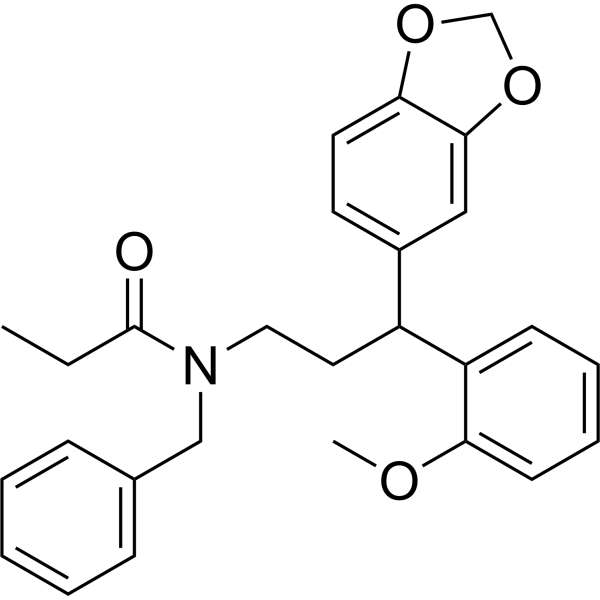
    TC11 is a MCL1 degrader and Caspase-9 and CDK1 activator. TC11 functions as a phenylacetylamide derivative and is structurally related to immunomodulatory active molecules. TC11 induces degradation of MCL1 leading to apoptotic death during prolonged mitotic arrest.
    TC11
  • HY-114803

    Cholinesterase (ChE) Apoptosis Microtubule/Tubulin Neurological Disease Cancer
    Kokusaginine is a furoquinoline alkaloids, which exhibits inhibitory efficacy for acetylcholinesterase (AChE) with an IC50 of 28.2 μM. Kokusaginine exhibits anti-proliferative and apoptotic inducing effects in MCF-7/ADR cells .
    Kokusaginine
  • HY-101991

    PERK Eukaryotic Initiation Factor (eIF) Apoptosis Cancer
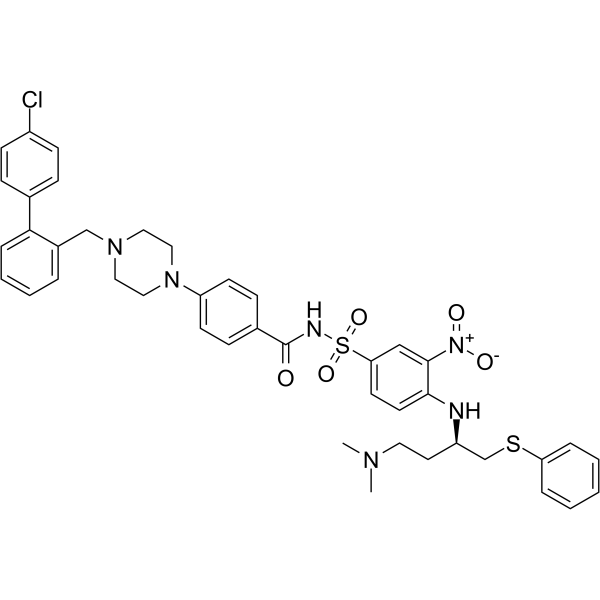
    ML291 is a UPR (unfolded protein response)-inducing sulfonamidebenzamide. ML291 overwhelms the adaptive capacity of the UPR and induces apoptosis in a variety of solid cancer models. ML291 can activate the PERK/eIF2a/CHOP (apoptotic) arm of the UPR and reduce leukemic cell burden .
    ML291
  • HY-13563

    T138067

    Microtubule/Tubulin Apoptosis Cancer
    Batabulin (T138067) is an antitumor agent, which binds covalently and selectively to a subset of the β-tubulin isotypes, thereby disrupting microtubule polymerization. Batabulin affects cell morphology and leads to cell-cycle arrest ultimately induces apoptotic cell death .
    Batabulin
  • HY-N7695

    Apoptosis Autophagy Cancer
    Physalin B, one of the major active steroidal constituents of Cape gooseberry, induces cell cycle arrest and triggers apoptosis in breast cancer cells through modulating p53-dependent apoptotic pathway. Physalin B inhibits the ubiquitin-proteasome pathway and induces incomplete autophagic response in human colon cancer cells in vitro .
    Physalin B
  • HY-129751

    Difurazon hydrochloride

    Bacterial TrxR Apoptosis Infection Cancer
    Nitrovin hydrochloride is an antibacterial growth promoter. Nitrovin hydrochloride induces ROS-mediated non-apoptotic and apoptotic-like cell death by targeting TrxR1. Nitrovin hydrochloride has anticancer activity, with IC50 values of 1.31-6.60 μM for tumor and normal cells .
    Nitrovin hydrochloride
  • HY-129746

    Apoptosis Cancer
    Arylquin 1, a prostate-apoptosis-response-4 (Par-4) secretagogue, targets vimentin to induce Par-4 secretion. Arylquin 1 induces non-apoptotic cell death in cancer cells through the induction of lysosomal membrane permeabilization (LMP) .
    Arylquin 1
  • HY-N5106
    (E)-Flavokawain A
    2 Publications Verification

    Apoptosis Cancer
    (E)-Flavokawain A, a chalcone extracted from Kava, has anticarcinogenic effect. (E)-Flavokawain A induces apoptosis in bladder cancer cells by involvement of bax protein-dependent and mitochondria-dependent apoptotic pathway and suppresses tumor growth in mice .
    (E)-Flavokawain A
  • HY-125305

    Caspase Apoptosis Cancer
    Z-AEVD-FMK is a caspase-10 inhibitor. Z-AEVD-FMK can inhibit the activation of Bid and the release of apoptosis-inducing factor (AIF) in mitochondria in cells, resulting in a significant decrease in the number of apoptotic cells .
    Z-AEVD-FMK
  • HY-N3255

    CXCR STAT Inflammation/Immunology Cancer
    Minecoside is a CXCR4/STAT3 inhibitor with anticancer and anti-inflammatory activity. Minecoside decreases CXCR4 expression and suppresses STAT3 activation, thus to inhibit CXCL 12-induced invasion. Minecoside potently inhibits cancer metastasis and promotes apoptotic progression .
    Minecoside
  • HY-13563A

    T138067 sodium

    Microtubule/Tubulin Apoptosis Cancer
    Batabulin sodium (T138067 sodium) is an antitumor agent, which binds covalently and selectively to a subset of the β-tubulin isotypes, thereby disrupting microtubule polymerization. Batabulin sodium affects cell morphology and leads to cell-cycle arrest ultimately induces apoptotic cell death .
    Batabulin sodium
  • HY-113963

    Apoptosis Cancer
    Ac- IETD- CHO is a potent, reversible inhibitor of granzyme B and caspase-8. Ac- IETD- CHO inhibits Fas-mediated apoptotic cell death, hemorrhage, and liver failure. Ac- IETD- CHO also inhibits cytotoxic T lymphocytes induced cell death .
    Ac-​IETD-​CHO
  • HY-161659

    Apoptosis Bcl-2 Family Caspase Reactive Oxygen Species (ROS) Cancer
    Apoptosis inducer 19 (Compound 7g) is an Apoptosis inducer. Apoptosis inducer 19 elevates expression of pro-apoptotic proteins (Bax and caspase-3) and downregulates anti-apoptotic protein (Bcl-2). Apoptosis inducer 19 upregulates cellular reactive oxygen species (ROS) levels and disrupts mitochondrial membrane potential (MMP). Apoptosis inducer 19 can be used for triple-negative breast cancer (TNBC) research .
    Apoptosis inducer 19
  • HY-124414

    Estrogen Receptor/ERR Drug Metabolite Cancer
    4'-Hydroxytamoxifen is a metabolite of Tamoxifen. 4'-Hydroxytamoxifen shows higher affinity for the ER than Tamoxifen. 4'-Hydroxytamoxifen induces a non-apoptotic cytotoxic effect in human endometrial adenocarcinoma cells .
    4'-Hydroxytamoxifen
  • HY-175020

    Fatty Acid Synthase (FASN) Apoptosis Bcl-2 Family Cancer
    QNX-10 is a fatty acid synthase (FASN) inhibitor (IC50 = 0.7 μM) with anticancer activity. QNX-10 exhibits potent FASN inhibition and cytotoxicity against colorectal and breast cancer cells. QNX-10 induces apoptosis and cell cycle arrest in S phase by upregulating the pro-apoptotic protein Bax and downregulating the anti-apoptotic protein Bcl-xL. QNX-10 can be used to investigate anticancer therapies targeting FASN enzymes .
    QNX-10
  • HY-123950

    MDM-2/p53 Apoptosis Cancer
    MMRi64 disrupts Mdm2-MdmX interactions. MMRi64 downregulates Mdm2 and MdmX in leukemia cells. MMRi64 induces p53 accumulation, and induces the apoptotic arm of the p53 pathway in leukemia/lymphoma cells. MMRi64 can be used for cancer research .
    MMRi64
  • HY-N6801S

    Isotope-Labeled Compounds Caspase Apoptosis Bcl-2 Family Infection Inflammation/Immunology Cancer
    Nivalenol- 13C15 is the 13C labeled Nivalenol (HY-N6801) . Nivalenol, a trichothecene mycotoxin that can be produced by Fusarium graminearum, is a fungal metabolite present in agricultural product. Nivalenol modulates apoptotic pathway, cell cycle regulation, Bax, ERK, caspase-3, and poly-ADP-ribose synthase activity in macrophages. Nivalenol inhibits ribosomal peptidyltransferase site, protein synthesis, DNA synthesis, and cell proliferation. Nivalenol induces late-stage apoptotic morphological changes, reduces cellular metabolism, and decreases cell proliferation in erythroleukemia cells. Nivalenol induces lymphocyte apoptosis in murine thymus, spleen, and Peyer's patches. Nivalenol can be used for the research of erythroleukemia.
    Nivalenol-13C15
  • HY-W768912

    Isotope-Labeled Compounds Microtubule/Tubulin ADC Payload Apoptosis Autophagy Cancer
    Paclitaxel- 13C6 is the 13C-labeled Paclitaxel. Paclitaxel is a naturally occurring antineoplastic agent and stabilizes?tubulin?polymerization. Paclitaxel can cause both mitotic arrest and?apoptotic?cell death. Paclitaxel also induces?autophagy .
    Paclitaxel-13C6
  • HY-117359

    PAI-1 Apoptosis Cancer
    UCD38B hydrochloride is a cell permeant, competitive enzymatic uPA inhibitor with an IC50 value of 7 μM. UCD38B hydrochloride targets intracellular uPA causing mistrafficking of uPA into perinuclear mitochondria, reducing the mitochondrial membrane potential, and followed by the release of apoptotic inducible factor (AIF). UCD38B hydrochloride induces apoptosis .
    UCD38B hydrochloride
  • HY-110073

    Apoptosis Inflammation/Immunology Cancer
    iMAC2 hydrochloride is a potent MAC (mitochondrial apoptosis-induced channel) inhibitor, with an IC50 of 28 nM and a LD50 of 15000 nM. iMAC2 hydrochloride shows anti-apoptotic effect. iMAC2 hydrochloride blocks cytochrome c release .
    iMAC2 hydrochloride
  • HY-W750678

    Apoptosis Caspase Inflammation/Immunology
    9-cis-Canthaxanthin is a carotenoid with pro-apoptotic activity in THP-1 macrophage cells. 9-cis-Canthaxanthin induces cell apoptosis by increasing caspase-3 and caspase-8 activity .
    9-cis-Canthaxanthin
  • HY-124414A

    Estrogen Receptor/ERR Drug Metabolite Cancer
    4'-Hydroxytamoxifen TFA is a salt form of a metabolite of Tamoxifen. 4'-Hydroxytamoxifen TFA has a higher affinity for ER than Tamoxifen. 4'-Hydroxytamoxifen TFA induces non-apoptotic cytotoxicity in human endometrial adenocarcinoma cells .
    4'-Hydroxytamoxifen TFA
  • HY-B0015S1

    Isotope-Labeled Compounds Microtubule/Tubulin ADC Payload Apoptosis Autophagy Cancer
    Paclitaxel-d5 (benzoyloxy) is the deuterium labeled Paclitaxel. Paclitaxel is a naturally occurring antineoplastic agent and stabilizes tubulin polymerization. Paclitaxel can cause both mitotic arrest and apoptotic cell death. Paclitaxel also induces autophagy .
    Paclitaxel-d5 (benzoyloxy)
  • HY-101597

    Apoptosis Cancer
    NVX-207, a Betulinic acid-derived anti-cancer compound, shows anti-tumor activity (mean IC50=3.5 μM) against various human and canine cell lines. NVX-207-induced apoptosis is associated with activation of the intrinsic apoptotic pathway via cleavage of caspases -9, -3, -7 and of PARP .
    NVX-207
  • HY-W504391

    Difurazon

    Bacterial TrxR Apoptosis Infection Cancer
    Nitrovin is an antibacterial growth promoter. Nitrovin induces ROS-mediated non-apoptotic and apoptotic-like cell death by targeting TrxR1. Nitrovin has anticancer activity, with IC50 values of 1.31-6.60 μM for tumor and normal cells .
    Nitrovin
  • HY-N3204

    Apoptosis Neurological Disease
    Neoechinulin A is an isoprenyl indole alkaloid that exhibits scavenging, neurotrophic factor-like, and anti-apoptotic activities. Neoechinulin A induces memory improvements and antidepressant-like effects in mice .
    Neoechinulin A
  • HY-178380

    HDAC Reactive Oxygen Species (ROS) Apoptosis Necroptosis Biochemical Assay Reagents Caspase Bcl-2 Family Inflammation/Immunology Cancer
    HDAC8-IN-14, a curcuminoid derivative, is a selective HDAC8 inhibitor with a Ki of 9 nM. HDAC8-IN-14 induces the production of reactive oxygen species (ROS), disrupts mitochondrial membrane potential, and promotes apoptosis. HDAC8-IN-14 can significantly promote the accumulation of cells in the sub-G0/G1 phase, consistent with apoptotic or necrotic cell death. HDAC8-IN-14 induces upregulation of cytochrome c, cleaved caspase-3, and the pro-apoptotic protein Bak while leaving the anti-apoptotic Bcl-2 levels unaltered. HDAC8-IN-14 can be used for the study of leukemia .
    HDAC8-IN-14
  • HY-174404

    Topoisomerase Apoptosis Bcl-2 Family Cancer
    Topoisomerase II inhibitor 23 is a potent topoisomerase II inhibitor (IC50 = 0.94 μM). Topoisomerase II inhibitor 23 shows high selectivity and exceptional cytotoxic activity in MCF-7, HepG2, and HCT116 cells. Topoisomerase II inhibitor 23 induces cell cycle arrest at the G1 phase, leading to inhibition of cell proliferation. Topoisomerase II inhibitor 2 induces apoptosis by up-regulating the pro-apoptotic Bax level and down-regulating the anti-apoptotic Bcl-2 level.
    Topoisomerase II inhibitor 23
  • HY-161577

    Bcl-2 Family Cancer
    BFC1103 is a small-molecule compound whose primary mechanism of action involves interaction with a specific domain of Bcl-2, particularly its loop domain. This interaction induces a conformational change in Bcl-2, exposing its BH3 (Bcl-2 homology 3) domain, thereby switching Bcl-2's function from anti-apoptotic to pro-apoptotic. The cell death induced by BFC1103 is dependent on the presence of Bax or Bak, both of which are key proteins involved in the intrinsic apoptotic pathway mediated by mitochondria. BFC1103 has successfully inhibited lung metastasis of triple-negative breast cancer in mouse models. It can be utilized in studying the roles of Bcl-2 family proteins in cancer development and how they impact the survival and proliferation of cancer cells .
    BFC1103
  • HY-178132

    Apoptosis NF-κB Cancer
    Apoptosis inducer 46 is an apoptosis inducer. Apoptosis inducer 46 exhibits potent and selective growth inhibitory effects on metastatic triple-negative breast cancer (TNBC) cells. Apoptosis inducer 46 induces G2/M phase cell cycle arrest and apoptotic cell death in MDA-MB-231 cells, and blocks NF-κB nuclear translocation. Apoptosis inducer 46 can be used for the study of TNBC .
    Apoptosis inducer 46
  • HY-N17612

    Apoptosis Caspase Bcl-2 Family Cancer
    Haplophytin-A is a quinoline alkaloid. Haplophytin-A is a potent apoptosis inducer that exerts robust anti-leukemic activity by activating the caspase-8-dependent apoptotic pathway. Haplophytin-A can be used for the research of promyelocytic leukemia .
    Haplophytin-A
  • HY-W050044R

    Reference Standards Endogenous Metabolite PERK Atg8/LC3 Autophagy Bcl-2 Family Apoptosis Eukaryotic Initiation Factor (eIF) ATF6 Cardiovascular Disease Neurological Disease Metabolic Disease Endocrinology Cancer
    L-Azetidine-2-carboxylic acid is a proline analog. L-Azetidine-2-carboxylic acid upregulates the lipid autophagy marker LC3-II via activation of the PERK pathway. L-Azetidine-2-carboxylic acid increases pro-apoptotic BAX protein. L-Azetidine-2-carboxylic acid induces ATF6 cleavage and upregulates phosphorylated eIF2α levels. L-Azetidine-2-carboxylic acid induces ER stress, inducing protein misfolding and aggregation. L-Azetidine-2-carboxylic acid shows teratogenic, pro-inflammatory and pro-apoptotic effects .
    L-Azetidine-2-carboxylic acid (Standard)
  • HY-N2802

    9-Oxo-10,11-dehydroageraphorone

    Apoptosis Caspase Parasite Infection Cancer
    Euptox A (9-Oxo-10, 11-dehydroageraphorone), a cadenine sesquiterpene, is the main toxin that can be isolated from Eupatorium adenophorum. Euptox A induces apoptosis by improving the gene expression level of apoptotic proteases such as caspase-10 in HeLa cells .
    Euptox A
  • HY-N6801R

    Reference Standards Caspase Apoptosis Bcl-2 Family Infection Inflammation/Immunology Cancer
    Nivalenol (Standard) is the analytical standard of Nivalenol (HY-N6801). This product is intended for research and analytical applications. Nivalenol, a trichothecene mycotoxin that can be produced by Fusarium graminearum, is a fungal metabolite present in agricultural product. Nivalenol modulates apoptotic pathway, cell cycle regulation, Bax, ERK, caspase-3, and poly-ADP-ribose synthase activity in macrophages. Nivalenol inhibits ribosomal peptidyltransferase site, protein synthesis, DNA synthesis, and cell proliferation. Nivalenol induces late-stage apoptotic morphological changes, reduces cellular metabolism, and decreases cell proliferation in erythroleukemia cells. Nivalenol induces lymphocyte apoptosis in murine thymus, spleen, and Peyer's patches. Nivalenol can be used for the research of erythroleukemia.
    Nivalenol (Standard)
  • HY-179124

    Apoptosis Caspase Cancer
    Apoptosis inducer 52 is a derivative of flutamide that induces apoptosis in prostate cancer cells. Apoptosis inducer 52 promotes apoptosis by activating both intrinsic and extrinsic apoptotic pathways, without generating reactive oxygen species (ROS). Apoptosis inducer 52 triggers caspase 3/7 activity and the externalization of phosphatidylserine, leading to cell cycle arrest at the G0/G1 phase. Apoptosis inducer 52 can be used for the research of androgen receptor (AR)-dependent and -independent prostate cancers and leukemia .
    Apoptosis inducer 52

Inquiry Online

Your information is safe with us. * Required Fields.

Salutation


Country or Region *

Applicant Name *


Organization Name *

Department *


Email Address *


Product Name *

Cat. No.


Requested quantity *

Phone Number *


Remarks

Inquiry Online

Inquiry Information

Product Name:
Cat. No.:
Quantity:
MCE Japan Authorized Agent:

