

53 Results for "

beta-sheet

" in MedChemExpress (MCE) Product Catalog:
Products (53)

53 Results for "beta-sheet" in MCE Product Catalog:

1
1 Cited Publications
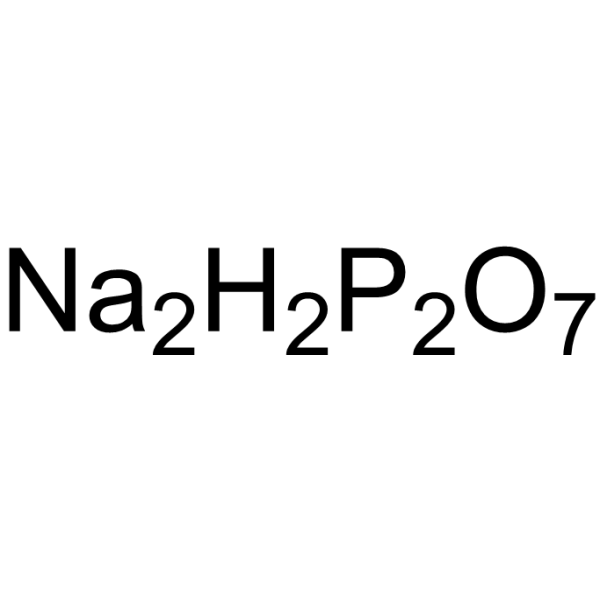
Cat. No.: HY-W105970
CAS No.: 7758-16-9
Synonyms: Disodium pyrophosphate; Sodium acid pyrophosphate; SAPP
Sodium pyrophosphate (Disodium pyrophosphate) is an orally active reverse transcriptase ribonuclease H inhibitor. Sodium pyrophosphate forms soluble complexes with iron from ferric pyrophosphate to promote intestinal iron absorption. Sodium pyrophosphate increases the β-sheet content of oxidatively damaged myofibrillar protein gels and enhances the gastric digestibility and antioxidant activity of their digestion products. Sodium pyrophosphate prevents the degradation of RNA-DNA hybrids, inhibits antisense complementary DNA synthesis, induces phage DNA leakage, and causes random mutations in temperate phages .
loading...
    loading...
1
1 Cited Publications
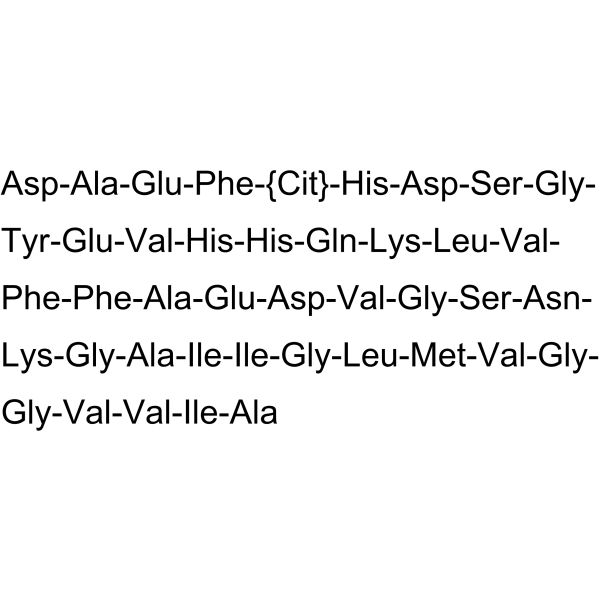
Cat. No.: HY-P5905
Synonyms: Citrullinated Aβ (1-42); Citrullinated Aβ42
Target:  

Amyloid-β

Research Areas:  

Neurological Disease

Citrullinated amyloid-β (1-42) peptide (human) (Citrullinated Aβ (1-42)) is a modified form of β-Amyloid (1-42) (HY-P1363) with a citrullination at the Arg5 site. Compared to the unmodified β-Amyloid (1-42), its formation of soluble low-molecular-weight oligomers is enhanced, the rate of fibril formation is reduced, and like unmodified Aβ42, it forms protofibrils comprised of parallel β-sheets .
loading...
    loading...
1
1 Cited Publications
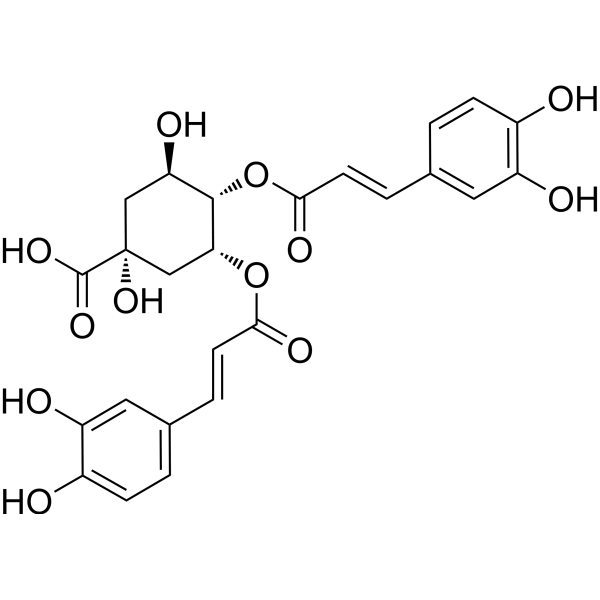
Cat. No.: HY-N11077
CAS No.: 89886-30-6
Synonyms: 4,5-di-O-CQA
4,5-Di-O-caffeoylquinic acid (4,5-di-O-CQA) is a natural product with multiple activities including anti-inflammatory, antioxidant, and antibacterial properties. 4,5-Di-O-caffeoylquinic acid induces intracellular Ca 2+ influx, and inhibits hypoxia-induced COX-2 expression and cell migration via the TRPV1-mediated pathway. 4,5-Di-O-caffeoylquinic acid scavenges DPPH free radicals, inhibits Cu 2+-mediated LDL oxidation, and reduces the production of TBARS. 4,5-Di-O-caffeoylquinic acid promotes intracellular ATP production, inhibits Aβ42 aggregation and β-sheet conversion, and protects neuroblastoma cells. 4,5-Di-O-caffeoylquinic acid inhibits the growth of Bacillus shigae. 4,5-Di-O-caffeoylquinic acid can be used in studies related to atherosclerosis, Alzheimer's disease, and bacterial infections .
loading...
    loading...
Cat. No.: HY-P10294
CAS No.: 593266-60-5
Target:  

Amyloid-β

Research Areas:  

Others

Oligopeptide P11-4 is an α-peptide that can be self-assembled into β-sheet amyloids with a hydrogel appearance at low pH. Oligopeptide P11-4 can be used in biomimetic mineralization, enamel regeneration and oral care agent .
loading...
    loading...
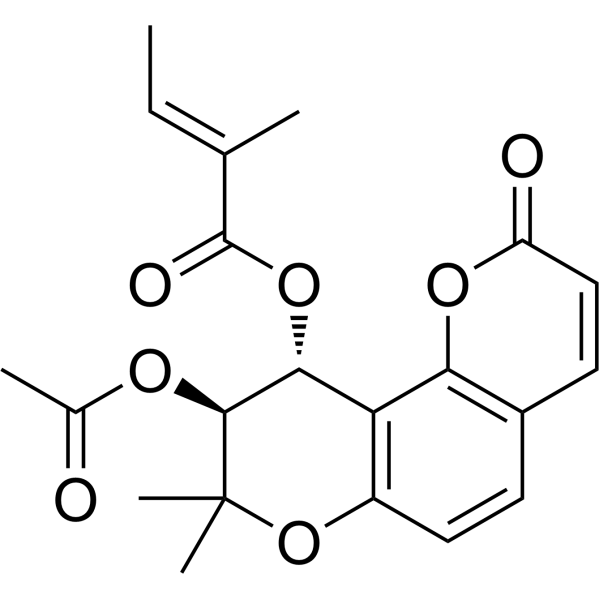
Cat. No.: HY-122958
CAS No.: 130464-57-2
Purity:  95.07%
Peucedanocoumarin III is an α-synuclein fiber depolymerizer with blood-brain barrier permeability. Peucedanocoumarin III depolymerizes β-sheet aggregate structures, promotes aggregate clearance, inhibits β23-induced cytotoxicity, blocks the formation of Lewy body-like inclusions, and prevents dopaminergic neuron loss. Peucedanocoumarin III can be used in studies related to Parkinson's disease .
loading...
    loading...
Cat. No.: HY-P99899
CAS No.: 2052591-32-7
Synonyms: PR-1498487

Target:  

ADC Antibodies

Research Areas:  

Cancer

Samrotamab (PR-1498487) is a humanized IgG1-κ chimeric monoclonal antibody targeting LRRC15, with a Kd of 5.42 nM for human LRRC15. Samrotamab can be used to synthesize antibody-drug conjugates (ADC). Samrotamab disrupts the LRRC15-SCG5 signaling module, binds to a membrane-proximal conformational epitope within the C-terminal leucine-rich repeat region of LRRC15, and binds to the lateral edge of the LRR solenoid while leaving the canonical concave β-sheet surface fully exposed. Samrotamab reduces the viability of bladder cancer cells, inhibits clonogenic growth, impairs cell migration, and compromises cell invasion. Samrotamab induces compensatory upregulation of LRRC15 transcripts while suppressing the expression of SCG5 mRNA. Samrotamab is applicable to research related to urothelial carcinoma, sarcoma, osteosarcoma, and undifferentiated pleomorphic sarcoma .
loading...
    loading...
Cat. No.: HY-P1047
CAS No.: 182912-74-9
Synonyms: [Pro18, Asp21] β-Amyloid (17-21)
Target:  

Amyloid-β

Research Areas:  

Neurological Disease

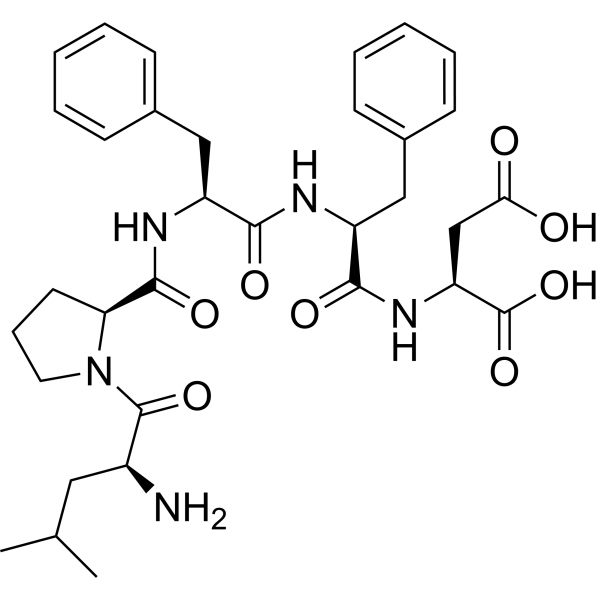
β-Sheet Breaker Peptide iAβ5 ([Pro18, Asp21] β-Amyloid (17-21)) is an amyloid fibril disaggregation inducer. β-Sheet Breaker Peptide iAβ5 inhibits fibril formation and disaggregates preformed fibrils by binding to the central hydrophobic region of Aβ (LVFFA) and disrupting the interactions between Aβ monomers/oligomers. β-Sheet Breaker Peptide iAβ5 reproducibly induces the disaggregation of fibrillar amyloid deposits in rat brain. β-Sheet Breaker Peptide iAβ5 prevents and reverses Aβ-induced neuronal shrinkage, reduces IL-1β-positive microglia surrounding Aβ deposits, and decreases the size of cerebral amyloid plaques. β-Sheet Breaker Peptide iAβ5 labeled with HBA enables blue quantitative detection under acidic conditions. β-Sheet Breaker Peptide iAβ5 is used in research related to Alzheimer's disease .
loading...
    loading...
Cat. No.: HY-P3688A
Synonyms: Aβ (1-38) TFA; Aβ38 TFA
Target:  

Amyloid-β

Research Areas:  

Neurological Disease

β-Amyloid (1-38) (Aβ (1-38)) TFA is a β-Amyloid (Aβ) peptide. β-Amyloid (1-38) TFA interferes with the conversion of Aβ(1-42) to a β-sheet-rich aggregate. β-Amyloid (1-38)TFA reverses the negative impact of Aβ(1-42) on long-term potentiation in acute hippocampal slices and on membrane conductance in primary neurons, and mitigates an Aβ(1-42) phenotype in Caenorhabditis elegans .
loading...
    loading...
Cat. No.: HY-137557
CAS No.: 1565797-16-1
Synonyms: APN1607; PM-PBB3
Target:  

Tau Protein

Research Areas:  

Neurological Disease

Florzolotau (APN1607) is a positron emission tomography (PET) ligand that can be used for the detection of Alzheimer's disease (AD) and other tau proteinopathies. Its binding sites are located in the β-sheet of paired helical filaments (PHFs) and straight filaments (SFs) of tau protein, as well as in the C-shaped cavity of SFs. In addition, APN-1607 binds to intraneuronal inclusions in Alzheimer's disease (AD), primary age-related tauopathy (PART) and posterior cortical atrophy (PCA). Florzolotau shows promise for PET imaging studies of neurological disorders, particularly tau proteinopathies .
loading...
    loading...
Cat. No.: HY-P1889
CAS No.: 721885-31-0
Target:  

Bcl-2 Family Amyloid-β

Research Areas:  

Neurological Disease

Bim BH3, Peptide IV is an Aβ42-binding peptide and the pro-apoptotic BH3 domain of the BIM protein. Bim BH3, Peptide IV binds Aβ42 with a Kd of 7.1 μM. Bim BH3, Peptide IV modulates Aβ42 structure, fibrillization pathways, aggregate morphology, and membrane interactions, inhibiting fibril formation while enhancing protofibril assembly. Bim BH3, Peptide IV promotes Aβ42 β-sheet formation and accelerates aggregation. Bim BH3, Peptide IV enhances Aβ42 membrane internalization and bilayer stiffening. Bim BH3, Peptide IV induces neuronal cell death by enhancing BH3-induced membrane interactions of Aβ42 prefibrillar species. Bim BH3, Peptide IV can be used for research on Alzheimer's disease .
loading...
    loading...
Cat. No.: HY-P5189A
Research Areas:  

Others

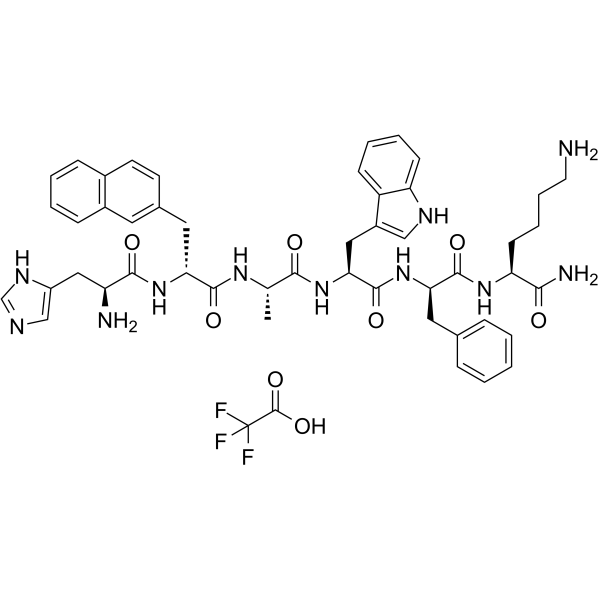
His-D-beta-Nal-Ala-Trp-D-Phe-Lys-NH2 TFA, is a growth hormone releasing peptide, as well as a metabolite of GHRP-1. GHRP-1, or Ala-His-D-beta Nal-Ala-Trp-D-Phe-Lys-NH2, has the effect of promoting the release of growth hormone (GH). GHRP-1 increases GH release and increases [Ca2+]i levels in static monolayer cells of rat pituitary gland, but does not affect cAMP levels .
loading...
    loading...
Cat. No.: HY-N8671
CAS No.: 256520-90-8
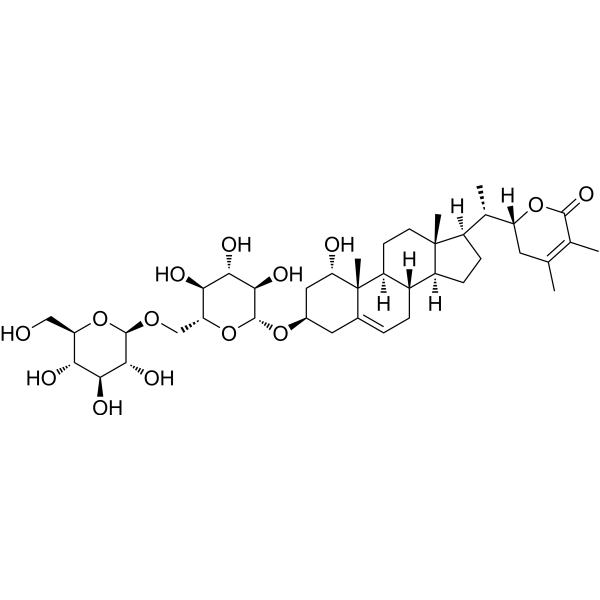
Withanoside V is a blood-brain barrier-permeable withanolide derivative . Withanoside V binds strongly to Sudlow I (domain IIA) of human serum albumin (HSA) to form a stable complex and alter the secondary structure of albumin, thereby increasing helix content and reducing β-sheet and random coil. Withanoside V binds to Aβ (1-42) to block the interaction between monomers and subsequent aggregation. Withanoside V inhibits the viability of neuroblastoma cells, reduces the number of apoptotic cells induced by Aβ (1-42), and decreases ROS production. Withanoside V inhibits SARS-CoV-2 Mpro. Withanoside V can be used for research on Alzheimer's disease and coronavirus disease 2019 .
loading...
    loading...
Cat. No.: HY-114508
CAS No.: 1083-30-3
Purity:  99.87%
Synonyms: 3-Phenylpropiophenone; β-Phenylpropiophenone
Target:  

Amyloid-β

Research Areas:  

Neurological Disease

Dihydrochalcone (3-Phenylpropiophenone) is a Aβ aggregation inhibitor. Dihydrochalcone destabilizes Aβ17-42 protofibrils by disrupting the β-sheet of β1 region. Dihydrochalcone destabilizes both U-shaped Aβ40/Aβ42 protofibrils and S-shaped Aβ42 protofibrils by binding to the protofibril cavity. Dihydrochalcone is the main component of daemonorops draco tree .
loading...
    loading...
Cat. No.: HY-P10578
CAS No.: 906357-94-6
Target:  

Amyloid-β

Research Areas:  

Neurological Disease

SEN 304 is an Aβ aggregation inhibitor. SEN 304 can bind directly to Aβ(1-42), delay β-sheet formation and promote aggregation of toxic oligomers into a nontoxic form. SEN 304 can be used for research of Alzheimer’s disease .
loading...
    loading...
Cat. No.: HY-P2399
CAS No.: 957780-56-2
Research Areas:  

Others

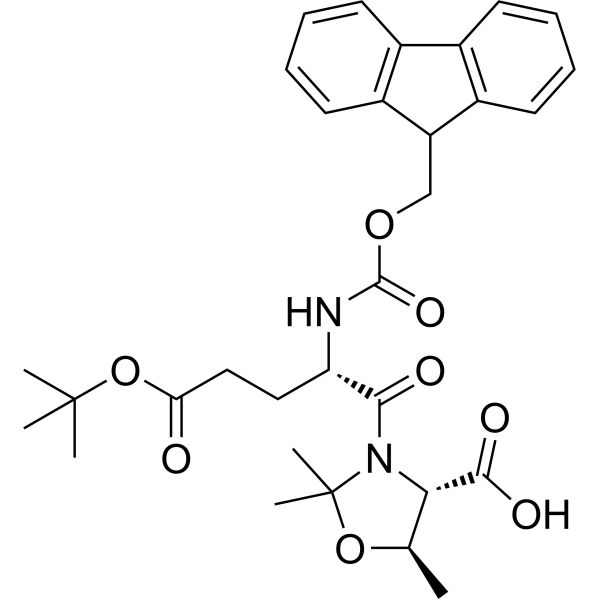
Fmoc-Glu(OtBu)-Thr(psi(Me,Me)pro)-OH is a dipeptide building block containing a pseudoproline, which is used in studies related to Fmoc solid-phase peptide synthesis. Fmoc-Glu(OtBu)-Thr(psi(Me,Me)pro)-OH inhibits premature β-sheet aggregation during solid-phase peptide synthesis .
loading...
    loading...
Cat. No.: HY-W835959
CAS No.: 2361566-66-5
Target:  

Tau Protein

Research Areas:  

Neurological Disease

ACI-3024 is an an orally active and highly selective Tau protein aggregation inhibitor. ACI-3024 decrease the β-sheet content and seeding properties of pathological Tau from different Tauopathies, leading to a significant rescue of the Tau-induced neurodegeneration and neuroinflammation in a cellular model. ACI-3024 is promising for research of neurodegenerative diseases .
loading...
    loading...
Cat. No.: HY-141661
CAS No.: 2252162-81-3
Purity:  98.10%
Target:  

Amyloid-β

Research Areas:  

Neurological Disease

Aβ/tau aggregation-IN-1 is a potent Aβ1-42 β-sheets formation and tau aggregation inhibitor. The KD values of Aβ/tau aggregation-IN-1 with Aβ1-42 and tau are 160 μM and 337 μM, respectively. Aβ/tau aggregation-IN-1 can permeate the blood-brain barrier .
loading...
    loading...
Cat. No.: HY-P10701
CAS No.: 581799-39-5
Q11 peptide is a β-sheet-forming peptide that plays an important role in self-assembly and targeted applications. As a scaffold peptide, Q11 peptide can display immunogenic epitopes and is widely used in peptide-based immune vaccine research. Additionally, Q11 peptide can be conjugated with MUC1 glycopeptides for the study of self-assembling, adjuvant-free MUC1 glycopeptide vaccines. Q11 peptide holds great potential for research in the field of cancer immunology .
loading...
    loading...
Cat. No.: HY-P3688
CAS No.: 131438-74-9
Synonyms: Aβ (1-38); Aβ38
Target:  

Amyloid-β

Research Areas:  

Neurological Disease

β-Amyloid (1-38) (Aβ (1-38)) is a β-Amyloid (Aβ) peptide. β-Amyloid (1-38) interferes with the conversion of Aβ(1-42) to a β-sheet-rich aggregate. β-Amyloid (1-38) reverses the negative impact of Aβ(1-42) on long-term potentiation in acute hippocampal slices and on membrane conductance in primary neurons, and mitigates an Aβ(1-42) phenotype in Caenorhabditis elegans .
loading...
    loading...
Cat. No.: HY-P6299
CAS No.: 944792-75-0
Research Areas:  

Neurological Disease Cancer

MAX8 is a synthetic β-hairpin peptide that folds rapidly and self-assembles into a β-sheet-rich fibrous hydrogel network via non-covalent crosslinking. MAX8 hydrogel exhibits excellent shear-thinning and self-healing properties, enabling precise delivery via syringe and maintaining local retention after implantation. MAX8 hydrogel can uniformly encapsulate cells while preserving their viability and morphology, and protect growth factors (e.g., NGF) and chemotherapeutic drugs from degradation. MAX8 is applicable for spinal cord injury repair, medulloblastoma treatment, and three-dimensional high-throughput drug screening .
loading...
    loading...

