
1. Search Result
Search Result
Results for "

brain disorders

" in MedChemExpress (MCE) Product Catalog:

263

Inhibitors & Agonists

4

Screening Libraries

3

Biochemical Assay Reagents

6

Peptides

2

Inhibitory Antibodies

21

Natural
Products

22

Isotope-Labeled Compounds

1

Click Chemistry

1

Oligonucleotides

Cat. No. Product Name Target Research Areas Chemical Structure
  • HY-12495A
    ISRIB
    25+ Cited Publications

    Biochemical Assay Reagents Eukaryotic Initiation Factor (eIF) Neurological Disease
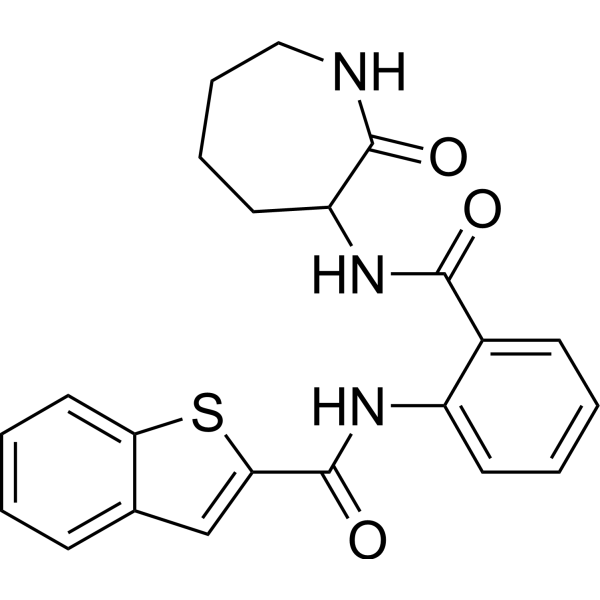
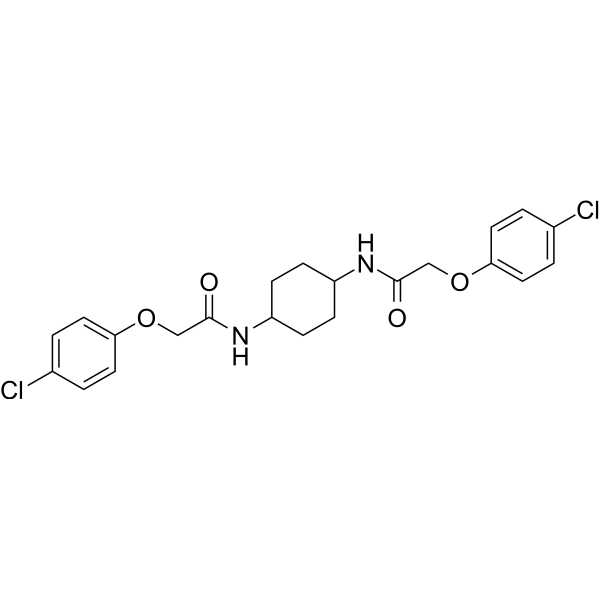
    ISRIB is a brain-penetrant inhibitor of integrated stress response (ISR). Persistent activation of the ISR has been linked to the development of several neurological disorders as ISR represses translation through inhibiting eIF2B. ISRIB inhibits the ISR by promoting the nucleotide exchange activity of eIF2B and recovering the translation, and thus can be used for neurological disorders research .
    ISRIB
  • HY-B1395
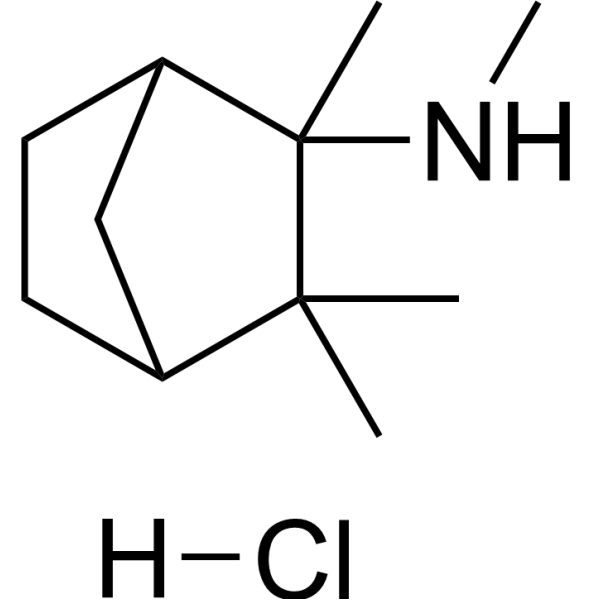
    Mecamylamine hydrochloride
    5 Publications Verification

    nAChR Histamine Receptor Cardiovascular Disease Neurological Disease
    Mecamylamine hydrochloride is an orally active, nonselective, noncompetitive nAChR antagonist. Mecamylamine hydrochloride is also a ganglionic blocker. Mecamylamine hydrochloride can across the blood-brain barrier. Mecamylamine hydrochloride can be used in the research of neuropsychiatric disorders, hypertension, antidepressant area .
    Mecamylamine hydrochloride
  • HY-17416
    Guanfacine hydrochloride
    3 Publications Verification

    Adrenergic Receptor Cardiovascular Disease Infection Neurological Disease Metabolic Disease
    Guanfacine hydrochloride is an orally active and blood-brain barrier permeability noradrenergic α2A agonist and has high selective for the α2A receptor subtype. Guanfacine has effects in producing hypotension and sedation. Guanfacine can be used for the research of a variety of prefrontal cortex (PFC) cognitive disorders, including tourette's syndrome and attention deficit hyperactivity disorder (ADHD) .
    Guanfacine hydrochloride
  • HY-17646
    Verdiperstat
    5+ Cited Publications

    AZD3241

    Glutathione Peroxidase Neurological Disease
    Verdiperstat (AZD3241) is a selective, irreversible and orally active myeloperoxidase (MPO) inhibitor, with an IC50 of 630 nM, and can be used in the research of neurodegenerative brain disorders.
    Verdiperstat
  • HY-106301
    Devazepide
    5+ Cited Publications

    L-364,718; MK-329

    Cholecystokinin Receptor Metabolic Disease
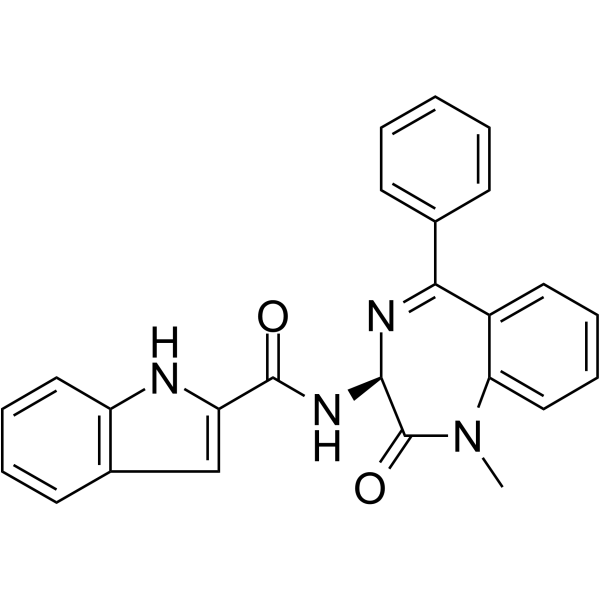
    Devazepide (L-364,718) is a potent, competitive, selective and orally active nonpeptide antagonist of cholecystokinin (CCK) receptor, with IC50s of 81 pM, 45 pM and 245 nM for rat pancreatic, bovine gallbladder and guinea pig brain CCK receptors, respectively. Devazepide (L-364,718) is effective for gastrointestinal disorders .
    Devazepide
  • HY-113218
    Acetyl-L-carnitine
    2 Publications Verification

    O-Acetyl-L-carnitine; ALCAR

    Caspase Apoptosis Neurological Disease
    Acetyl-L-carnitine (O-Acetyl-L-carnitine; ALCAR) is an orally active mitochondrial energy metabolism regulator and neuroprotectant that can penetrate the blood-brain barrier. Acetyl-L-carnitine selectively enters cells and the brain through the organic cation transporter OCTN2. Acetyl-L-carnitine can participate in fatty acid β-oxidation, promote acetylcholine synthesis, regulate mitochondrial function and inhibit oxidative stress as an acetyl donor. Acetyl-L-carnitine exerts its activity by enhancing energy metabolism, protecting neurons and improving synaptic plasticity. Acetyl-L-carnitine is mainly used in the study of neurodegenerative diseases and metabolic disorder-related diseases such as neonatal hypoxic-ischemic brain damage, Alzheimer's disease, and depression .
    Acetyl-L-carnitine
  • HY-117516

    REV-ERB Neurological Disease Metabolic Disease
    SR10067 is a potent, selective and brain penetrant REV-ERB agonist. SR10067 has high affinity for Rev-Erbβ and Rev-Erbα with IC50 values of 160 nM and 170 nM, respectively. SR10067 can be used for the research of metabolic diseases and neuropsychiatric disorders .
    SR10067
  • HY-B2167R

    DHA (Standard); Cervonic acid (Standard)

    Reference Standards Endogenous Metabolite Neurological Disease Cancer
    Docosahexaenoic acid (Standard) is the analytical standard of Docosahexaenoic acid. This product is intended for research and analytical applications. Docosahexaenoic Acid (DHA) is an omega-3 fatty acid abundantly present brain and retina. It can be obtained directly from fish oil and maternal milk. In Vitro: Docosahexaenoic acid (DHA) is essential for the growth and functional development of the brain in infants. DHA is also required for maintenance of normal brain function in adults. The inclusion of plentiful DHA in the diet improves learning ability and memory . DHA is an essential requirement in every step of brain development like neural cell proliferation, migration, differentiation, synaptogenesis. The multiple double bonds and unique structure allow DHA to impart special membrane characteristics for effective cell signaling. Many development disorders like dyslexia, autism spectrum disorder, attention deficit hyperactivity disorder, schizophrenia etc. are causally related to decreased level of DHA . DHA is a potent RXR ligand inducing robust RXR activation already at low micro molar concentrations. The EC50 for RXRα activation by DHA is about 5-10 μM fatty acid . In Vivo: Docosahexaenoic acid administration over 10 weeks significantly reduces the number of reference memory errors, without affecting the number of working memory errors, and significantly increases the docosahexaenoic acid content and the docosahexaenoic acid/arachidonic acid ratio in both the hippocampus and the cerebral cortex . DHA treatment exerts neuroprotective actions on an experimental mouse model of PD. There is a decrease tendency in brain lipid oxidation of MPTP mice but it does not significantly .
    Docosahexaenoic acid (Standard)
  • HY-114452
    LY2940094
    1 Publications Verification

    BTRX-246040

    Opioid Receptor Neurological Disease
    LY2940094 (BTRX-246040) is a potent, selective and orally available nociceptin receptor (NOP receptor) antagonist with high affinity (Ki=0.105 nM) and antagonist potency (Kb=0.166 nM). LY2940094 reduces ethanol self-administration in animal models .
    LY2940094
  • HY-76201
    Dexrazoxane hydrochloride
    15+ Cited Publications

    ICRF-187 hydrochloride; ADR-529 hydrochloride; NSC-169780 hydrochloride

    Apoptosis Ferroptosis Cardiovascular Disease Neurological Disease Inflammation/Immunology Cancer
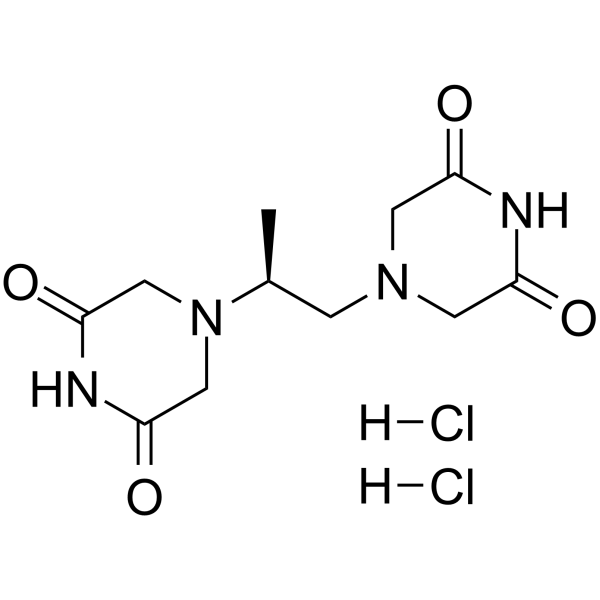
    Dexrazoxane hydrochloride (ICRF-187 hydrochloride) is a heart protectant that can help preserve ovarian function and fertility. Dexrazoxane hydrochloride has antioxidant and anti-inflammatory properties, can cross the blood-brain barrier, improves motor function disorders, and offers neuroprotective effects, making it useful in the study of neurodegenerative diseases .
    Dexrazoxane hydrochloride
  • HY-11100
    Asenapine maleate
    3 Publications Verification

    Org 5222 maleate

    5-HT Receptor Neurological Disease
    Asenapine (Org 5222) maleate, a brain-penetrant atypical antipsychotic, is an antagonist of serotonin receptors (pKi: 8.4-10.5), adrenoceptors (pKi: 8.9-9.5), dopamine receptors (pKi: 8.9-9.4) and histamine receptors (pKi: 8.2-9.0). Asenapine maleate can be used in the research of schizophrenia and bipolar disorder .
    Asenapine maleate
  • HY-W250122
    Glutamic acid sodium salt
    1 Publications Verification

    Monosodium glutamate

    Biochemical Assay Reagents Reactive Oxygen Species (ROS) Mitochondrial Metabolism Apoptosis HSP Bcl-2 Family Neurological Disease Metabolic Disease Inflammation/Immunology
    Glutamic acid sodium salt (Monosodium glutamate) is an orally active food flavor enhancer. Glutamic acid sodium salt causes ROS generation, mitochondrial dysfunction, and Apoptosis. Glutamic acid sodium salt upregulates CHOP, Grp78, and Bcl-2. Glutamic acid sodium salt impairs cognition, induces depressive-like behavior, induces hyperalgesia, and induces obesity and insulin resistance. Glutamic acid sodium salt can be used to study neurotoxicity (e.g., brain damage, cognitive impairment), metabolic disorders (e.g., obesity, insulin resistance), hepatotoxicity, and renal toxicity, as well as pain-related disorders .
    Glutamic acid sodium salt
  • HY-W250174

    3,5-Diiodosalicylic acid lithium salt

    Biochemical Assay Reagents Others
    Lithium 3,5-diiodosalicylate is a compound used in the study of bipolar disorder and other psychiatric disorders. It contains lithium and a salicylate. Lithium 3,5-diiodosalicylate works by affecting the levels of certain neurotransmitters in the brain, including dopamine and serotonin.
    Lithium 3,5-diiodosalicylate
  • HY-15722
    SB-222200
    5+ Cited Publications

    Neurokinin Receptor Neurological Disease Endocrinology
    SB-222200 is a potent, selective, orally active and blood-brain barrier (BBB) penetrant NK-3 receptor antagonist. SB-222200 is developed for central nervous system (CNS) disorders .
    SB-222200
  • HY-131703
    UGT8-IN-1
    1 Publications Verification

    UGT Metabolic Disease
    UGT8-IN-1 is a brain penetrable and orally active inhibitor of ceramide galactosyltransferase enzyme (UGT8). UGT8-IN-1 can be used in the study for lysosomal storage disorders .
    UGT8-IN-1
  • HY-136660

    mTOR Neurological Disease
    PQR626, a rapamycin derivative, is a potent, selective, orally active, and brain-penetrant mTOR inhibitor, with an IC50 and Ki of 5 nM and 3.6 nM, respectively. PQR626 can be can be used for the research of neurological disorders .
    PQR626
  • HY-160236

    Drug Metabolite Neurological Disease
    3-(3-Sulfooxyphenyl) propanoic acid is a metabolite of Echinacoside (HY-N0020). It promotes neural, psychological and brain health, enhances the proliferation, function and activity of brain cells, and facilitates extinction learning. 3-(3-Sulfooxyphenyl) propanoic acid can be used in research related to anxiety disorders, post-traumatic stress disorder, extinction learning deficits, autism, as well as neurodegenerative diseases including Parkinson's disease and Alzheimer's disease .
    3-(3-Sulfooxyphenyl)propanoic acid
  • HY-160505

    HCN Channel Neurological Disease
    RO-275 (compound 29) is a potent, selective and orally active HCN1 inhibitor with IC50 values of 0.046, 14.3, 4.6, 13.9 µM for HCN1, HCN2, HCN3, HCN4, respectively. RO-275 rescues decremented working memory. RO-275 has the potential for the research of cognitive dysfunction in brain disorder .
    RO-275
  • HY-135714

    EKZ-001

    HDAC Microtubule/Tubulin Neurological Disease Cancer
    Bavarostat (EKZ-001) is a blood-brain barrier-permeable, potent HDAC6 inhibitor and PET radiotracer, with an IC50 as low as 17 nM against human HDAC6. Bavarostat can be labeled with 18F and used as a probe to map HDAC6 distribution and measure target occupancy in the brains of non-human primates. Bavarostat also selectively modulates tubulin acetylation, but not histone acetylation. Bavarostat is applicable for research on Alzheimer's disease, other neurodegenerative disorders, and cancers .
    Bavarostat
  • HY-14880

    JNJ-31001074

    Histamine Receptor Neurological Disease Metabolic Disease
    Bavisant (JNJ-31001074) is an orally active, potent, brain-penetrating and highly selective antagonist of the histamine H3 receptor. Bavisant can be used for attention-deficit hyperactivity disorder (ADHD) research .
    Bavisant
  • HY-132806

    RG-7816; RO-7017773

    GABA Receptor Neurological Disease
    Alogabat is a positive allosteric modulator (PAM) and agonist (Ki <100 nM) of the GABAA α5 receptor, targeting the α5β3γ2 subunit with a Ki of 8.7 nM. Alogabat increases the expression level of α5β3γ2 in oocytes (1.97-fold). GABAA has been implicated in cognitive impairment associated with central nervous system (CNS) disorders, brain cancer (including brain tumors such as medulloblastoma), and can be used in the study of mild cognitive impairment (MCI), amnestic MCI (aMCI), age-associated memory impairment (AAMI), age-related cognitive decline (ARCD), dementia, Alzheimer's disease (AD), prodromal AD, post-traumatic stress disorder (PTSD), schizophrenia, bipolar disorder, amyotrophic lateral sclerosis (ALS), cognitive impairment associated with cancer treatment, mental retardation, Parkinson's disease (PD), autism spectrum disorder, fragile X, Rett syndrome, obsessive-compulsive behavior, and substance addiction .
    Alogabat
  • HY-172318

    NKCC Neurological Disease
    IAMA-6 is a selective NKCC1 inhibitor with neuroprotective effects. IAMA-6 can be used for the study of brain conditions, including drug-resistant epilepsy (e.g. temporal lobe epilepsy (TLE) and Dravet syndrome (DrS)), autism spectrum disorders (ASD) and Down syndrome (DoS) .
    IAMA-6
  • HY-B0416

    mAChR Adrenergic Receptor Neurological Disease
    Gallamine Triethiodide is a blood-brain barrier-permeable skeletal muscle relaxant. Gallamine Triethiodide induces skeletal muscle paralysis by blocking acetylcholine. Gallamine Triethiodide directly stimulates intracardiac β receptors. Gallamine Triethiodide prolongs the duration of afterdischarge in the cat cerebral cortex. Gallamine Triethiodide can be used in studies related to convulsive disorders .
    Gallamine Triethiodide
  • HY-13999

    NSI-189

    Trk Receptor Neurological Disease
    Amdiglurax (NSI-189) is an orally active chemical entity with enhanced neurogenic activity. Amdiglurax up-regulates neurogenic factors such as BDNF (brain derived-neurotrophic factor) and SCF. Amdiglurax exhibits anti-depressant effect. Amdiglurax enhances synaptic plasticity and reduces cognitive dysfunction. Amdiglurax holds potential for psychiatric disorder research .
    Amdiglurax
  • HY-120332

    KH176 hydrochloride

    Reactive Oxygen Species (ROS) Metabolic Disease
    Sonlicromanol (KH176) hydrochloride, a chemical entity derivative of Trolox, is a blood-brain barrier permeable ROS-redox modulator. Sonlicromanol (KH176) hydrochloride is used in the study for mitochondrial disorders .
    Sonlicromanol hydrochloride
  • HY-114452A
    LY2940094 tartrate
    1 Publications Verification

    BTRX-246040 tartrate

    Opioid Receptor Neurological Disease
    LY2940094 (BTRX-246040) tartrate is a potent, brain penetrant, selective and orally available N/OFQ peptide (NOP) receptor antagonist with high affinity (Ki=0.105 nM) and antagonist potency (Kb=0.166 nM). LY2940094 tartrate reduces Ethanol self-administration and Ethanol seeking in animal models .
    LY2940094 tartrate
  • HY-11044

    Histamine Receptor Neurological Disease Metabolic Disease Inflammation/Immunology
    PF-03654746 Tosylate is a potent, selective and brain-penetrant histamine H3 receptor antagonist. PF-03654746 Tosylate reduces allergen-induced nasal symptoms . PF-03654746 Tosylate has potential for treatment of human cognitive disorders, improves cognitive efficacy and disease-modifying effects in Alzheimer's disease (AD) .
    PF-03654746 Tosylate
  • HY-148137
    CB1 agonist 1
    1 Publications Verification

    Cannabinoid Receptor Neurological Disease
    CB1 agonist 1 (compound 22) is an agonist of CB1. CB1 agonist 1 shows affinity to CB1 receptor with an pIC50 value of 5.7. CB1 agonist 1 can be used for the research of brain disorders .
    CB1 agonist 1
  • HY-101834

    Orexin Receptor (OX Receptor) Others
    ACT-462206 is an orally active and potent dual Orexin 1/Orexin 2 receptor antagonist with IC50s of 60 nM (Orexin 1) and 11 nM (Orexin 2), respectively. ACT-462206 exhibits brain penetration properties, and can be used for insomnia, stress/anxiety-related disorders and addiction research .
    ACT-462206
  • HY-153175

    RET Neurological Disease
    BT44 is a selective RET activator. BT44 can penetrate through the blood-brain barrier and can be used for the research of neurodegenerative disorders and diabetes mellitus .
    BT44
  • HY-139464

    Nuclear Factor of activated T Cells (NFAT) Neurological Disease
    Q134R, a neuroprotective hydroxyquinoline derivative that suppresses nuclear factor of activated T cell (NFAT) signaling. Q134R can across blood-brain barrier. Q134R has the potential for Alzheimer's disease (AD) and aging-related disorders research .
    Q134R
  • HY-117764

    mGluR Neurological Disease
    LSP4-2022 is a potent and brain-penetrant mGlu4-selective orthosteric agonist, with an EC50 of 0.11 μM. LSP4-2022 inhibits neurotransmission in cerebellar slices from wild-type but not mGlu4 receptor-knockout mice. LSP4-2022 shows pro-depressant activity .
    LSP4-2022
  • HY-103493

    Phosphodiesterase (PDE) Neurological Disease
    TAK-915 is a potent, selective, brain-penetrant and orally active phosphodiesterase 2A (PDE2A) inhibitor with an IC50 of 0.61 nM. TAK-915 is >4100-fold more selectivity for PDE2A than PDE1A. TAK-915 has the potential for neuropsychiatric and neurodegenerative disorders treatment .
    TAK-915
  • HY-122347A

    GW823296 maleate

    Neurokinin Receptor Neurological Disease Inflammation/Immunology
    Orvepitant maleate (GW823296 maleate) is potent, selective, orally active and well-tolerated neurokinin-1 receptor (NK-1) antagonist with a pKi of 10.2 for human neurokinin-1 receptor. Orvepitant maleate can across the blood-brain barrier. Orvepitant maleate has the potential for depressive disorder and chronic refractory cough (CRC) treatment .
    Orvepitant maleate
  • HY-120717

    mGluR Cytochrome P450 Neurological Disease
    VU6001966 is a brain-penetrant and selective mGlu2 receptor inhibitor. VU6001966 blocks mGlu2 receptor activity, counteracts LY379268 (HY-103558)-mediated blood-brain barrier protection and inflammatory cytokine dampening in microglia under inflammatory conditions. VU6001966 enhances antidepressant effects when combined with Scopolamine (HY-N0296). VU6001966 can be used for the research of major depressive disorder .
    VU6001966
  • HY-N15001

    GABA Receptor Neurological Disease
    Gabaculine is an amino acid neurotoxin and blood-brain barrier-permeable GABA transaminase inhibitor, with an IC50 of 1 μM in beef and Pseudomonas ovalis. Gabaculine elevates endogenous synaptic and brain GABA levels and enhances GABA activity. Gabaculine induces sedation, hypothermia, loss of righting reflex, and prevents convulsions in mice. Gabaculine is applicable to research related to neurological disorders .
    Gabaculine
  • HY-163671

    GPR52 Neurological Disease
    PW0729 (compound 15b) is an orphan GPR52 agonist with potential applications in GPR52 activation, signaling bias, and neuropsychiatric and neurological disorders. The brain exposure characteristics of PW0729 need to be further optimized .
    PW0729
  • HY-14196
    Toloxatone
    1 Publications Verification

    MD 69276

    Monoamine Oxidase Neurological Disease
    Toloxatone (MD 69276) is a reversible, selective MAO-A inhibitor that can cross the blood-brain barrier. Toloxatone increases the levels of serotonin (5-HT) and norepinephrine in the brain. Toloxatone reduces the immobility time in the forced swimming test in mice, inhibits killing behavior in rats without causing sedation, and shows a correlation between its free plasma concentration and cerebrospinal fluid concentration. Toloxatone is widely used in research related to depression, depressive disorders and Parkinson's disease .
    Toloxatone
  • HY-P991374

    Tau Protein Neurological Disease
    PNT001 is a human IgG1 monoclonal antibody (mAb) targeting cis-pT231 Tau. PNT001 can be used in Neurodegenerative disorders and Traumatic brain injuries research. Recommended isotype control: Human IgG1 kappa, Isotype Control (HY-P99001) .
    PNT001
  • HY-14880B

    JNJ31001074AAC; JNJ31001074 dihydrochloride hydrate

    Histamine Receptor Neurological Disease Metabolic Disease
    Bavisant (JNJ31001074AAC) dihydrochloride hydrate is an orally active, potent, brain-penetrating and highly selective antagonist of the histamine H3 receptor. Bavisant dihydrochloride hydrate can be used for attention-deficit hyperactivity disorder (ADHD) research .
    Bavisant dihydrochloride hydrate
  • HY-108683

    Orexin Receptor (OX Receptor) Neurological Disease
    ACT-335827 is a selective, orally active, brain-penetrant orexin type 1 receptor antagonist. ACT-33582 acts on OXR1 and OXR2 with IC50 values of 6 nM and 417 nM, respectively. ACT-33582 can be used in studies related to neurological disorders .
    ACT-335827
  • HY-18078

    Phosphodiesterase (PDE) Neurological Disease
    PQ-10 is a potent inhibitor of Phosphodiesterase 10A (PDE10A) with IC50 andED50 of 4.6 nM and 13 mg/kg, respectively. PQ-10 induces patterns of brain glucose metabolism which can be a potential translational biomarker. PQ-10 has the potential for researching psychiatric disorders like schizophrenia .
    PQ-10
  • HY-13999A1

    NSI-189 phosphate

    Trk Receptor Neurological Disease
    Amdiglurax (NSI-189) phosphate is an orally active chemical entity with enhanced neurogenic activity. Amdiglurax phosphate up-regulates neurogenic factors such as BDNF (brain derived-neurotrophic factor) and SCF. Amdiglurax phosphate exhibits anti-depressant effect. Amdiglurax enhances synaptic plasticity and reduces cognitive dysfunction. Amdiglurax phosphate holds potential for psychiatric disorder research .
    Amdiglurax phosphate
  • HY-148331

    Prolyl Endopeptidase (PREP) Neurological Disease
    Z-Thioprolyl-Thioproline is a bovine brain prolyl endopeptidase (PEP) inhibitor (IC50=16 µM; Ki=37 µM). Z-Thioprolyl-Thioproline is used in the study of neurological disorders such as memory disorders and cognitive disorders .
    Z-Thioprolyl-Thioproline
  • HY-Z8890

    Cholinesterase (ChE) Neurological Disease
    Norneostigmine is a potent inhibitor of AChE that can penetrate the blood-brain barrier. Norneostigmine can achieve a 50% inhibition rate of mouse brain AChE after 10 min treatment, which is close to the inhibitory effect of tetrahydroaminoacridine (57% at 10 min). Norneostigmine can be used to study memory disorders related to Alzheimer's disease and other memory disorders .
    Norneostigmine
  • HY-151797

    CaMK Neurological Disease
    Ph-HTBA is a high-affinity, brain-penetrating modulator for CaMKIIα. Ph-HTBA has binding affinity for CaMKIIα with a Kd value of 757 nM. Ph-HTBA can be used for the research of ischemia and neurodegenerative disorders .
    Ph-HTBA
  • HY-B1395A

    nAChR Histamine Receptor Cardiovascular Disease Neurological Disease
    Mecamylamine is an orally active, nonselective, noncompetitive nAChR antagonist. Mecamylamine is also a ganglionic blocker. Mecamylamine can across the blood-brain barrier. Mecamylamine can be used in the research of neuropsychiatric disorders, hypertension, antidepressant area .
    Mecamylamine
  • HY-138693

    FAAH Neurological Disease
    ST4070 is a potent, orally active, and selective reversible fatty acid amide hydrolase (FAAH) inhibitor. ST4070 increases endocannabinoid (eCB) brain levels and counteracts neuropathic pain in animal models. ST4070 enhances the endogenous eCB tone in specific brain regions engaged in emotional control, and induces remarkable anxiolytic-like behaviours in rodents. ST4070 can be used for neuropathic pain and anxiety disorders research .
    ST4070
  • HY-177085

    Orexin Receptor (OX Receptor) Neurological Disease
    Fumiporexant (Compound Example 93) is an orally active, brain-penetrant and selective Orexin receptor 2 (OX2R) antagonist. Fumiporexant regulates the sleep-wake cycle and emotion-related pathways in the central nervous system. Fumiporexant is promising for research of nervous system diseases such as insomnia and major depressive disorder .
    Fumiporexant
  • HY-W017933

    Octahydro-1H-isoindole; Perhydroisoindole; Hexahydroisoindoline

    Neurokinin Receptor Neurological Disease
    Octahydroisoindole (Perhydroisoindole) is a substance P antagonist that can cross the blood-brain barrier and is useful for the study of movement disorders associated with central nervous system diseases .
    Octahydroisoindole

Inquiry Online

Your information is safe with us. * Required Fields.

Salutation


Country or Region *

Applicant Name *


Organization Name *

Department *


Email Address *


Product Name *

Cat. No.


Requested quantity *

Phone Number *


Remarks

Inquiry Online

Inquiry Information

Product Name:
Cat. No.:
Quantity:
MCE Japan Authorized Agent:

