
1. Search Result
Search Result
Results for "

characterization

" in MedChemExpress (MCE) Product Catalog:

34

Inhibitors & Agonists

2

Screening Libraries

7

Fluorescent Dye

4

Biochemical Assay Reagents

2

Peptides

6

Natural
Products

1

Isotope-Labeled Compounds

3

Click Chemistry

1

Oligonucleotides

Cat. No. Product Name Target Research Areas Chemical Structure
  • HY-128692
    Luc Yellow CH dilithium
    5 Publications Verification

    Fluorescent Dye Neurological Disease
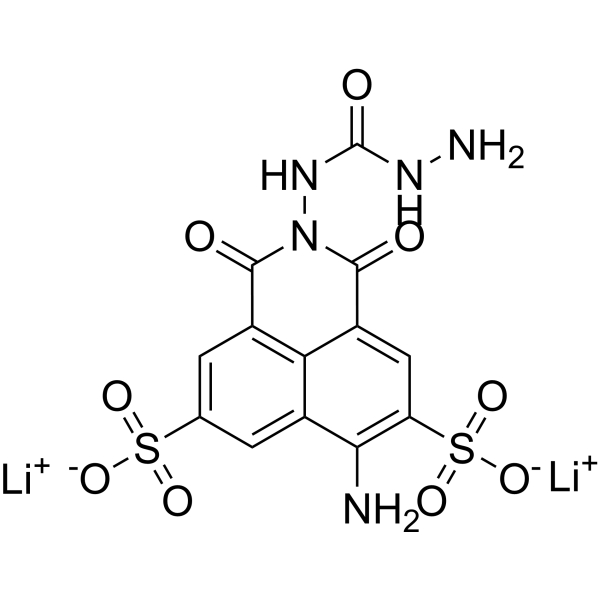
    Luc Yellow CH dilithium is a high-intensity fluorescent probe containing free hydrazyl groups. Luc Yellow CH can react with fatty aldehydes at room temperature. Luc Yellow CH serves as a biological tracer to monitor neuronal branching, regeneration, gap junction detection and characterization, and selective ablation of cells after aldehyde fixation. Luc Yellow CH displays the maximum excitation/emission of 430 nm/540 nm, respectively .
    Luc Yellow CH dilithium
  • HY-W127715
    Lucifer Yellow CH dipotassium salt
    5 Publications Verification

    Fluorescent Dye Others
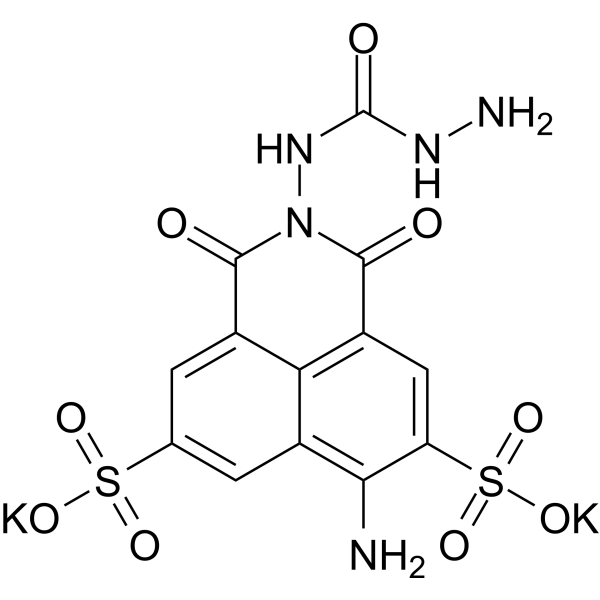
    Lucifer Yellow CH dipotassium is a high-intensity fluorescent probe containing free hydrazyl groups. Lucifer Yellow CH can react with fatty aldehydes at room temperature. Lucifer Yellow CH serves as a biological tracer to monitor neuronal branching, regeneration, gap junction detection and characterization, and selective ablation of cells after aldehyde fixation. Lucifer yellow CH displays the maximum excitation/emission of 430 nm/540 nm, respectively .
    Lucifer Yellow CH dipotassium salt
  • HY-E70097

    Endogenous Metabolite Others
    Sialidase (α2-3-6-8-9) is a broadly specific sialidase that cuts linear and branched non-reducing terminal sialic acid residues from glycoproteins, glycopeptides, and oligosaccharides. Sialidase (α2-3-6-8-9) can be used for in vitro and in vivo polysaccharide analysis and characterization as well as complete glycoprotein remodeling .
    Sialidase (α2-3-6-8-9)
  • HY-126192

    PiB; 6-OH-BTA-1

    Amyloid-β Neurological Disease
    Pittsburgh Compound B (PiB) is a blood-brain barrier-permeable, specific deposition PET tracer that binds to Aβ(1-40) fibrils with a Ki value of 678.4 nM. Through click chemical modification (a clickable Pittsburgh Compound B derivative is prepared by introducing a PEG3 linker and an alkynyl group at the 6-hydroxy site of Pittsburgh Compound B, followed by covalent conjugation with azide-labeled fluorescent dyes or affinity tags via copper-catalyzed azide-alkyne cycloaddition (CuAAC)), Pittsburgh Compound B and its conjugates can be used for fluorescence imaging, ultrastructural studies, and enrichment and characterization of Aβ complexes. Pittsburgh Compound B is applicable to Alzheimer's disease research .
    Pittsburgh Compound B
  • HY-W011426

    Propan-2-yl hexadecanoate

    Environmental Pollutants Biochemical Assay Reagents Liposome Others
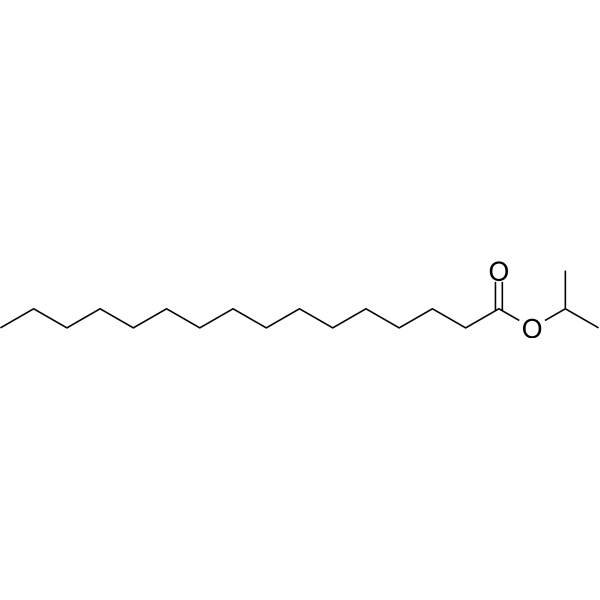
    Isopropyl palmitate is an fatty acid ester. Isopropyl palmitate can be used for design and characterization of bioactive bilayer films. The bilayer membrane not only has the ability to scavenge free radicals and inhibit lipid peroxidation, but also can inhibit the growth of known foodborne pathogens. Isopropyl palmitate can be used as an excipient, such as lubricant, oily carrier, solvent, controlled-release transdermal film. Pharmaceutical excipients, or pharmaceutical auxiliaries, refer to other chemical substances used in the pharmaceutical process other than pharmaceutical ingredients. Pharmaceutical excipients generally refer to inactive ingredients in pharmaceutical preparations, which can improve the stability, solubility and processability of pharmaceutical preparations. Pharmaceutical excipients also affect the absorption, distribution, metabolism, and elimination (ADME) processes of co-administered drugs .
    Isopropyl palmitate
  • HY-133091

    7-O-Ethylumbelliferone

    Cytochrome P450 Metabolic Disease
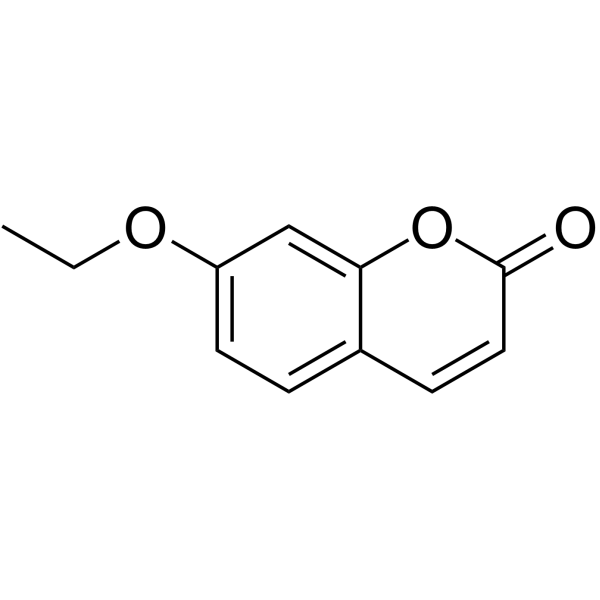
    7-Ethoxycoumarin is a substrate of cytochrome P450 (CYP450). 7-Ethoxycoumarin has been used for the functional characterization of various CYPs and for the generation of 7-hydroxycoumarin (HY-N0573) .
    7-Ethoxycoumarin
  • HY-W040254

    Fluorescent Dye Others
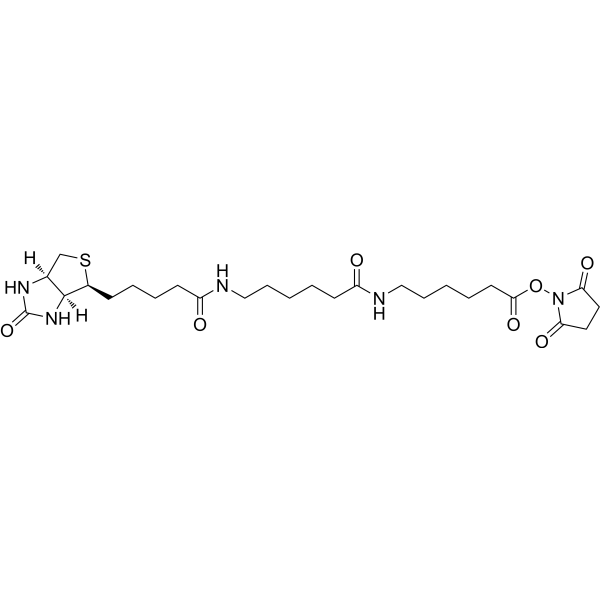
    Biotin-LC-LC-NHS is a biotinylation reagent that contains an NHS moiety, which can react efficiently with primary amino (-NH2). Biotin-LC-LC-NHS enables simple and efficient biotinylation of antibodies, proteins, and any other primary amine-containing biomolecules in solution. Biotin-LC-LC-NHS can be used to biotinylate small molecules such as Paclitaxel (HY-B0015) for use in binding site characterization.
    Biotin-LC-LC-NHS
  • HY-E70574

    Biochemical Assay Reagents Others
    Trypsin/Lys-C complex protease (MS grade) combines Trypsin and Lys-C, two recombinant proteases, to achieve efficient peptide bond hydrolysis. Trypsin specifically cleaves the C-terminal peptide bonds of arginine (R) and lysine (K), while Lys-C specifically cleaves the C-terminal peptide bonds of lysine (K). This combination overcomes issues such as the slower digestion rate of lysine and arginine by rTrypsin, PTM changes on lysine, or hydrophobic C-termini (such as proline) that can lead to missed cleavage. Trypsin/Lys-C complex protease (MS grade) can be used to process complex protein samples that are difficult to enzymatically digest. Trypsin/Lys-C complex protease (MS grade) can be used for protein characterization, single-cell proteomics and large cohort proteomics studies.
    Trypsin/Lys-C complex protease (MS grade)
  • HY-P5979

    LRRK2 Neurological Disease
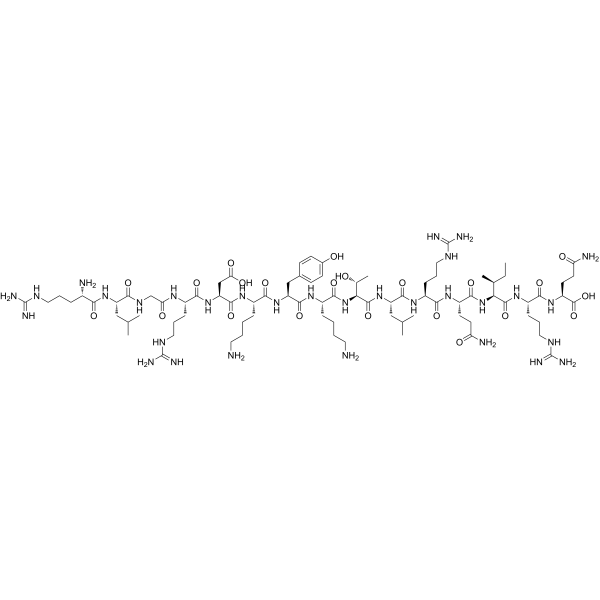
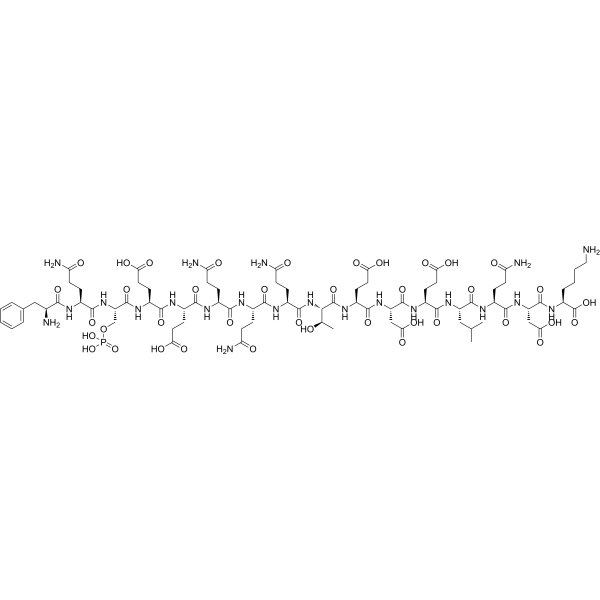
    LRRKtide is a polypeptide substrate. LRRKtide is a specific phosphorylation substrate of LRRK2, a kinase associated with Parkinson's disease, and its phosphorylation site is a threonine residue. LRRKtide can be used for characterization of the catalytic properties of LRRK2, as well as studies on kinase activity and inhibition. LRRKtide is applicable to research related to Parkinson's disease .
    LRRKtide
  • HY-171978

    Adrenergic Receptor Cardiovascular Disease
    LM-189 is a β2-adrenergic receptor (β2AR) ligand and G protein-biased modulator with a human β2AR Ki of 0.063 nM.LM-189 promotes β2AR coupling to Gαs and Gαi heterotrimers, stabilizes distinct β2AR conformations including a TM6 outward state, and increases β2AR ICL2 dynamics.LM-189 restricts β2AR ligand-binding pocket conformational heterogeneity, stabilizes polar ligand-receptor interaction networks, and exhibits bias toward Gαi signaling over Gαs signaling.LM-189 enabled cryo-EM structural characterization of the β2AR-Gi complex.LM-189 can be used for the research of congestive heart failure .
    LM-189
  • HY-D2413

    BODIPY FL PEG4-VH032

    Fluorescent Dye Others
    BODIPY FL VH032 is a high-affinity VHL fluorescent probe with a Kd value of 3.01 nM. BODIPY FL VH032 consists of von Hippel-Lindau (VHL) ligand VH032 (HY-120217) and BODIPY FL (HY-43520). BODIPY FL VH032 can be used for time-resolved fluorescence resonance energy transfer (TR-FRET) detection for high-throughput identification and characterization of VHL ligands with maximum excitation emission wavelength: 504/520 nm .
    BODIPY FL VH032
  • HY-158253

    Biochemical Assay Reagents Others
    Helix pomatia lectin, biotin conjugate, is a carbohydrate-binding protein that is widely found in fungi, plants, and animals. Helix pomatia lectin, biotin conjugate is commonly used for characterizing, imaging, or targeting glycoconjugates, and is also a very useful tool for glycomics analysis .
    Lectin from Helix pomatia, biotin conjugate
  • HY-148353

    LRRK2 Neurological Disease
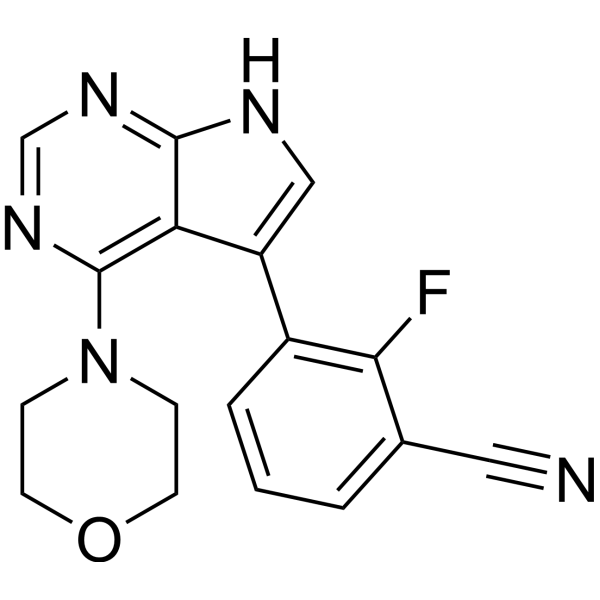
    PF-06455943 is a leucine rich repeat kinase 2 (LRRK2) inhibitor with IC50 value of 3 nM. PF-06455943 also is a PET radioligand. PF-06455943 can be used for the research of ADME/neuro PK characterization and Parkinson disease (PD) .
    PF-06455943
  • HY-169863

    RAR/RXR Inflammation/Immunology
    DC360 is a synthetic retinoid analogue of all-trans retinoic acid (ATRA) which induces RARβ expression. DC360 can be utilized in characterization of retinoid signalling pathways .
    DC360
  • HY-133091R

    7-O-Ethylumbelliferone (Standard)

    Cytochrome P450 Reference Standards Metabolic Disease
    7-Ethoxycoumarin (Standard) is the analytical standard of 7-Ethoxycoumarin. This product is intended for research and analytical applications. 7-Ethoxycoumarin is a substrate of cytochrome P450 (CYP450). 7-Ethoxycoumarin has been used for the functional characterization of various CYPs and for the generation of 7-hydroxycoumarin (HY-N0573) .
    7-Ethoxycoumarin (Standard)
  • HY-143285

    Fluorescent Dye Infection
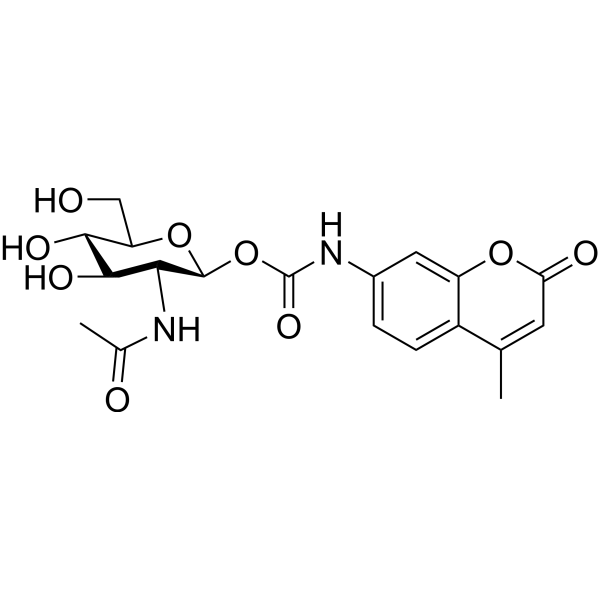
    AMC-GlcNAc (compound 1) is a potent fluorogenic probe for detection and characterization of β-hexosaminidase enzyme activity. AMC-GlcNAc enables continuous monitoring by turn-on fluorescence and fluorescence signal is constant over a wide pH range (Ex=325 nm, Em=390 nm). AMC-GlcNAc enables ratiometric fluorescence detection with high sensitivity and low background, which can be used to screen for recombinant dispersin B activity in E. coli cell lysate .
    AMC-GlcNAc
  • HY-D2931

    Fluorescent Dye Others
    SNAP-FAM is a FAM-labeled SNAP tag fluorescent probe, specifically designed for live-cell protein labeling and real-time imaging applications .
    SNAP-FAM
  • HY-123311

    Adrenergic Receptor Endocrinology
    CP59430 is an azide analog of the α-adrenaline receptor antagonist Prazosin (HY-B0193). P59430 behaves as a competitive antagonist of α1-adrenaline receptor before photolysis. After photolysis, it specifically and irreversibly labels α1-adrenaline receptor and exhibits non-competitive antagonist activity. CP59430 can be used for the study of receptor molecular characterization .
    CP59430
  • HY-W039920

    β-D-Galactosylamine, 98%

    Biochemical Assay Reagents Others
    1-Amino-1-deoxy-β-D-galactose, 98% is a galactose analog used as a competitive inhibitor to aid in the separation, purification, identification, differentiation, and characterization of β-D-galactosidase and galactose oxidase.
    1-Amino-1-deoxy-β-D-galactose, 98%
  • HY-133091S

    Cytochrome P450 Isotope-Labeled Compounds Others
    7-Ethoxycoumarin-d5 is deuterium labeled 7-Ethoxycoumarin. 7-Ethoxycoumarin is a substrate for cytochrome P450(CYP450) and has been used in the functional characterization of various CYPs .
    7-Ethoxycoumarin-d5
  • HY-101199

    Opioid Receptor Neurological Disease
    N-Benzylnaltrindole hydrochloride is a potent δ2-selective opioid receptor antagonist. Benzylnaltrindole hydrochloride has a long duration of action in vivo than Naltriben (NTB). N-Benzylnaltrindole hydrochloride iserve as a useful tool in the pharmacologic characterization of δ-opioid receptor function .
    N-Benzylnaltrindole hydrochloride
  • HY-155772

    Adenosine Receptor Fluorescent Dye Inflammation/Immunology
    LUF7690 (Compound 9) is a clickable and covalent affinity-based probe (AfBP) that targets the human A3AR (hA3AR). LUF7690 can be used in the detection and characterization of the hA3AR in different types of granulocytes, among other cell types .
    LUF7690
  • HY-165095

    1,2-Palmitolein-3-palmitin; TG(16:1/16:1/16:0)

    Others Others
    1,2-Dipalmitoleoyl-3-palmitoyl-rac-glycerol (1,2-Palmitolein-3-palmitin) is a triglyceride used for serum lipidomics analysis by liquid chromatography-mass spectrometry. This method can effectively separate and detect lipids in positive and negative ionization modes and has certain performance in the identification and characterization of serum triglycerides.
    1,2-Dipalmitoleoyl-3-palmitoyl-rac-glycerol
  • HY-126634

    Others Infection
    Lyngbyatoxin B is a complex compound in a versatile biosynthetic pathway from the marine cyanobacterium Moorea producens. By heterologously expressing the lyngbyatoxin biosynthetic pathway in Escherichia coli, lyngbyatoxin A (25.6 mg/L) and its precursor indolactam-V (150 mg/L) were successfully produced. This approach confirmed the biosynthetic route of lyngbyatoxin and laid a chemical foundation for future pathway engineering. In addition, the successful production of lyngbyatoxin A in E. coli opens the possibility for heterologous expression and characterization of other cyanobacterial natural products.
    Lyngbyatoxin B
  • HY-N12138

    Glycosidase Metabolic Disease
    Flaccidoside III is a triterpenoid isolated from the aerial parts of N. sativa (Ranunculaceae). Flaccidoside III inhibits α-Glucosidase (IC50: 256.7 μM) and has potential antioxidant and antidiabetic activities .
    Flaccidoside III
  • HY-147150

    Fluorescent Dye Others
    8-Azido-cADPR, with its photoactive azido group, is a potent photoaffinity probe. 8-Azido-cADPR can be used for the identification and characterization of cADPR-binding proteins . 8-Azido-cADPR is a click chemistry reagent, it contains an Azide group and can undergo copper-catalyzed azide-alkyne cycloaddition reaction (CuAAc) with molecules containing Alkyne groups. It can also undergo strain-promoted alkyne-azide cycloaddition (SPAAC) reactions with molecules containing DBCO or BCN groups.
    8-Azido-cADPR
  • HY-D2953

    CLIP-CPY

    Fluorescent Dye Others
    BC-CPY is a CLIP-tagged probe based on the pyridine-benzoanthrone (CPY) fluorophore (Ex/Em: 580 nm/610 nm). BC-CPY has excellent cell membrane permeability, enabling deep imaging, low phototoxicity and high signal-to-noise ratio. BC-CPY can be used for super-resolution microscopy imaging of living cells .
    BC-CPY
  • HY-N10519

    Others Others
    Cellooctaose is an oligosaccharide, consisting of eight glucose residues. Cellooctaose is a low-cost polysaccharides in fermentation to hold on Lactococcus lactis recombinant strain growth. Cellooctaose is the substrate of beta-glucosidase (E.C. 3.2.1.21) .
    Cellooctaose
  • HY-W012618R

    Drug Intermediate Reference Standards Others
    Isopropyl palmitate (Standard) is the analytical standard of Isopropyl palmitate. This product is intended for research and analytical applications. Isopropyl palmitate is an fatty acid ester. Isopropyl palmitate can be used for design and characterization of bioactive bilayer films. The bilayer membrane not only has the ability to scavenge free radicals and inhibit lipid peroxidation, but also can inhibit the growth of known foodborne pathogens. Isopropyl palmitate can be used as an excipient, such as lubricant, oily carrier, solvent, controlled-release transdermal film. Pharmaceutical excipients, or pharmaceutical auxiliaries, refer to other chemical substances used in the pharmaceutical process other than pharmaceutical ingredients. Pharmaceutical excipients generally refer to inactive ingredients in pharmaceutical preparations, which can improve the stability, solubility and processability of pharmaceutical preparations. Pharmaceutical excipients also affect the absorption, distribution, metabolism, and elimination (ADME) processes of co-administered drugs .
    1-Phenyl-1-propanol (Standard)
  • HY-W011426R

    Propan-2-yl hexadecanoate (Standard)

    Biochemical Assay Reagents Liposome Reference Standards Others
    Isopropyl palmitate (Standard) is the analytical standard of Isopropyl palmitate. This product is intended for research and analytical applications. Isopropyl palmitate is an fatty acid ester. Isopropyl palmitate can be used for design and characterization of bioactive bilayer films. The bilayer membrane not only has the ability to scavenge free radicals and inhibit lipid peroxidation, but also can inhibit the growth of known foodborne pathogens. Isopropyl palmitate can be used as an excipient, such as lubricant, oily carrier, solvent, controlled-release transdermal film. Pharmaceutical excipients, or pharmaceutical auxiliaries, refer to other chemical substances used in the pharmaceutical process other than pharmaceutical ingredients. Pharmaceutical excipients generally refer to inactive ingredients in pharmaceutical preparations, which can improve the stability, solubility and processability of pharmaceutical preparations. Pharmaceutical excipients also affect the absorption, distribution, metabolism, and elimination (ADME) processes of co-administered drugs .
    Isopropyl palmitate (Standard)
  • HY-W415799

    Biochemical Assay Reagents Others
    (2S)-Ac4GalNAl can be used for the identification and characterization of specific surface groups of glycoproteins. The alkyne groups can react with azides via copper-catalyzed Click Chemistry. The acetyl groups on the glucose allow for easier penetration through the cell membrane.
    (2S)-Ac4GalNAl
  • HY-117908

    Dihydroorotate Dehydrogenase Parasite Infection
    DSM267 is a triazolopyrimidine inhibitor of Plasmodium falciparum dihydroorotate dehydrogenase (PfDHODH), with an IC50 of 38 nM, while its IC50 against human DHODH exceeds 100000 nM. DSM267 is used for the in vitro systematic screening and characterization of the resistance evolution pathways of Plasmodium falciparum to DHODH inhibitors .
    DSM267
  • HY-N16538

    Drug Derivative Cardiovascular Disease Neurological Disease
    4-(Acetoxymethyl)phenyl glucoside is a type of gastrodin derivative that can cross the blood-brain barrier. 4-(Acetoxymethyl)phenyl glucoside exhibits sedative, anticonvulsant and analgesic effects in mouse models. 4-(Acetoxymethyl)phenyl glucoside can be used for research on senile cardiovascular and cerebrovascular diseases as well as brain nerve disorders .
    4-(Acetoxymethyl)phenyl glucoside
  • HY-D3404

    DNA Stain Others
    BODi-1 is a fluorescent modulator targeting dsDNA, which binds to dsDNA via a bis-intercalation mechanism (Ex=465 nm, Em=490 nm). BODi-1 exhibits a fluorescence enhancement effect upon binding to nucleic acids, but its fluorescence intensity, anisotropy and average lifetime decrease at higher dye/DNA ratios. When BODi-1 binds to DNA in liposome complexes, it also shows red-shifted emission spectra, along with reduced quantum yield and average lifetime. BODi-1 does not induce significant DNA conformational changes when the dye/DNA ratio is below 0.01. BODi-1 can be used as a fluorescent probe for the characterization of liposome complexes and FRET studies at this ratio .
    BODi-1

Inquiry Online

Your information is safe with us. * Required Fields.

Salutation


Country or Region *

Applicant Name *


Organization Name *

Department *


Email Address *


Product Name *

Cat. No.


Requested quantity *

Phone Number *


Remarks

Inquiry Online

Inquiry Information

Product Name:
Cat. No.:
Quantity:
MCE Japan Authorized Agent:

