21 Results for "

cleavable probe

" in MedChemExpress (MCE) Product Catalog:
Products (21)

21 Results for "cleavable probe" in MCE Product Catalog:

17
17 Cited Publications
Cat. No.: HY-D0717
CAS No.: 254109-22-3
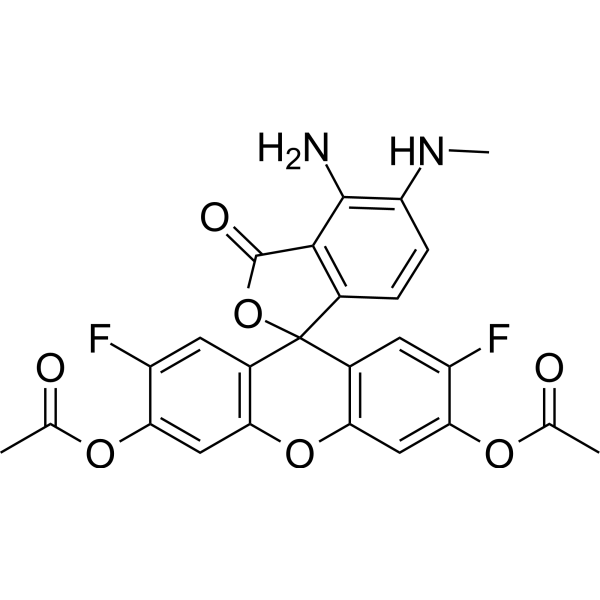
Synonyms: Diaminofluorescein-FM diacetate
DAF-FM DA (Diaminofluorescein-FM diacetate) is a fluorescent probe for the detection and bioimaging of nitric oxide (NO). DAF-FM DA spontaneously crosses the plasma membrane and is subsequently cleaved by esterases to generate intracellular DAF-FM (Ex/Em=495/515 nm) .
loading...
    loading...
12
12 Cited Publications
Cat. No.: HY-126561
CAS No.: 136832-63-8
Purity:  99.82%
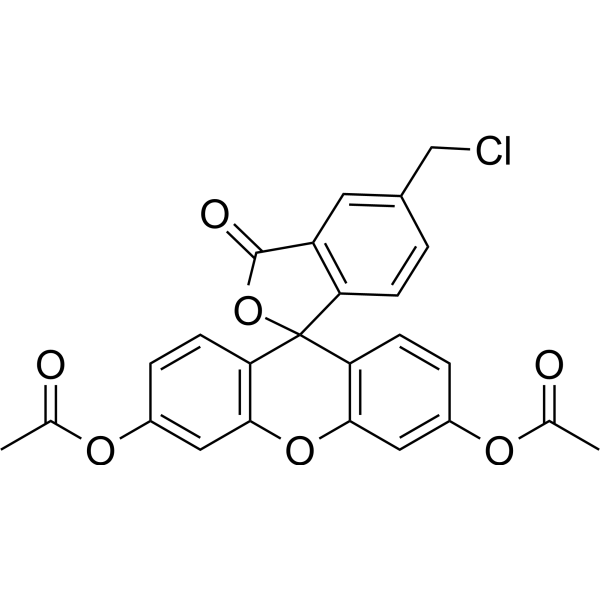
Synonyms: CMFDA
Green CMFDA is a cell-permeable fluorescent probe with Em of 514 nm and Ex of 485 nm and can be used as a cell tracer. Green CMFDA can be cleaved by non-specific esterases common in living cells, producing a fluorescent compound, fluorescein, visible using a fluorescent microscope .
loading...
    loading...
Cat. No.: HY-DY1046
CAS No.: 136832-63-8
Green CMFDA (solution) is a cell-permeable fluorescent probe with Em of 514 nm and Ex of 485 nm and can be used as a cell tracer. Green CMFDA can be cleaved by non-specific esterases common in living cells, producing a fluorescent compound, fluorescein, visible using a fluorescent microscope .
Solvent and concentration: DMSO: 10 mM
loading...
    loading...
Cat. No.: HY-D1078
CAS No.: 127770-45-0
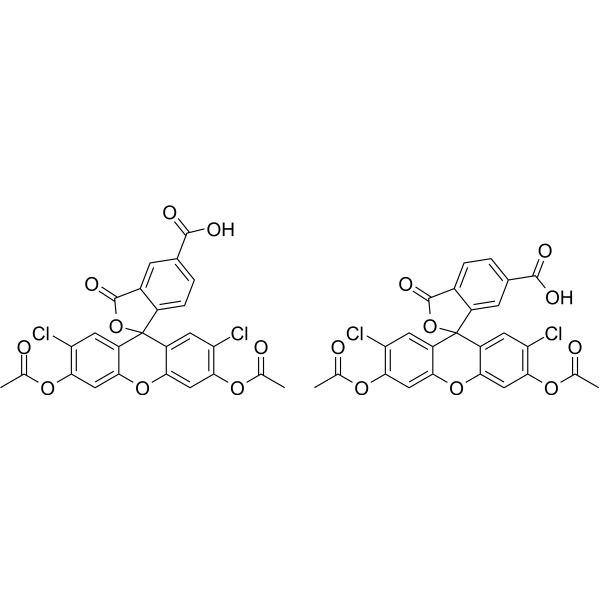
5 (6)-Carboxy-2',7'-dichlorofluorescein diacetate is a fluorescein-based reactive oxygen species (ROS) probe and also a MRP2 substrate. 5 (6)-Carboxy-2',7'-dichlorofluorescein diacetate serves as a substrate for intracellular esterases, which cleave its acetate groups to generate a fluorescent product capable of detecting intracellular ROS. 5 (6)-Carboxy-2',7'-dichlorofluorescein diacetate is ATP-dependent and is transported via a single MRP2 binding site; it competes with LTC4 for MRP2 binding sites and inhibits MRP2-mediated LTC4 transport (Ex/Em = 496/525 nm) .
loading...
    loading...
Cat. No.: HY-149931
CAS No.: 1458731-58-2
Target:  

Fluorescent Dye

Research Areas:  

Cancer

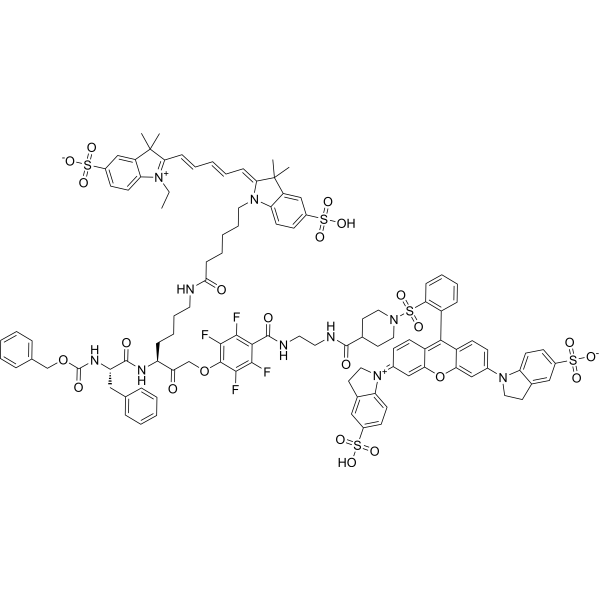
BMV109 is a quenched probe that becomes fluorescent when cleaved and covalently bound by active cathepsin proteases. BMV109 can be exploited for tumor imaging .
loading...
    loading...
Cat. No.: HY-DY1048
CAS No.: 254109-22-3
DAF-FM DA (Diaminofluorescein-FM diacetate) (solution) is a fluorescent probe for the detection and bioimaging of nitric oxide (NO). DAF-FM DA spontaneously crosses the plasma membrane and is subsequently cleaved by esterases to generate intracellular DAF-FM (Ex/Em=495/515 nm) .
Solvent and concentration: DMSO: 2 mM
loading...
    loading...
Cat. No.: HY-112526
CAS No.: 1004324-99-5
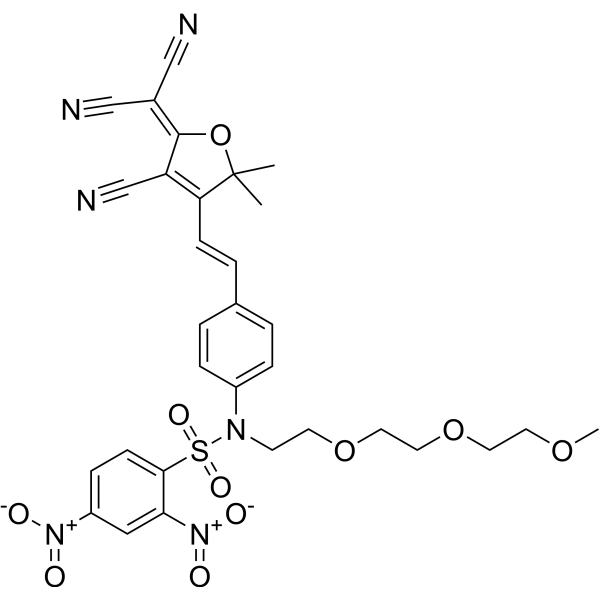
Thiofluor 623 (Compound 3) is a fluorescent turn-on probe that can be used for the selective sensing and bioimaging of thiols. Thiofluor 623 displays excellent immunity to interference from nitrogen and oxygen nucleophiles. Thiofluor 623 is essentially nonfluorescent in the absence of thiols, which cleave the probe and release the red-emissive donor-acceptor fluorophore (Ex=563 nm, Em=623 nm) .
loading...
    loading...
Cat. No.: HY-155486
Target:  

Fluorescent Dye

Research Areas:  

Cancer

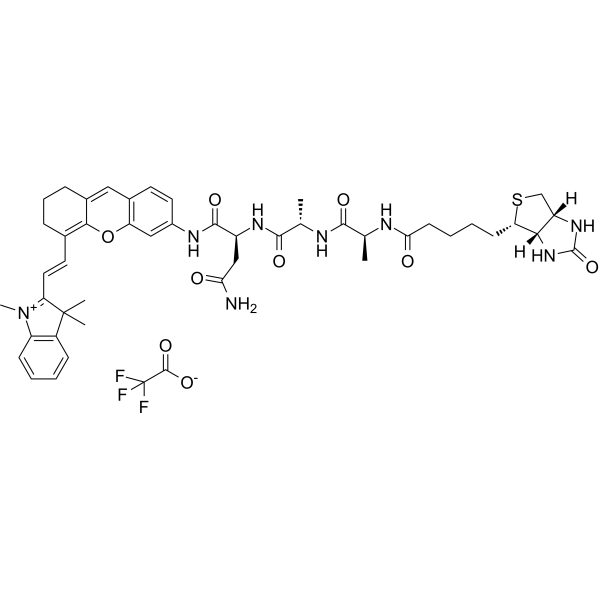
HCy-AAN-Bio is a tumor-targeted hemicyanine (HCy) probe for Fluorescent/photoacoustic (FL/PA) imaging of legumain in vivo. Legumain can specifically cleave HCy-AAN-Bio with the generation of FL/PA signal. HCy-AAN-Bio is a powerful tool for early diagnosis of associated cancer .
loading...
    loading...
Cat. No.: HY-153665
CAS No.: 2761446-55-1
Purity:  99.45%
Research Areas:  

Others

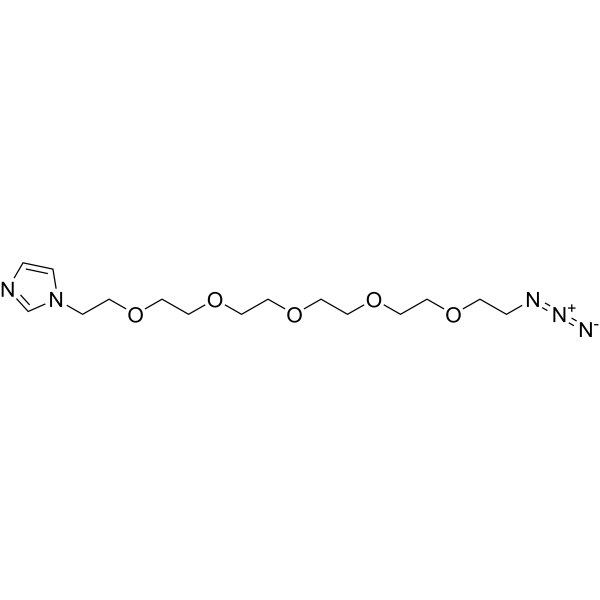
Deg-1 is a a bifunctional probe with a cleavage group and a covalent binding group. Deg-1 covalently binds to the target nucleic acid, and serves as click-degrader to cleave a nucleic acid molecule. Deg-1 has potential to selectively cleave target nucleic acids in cells . It contains an azide group and can undergo copper-catalyzed azide-alkyne cycloaddition (CuAAc) with molecules containing alkyne groups. It can also undergo ring strain-promoted alkyne-azide cycloaddition (SPAAC) with molecules containing DBCO or BCN groups.
loading...
    loading...
Cat. No.: HY-W411215
CAS No.: 83619-73-2
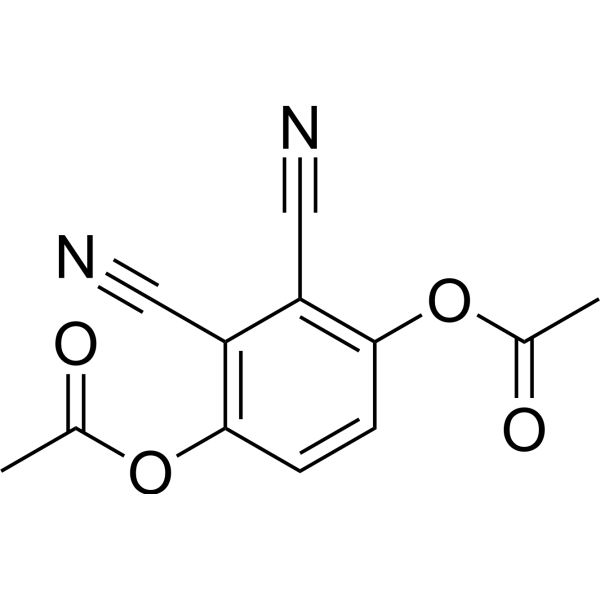
1,4-Diacetoxy-2,3-dicyanobenzene is a cell-permeable fluorescent probe. 1,4-Diacetoxy-2,3-dicyanobenzene crosses the cell membrane and is cleaved by cytosolic esterases to the fluorescent pH indicator 2,3-dicyano-hydroquinone (DCH). 1,4-Diacetoxy-2,3-dicyanobenzene can be used to monitor intracellular pH .
loading...
    loading...
Cat. No.: HY-D2943
Synonyms: SNAP-SS-SulfoCy3
BG-SS-SulfoCy3 is a SulfoCy3-labeled SNAP tag fluorescent probe, which is linked by a disulfide bond to achieve selective labeling and controllable cleavage. BG-SS-SulfoCy3 can be used to study the endocytosis and trafficking of membrane proteins such as GPCRs .
loading...
    loading...
Cat. No.: HY-D2930
Synonyms: SNAP-SS-SulfoCy5
BG-SS-SulfoCy5 (SNAP-SS-SulfoCy5) is a SulfoCy5-labeled SNAP tag fluorescent probe, linked by a disulfide bond. BG-SS-SulfoCy5 combines the specific recognition of SNAP-tag, the cleavability of disulfide bond, and the excellent optical properties of SulfoCy5. BG-SS-SulfoCy5 can be used for tracking the internalization of cell surface proteins and multiple labeling experiments .
loading...
    loading...
Cat. No.: HY-D3319
BHQ‑3 carboxylic acid is an azo‑containing dark fluorescence quencher. BHQ‑3 carboxylic acid is conjugated to an MMP‑cleavable peptide and paired with a fluorophore to form an activatable probe for MMP activity detection in vitro. BHQ‑3 carboxylic acid shows maximal absorption in the 620 to 730 nm range. BHQ‑3 carboxylic acid–based fluorescent probes can be used in the research of arthritis and tumor‑related pathological processes. .
loading...
    loading...
Cat. No.: HY-P11595
CAS No.: 2357123-44-3
Target:  

Fluorescent Dye

Research Areas:  

Cancer

TBZ-1 is a fluorescent probe that monitors the activity of immunoproteasome (Proteasome) (iCP) in cells. TBZ-1 undergoes fluorescence activation after being selectively cleaved by β5i, which is used for intracellular activity monitoring. TBZ-1 is applicable to cancer-related research .
loading...
    loading...
Cat. No.: HY-175163
Target:  

Photosensitizer

Research Areas:  

Cancer

TPAPyN is a nitroreductase(NTR)-responsive type I photosensitizer. TPAPyN facilitates the imaging of hypoxic cancer cells and image-guided photodynamic therapy (PDT). TPAPyN does not emit fluorescence in the aqueous environment, but restores when NTR cleaves the nitrofuran quencher with aggregation-induced emission. TPAPyN can be used as a fluorescent probe for specific imaging of hypoxic cancer .
loading...
    loading...
Cat. No.: HY-156898
NPT100-18A is an αSyn oligomerization inhibitor. NPT10018A rescues cleaved caspase-3 levels to control levels. NPT10018A attenuates mitochondrial oxidative stress probe levels in a compartment-specific manner and, at higher concentrations, increases ATP signals. NPT100-18A can be used for the study of Parkinson’s disease (PD) .
loading...
    loading...
Cat. No.: HY-D3169
CAS No.: 1476735-95-1
Target:  

Fluorescent Dye Caspase

Research Areas:  

Inflammation/Immunology

IETDC is a caspase 8-responsive fluorescent probe. IETDC is cleaved by activated caspase 8 to release D-cysteine, which then reacts with 6-hydroxy-2-cyanobenzothiazole (HCBT) ​​to form firefly luciferin in situ. IETDC must be used in conjunction with PCL-2 (HY-D3168) to detect the co-existence of hydrogen peroxide and caspase 8. IETDC is applicable to studies related to acute inflammation .
loading...
    loading...
Cat. No.: HY-D2924
CBG-549-QSY7 is a Dylight 549-labeled SNAP tag fluorescent probe (Ex/Em: 546 nm/580 nm), specially designed for non-washable fluorescence imaging applications. CBG-549-QSY7 employs an intramolecular FRET quenching mechanism: intramolecular fluorescence quenching occurs before binding to the SNAP tag, and upon binding, the quenching group is cleaved, releasing fluorescence. The background fluorescence of CBG-549-QSY7 is extremely low, and clear cell membrane images can be obtained after 5 minutes of incubation .
loading...
    loading...
Cat. No.: HY-D3187
CAS No.: 2484831-02-7
HMRef-αMan is a substrate-based green fluorescent probe (Ex/Em=465 nm/515 nm) targeting MAN2C1 (α-mannosidase). HMRef-αMan can be specifically cleaved by MAN2C1 to generate a highly fluorescent product, which thus gets activated to produce green fluorescence in malignant breast tissues, benign lesions and living cancer cells. The signal intensity of HMRef-αMan is directly correlated with MAN2C1 activity, and it can effectively detect tiny breast cancer lesions with a diameter of less than 1 mm. When used in combination with the red-emitting γ-glutamyl transpeptidase (GGT) probe gGlu-2OMe SiR600 (HY-D3188), HMRef-αMan enables precise optical differentiation of breast tissue types via a dual-color imaging strategy. HMRef-αMan has been widely used in the research of breast diseases such as breast cancer, fibroadenoma, phyllodes tumor and various types of papilloma .
loading...
    loading...
Cat. No.: HY-D3181
CyGbPF is a granzyme B-specific near-infrared fluorescent probe. CyGbPF can be cleaved by granzyme B to remove the peptide cage group, restoring near-infrared fluorescence. CyGbPF passively accumulates in mouse tumors, and its activated fluorescence correlates with granzyme B expression, CD8 + cytotoxic T lymphocyte populations, and CD4 + helper T lymphocyte populations in tumor tissues. CyGbPF is efficiently cleared by the kidneys, enabling the assessment of immune activation via optical urine analysis. CyGbPF allows real-time non-invasive evaluation of cancer immunotherapeutic efficacy in living animals. CyGbPF can be used in research on cancers such as breast cancer. Excitation wavelength/emission wavelength: approximately 658 nm/approximately 717 nm .
loading...
    loading...

