1. Search Result
Search Result
Results for "

gastric lesions

" in MedChemExpress (MCE) Product Catalog:

23

Inhibitors & Agonists

1

Peptides

1

Inhibitory Antibodies

10

Natural
Products

Cat. No. Product Name Target Research Areas Chemical Structure
  • HY-W027951
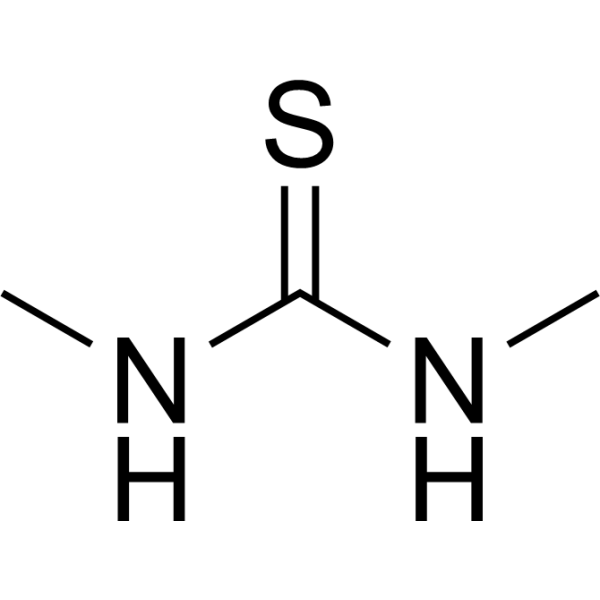
    N,N'-Dimethylthiourea
    1 Publications Verification

    DMTU

    Environmental Pollutants Reactive Oxygen Species (ROS) Inflammation/Immunology
    N,N'-Dimethylthiourea (DMTU), isolated from Allium sativum, is an orally active scavenger of hydroxyl radical (•OH) and blocks •OH production by activated neutrophils in vitro. N,N'-Dimethylthiourea protects against water-immersion restraint stress (WIRS)-induced gastric mucosal lesions in rats by exerting its antioxidant action including •OH scavenging and anti-inflammatory action .
    N,N'-Dimethylthiourea
  • HY-N0554
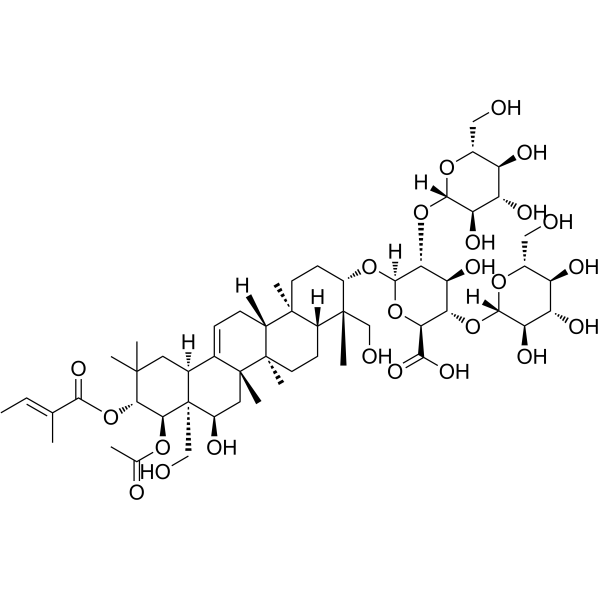
    Escin IA
    1 Publications Verification

    HIV Protease Monoamine Oxidase Infection Inflammation/Immunology Cancer
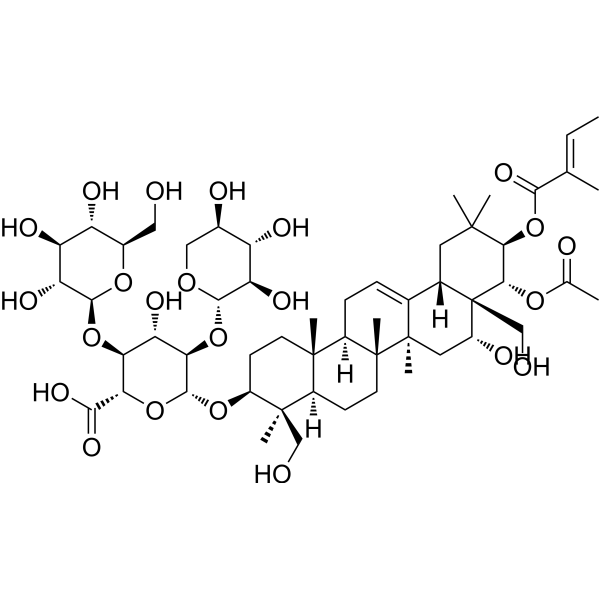
    Escin IA is an oral LOXL2 inhibitor and EMT inhibitor, with selectivity for LOXL2-expressing cells. Escin IA suppresses invasion, migration, and metastasis of breast cancer cells, and acts as the primary anti-TNBC metastasis constituent of Aesculus chinensis Bunge fruit saponin fraction. Escin IA can be used for the research of triple-negative breast cancer, acute inflammation, and ethanol-induced gastric mucosal lesions .
    Escin IA
  • HY-123026

    Bacterial Infection
    Salannin, a limonoid bitter principle of the seed oil of Azadirachta indica, shows antiulcer and spermicidal activities. Salannin displays antibacterial activity towards both Gram-positive and Gram-negative bacteria .
    Salannin
  • HY-108292

    NF-κB Neurological Disease Cancer
    Propacetamol hydrochloride is an orally active prodrug of paracetamol and an inducer of acute liver injury models, with multiple properties including antinociception, antioxidation and gastroprotection. Propacetamol hydrochloride potentiates Tramadol and attenuates Aspirin (HY-14654)-induced gastric mucosal damage and lipid peroxidation. Under specific conditions, Propacetamol hydrochloride also acts as a hepatotoxic inducer, triggering acute liver injury, oxidative stress and apoptosis, with strain differences in toxicity sensitivity. Propacetamol hydrochloride can be used in the research of acute liver injury, drug-induced hepatotoxicity and gastric mucosal damage .
    Propacetamol hydrochloride
  • HY-N3031

    Bacterial Apoptosis Bcl-2 Family MDM-2/p53 Glutathione Peroxidase SOD TNF Receptor Interleukin Related Infection Inflammation/Immunology
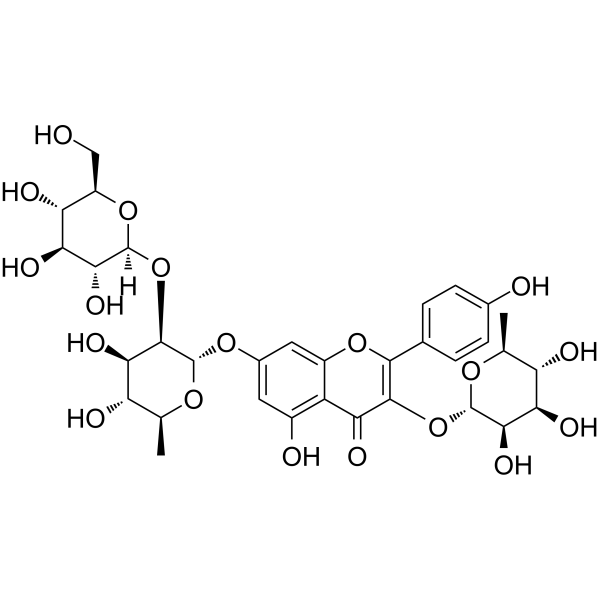
    Grosvenorine is an orally active flavonoid glycoside found in S. grosvenorii. Grosvenorine exhibits antibacterial, antioxidant and antiinflammation activities. Grosvenorine can induce apoptosis and increases anti-apoptotic Bcl-2 protein expression and reduces pro-apoptotic P53 protein expression in gastric tissues. Grosvenorine enhances mucin/glycoprotein secretion, regulates gastric pH, and reduces gastric lesion incidence.Grosvenorine increases glutathione peroxidase, catalase, and SOD levels, reduces lipid peroxidation (MDA), and lowers TNF-α and IL-6 levels. Grosvenorine can be used for the researches of bacterial infection and Gastric ulcer .
    Grosvenorine
  • HY-I0008

    Biochemical Assay Reagents Neurological Disease Inflammation/Immunology
    3-(Trifluoromethyl)cinnamic acid is a cinnamic acid derivative which can be extracted from Polygalae Radix. 3-(Trifluoromethyl)cinnamic acid exerts hepatoprotective, anti-gastric lesions and anti-neurodegenerative effects and can be used in chemical synthesis .
    3-(Trifluoromethyl)cinnamic acid
  • HY-19105A

    Histamine Receptor Inflammation/Immunology
    IT 066 hydrochloride is a Histamine H2 receptor antagonist. IT 066 hydrochloride possesses antioxidant activity and can protect rats against acute gastric mucosal injury induced by ischemia-reperfusion. IT 066 hydrochloride can also inhibit secretagogue-induced gastric acid secretion in rats and exert a long-acting anti-lesion effect on experimental gastric and duodenal lesions in rats. IT 066 hydrochloride is applicable for the research of gastrointestinal diseases .
    IT 066 hydrochloride
  • HY-75424A

    Proton Pump Inflammation/Immunology
    2-(Trifluoromethyl)cinnamic acid is a cinnamic acid derivative that inhibits the proton pump (H +/K +-ATPase), thereby reducing gastric acid secretion. 2-(Trifluoromethyl)cinnamic acid also improves delayed gastric emptying and can be used in research on gastric diseases such as acute gastritis and gastric ulcers .
    2-(Trifluoromethyl)cinnamic acid
  • HY-N4280
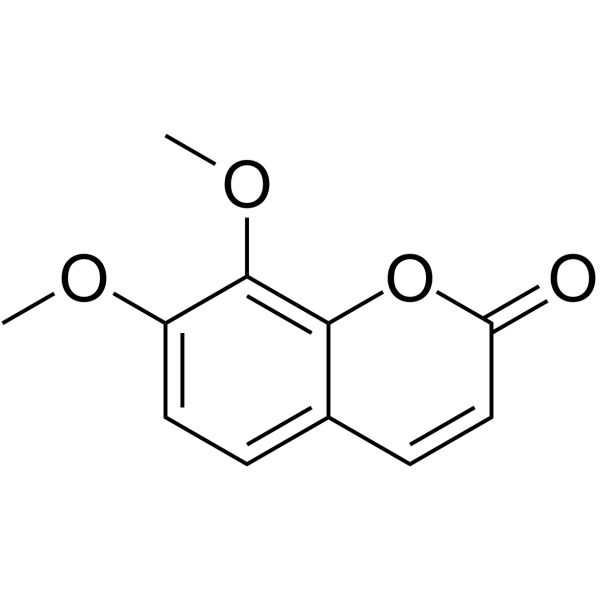
    7,8-Dimethoxycoumarin
    1 Publications Verification

    Na+/K+ ATPase Glutathione Peroxidase NF-κB p38 MAPK Interleukin Related Neurological Disease Metabolic Disease Inflammation/Immunology
    7,8-Dimethoxycoumarin is a coumarin compound derived from Artemisia caruifolia with oral activity. 7,8-Dimethoxycoumarin inhibits mitochondrial permeability transition pore and H +/K +-ATPase, and exhibits antioxidant, anti-inflammatory, renoprotective, neuroprotective and gastroprotective effects. 7,8-Dimethoxycoumarin reduces lipid peroxidation (TBARS), increases GSH levels, inhibits myeloperoxidase (MPO) activity, and regulates the expression of inflammatory factors by inhibiting the NF‑κB and MAPK pathways. 7,8-Dimethoxycoumarin ameliorates gastric mucosal injury, alleviates renal tissue lesions and relieves neuropathic pain. 7,8-Dimethoxycoumarin can be used in studies related to acute renal failure, trigeminal neuralgia and gastritis .
    7,8-Dimethoxycoumarin
  • HY-167653

    Histamine Receptor Bacterial Infection
    FR-145715 is a histamine H2 receptor antagonist, with specific anti-Helicobacter pylori activities. FR-145715 can be used for the research of gastric lesions .
    FR-145715
  • HY-107248

    Others Inflammation/Immunology
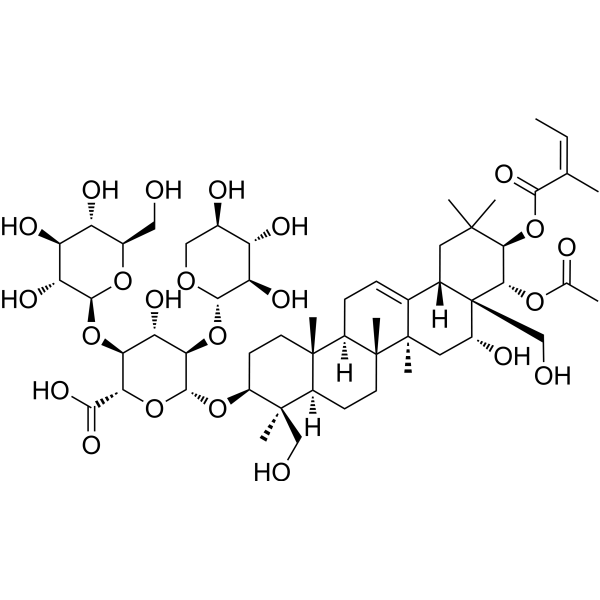
    Escin IIa, isolated from horse chestnut, the seeds of Aesculus hippocastanum L., has positive effects on acute inflammation in animals. Escin IIa has gastroprotections on ethanol-induced gastric mucosal lesions in rats .
    Escin IIa
  • HY-107247

    Others Inflammation/Immunology
    Escin IIb, isolated from horse chestnut, the seeds of Aesculus hippocastanum L., has positive effects on acute inflammation in animals . Escin IIb showed potent protective effects against ethanol-induced gastric mucosal lesions .
    Escin IIb
  • HY-105126

    TR4698

    Prostaglandin Receptor Others
    Rioprostil (TR4698) is an orally effective analogue of prostaglandin E1, possessing potent antisecretory and anti-gastric lesion properties. Rioprostil can be utilized in mucosal protection research .
    Rioprostil
  • HY-120381

    CAM 1189

    Cholecystokinin Receptor Neurological Disease Inflammation/Immunology
    PD 136450 (CAM 1189) is an antagonist for cholecystokinin 2 (CCK2). PD 136450 exhibits anti-secretory, anxiolytic and anti-ulcer activities, inhibits gastric acid secretion (IC50=1 mg/kg), and ameliorates the haemorrhagic lesions (IC50=4.7 mg/kg) in rats .
    PD 136450
  • HY-100413

    Proton Pump Inflammation/Immunology
    CS-526 is a potent, selective, reversible and orally active acid pump antagonist. CS-526 inhibits H +,K +-ATPase activity. CS-526 inhibits gastric acid secretion and prevents esophageal lesions. CS-526 has the potential for the research of gastroesophageal reflux disease .
    CS-526
  • HY-N3031R

    Reference Standards Bacterial Apoptosis Bcl-2 Family MDM-2/p53 Glutathione Peroxidase SOD TNF Receptor Interleukin Related Infection Inflammation/Immunology
    Grosvenorine (Standard) is the analytical standard of Grosvenorine. This product is intended for research and analytical applications. Grosvenorine is an orally active flavonoid glycoside found in S. grosvenorii. Grosvenorine exhibits antibacterial, antioxidant and antiinflammation activities. Grosvenorine can induce apoptosis and increases anti-apoptotic Bcl-2 protein expression and reduces pro-apoptotic P53 protein expression in gastric tissues. Grosvenorine enhances mucin/glycoprotein secretion, regulates gastric pH, and reduces gastric lesion incidence.Grosvenorine increases glutathione peroxidase, catalase, and SOD levels, reduces lipid peroxidation (MDA), and lowers TNF-α and IL-6 levels. Grosvenorine can be used for the researches of bacterial infection and Gastric ulcer .
    Grosvenorine (Standard)
  • HY-125540

    Influenza Virus Infection Inflammation/Immunology
    Saussureamine C shows gastroprotective effect on acidified ethanol-induced gastric mucosal lesions in rats. Saussureamine C inhibits H274Y and N294S mutants and can be used for research of influenza virus infection. Saussureamine C can be isolated from the dried roots of Saussurea lappa Clarke .
    Saussureamine C
  • HY-W027951R

    DMTU (Standard)

    Reference Standards Reactive Oxygen Species (ROS) Inflammation/Immunology
    N,N'-Dimethylthiourea (DMTU), isolated from Allium sativum, is an orally active scavenger of hydroxyl radical (•OH) and blocks •OH production by activated neutrophils in vitro. N,N'-Dimethylthiourea protects against water-immersion restraint stress (WIRS)-induced gastric mucosal lesions in rats by exerting its antioxidant action including •OH scavenging and anti-inflammatory action .
    N,N'-Dimethylthiourea (Standard)
  • HY-106322

    Bacterial Infection
    IO-21 (Compound 3) is a candidate cytoprotective agent. IO-21 exhibits a marked cytoprotective effect. IO-21 shows a potent inhibitory activity against HCl•ethanol-induced lesions. IO-21 shows a MIC of 50 μg/mL against Helicobacter pylori 7795. IO-21 can be used in the research of gastric mucosal ulcers .
    IO-21
  • HY-165489

    Endogenous Metabolite Inflammation/Immunology Endocrinology
    AU-006 is an orally active inhibitor of gastric acid secretion, with anti-ulcer effects. AU-006 does not rely on NO and mucus regulation. AU-006 significantly prevents 95% of gastric mucosal damage caused by ethanol and has broad-spectrum protective effects against chemical corrosive damage. AU-006 can be used for research on gastric ulcers .
    .
    AU-006
  • HY-135754

    HSR-902

    mAChR Neurological Disease Inflammation/Immunology
    Tiquizium bromide is an orally active, atropine-type, nonselective muscarinic antagonist and novel spasmolytic agent. Tiquizium bromide inhibits the developments of gastric lesions and duodenal lesions. Tiquizium bromide induces the mydoriasis and inhibits the Pilocarpine (HY-B0726A)-induced salivation .
    Tiquizium bromide
  • HY-P992459

    ADC Antibody Transmembrane Glycoprotein Cancer
    SGM-101 Antibody is a chimeric monoclonal antibody targeting carcinoembryonic antigen (CEA). SGM-101 Antibody can serve as a tumor-specific fluorescent imaging probe after being covalently conjugated with the near-infrared fluorescent dye BM104 . SGM-101 Antibody accumulates in CEA-positive tumor tissues via antigen-antibody specific binding, and emits near-infrared fluorescence to enable imaging of tumor lesions. SGM-101 Antibody can be used in research related to gastric cancer, colorectal cancer, pancreatic cancer, non-small cell lung cancer, breast cancer, peritoneal carcinomatosis, and liver metastases .
    SGM-101 Antibody
  • HY-124148

    Drug Intermediate Neurological Disease Inflammation/Immunology
    Fenimide is an antipsychotic agent. Fenimide shows sedative, anticonvulsant and anesthetic activity. Fenimide has also prevented formation of stress-induced gastric lesions in the rat .
    Fenimide

Inquiry Online

Your information is safe with us. * Required Fields.

Salutation


Country or Region *

Applicant Name *


Organization Name *

Department *


Email Address *


Product Name *

Cat. No.


Requested quantity *

Phone Number *


Remarks

Inquiry Online

Inquiry Information

Product Name:
Cat. No.:
Quantity:
MCE Japan Authorized Agent:

