1. Search Result
Search Result
Results for "

hydrolysis

" in MedChemExpress (MCE) Product Catalog:

767

Inhibitors & Agonists

1

Screening Libraries

18

Fluorescent Dye

91

Biochemical Assay Reagents

55

Peptides

2

MCE Kits

5

Inhibitory Antibodies

96

Natural
Products

19

Isotope-Labeled Compounds

6

Click Chemistry

8

Oligonucleotides

2

GMP Molecules

Cat. No. Product Name Target Research Areas Chemical Structure
  • HY-15249
    JZL 184
    5+ Cited Publications

    MAGL Neurological Disease
    JZL 184 is a potent, selective and irreversible MAGL inhibitor that blocks 2-Arachidonoylglycerol (2-AG) hydrolysis in brain membranes (IC50 of 8 nM). JZL 184 displays >300-fold selectivity for MAGL over FAAH .
    JZL 184
  • HY-E70069

    Others Others
    Endo-β-N-acetylglucosaminidase (Endo S2) is a key enzyme involved in the processing of free oligosaccharides in the cytosol. Endo-β-N-acetylglucosaminidase catalyzes hydrolysis of N-linked oligosaccharides .
    Endo S2, Streptococcus pyogenes
  • HY-P2818
    Alkaline phosphatase, Bovine intestine
    1 Publications Verification

    Apase

    Endogenous Metabolite Phosphatase Glutathione Peroxidase Bacterial Infection Inflammation/Immunology
    Alkaline phosphatase, Bovine intestine (Apase) is an orally active membrane-bound glycoprotein that catalyzes the hydrolysis of phosphate monoesters at alkaline pH. Alkaline phosphatase, Bovine intestine reduces myeloperoxidase activity and bacterial translocation. Alkaline phosphatase, Bovine intestine improves survival rate of mice infected with E. coli. Alkaline phosphatase, Bovine intestine improves TNBS-induced colon inflammation .
    Alkaline phosphatase, Bovine intestine
  • HY-Y0850E

    PVA (Mw 30000-70000, 87-90% hydrolyzed); Poly(Ethenol) (Mw 30000-70000, 87-90% hydrolyzed)

    Environmental Pollutants Biochemical Assay Reagents Cardiovascular Disease Cancer
    Polyvinyl alcohol (Mw 30000-70000, 87-90% hydrolyzed) is a polyvinyl alcohol with a molecular weight of 30000-70000 and hydrolytic properties. The degree of hydrolysis refers to the degree to which the acetate groups in the original polyvinyl acetate are converted into hydroxyl groups during the hydrolysis process. Polyvinyl alcohol (Mw 30000-70000, 87-90% hydrolyzed) is the hydrolysis and removal of acetate groups after the polymerization of ethylene acetate. And polyvinyl alcohol is obtained. A degree of hydrolysis of 87-90% indicates that a large part of the acetate groups have been removed, resulting in a large number of hydroxyl groups in the PVA structure. Polyvinyl alcohol with different degrees of hydrolysis can be used to self-crosslink to form cryogel, which can be used as biological excipients .
    Polyvinyl alcohol (Mw 30000-70000, 87-90% hydrolyzed)
  • HY-P1748

    EC 3.4.24.27; TML

    Endogenous Metabolite Infection
    Thermolysin, Bacillus thermoproteolyticus rokko (EC 3.4.24.27) (TML) is a thermostable neutral metalloproteinase enzyme secreted by the Gram-positive bacteria Bacillus thermoproteolyticus. Thermolysin catalyzes the hydrolysis of peptide bonds containing hydrophobic residues .

    Optimal pH: 8.0. Considerably stable from pH 5 to 9.5.
    Optimal temperature : 70 °C
    Thermolysin, Bacillus thermoproteolyticus rokko
  • HY-129217
    Naringinase
    2 Publications Verification

    Glycosidase Others
    Naringinase, a hydrolytic enzymatic complex, possesses the activity of both α-L-rhamnosidase and β-D-glucosidase. Naringinase has wide occurrence in nature. Naringinase can be used in the biotransformation of steroids, antibiotics, and mainly on glycosides hydrolysis .
    Naringinase
  • HY-P1315

    Glycylglycyl-L-tyrosyl-L-arginine

    Cathepsin Others
    Papain inhibitor (Glycylglycyl-L-tyrosyl-L-arginine) is a competitive papain-targeting enzyme inhibitor with a Ki of 9 μM. Papain inhibitor binds directly to the substrate binding site of papain, inhibiting substrate hydrolysis by the enzyme. Papain inhibitor functions as a component of an electrochemical probe for the detection of papain .
    Papain inhibitor
  • HY-B1064
    Clindamycin phosphate
    4 Publications Verification

    Clindamycin 2-phosphate; U-28508

    Bacterial Antibiotic Parasite Infection Cancer
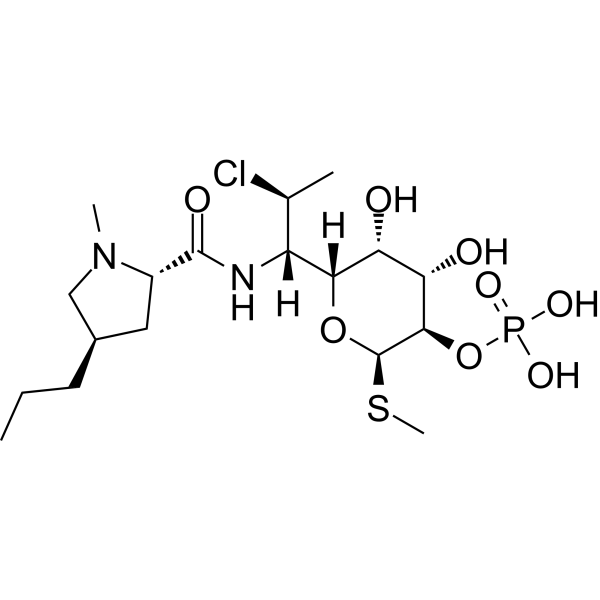
    Clindamycin phosphate (Clindamycin 2-phosphate) is a broad-spectrum bacteriostatic lincosamide antibiotic. Clindamycin phosphate is the proagent of Clindamycin (HY-B1455) with no antimicrobial activity in vitro but can be rapidly converted in vivo to the active parent agent, Clindamycin, by phosphatase ester hydrolysis. Clindamycin phosphate can be used for researching acne and bacterial vaginosis . Clindamycin phosphate has no cytotoxicity. Combined with platelet rich fibrin (PRF), PRF-Clindamycin phosphate enhances antimicrobial properties .
    Clindamycin phosphate
  • HY-P2661

    Biochemical Assay Reagents Bacterial Infection
    FA-Leu-Gly-Pro-Ala-OH is a furylacryloyl-terminal tetrapeptide that serves as a substrate for bacterial collagenase and spirochete metalloendopeptidase. FA-Leu-Gly-Pro-Ala-OH is specifically hydrolyzed by spirochete collagenase only at the Leu-Gly bond. FA-Leu-Gly-Pro-Ala-OH can be used to determine the equilibrium constant of peptide bond hydrolysis, and also to detect collagenase-mediated cleavage reactions via turbidimetry based on absorbance reduction .
    FA-Leu-Gly-Pro-Ala-OH
  • HY-Y0850M

    PVA (Mw 85000-124000, 87-89% hydrolyzed); Poly(Ethenol) (Mw 85000-124000, 87-89% hydrolyzed)

    Environmental Pollutants Biochemical Assay Reagents Others
    Polyvinyl alcohol (Mw 85000-124000, 87-89% hydrolyzed) is a polyvinyl alcohol with a molecular weight of 85000-124000 and hydrolytic properties. The degree of hydrolysis refers to the degree to which the acetate groups in the original polyvinyl acetate are converted into hydroxyl groups during the hydrolysis process. Polyvinyl alcohol (Mw 85000-124000, 87-89% hydrolyzed) is the hydrolysis and removal of acetate groups after the polymerization of ethylene acetate. And polyvinyl alcohol is obtained. A degree of hydrolysis of 87-89% indicates that a large part of the acetate groups have been removed, resulting in a large number of hydroxyl groups in the PVA structure. Polyvinyl alcohol with different degrees of hydrolysis can be used to self-crosslink to form cryogel, which can be used as biological excipient .
    Polyvinyl alcohol (Mw 85000-124000, 87-89% hydrolyzed)
  • HY-B2192

    Amylases Metabolic Disease Cancer
    Amylase is an enzyme produced by pancreas and salivary glands, catalyzing the hydrolysis of starch into sugars. Amylase are broadly classified into α, β, and γ subtypes .
    Amylase
  • HY-E70130

    Others Others
    Snailase, Snail gastrointestinal is an enzyme mixture composed of more than 20 enzymes, which is often used for enzymatic hydrolysis of purified flavonoid glycosides. Snailase can be obtained from the digestive tract and includes cellulase, sucrase, hemicellulase, pectinase, polygalacturonase, protease, etc .
    Snailase, Snail gastrointestinal
  • HY-137824

    4-Methylumbelliferyl-β-D-xyloside

    Biochemical Assay Reagents Others
    4-Methylumbelliferyl-β-D-xylopyranoside (4-Methylumbelliferyl-β-D-xyloside) is an enzymatically hydrolyzable β-D-xylopyranoside substrate. The enzymatic hydrolysis of 4-Methylumbelliferyl-β-D-xylopyranoside is mediated by the stereochemistry-retaining β-D-xylosidase GSXynB2 via a two-step catalytic process (xylosylation followed by dexylosidation). 4-Methylumbelliferyl-β-D-xylopyranoside serves as a substrate for the β-xylosidase of Trichoderma reesei QM 9414, and its enzymatic hydrolysis process is limited by the dexylosidation step.
    4-Methylumbelliferyl-β-D-xylopyranoside
  • HY-N6831
    Xylohexaose
    1 Publications Verification

    Biochemical Assay Reagents Others
    Xylohexaose is a xylooligosaccharide composed of six xylose residues. Xylohexaose can be produced by hydrolysis of beechwood xylan by AfXynA. Xylohexaose serves as a substrate for the determination of xylan hydrolysis activity .
    Xylohexaose
  • HY-119577

    Distigmine dibromide

    Cholinesterase (ChE) Neurological Disease
    Ubretid is a potent inhibitor of plasma cholinesterase. Ubretid therefore delays the hydrolysis of suxamethonium and prolongs its action, similar to the effects shown by other anticholinesterase agents, such as pyridostigmine and donepezil. Ubretid has the potential for the research of urinary retention prolongs the effect of suxamethonium. Ubretid is commonly prescribed for the research of myasthenia gravis and for difficulty in emptying the bladder .
    Ubretid
  • HY-128476

    Environmental Pollutants Biochemical Assay Reagents Others
    Sodium Tartrate (E335ii) is an approved food additive that functions as both a pH regulator and an emulsifier. Sodium Tartrate effectively inhibits hydrolysis, thermal oxidation, polymerization and coloration of vegetable oil during high-temperature heating, exhibiting significant antioxidant activity. The DL-tartaric acid component of Sodium Tartrate has an absorption rate of up to 90% in brown rats, while the absorption rate of related tartaric acid in humans is only 20% .
    Sodium Tartrate
  • HY-153821

    Ras PROTACs Cancer
    PROTAC KRAS G12C degrader-2 (compound 432) is a modulator of K-Ras protein hydrolysis. PROTAC KRAS G12C degrader-2 is a bifunctional compound, which contain on one end a cereblon inhibitor of apoptosis proteins (IAP) and on the other end a moiety which binds KRAS .
    PROTAC KRAS G12C degrader-2
  • HY-142689

    Carboxylesterase (CES) Wnt Cancer
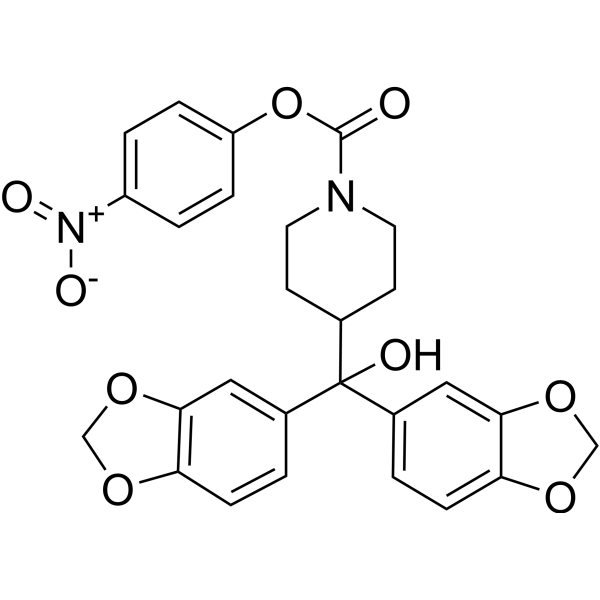
    Carboxylesterase-IN-3 (compound 4y) is a potent inhibitor of Carboxylesterase Notum with an IC50 less than or equal to 10 nM. Notum is a negative regulator of Wnt signaling acting through the hydrolysis of a palmitoleoylate ester, which is required for Wnt activity. Carboxylesterase-IN-3 has the potential for the research of cancer disease .
    Carboxylesterase-IN-3
  • HY-129043

    Drug Metabolite Infection
    3-Formyl rifamycin is an acid degradation product of the broad-spectrum antibiotic Rifampicin (HY-B0272). 3-Formyl rifamycin forms via acid hydrolysis of Rifampicin in an acidic environment .
    3-Formyl rifamycin
  • HY-101366

    Adrenergic Receptor Endocrinology
    A-61603 is a selective α1A/α1a-adrenergic receptor agonist with Ki of 8.89 nM for rat submaxillary gland α1A, Ki of 30.5 nM for cloned bovine α1a. A-61603 potentiates Ca 2+ transients with EC50 of 6.9 nM. A-61603 stimulates phosphoinositide hydrolysis, induces contractile responses in vas deferens, prostate strips, and spleen strips, and exhibits low activity in aortic rings. A-61603 can be used for research on adrenergic function .
    A-61603
  • HY-Y1422H

    Environmental Pollutants Biochemical Assay Reagents Lipase Others
    Lipase, Candida cylindracea (Immobilized) is an immobilized hydrolase and biocatalyst with relaxed positional and substrate specificity. Lipase, Candida cylindracea (Immobilized) can target primary and secondary ester bonds to completely hydrolyze triglycerides into fatty acids and glycerol, producing only trace amounts of monoglycerides. Lipase, Candida cylindracea (Immobilized) exhibits chain specificity, with a relatively fast hydrolysis rate for oleic acid and lauric acid chains, and the slowest hydrolysis rate for stearic acid chains. Lipase, Candida cylindracea (Immobilized) shows high catalytic activity toward long-chain triglycerides under the conditions of pH 8.0 and 37°C .
    Lipase,Candida cylindracea (Immobilized)
  • HY-W392100A

    PCL-diol (MW 530)

    Biochemical Assay Reagents Fungal Infection
    Polycaprolactone diol (MW 530) (PCL-diol (MW 530)) is a poly (ε-caprolactone) diol with an average molecular weight of 530 g·mol −1, which serves as a monomer for biodegradable network elastic polyesters. Network polyester films undergo enzymatic hydrolysis by Rhizopus delemar lipase .
    Polycaprolactone diol (MW 530)
  • HY-W145498

    Cellotetraose

    Drug Metabolite Others
    D-(+)-Cellotetraose (Cellotetraose) is a primary hydrolysis product of cellulose .
    D-(+)-Cellotetraose
  • HY-P4417

    Fluorescent Dye Others
    Ac-IEPD-AMC is a fluorogenic substrate for the determination of protease activity. Ac-IEPD-AMC undergoes hydrolysis and releases the fluorescent product 7-amino-4-methylcoumarin (AMC). AMC is fluorescent under UV light and can emit a fluorescent signal .
    Ac-IEPD-AMC
  • HY-P4419A

    Fluorescent Dye Others
    Boc-Asp(OBzl)-Pro-Arg-AMC acetate is a fluorogenic substrate for the determination of protease activity. Boc-Asp(OBzl)-Pro-Arg-AMC acetate undergoes hydrolysis and releases the fluorescent product 7-amino-4-methylcoumarin (AMC). AMC is fluorescent under UV light and can emit a fluorescent signal .
    Boc-Asp(OBzl)-Pro-Arg-AMC acetate
  • HY-120589

    mGluR Neurological Disease
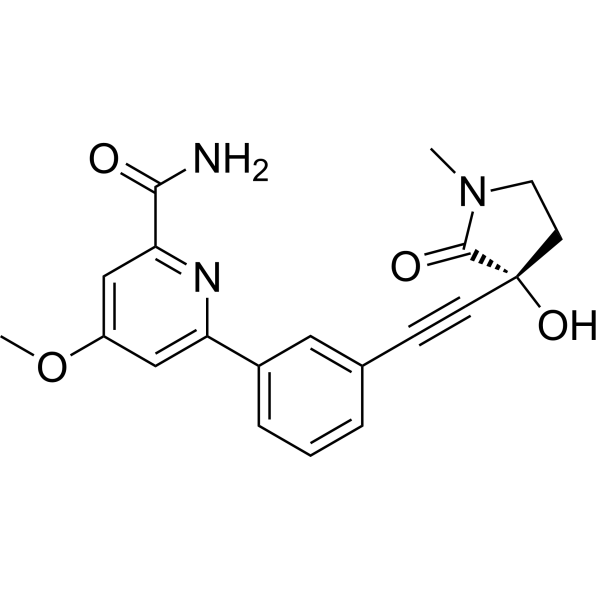
    VU0360172 is a potent and selective mGlu5 receptor positive allosteric modulator with an EC50 value of 16 nM and a Ki of 195 nM, respectively. VU0360172 stimulates polyphosphoinositide (PI) hydrolysis in vivo, which is abrogated in mGlu5 receptors gene deleted mice . VU0360172 is a click chemistry reagent, it contains an Alkyne group and can undergo copper-catalyzed azide-alkyne cycloaddition (CuAAc) with molecules containing Azide groups.
    VU0360172
  • HY-15249R

    MAGL Reference Standards Neurological Disease
    JZL 184 (Standard) is the analytical standard of JZL 184. This product is intended for research and analytical applications. JZL 184 is a potent, selective and irreversible MAGL inhibitor that blocks 2-Arachidonoylglycerol (2-AG) hydrolysis in brain membranes (IC50 of 8 nM). JZL 184 displays >300-fold selectivity for MAGL over FAAH .
    JZL 184 (Standard)
  • HY-E70011

    Biochemical Assay Reagents Others
    Levanase is a slime-dissolving enzyme of Rhodotorula species. Levanase performs random hydrolysis of β-2,6 fructofuranosyl linkages in β-2,6 fructans containing more than 3 fructose units .
    Levanase
  • HY-150504
    ERAP2-IN-1
    1 Publications Verification

    Aminopeptidase Inflammation/Immunology
    ERAP2-IN-1 (compound 61) is an uncompetitive ERAP2 inhibitor. ERAP2-IN-1 specifically inhibits the ERAP2 peptide hydrolysis activity, inhibiting Arg-AMC hydrolysis with an IC50 of 27 μM and model peptide hydrolysis with an IC50 of 44 μM .
    ERAP2-IN-1
  • HY-134361

    P2Y Receptor Eukaryotic Initiation Factor (eIF) Neurological Disease Metabolic Disease Inflammation/Immunology
    ATP-γ-S (tetrasodium) is a P2Y11 receptor agonist, an antioxidant and a neuroprotective agent. ATP-γ-S (tetrasodium) can be used as a substrate for the nucleotide hydrolysis and RNA unwinding activities of eukaryotic translation initiation factor eIF4A. ATP-γ-S (tetrasodium) is active in ATP hydrolysis .
    ATP-γ-S tetrasodium
  • HY-P4417A

    Fluorescent Dye Others
    Ac-IEPD-AMC TFA is a fluorescent substrate used to measure protease activity. Ac-IEPD-AMC undergoes hydrolysis and releases the fluorescent product 7-amino-4-methylcoumarin (AMC). AMC fluoresces under UV light irradiation and can emit fluorescent signals .
    Ac-IEPD-AMC TFA
  • HY-P4323A

    Fluorescent Dye Others
    Boc-Gln-Arg-Arg-AMC acetate is a fluorogenic substrate for the determination of protease activity. Boc-Gln-Arg-Arg-AMC undergoes hydrolysis and releases the fluorescent product 7-amino-4-methylcoumarin (AMC). AMC is fluorescent under UV light and can emit a fluorescent signal .
    Boc-Gln-Arg-Arg-AMC acetate
  • HY-142688

    Carboxylesterase (CES) Wnt Cancer
    Carboxylesterase-IN-2 (compound 4u) is a potent inhibitor of Carboxylesterase Notum with an IC50 less than or equal to 10 nM. Notum is a negative regulator of Wnt signaling acting through the hydrolysis of a palmitoleoylate ester, which is required for Wnt activity. Carboxylesterase-IN-2 has the potential for the research of cancer disease .
    Carboxylesterase-IN-2
  • HY-B1610K

    Biochemical Assay Reagents Others
    Sodium Citrate Buffer, 0.5M, pH 5.5 is a metal chelator and buffering agent. Sodium Citrate Buffer, 0.5M, pH 5.5 requires oxygen to participate in the oxidation process to reduce pink defects in cooked ground turkey, and it does not function via heme iron chelation or iron complex interaction. When mixed with 50% (by vol.) 1,3-dimethylimidazolium methyl sulfate, Sodium Citrate Buffer, 0.5M, pH 5.5 can serve as an aqueous buffering medium to maintain the catalytic efficiency of the hyperthermophilic β-glycosidase CelB for lactose hydrolysis at 80°C, while also acting as a reaction medium for CelB-catalyzed lactose hydrolysis and galactosyltransferase assays .
    Sodium Citrate Buffer, 0.5M, pH 5.5
  • HY-Y0850U8

    Polyvinyl alcohol (Mw 47000, 98-99% hydrolyzed, ~1000 polymerization); Poly(Ethenol) (Mw 47000, 98-99% hydrolyzed, ~1000 polymerization)

    Biochemical Assay Reagents Others
    PVA (Mw 47000, 98-99% hydrolyzed, ~1000 polymerization) is a polyvinyl alcohol with molecular weight of 47000 with hydrolysis properties. Hydrolysis degree refers to the conversion rate of acetic acid group hydrolysis to hydroxyl group in the original polyvinyl acetate, PVA (Mw 47000, 98-99% hydrolyzed, ~1000 polymerization). In addition, polyvinyl alcohol is obtained from polymerization of vinyl acetate to remove acetic acid group by hydrolysis. Polyvinyl alcohol with different degrees of hydrolysis can be self-crosslinked to form frozen gels and used as biological excipients .
    PVA (Mw 47000, 98-99% hydrolyzed, ~1000 polymerization)
  • HY-P3948

    Fluorescent Dye Others
    Fluorescent Substrate for Pro-Specific Proteases is a fluorescent substrate of pro-specific proteases. Fluorescent Substrate for Pro-Specific Proteases can be used to detect the hydrolysis rate and activity of target enzyme .
    Fluorescent Substrate for Pro-Specific Proteases
  • HY-B2192A

    Maltin

    Biochemical Assay Reagents Others
    Diastase, Aspergillus oryzae (Maltin) is a starch hydrolase derived from Aspergillus oryzae. Diastase, Aspergillus oryzae catalyzes starch hydrolysis through sequential stages, first producing dextrins, then glucose and maltose .
    Diastase, Aspergillus oryzae
  • HY-N12146

    Parasite Infection
    Spinosyn D 17-pseudoaglycone is a hydrolysis product of the minor insecticide component Spinosyn D (HY-125326) .
    Spinosyn D 17-pseudoaglycone
  • HY-W923640

    N-Methyltryptophan

    Drug Derivative Others
    N-Methyl-DL-tryptophan (N-Methyltryptophan) is a DL-tryptophan (HY-W012480) derivative with activity to stabilize tryptophan against degradation during acid hydrolysis of protein fibres .
    N-Methyl-DL-tryptophan
  • HY-137613

    HIV Infection Inflammation/Immunology
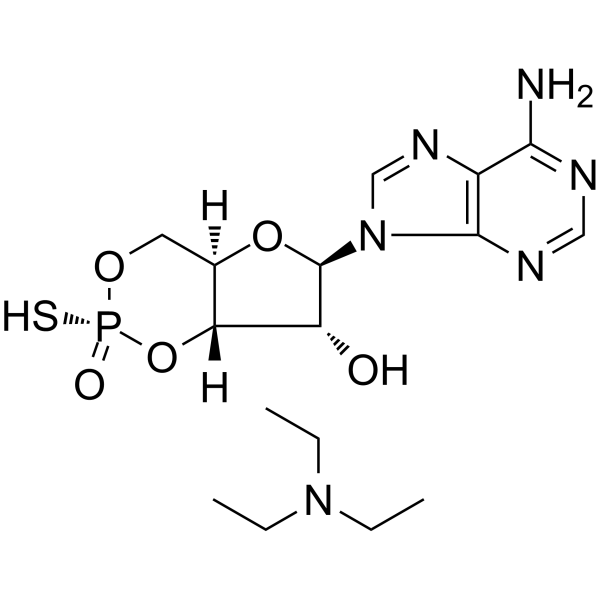
    Sp-TTPαS is a competitivesterile alpha motif and HD domain containing protein 1 (SAMHD1) hydrolysis inhibitor. Sp-TTPαS competitively inhibits SAMHD1 triphosphohydrolase activity with a Ki value of 46 µM .
    Sp-TTPαS
  • HY-N3921

    Carboxylesterase (CES) Cancer
    Gancaonin I, an Isoflavone, exhibits moderate inhibition on human carboxylesterase 2 (hCES2A) with IC50 of 1.72 μM. Gancaonin I inhibits hCES2A-mediated fluorescein diacetate (FD) hydrolysis .
    Gancaonin I
  • HY-165424

    Fluorescent Dye Glycosidase Cardiovascular Disease Cancer
    NIR-BG2 is a near-infrared fluorescent probe targeting senescence-associated β-galactosidase (SA-β-Gal). NIR-BG2 is activated by SA-β-Gal and undergoes hydrolysis to release electrophilic quinone methide that covalently binds to surrounding proteins for in situ labeling, with a 16-fold enhancement of fluorescence signal at 709 nm . NIR-BG2 is promising for research of vivo imaging of cellular senescence .
    NIR-BG2
  • HY-E70192

    Ser/Thr Protease Others
    Acetyltrypsin, Bovine pancreas is a stable trypsin derivative that can catalyze the hydrolysis of alpha-N-benzoyl-L-argininamide .
    Acetyltrypsin, Bovine pancreas
  • HY-E70017

    Erepsin; Peptidase (IMPa)

    Others Others
    Peptidase (IMPa) (Erepsin) is catalytically active enzyme that cleaves peptide bonds in proteins and peptides by hydrolysis .
    Peptidase, microorganism
  • HY-120300

    Cannabinoid Receptor Metabolic Disease
    UCM710 is an endocannabinoid (eCB) hydrolysis inhibitor that increases the levels of N-arachidonoyl ethanolamine and 2-arachidonoylglycerol in neurons. UCM710 inhibits fatty acid amide hydrolase and α/β-hydrolase domain 6, but not monoacylglycerol lipase .
    UCM710
  • HY-172567

    Biochemical Assay Reagents Phospholipase Others
    PLC thio-PIP2 trisodium is an analog of naturally occurring PIP2. PLC thio-PIP2 trisodium can simulate the process of PIP2 being hydrolyzed by PLC in in vitro experiments, and then quantitatively analyze the activity of PLC by detecting the free thiol produced by hydrolysis .
    PLC thio-PIP2 trisodium
  • HY-P4465

    Fluorescent Dye Others
    Gly-Arg-pNA is a fluorogenic substrate for the measurement of protease activity. Gly-Arg-pNA undergoes hydrolysis and releases the fluorescent product p-nitroaniline. p-nitroaniline is in a fluorescent state under ultraviolet light irradiation and can emit a fluorescent signal .
    Gly-Arg-pNA
  • HY-149736

    PKA ATP Synthase Cardiovascular Disease
    ATP Synthesis-IN-3 (compound 31) is an ATP hydrolysis inhibitor with protective effects during myocardial ischemia. ATP Synthesis-IN-3 can increase the ATP content of ischemic cardiomyocytes, increase the phosphorylation of PKA and phospholamban, and inhibit ischemia-induced apoptosis .
    ATP Synthesis-IN-3
  • HY-P4419

    Fluorescent Dye Others
    Boc-Asp(OBzl)-Pro-Arg-AMC is a fluorogenic substrate for the determination of protease activity. Boc-Asp(OBzl)-Pro-Arg-AMC undergoes hydrolysis and releases the fluorescent product 7-amino-4-methylcoumarin (AMC). The excitation and emission wavelengths are 351 nm and 430 nm, respectively .
    Boc-Asp(OBzl)-Pro-Arg-AMC
  • HY-P4408

    Fluorescent Dye Others
    Ac-Arg-Gly-Lys-AMC is a fluorogenic substrate for the determination of protease activity. Ac-Arg-Gly-Lys-AMC undergoes hydrolysis and releases the fluorescent product 7-amino-4-methylcoumarin (AMC). AMC is fluorescent under UV light and can emit a fluorescent signal .
    Ac-Arg-Gly-Lys-AMC

Inquiry Online

Your information is safe with us. * Required Fields.

Salutation


Country or Region *

Applicant Name *


Organization Name *

Department *


Email Address *


Product Name *

Cat. No.


Requested quantity *

Phone Number *


Remarks

Inquiry Online

Inquiry Information

Product Name:
Cat. No.:
Quantity:
MCE Japan Authorized Agent:

