31 Results for "

iPSC

" in MedChemExpress (MCE) Product Catalog:
Products (31)

31 Results for "iPSC" in MCE Product Catalog:

12
12 Cited Publications
Cat. No.: HY-13257
CAS No.: 1226056-71-8
Purity:  99.57%
Target:  

ROCK

Research Areas:  

Cancer

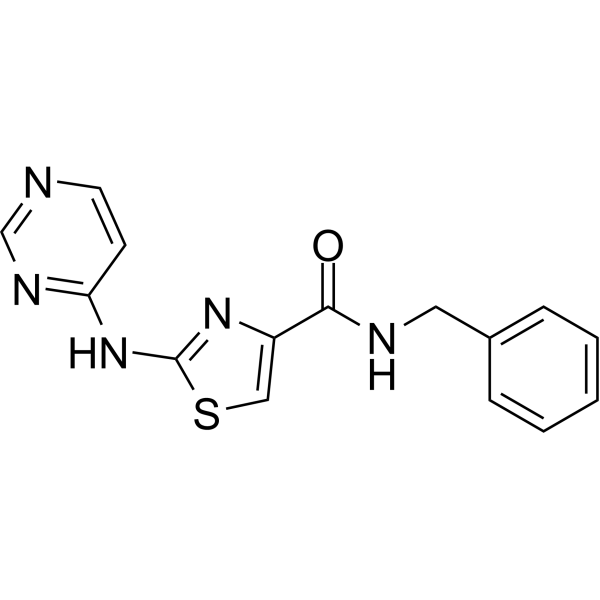
Thiazovivin is a potent ROCK inhibitor, which can protect human embryonic stem cells. Thiazovivin improves the efficiency of iPSC generation.
loading...
    loading...
1
1 Cited Publications
Cat. No.: HY-12303
CAS No.: 300586-90-7
Purity:  99.56%
Target:  

Oct3/4 TET Protein

Research Areas:  

Cancer

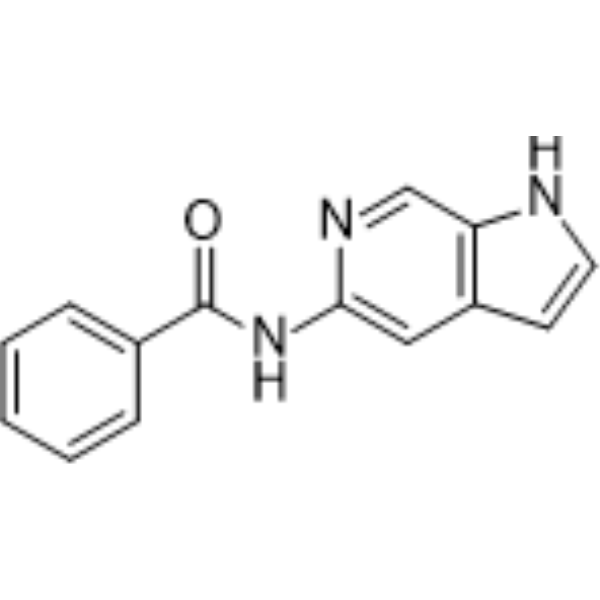
OAC1 is a potent Oct4 activator. OAC1 activates Oct4 and Nanog promoters and enhances induced pluripotent stem cells (iPSC) formation. OAC1 activates OCT4 through upregulation of HOXB4 expression. OAC1 increases transcription of the Oct4-Nanog-Sox2 triad and TET1. OAC1 facilitates the reprogramming of cells by enhancing efficiency and shortening the reprogramming time .
loading...
    loading...
Cat. No.: HY-141591
CAS No.: 1799392-31-6
Purity:  99.80%
Research Areas:  

Others

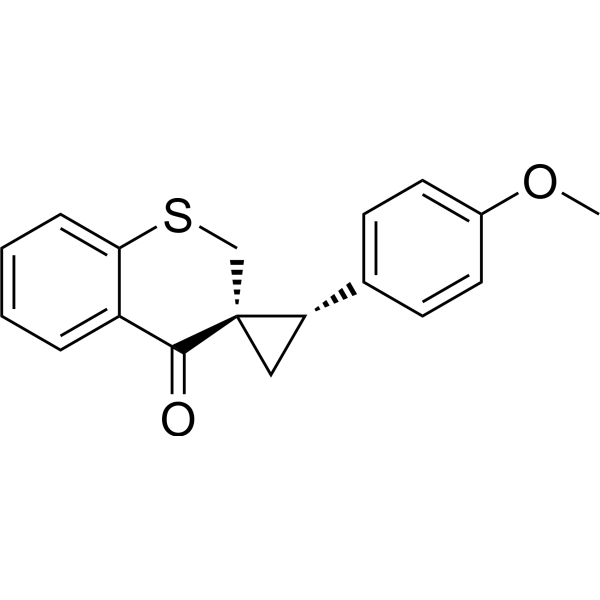
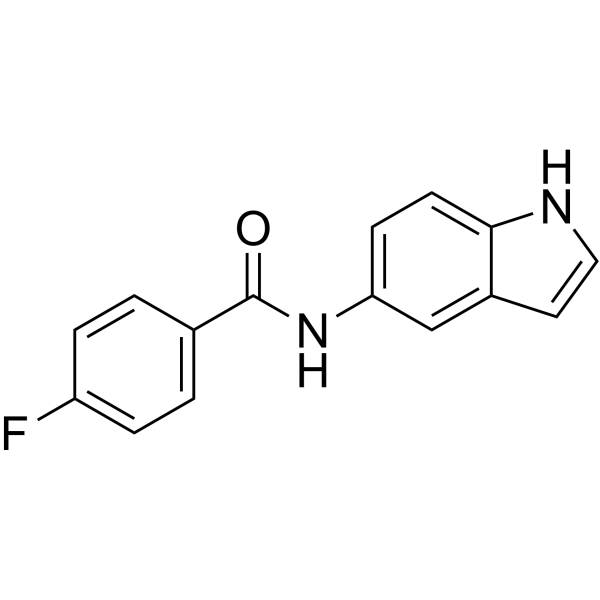
CYT296 is a target chromatin de-condensation compound. CYT296 can improve the induction of induced pluripotent stem cell (iPSCs) mediated by defined factors (OSKM) and induce an open chromatin state in Mouse Embryonic Fibroblast (MEFs) to facilitate somatic cell reprogramming. CYT296 can be used for cell replacement therapies and drug screening research .
loading...
    loading...
Cat. No.: HY-170781
CAS No.: 3099003-91-2
Target:  

LIM Kinase (LIMK)

Research Areas:  

Metabolic Disease

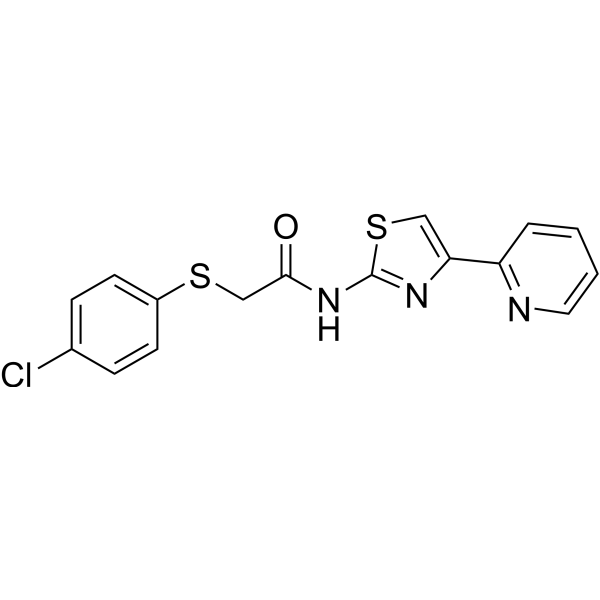
MDI-114215 (compound 85) is an allosteric LIMK1/2 dual inhibitor with good in vivo tolerance. MDI-114215 can inhibit cofilin phosphorylation in mouse brain region-induced pluripotent stem cells (iPSCs), which can be used for Fragile X Syndrome (FXS) research .
loading...
    loading...
Cat. No.: HY-124815
CAS No.: 895470-67-4
Purity:  99.69%
Research Areas:  

Others

CP-312 is a potent Heme Oxygenase-1 (HO-1) inducer. CP-312 protects hiPSC-CM viability by targeting the antioxidant response network through induction of HMOX1 expression. CP-312 protects human iPSC-derived cardiomyocytes from oxidative stress .
loading...
    loading...
Cat. No.: HY-160842
CAS No.: 3024322-57-1
Target:  

c-Fms

Research Areas:  

Neurological Disease

CSF1R-IN-24 (Example 134) is an orally active CSF1R inhibitor. CSF1R-IN-24 significantly inhibits the survival of human ipSC-derived microglia (hiPSC-MG) .
loading...
    loading...
Cat. No.: HY-N0229R
CAS No.: 56-41-7
Synonyms: L-2-Aminopropionic acid (Standard)
L-Alanine (Standard) is the analytical standard of L-Alanine. This product is intended for research and analytical applications. L-Alanine is a non-essential amino acid, involved in sugar and acid metabolism, increases immunity, and provides energy for muscle tissue, brain, and central nervous system. In Vitro: The viability of both hiPSCs, 201B7 cells and ehiPSCs decrease with an increase in L-Alanine concentration, and reach 7.5±1.3% and 3.7±0.7% respectively at 1.2 M of L-Alanine. On the other hand, no decrease in the viability of hFBs and hSkMCs are observed. Although the viability of iCMs slightly decreases along with the increase of the L-Alanine concentration, viability of iCMs at 1.2 M concentration of L-Alanine, 49.4±6.9%, is significantly higher than that of undifferentiated iPSCs, 201B7 cells and ehiPSCs (p< 0.01). The viability of hiPSCs, 201B7 cells and ehiPSCs, drastically decrease even after 2 or 4 h treatment. In contrast, the viability of hFBs fails to decrease at 1, 2, and 4 h and shows a small decrease at 24 h treatment. The viability of 201B7 cells in suspension culture decreases to 11.8±6.0% following treatment with 1.2 M L-Alanine for 2 h, whereas that of hFBs is 72.9±14.2% .
loading...
    loading...
Cat. No.: HY-P2286
CAS No.: 1967815-98-0
Target:  

Phosphatase

Research Areas:  

Cancer

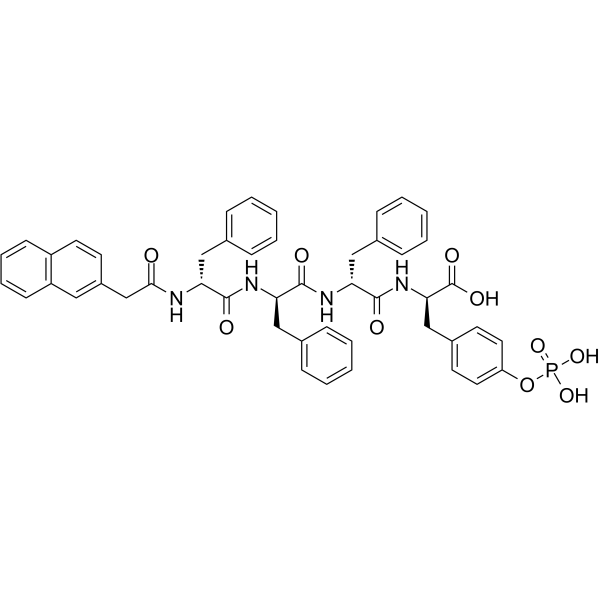
D-3, a phosphorpeptide, is an efficient, simple, and specific iPSC-eliminating agent .
loading...
    loading...
Cat. No.: HY-119672
CAS No.: 182564-41-6
Purity:  98.27%
Target:  

Oct3/4

Research Areas:  

Others

Oct4 inducer-1 (compound OAC-3) is a potent Oct4 activator. Oct4 inducer-1 activates Oct4 and Nanog promoters and enhances induced pluripotent stem cells (iPSC) formation. Oct4 inducer-1 facilitates the reprogramming of cells by enhancing efficiency and shortening the reprogramming time .
loading...
    loading...
Cat. No.: HY-50751G
CAS No.: 796967-16-3
Synonyms: ABT-869 (GMP); AL-39324 (GMP)
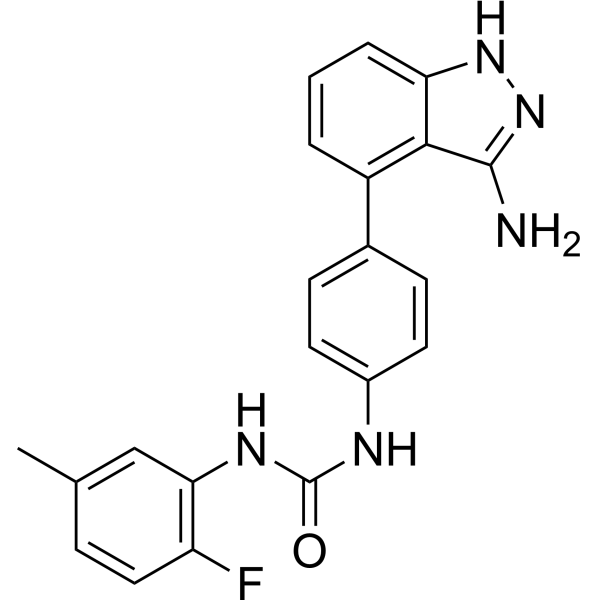
Linifanib (ABT-869) (GMP) is Linifanib (HY-50751) produced by using GMP guidelines. GMP small molecules work appropriately as an auxiliary reagent for cell therapy manufacture. Linifanib is a potent and orally active multi-target inhibitor of VEGFR and PDGFR family with IC50s of 4, 3, 66, and 4 nM for KDR, FLT1, PDGFRβ, and FLT3, respectively. Linifanib (GMP) promotes the generation and reprogramming of iPSCs from somatic cells .
loading...
    loading...
Cat. No.: HY-100372
CAS No.: 170846-89-6
Purity:  ≥98.0%
Synonyms: (RS)-ECPG
Target:  

mGluR

Research Areas:  

Neurological Disease

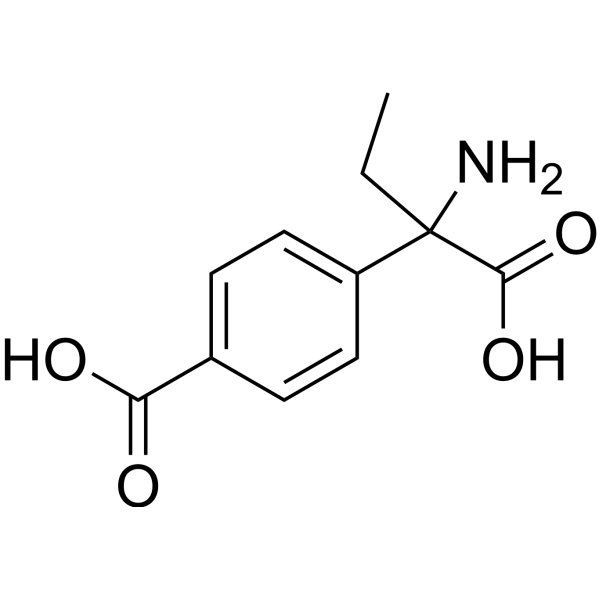
E4CPG ((RS)-ECPG) is a Group I/Group II metabotropic glutamate receptor (mGluR) antagonist. E4CPG can inhibit the paired-pulse ratio of monosynaptic inhibitory postsynaptic currents (IPSC) potentiation .
loading...
    loading...
Cat. No.: HY-178048
CAS No.: 3086460-35-4
Target:  

Autophagy

Research Areas:  

Neurological Disease

Neuroprotective agent 13 is a brain-penetrant 1H-benzo[d]imidazoles compound with neuroprotective effect. Neuroprotective agent 13 can activate autophagy and clear SCMAS accumulation from iPSC-derived neural progenitor cells. Neuroprotective agent 13 can be used for the research of neurological disease, such as neuronal ceroid lipofuscinoses (NCLs) .
loading...
    loading...
Cat. No.: HY-172544
CAS No.: 2857982-34-2
Target:  

Tau Protein

Research Areas:  

Neurological Disease

TTBK1/2-IN-3 (Compound 10) is a potent inhibitor of tau tubulin kinase 1 (TTBK1) and TTBK2, with IC50 values of 579 nM and 258 nM, respectively. TTBK1/2-IN-3 inhibits the phosphorylation of TDP-43. TTBK1/2-IN-3 reduces the expression of primary cilia on the surface of iPSCs .
loading...
    loading...
Cat. No.: HY-12701A
CAS No.: 234757-41-6
Purity:  99.23%
Synonyms: U-99194A; PNU-99194A maleate; JPC-211 maleate
Target:  

Dopamine Receptor

Research Areas:  

Neurological Disease

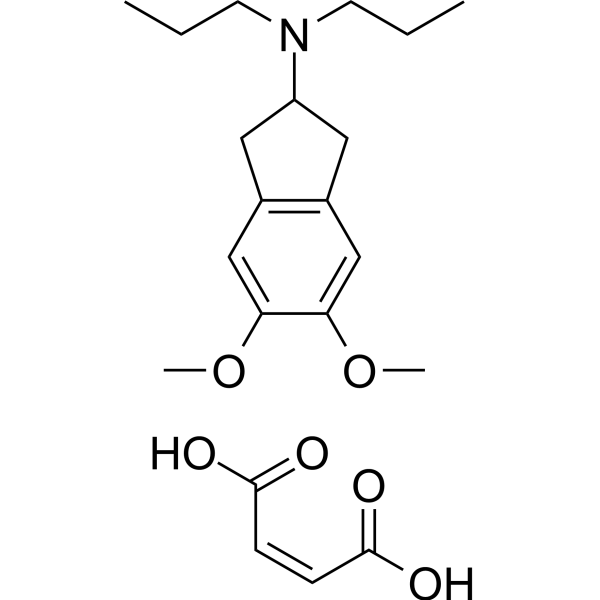
U-99194 (PNU-99194) maleate is a selective, potent dopamine D3 receptor antagonist (Ki =160 nM). U-99194 maleate inhibits the activation of D3 receptor mediated by endogenously released dopamine or exogenous D3 agonists. U-99194 maleate abrogates the IPSC-suppressive effect of the D3 agonist PD 128907 in rat hippocampal slices. U-99194 maleate significantly suppresses Nicotine (HY-127019)-induced tremor in mice. U-99194 maleate can be used for the study of dopamine D3 receptor-mediated motor disorders, particularly kinetic tremors .
loading...
    loading...
Cat. No.: HY-172543
CAS No.: 2857982-35-3
Target:  

Tau Protein

Research Areas:  

Neurological Disease

TTBK1/2-IN-2 (compound 9) is a potent Tau tubulin kinase 1 (TTBK1) and TTBK2 inhibitor with IC50s of 384 nM and 175 nM, respectively. TTBK1/2-IN-2 shows a significant ciliogenesis phenotype in human induced pluripotent stem cells (iPSCs) .
loading...
    loading...
Cat. No.: HY-178052
CAS No.: 3086460-57-0
Target:  

Autophagy

Research Areas:  

Neurological Disease

Neuroprotective agent 14 is a brain-penetrant 1H-benzo[d]imidazoles compound with neuroprotective effect. Neuroprotective agent 14 can activate autophagy and clear SCMAS accumulation from iPSC-derived neural progenitor cells. Neuroprotective agent 14 can be used for the research of neurological disease, such as neuronal ceroid lipofuscinoses (NCLs) .
loading...
    loading...
Cat. No.: HY-124815R
CAS No.: 895470-67-4
Research Areas:  

Others

CP-312 (Standard) is the analytical standard of CP-312. This product is intended for research and analytical applications. CP-312 is a potent Heme Oxygenase-1 (HO-1) inducer. CP-312 protects hiPSC-CM viability by targeting the antioxidant response network through induction of HMOX1 expression. CP-312 protects human iPSC-derived cardiomyocytes from oxidative stress .
loading...
    loading...
Cat. No.: HY-12701
CAS No.: 82668-33-5
Synonyms: U-99194A free base; PNU-99194A; JPC-211
Target:  

Dopamine Receptor

Research Areas:  

Neurological Disease

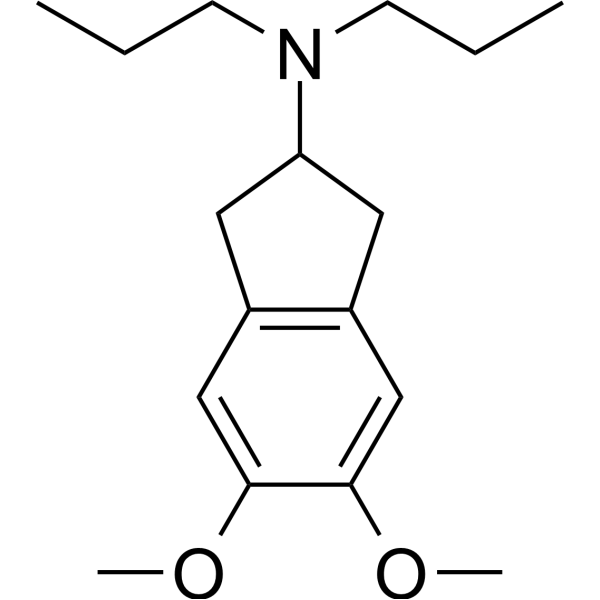
U-99194 (PNU-99194) is a selective, potent dopamine D3 receptor antagonist. U-99194 inhibits the activation of D3 receptor mediated by endogenously released dopamine or exogenous D3 agonists. U-99194 abrogates the IPSC-suppressive effect of the D3 agonist PD 128907 in rat hippocampal slices. U-99194 significantly suppresses Nicotine (HY-127019)-induced tremor in mice. U-99194 can be used for the study of dopamine D3 receptor-mediated motor disorders, particularly kinetic tremors .
loading...
    loading...
Cat. No.: HY-K6020

MCE iPSC/ESC Dissociation Solution (Enzyme-Free) is a chelation-based, enzyme-free cell dissociation reagent specifically designed for the culture and manipulation of induced pluripotent stem cells (iPSCs) and embryonic stem cells (ESCs). This optimized solution enables gentle and efficient dissociation of iPSCs/ESCs within 5-8 min, making it suitable for routine passaging, dissociation, and cell-cluster handling. It provides superior stability and better preservation of cell state compared with traditional methods.

loading...
    loading...
Cat. No.: HY-K6502

MCE Human iPSC-Derived Brain Organoid Long-term Culture Medium is a specialized culture system developed through systematic reformulation and concentration optimization based on neuronal cell culture platforms. It significantly enhances the adaptability and stability of long-term culture for brain organoids derived from human induced pluripotent stem cells (iPSCs).

loading...
    loading...

