
1. Search Result
Search Result
Results for "

kinetics

" in MedChemExpress (MCE) Product Catalog:

150

Inhibitors & Agonists

1

Screening Libraries

8

Fluorescent Dye

11

Biochemical Assay Reagents

7

Peptides

12

Natural
Products

2

Recombinant Proteins

5

Click Chemistry

1

Oligonucleotides

Cat. No. Product Name Target Research Areas Chemical Structure
  • HY-128643
    FAPI-4
    30+ Cited Publications

    FAP Cancer
    FAPI-4 is a potent fibroblast activation protein (FAP) inhibitor for the targeting FAP. FAPI-4 can be used in cancer research. 68Ga-FAPI-4 PET/CT is a promising new diagnostic method for imaging various kinds of cancer, with good tumor-to-background contrast ratios .
    FAPI-4
  • HY-W015239
    KAT8-IN-1
    3 Publications Verification

    Acyltransferase Inflammation/Immunology Cancer
    KAT8-IN-1 is a lysine (K) acetyltransferase 8 (KAT8) inhibitor, with IC50s of 141 μM (KAT8), 221 μM (KAT2B), 106 μM (KAT3B), respectively. KAT8 inhibits histone acetyltransferases (HATs), and could result in disease states, such as cancer or inflammatory diseases .
    KAT8-IN-1
  • HY-N1495

    Maltopentose

    Amylases Others
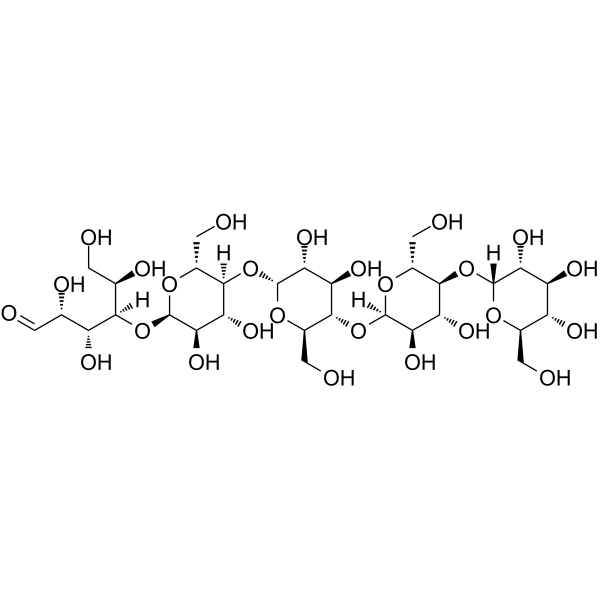
    Maltopentaose is the shortest chain oligosaccharide. Maltopentaose is a substrate for α-amylases. Maltopentaose can be classified as maltodextrin and is also used in a study to investigate glycation and phosphorylation of α-lactalbumin. Maltopentaose is used to study the inhibition kinetics of human pancreatic α-amylase by dehydrodieugenol B .
    Maltopentaose
  • HY-137822

    4-Nitrophenyl a-D-mannopyranoside

    Glycosidase Others
    p-Nitrophenyl α-D-mannopyranoside (4-Nitrophenyl α-D-mannopyranoside) is a chromogenic glycosidic ligand. p-Nitrophenyl α-D-mannopyranoside features a sugar moiety (α-D-mannopyranose) with the mannose-characteristic axial hydroxyl group at the C2 position and a ligand portion (p-nitrophenol) that provides ultraviolet-visible light absorption properties. p-Nitrophenyl α-D-mannopyranoside can be used to determine glycosidase activity and characterize the sugar recognition properties of lectins (such as Concanavalin A (HY-P2149)) .
    p-Nitrophenyl α-D-mannopyranoside
  • HY-E70336

    Endogenous Metabolite Others
    Peroxidase, Lignin is a biocatalyst and a key enzyme in new biocatalyst technology. Enzyme engineering focuses on enhancing enzyme reaction kinetics, substrate selectivity, and activity under harsh conditions such as low or high pH. By introducing stimulus responsiveness to these enzyme modifications, dynamic control of activity is also possible .
    Peroxidase, Lignin
  • HY-100034
    NSC 663284
    5+ Cited Publications

    DA-3003-1

    Phosphatase Histone Methyltransferase Cancer
    NSC 663284 (DA-3003-1) is a potent, cell-permeable, and irreversible Cdc25 dual specificity phosphatase inhibitor, has an IC50 for Cdc25B2 of 0.21 μM. NSC 663284 exhibits mixed competitive kinetics against Cdc25A, Cdc25B(2), and Cdc25C with Ki values of 29, 95, and 89 nM, respectively . NSC 663284 inhibits NSD2 (IC50 of 170 nM) through a direct interaction with the catalytic SET domain (Kd of 370 nM) .
    NSC 663284
  • HY-122376

    D-Trans-Allethrin; Esbiol

    Environmental Pollutants Sodium Channel Neurological Disease
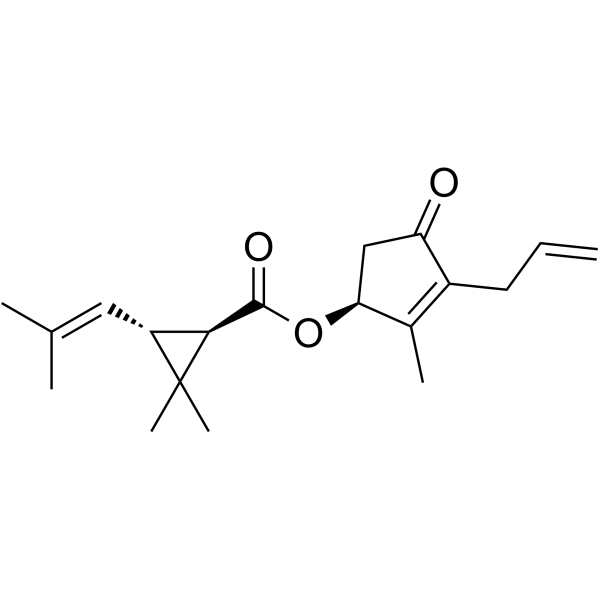
    S-Bioallethrin (D-Trans-Allethrin) is a pyrethroid insecticide. S-Bioallethrin disrupts nerve function by modifying the gating kinetics of transitions between the conducting and nonconducting states of voltage-gated sodium channels. S-Bioallethrin also causes inhibition of lymphocyte proliferation and induces histamine release from human basophils .
    S-Bioallethrin
  • HY-137333

    Fluorescent Dye Others
    4-Methylumbelliferyl β-D-cellobioside is a substrate of Cellulase (HY-B2220). 4-Methylumbelliferyl β-D-cellobioside can be hydrolyzed and produces fluorescent 4-methylumbelliferone, which can be used to study the kinetics of cellulases .
    4-Methylumbelliferyl β-D-cellobioside
  • HY-W008129

    Endogenous Metabolite Infection
    H-D-cis-Hyp-OH (cis-4-Hydroxy-D-proline) is a proline derivative involved in bacterial metabolic pathways and is a substrate for cis-4-hydroxy-D-proline dehydrogenase. H-D-cis-Hyp-OH is a precursor for the synthesis of conformationally constrained PNA adenine monomers and can be used to study the specificity and kinetics of D-alanine dehydrogenase .
    H-D-cis-Hyp-OH
  • HY-B0445B

    α-Nicotinamide Adenine Dinucleotide

    Mitochondrial Metabolism Endogenous Metabolite Metabolic Disease
    α-NAD (α-Nicotinamide Adenine Dinucleotide) serves as a substrate for reninase, functions as an analog of β-NAD, affects the kinetics of NAD-dependent enzymes, and also plays a critical role as a cofactor in mitochondrial redox reactions .
    α-NAD
  • HY-151720
    Cy5.5 DBCO
    1 Publications Verification

    ADC Linker Others
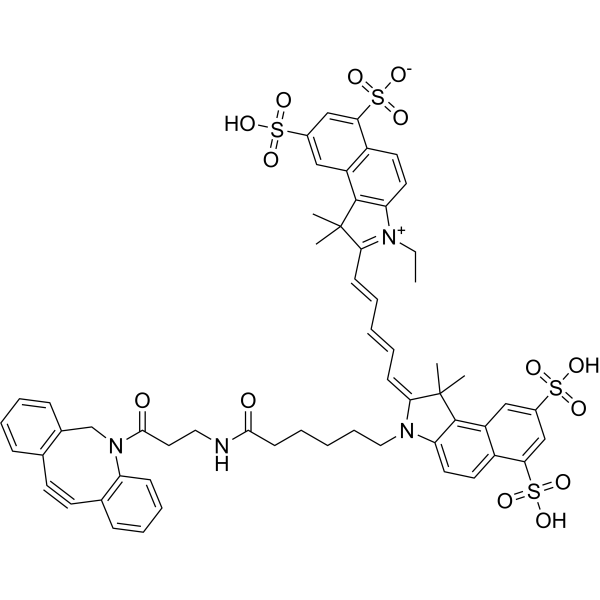
    Cy5.5 DBCO is a click chemistry reagent containing an cycloalkynes group. Cy5.5 DBCO is a linker of Cyanine5.5 fluorophore. DBCO group enables copper free biocompatible click chemistry with fast reaction kinetics and good stability .
    Cy5.5 DBCO
  • HY-E70333

    AR2000

    Endogenous Metabolite Others
    Microgranulated pectolytic enzyme is a biocatalyst and a key enzyme in new biocatalyst technology. Enzyme engineering focuses on enhancing enzyme reaction kinetics, substrate selectivity, and activity under harsh conditions such as low or high pH. By introducing stimulus responsiveness to these enzyme modifications, dynamic control of activity is also possible .
    Microgranulated pectolytic enzyme
  • HY-E70332

    Endogenous Metabolite Others
    Lipase, Aspergillus niger is a biocatalyst and a key enzyme in new biocatalyst technology. Enzyme engineering focuses on enhancing enzyme reaction kinetics, substrate selectivity, and activity under harsh conditions such as low or high pH. By introducing stimulus responsiveness to these enzyme modifications, dynamic control of activity is also possible .
    Lipase, Aspergillus niger
  • HY-15404

    Lu-135252

    Endothelin Receptor Cardiovascular Disease Endocrinology
    Darusentan (Lu-135252) is a selective endothelin receptor A (ET-A) receptor antagonist, which binds with a Ki of 1.4 nM to the ET-A receptor and a Ki of 184 nM to ET-B receptor, respectively with a 100-fold selectivity for ETA rather than ETB receptors . Darusentan competes for radiolabeled endothelin binding in rat aortic vascular smooth muscle cells (RAVSMs) membranes with single-site kinetics, exhibiting a Ki of 13 nM .
    Darusentan
  • HY-131682

    3-Hexanoyl-NBD-cholesterol

    Fluorescent Dye Others
    3-C6-NBD-cholesterol is a fluorescent analog of Chol that can be used to measure the kinetics of membrane and intracellular trafficking .
    3-C6-NBD-cholesterol
  • HY-E70335

    Endogenous Metabolite Others
    Colipase, Porcine is a biocatalyst and a key enzyme in new biocatalyst technology. Enzyme engineering focuses on enhancing enzyme reaction kinetics, substrate selectivity, and activity under harsh conditions such as low or high pH. By introducing stimulus responsiveness to these enzyme modifications, dynamic control of activity is also possible .
    Colipase, Porcine
  • HY-E70353

    Endogenous Metabolite Others
    Trypsin-Chymotrypsin 6:1 is a biocatalyst and a key enzyme in new biocatalyst technology. Enzyme engineering focuses on enhancing enzyme reaction kinetics, substrate selectivity, and activity under harsh conditions such as low or high pH. By introducing stimulus responsiveness to these enzyme modifications, dynamic control of activity is also possible .
    Trypsin-Chymotrypsin 6:1
  • HY-E70312

    Endogenous Metabolite Others
    High-efficiency lipase,Candida antarctica (Immobilized on hydrophilic carrier) is a biocatalyst and a key enzyme in new biocatalyst technology. Enzyme engineering focuses on enhancing enzyme reaction kinetics, substrate selectivity, and activity under harsh conditions such as low or high pH. By introducing stimulus responsiveness to these enzyme modifications, dynamic control of activity is also possible .
    High-efficiency lipase,Candida antarctica (Immobilized on hydrophilic carrier)
  • HY-117822

    GSK-3 Neurological Disease Metabolic Disease Cancer
    BRD0209 is a potent, selective and dual inhibitor of GSK3α/β inhibitor (GSK3α IC50 = 19 nM; GSK3β IC50 = 5 nM). BRD0209 is also a reversible ATP-competitive inhibitor with fast-off kinetics (Ki = 4.2 nM, respectively). BRD0209 is a tricyclic pyrazolotetrahydroquinolinone compound. BRD0209 has the potential for the research of mood disorder diseases .
    BRD0209
  • HY-W003371

    Drug Metabolite Others
    CGP 44 645 is the methanol metabolite of Letrozole (HY-14248) and is a molecular indicator for evaluating its metabolic kinetics in microsomes in vitro. Levels of CGP 44 645 in rat liver microsomes may be sex-specific .
    CGP 44 645
  • HY-P2876

    Bacterial Others
    Tryptophanase is a zymogen-converting enzyme and inducible enzyme that can convert its inactive precursor form into an active enzyme without additional polypeptide synthesis. In Escherichia coli K12, tryptophanase functions as an inducible enzyme, and its induction kinetics are similar to those of β-galactosidase. Tryptophanase catalyzes the conversion of L-tryptophan to indole .
    Tryptophanase
  • HY-21170E

    Zinc(II) Triflate

    Biochemical Assay Reagents Others
    Zinc trifluoromethanesulfonate (Zinc (II) Triflate) is a Zn 2+ salt commonly used in potentiometric titration to determine the stability constants of Zn 2+-quinoline sulfonamide complexes. Aqueous solutions of Zinc trifluoromethanesulfonate form micellar structures, which result in poor desolvation kinetics of Zn 2+ and induce dendrite growth on zinc anodes, failing to support long-term cycling of zinc anodes .
    Zinc trifluoromethanesulfonate
  • HY-174210

    PROTACs Epigenetic Reader Domain Cancer
    PROTAC BRD4 Degrader-31 is a BRD4 PROTAC degrader with DC50 s of 164 and 80 nM at 4 h and 24 h, respectively. PROTAC BRD4 Degrader-31 potently degrades BRD4 in cells with long acting degradation kinetics . Pink: BRD4 ligand (HY-78695); Blue: KLHDC2 ligand (HY-174218)
    PROTAC BRD4 Degrader-31
  • HY-117374
    HDAC3-IN-1
    1 Publications Verification

    HDAC Cancer
    HDAC3-IN-1 (compound 5) is a potent and selective HDAC3 inhibitor, with an IC50 of 5.96 nM .
    HDAC3-IN-1
  • HY-W099571
    Lithium stearate
    20+ Cited Publications

    Stearic acid lithium; Lithium octadecanoate

    Environmental Pollutants Biochemical Assay Reagents Others
    Lithium stearate (Stearic acid (lithium)) is a compound that forms vesicles in reaction with silver nitrate, thereby changing the reaction kinetics of the nucleation and self-assembly process of silver stearate. It has the activity that even in the presence of excess silver nitrate, only about 80% can be converted into silver stearate and the residual lithium stearate will inhibit the growth process of silver stearate crystals, thereby producing silver stearate crystals that are much smaller than those obtained from sodium stearate, providing an opportunity to further control the self-assembly and crystal growth of silver stearate.
    Lithium stearate
  • HY-P2881

    Nucleoside 5′-diphosphate kinase

    Biochemical Assay Reagents Cancer
    Nucleoside diphosphate kinase (Nucleoside 5′-diphosphate kinase) belongs to the family of structurally and functionally conserved NDPK (Nucleotide diphosphate kinase) enzymes. Nucleoside diphosphate kinase catalyzes the reversible transfer of γ-phosphates between nucleoside di-(NDP) and triphosphates (NTP) through ping-pong bi-bi reaction kinetics. Nucleoside diphosphate kinase is the essential housekeeping proteins that produces CTP (cytidine triphosphate) for lipid syntheses, UTP (Uridine triphosphate) for polysaccharide syntheses, and GTP (guanosine triphosphate) for protein syntheses, signal transduction, and microtubules polymerization .
    Nucleoside diphosphate kinase
  • HY-W012232

    Biochemical Assay Reagents Drug Intermediate Others
    2,6-Diphenylpyridine is a proton acceptor (log(P) = 5) and a tridentate [C^N^C] dianionic ligand. 2,6-Diphenylpyridine efficiently transfers protons through a direct pathway at the interface of two immiscible electrolyte solutions. 2,6-Diphenylpyridine as a tridentate ligand and can form mononuclear and binuclear complexes with gold(III). 2,6-Diphenylpyridin is applicable to research in electrochemical ion transfer kinetics and organometallic chemistry .
    2,6-Diphenylpyridine
  • HY-158615

    Stimulator of interferon genes 18

    Others Others
    STING18 (Stimulator of interferon genes 18) is a compound that inhibits STING protein by utilizing a small molecule active site dimer, with good oral exposure, slow binding kinetics, and functional inhibitory activity on STING-mediated cytokine release.
    STING18
  • HY-E70337

    Endogenous Metabolite Others
    Heparanase 1, Human is a biocatalyst and a key enzyme in new biocatalyst technology. Enzyme engineering focuses on enhancing enzyme reaction kinetics, substrate selectivity, and activity under harsh conditions such as low or high pH. By introducing stimulus responsiveness to these enzyme modifications, dynamic control of activity is also possible .
    Heparanase 1, Human
  • HY-128642

    FAP Cancer
    FAPI-2 is a quinoline-based fibroblast activation protein (FAP)-targeting ligand that can be labeled as 68Ga-FAPI-2 and used as a PET tracer for cancer diagnosis. FAPI-2 has advantages such as fast tracer kinetics, no need for fasting preparation, and being unaffected by blood glucose .
    FAPI-2
  • HY-158800

    Biochemical Assay Reagents Others
    1-NBD-decanoyl-2-decanoyl-sn-glycerol is a diacylglycerol (DAG) derivative, which is labeled with a fluorescent group NBD. 1-NBD-decanoyl-2-decanoyl-sn-glycerol is the substrate for diacylglycerol kinase (DGK), and can be used for quantitative detection of the DGF enzyme kinetics in vitro, and the changes in DAG and PA during cell signaling .
    1-NBD-decanoyl-2-decanoyl-sn-glycerol
  • HY-P1218

    Sodium Channel Neurological Disease
    Phrixotoxin 3 is a potent blocker of voltage-gated sodium channels, with IC50s of 0.6, 42, 72, 288, 610 nM for NaV1.2, NaV1.3, NaV1.4, NaV1.1 and NaV1.5, respectively. Phrixotoxin 3 modulates voltage-gated sodium channels with properties similar to those of typical gating-modifier toxins, both by causing a depolarizing shift in gating kinetics and by blocking the inward component of the sodium current .
    Phrixotoxin 3
  • HY-A0229

    GR 138950

    Angiotensin Receptor Others
    Saprisartan (GR 138950) is a selective, long-acting AT1 receptor antagonist with low receptor dissociation kinetics.
    Saprisartan
  • HY-161345

    Apoptosis Cancer
    Meriolin 16 can induce cell apoptosis in rapid kinetics (within 2-3 h) with the IC50 of 50 nM .
    Meriolin 16
  • HY-138126A

    Others Others
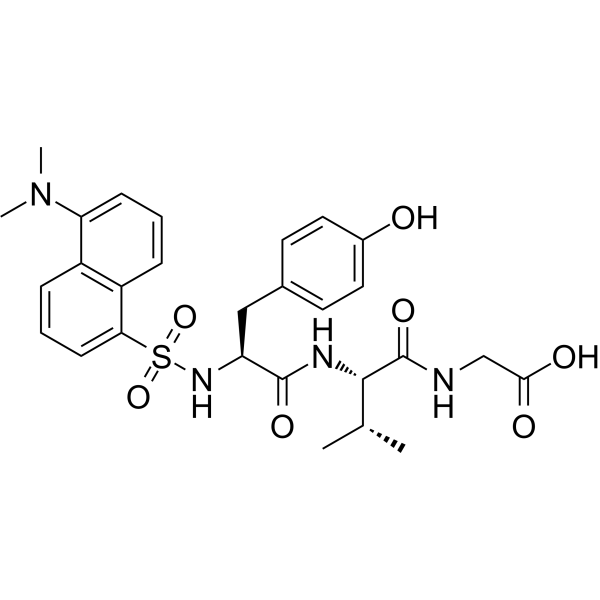
    Dansyl-Tyr-Val-Gly TFA is a substrate of peptidylglycine monooxygenase (PHM), with a KD of 22 μM for PHM. Dansyl-Tyr-Val-Gly TFA can be used to investigate the catalytic mechanism, kinetics and inactivation characteristics of PHM .
    Dansyl-Tyr-Val-Gly TFA
  • HY-E70331

    Endogenous Metabolite Others
    Acid Stable Protease is a biocatalyst and a key enzyme in new biocatalyst technology. Enzyme engineering focuses on enhancing enzyme reaction kinetics, substrate selectivity, and activity under harsh conditions such as low or high pH. By introducing stimulus responsiveness to these enzyme modifications, dynamic control of activity is also possible .
    Acid Stable Protease
  • HY-E70354

    Endogenous Metabolite Others
    Protease for flavors is a biocatalyst and a key enzyme in new biocatalyst technology. Enzyme engineering focuses on enhancing enzyme reaction kinetics, substrate selectivity, and activity under harsh conditions such as low or high pH. By introducing stimulus responsiveness to these enzyme modifications, dynamic control of activity is also possible .
    Protease for flavors
  • HY-E70347

    Endogenous Metabolite Others
    Tn5 Transposase is a biocatalyst and a key enzyme in new biocatalyst technology. Enzyme engineering focuses on enhancing enzyme reaction kinetics, substrate selectivity, and activity under harsh conditions such as low or high pH. By introducing stimulus responsiveness to these enzyme modifications, dynamic control of activity is also possible .
    Tn5 Transposase
  • HY-D0234

    ortho-Cresolphthalein

    Endogenous Metabolite Others
    o-Cresolphthalein (ortho-Cresolphthalein) is a biocatalyst and a key enzyme in new biocatalyst technology. Enzyme engineering focuses on enhancing enzyme reaction kinetics, substrate selectivity, and activity under harsh conditions such as low or high pH. By introducing stimulus responsiveness to these enzyme modifications, dynamic control of activity is also possible .
    o-Cresolphthalein
  • HY-E70352

    Endogenous Metabolite Others
    Trypsin-Chymotrypsin 1:250 is a biocatalyst and a key enzyme in new biocatalyst technology. Enzyme engineering focuses on enhancing enzyme reaction kinetics, substrate selectivity, and activity under harsh conditions such as low or high pH. By introducing stimulus responsiveness to these enzyme modifications, dynamic control of activity is also possible .
    Trypsin-Chymotrypsin 1:250
  • HY-N16302

    Fluorescent Dye Others
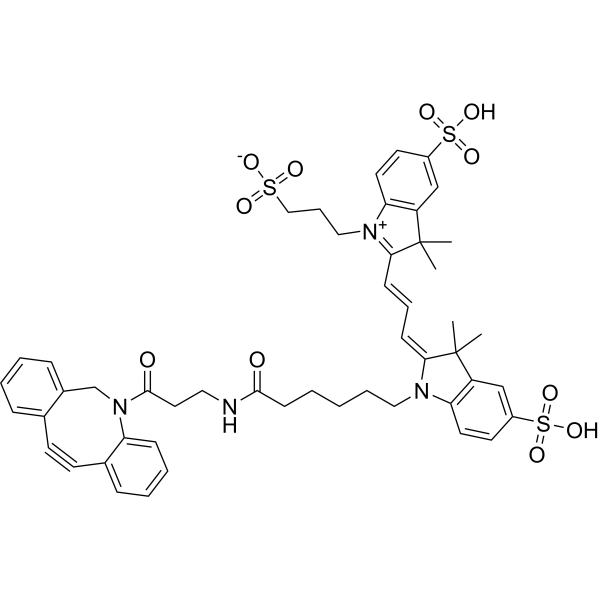
    Cyanine 5.5 DBCO chloride is a click chemistry reagent containing an cycloalkynes group. Cyanine 5.5 DBCO chloride is a linker of Cyanine5.5 fluorophore. DBCO group enables copper free biocompatible click chemistry with fast reaction kinetics and good stability (Ex/Em = 680/715 nm) .
    Cyanine 5.5 DBCO chloride
  • HY-D2253

    Fluorescent Dye Others
    Direct Blue 108 has the structure of triphenyl two oxazine, and can be used in dyeing of cotton, viscose fiber, silk and its blended fabrics .
    Direct Blue 108
  • HY-128642A

    FAP Cancer
    FAPI-2 TFA is a quinoline-based fibroblast activation protein (FAP)-targeting ligand that can be labeled as 68Ga-FAPI-2 and used as a PET tracer for cancer diagnosis. FAPI-2 TFA has advantages such as fast tracer kinetics, no need for fasting preparation, and being unaffected by blood glucose .
    FAPI-2 TFA
  • HY-120791

    L-Lysyl-L-lysine

    Drug Intermediate Others
    Lysyllysine (L-Lysyl-L-lysine) is a dipeptide composed of two L-lysine amino acids linked together. Lysyllysine is often used as an enzyme cleavage linker for connecting bioactive peptides, or as a component of more complex antibacterial agents .
    Lysyllysine
  • HY-W140208

    Cytochrome P450 Neurological Disease
    3-Phenylthiophene (Compound 25) is a CYP2A6 inhibitor with a Ki value of 3.3 μM. The Ki values for CYP2E1, CYP2B6, CYP2C9, and CYP2C19 are 9.7, 14, 112, and 107 μM respectively. It shows no significant inhibition on CYP3A4 and CYP2D6. 3-Phenylthiophene can be used in smoking cessation research .
    3-Phenylthiophene
  • HY-170789

    Histamine Receptor Neurological Disease
    H1R ligand-1 (Compound fragment 1) is a high-affinity ligand for the human histamine H1 receptor (H1R). H1R ligand-1 can be used as a scaffold to design and synthesize a set of derivatives to explore H1R binding kinetics .
    H1R ligand-1
  • HY-W800838

    Fluorescent Dye Cancer
    BP Fluor 488 Tetrazine is a bright, green-fluorescent probe used for detection TCO-tagged biopolymers. BP Fluor 488 Tetrazine demonstrates exceptionally fast cycloaddition kinetics (up to 30 000 M-1 s-1) with trans-cyclooctenes (TCO) as the dienophile, the fastest kinetics ever reported for any bioorthogonal reaction. In applications such as in vivo cancer imaging or pre?targeted cell labeling studies where rapid reaction kinetics is a must BP Fluor 488 Tetrazine probe would of great value.
    BP Fluor 488 Tetrazine
  • HY-D0910

    Biochemical Assay Reagents Others
    5-Bromo-6-chloro-1H-indol-3-yl acetate, a member of the indole family, is a derivative of the aromatic heterocyclic compound indole. It has been used in a variety of research settings, including studies of enzyme kinetics and protein-ligand interactions. 5-Bromo-6-chloro-1H-indol-3-yl acetate is a biomaterial or organic compound that can be used as a biomaterial or organic compound related to life science research .
    5-Bromo-6-chloro-1H-indol-3-yl acetate
  • HY-134425

    Endogenous Metabolite Metabolic Disease
    β-Methylcrotonyl coenzyme A lithium is an intermediate in leucine metabolism and can be used as a substrate to study the specificity and kinetics of β-methylcrotonyl coenzyme A carboxylase (MCCase) .
    β-Methylcrotonyl coenzyme A lithium
  • HY-107697

    iGluR Neurological Disease
    N20C hydrochloride is a selective and noncompetitive open NMDA receptor open channel blocker, with micromolar affinity, fast on-off blockade kinetics, and strong voltage dependence. Neuroprotective activity .
    N20C hydrochloride

Inquiry Online

Your information is safe with us. * Required Fields.

Salutation


Country or Region *

Applicant Name *


Organization Name *

Department *


Email Address *


Product Name *

Cat. No.


Requested quantity *

Phone Number *


Remarks

Inquiry Online

Inquiry Information

Product Name:
Cat. No.:
Quantity:
MCE Japan Authorized Agent:

