554 Results for "

low selectivity

" in MedChemExpress (MCE) Product Catalog:
Products (554)

554 Results for "low selectivity" in MCE Product Catalog:

89
89 Publications Verification
Cat. No.: HY-10224
CAS No.: 404950-80-7
Purity:  99.37%
Synonyms: LBH589; NVP-LBH589
Target:  

HDAC Autophagy HIV Apoptosis

Research Areas:  

Cancer

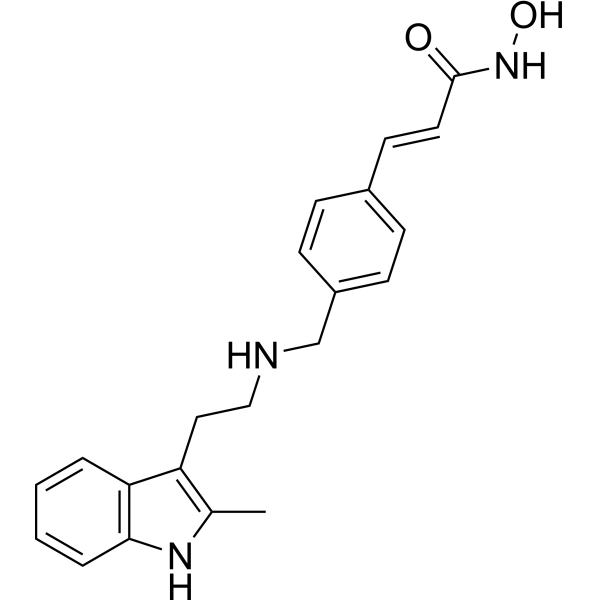
Panobinostat (LBH589; NVP-LBH589) is a potent and orally active non-selective HDAC inhibitor, and has antineoplastic activities . Panobinostat induces HIV-1 virus production even at low concentration range 8-31 nM, stimulates HIV-1 expression in latently infected cells . Panobinostat induces cell apoptosis and autophagy. Panobinostat can be used for the study of refractory or relapsed multiple myeloma .
loading...
    loading...
49
49 Cited Publications
Cat. No.: HY-10626
CAS No.: 293754-55-9
Purity:  99.93%
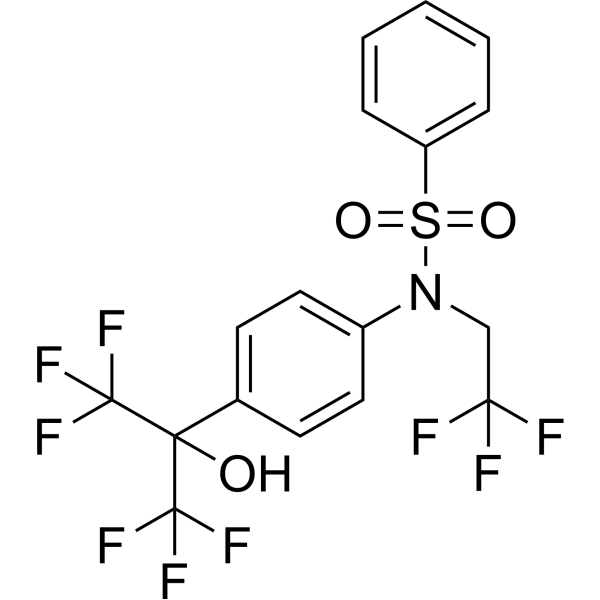
T0901317 is an orally active and highly selective LXR agonist with an EC50 of 20 nM for LXRα . T0901317 activates FXR with an EC50 of 5 μM . T0901317 is RORα and RORγ dual inverse agonist with Ki values of 132 nM and 51 nM, respectively . T0901317 induces apoptosis and inhibits the development of atherosclerosis in low-density lipoprotein (LDL) receptor-deficient mice .
loading...
    loading...
39
39 Cited Publications
Cat. No.: HY-12497
CAS No.: 219766-25-3
Purity:  99.90%
Target:  

Trk Receptor

Research Areas:  

Neurological Disease

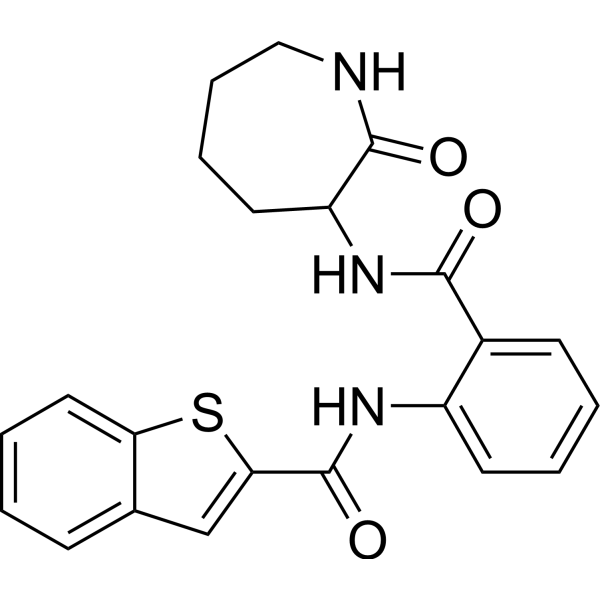
ANA-12 is a potent and selective TrkB antagonist with IC50s of 45.6 nM and 41.1 μM for the high and low affinity sites, respectively.
loading...
    loading...
35
35 Cited Publications
Cat. No.: HY-12755
CAS No.: 71203-35-5
Purity:  99.96%
Synonyms: CID-2950007
Target:  

Ras Apoptosis

Research Areas:  

Cancer

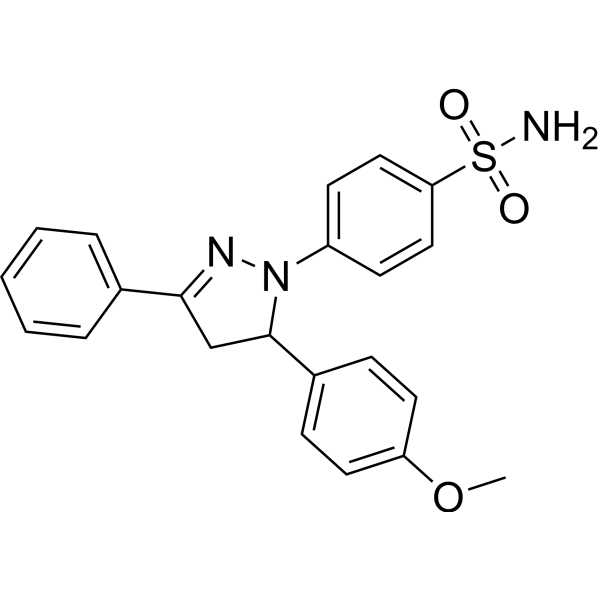
ML141 (CID-2950007) is a potent, allosteric, selective and reversible non-competitive inhibitor of Cdc42 GTPase. ML141 inhibits Cdc42 wild type and Cdc42 Q61L mutant with EC50s of 2.1 and 2.6 μM, respectively. ML141 shows low micromolar potency and selectivity against other members of the Rho family of GTPases (Rac1, Rab2, Rab7). ML141 do not show cytotoxicity in multiple cell lines .
loading...
    loading...
26
26 Cited Publications
Cat. No.: HY-13207
CAS No.: 960374-59-8
Purity:  99.72%
Synonyms: PR-957
Target:  

Proteasome Bacterial HIV

Research Areas:  

Infection Inflammation/Immunology

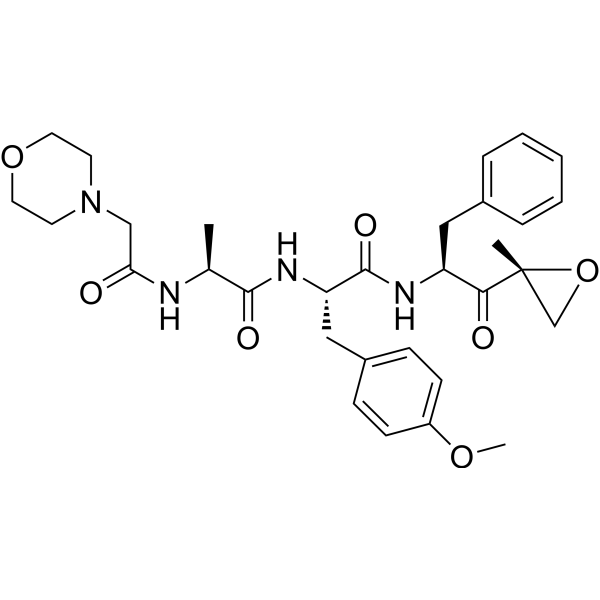
ONX-0914 (PR-957) is a selective inhibitor of low-molecular mass polypeptide-7 (LMP7), the chymotrypsin-like subunit of the immunoproteasome. ONX-0914 blocks cytokine production and attenuates progression of experimental arthritis. ONX-0914 is a noncompetitive irreversible inhibitor of the mycobacterial proteasome (Ki=5.2 μM). ONX-0914 reactivates latent HIV-1 through p-TEFb activation mediated by HSF-1 .
loading...
    loading...
26
26 Cited Publications
Cat. No.: HY-13207A
Purity:  98.01%
Synonyms: PR-957 TFA
Target:  

Proteasome Bacterial HIV

Research Areas:  

Infection Inflammation/Immunology

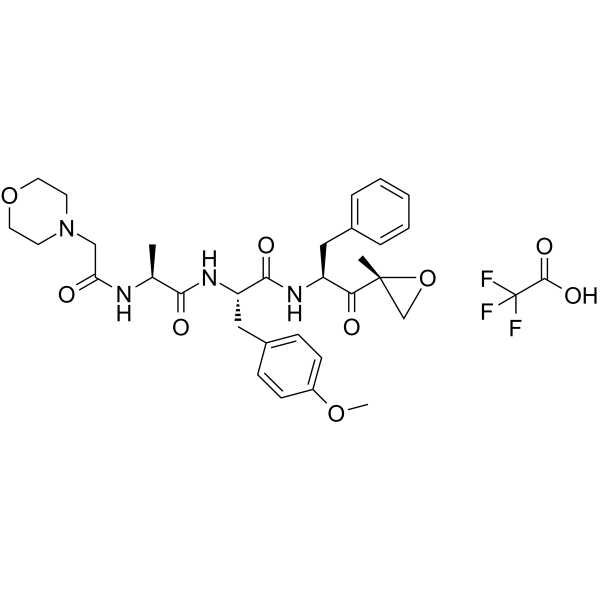
ONX-0914 (PR-957) TFA is a selective inhibitor of low-molecular mass polypeptide-7 (LMP7), the chymotrypsin-like subunit of the immunoproteasome. ONX-0914 TFA blocks cytokine production and attenuates progression of experimental arthritis. ONX-0914 TFA is a noncompetitive irreversible inhibitor of the mycobacterial proteasome (Ki=5.2 μM). ONX-0914 TFA reactivates latent HIV-1 through p-TEFb activation mediated by HSF-1 .
loading...
    loading...
18
18 Cited Publications
Cat. No.: HY-112083
CAS No.: 2377576-35-5
Purity:  99.66%
Target:  

AMPK

Research Areas:  

Cancer

BAY-3827, a chemical probe, is a potent and selective AMPK inhibitor with IC50 values of 1.4 nM at low (10 μM ATP concentration) and 15 nM at high (2 mM ATP concentration). BAY-3827 shows over 500-fold selectivity for most of the 331 kinases. BAY-3827 prevents phosphorylation of acetyl-CoA carboxylase 1 and shows strongest anti-proliferative activity in androgen-dependent prostate cancer cell lines .
loading...
    loading...
17
17 Cited Publications
Cat. No.: HY-12866
CAS No.: 1223403-58-4
Purity:  99.95%
Synonyms: LOXO-101; ARRY-470
Target:  

Trk Receptor Apoptosis

Research Areas:  

Cancer

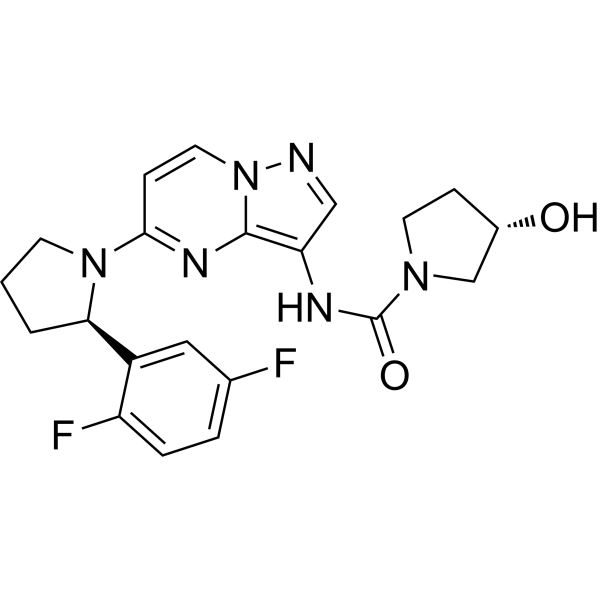
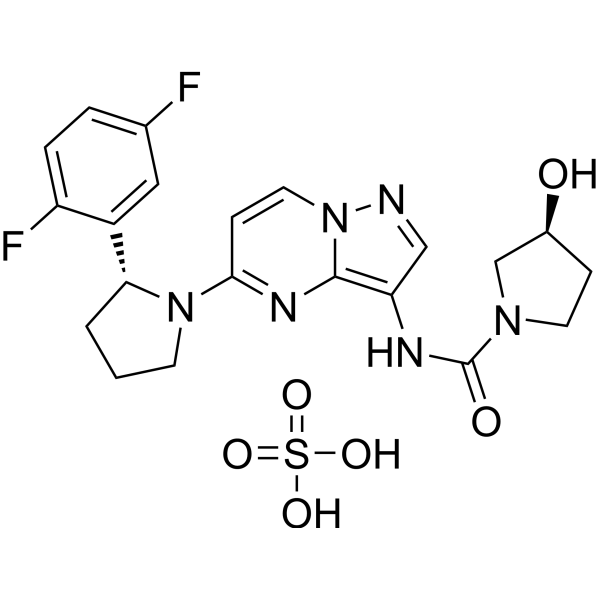
Larotrectinib (LOXO-101) is an ATP-competitive oral, selective inhibitor of the tropomyosin-related kinase (TRK) family receptors, with low nanomolar 50% inhibitory concentrations against all three isoforms (TRKA, B, and C).
loading...
    loading...
17
17 Cited Publications
Cat. No.: HY-12866A
CAS No.: 1223405-08-0
Purity:  98.96%
Synonyms: LOXO-101 sulfate; ARRY-470 sulfate
Target:  

Trk Receptor Apoptosis

Research Areas:  

Cancer

Larotrectinib sulfate (LOXO-101 sulfate; ARRY-470 sulfate) is an ATP-competitive oral, selective inhibitor of the tropomyosin-related kinase (TRK) family receptors, with low nanomolar 50% inhibitory concentrations against all three isoforms (TRKA, B, and C).
loading...
    loading...
17
17 Cited Publications
Cat. No.: HY-17605A
CAS No.: 1807988-02-8
Synonyms: GS-9883 sodium
Target:  

HIV Integrase HIV

Research Areas:  

Infection

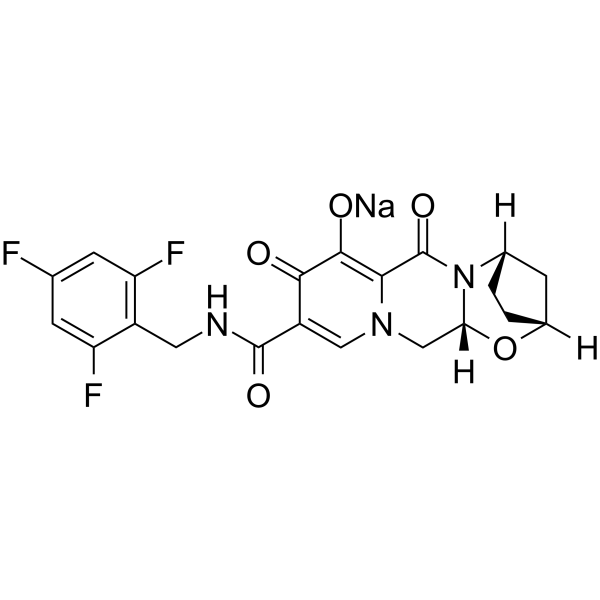
Bictegravir sodium is a potent inhibitor of HIV-1 integrase, with an IC50 of 7.5 nM. Bictegravir sodium exhibits potent and selective anti-HIV activity and low cytotoxicity .
loading...
    loading...
17
17 Cited Publications
Cat. No.: HY-102084
CAS No.: 1239600-18-0
Purity:  98.93%
Target:  

Interleukin Related

Research Areas:  

Inflammation/Immunology

LMT-28 is an orally active and the first synthetic IL-6 inhibitor that functions through direct binding to gp130. LMT-28 shows low toxicity and selectively inhibits IL-6-induced phosphorylation of STAT3, JAK2, and gp130 .
loading...
    loading...
15
15 Cited Publications
Cat. No.: HY-12839
CAS No.: 1006378-90-0
Purity:  99.58%
Target:  

p38 MAPK Autophagy

Research Areas:  

Inflammation/Immunology

p38 MAPK-IN-1 (Compound 4) is a novel potent and selective inhibitor of p38 MAPK with IC50 of 68 nM. p38 MAPK-IN-1 shows sustained levels, low clearance and good bioavailability.
loading...
    loading...
10
10 Cited Publications
Cat. No.: HY-19975
CAS No.: 946387-07-1
Target:  

TRP Channel

Research Areas:  

Neurological Disease Cancer

RN-1734 is selective antagonist of the TRPV4 channel, completely antagonizes 4αPDD-mediated activation of TRPV4 with comparable, low micromolar IC50s for all three species (hTRPV4: 2.3 μM, mTRPV4: 5.9 μM, rTRPV4: 3.2 μM) . RN-1734 clearly decreases the production of tumor necrosis factor α (TNF-α) and interleukin 1β (IL-1β) without altering the number of olig2-positive cells .
loading...
    loading...
9
9 Cited Publications
Cat. No.: HY-16978
CAS No.: 1415716-58-3
TG6-10-1 is an EP2 antagonist, shows low-nanomolar antagonist activity against only EP2, >300-fold selectivity over human EP3, EP4, and IP receptors, 100-fold selectivity over EP1 receptors .
loading...
    loading...
8
8 Cited Publications
Cat. No.: HY-14121
CAS No.: 264622-58-4
Purity:  98.31%
MRS 1754 is a selective antagonist radioligand for A2B adenosine receptor with very low affinity for A1 and A3 receptors of both humans and rats .
loading...
    loading...
8
8 Cited Publications
Cat. No.: HY-D1297
CAS No.: 730931-46-1
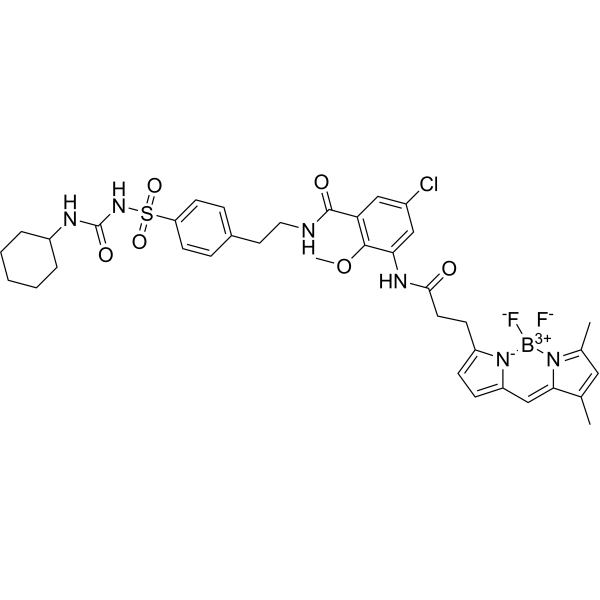
ER-Tracker dye is a derivative of BODIPY series dyes coupled with Glibenclamide (HY-15206), highly selective binding to the endoplasmic reticulum, non-toxic to cells at low concentrations, this type of dye is an environmentally sensitive probe, and formaldehyde treatment can still retain part of the fluorescence, with high fluorescence life, good extinction coefficient and other characteristics. Glibenclamide is an atp-dependent K + channel blocker (Kir6, KATP) and CFTR Cl-channel blocker that binds in the endoplasmic reticulum. ER-Tracker is not suitable for staining cells after fixation .
loading...
    loading...
8
8 Cited Publications
Cat. No.: HY-12513
CAS No.: 1386874-06-1
Purity:  99.27%
Synonyms: LY3023414
Target:  

PI3K DNA-PK mTOR Autophagy

Research Areas:  

Cancer

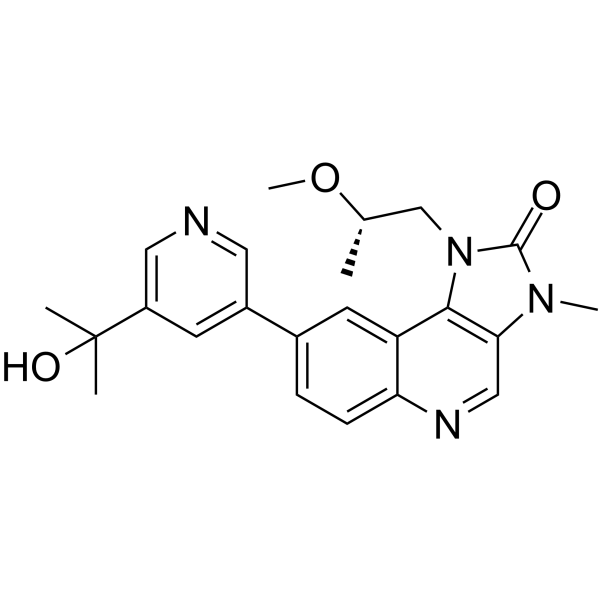
Samotolisib (LY3023414) potently and selectively inhibits class I PI3K isoforms, DNA-PK, and mTORC1/2 with IC50s of 6.07 nM, 77.6 nM, 38 nM, 23.8 nM, 4.24 nM and 165 nM for PI3Kα, PI3Kβ, PI3Kδ, PI3Kγ, DNA-PK and mTOR, respectively. Samotolisib potently inhibits mTORC1/2 at low nanomolar concentrations .
loading...
    loading...
7
7 Cited Publications
Cat. No.: HY-19749
CAS No.: 181765-30-0
PD 151746 is a selective calpain-1 inhibitor with an IC50 of 260 nM. PD 151746 binds μ-calpain Ca 2+-binding sites, and shows selectivity over cathepsin B, papain, trypsin, thermolysin, and basal calcineurin. PD 151746 reduces Oxidized low-density lipoprotein (oxLDL)-induced cytotoxicity, apoptotic DNA fragmentation, and blocks IL-1α maturation. PD 151746 can be used for the research of atherosclerosis and psoriasis .
loading...
    loading...
7
7 Cited Publications
Cat. No.: HY-18102
CAS No.: 1215085-92-9
Target:  

Androgen Receptor

Research Areas:  

Neurological Disease

GLPG0492 is an orally active, non-steroidal selective androgen receptor modulator. GLPG0492 exerts functional transactivation by binding to the ligand-binding domain of the receptor, exhibiting preferential partial agonist activity in muscle and bone tissues with low activity in reproductive tissues. GLPG0492 effectively counteracts muscle atrophy-related pathways, significantly enhances muscle strength, maintains motor ability, reduces fibrosis and improves electrophysiological parameters. GLPG0492 prevents immobilization-induced muscle atrophy and regulates muscle mass homeostasis, serving as a valuable tool compound for studies on Duchenne muscular dystrophy, muscle loss and various types of disuse musculoskeletal atrophy .
loading...
    loading...
7
7 Cited Publications
Cat. No.: HY-14668
CAS No.: 202914-84-9
Purity:  99.57%
Synonyms: AEGR-733 mesylate; BMS-201038 mesylate
Lomitapide (AEGR-733; BMS-201038) mesylate is an orally active microsomal triglyceride transfer protein (MTP) inhibitor and a selective mTORC1 inhibitor with lipid-lowering activity and BBB permeability. Lomitapide mesylate significantly reduces plasma LDL levels by blocking the assembly and secretion of very-low-density lipoprotein (VLDL). Lomitapide mesylate inhibits mTORC1 in an ATP-dependent manner, thereby inducing AMPK-independent autophagic cell death and suppressing cancer cell growth and apoptosis. Lomitapide mesylate also enhances tumor infiltration of CD8 + T cells. In addition, Lomitapide mesylate inhibits HDAC, improves endothelial function, effectively alleviates vascular inflammation and oxidative stress, and exerts neuroprotective effects in a cerebral ischemia/reperfusion injury model. Lomitapide mesylate can be used in research on related diseases such as colorectal cancer, breast cancer, melanoma, ischemic stroke, and familial hypercholesterolemia .
loading...
    loading...

