


12864 Results for "

mouse brain cortex slices

" in MedChemExpress (MCE) Product Catalog:
Products (12864)

12864 Results for "mouse brain cortex slices" in MCE Product Catalog:

576
576 Publications Verification
Art. -Nr.: HY-15760
CAS. Nr.: 4311-88-0
Reinheit:  99.89%
Synonyms: Nec-1
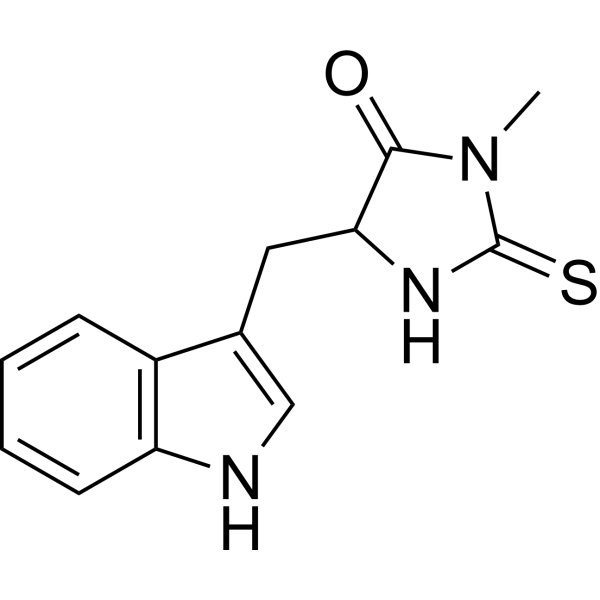
Necrostatin-1 (Nec-1) is a potent and cross the blood-brain barrier necroptosis inhibitor with an EC50 of 490 nM in Jurkat cells. Necrostatin-1 inhibits RIP1 kinase (EC50=182 nM). Necrostatin-1 is also an IDO inhibitor .
loading...
    loading...
387
387 Cited Publications
Art. -Nr.: HY-10162
CAS. Nr.: 763113-22-0
Reinheit:  99.98%
Synonyms: AZD2281; KU0059436; MK-7339
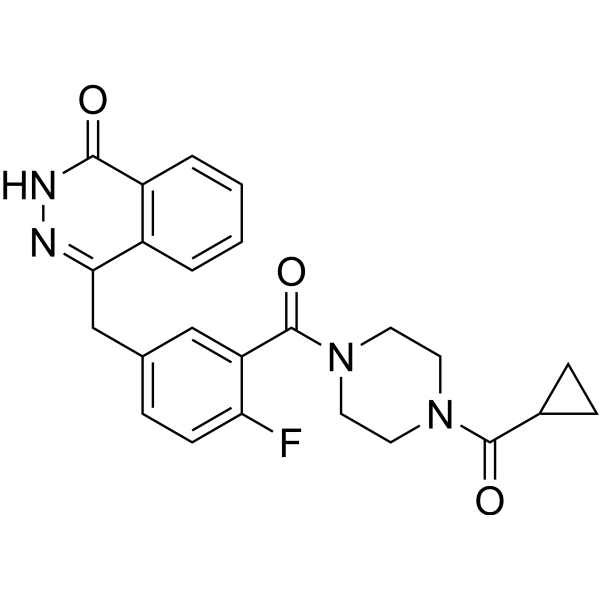
Olaparib (AZD2281; KU0059436) is a potent and orally active PARP inhibitor with IC50s of 5 and 1 nM for PARP1 and PARP2, respectively. Olaparib is an autophagy and mitophagy activator. Olaparib cannot cross the intact blood-brain barrier (BBB) .
loading...
    loading...
308
308 Cited Publications
Art. -Nr.: HY-10999
CAS. Nr.: 871700-17-3
Reinheit:  99.93%
Synonyms: GSK1120212; JTP-74057
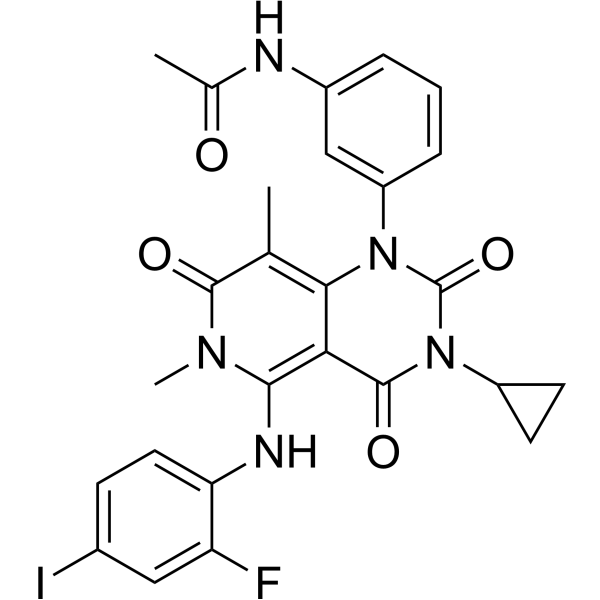
Trametinib (GSK1120212; JTP-74057) is an orally active MEK inhibitor that inhibits MEK1 and MEK2 with IC50s of about 2 nM. Trametinib activates autophagy and induces apoptosis, cross the blood-brain barrier (BBB), used in research related to subarachnoid hemorrhage (SAH) .
loading...
    loading...
197
197 Cited Publications
Art. -Nr.: HY-17386
CAS. Nr.: 122320-73-4
Synonyms: BRL 49653
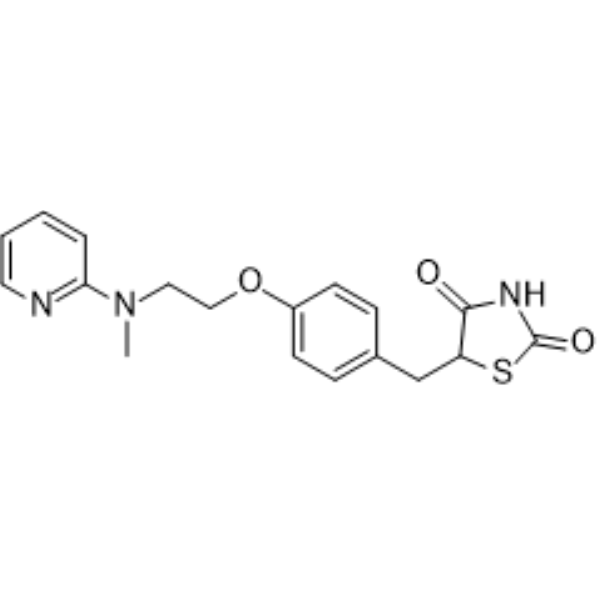
Rosiglitazone (BRL 49653) is an orally active selective PPARγ agonist (EC50: 60 nM, Kd: 40 nM), with blood-brain barrier permeability. Rosiglitazone is an TRPC5 activator (EC50: 30 μM) and TRPM3 inhibitor. Rosiglitazone can be used in the research of obesity and diabetes, senescence, ovarian cancer .
loading...
    loading...
159
159 Cited Publications
Art. -Nr.: HY-18738
CAS. Nr.: 5108-96-3
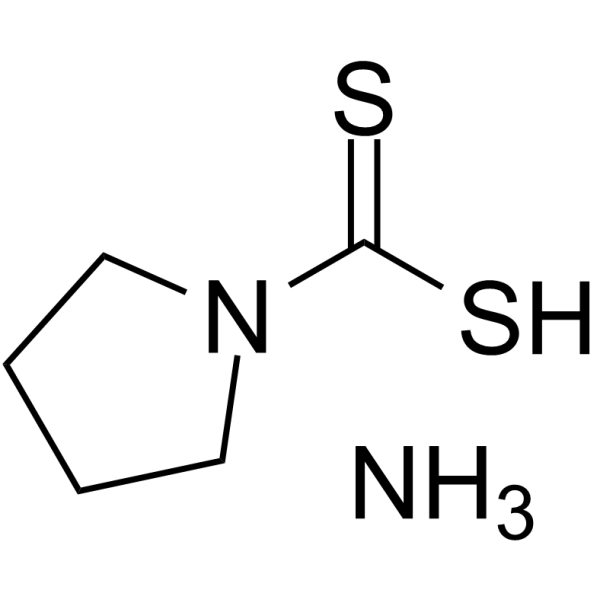
Synonyms: Ammonium pyrrolidinedithiocarbamate; PDTC ammonium; APDC
Target:  

NF-κB

Forschungsgebiete:  

Inflammation/Immunology Cancer

Pyrrolidinedithiocarbamate ammonium (Ammonium pyrrolidinedithiocarbamate) is a selective and blood-brain barrier (BBB) permeable NF-κB inhibitor.
loading...
    loading...
148
148 Cited Publications
Art. -Nr.: HY-P7085
Reinheit:  ≥ 95%, as determined by reducing SDS-PAGE.
Synonyms: CSF1; Macrophage Colony Stimulating Factor 1; Colony Stimulating Factor 1; Lanimostim; MCSF; MGC31930; Proteoglycan Macrophage Colony-Stimulating Factor; PG-M-CSF; Macrophage Colony-Stimulating Factor 1; CSF-1; M-CSF; CSF1-HERV-LTR71B Fusion Protein; Colo
Species:  
Mouse
Source:  
E. coli
loading...
    loading...
128
128 Cited Publications
Art. -Nr.: HY-112906
CAS. Nr.: 314054-00-7
Reinheit:  99.45%
Target:  

STING

Forschungsgebiete:  

Inflammation/Immunology

C-176 is a selective and blood-brain barrier permeable STING inhibitor. C-176 covalently targets transmembrane cysteine residue 91 and thereby blocking activation-induced palmitoylation of STING .
loading...
    loading...
126
126 Cited Publications
Art. -Nr.: HY-10218
CAS. Nr.: 159351-69-6
Reinheit:  99.85%
Synonyms: RAD001; SDZ-RAD
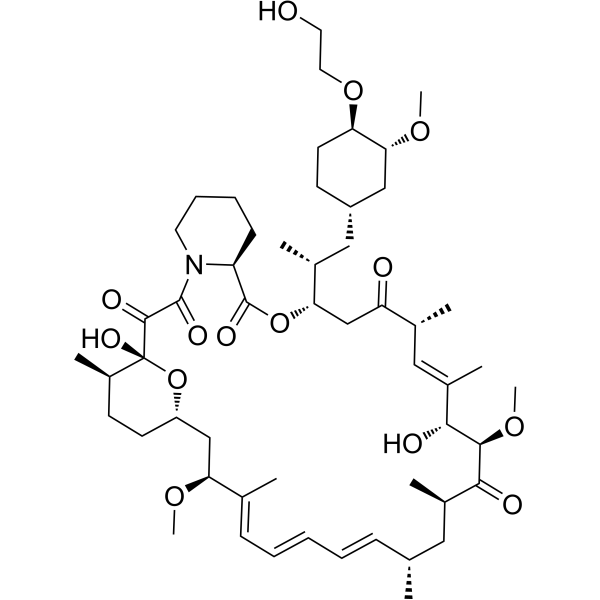
Everolimus (RAD001) is a Rapamycin (HY-10219) derivative and a potent, selective, orally active, blood-brain barrier-permeable mTOR1 inhibitor. Everolimus binds to FKBP-12 to generate an immunosuppressive complex. Everolimus inhibits tumor cells proliferation and induces cell apoptosis and autophagy. Everolimus has potent immunosuppressive and anticancer activities .
loading...
    loading...
117
117 Cited Publications
Art. -Nr.: HY-12248
CAS. Nr.: 1439399-58-2
Reinheit:  99.82%
Synonyms: CB-839
Target:  

Glutaminase Autophagy

Forschungsgebiete:  

Cancer

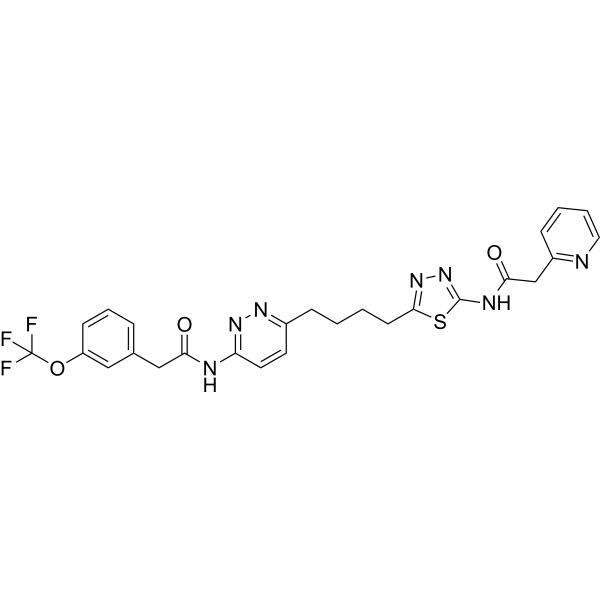
Telaglenastat (CB-839) is a first-in-class, selective, reversible and orally active glutaminase 1 (GLS1) inhibitor. Telaglenastat selectively inhibits GLS1 splice variants KGA (kidney-type glutaminase) and GAC (glutaminase C) compared to GLS2. The IC50s are 23 nM and 28 nM for endogenous glutaminase in mouse kidney and brain, respectively. Telaglenastat inuduces autophagy and has antitumor activity .
loading...
    loading...
117
117 Cited Publications
Art. -Nr.: HY-12248A
CAS. Nr.: 1874231-60-3
Synonyms: CB-839 hydrochloride
Target:  

Glutaminase Autophagy

Forschungsgebiete:  

Cancer

Telaglenastat (CB-839) hydrochloride is a first-in-class, selective, reversible and orally active glutaminase 1 (GLS1) inhibitor. Telaglenastat hydrochloride selectively inhibits GLS1 splice variants KGA (kidney-type glutaminase) and GAC (glutaminase C) compared to GLS2. The IC50s are 23 nM and 28 nM for endogenous glutaminase in mouse kidney and brain, respectively. Telaglenastat hydrochloride inudces autophagy and has antitumor activity .
loading...
    loading...
117
117 Cited Publications
Art. -Nr.: HY-12305
CAS. Nr.: 1135695-98-5
Reinheit:  99.92%
Synonyms: QVD-OPH; Quinoline-Val-Asp-Difluorophenoxymethylketone
Target:  

Caspase HIV

Forschungsgebiete:  

Infection Cancer

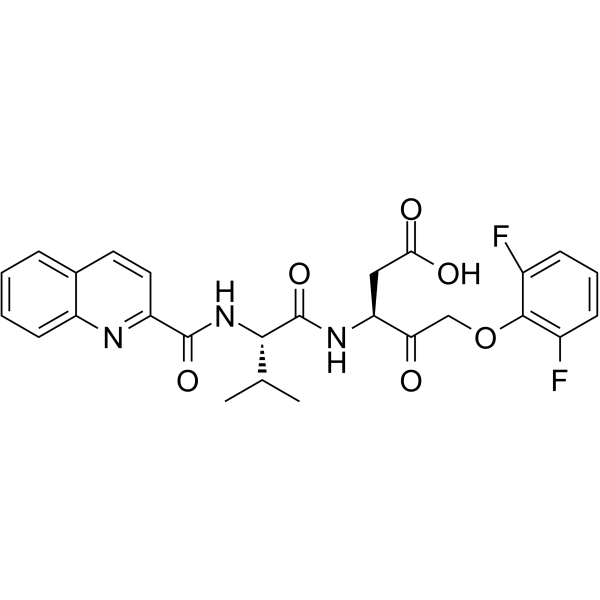
Q-VD-OPh is an irreversible pan-caspase inhibitor with potent antiapoptotic properties; inhibits caspase 7 with an IC50 of 48 nM and 25-400 nM for other caspases including caspase 1, 3, 8, 9, 10, and 12. Q-VD-OPh can inhibits HIV infection. Q-VD-OPh is able to cross the blood-brain barrier.
loading...
    loading...
114
114 Cited Publications
Art. -Nr.: HY-101872
CAS. Nr.: 1346546-69-7
Reinheit:  99.80%
Target:  

RIP kinase

Forschungsgebiete:  

Inflammation/Immunology

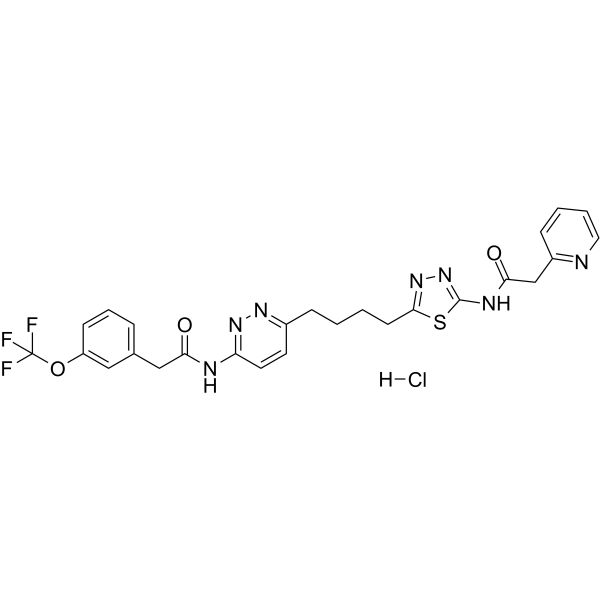
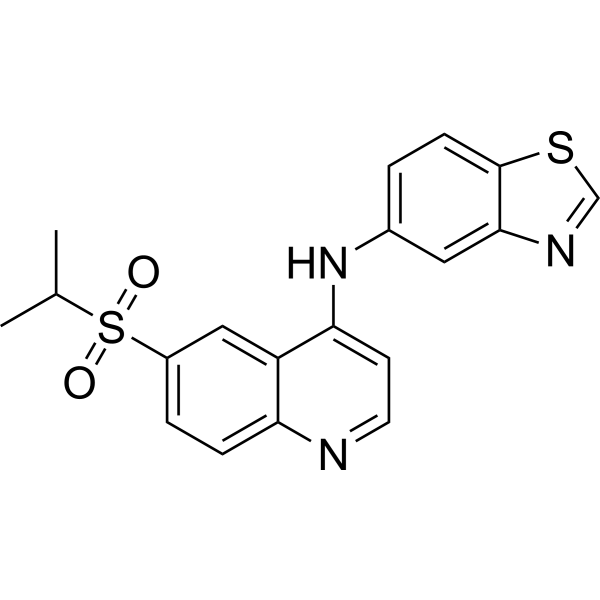
GSK-872 is a RIPK3 inhibitor, which binds RIP3 kinase domain with an IC50 of 1.8 nM, and inhibits kinase activity with an IC50 of 1.3 nM. GSK-872 decreases the RIPK3-mediated necroptosis and subsequent cytoplasmic translocation and expression of HMGB1, as well as ameliorates brain edema and neurological deficits in early brain injury .
loading...
    loading...
114
114 Cited Publications
Art. -Nr.: HY-101872A
CAS. Nr.: 2703752-81-0
Reinheit:  99.21%
Target:  

RIP kinase

Forschungsgebiete:  

Inflammation/Immunology

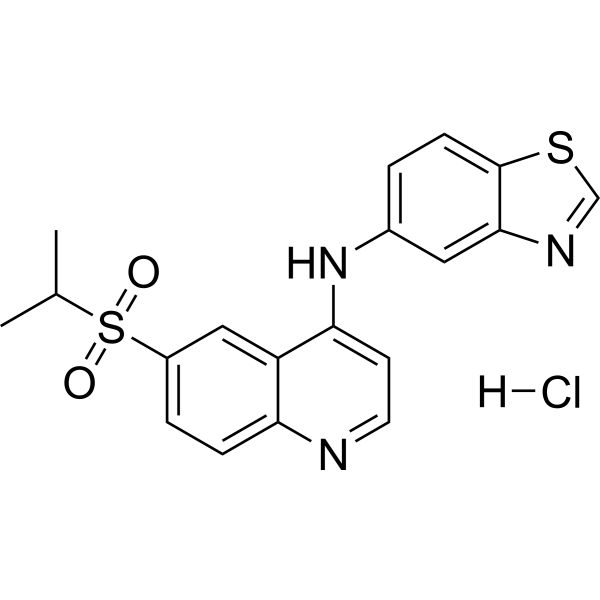
GSK-872 hydrochloride is a RIPK3 inhibitor, which binds RIP3 kinase domain with an IC50 of 1.8 nM, and inhibits kinase activity with an IC50 of 1.3 nM. GSK-872 hydrochloride decreases the RIPK3-mediated necroptosis and subsequent cytoplasmic translocation and expression of HMGB1, as well as ameliorates brain edema and neurological deficits in early brain injury .
loading...
    loading...
102
102 Cited Publications
Art. -Nr.: HY-P1061
CAS. Nr.: 867021-83-8
Target:  

STAT Amyloid-β

Forschungsgebiete:  

Neurological Disease

Colivelin is a brain penetrant neuroprotective peptide and a potent activator of STAT3, suppresses neuronal death by activating STAT3 in vitro . Colivelin exhibits long-term beneficial effects against neurotoxicity, Aβ deposition, neuronal apoptosis, and synaptic plasticity deficits in neurodegenerative disease . Colivelin has the potential for the treatment of alzheimer's disease and ischemic brain injury
loading...
    loading...
102
102 Cited Publications
Art. -Nr.: HY-P1061A
CAS. Nr.: 2803948-60-7
Target:  

STAT Amyloid-β Apoptosis

Forschungsgebiete:  

Neurological Disease

Colivelin TFA is a brain penetrant neuroprotective peptide and a potent activator of STAT3, suppresses neuronal death by activating STAT3 in vitro . Colivelin TFA exhibits long-term beneficial effects against neurotoxicity, Aβ deposition, neuronal apoptosis, and synaptic plasticity deficits in neurodegenerative disease . Colivelin TFA has the potential for the treatment of alzheimer's disease and ischemic brain injury .
loading...
    loading...
102
102 Cited Publications
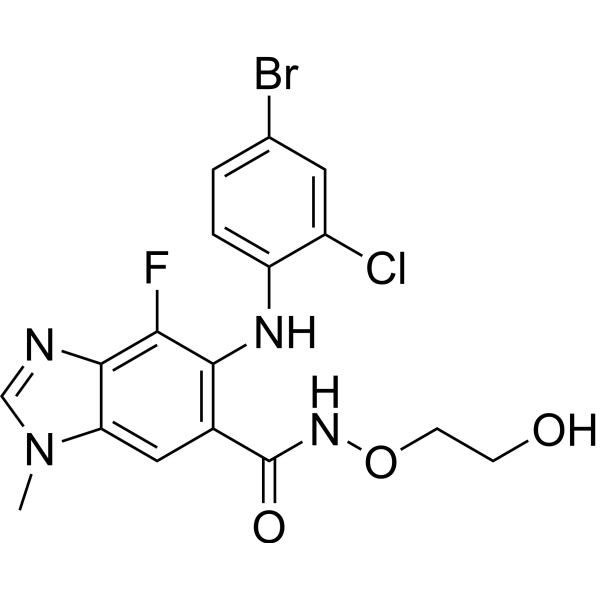
Art. -Nr.: HY-50706
CAS. Nr.: 606143-52-6
Synonyms: AZD6244; ARRY-142886
Selumetinib (AZD6244) is selective, non-ATP-competitive oral MEK1/2 inhibitor, with an IC50 of 14 nM for MEK1. Selumetinib (AZD6244) inhibits ERK1/2 phosphorylation. Selumetinib can penetrate the blood brain barrier (BBB) .
loading...
    loading...
102
102 Cited Publications
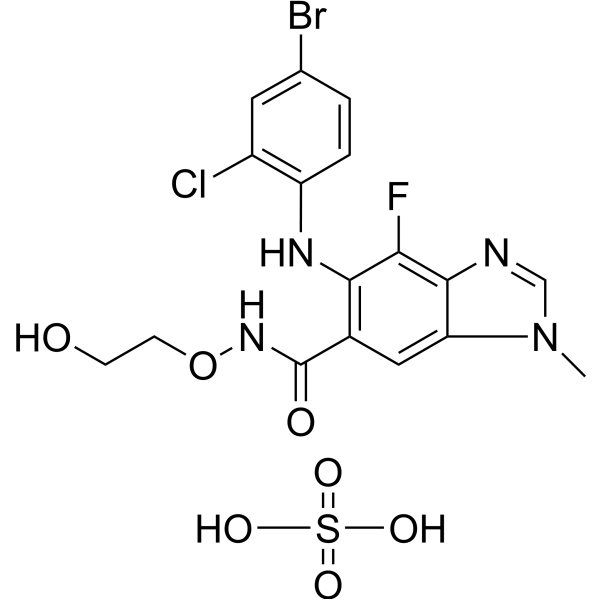
Art. -Nr.: HY-50706A
CAS. Nr.: 943332-08-9
Synonyms: AZD6244 sulfate; ARRY-142886 sulfate
Selumetinib (AZD6244) sulfate is selective, non-ATP-competitive oral MEK1/2 inhibitor, with an IC50 of 14 nM for MEK1. Selumetinib (AZD6244) sulfate inhibits ERK1/2 phosphorylation. Selumetinib sulfate can penetrate the blood brain barrier (BBB) .
loading...
    loading...
100
100 Cited Publications
Art. -Nr.: HY-128868
CAS. Nr.: 60842-46-8
FITC-Dextran (MW 10000) is a fluorescent probe for fluorescein isothiocyanate (FITC) dextran (Ex=495 nm; Em=525 nm). FITC-Dextran (MW 10000) can be used as a marker to reveal heat shock-induced cell damage and to study the early and late stages of apoptosis. FITC-Dextran (MW 10000) can also be used for cell permeability studies, such as blood-brain barrier permeability and determination of the extent of blood-brain barrier disruption .
loading...
    loading...
100
100 Cited Publications
Art. -Nr.: HY-128868A
CAS. Nr.: 60842-46-8
FITC-Dextran (MW 4000) is a fluorescent probe for fluorescein isothiocyanate (FITC) dextran (Ex=495 nm; Em=525 nm). FITC-Dextran (MW 4000) can be used as a marker to reveal heat shock-induced cell damage and to study the early and late stages of apoptosis. FITC-Dextran (MW 4000) can also be used for cell permeability studies, such as blood-brain barrier permeability and determination of the extent of blood-brain barrier disruption .
loading...
    loading...
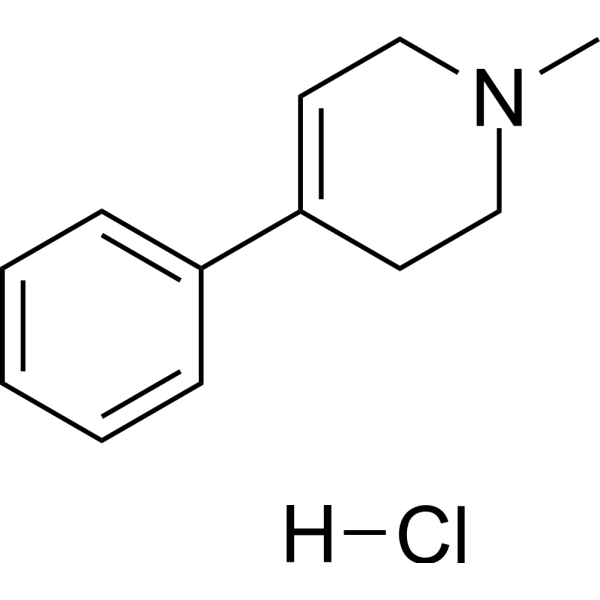
96
96 Cited Publications
Art. -Nr.: HY-15608
CAS. Nr.: 23007-85-4
Reinheit:  99.52%
MPTP hydrochloride is a brain penetrant dopaminergic neurotoxin. MPTP hydrochloride can be used to induce Parkinson’s Disease model. MPTP hydrochloride, a precusor of MPP +, induces apoptosis . MPTP hydrochloride has been verified by MCE with professional biological experiments.
loading...
    loading...

