1. Search Result
Search Result
Results for "

nucleus

" in MedChemExpress (MCE) Product Catalog:

228

Inhibitors & Agonists

5

Screening Libraries

20

Fluorescent Dye

11

Biochemical Assay Reagents

32

Peptides

1

MCE Kits

2

Inhibitory Antibodies

41

Natural
Products

10

Isotope-Labeled Compounds

6

Antibodies

9

Oligonucleotides

1

GMP Molecules

Cat. No. Product Name Target Research Areas Chemical Structure
  • HY-16950
    4-Hydroxytamoxifen
    50+ Cited Publications

    (Z)-4-Hydroxytamoxifen; trans-4-Hydroxytamoxifen; (Z)-Afimoxifene

    Estrogen Receptor/ERR Cancer
    4-Hydroxytamoxifen ((Z)-4-Hydroxytamoxifen) is an orally active, selective estrogen receptor modulator (SERM). 4-Hydroxytamoxifen ((Z)-4-Hydroxytamoxifen) is also the active metabolic form of Tamoxifen (HY-13757A) in vivo and can be used to induce gene knockout in transgenic mice expressing CreER .
    4-Hydroxytamoxifen
  • HY-D0079
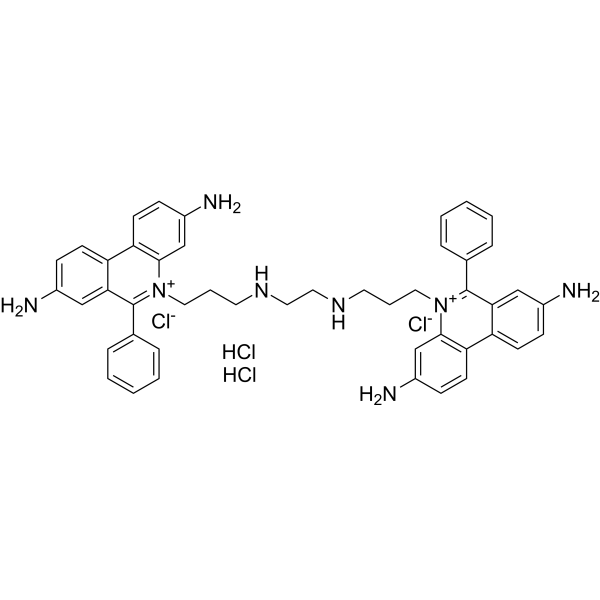
    Dihydroethidium
    170+ Cited Publications

    Hydroethidine; PD-MY 003

    Fluorescent Dye Others
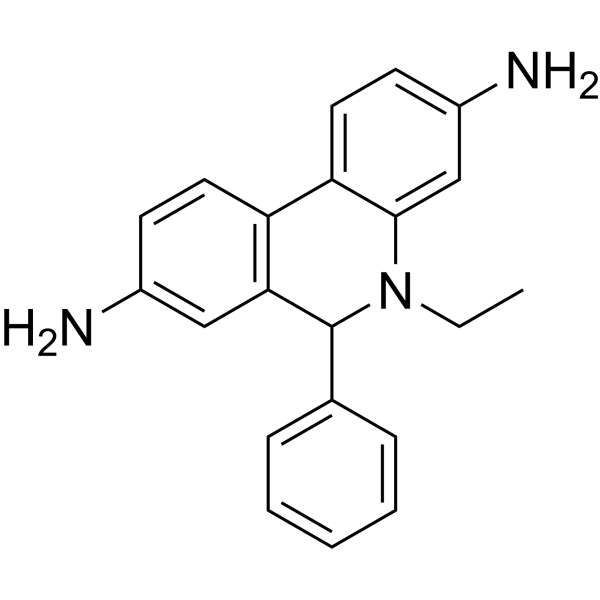
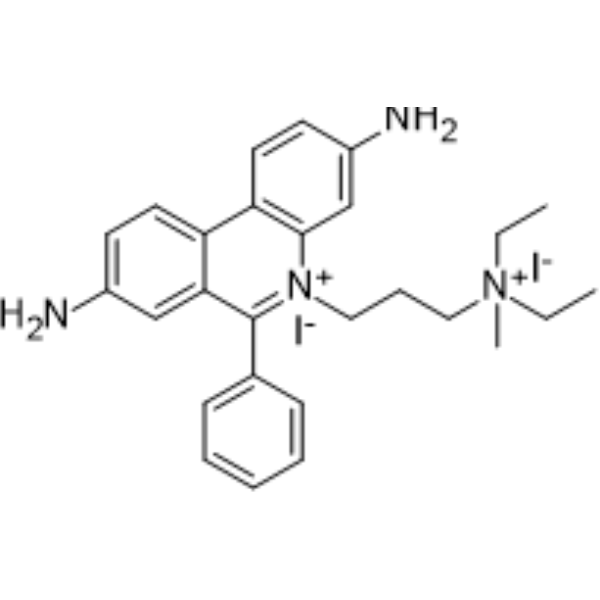
    Dihydroethidium, also known as DHE, is a peroxide indicator. Dihydroethidium penetrates cell membranes to form a fluorescent protein complex with blue fluoresces. After entering the cells, Dihydroethidium is mainly localized in the cell membrane, cytoplasm and nucleus, and the staining effect is the strongest in the nucleus. Dihydroethidium produces inherent blue fluorescence with a maximum excitation wavelength of 370 nm and a maximum emission wavelength of 420 nm; after dehydrogenation, Dihydroethidium combines with RNA or DNA to produce red fluorescence with a maximum excitation wavelength of 300 nm and a maximum emission wavelength of 610 nm. 535 nm can also be used as the excitation wavelength for actual observation .
    Dihydroethidium
  • HY-D0938
    CFDA-SE
    105+ Cited Publications

    CFSE; 5(6)-Carboxyfluorescein diacetate succinimidyl ester; 5(6)-CFDA N-succinmidyl ester

    Fluorescent Dye Others
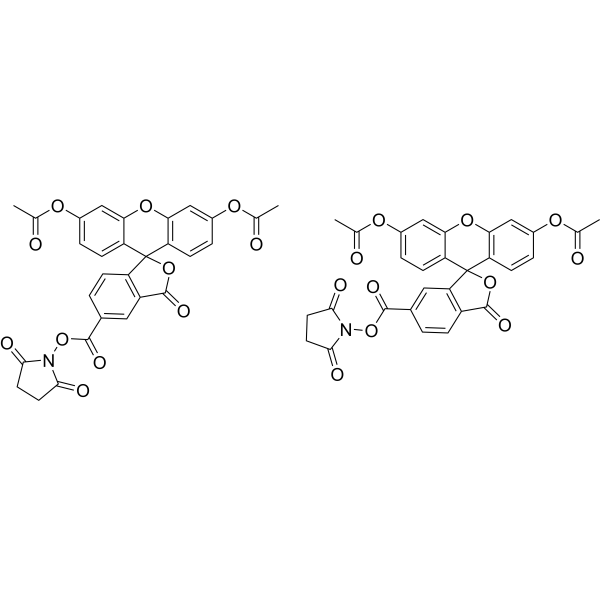
    CFDA-SE is a fluorescent dye that can penetrate the cell membrane. It can react with the free amine group in the cytoskeleton protein inside the cell, and finally form a protein complex with fluorescence. After entering the cell, CFDA-SE locates in the cell membrane, cytoplasm and nucleus, and the fluorescence staining is strongest in the nucleus . CFDA-SE dye can be uniformly inherited by the cells with cell division and proliferation, and its attenuation is proportional to the number of cell divisions. This phenomenon can be detected and analyzed by flow cytometry under the excitation light of 488 nm, and can be used to detect the proliferation of cells .
    CFDA-SE
  • HY-B0324A
    Crystal Violet
    60+ Cited Publications

    Basic Violet 3; Gentian Violet; Methyl Violet 10B

    Environmental Pollutants Fluorescent Dye Influenza Virus Bacterial Infection
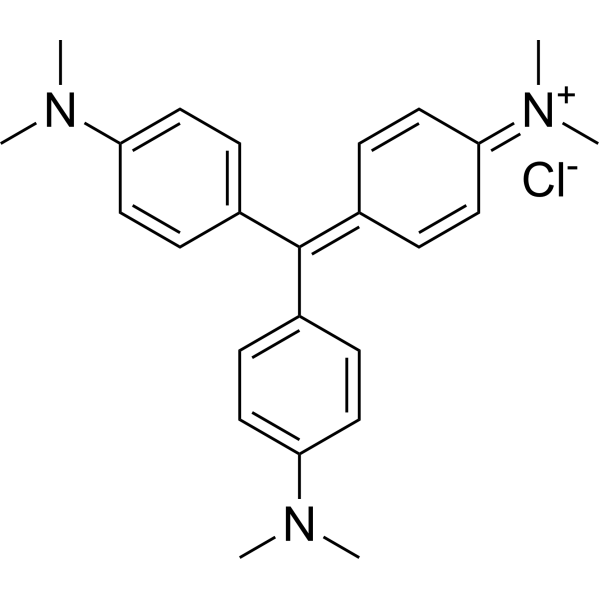
    Crystal Violet, also known as Gentian violet, methyl violet 10B, is a triphenyl-methane, an alkaline dye that binds to DNA in the nucleus of a cell, staining it a deep purple. It is often used for Gram staining to classify bacteria, or for cell or histological staining[1].
    Crystal Violet
  • HY-N0145
    Puerarin
    Maximum Cited Publications
    29 Publications Verification

    5-HT Receptor Cardiovascular Disease Infection Neurological Disease Metabolic Disease Inflammation/Immunology Cancer
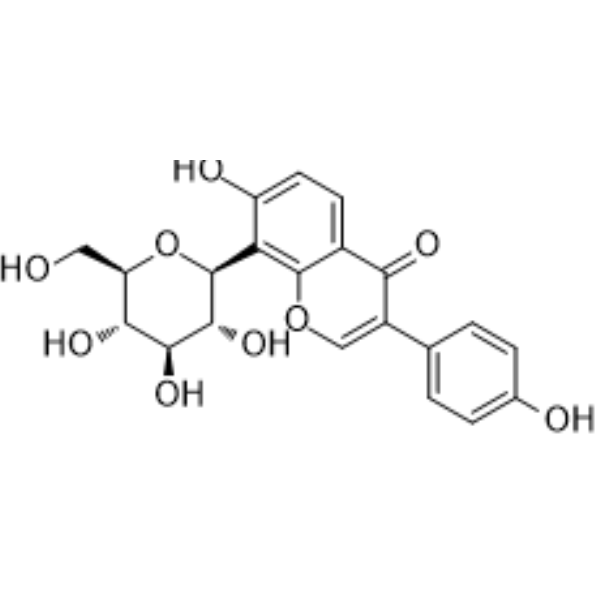
    Puerarin is an isoflavone extracted from Pueraria root and is a 5-HT2C receptor antagonist. Puerarin inhibits the dorsal motor nucleus of the vagus (DMV)-vagus nerve pathway, which in turn leads to decreased fat absorption .
    Puerarin
  • HY-148764

    Cryptochrome Molecular Glues Apoptosis Cancer
    M47 is a molecular glue that selectively destabilizes Cryptochrome 1 (CRY1) and increases degradation of the CRY1 in the nucleus. M47 enhances apoptosis in Ras-transformed P53-deficient mouse skin fibroblast lines and enhances life span in p53 knockout mice. M47 can be used in research of cancer .
    M47
  • HY-N0694
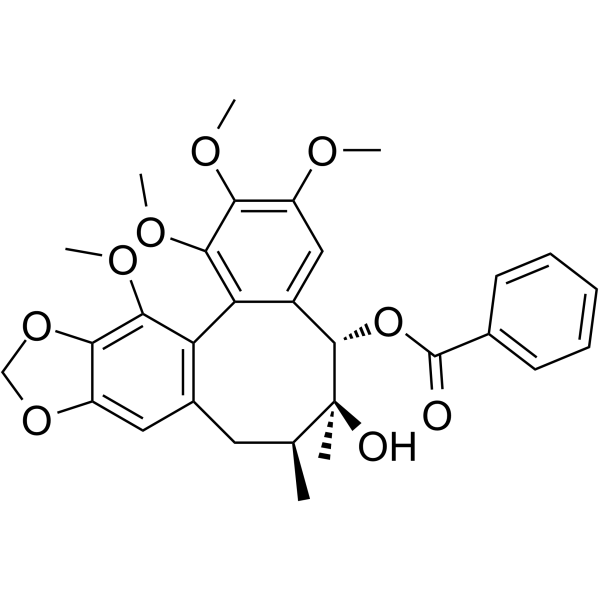
    Schisantherin A
    2 Publications Verification

    Gomisin-C; Schizantherin-A; Wuweizi ester-A

    NF-κB Inflammation/Immunology
    Schisantherin A is a dibenzocyclooctadiene lignan. Schisantherin A inhibits p65-NF-κB translocation into the nucleus by IκBα degradation.
    Schisantherin A
  • HY-141609

    AHR antagonist 5 free base

    Aryl Hydrocarbon Receptor Cancer
    IK-175 is a selective and orally active aryl hydrocarbon receptor (AHR) inhibitor. IK-175 effectively blocks AHR from translocating from the cytoplasm to the nucleus. IK-175 is highly selective for AHR over other receptors, transporters, and kinases .
    IK-175
  • HY-15067
    DNQX
    10+ Cited Publications

    FG 9041

    iGluR Cancer
    DNQX (FG 9041), a quinoxaline derivative, is a selective, potent competitive non-NMDA glutamate receptor antagonist (IC50s = 0.5, 2 and 40 μM for AMPA, kainate and NMDA receptors, respectively) .
    DNQX
  • HY-W012634

    Environmental Pollutants Bacterial Infection Metabolic Disease Inflammation/Immunology Cancer
    Benzothiazole is a natural occurring heterocyclic nuclei. Benzothiazole nucleus possesses a number of biological activities such as anticancer, antimicrobial, antidiabetic, anti-inflammatory, antileishmanial, and antiviral. Furthermore, Benzothiazole nucleus can function as an efficacious β-amyloid imaging agent [1][2][3][4].
    Benzothiazole
  • HY-N2292
    Kinsenoside
    4 Publications Verification

    Keap1-Nrf2 Apoptosis Inflammation/Immunology
    Kinsenoside is the main active ingredient of the genus plant, and has various biological activities. Kinsenoside and Nrf2 depend on the protection of nuclear cells (NPCs), which significantly reduces their ability to survive. Kinsenoside Active NPC Medium AKT-ERK1/2-Nrf2 Signal passage, Prevent physical decline, aging, harmonious physical function impairment. Kinsenoside can improve the puncture guide model for intermediate vertebral wall discharge (IDD).
    Kinsenoside
  • HY-B1833

    HQ-495

    GABA Receptor Neurological Disease
    Afloqualone (HQ-495) is an orally active central muscle relaxant and antivertiginous agent that can increase the sensitivity of GABA receptors in neurons of the lateral vestibular nucleus. Afloqualone (HQ-495) can be used in the research of low back pain and neck-arm-shoulder syndrome .
    Afloqualone
  • HY-148417

    Serotonin Transporter Neurological Disease
    ZZL-7 is a fast-onset antidepressant agent. ZZL-7 works by disrupting the interaction between the serotonin transporter (SERT) and neuronal nitric oxide synthase (nNOS) in the dorsal raphe nucleus (DRN). ZZL-7 can cross the blood-brain barrier readily. ZZL-7 can be used for the research of major depressive disorder (MDD) .
    ZZL-7
  • HY-D1742

    Fluorescent Dye DNA Stain Others
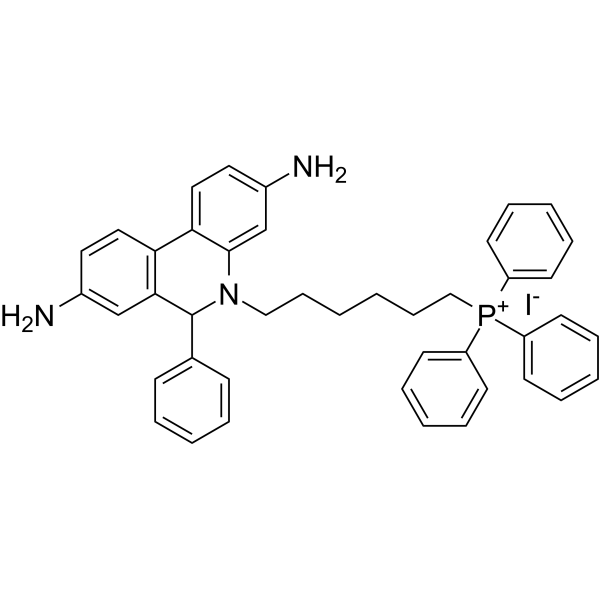
    DeepRed Nucleus Dye is a novel cell permeant and far red-fluorescing DNA probe. DeepRed Nucleus Dye excites at a wavelength of 647 nm, close to the Ex, and produces a fluorescence spectrum extending from 665 nm out to beyond 780 nm wavelengths. DeepRed Nucleus Dye fluorescence reflects cellular DNA content. DeepRed Nucleus Dye can be used in combination with FITC and RPE-labelled antibodies, without the need for fluorescence compensation .
    DeepRed Nucleus Dye
  • HY-19820A
    NSC45586 sodium
    1 Publications Verification

    Akt Ser/Thr Protease Apoptosis MMP Cardiovascular Disease Neurological Disease Inflammation/Immunology
    NSC45586 sodium is an inhibitor of PHLPP. NSC45586 sodium targets the PP2C phosphatase domains of PHLPP1 and PHLPP2, blocks the phosphatase activity of PHLPP, increases the expression level of FOXO1 in the nucleus, and reduces the protein expression of PHLPP1. NSC45586 sodium activates the AKT survival signaling pathway, enhances IGF-1-induced AKT activation, and inhibits the phosphorylation of AKT/ERK under basal conditions. NSC45586 sodium reduces staurosporine-induced neuronal death, preserves notochord cell morphology and KRT19 expression, inhibits cell apoptosis (apoptosis), improves the viability and proliferation of nucleus pulposus cells, upregulates the expression of ACAN/SOX9, and downregulates the expression of MMP13. NSC45586 sodium binds tightly to bovine serum albumin (bovine serum albumin), and exerts a more significant effect on nucleus pulposus in male individuals. NSC45586 sodium can be used in studies related to global cerebral ischemia and intervertebral disc degeneration .
    NSC45586 sodium
  • HY-103309
    ML218
    2 Publications Verification

    Calcium Channel Neurological Disease
    ML218 is a potent, selective and orally active T-type Ca 2+ channels (Cav3.1, Cav3.2, Cav3.3) inhibitor with IC50s of 310 nM and 270 nM for Cav3.2 and Cav3.3, respectively. ML218 inhibits the burst activity in subthalamic nucleus (STN) neurons. ML218 has no significant inhibition of L- or N-type calcium channels, KATP or hERG potassium channels. ML218 can penetrate the blood-brain barrier .
    ML218
  • HY-135608

    Sigma Receptor Neurological Disease
    BD-1008 is a nonselective σ receptor antagonist with Kis against σ1 receptor and σ2 receptor of 2 nM and 8 nM. The BD-1008 has an extremely low affinity for the D2 receptor (Ki = 1112 nM) and dopamine transporter (DAT) (Ki > 10,000 nM). BD-1008 significantly antagonizes dopamine release in the shell region of the nucleus accumbens via the σ₂ receptor. BD-1008 blocks the self-administration behavior of σ agonists.BD-1008 can be used for the study of addiction therapy that target the σ receptor .
    BD-1008
  • HY-108448

    OLDA

    TRP Channel Lipoxygenase Cardiovascular Disease Neurological Disease Metabolic Disease
    N-Oleoyldopamine (OLDA) is an orally active TRPV1 activator and 5-LOX inhibitor with blood-brain barrier permeability. N-Oleoyldopamine excites histaminergic neurons in the tuberomammillary nucleus via a dopamine receptor mechanism, a process independent of TRPV1 and cannabinoid receptors. On one hand, N-Oleoyldopamine promotes the release of insulin and glucose-dependent insulinotropic polypeptide through a GPR119-dependent pathway to improve glucose tolerance; on the other hand, N-Oleoyldopamine improves left ventricular function and reduces myocardial infarction size by triggering the release of substance P and calcitonin gene-related peptide. N-Oleoyldopamine is used in studies related to glycemic abnormalities and myocardial ischemia-reperfusion injury .
    N-Oleoyldopamine
  • HY-W040128

    Antibiotic Autophagy JNK Bcl-2 Family Infection
    Kanamycins sulfate is a blood-brain barrier-permeable JNK1 and Bcl-2 modulator as well as an antibiotic, with broad-spectrum antibacterial, and biofilm-inhibiting activities, and it induces autophagy. Kanamycins sulfate promotes Bcl-2 phosphorylation to upregulate autophagy levels, triggering changes such as mitochondrial swelling and endoplasmic reticulum expansion. Consequently, it causes reversible neuronal damage in the dorsal cochlear nucleus without inducing significant neuronal apoptosis. In the presence of exogenous alanine or glucose, Kanamycins sulfate effectively kills drug-resistant bacteria, restores drug sensitivity of multidrug-resistant bacteria, and alleviates urinary tract and kidney infections in mice. Kanamycins sulfate can be applied to scientific research related to Mycobacterium tuberculosis, salmonellosis, brucellosis, shigellosis, urinary tract infections, and reversible neurotoxicity .
    Kanamycins sulfate
  • HY-156214

    AP1867-PEG2-JQ1; AP-PEG2-JQ1

    Epigenetic Reader Domain Others
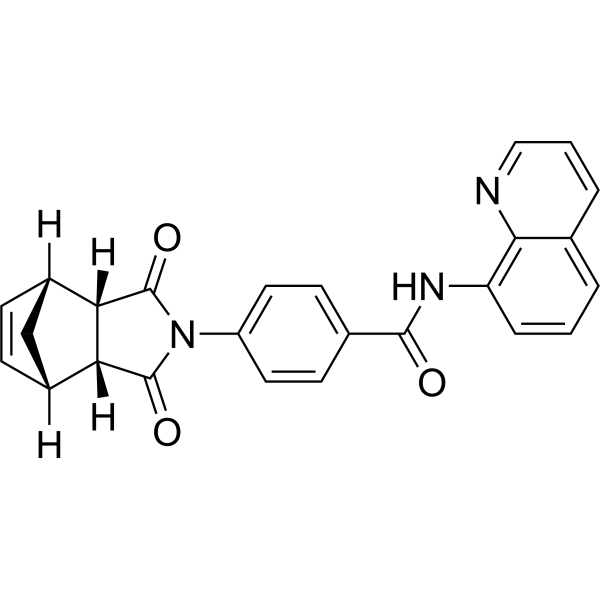
    NICE-01 (AP1867-PEG2-JQ1; AP-PEG2-JQ1) is a bifunctional compound that bind to proteins in separate cellular compartments that can induce nuclear import of cytosolic cargoes, using nuclear-localized bromodomain-containing protein 4 (BRD4) as a “carrier” for co-import and nuclear trapping of cytosolic proteins .
    NICE-01
  • HY-P991400

    TNF Receptor Apoptosis Interleukin Related NF-κB JNK p38 MAPK Inflammation/Immunology
    GSK1995057 is a human monoclonal antibody (mAb) targeting TNFRSF1A. GSK1995057 selectively binds to TNFR1, blocks the binding of TNF-α and LT-α, and does not interfere with TNFR2 signaling. GSK1995057 inhibits the activation of NF-κB, JNK and MAPK pathways, alleviates apoptosis (apoptosis) and inflammatory responses (inhibiting IL-1β, IL-6, IL-10, TNF-α), and prevents viability loss of human nucleus pulposus cells. GSK1995057 inhibits the expression of cytokines and neutrophil adhesion molecules in human pulmonary microvascular endothelial cell monolayers, and reduces inflammatory responses and lung injury symptoms in non-human primates. GSK1995057 forms complexes with HAVH autoantibodies, thereby activating TNFR1 and triggering the release of cytokines and IL-8 in human cells. GSK1995057 can be used in research related to intervertebral disc degeneration and acute lung injury .
    GSK1995057
  • HY-128577
    NIC3
    1 Publications Verification

    BTB/POZ Family Cancer
    NIC3 is a selective nucleus accumbens-associated protein-1 (NAC1) inhibitor, binds to the conserved Leu-90 of NAC1, prevents its homodimerization, and leads to proteasomal NAC1 degradation. Anti-cancer activity .
    NIC3
  • HY-P1422
    Spadin
    1 Publications Verification

    Potassium Channel 5-HT Receptor Neurological Disease
    Spadin, a natural peptide derived from a propeptide released in blood, is a potent TREK-1 channel blocker with IC50 value of 10 nM. Spadin enhances dorsal raphe nucleus 5-HT neurotransmission in mice and induces hippocampal CREB activation and neurogenesis. Spadin can be used for antidepressant research .
    Spadin
  • HY-DY2001

    Fluorescent Dye Influenza Virus Bacterial Infection
    Crystal Violet (solution) , also known as Gentian violet, methyl violet 10B, is a triphenyl-methane, an alkaline dye that binds to DNA in the nucleus of a cell, staining it a deep purple. It is often used for Gram staining to classify bacteria, or for cell or histological staining .
    Solvent and Concentration: Sterile water: 5 mg/mL (0.5%)
    Crystal Violet (solution)
  • HY-12242
    GBR 12935 dihydrochloride
    1 Publications Verification

    Dopamine Transporter Neurological Disease
    GBR 12935 dihydrochloride is a potent, and selective dopamine reuptake inhibitor, with the binding constant (Kd) of 1.08 nM in COS-7 cells. GBR 12935 dihydrochloride stimulates the locomotion activity in different mice strains but fails to induce stereotypy. Thus, GBR 12935 dihydrochloride also prevents the d-Fenfluramine-induced head-twitch response in mice .
    GBR 12935 dihydrochloride
  • HY-N6025
    Clemastanin B
    1 Publications Verification

    Influenza Virus Infection Inflammation/Immunology
    Clemastanin B, a lignin, has potent anti-influenza activities by inhibiting the virus multiplication, prophylaxsis and blocking the virus attachment. Clemastanin B targets viral endocytosis, uncoating or ribonucleoprotein (RNP) export from the nucleus. Clemastanin B has antioxidant and anti-inflammatory activities .
    Clemastanin B
  • HY-107915

    (-)-Cobefrin; (-)-α-Methylnoradrenaline; (-)-Nordefrin

    Adrenergic Receptor Cardiovascular Disease
    Levonordefrin ((-)-Cobefrin; (-)-α-Methylnoradrenaline; (-)-Nordefrin) is an α-adrenergic receptor agonist with blood pressure regulatory properties. Levonordefrin is a key metabolite responsible for the hypotensive effect of α-methyldopa. By stimulating central α-adrenergic receptors in the nucleus tractus solitarius region of the medulla oblongata, Levonordefrin induces centrally mediated hypotension and bradycardia. When administered intravenously, Levonordefrin increases mean arterial blood pressure in a dose-dependent manner. Levonordefrin is applicable for research on the pathophysiology of hypertension and drug metabolism .
    Levonordefrin
  • HY-129077

    Drug Intermediate Infection
    FR179642 is a key intermediate in the synthesis of the echinocandin antifungal Micafungin . FR179642 is the cyclic peptide nucleus of the echinocandin-like antifungal lipopeptide FR901379 .
    FR179642
  • HY-18959
    CWP232228
    5+ Cited Publications

    β-catenin Wnt Cancer
    CWP232228, a highly potent selective Wnt/β-catenin signaling inhibitor, antagonizes binding of β-catenin to T-cell factor (TCF) in the nucleus. CWP232228 suppresses tumor formation and metastasis without toxicity through the inhibition of the growth of breast and liver cancer stem cells (CSCs) .
    CWP232228
  • HY-P3561A

    Melanocortin Receptor Neurological Disease
    Agouti-related Protein (AGRP) (83-132) Amide (human) TFA is a fragment of agouti-related protein (AGRP) which is a protein found in abundance in the arcuate nucleus of the hypothalamus. AgRP primarily acts as an inverse agonist for the melanocortin-4 receptor (MC4R) to increase food intake .
    Agouti-related Protein (AGRP) (83-132) Amide (human) TFA
  • HY-153797

    Biotin Labeled Doxorubicin

    ADC Payload Antibiotic Bacterial Topoisomerase AMPK HIV HBV Apoptosis Autophagy Mitophagy Infection Cancer
    Dox-btn2 is a biotin labeled Doxorubicin (HY-15142A), with a biotin label at the point of conjugation to doxorubicin at 3'-NH2. Dox-btn2 can be used for cell imaging. While Doxorubicin is mainly accumulated in the nucleus, while Dox-btn2 is mainly located in the cytoplasm .
    Dox-btn2
  • HY-DY1009

    Fluorescent Dye Others
    CFDA-SE (solution) is a fluorescent dye that can penetrate the cell membrane. It can react with the free amine group in the cytoskeleton protein inside the cell, and finally form a protein complex with fluorescence. After entering the cell, CFDA-SE locates in the cell membrane, cytoplasm and nucleus, and the fluorescence staining is strongest in the nucleus . CFDA-SE dye can be uniformly inherited by the cells with cell division and proliferation, and its attenuation is proportional to the number of cell divisions. This phenomenon can be detected and analyzed by flow cytometry under the excitation light of 488 nm, and can be used to detect the proliferation of cells .
    Solvent and concentration: DMSO: 5 mM
    CFDA-SE (solution)
  • HY-W012634S

    Isotope-Labeled Compounds Bacterial Cancer
    Benzothiazole-d4 is a deuterium labeled Benzothiazole (HY-W012634). Benzothiazole is a natural occurring heterocyclic nuclei. Benzothiazole nucleus possesses a number of biological activities such as anticancer, antimicrobial, antidiabetic, anti-inflammatory, antileishmanial, and antiviral .
    Benzothiazole-d4
  • HY-P1341

    Orexin A (17-33) (human, mouse, rat, bovine)

    Orexin Receptor (OX Receptor) Sigma Receptor Phospholipase Neurological Disease
    OXA (17-33) (Orexin A (17-33) (human, mouse, rat, bovine)) is the shortest active orexin peptide that selectively targets OX1 (EC50=8.29 nM), with 23-fold selectivity for the OX1 receptor over the OX2 receptor. The activity of OXA (17-33) depends on the Tyr17, Leu20, Asn25, His26 residues and the spatial conformation of the α-helix. OXA (17-33) activates signaling pathways involving inositol-1,4,5-trisphosphate receptor (IP3R), phospholipase D (PL-D) and choline-Sigma-1R, thereby increasing the cytoplasmic Ca 2+ level in nucleus accumbens neurons, an effect that is blocked by Sigma-1R antagonists. OXA (17-33) serves as an important biological probe for investigating the function of the OX1 receptor. OXA (17-33) can be modified via incorporation of mixed disulfide bonds of homocysteine and cysteamine, and is widely used in studies related to insomnia and narcolepsy .
    OXA(17-33)
  • HY-P1329A
    CTOP TFA
    1 Publications Verification

    Opioid Receptor Neurological Disease
    CTOP TFA is a potent and highly selective μ-opioid receptor antagonist. CTOP TFA antagonizes the acute analgesic effect and hypermotility. CTOP TFA enhances extracellular dopamine levels in the nucleus accumbens. CTOP TFA dose-dependently enhances locomotor activity .
    CTOP TFA
  • HY-144634
    DDO-7263
    1 Publications Verification

    Keap1-Nrf2 Neurological Disease Inflammation/Immunology
    DDO-7263, a 1,2,4-Oxadiazole derivative, is a potent Nrf2-ARE activator. DDO-7263 upregulates Nrf2 through binding to Rpn6 to block the assembly of 26S proteasome and the subsequent degradation of ubiquitinated Nrf2. DDO-7263 induces Nrf2 translocation into the nucleus. DDO-7263 inhibits of NLRP3 inflammasome activation. DDO-7263 exerts anti-inflammatory activity and has the potential for neurodegenerative diseases research, such as Parkinson's disease (PD) .
    DDO-7263
  • HY-P1485A

    Neurokinin Receptor Neurological Disease Endocrinology
    Substance P(1-7) TFA is a fragment of the neuropeptide, substance P (SP). Substance P(1-7) TFA gives depressor and bradycardic effects when applied to the nucleus tractus solitarius .
    Substance P(1-7) TFA
  • HY-DY1015

    Fluorescent Dye Others
    Dihydroethidium (solution) , also known as DHE, is a peroxide indicator. Dihydroethidium penetrates cell membranes to form a fluorescent protein complex with blue fluoresces. After entering the cells, Dihydroethidium is mainly localized in the cell membrane, cytoplasm and nucleus, and the staining effect is the strongest in the nucleus. Dihydroethidium produces inherent blue fluorescence with a maximum excitation wavelength of 370 nm and a maximum emission wavelength of 420 nm; after dehydrogenation, Dihydroethidium combines with RNA or DNA to produce red fluorescence with a maximum excitation wavelength of 300 nm and a maximum emission wavelength of 610 nm. 535 nm can also be used as the excitation wavelength for actual observation .
    Solvent and concentration: DMSO: 5 mM
    Dihydroethidium (solution)
  • HY-136476

    Endogenous Metabolite Others
    Mg (II) protoporphyrin IX is a precursor of chlorophyll in Chlorella. Mg (II) protoporphyrin IX acts as a negative effector of nuclear photosynthetic gene expression. Mg (II) protoporphyrin IX can be used to study signal molecules involved in plastid-nucleus communication .
    Mg(II) protoporphyrin IX
  • HY-103233
    DNQX disodium salt
    10+ Cited Publications

    FG 9041 disodium salt

    iGluR Cancer
    DNQX (FG 9041) disodium salt, a quinoxaline derivative, is a selective, potent competitive non-NMDA glutamate receptor antagonist (IC50s = 0.5, 2 and 40 μM for AMPA, kainate and NMDA receptors, respectively) .
    DNQX disodium salt
  • HY-16230

    ROS Kinase Apoptosis Cancer
    GGTI-2417 is a potent and selective inhibitor of GGTase I. GGTI-2417 inhibits the Cdk2-mediated phosphorylation of p27 Kip1 at Thr187 and accumulates p27 Kip1 in the nucleus. GGTI-2417 also induces breast cancer cell apoptosis .
    GGTI-2417
  • HY-13340
    VU0152100
    1 Publications Verification

    VU152100

    mAChR Neurological Disease
    VU0152100 (VU152100) is a highly selective mAChR positive allosteric modulator (permeable to the blood-brain barrier). VU0152100 reverses Amphetamine-induced hypermotility in rats and increased levels of extracellular dopamine in nucleus accumbens and caudate-putamen. VU0152100 has good research potential in psychosis and cognitive impairment associated with mental disorders such as schizophrenia .
    VU0152100
  • HY-115533

    DNA/RNA Synthesis Others
    LBL1 is a ligand for lamins (especially lamin A, LA) in the nucleus, that stabilizes the oligomeric state of LA, and affects the assembly state of LA. LBL1 can be used to study the assembly state and dynamic changes of LA .
    LBL1
  • HY-123554

    Apoptosis Cancer
    Flavagline FL3 is a flavagline with potent and selective cytotoxicity in cancer cells.Flavagline FL3 induces apoptosis of HL60 and Hela cells by triggering the translocation of Apoptosis Inducing Factor (AIF) and caspase-12 to the nucleus .
    Flavagline FL3
  • HY-118618

    Hiyodorilactone A; Schkuhrin I

    STAT Cancer
    Eucannabinolide is a STAT3 inhibitor. Eucannabinolide suppresses STAT3 activation at tyrosine 705, inhibiteds its translocation to nucleus, and decreases its DNA binding capacity. Eucannabinolide can be used for triple negative breast cancer (TNBC) diseases research .
    Eucannabinolide
  • HY-P1422A
    Spadin TFA
    1 Publications Verification

    Potassium Channel 5-HT Receptor Neurological Disease
    Spadin TFA, a natural peptide derived from a propeptide released in blood, is a potent TREK-1 channel blocker with an IC50 value of 10 nM. Spadin TFA enhances dorsal raphe nucleus 5-HT neurotransmission in mice and induces hippocampal CREB activation and neurogenesis. Spadin TFA can be used for antidepressant research .
    Spadin TFA
  • HY-177508

    Cholecystokinin Receptor Neurological Disease
    BC264 is a highly potent and selective CCK-B agonist that crosses the blood-brain barrier. BC264 increases dopamine in the nucleus accumbens and facilitates motivation and attention in rats .
    BC264
  • HY-P1329

    Opioid Receptor Neurological Disease
    CTOP is a potent and highly selective μ-opioid receptor antagonist. CTOP antagonizes the acute morphine-induced analgesic effect and hypermotility. CTOP enhances extracellular dopamine levels in the nucleus accumbens. CTOP dose-dependently enhances locomotor activity .
    CTOP
  • HY-N16552

    Apoptosis Cardiovascular Disease
    Embinin is a natural product that can be isolated from Petals of Iris germanica Linnaeous. Embinin can enhance lumbar disc neovascularization and induces apoptosis of nucleus pulposus cells in lumbar disc herniation rats .
    Embinin
  • HY-W845607

    Monoamine Oxidase Neurological Disease
    Milacemide, a glycinamide derivative, is an orally active MAO-B inhibitor with anticonvulsant activity. Milacemide reduces the levels of dihydroxyphenylacetic acid and homovanilic acid, but increases the levels of dopamine and serotonin in the caudate nucleus. Milacemide is promising for research of Alzheimer's disease .
    Milacemide

Inquiry Online

Your information is safe with us. * Required Fields.

Salutation


Country or Region *

Applicant Name *


Organization Name *

Department *


Email Address *


Product Name *

Cat. No.


Requested quantity *

Phone Number *


Remarks

Inquiry Online

Inquiry Information

Product Name:
Cat. No.:
Quantity:
MCE Japan Authorized Agent:

