21 Results for "

parasitic nematodes

" in MedChemExpress (MCE) Product Catalog:
Products (21)

21 Results for "parasitic nematodes" in MCE Product Catalog:

8
8 Cited Publications
Cat. No.: HY-115364
CAS No.: 14255-87-9
Purity:  99.87%
Synonyms: SKF 29044
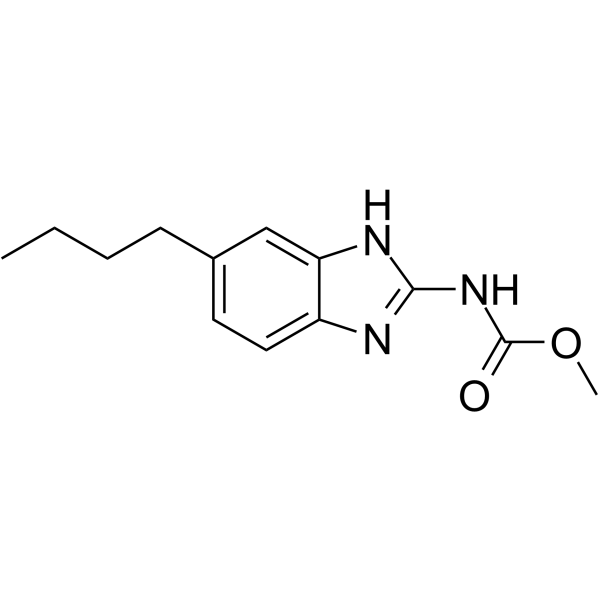
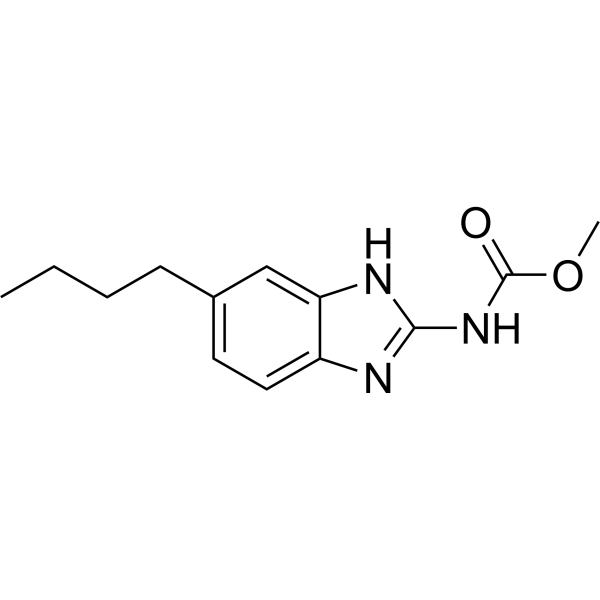
Parbendazole (SKF‑29044) is an orally active benzimidazole carbamate compound with multiple biological activities. Parbendazole binds to free tubulin and inhibits microtubule polymerization; it also activates the JNK/c‑Jun signaling axis and upregulates the expression of the downstream axonal repulsion factor Sema3A. Parbendazole upregulates KAL-1 mRNA expression, reduces nerve growth factor levels, and promotes the terminal differentiation of normal human epidermal keratinocytes. Parbendazole induces apoptosis in differentiated acute myeloid leukemia monocytes and exerts antileukemic activity in a mouse xenograft model of acute myeloid leukemia. Parbendazole exhibits broad-spectrum anthelmintic activity against various animal nematodes. Parbendazole is used in research related to acute myeloid leukemia and parasitic infections .
loading...
    loading...
Cat. No.: HY-107771
CAS No.: 318290-98-1
Purity:  99.52%
Synonyms: MCW-2
Target:  

Parasite

Research Areas:  

Cancer

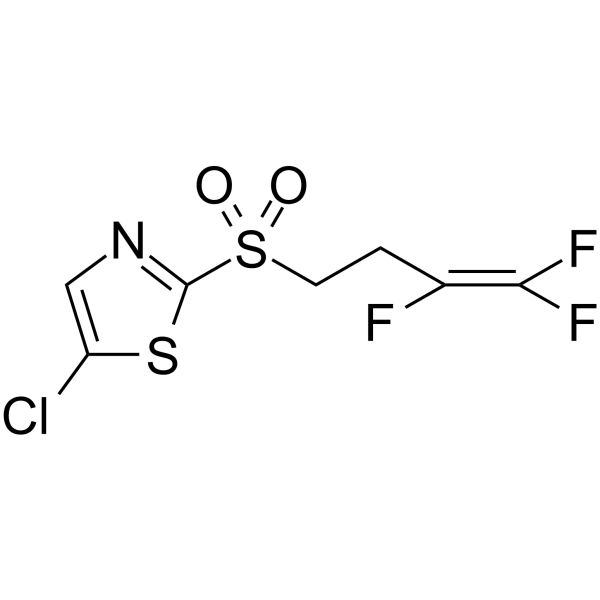
Fluensulfone is a new nematicide for chemical control of plant parasitic nematodes.
loading...
    loading...
Cat. No.: HY-P2779
CAS No.: 9054-63-1
Target:  

Endogenous Metabolite

Research Areas:  

Metabolic Disease

Microsomal aminopeptidase, Microorganism is first reported from C. elegans. The Microsomal aminopeptidase, Microorganism is beneficial for the development of molecular vaccines against parasitic nematodes .
loading...
    loading...
Cat. No.: HY-W012657
CAS No.: 4748-78-1
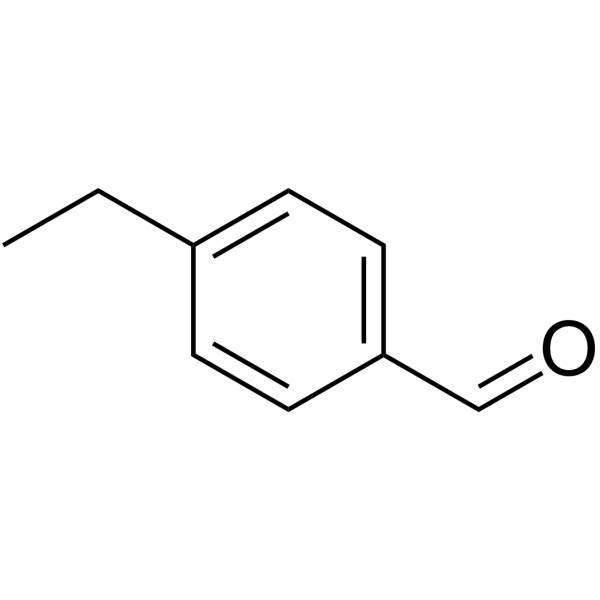
4-Ethylbenzaldehyde is an aldehyde type organic compound with an almond-like odor. 4-Ethylbenzaldehyde is naturally present in various foods such as grilled meat, black tea, peanuts, etc. 4-Ethylbenzaldehyde has significant effects in controlling plant parasitic nematodes. 4-Ethylbenzaldehyde has genotoxicity and potential for liver damage in zebrafish models .
loading...
    loading...
Cat. No.: HY-W020785
CAS No.: 98886-44-3
Research Areas:  

Infection

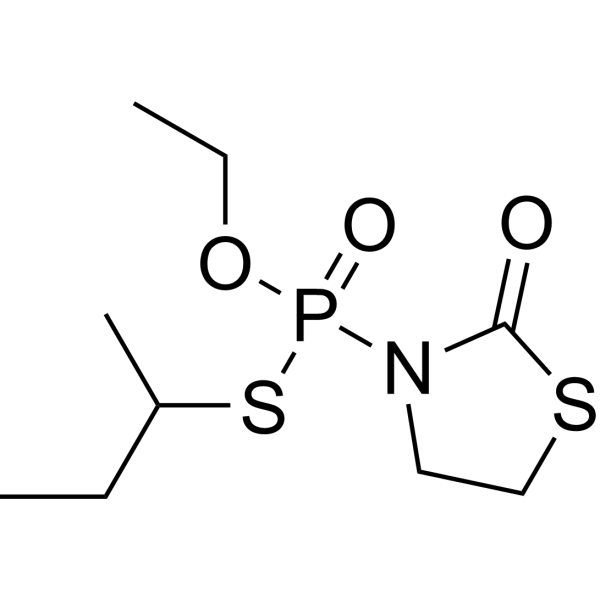
Fosthiazate is an inhibitor of acetylcholinesterase (Acetylcholinesterase, AChE). Fosthiazate exhibits significant nematicidal activity and systemic insecticidal activity. Fosthiazate is applicable to studies on plant-parasitic nematodes, root-knot diseases, agricultural pests, as well as the ecotoxicology and environmental behavior of organophosphorus compounds .
loading...
    loading...
Cat. No.: HY-129591
CAS No.: 77392-58-6
Synonyms: PNU-97333
Target:  

Parasite nAChR

Research Areas:  

Infection

Paraherquamide A (PNU-97333) is an anthelmintic and nicotinic acetylcholine receptor (nAChR) antagonist, with pIC50 values ranging from 6.87 to 7.58 for L-type nAChR and from 4.84 to 5.54 for N-type nAChR. Paraherquamide A acts as a competitive antagonist against multiple nematode nAChR subtypes, as well as a mixed competitive-noncompetitive antagonist against nematode N-type nAChR. Paraherquamide A induces flaccid paralysis in parasitic nematodes without altering ATP levels, inhibits nematode motility, and antagonizes cholinergic agonist-induced muscle contraction in nematodes. Paraherquamide A can be used in studies related to nematode parasitic infections .
loading...
    loading...
Cat. No.: HY-W127746
CAS No.: 550-74-3
Research Areas:  

Infection

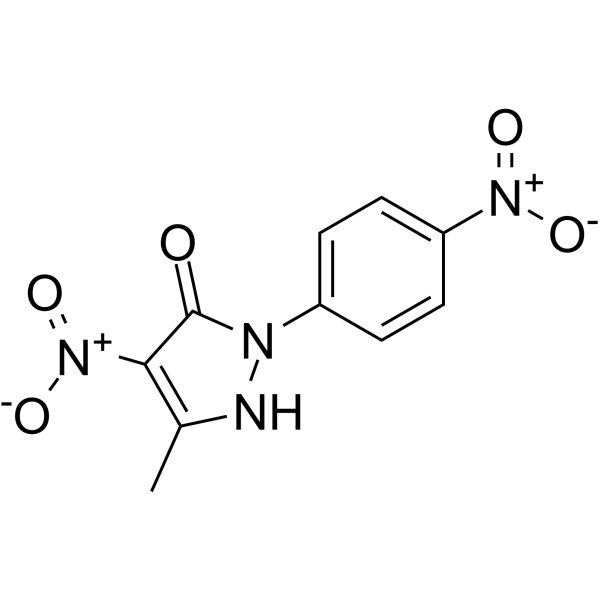
Picrolonic acid is a nematode hatching agent and bacterial frameshift mutagen. Picrolonic acid induces egg hatching in various nematodes. Picrolonic acid induces frameshift mutations in Salmonella. Picrolonic acid preferentially inhibits the growth of DNA polymerase-deficient E. coli . Picrolonic acid also serves as an analytical reagent for the determination of calcium, magnesium, lead, strontium, and thorium, and for the analysis of alkaloids, tryptophan, and phenylalanine. Picrolonic acid is used in research related to bacterial and parasitic infections .
loading...
    loading...
Cat. No.: HY-148968
CAS No.: 137-42-8
Synonyms: Carbathion
Target:  

Fungal

Research Areas:  

Infection

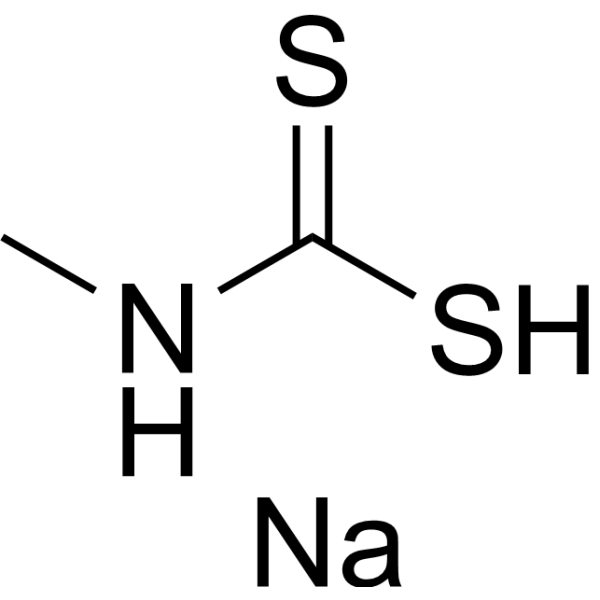
Metham sodium (Carbathion) is a broad-spectrum soil microbial suppressant. Metham sodium controls soil-borne pests and weeds. Metham sodium inhibits weed seeds, plant-parasitic nematodes, plant pathogenic fungi and soil insects .
loading...
    loading...
Cat. No.: HY-172523
CAS No.: 932889-57-1
Research Areas:  

Infection

CDA-IN-3 (NCDI) is an inhibitor of chitin deacetylase (CDA) with anti-parasitic activity. CDA-IN-3 disrupts the chitin metabolism of nematodes, leading to an increase in the level of ROS in nematodes and causing cell damage. CDA-IN-3 has a significant inhibitory effect on all developmental stages of Caenorhabditis elegans. CDA-IN-3 can be used in the research of the anti-infection field .
loading...
    loading...
Cat. No.: HY-W020785R
CAS No.: 98886-44-3
Fosthiazate (Standard) is the analytical standard of Fosthiazate (HY-W020785). This product is intended for research and analytical applications. Fosthiazate is an inhibitor of acetylcholinesterase (Acetylcholinesterase, AChE). Fosthiazate exhibits significant nematicidal activity and systemic insecticidal activity. Fosthiazate is applicable to studies on plant-parasitic nematodes, root-knot diseases, agricultural pests, as well as the ecotoxicology and environmental behavior of organophosphorus compounds .
loading...
    loading...
Cat. No.: HY-W012657R
CAS No.: 4748-78-1
4-Ethylbenzaldehyde (Standard) is the analytical standard of 4-Ethylbenzaldehyde (HY-W012657). This product is intended for research and analytical applications. 4-Ethylbenzaldehyde is an aldehyde type organic compound with an almond-like odor. 4-Ethylbenzaldehyde is naturally present in various foods such as grilled meat, black tea, peanuts, etc. 4-Ethylbenzaldehyde has significant effects in controlling plant parasitic nematodes. 4-Ethylbenzaldehyde has genotoxicity and potential for liver damage in zebrafish models.
loading...
    loading...
Cat. No.: HY-126638
CAS No.: 75731-43-0
Synonyms: NSC 324645
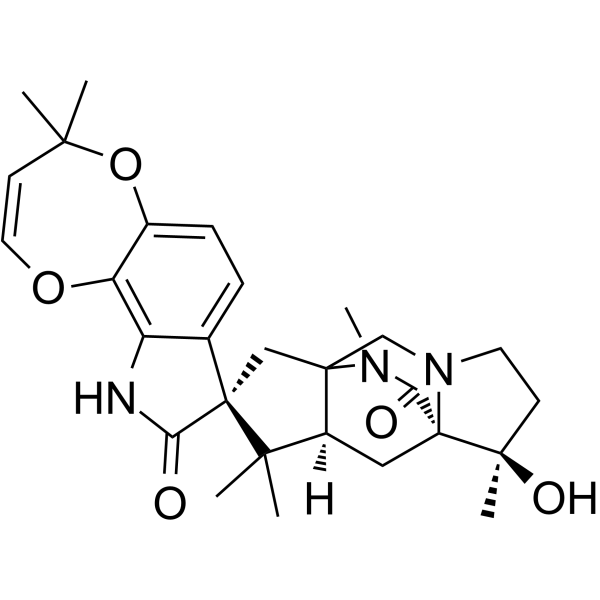
Marcfortine A is an indole alkaloid originally isolated from P. roqueforti. It has nematocidal activity against the parasitic nematode H. contortus (LD99=0.06 μg/mL) and inhibits motility of adult worms (EC50=2 μM). Marcfortine A eliminates H. contortus, T. colubriformis, and O. ostertagi from experimentally infected jirds (ED95s=0.33, 0.11, and 2.5 mg/animal, respectively). It dose-dependently inhibits nicotine-induced calcium mobilization in SH-SY5Y and TE-671 cells expressing α3 subunit-containing human nicotinic acetylcholine receptors (nAChRs) and muscle-type nAChRs, respectively.
loading...
    loading...
Cat. No.: HY-115364R
CAS No.: 14255-87-9
Synonyms: SKF 29044 (Standard)
Parbendazole (Standard) (SKF 29044 (Standard)) is the analytical standard of Parbendazole (HY-115364). This product is intended for research and analytical applications. Parbendazole (SKF‑29044) is an orally active benzimidazole carbamate compound with multiple biological activities. Parbendazole binds to free tubulin and inhibits microtubule polymerization; it also activates the JNK/c‑Jun signaling axis and upregulates the expression of the downstream axonal repulsion factor Sema3A. Parbendazole upregulates KAL-1 mRNA expression, reduces nerve growth factor levels, and promotes the terminal differentiation of normal human epidermal keratinocytes. Parbendazole induces apoptosis in differentiated acute myeloid leukemia monocytes and exerts antileukemic activity in a mouse xenograft model of acute myeloid leukemia. Parbendazole exhibits broad-spectrum anthelmintic activity against various animal nematodes. Parbendazole is used in research related to acute myeloid leukemia and parasitic infections .
loading...
    loading...
Cat. No.: HY-115364S
CAS No.: 1613439-58-9
Synonyms: SKF 2904-d3
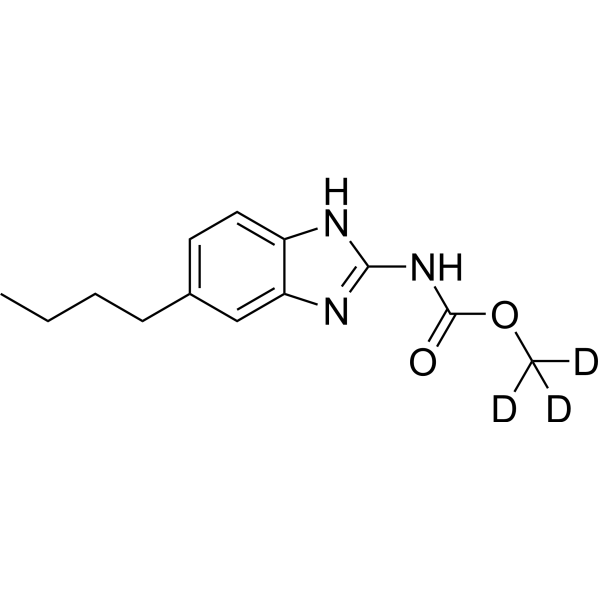
Parbendazole-d3 (SKF 2904-d3) is the deuterated-labeled Parbendazole (HY-115364). Parbendazole (SKF‑29044) is an orally active benzimidazole carbamate compound with multiple biological activities. Parbendazole binds to free tubulin and inhibits microtubule polymerization; it also activates the JNK/c‑Jun signaling axis and upregulates the expression of the downstream axonal repulsion factor Sema3A. Parbendazole upregulates KAL-1 mRNA expression, reduces nerve growth factor levels, and promotes the terminal differentiation of normal human epidermal keratinocytes. Parbendazole induces apoptosis in differentiated acute myeloid leukemia monocytes and exerts antileukemic activity in a mouse xenograft model of acute myeloid leukemia. Parbendazole exhibits broad-spectrum anthelmintic activity against various animal nematodes. Parbendazole is used in research related to acute myeloid leukemia and parasitic infections .
loading...
    loading...
Cat. No.: HY-W727209
CAS No.: 1254304-22-7
Target:  

Parasite

Research Areas:  

Infection

Fluazaindolizine is a fluorinated nematicide. Fluazaindolizine induces mortality in second-stage juveniles (J2) of Meloidogyne incognita and Tylenchulus semipenetrans in vitro. Fluazaindolizine impacts plant-parasitic nematode parasitism. Fluazaindolizine can be used for the research of plant-parasitic nematode infestation .
loading...
    loading...
Cat. No.: HY-P11862
CAS No.: 2097822-76-7
Synonyms: MBJ-0173
Category:  

Microorganisms

Malpinin A (MBJ-0173) is a dehydrohexapeptide biosurfactant with significant anthelmintic activity. Malpinin A specifically accumulates in the nematode digestive tract, thereby effectively inhibiting nematode feeding and proliferation without causing paralysis. Malpinin A can be used in studies related to plant-parasitic nematode infection .
loading...
    loading...
Cat. No.: HY-W102349
CAS No.: 1534-08-3
S-Methyl thioacetate is a toxicant with fumigant activity, can be found in emissions from Bacillus oshimensis, Burkholderia gladioli, Burkholderia cepacia, and Pseudomonas oryzihabitans. S-Methyl thioacetate exerts fumigant toxicity against Caenorhabditis elegans and root-knot nematode Meloidogyne incognita. S-Methyl thioacetate functions as a bacterial volatile organic compound. S-Methyl thioacetate can be used for the research of plant-parasitic nematode infection .
loading...
    loading...
Cat. No.: HY-187808
CAS No.: 257880-89-0
Insecticidal agent 38 is a AChE inhibitor and Insecticide, with an IC50 of 49.08 μg/mL against AChE. Insecticidal agent 38 inhibits the activities of SOD, Catalase and Glutathione-S-transferase. Insecticidal agent 38 induces intracellular ROS, lipofuscin and lipid accumulation, increases malondialdehyde levels, disrupts redox homeostasis and triggers oxidative damage. Insecticidal agent 38 inhibits the feeding and reproductive capabilities of the pine wood nematode (Bursaphelenchus xylophilus). Insecticidal agent 38 exhibits insecticidal activity against nematodes. Insecticidal agent 38 can be used in studies of plant-parasitic nematode infections .
loading...
    loading...
Cat. No.: HY-W783593
CAS No.: 65195-51-9
Target:  

Parasite

Avermectin A1a is a potent and broad-spectrum antiparasitic agent. Avermectin A1a targets nematodes and arthropods by binding to their glutamate-gated chloride channels to block nerve signal transmission and induce paralysis. Avermectin A1a can be used for the study of parasitic infection .
loading...
    loading...
Cat. No.: HY-183949
Insecticidal agent 33 is an AChE inhibitor with nematicidal activity. Insecticidal agent 33 impairs locomotor activity of Caenorhabditis elegans, and induces oxidative damage in Caenorhabditis elegans, including elevated reactive oxygen species (ROS) levels, lipofuscin accumulation, lipid deposition, and disrupted cellular homeostasis. Insecticidal agent 33 can be used for the research of plant-parasitic nematode infection .
loading...
    loading...

