

47 Results for "

peptide cyclization

" in MedChemExpress (MCE) Product Catalog:
Products (47)

47 Results for "peptide cyclization" in MCE Product Catalog:

1
1 Cited Publications
Cat. No.: HY-P2048
CAS No.: 1627580-64-6
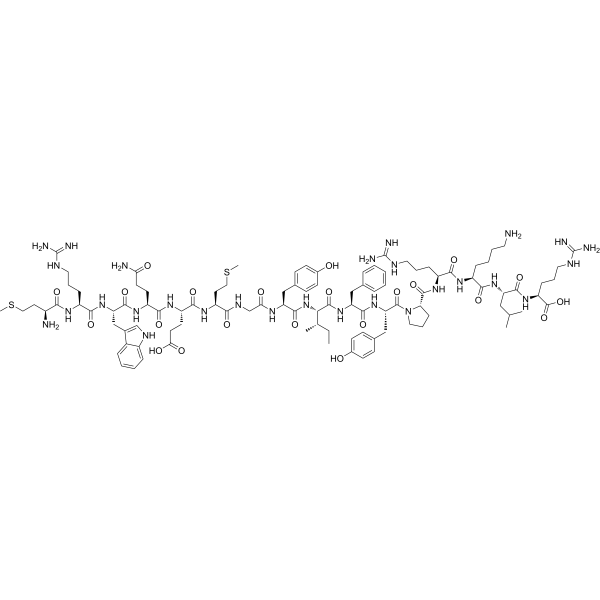
MOTS-c (human) is a mitochondrial-derived peptide that modulates the AMPK/PGC-1α pathway to enhance insulin sensitivity. MOTS-c (human) inhibits the folate cycle and de novo purine synthesis, increases AICAR levels to activate AMPK, and then regulates the Nrf2/Keap1 antioxidant pathway and inhibits the NF-κB inflammatory pathway, while promoting mitochondrial biogenesis and energy metabolism. MOTS-c (human) has the effects of improving glucose and lipid metabolism, anti-oxidative stress, anti-inflammatory and neuroprotection, and can be used in the study of type 2 diabetes, traumatic brain injury, inflammatory diseases and aging-related metabolic disorders .
loading...
    loading...
1
1 Cited Publications
Cat. No.: HY-N2071
CAS No.: 77-53-2
Synonyms: (+)-Cedrol; α-Cedrol
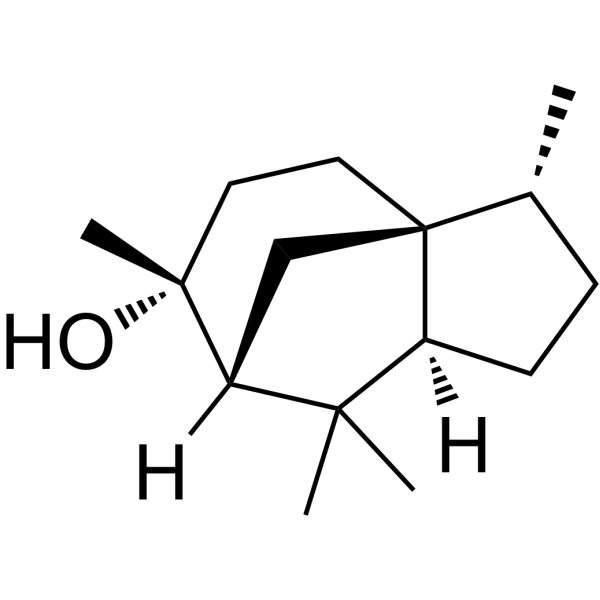
Cedrol is a potent competitive inhibitor of cytochrome P-450(CYP) enzyme. Cedrol plays an anticancer role by inducing cell cycle arrest and Caspase-dependent apoptosis. Cedrol acts as a neutrophil agonist that can desensitize cells to subsequent stimulation of N-formyl peptides. Cedrol prevents neuropathic pain caused by chronic contractile injury by inhibiting oxidative stress and inflammation. In addition, Cedrol has antibacterial, hair loss prevention and anti-anxiety properties .
loading...
    loading...
1
1 Cited Publications
Cat. No.: HY-P2048A
Target:  

AMPK GLUT

MOTS-c (human) acetate is a mitochondrial-derived peptide that modulates the AMPK/PGC-1α pathway to enhance insulin sensitivity. MOTS-c (human) acetate inhibits the folate cycle and de novo purine synthesis, increases AICAR levels to activate AMPK, and then regulates the Nrf2/Keap1 antioxidant pathway and inhibits the NF-κB inflammatory pathway, while promoting mitochondrial biogenesis and energy metabolism. MOTS-c (human) acetate has the effects of improving glucose and lipid metabolism, anti-oxidative stress, anti-inflammatory and neuroprotection, and can be used in the study of type 2 diabetes, traumatic brain injury, inflammatory diseases and aging-related metabolic disorders .
loading...
    loading...
Cat. No.: HY-Y1703
CAS No.: 148893-10-1
Research Areas:  

Others

HATU is a third-generation uronium salt peptide coupling reagent. HATU increases the rate of peptide coupling reactions, activates amino acids, promotes peptide bond formation in both solution-phase and solid-phase synthesis, and also facilitates peptide assembly, fragment coupling, and linear peptide cyclization. HATU can promote the N-acylation of chitosan to generate amide-linked cationic derivatives with a controllable degree of substitution. HATU is commonly used in amine acylation reactions .
loading...
    loading...
Cat. No.: HY-113110
CAS No.: 19246-18-5
Purity:  99.96%
Synonyms: L-Cysteinylglycine; Cys-Gly; H-Cys-Gly-OH
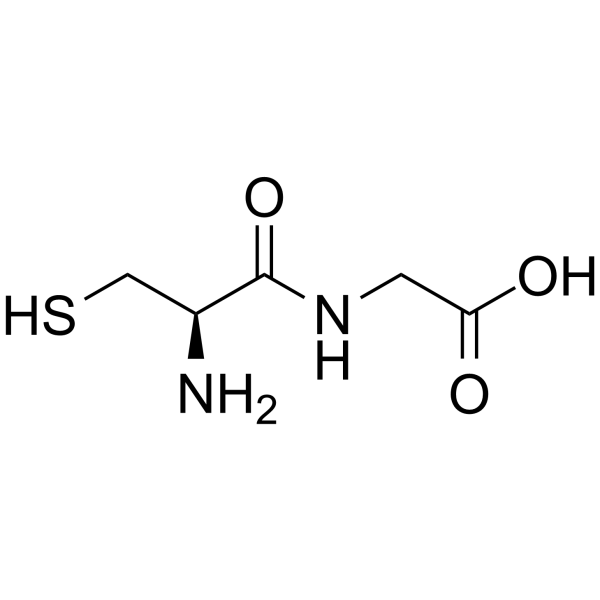
Cysteinylglycine (L-Cysteinylglycine; Cys-Gly) is a dipeptide formed by the peptide bond linkage between cysteine (Cysteine) and glycine (Glycine). Cysteinylglycine is an important metabolic intermediate in the human body, mainly derived from the degradation of glutathione (GSH). Cysteinylglycine reduces ferric iron to ferrous iron, drives the redox cycle of iron, generates reactive oxygen species (ROS), stimulates oxidative reactions, induces lipid peroxidation of human plasma LDL lipoproteins, and causes oxidative damage to DNA bases. Cysteinylglycine can be used as a biomarker to evaluate ischemic heart disease, breast cancer and other conditions .
loading...
    loading...
Cat. No.: HY-P5910
CAS No.: 897026-25-4
Target:  

MDM-2/p53 Apoptosis

Research Areas:  

Cancer

Azurin p28 peptide is a tumor-penetrated antitumor peptide. Azurin p28 peptide redues proteasomal degradation of p53 through formation of a p28: p53 complex. Azurin p28 peptide induces apoptosis or cell cycle arrest. Azurin p28 peptide inhibits p53-positive tumor growths. Azurin p28 peptide shows antiangiogenic effect by inhibiting phosphorylation of VEGFR-2, FAK and Akt .
loading...
    loading...
Cat. No.: HY-P10909
CAS No.: 2925554-87-4
Synonyms: MBX 2109
Target:  

PTHR Drug Intermediate

Research Areas:  

Endocrinology

Canvuparatide (MBX 2109) is a PTH analog prodrug that releases the biologically active peptide through temperature- and pH-controlled intramolecular cyclization. The peptide released by Canvuparatide binds to and activates the PTH1 receptor, stimulating dose-dependent cAMP accumulation. Canvuparatide can be used in research on hypoparathyroidism .
loading...
    loading...
Cat. No.: HY-N1243
CAS No.: 205304-87-6
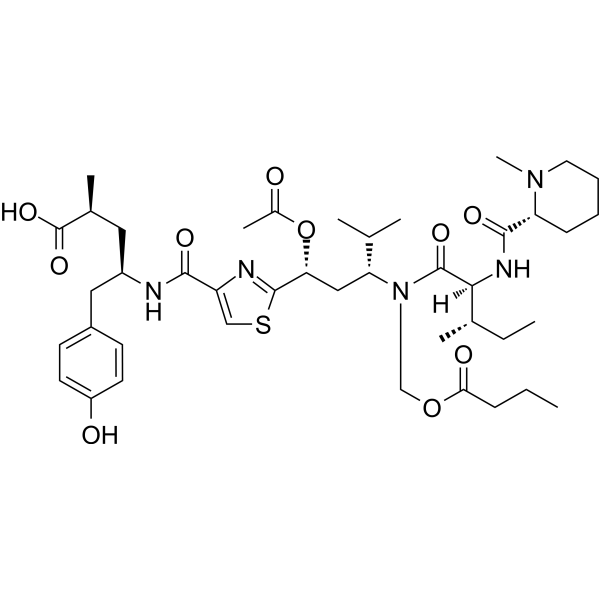
Tubulysin B is a highly cytotoxic peptide and potent microtubule destabilizing agents isolated from the myxobacteria Archangium geophyra and Angiococcus disciformis. Tubulysin B has IC50 values in the picomolar range against many cancer cell lines, including those with multidrug resistant properties .Tubulysin B is a cytotoxic activity tubulysin which inhibits tubulin polymerization and leads to cell cycle arrest and apoptosis .
loading...
    loading...
Cat. No.: HY-P2315
CAS No.: 452274-53-2
Synonyms: HβD-1
Research Areas:  

Infection Cancer

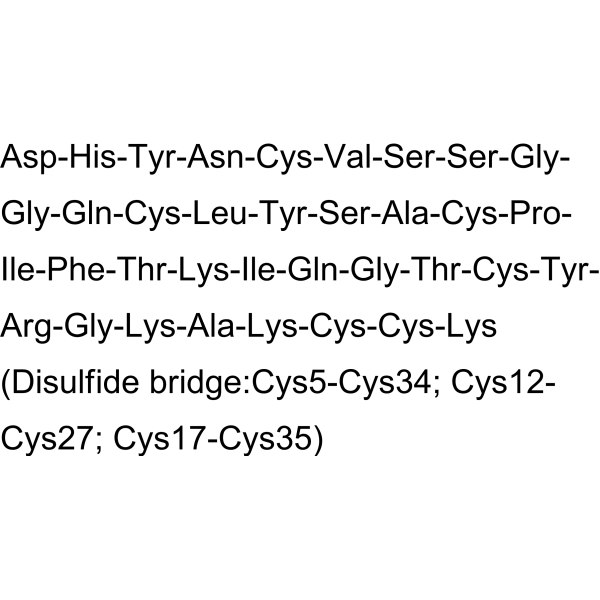
Human β-defensin-1 (HβD-1) is an antimicrobial peptide and immunomodulator that induces angiogenin secretion from fibroblasts through EGFR, JNK, NF-κB, Src, and p38 signaling pathways, and binds CCR6 to activate G protein signaling, while also inducing ER stress, apoptosis, cell cycle arrest, and autophagy. Human β-defensin-1 can be used in research on hepatocellular carcinoma, influenza A virus infection, male infertility, colon cancer, and bacterial infections caused by antibiotic-resistant strains .
loading...
    loading...
Cat. No.: HY-P6292
CAS No.: 2724212-01-3
Research Areas:  

Neurological Disease Cancer

KS-133 is a bicyclic peptide with VIPR2 antagonistic activity that can cross the blood-brain barrier. KS-133 selectively blocks VIPR2-mediated Gq/Ca, Gs/cAMP, cAMP/PKA/ERK and PI3K/AKT/GSK3β signaling pathways. KS-133 inhibits VIPR2 agonist-induced CREB phosphorylation in the prefrontal cortex of mice. KS-133 shifts the polarization direction of macrophages toward M1. KS-133 attenuates cancer cell proliferation and reduces the cell cycle distribution level at the S-M phase. KS-133 exerts antitumor effects in a mouse model of colorectal cancer. KS-133 reverses cognitive decline in mouse models of psychiatric disorders. KS-133 can be used for research related to schizophrenia, colorectal cancer and breast cancer .
loading...
    loading...
Cat. No.: HY-125372
CAS No.: 16348-49-5
Purity:  99.85%
Synonyms: ABAO
Research Areas:  

Others

2-Amino benzamidoxime (ABAO) acts as a bioconjugation reagent precursor and a fluorescent probe precursor. 2-Amino benzamidoxime contains an aniline group for imine activation of aldehydes, as well as a nucleophilic group (Nu:) located at the ortho position of the amine, which is responsible for intramolecular cyclization. 2-Amino benzamidoxime reacts with glyoxal at the N-terminus of phage-displayed peptide libraries. Derivatives of 2-Amino benzamidoxime can be used for protein bioconjugation. Derivatives of 2-Amino benzamidoxime serve as fluorescent probes .\n


loading...
    loading...
Cat. No.: HY-E70421
Target:  

Angiotensin Receptor

Research Areas:  

Others

Peptide ligase is an Asx-specific asparaginyl endopeptidase (AEP) ligase and cyclase that can be isolated from the pods of butterfly pea (Clitoria ternatea). Peptide ligase mediates traceless intramolecular cyclization of polypeptides. Peptide ligase mediates intermolecular ligation of polypeptides or proteins. Peptide ligase can be used to cyclize food-derived angiotensin-converting enzyme (ACE) inhibitory peptides, thereby enhancing the stability and biological activity of ACE inhibitory peptides. Peptide ligase is applicable to relevant research in the fields of food and biopharmaceuticals .
loading...
    loading...
Cat. No.: HY-P10323
Synonyms: Tumstatin (74-98), human
Target:  

Integrin FAK mTOR Apoptosis

Research Areas:  

Cancer

T7 Peptide is a protein synthesis inhibitor and anti-angiogenic agent, with a Kd of 10 nM for human transferrin receptor. T7 Peptide inhibits the phosphorylation of focal adhesion kinase, the activation of phosphatidylinositol 3-kinase and Akt, the kinase activity of mTOR, as well as the phosphorylation of 4E-BP1 in endothelial cells. T7 Peptide induces G0/G1 cell cycle arrest, apoptosis and protective autophagy in hepatocellular carcinoma cells, and suppresses tumor growth in mouse models. T7 Peptide is applicable to research related to cancer, glioblastoma, hepatocellular carcinoma and glioma .
loading...
    loading...
Cat. No.: HY-P10323A
Synonyms: Tumstatin (74-98), human TFA
Target:  

Integrin FAK mTOR Apoptosis

Research Areas:  

Cancer

T7 Peptide TFA is a protein synthesis inhibitor and anti-angiogenic agent, with a Kd of 10 nM for human transferrin receptor. T7 Peptide TFA inhibits the phosphorylation of focal adhesion kinase, the activation of phosphatidylinositol 3-kinase and Akt, the kinase activity of mTOR, as well as the phosphorylation of 4E-BP1 in endothelial cells. T7 Peptide TFA induces G0/G1 cell cycle arrest, apoptosis and protective autophagy in hepatocellular carcinoma cells, and suppresses tumor growth in mouse models. T7 Peptide TFA is applicable to research related to cancer, glioblastoma, hepatocellular carcinoma and glioma .
loading...
    loading...
Cat. No.: HY-P1109
CAS No.: 189064-08-2
Target:  

CDK

Research Areas:  

Cancer

[Ala92]-p16 (84-103) is a peptide derived from the p16CDKN2/INK4a (p16) tumor suppressor protein. [Ala92]-p16 (84-103) binds to both cdk4 and cdk6 and inhibits cdk4-cyclin D1 kinase activity in vitro (IC50: 1.5 μM). [Ala92]-p16 (84-103) blocks cell cycle progression through the G1 phase .
loading...
    loading...
Cat. No.: HY-118593
CAS No.: 58717-24-1
Synonyms: Madumycin II; Antibiotic A 2315A
Target:  

Antibiotic

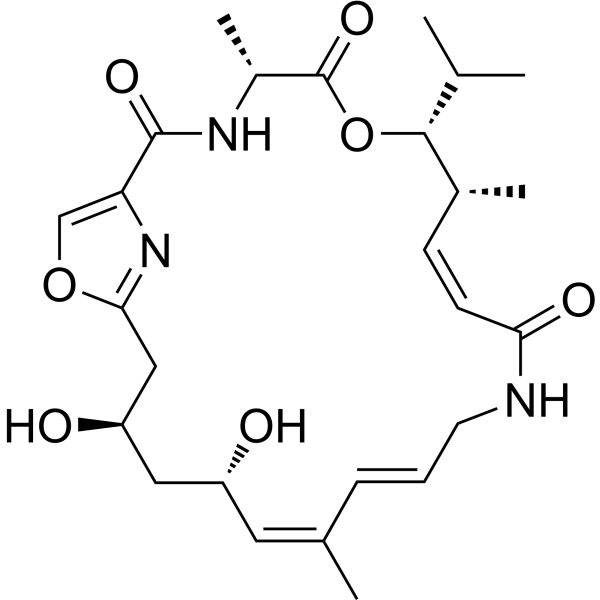
A2315A (Madumycin II) is an alanine-containing streptogramin A antibiotic. A2315A is a potent peptidyl transferase center (PTC) inhibitor. A2315A inhibits the ribosome prior to the first cycle of peptide bond formation .
loading...
    loading...
Cat. No.: HY-130544
CAS No.: 79583-98-5
Purity:  99.77%
Synonyms: 5-Azidovaleric acid
Research Areas:  

Others

5-Azidopentanoic acid (5-Azidovaleric acid) is a crosslinker/cyclization reagent as well as an azido-containing carboxylic acid. 5-Azidopentanoic acid participates in Cu I-catalyzed azide-alkyne cycloaddition reactions; when used to cap the N-terminus of resin-bound peptides containing propargylglycine residues, it enables head-to-tail cyclodimerization of peptides. 5-Azidopentanoic acid introduces azido functional groups into chitosan via amidation for strain-promoted azide-alkyne cycloaddition click reactions. 5-Azidopentanoic acid acts as an aliphatic bifunctional ligand and capping agent for CdSe tetrapods; its bromo group can be converted to an azido group, which then undergoes catalyst-free alkyne-azide cycloaddition click reactions with ethynyl-terminated poly (3-hexylthiophene) .
loading...
    loading...
Cat. No.: HY-P3756
CAS No.: 180088-82-8
Synonyms: EMP-1
Target:  

Inhibitory Antibodies

Research Areas:  

Cardiovascular Disease

EPO mimetic peptide-1 (EMP-1), a 20 amino acid peptide. EPO mimetic peptide-1 stimulates cell proliferation, affects cell cycle and induces the production of reticulocytes in vivo .
loading...
    loading...
Cat. No.: HY-113110A
CAS No.: 1100364-95-1
Purity:  99.76%
Synonyms: L-Cysteinylglycine TFA; Cys-Gly TFA; H-Cys-Gly-OH TFA
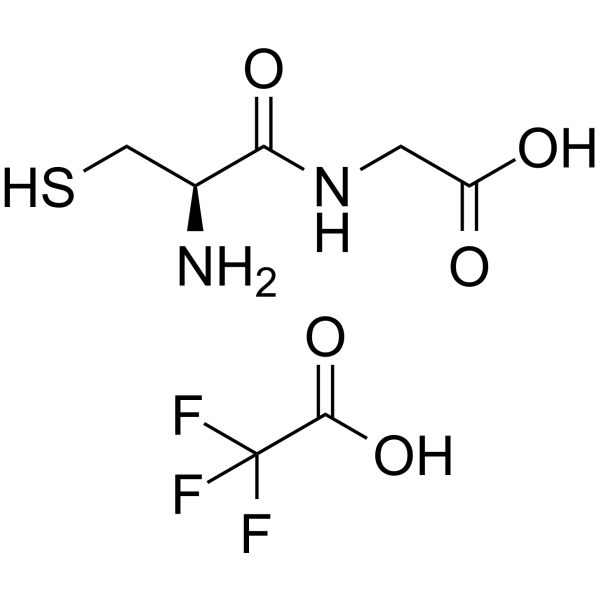
Cysteinylglycine (L-Cysteinylglycine; Cys-Gly) TFA is a dipeptide formed by the peptide bond connection of cysteine and glycine. Cysteinylglycine TFA is an important metabolic intermediate in the human body, mainly derived from the degradation of glutathione (GSH). Cysteinylglycine TFA can reduce trivalent iron to divalent iron, driving the redox cycle of iron, generating reactive oxygen species (ROS), stimulating oxidative reactions, inducing lipid peroxidation in human plasma LDL lipoproteins, and causing oxidative damage to DNA base. Cysteinylglycine TFA can be used as a biomarker to assess ischemic heart disease and breast cancer, etc [1][2][3][4].
loading...
    loading...
Cat. No.: HY-W701082
CAS No.: 952-45-4
Research Areas:  

Others

Cyclo(leucylleucine) is a cyclic dipeptide formed by the cyclization of two leucine molecules via peptide bonds, and it can be used in the preparation of nanomaterials .
loading...
    loading...