









1. Search Result
Search Result
Results for "

polypeptide research

" in MedChemExpress (MCE) Product Catalog:

92

Inhibitors & Agonists

1

Screening Libraries

2

Biochemical Assay Reagents

287

Peptides

1

Inhibitory Antibodies

9

Natural
Products

2

Isotope-Labeled Compounds

1

Oligonucleotides

Targets Recommended:
Cat. No. Product Name Target Research Areas Chemical Structure
  • HY-P3506
    Retatrutide
    3 Publications Verification

    LY3437943

    GCGR GLP Receptor Metabolic Disease
    Retatrutide (LY3437943) is a triple agonist peptide of the glucagon receptor (GCGR), glucosedependent insulinotropic polypeptide receptor (GIPR), and glucagon-like peptide-1 receptor (GLP-1R). Retatrutide binds human GCGR, GIPR, and GLP-1R with EC50 values of 5.79, 0.0643 and 0.775 nM, respectively. Retatrutide can be used for the research of obesity .
    Retatrutide
  • HY-B0804
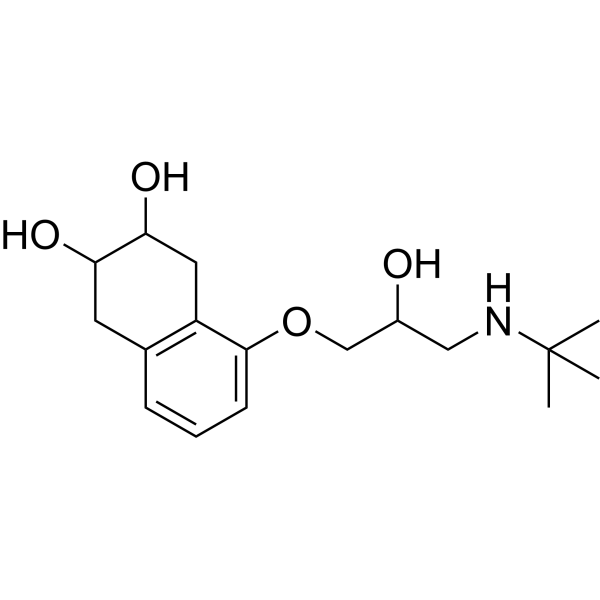
    Nadolol
    5 Publications Verification

    SQ-11725

    Adrenergic Receptor Cardiovascular Disease
    Nadolol (SQ-11725) is a non-selective and orally active β-adrenergic receptors blocker and is a substrate of organic anion transporting polypeptide 1A2 (OATP1A2). Nadolol has the the potential for high blood pressure, angina pectoris and vascular headaches research .
    Nadolol
  • HY-P0012
    Aviptadil
    2 Publications Verification

    Vasoactive Intestinal Peptide (human, rat, mouse, rabbit, canine, porcine)

    SARS-CoV Infection Inflammation/Immunology
    Aviptadil is an analog vasoactive intestinal polypeptide (VIP) with potent vasodilatory effects. Aviptadil induces pulmonary vasodilation and inhibits vascular SMCs proliferation, platelet aggregation. Aviptadil can be used for the research of pulmonary fibrosis, pulmonary arterial hypertension (PAH) and SARS-CoV-2 caused respiratory failure, et al .
    Aviptadil
  • HY-113678

    Polymyxin E

    Antibiotic Bacterial Infection
    Colistin is an orally active polypeptide antibiotic. Colistin has excellent activity against various Gram-negative rod-shaped bacteria, including multidrug-resistant Pseudomonas aeruginosa, Acinetobacter baumannii and Klebsiella pneumoniae. Colistin is associated with nephrotoxicity. Colistin can be used for the research of infections caused by Gram-negative bacilli .
    Colistin
  • HY-147271

    Drug-Linker Conjugates for ADC Topoisomerase Cancer
    Mal-PEG8-Val-Ala-PAB-Exatecan (Compound 9b) is an antibody-drug conjugate linker (ADC linker) that binds to Nectin-4 polypeptides conjugated to chemotherapeutic agents. Mal-PEG8-Val-Ala-PAB-Exatecan can be used for cancer research .
    Mal-PEG8-Val-Ala-PAB-Exatecan
  • HY-P3463
    Beinaglutide
    1 Publications Verification

    GLP-1 (human)

    GCGR Metabolic Disease Inflammation/Immunology
    Beinaglutide is a human GLP-1 polypeptide that shares almost 100% homology with human GLP-1 (7–36). Beinaglutide displays does-dependent effects in glycemic control, inhibiting food intake and gastric empty and promoting weight loss. Beinaglutide has the potential for the research of overweight/obesity and nonalcoholic steatohepatitis (NASH) .
    Beinaglutide
  • HY-P3506A
    Retatrutide TFA
    3 Publications Verification

    LY3437943 TFA

    GLP Receptor GCGR Metabolic Disease
    Retatrutide (LY3437943) TFA is a triple agonist peptide of the glucagon receptor (GCGR), glucosedependent insulinotropic polypeptide receptor (GIPR), and glucagon-like peptide-1 receptor (GLP-1R). Retatrutide TFA binds human GCGR, GIPR, and GLP-1R with EC50 values of 5.79, 0.0643 and 0.775 nM, respectively. Retatrutide TFA can be used for the research of obesity .
    Retatrutide TFA
  • HY-P10959

    LY3532226

    Insulin Receptor Metabolic Disease
    Macupatide is a glucose-dependent insulinotropic polypeptide (GIP) receptor agonist. Macupatide improves insulin secretion responses and insulin sensitivity.Macupatide can be used for the research of type 2 diabetes .
    Macupatide
  • HY-W007599

    Drug Derivative Cancer
    (S)-2,6-Bis((tert-butoxycarbonyl)amino)hexanoic acid is a polypeptide derivative, can be used to synthesis multifunctional amphiphilic peptide dendrimer for non-viral gene delivery in cancer research. (S)-2,6-Bis((tert-butoxycarbonyl)amino)hexanoic acid can be used in the preparation of organic substances that enhance the luminescence intensity of alkaline phosphatase substrates .
    (S)-2,6-Bis((tert-butoxycarbonyl)amino)hexanoic acid
  • HY-P5912

    iGluR Calcium Channel Neurological Disease
    GluN1 (356-385) is a polypeptide targeting NMDAR GluN1. GluN1 (356-385) induces the production of autoantibodies, which reduce the density of cell surface NMDAR clusters, impair long-term potentiation, and decrease NMDAR-mediated Ca 2+ influx. As an immunogen, GluN1 (356-385) induces symptoms similar to anti-NMDAR encephalitis, including memory loss, in mice. GluN1 (356-385) can be used to establish a mouse model that mimics the pathogenesis of anti-NMDAR encephalitis. GluN1 (356-385) is applicable to research related to anti-NMDAR encephalitis .
    GluN1(356-385)
  • HY-147557
    PA-915
    1 Publications Verification

    PAC1R antagonist 1

    PACAP Receptor Neurological Disease
    PA-915 (PAC1R antagonist 1) is a potent and orally active antagonist of PAC1 receptor. PA-915 inhibits pituitary adenylate cyclase-activating polypeptide (PACAP)-induced CREB phosphorylation. PA-915 can inhibit PACAP- and nerve injury-induced allodynia. PA-915 can be used for the research of neuropathic pain .
    PA-915
  • HY-W018004

    Amino Acid Derivatives Endogenous Metabolite Inflammation/Immunology
    L-Homocitrulline is a carbamoylated derivative amino acid and a structural analog of L-citrulline. L-Homocitrulline serves not only as an intermediate in polypeptide synthesis but also converts into a variety of cyclic derivatives under enzymatic or acidic conditions. The level of L-Homocitrulline is significantly elevated in the serum of patients with non-alcoholic fatty liver disease (NAFLD), with high diagnostic accuracy. L-Homocitrulline also exists in patients with related diseases such as hypercitrullinemia. L-Homocitrulline is a key biomarker for monitoring abnormal liver metabolism and is widely used in NAFLD research .
    L-Homocitrulline
  • HY-106373
    Adrenocorticotropic hormone
    1 Publications Verification

    ACTH; Adrenocorticotrophic hormone

    Androgen Receptor Reactive Oxygen Species (ROS) Mitochondrial Metabolism Interleukin Related TNF Receptor Metabolic Disease Inflammation/Immunology
    Adrenocorticotropic hormone (ACTH; Adrenocorticotrophic hormone) is a polypeptide tropic hormone produced by the anterior pituitary gland. Adrenocorticotropic hormone stimulates cortisol secretion from the adrenal cortex via the hypothalamic-pituitary-adrenal (HPA) axis. Adrenocorticotropic hormone regulates cortisol and androgen production. Adrenocorticotropic hormone can promote the development of spermatogenesis. Adrenocorticotropic hormone can relieve acute inflammation in gout models by inhibiting the polarization of macrophages to M1 type, inhibiting ROS and proinflammatory factor production and protecting mitochondrial function. Adrenocorticotropic hormone can be used for the researches of inflammation, endocrinology, metabolic disease, such as gout and nephrotic syndrome .
    Adrenocorticotropic hormone
  • HY-P11271

    Insulin Receptor GLP Receptor Metabolic Disease
    Ribupatide is a dual gastric inhibitory polypeptide (GIP) and glucagon-like peptide 1 (GLP-1) receptor agonist. Enicepatide can be studied in antidiabetic research .
    Ribupatide
  • HY-A0089R

    Polymyxin E sulfate (Standard)

    Reference Standards Bacterial Autophagy Antibiotic Infection
    Colistin (sulfate) (Standard) is the analytical standard of Colistin (sulfate). This product is intended for research and analytical applications. Colistin sulfate is a polypeptide antibiotic which inhibits gram-negative bacteria by binding to lipopolysaccharides and phospholipids in the outer cell membrane of gram-negative bacteria.
    Colistin sulfate (Standard)
  • HY-P0132
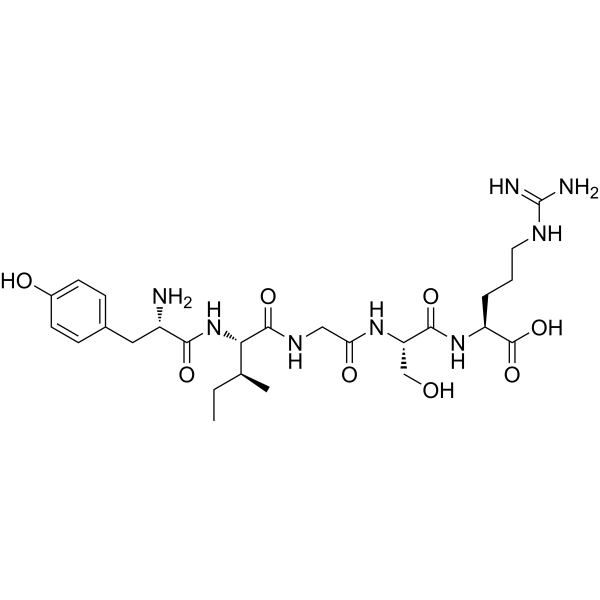
    YIGSR
    1 Publications Verification

    Laminin Fragment 929-933

    NO Synthase Cancer
    YIGSR (Laminin Fragment 929-933) is a polypeptide that inhibits tumor growth and metastasis of leukemia cells. YIGSR specifically binds to the 67kDa laminin receptor and regulates the expression of eNOS in endothelial cells. YIGSR can be used in leukemia-related research .
    YIGSR
  • HY-P11287A

    Interleukin Related Radionuclide-Drug Conjugates (RDCs) Cancer
    DOTA-Pep-1L TFA is a polypeptide formed by the conjugation of DOTA and Pep-1L. DOTA-Pep-1L TFA specifically binds to IL13RA2 and can be used for the synthesis of targeted polypeptides. DOTA-Pep-1L TFA yields the isotopically labeled product [ 225Ac]DOTA-Pep-1L, which exerts α-radiation killing effects on orthotopic glioma cells and extends the median survival time of mice bearing orthotopic glioma models after stereotactic injection. DOTA-Pep-1L TFA can be used for PET imaging, tumor targeting and glioma research .
    DOTA-Pep-1L TFA
  • HY-P5005

    CMV PD-1/PD-L1 Infection Inflammation/Immunology Cancer
    VIPhyb is a vasoactive intestinal polypeptide (VIP) receptor antagonist. VIPhyb can inhibit VIP signaling, increase T-cell immunity and downregulate PD1. VIPhyb can inhibit cancer cell proliferation. VIPhyb can reduce inflammatory cytokine expression. VIPhyb can enhance viral clearance. VIPhyb can be used for the researches of cancer, infection and inflammation and immunology, such as non-small cell lung cancer (NSCLC), cytomegalovirus infection and colitis .
    VIPhyb
  • HY-P0012A
    Aviptadil acetate
    2 Publications Verification

    Vasoactive Intestinal Peptide acetate salt (human, rat, mouse, rabbit, canine, porcine)

    SARS-CoV Infection Inflammation/Immunology
    Aviptadil acetate is an analog vasoactive intestinal polypeptide (VIP) with potent vasodilatory effects. Aviptadil acetate induces pulmonary vasodilation and inhibits vascular SMCs proliferation, platelet aggregation. Aviptadil acetate can be used for the research of pulmonary fibrosis, pulmonary arterial hypertension (PAH) and SARS-CoV-2 caused respiratory failure, et al .
    Aviptadil acetate
  • HY-P5979

    LRRK2 Neurological Disease
    LRRKtide is a polypeptide substrate. LRRKtide is a specific phosphorylation substrate of LRRK2, a kinase associated with Parkinson's disease, and its phosphorylation site is a threonine residue. LRRKtide can be used for characterization of the catalytic properties of LRRK2, as well as studies on kinase activity and inhibition. LRRKtide is applicable to research related to Parkinson's disease .
    LRRKtide
  • HY-P4581

    Suc-ALPF-pNA

    FKBP Others
    Suc-Ala-Leu-Pro-Phe-pNA (Suc-ALPF-pNA) is a synthetic polypeptide substrate that targets FK506-binding protein (FKBP). Suc-Ala-Leu-Pro-Phe-pNA can be used to determine peptidyl-prolyl cis-trans isomerase activity via the chymotrypsin-coupled assay. Suc-Ala-Leu-Pro-Phe-pNA serves as a substrate for human FK506-binding protein hFKBP-12 in the chymotrypsin-FKBP coupled PPIase assay. Suc-Ala-Leu-Pro-Phe-pNA is applicable for the detection and research of PPIase activity .
    Suc-Ala-Leu-Pro-Phe-pNA
  • HY-P5542

    SB-01; Peniel 2000

    Factor Xa TGF-beta/Smad Inflammation/Immunology
    Vicatertide (SB-01, Peniel 2000) is a polypeptide with both competitive inhibitory activity against TGF-β1 and selective inhibitory activity against human factor XIa (hFXIa, with a Ka of 80 nM for hFXIa). Vicatertide binds allosterically to the two binding sites of dimeric hFXI/hFXIa, while directly binding to activated TGF-β1, selectively blocking the Smad1/5/8 pathway and maintaining low-level activation of the Smad2 pathway to enhance the synthesis of type Ⅱ collagen and aggrecan. Vicatertide inhibits thrombus formation in arteriovenous thrombosis models, and also reduces thrombus weight and thrombus incidence in mouse lung cancer models. Vicatertide can be used for research on degenerative disc disease and thrombosis-related diseases .
    Vicatertide
  • HY-135700

    Calcineurin Ras HMG-CoA Reductase (HMGCR) Metabolic Disease Inflammation/Immunology
    Mevalonolactone is an intermediate metabolite in the eukaryotic mevalonate pathway, serving as the stable δ-lactone form of mevalonate with oral activity. Mevalonolactone exhibits binding affinity for ZNF384 (Ka = 12.6 μM) and inhibitory activity against aconitase (aconitase). Mevalonolactone promotes the nuclear localization of ZNF384 and enhances its binding to the GGPPS promoter. Mevalonolactone induces insulin resistance, disrupts glucose and lipid metabolism, enhances the isoprenylation of K-Ras, and inhibits the activation of the insulin signaling pathway. Mevalonolactone inhibits polypeptide synthesis of HMG-CoA reductase in isolated rat hepatocytes, promotes its degradation, and reduces its enzymatic activity. Mevalonolactone impairs mitochondrial function in rat brains. Mevalonolactone promotes the development of metabolically unhealthy obesity. Mevalonolactone can be used in research related to metabolically abnormal obesity, mevalonic aciduria, HMGCR-related limb-girdle myopathy, and statin-induced myopathy .
    Mevalonolactone
  • HY-177204

    Ferroptosis Apoptosis Glutathione Peroxidase Cardiovascular Disease
    DSPE-PEG2000-WLSEAGPVVTVRALRGTGSW is a polypeptide targeting tenascin-X (Tenascin-X) that can be conjugated with liposomes and exosomes. DSPE-PEG2000-WLSEAGPVVTVRALRGTGSW specifically binds to Tenascin-X on the surface of cardiomyocytes, mediates receptor-dependent uptake of nanocarriers, enhances targeted drug delivery of cargo to cardiomyocytes, and increases drug accumulation in cardiac tissue. DSPE-PEG2000-WLSEAGPVVTVRALRGTGSW protects cardiomyocytes treated with LPS, alleviates oxidative stress, repairs mitochondrial function, inhibits ferroptosis and apoptosis, and downregulates the secretion of pro-inflammatory cytokines at the same time. DSPE-PEG2000-WLSEAGPVVTVRALRGTGSW improves cardiac injury and pathological morphology in mice with sepsis-induced cardiomyopathy, restores GPX4 expression, and promotes the internalization of cardiomyocyte-derived exosomes, making it suitable for related research on sepsis-induced cardiomyopathy, myocardial ischemia-reperfusion injury, and other conditions .
    DSPE-PEG2000-WLSEAGPVVTVRALRGTGSW
  • HY-P4463

    GnRH Receptor Others
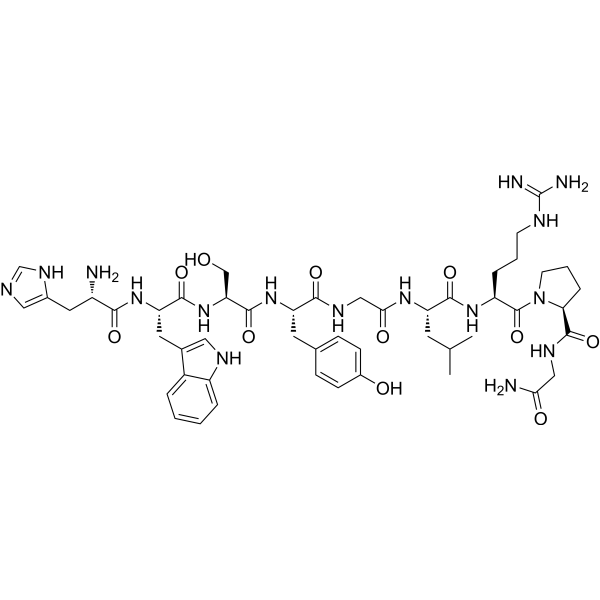
    (Des-Pyr1)-LHRH is a Polypeptide Internal Standard, identical to (Des-Pyr1)-GnRH, which can be identified through peptide screening. Peptide screening is a research tool that mainly collects active polypeptides via immunoassays. It can be applied to protein interaction, functional analysis, epitope screening, especially in the field of active molecule research and development. (Des-Pyr1)-LHRH can serve as an internal standard (ISTD) for mass spectrometry analysis .
    (Des-Pyr1)-LHRH
  • HY-W006886

    Amino Acid Derivatives Others
    Fmoc-(R)-2-(7-octenyl) Ala-OH is an unnatural Fmoc-protected amino acid and modification module. Fmoc-(R)-2-(7-octenyl) Ala-OH serves as a key building block for all-hydrocarbon cross-linking modification of antimicrobial peptides, and facilitates the generation of stapled peptide derivatives. When introduced into specific sites of the parent peptide, Fmoc-(R)-2-(7-octenyl) Ala-OH effectively increases the α-helix content of the peptide chain, thereby significantly enhancing its antimicrobial activity and proteolytic stability. Fmoc-(R)-2-(7-octenyl) Ala-OH is widely used in research on bacterial infections and the development of related antimicrobial agents . Stapled peptide is a specially chemically modified polypeptide. It locks the peptide chain into a stable α-helical structure by introducing a "staple"-like chemical bridge (usually an all-carbon backbone) at specific positions of the peptide chain.
    Fmoc-(R)-2-(7-octenyl)Ala-OH
  • HY-W048673

    Amino Acid Derivatives Others
    Fmoc-Phe (4-CONH2)-OH is a protected phenylalanine derivative commonly used in peptide synthesis, and it can be applied in polypeptide research .
    Fmoc-Phe(4-CONH2)-OH
  • HY-P10959A

    LY3532226 acetate

    Insulin Receptor Metabolic Disease
    Macupatide acetate is a glucose-dependent insulinotropic polypeptide (GIP) receptor agonist. Macupatide acetate improves insulin secretion responses and insulin sensitivity.Macupatide acetate can be used for the research of type 2 diabetes .
    Macupatide acetate
  • HY-N0225R
    (-)-Epigallocatechin (Standard)
    5 Publications Verification

    Epigallocatechin(Standard); L-Epigallocatechin (Standard)

    Reference Standards MMP Autophagy Cancer
    (-)-Epigallocatechin (Standard) is the analytical standard of (-)-Epigallocatechin. This product is intended for research and analytical applications. (-)-Epigallocatechin (Epigallocatechin) is the most abundant flavonoid in green tea, can bind to unfolded native polypeptides and prevent conversion to amyloid fibrils.
    (-)-Epigallocatechin (Standard)
  • HY-P3580A

    Human N-acetyl GIP TFA

    Insulin Receptor Metabolic Disease Endocrinology
    Acetyl Gastric Inhibitory Peptide (human) TFA is a fatty acid derivatized analog of glucose-dependent insulinotropic polypeptide with improved antihyperglycaemic and insulinotropic properties. Acetyl Gastric Inhibitory Peptide (human) TFA can be used for research of diabetes, insulin resistance and obesity .
    Acetyl Gastric Inhibitory Peptide (human) TFA
  • HY-P4534

    (D-His2)-Triptorelin

    GnRH Receptor Others
    (D-His2,D-Trp6)-LHRH ((D-His2)-Triptorelin) is a polypeptide that can be found by peptide screening. Peptide screening is a research tool that pools active peptides primarily by immunoassay. Peptide screening can be used for protein interaction, functional analysis, epitope screening, especially in the field of agent research and development .
    (D-His2,D-Trp6)-LHRH
  • HY-129421

    PACAP Receptor Neurological Disease Inflammation/Immunology
    PA-9 is a pituitary adenylate cyclase-activating polypeptide (PACAP) type I (PAC1) receptor antagonist. PA-9 dose dependently inhibits PACAP-induced cAMP elevation with an IC50 of 5.6 nM. PA-9 can be used for the research of neuropathic and/or inflammatory pain .
    PA-9
  • HY-106373A
    Adrenocorticotropic hormone TFA
    1 Publications Verification

    ACTH TFA; Adrenocorticotrophic hormone TFA

    Androgen Receptor Reactive Oxygen Species (ROS) Mitochondrial Metabolism Interleukin Related TNF Receptor Metabolic Disease Inflammation/Immunology
    Adrenocorticotropic hormone (ACTH; Adrenocorticotrophic hormone) TFA is a polypeptide tropic hormone produced by the anterior pituitary gland. Adrenocorticotropic hormone TFA stimulates cortisol secretion from the adrenal cortex via the hypothalamic-pituitary-adrenal (HPA) axis. Adrenocorticotropic hormone TFA regulates cortisol and androgen production. Adrenocorticotropic hormone TFA can promote the development of spermatogenesis. Adrenocorticotropic hormone TFA can relieve acute inflammation in gout models by inhibiting the polarization of macrophages to M1 type, inhibiting ROS and proinflammatory factor production and protecting mitochondrial function. Adrenocorticotropic hormone TFA can be used for the researches of inflammation, endocrinology, metabolic disease, such as gout and nephrotic syndrome .
    Adrenocorticotropic hormone TFA
  • HY-P11271A

    Insulin Receptor GLP Receptor Metabolic Disease
    Ribupatide TFA is a dual gastric inhibitory polypeptide (GIP) and glucagon-like peptide 1 (GLP-1) receptor agonist. Ribupatide TFA can be studied in antidiabetic research .
    Ribupatide TFA
  • HY-W549438

    Amino Acid Derivatives Others
    Cyclo(Phe-Phe) is a polypeptide that can be found by peptide screening. Peptide screening is a research tool that pools active peptides primarily by immunoassay. Peptide screening can be used for protein interaction, functional analysis, epitope screening, especially in the field of agent research and development .
    Cyclo(Phe-Phe)
  • HY-165125

    Neuropeptide Y Receptor Metabolic Disease
    (S)-VU0637120 is a Y4R antagonist that effectively reduces the binding response of its endogenous ligand, pancreatic polypeptide (PP), on Y4R, with an IC50 value of 2.7 μM. (S)-VU0637120 binds to the allosteric site of Y4R, which is located in the core region of the Y4R transmembrane structure, near the binding pocket of pancreatic polypeptide (PP), with a KB value of 300-400 nM. (S)-VU0637120 holds potential for research in the field of metabolic diseases .
    (S)-VU0637120
  • HY-P11287

    Interleukin Related Radionuclide-Drug Conjugates (RDCs) Cancer
    DOTA-Pep-1L is a polypeptide formed by the conjugation of DOTA and Pep-1L. DOTA-Pep-1L specifically binds to IL13RA2 and can be used for the synthesis of targeted polypeptides. DOTA-Pep-1L yields the isotopically labeled product [ 225Ac]DOTA-Pep-1L, which exerts α-radiation killing effects on orthotopic glioma cells and extends the median survival time of mice bearing orthotopic glioma models after stereotactic injection. DOTA-Pep-1L can be used for PET imaging, tumor targeting and glioma research .
    DOTA-Pep-1L
  • HY-P3506B

    LY3437943 acetate

    GCGR GLP Receptor Metabolic Disease
    Retatrutide (LY3437943) acetate is a triple agonist peptide of the glucagon receptor (GCGR), glucosedependent insulinotropic polypeptide receptor (GIPR), and glucagon-like peptide-1 receptor (GLP-1R). Retatrutide acetate inhibits human GCGR, GIPR, and GLP-1R with EC50 values of 5.79, 0.0643 and 0.775 nM, respectively. Retatrutide acetate can be used for the research of obesity .
    Retatrutide acetate
  • HY-10465R

    BMS-790052 dihydrochloride (Standard); EBP 883 dihydrochloride (Standard)

    Reference Standards HCV Infection
    Daclatasvir (dihydrochloride) (Standard) is the analytical standard of Daclatasvir (dihydrochloride). This product is intended for research and analytical applications. Daclatasvir dihydrochloride (BMS-790052 dihydrochloride) is a potent and orally active HCV NS5A protein inhibitor with EC50s range of 9-146 pM for multiple HCV replicon genotypes. Daclatasvir dihydrochloride is also an organic anion transporting polypeptide 1B (OATP1B) and OATP1B3 inhibitor with IC50s of 1.5 µM and 3.27 µM, respectively .
    Daclatasvir dihydrochloride (Standard)
  • HY-P3269

    Calcium Channel Cardiovascular Disease
    Calciseptine is a natural polypeptide toxin found in the venom of the black mamba snake (Dendroaspis p. polylepis). Calciseptine is a highly effective and selective blocker of the L-type channel of the Cav1.2 subtype, with an IC50 value of 92 nM. Calciseptine has no effect on Cav3.1, Cav2.2, Cav2.1, Cav1.1, voltage-sensitive sodium channels and potassium channels. Calciseptine exhibits negative inotropic and negative relaxant effects on mice, and does not affect heart rate or the action potential of sinoatrial node pacemaker cells. Calciseptine can be used for research on cardiovascular diseases[1].
    Calciseptine
  • HY-P11237

    CT-388

    GCGR Insulin Receptor Metabolic Disease
    Enicepatide is a dual gastric inhibitory polypeptide (GIP) and glucagon-like peptide 1 (GLP-1) receptor agonist. Enicepatide can be studied in antidiabetic research .
    Enicepatide
  • HY-P11270

    BG128

    Insulin Receptor GLP Receptor Metabolic Disease
    Relsipatide (BG128) is a dual gastric inhibitory polypeptide (GIP) and glucagon-like peptide 1 (GLP-1) receptor agonist. Enicepatide can be studied in antidiabetic research .
    Relsipatide
  • HY-P4536

    GnRH Receptor Others
    (D-Leu6)-LHRH (1-8) is a polypeptide that can be found by peptide screening. Peptide screening is a research tool that pools active peptides primarily by immunoassay. Peptide screening can be used for protein interaction, functional analysis, epitope screening, especially in the field of agent research and development .
    (D-Leu6)-LHRH (1-8)
  • HY-NP0160

    WGA (Agarose)

    Fluorescent Dye Others
    Succinylated Wheat Germ Agglutinin (WGA) Agarose is a plant lectin that can serve as a probe to specifically bind biomolecules (such as polysaccharides, polypeptides, etc.). Succinylated Wheat Germ Agglutinin (WGA) Agarose is available as a biological material or organic compound for life science research .
    Succinylated Wheat Germ Agglutinin (Agarose)
  • HY-B0467BR

    Amoxycillin trihydrate (Standard)

    Reference Standards Bacterial Antibiotic Infection
    Amoxicillin (trihydrate) (Standard) is the analytical standard of Amoxicillin (trihydrate). This product is intended for research and analytical applications. Amoxicillin (Amoxycillin) trihydrateis an antibiotic with good oral absorption and broad spectrum antimicrobial activity. Amoxicillin trihydrateis inhibits the biosynthesis of polypeptides in the cell wall, thereby inhibiting cell growth .
    Amoxicillin trihydrate (Standard)
  • HY-P4440

    GnRH Receptor Others
    (Des-Gly10,Des-Ser4,D-Leu6,Pro-NHEt9)-LHRH is a polypeptide that can be found by peptide screening. Peptide screening is a research tool that pools active peptides primarily by immunoassay. Peptide screening can be used for protein interaction, functional analysis, epitope screening, especially in the field of agent research and development .
    (Des-Gly10,Des-Ser4,D-Leu6,Pro-NHEt9)-LHRH
  • HY-P4441

    GnRH Receptor Others
    (Des-Gly10,D-His2,D-His(Bzl)6,Pro-NHEt9)-LHRH is a polypeptide that can be found by peptide screening. Peptide screening is a research tool that pools active peptides primarily by immunoassay. Peptide screening can be used for protein interaction, functional analysis, epitope screening, especially in the field of agent research and development .
    (Des-Gly10,D-His2,D-His(Bzl)6,Pro-NHEt9)-LHRH
  • HY-P11321A

    acyl-GIP hydrochloride

    Insulin Receptor Metabolic Disease
    IUB0271 (acyl-GIP) hydrochloride is a fatty acylated and long-acting glucose-dependent insulinotropic polypeptide (GIP). IUB0271 hydrochloride increases cFos neuronal activity in hypothalamic feeding centers and decreases body weight, food intake and glycemia in DIO mouse models, and these effects depend on CNS-GIPR signaling. IUB0271 hydrochloride can be used for type 2 diabetes mellitus (T2DM) and obesity research .
    IUB0271 hydrochloride
  • HY-P11321

    acyl-GIP

    Insulin Receptor Metabolic Disease
    IUB0271 (acyl-GIP) is a fatty acylated and long-acting glucose-dependent insulinotropic polypeptide (GIP). IUB0271 increases cFos neuronal activity in hypothalamic feeding centers and decreases body weight, food intake and glycemia in DIO mouse models, and these effects depend on CNS-GIPR signaling. IUB0271 can be used for type 2 diabetes mellitus (T2DM) and obesity research .
    IUB0271
  • HY-P4968

    Tau Protein Others
    Tau Peptide (337-368) (Repeat 4 Domain) is a polypeptide that can be found by peptide screening. Peptide screening is a research tool that pools active peptides primarily by immunoassay. Peptide screening can be used for protein interaction, functional analysis, epitope screening, especially in the field of agent research and development .
    Tau Peptide (337-368) (Repeat 4 Domain)

Inquiry Online

Your information is safe with us. * Required Fields.

Salutation


Country or Region *

Applicant Name *


Organization Name *

Department *


Email Address *


Product Name *

Cat. No.


Requested quantity *

Phone Number *


Remarks

Inquiry Online

Inquiry Information

Product Name:
Cat. No.:
Quantity:
MCE Japan Authorized Agent:

