21 Results for "

preadipocytes

" in MedChemExpress (MCE) Product Catalog:
Products (21)

21 Results for "preadipocytes" in MCE Product Catalog:

4
4 Cited Publications
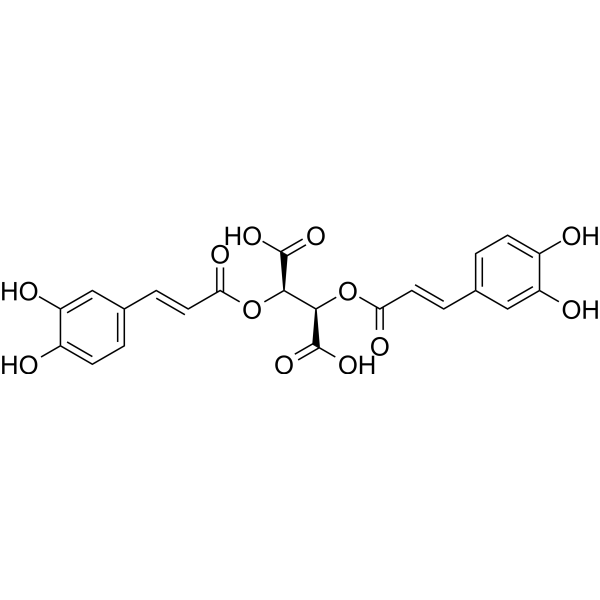
Cat. No.: HY-N0457
CAS No.: 6537-80-0
Synonyms: Cichoric acid; Dicaffeoyltartaric acid
Chicoric acid (Cichoric acid), an orally active dicaffeyltartaric acid, induces reactive oxygen species (ROS) generation. Chicoric acid inhibits cell viability and induces mitochondria-dependent apoptosis in 3T3-L1 preadipocytes through ROS-mediated PI3K/Akt and MAPK signaling pathways. Chicoric acid increases glucose uptake, improves insulin resistance, and attenuates glucosamine-induced inflammation. Chicoric acid has antidiabetic properties and antioxidant, anti-inflammatory effects .
loading...
    loading...
4
4 Cited Publications
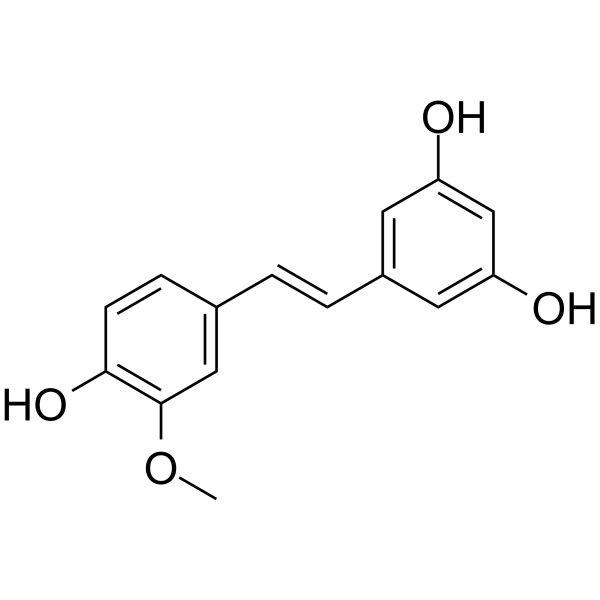
Cat. No.: HY-N2593
CAS No.: 32507-66-7
Isorhapontigenin is an orally active dietary polyphenol. Isorhapontigenin acts as a potent antioxidant that reduces the production of reactive oxygen species (ROS). Isorhapontigenin promotes the binding of JUN to the AP-1 site on the SESN2 promoter, induces SESN2 transcription, triggers MAPK8-dependent JUN activation, and upregulates the expression of PPAR-α, PGC-1α and CPT-1A to facilitate fatty acid oxidation. Isorhapontigenin induces autophagy, apoptosis and preadipocyte differentiation; it inhibits tumor growth, cell invasion, NF-κB transcriptional activity, the PI3K/Akt signaling pathway, STAT1 phosphorylation and MMP-2 expression. Isorhapontigenin alleviates oxidative stress, inflammatory cytokine release and triglyceride accumulation; it increases intracellular ATP levels and promotes Nrf2 nuclear translocation. Isorhapontigenin improves insulin sensitivity in adipose tissue and glucose tolerance, and reduces postprandial blood glucose, insulin and free fatty acid levels. Isorhapontigenin is applicable to research on bladder cancer, liver injury, chronic obstructive pulmonary disease, acute lung injury and type 2 diabetes .
loading...
    loading...
4
4 Cited Publications
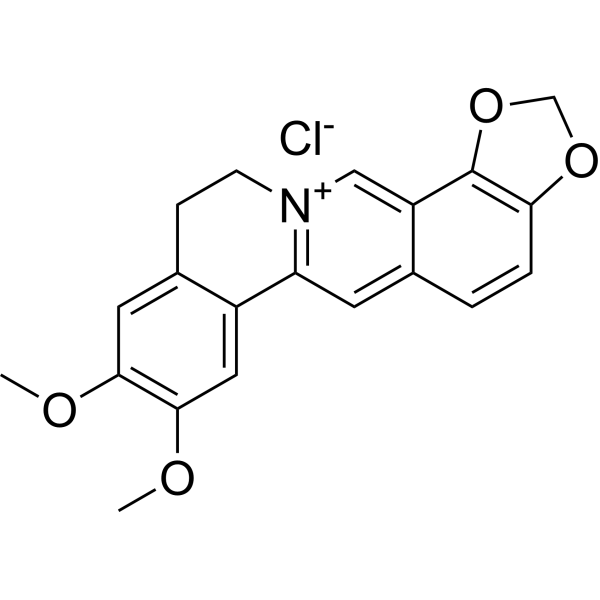
Cat. No.: HY-N0226A
CAS No.: 889665-86-5
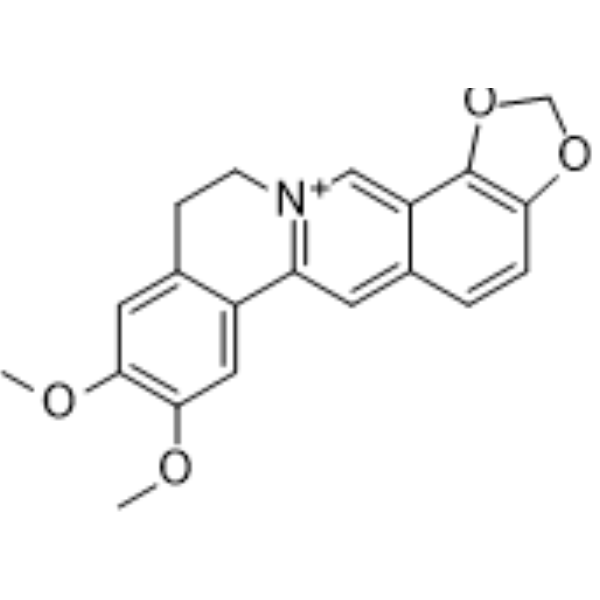
Epiberberine chloride is an alkaloid isolated from Coptis chinensis, acts as a potent AChE and BChE inhibitor, and a non-competitive BACE1 inhibitor, with IC50s of 1.07, 6.03 and 8.55 μM, respectively. Epiberberine chloride has antioxidant activity, with peroxynitrite ONOO - scavenging effect (IC50, 16.83 μM), and may protect against Alzheimer disease . Epiberberine chloride inhibits the early stage of differentiation of 3T3-L1 preadipocytes, downregulates the Raf/MEK1/2/ERK1/2 and AMPKα/Akt pathways . Epiberberine has the potential effect in the research of diabetic disease .
loading...
    loading...
3
3 Cited Publications
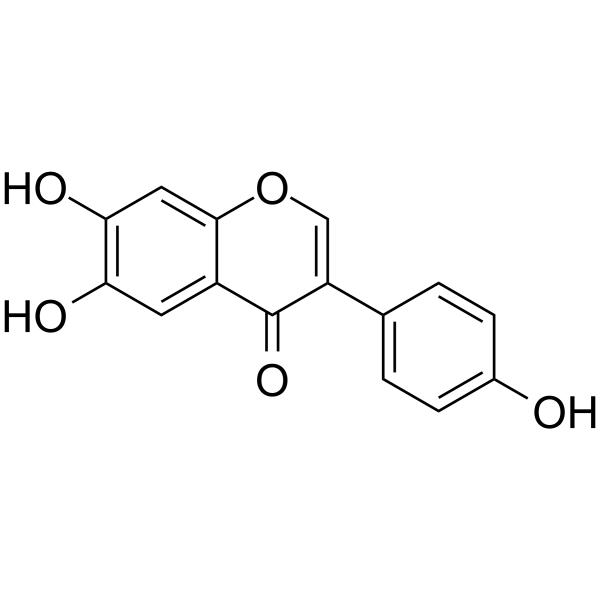
Cat. No.: HY-N5072
CAS No.: 17817-31-1
Synonyms: 4',6,7-Trihydroxyisoflavone
Desmethylglycitein (4',6,7-Trihydroxyisoflavone), a metabolite of daidzein, sourced from Glycine max with antioxidant, and anti-cancer activities. Desmethylglycitein binds directly to CDK1 and CDK2 in vivo, resulting in the suppresses CDK1 and CDK2 activity . Desmethylglycitein is a direct inhibitor of protein kinase C (PKC)α, against solar UV (sUV)-induced matrix matrix metalloproteinase 1 (MMP1) . Desmethylglycitein binds to PI3K in an ATP competitive manner in the cytosol, where it inhibits the activity of PI3K and downstream signaling cascades, leading to the suppression of adipogenesis in 3T3-L1 preadipocytes .
loading...
    loading...
2
2 Cited Publications
Cat. No.: HY-N1970
CAS No.: 31721-94-5
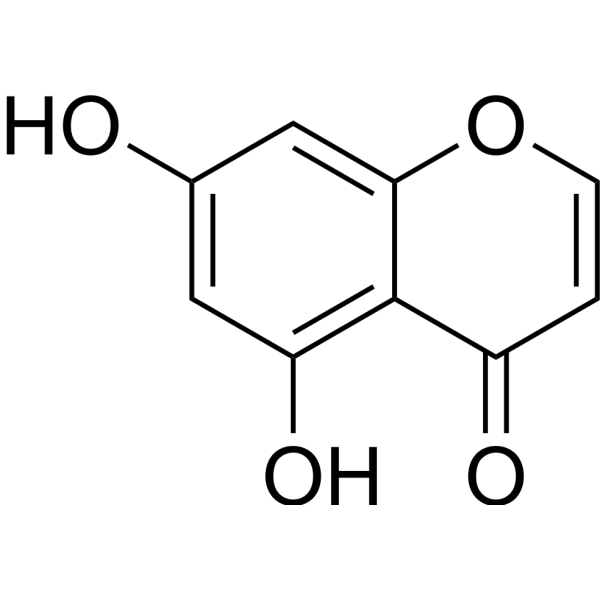
5,7-Dihydroxychromone is a flavonoid compound with antioxidant properties. 5,7-Dihydroxychromone induces Nrf2 nuclear translocation, increases Nrf2/ARE binding activity, and up-regulates Nrf2-dependent antioxidant genes HO-1, NQO1, GCLc. 5,7-Dihydroxychromone attenuates excessive ROS generation, inhibits activated caspase-3, caspase-9, cleaved PARP expression, and prevents neuronal apoptosis and cell death. 5,7-Dihydroxychromone increases LXRα and PPARγ mRNA expression, induces preadipocyte differentiation, and regulates blood glucose levels. 5,7-Dihydroxychromone inhibits radial growth of soil pathogenic fungi, radicle elongation of select seedlings, and transiently inhibits Bradyrhizobium sp. growth in high mannitol medium. 5,7-Dihydroxychromone can be used for the research of Parkinson’s disease, type 2 diabetes mellitus and pathogenic fungal infection .
loading...
    loading...
1
1 Cited Publications
Cat. No.: HY-W012722
CAS No.: 816-66-0
Synonyms: α-Ketoisocaproic acid
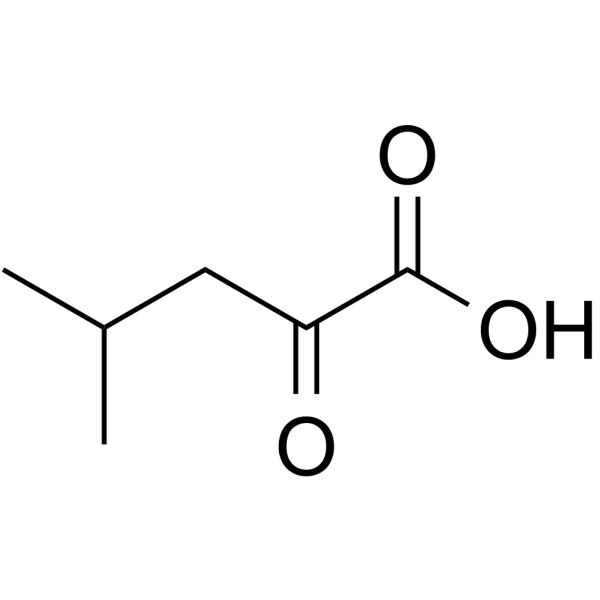
4-Methyl-2-oxopentanoic acid (α-Ketoisocaproic acid) is a metabolite of L-leucine and is involved in energy metabolism. 4-Methyl-2-oxopentanoic acid increases endoplasmic reticulum stress, promotes lipid accumulation in preadipocytes and insulin resistance by impairing mTOR and autophagy signaling pathways. 4-Methyl-2-oxopentanoic acid also causes oxidative damage, leading to cognitive deficits, inhibits α-ketoglutarate dehydrogenase activity, acts as an oxidative phosphorylation uncoupler and metabolic inhibitor. 4-Methyl-2-oxopentanoic acid acts as a nutrient signal and stimulates skeletal muscle protein synthesis. 4-Methyl-2-oxopentanoic acid can be used in the study of maple syrup urine disease .
loading...
    loading...
1
1 Cited Publications
Cat. No.: HY-156010
CAS No.: 2682078-97-1
Purity:  99.57%
Target:  

PPAR

Research Areas:  

Metabolic Disease

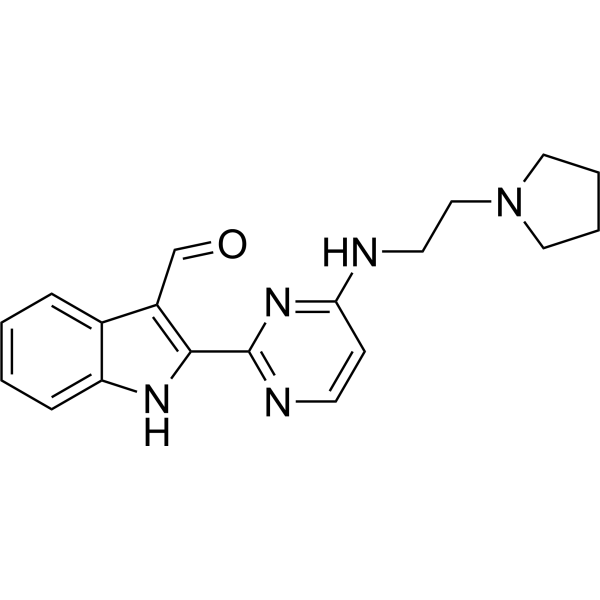
PPARγ-IN-2 (Compound 5a) is a PPARγ inhibitor. PPARγ-IN-2 inhibits TG accumulation in 3T3-L1 preadipocytes (EC50: 0.106 μM). PPARγ-IN-2 inhibits high-cholesterol diet (HFC)-induced obesity and related metabolic syndrome, and reduces lipid accumulation in adipose tissue .
loading...
    loading...
Cat. No.: HY-N0226
CAS No.: 6873-09-2
Epiberberine is an alkaloid isolated from Coptis chinensis, acts as a potent AChE and BChE inhibitor, and a non-competitive BACE1 inhibitor, with IC50s of 1.07, 6.03 and 8.55 μM, respectively. Epiberberine has antioxidant activity, with peroxynitrite ONOO - scavenging effect (IC50, 16.83 μM), and can be used for the research of Alzheimer disease . Epiberberine inhibits the early stage of differentiation of 3T3-L1 preadipocytes, downregulates the Raf/MEK1/2/ERK1/2 and AMPKα/Akt pathways . Epiberberinecan be used for the research of diabetic disease .
loading...
    loading...
Cat. No.: HY-103325
CAS No.: 282089-49-0
Purity:  98.72%
JTE-907 is a selective and orally active cannabinoid CB2 receptor inverse agonist and exerts anti-inflammatory effects. JTE-907 upregulates IL-6, MCP-1, IL-1β, VEGF, ANGPTL4, and TRPV1 in mature adipocytes. JTE-907 downregulates CB1, MCP-1, and IL-1β in preadipocytes. JTE-907 inhibits ear swelling in mice. JTE-907 reverses the protective effects of CB2 agonists and Anandamide (HY-10863) against cytokine-evoked colonic mucosal damage. JTE-907 can be used for the research of allergic dermatitis, obesity, and colitis .
loading...
    loading...
Cat. No.: HY-W012722BS
CAS No.: 1795020-84-6
Synonyms: α-Ketoisocaproic acid-d7 sodium
4-Methyl-2-oxopentanoic acid-d7 (α-Ketoisocaproic acid-d7) sodium is the deuterium labeled 4-Methyl-2-oxopentanoic acid (HY-W012722).4-Methyl-2-oxopentanoic acid is a metabolite of L-leucine and is involved in energy metabolism. 4-Methyl-2-oxopentanoic acid increases endoplasmic reticulum stress, promotes lipid accumulation in preadipocytes and insulin resistance by impairing mTOR and autophagy signaling pathways .
loading...
    loading...
Cat. No.: HY-N0457R
CAS No.: 6537-80-0
Synonyms: Cichoric acid (Standard); Dicaffeoyltartaric acid (Standard)
Chicoric acid (Standard) is the analytical standard of Chicoric acid. This product is intended for research and analytical applications. Chicoric acid (Cichoric acid), an orally active dicaffeyltartaric acid, induces reactive oxygen species (ROS) generation. Chicoric acid inhibits cell viability and induces mitochondria-dependent apoptosis in 3T3-L1 preadipocytes through ROS-mediated PI3K/Akt and MAPK signaling pathways. Chicoric acid increases glucose uptake, improves insulin resistance, and attenuates glucosamine-induced inflammation. Chicoric acid has antidiabetic properties and antioxidant, anti-inflammatory effects .
loading...
    loading...
Cat. No.: HY-N5072R
CAS No.: 17817-31-1
Synonyms: 4',6,7-Trihydroxyisoflavone (Standard)
Desmethylglycitein (4',6,7-Trihydroxyisoflavone), a metabolite of daidzein, sourced from Glycine max with antioxidant, and anti-cancer activities. Desmethylglycitein binds directly to CDK1 and CDK2 in vivo, resulting in the suppresses CDK1 and CDK2 activity . Desmethylglycitein is a direct inhibitor of protein kinase C (PKC)α, against solar UV (sUV)-induced matrix matrix metalloproteinase 1 (MMP1) . Desmethylglycitein binds to PI3K in an ATP competitive manner in the cytosol, where it inhibits the activity of PI3K and downstream signaling cascades, leading to the suppression of adipogenesis in 3T3-L1 preadipocytes .
loading...
    loading...
Cat. No.: HY-N1970R
CAS No.: 31721-94-5
5,7-Dihydroxychromone (Standard) is the analytical standard of 5,7-Dihydroxychromone (HY-N1970). This product is intended for research and analytical applications. 5,7-Dihydroxychromone is a flavonoid compound with antioxidant properties. 5,7-Dihydroxychromone induces Nrf2 nuclear translocation, increases Nrf2/ARE binding activity, and up-regulates Nrf2-dependent antioxidant genes HO-1, NQO1, GCLc. 5,7-Dihydroxychromone attenuates excessive ROS generation, inhibits activated caspase-3, caspase-9, cleaved PARP expression, and prevents neuronal apoptosis and cell death. 5,7-Dihydroxychromone increases LXRα and PPARγ mRNA expression, induces preadipocyte differentiation, and regulates blood glucose levels. 5,7-Dihydroxychromone inhibits radial growth of soil pathogenic fungi, radicle elongation of select seedlings, and transiently inhibits Bradyrhizobium sp. growth in high mannitol medium. 5,7-Dihydroxychromone can be used for the research of Parkinson’s disease, type 2 diabetes mellitus and pathogenic fungal infection .
loading...
    loading...
Cat. No.: HY-A0241R
CAS No.: 112362-50-2
Synonyms: RP54476 (Standard)
Research Areas:  

Infection

Stearic acid (Standard) is the analytical standard of Stearic acid. This product is intended for research and analytical applications. Stearic acid is a long-chain dietary saturated fatty acid that can significantly reduce visceral fat by inducing apoptosis of preadipocytes. Stearic acid can be used in the study of cardiovascular and metabolic diseases .
loading...
    loading...
Cat. No.: HY-N15448
CAS No.: 6005-18-1
Synonyms: Dimidin
Dihydrosamidin is a coumarin component isolated from the fruits of ammi visnaga. Dihydrosamidin promotes neuroplasticity, modulates glycolysis and oxidative phosphorylation and enhances antioxidant defences. Dihydrosamidin inhibits triacylglycerol accumulation in 3T3-L1 preadipocytes. Dihydrosamidin can be used for neuroprotective, anti-obesity study .
loading...
    loading...
Cat. No.: HY-N11507
CAS No.: 2319668-87-4
Synonyms: TKV
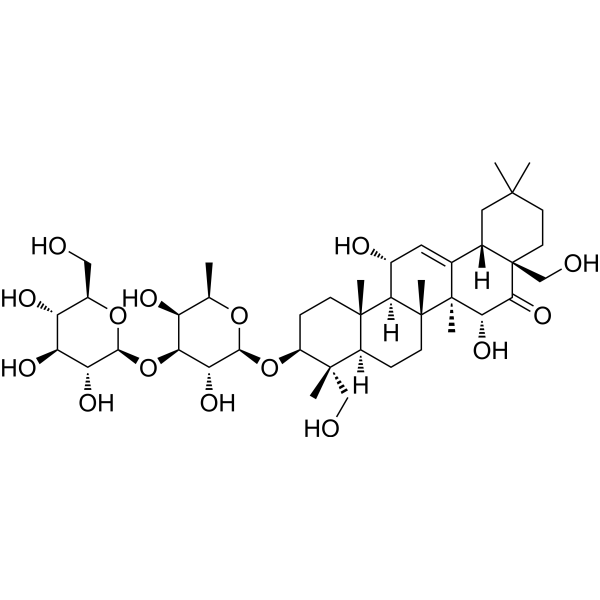
Tibesaikosaponin V (TKV) is a triterpene diglycoside, which can be isolated from the methanol extract of the roots of Bupleurum chinense DC.. Tibesaikosaponin V inhibits lipid accumulation and triacylglycerol content occurred without cytotoxicity to adipocytes. Tibesaikosaponin V suppresses the mRNA expression of nuclear transcription factors, such as peroxisome proliferator-activated receptor γ (PPARγ) and CCAAT/enhancer binding protein α (C/EBPα). Tibesaikosaponin V inhibits 3T3-L1 preadipocyte differentiation. Tibesaikosaponin V can be used fro research of obesity and its associated metabolic disorders .
loading...
    loading...
Cat. No.: HY-N2593R
CAS No.: 32507-66-7
Isorhapontigenin (Standard) is the analytical standard of Isorhapontigenin (HY-N2593). This product is intended for research and analytical applications. Isorhapontigenin is an orally active dietary polyphenol. Isorhapontigenin acts as a potent antioxidant that reduces the production of reactive oxygen species (ROS). Isorhapontigenin promotes the binding of JUN to the AP-1 site on the SESN2 promoter, induces SESN2 transcription, triggers MAPK8-dependent JUN activation, and upregulates the expression of PPAR-α, PGC-1α and CPT-1A to facilitate fatty acid oxidation. Isorhapontigenin induces autophagy, apoptosis and preadipocyte differentiation; it inhibits tumor growth, cell invasion, NF-κB transcriptional activity, the PI3K/Akt signaling pathway, STAT1 phosphorylation and MMP-2 expression. Isorhapontigenin alleviates oxidative stress, inflammatory cytokine release and triglyceride accumulation; it increases intracellular ATP levels and promotes Nrf2 nuclear translocation. Isorhapontigenin improves insulin sensitivity in adipose tissue and glucose tolerance, and reduces postprandial blood glucose, insulin and free fatty acid levels. Isorhapontigenin is applicable to research on bladder cancer, liver injury, chronic obstructive pulmonary disease, acute lung injury and type 2 diabetes.
loading...
    loading...
Cat. No.: HY-184061
CAS No.: 2590661-64-4
Research Areas:  

Others

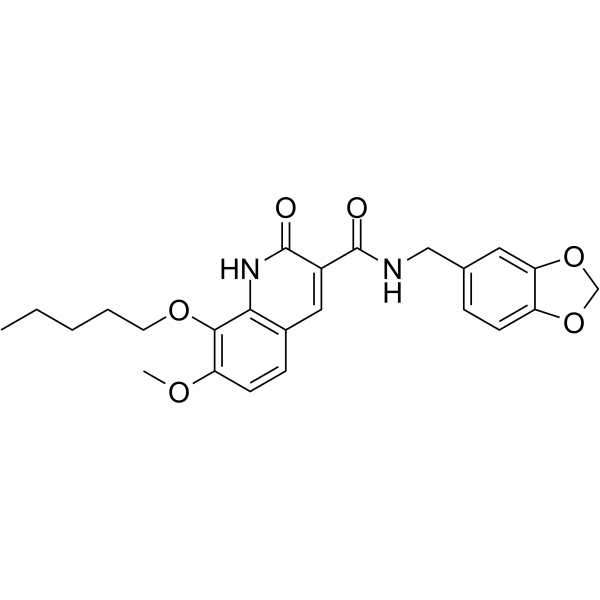
Carboxylesterase 2-IN-1 is a potent carboxylesterase CES2 inhibitor with an IC50 of 0.13 μM. Carboxylesterase 2-IN-1 blocks the hydrolysis of fluorescein diacetate by CES2 via non-competitive inhibition. Carboxylesterase 2-IN-1 also effectively inhibits adipogenesis induced in mouse preadipocytes .
loading...
    loading...
Cat. No.: HY-118386
CAS No.: 1060478-12-7
Target:  

Endogenous Metabolite

Research Areas:  

Metabolic Disease

H2-005 is a compound that selectively inhibits diacylglycerol acyltransferase 2 (DGAT2) and has the activity to inhibit triacylglycerol synthesis in hepatocytes and preadipocytes. H2-005 significantly reduces triacylglycerol biosynthesis in HepG2 hepatocytes and 3T3-L1 preadipocytes. H2-005 exhibits specific inhibitory activity in DGAT2-overexpressing HEK293 cells. H2-005 almost completely inhibits lipid droplet formation in 3T3-L1 cells when co-treated with a DGAT1 inhibitor. H2-005 will contribute to DGAT2-related lipid metabolism research and the development of drugs to inhibit metabolic diseases .
loading...
    loading...
Cat. No.: HY-113922
CAS No.: 109229-57-4
Target:  

PPAR Potassium Channel

Research Areas:  

Metabolic Disease

Englitazone sodium is a thiazolidinedione compound. Englitazone sodium selectively activates PPARγ1 and PPARγ2. Englitazone sodium improves insulin sensitivity, induces adipogenesis in preadipocytes and mesenchymal stem cells, and inhibits the channel currents of Kir6.2-SUR1 and Kir6.2D26. Englitazone sodium is applicable to research related to non-insulin-dependent diabetes mellitus .
loading...
    loading...

