161 Results for "

salt bridge

" in MedChemExpress (MCE) Product Catalog:
Products (161)

161 Results for "salt bridge" in MCE Product Catalog:

67
67 Publications Verification
Cat. No.: HY-B2227
CAS No.: 50-21-5
Synonyms: DL-Lactic acid; E-270
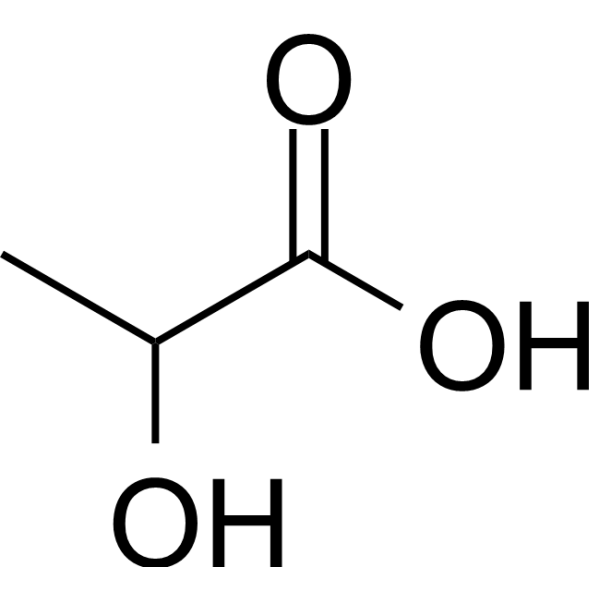
Lactic acid (DL-Lactic acid) is a hydroxycarboxylic acid receptor 1 (HCAR1) activator and an epigenetic modulator inducing lysine residues lactylation. Lactic acid is a glycolysis end-product, bridging the gap between glycolysis and oxidative phosphorylation. Lactic acid is an oncometabolite and has immune protective role of lactate in anti-tumor immunity . Lactic acid also has antimicrobial activity, which can be used as a food preservative .
loading...
    loading...
66
66 Cited Publications
Cat. No.: HY-B2227C
CAS No.: 996-31-6
Synonyms: DL-Lactic acid potassium; E-270 potassium
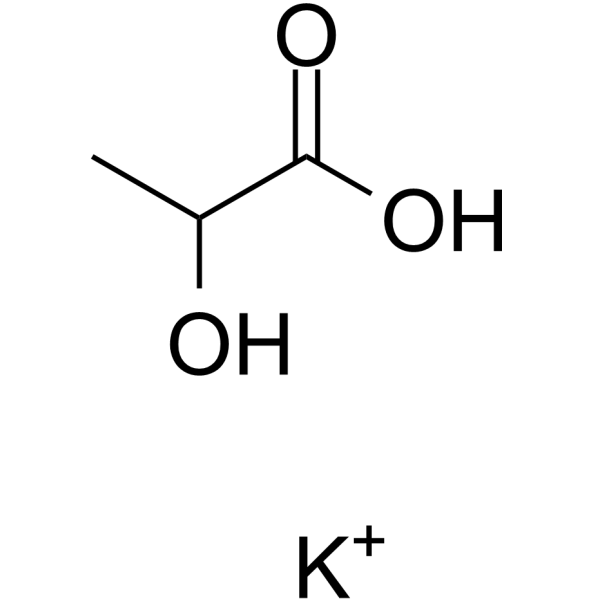
Lactic acid (DL-Lactic acid) potassium is a hydroxycarboxylic acid receptor 1 (HCAR1) activator and an epigenetic modulator inducing lysine residues lactylation. Lactic acid potassium is a glycolysis end-product, bridging the gap between glycolysis and oxidative phosphorylation. Lactic acid potassium is an oncometabolite and has immune protective role of lactate in anti-tumor immunity . Lactic acid also potassium has antimicrobial activity, which can be used as a food preservative .
loading...
    loading...
66
66 Cited Publications
Cat. No.: HY-B2227A
CAS No.: 814-80-2
Synonyms: DL-Lactic acid calcium; E-270 calcium
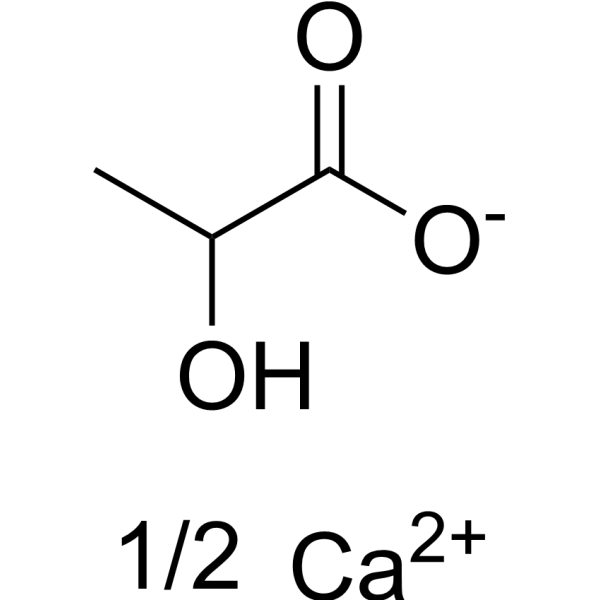
Lactic acid (DL-Lactic acid) calcium is a hydroxycarboxylic acid receptor 1 (HCAR1) activator and an epigenetic modulator inducing lysine residues lactylation. Lactic acid calcium is a glycolysis end-product, bridging the gap between glycolysis and oxidative phosphorylation. Lactic acid calcium is an oncometabolite and has immune protective role of lactate in anti-tumor immunity . Lactic acid calcium also has antimicrobial activity, which can be used as a food preservative .
loading...
    loading...
66
66 Cited Publications
Cat. No.: HY-B2227B
CAS No.: 72-17-3
Synonyms: DL-Lactic acid sodium; E-270 sodium
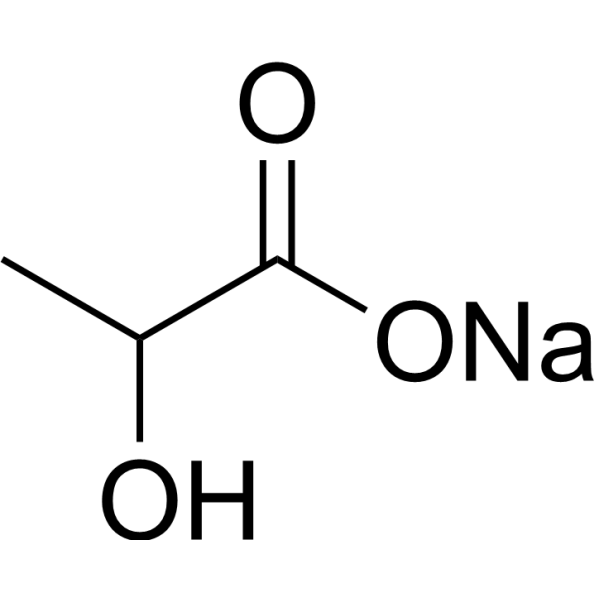
Lactic acid (DL-Lactic acid) sodium (60% w/w in water) is a hydroxycarboxylic acid receptor 1 (HCAR1) activator and an epigenetic modulator inducing lysine residues lactylation. Lactic acid sodium (60% w/w in water) is a glycolysis end-product, bridging the gap between glycolysis and oxidative phosphorylation. Lactic acid sodium (60% w/w in water) is an oncometabolite and has immune protective role of lactate in anti-tumor immunity . Lactic acid sodium (60% w/w in water) also has antimicrobial activity, which can be used as a food preservative .
This product has a content (w/w) of 60%, and 1 mL of the system contains 798 mg of Lactic acid sodium, i.e., a concentration of 798 mg/mL (i.e., 7.12 M).
loading...
    loading...
20
20 Cited Publications
Cat. No.: HY-B2227D
CAS No.: 5743-47-5
Calcium 2-hydroxypropanoate (pentahydrate) is a hydroxycarboxylic acid receptor 1 (HCAR1) activator and an epigenetic modulator inducing lysine residues lactylation. Calcium 2-hydroxypropanoate (pentahydrate) is a glycolysis end-product, bridging the gap between glycolysis and oxidative phosphorylation. Calcium 2-hydroxypropanoate (pentahydrate) is an oncometabolite and has immune protective role of lactate in anti-tumor immunity .
loading...
    loading...
5
5 Cited Publications
Cat. No.: HY-111999A
CAS No.: 2242635-03-4
Purity:  99.48%
Target:  

STING

Research Areas:  

Cancer

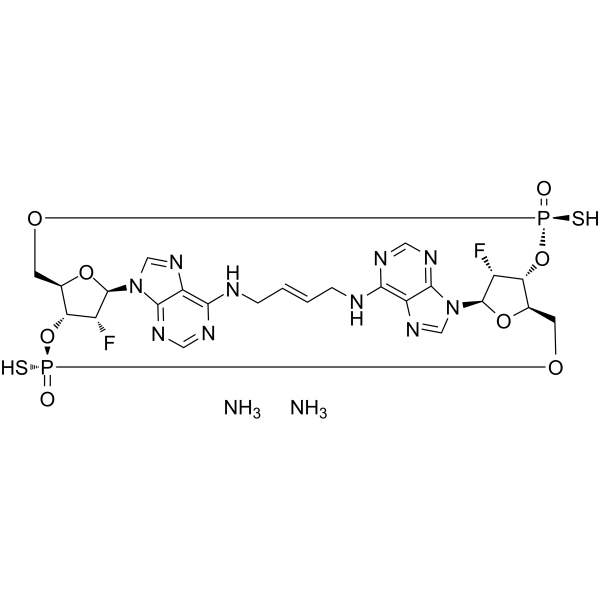
E7766 diammonium salt is a macrocycle-bridged STING agonist with a Kd of 40 nM. E7766 diammonium salt shows potent pan-genotypic and antitumor activities .
loading...
    loading...
4
4 Cited Publications
Cat. No.: HY-129917
CAS No.: 2384184-44-3
Purity:  99.17%
Research Areas:  

Cancer

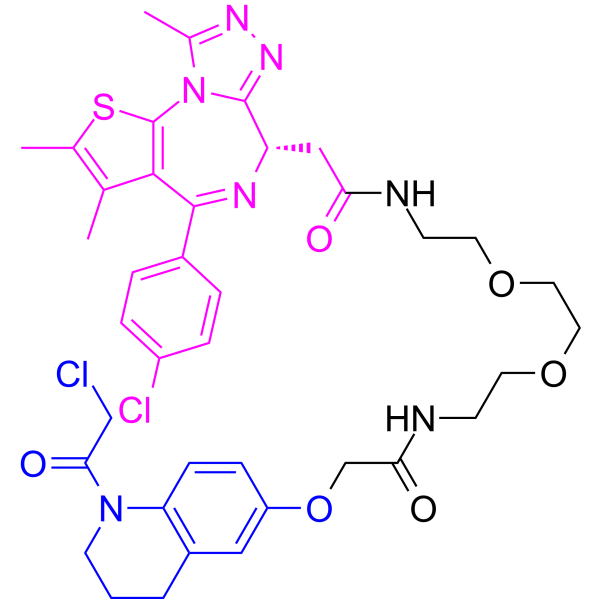
KB02-JQ1 is a potent and selective BRD4 PROTAC degrader. KB02-JQ1 degrades BRD4 via the ubiquitin-proteasome pathway by bridging DCAF16 E3 ubiquitin ligase and BRD4. KB02-JQ1 can be used for cancer research .
loading...
    loading...
2
2 Cited Publications
Cat. No.: HY-104086
CAS No.: 259886-50-5
Purity:  ≥98.0%
Synonyms: CB7; Carrier CB7
Cucurbit[7]uril is a cyclic organic molecule consisting of seven glycoluril units linked by methylene bridges. It has a rigid barrel-like structure with two identical inlets at both ends to selectively encapsulate guest molecules of appropriate size, shape, and polarity. Cucurbit[7]uril is known for its high binding affinity for a variety of organic and inorganic guests, including drugs, amino acids, peptides, and metal ions. This property makes them promising candidates for various applications in areas such as drug delivery, catalysis, and sensing.
loading...
    loading...
1
1 Cited Publications
Cat. No.: HY-D0020
CAS No.: 366-18-7
Synonyms: 2,2'-Dipyridyl
Target:  

MOFs

Research Areas:  

Metabolic Disease

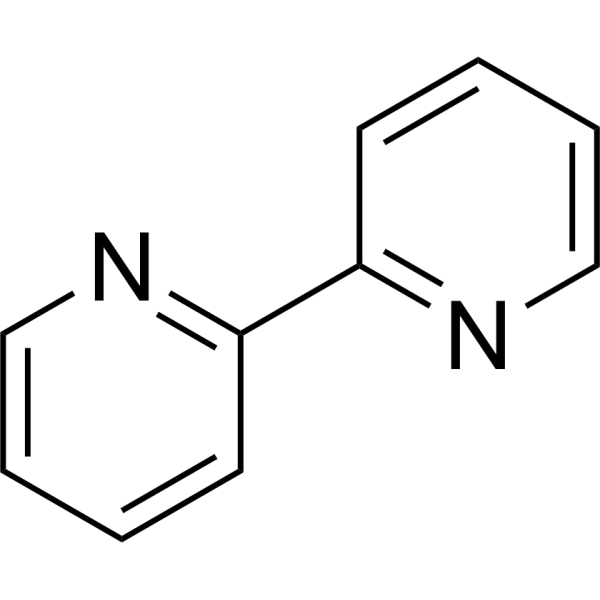
2,2'-Bipyridine is the unique molecular scaffold of the bioactive natural products. 2,2'-Bipyridine is extensively used as the core structure of many chelating ligands by acting as a bridge in the arrangement of the catalytic center. 2,2'-Bipyridine shows robust redox stability and hyperglycemic activity .
loading...
    loading...
1
1 Cited Publications
Cat. No.: HY-A0022A
CAS No.: 63302-99-8
Synonyms: Azafen monohydrate; Pipofezin dihydrochloride monohydrate; Pipofezine dihydrochloride monohydrate
Research Areas:  

Neurological Disease

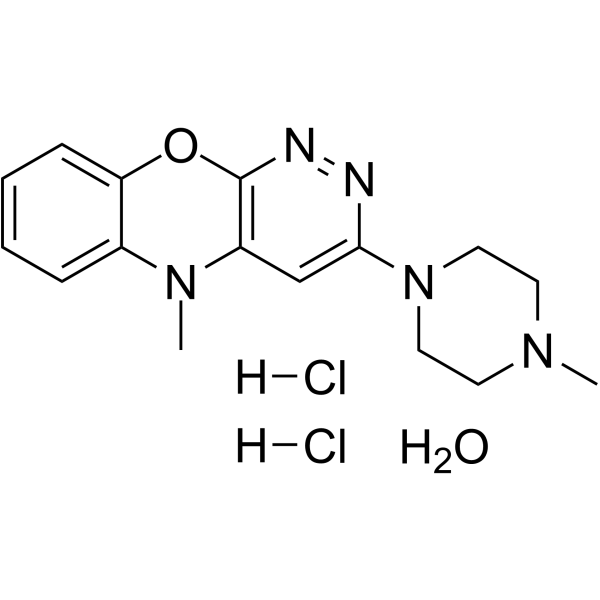
Azaphen dihydrochloride monohydrate is an orally active tricyclic antidepressant that inhibits the reuptake of serotonin and monoamines, regulates the 5-HT2c receptor, and exerts sedative, antidepressant and anxiolytic effects. Azaphen dihydrochloride monohydrate increases the bioavailability of serotonin in the synaptic cleft, does not block muscarinic receptors or affect monoamine oxidase activity, and binds to the human serotonin transporter via salt bridges, π-stacking, π-cation and hydrophobic interactions. Azaphen dihydrochloride monohydrate can be used in studies related to depression .
loading...
    loading...
Cat. No.: HY-118462
CAS No.: 70217-82-2
Purity:  99.70%
Synonyms: Coelenterazine 400a; Bisdeoxycoelenterazine
Target:  

Fluorescent Dye

Research Areas:  

Others

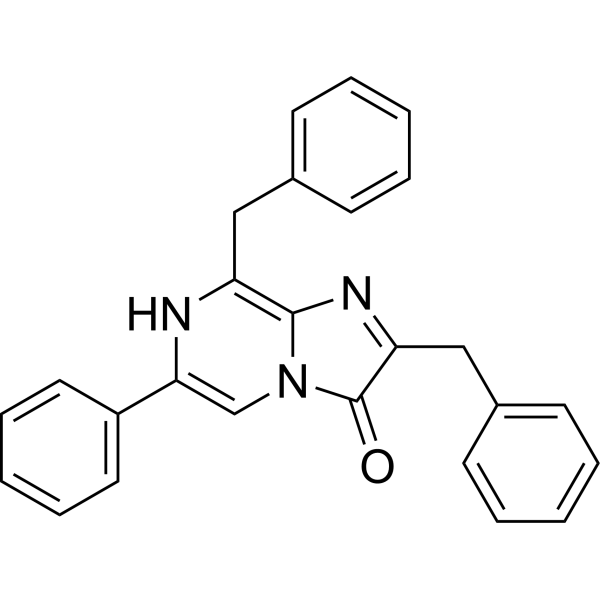
Coelenteramine 400a (Coelenterazine 400a), a derivative of Coelenterazine, is a Renilla luciferase (RLuc) substrate. In the presence of Coelenteramine 400a, RLuc can emit blue light at 395 nm . Coelenterazine 400a will causes color change in the bioluminescence reaction of Rluc by replacing the sulfur and oxygen heteroatoms of the methylene bridge. Coelenterazine 400a provides higher signal resolution and can be used in the research of bioluminescence resonance energy transfer (BRET) .
loading...
    loading...
Cat. No.: HY-P9940
CAS No.: 1610943-06-0
Synonyms: ACE-910; RG6013

Target:  

Factor VIII

Research Areas:  

Cardiovascular Disease

Emicizumab is a bispecific monoclonal antibody that bridges activated factor IX and factor X to replace the function of missing activated factor VIII, thereby restoring hemostasis. Emicizumab can be used for hemophilia A research .
loading...
    loading...
Cat. No.: HY-P2833
CAS No.: 9013-66-5
Synonyms: GSH-Px; EC 1.11.1.9
Research Areas:  

Metabolic Disease

Glutathione Peroxidase (GSH-Px; EC 1.11.1.9) belongs to the peroxidase family and is commonly used in biochemical research. Glutathione Peroxidase can catalyze reduced glutathione (GSH) to form a disulfide bridge with another glutathione molecule, convert it into oxidized glutathione (GSSG), and react with hydrogen peroxide or lipid peroxide reaction, reducing it to H2O. Glutathione Peroxidase is an effective antioxidant against oxidative stress .
loading...
    loading...
Cat. No.: HY-34485
CAS No.: 149771-44-8
Target:  

Drug Intermediate

Research Areas:  

Others

8-Boc-3,8-diaza-bicyclo[3.2.1]octane is a pharmaceutical intermediate containing a dinitrogen-bridged ring structure, used in the synthesis of various active compounds.
loading...
    loading...
Cat. No.: HY-D2355
CAS No.: 1070867-85-4
Tris-NTA Biotin is a biotin-labeled version of tris-NTA. Tris-NTA Biotin, as a bridge connecting His-tagged proteins with streptavidin, can reversibly label proteins and cell surfaces. Tris-NTA Biotin can be used in experiments such as protein immobilization, kinetic determination, live cell labeling, and Western blot detection .
loading...
    loading...
Cat. No.: HY-176444A
CAS No.: 3083777-50-5
Target:  

Molecular Glues CDK

Research Areas:  

Cancer

(R)-CDK2 degrader 6 is the R-enantiomer of CDK2 degrader 6 (HY-176444), a cereblon-based molecular glue degrader of CDK2 with a DC50 of 27 nM. (R)-CDK2 degrader 6 induces ubiquitination and proteasomal degradation of CDK2 by bridging cereblon and CDK2. (R)-CDK2 degrader 6 is applicable for cancer research .
loading...
    loading...
Cat. No.: HY-W141916
CAS No.: 7093-67-6
Synonyms: Tetraglycylglycine; Gly-Gly-Gly-Gly-Gly; NSC 96353
Research Areas:  

Infection

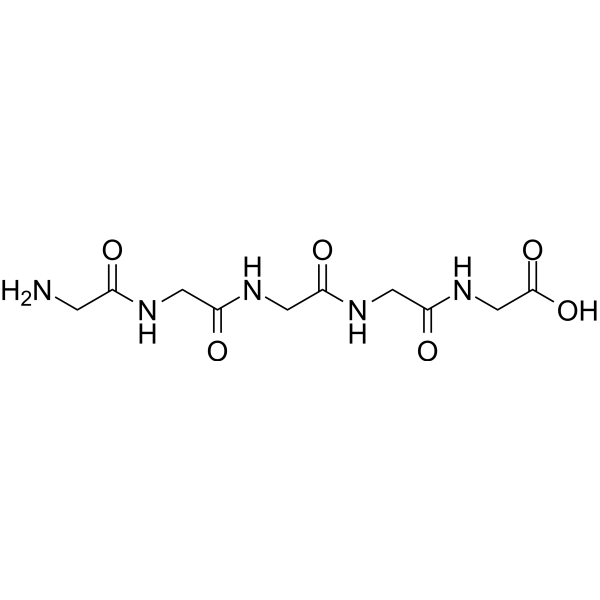
Pentaglycine (Tetraglycylglycine; NSC 96353) is a bridging structure composed of five glycine residues. Pentaglycine serves as a characteristic peptidoglycan cross-bridge component of staphylococci and a specific substrate for lysostaphin. Pentaglycine maintains the integrity of the peptidoglycan cell wall of Staphylococcus aureus via peptide chain cross-linking and regulates bacterial growth. Pentaglycine expression is downregulated in high-glucose environments, inhibiting bacterial proliferation. Pentaglycine can be applied to studies related to Staphylococcus aureus infection .
loading...
    loading...
Cat. No.: HY-P2695
CAS No.: 118447-40-8
Target:  

Inhibitory Antibodies

Research Areas:  

Infection

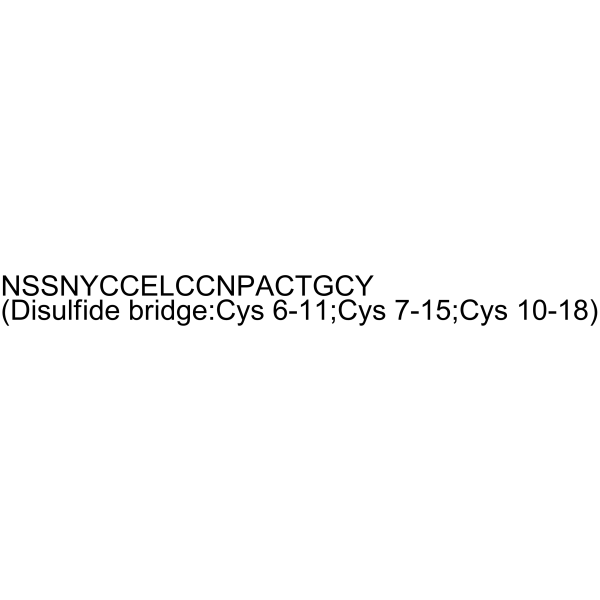
STh, an Escherichia coli heat-stable toxin, is a 19 amino acid polypeptide encompassing three disulfide bridges. STh is an antigen of interest in the search for a broad coverage enterotoxigenic Escherichia coli (ETEC) vaccine .
loading...
    loading...
Cat. No.: HY-D1568
CAS No.: 2736437-44-6
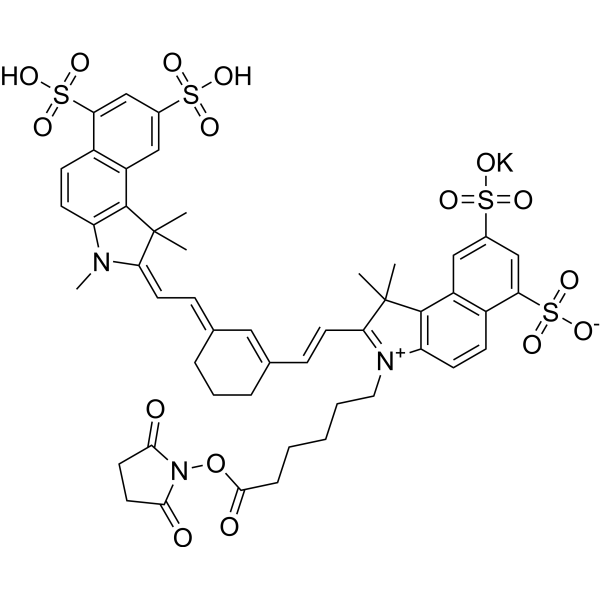
Sulfo-Cy7.5 NHS ester is a near infrared water soluble hydrophilic dye, also is an NHS ester for the modification of amine groups. Sulfo-Cy7.5 NHS ester contains a trimeth ylene bridge and has a linker arm for its attachment to proteins, peptides, and other molecules. Sulfo-Cy7.5 NHS ester can be used for the research of NIR imaging applications .
loading...
    loading...
Cat. No.: HY-175370
Target:  

PROTACs RIP kinase

Research Areas:  

Cancer

PROTAC RIPK1 Degrader-1 is a selective RIPK1 PROTAC degrader. PROTAC RIPK1 Degrader-1 induces complete degradation of RIPK1 through the ubiquitin-proteasome system by bridging the target protein RIPK1 and VHL E3 ubiquitin ligase. PROTAC RIPK1 Degrader-1 is applicable to melanoma-related research .
loading...
    loading...