
30 Results for "

skin+tumor

" in MedChemExpress (MCE) Product Catalog:
Products (30)

30 Results for "skin+tumor" in MCE Product Catalog:

4
4 Cited Publications
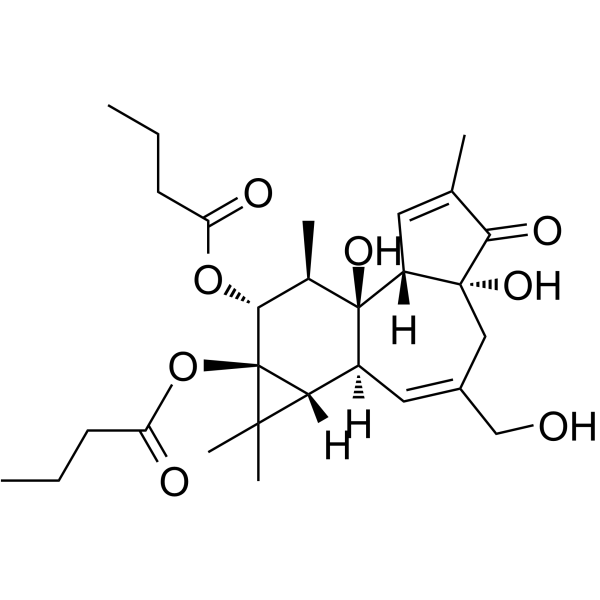
Cat. No.: HY-18985
CAS No.: 37558-16-0
Synonyms: Phorbol dibutyrate; PDBu
Target:  

PKC

Research Areas:  

Cancer

Phorbol 12,13-dibutyrate (Phorbol dibutyrate) is a PKC activator and a potent skin tumor promoter .
loading...
    loading...
2
2 Cited Publications
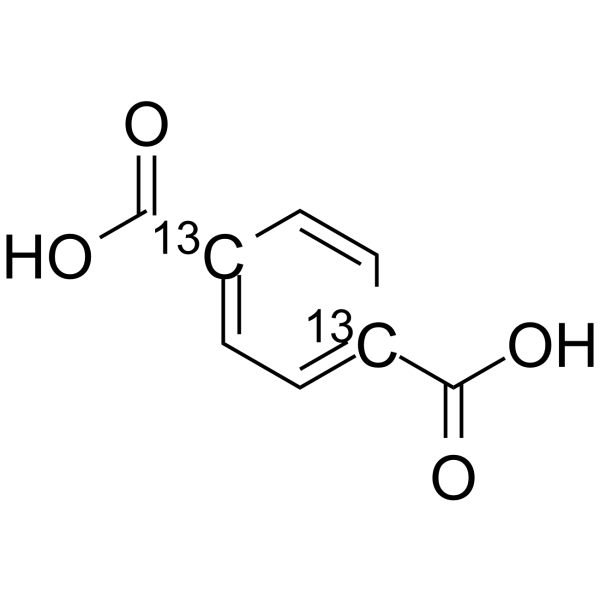
Cat. No.: HY-W010098S1
CAS No.: 121191-53-5
Terephthalic acid- 13C2 is the 13C-labeled Terephthalic acid. Terephthalic acid is an isomer and a precursor of polyester PET, which can be used to make clothing and plastics. Terephthalic acid can be used to build skin tumor models .
loading...
    loading...
1
1 Cited Publications
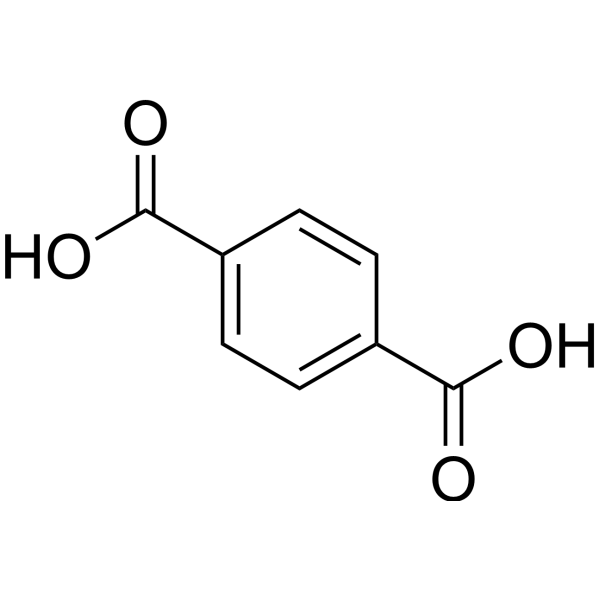
Cat. No.: HY-W010098
CAS No.: 100-21-0
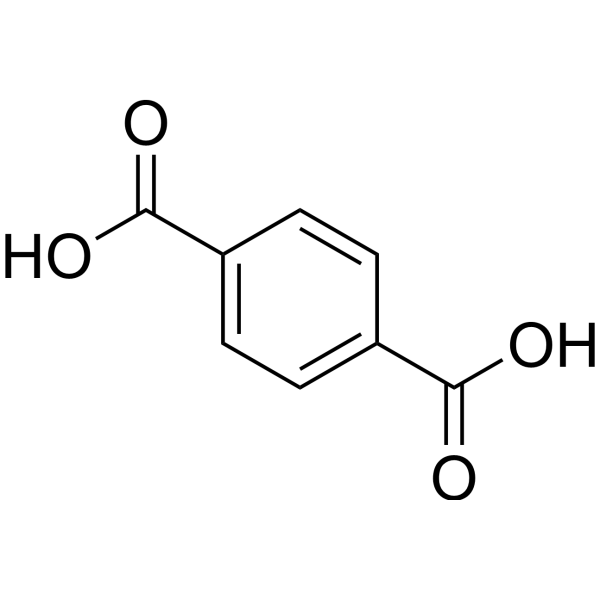
Terephthalic acid is an isomer and a precursor of polyester PET, which can be used to make clothing and plastics. Terephthalic acid can be used to build skin tumor models .
loading...
    loading...
1
1 Cited Publications
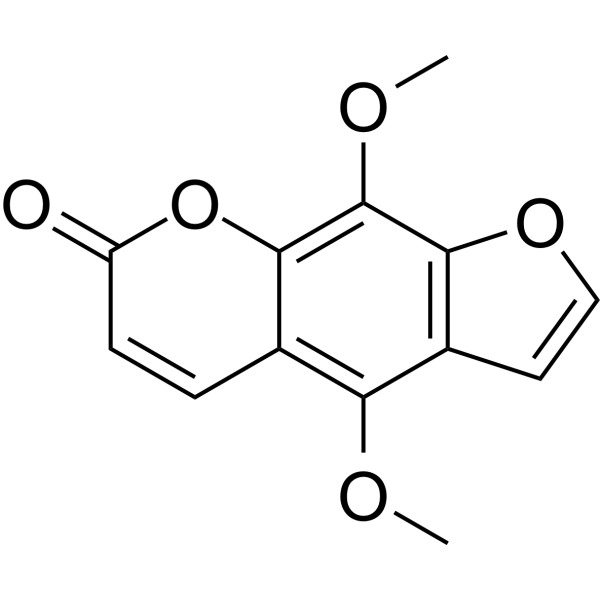
Cat. No.: HY-N0769
CAS No.: 482-27-9
Isopimpinellin, an orally active compound isolated from Glomerella cingulata. Isopimpinellin blocks DNA adduct formation and skin tumor initiation by 7,12-dimethylbenz[a]anthracene. Isopimpinellin possesses anti-leishmania effect .
loading...
    loading...
1
1 Cited Publications
Cat. No.: HY-A0169A
CAS No.: 79416-27-6
Research Areas:  

Cancer

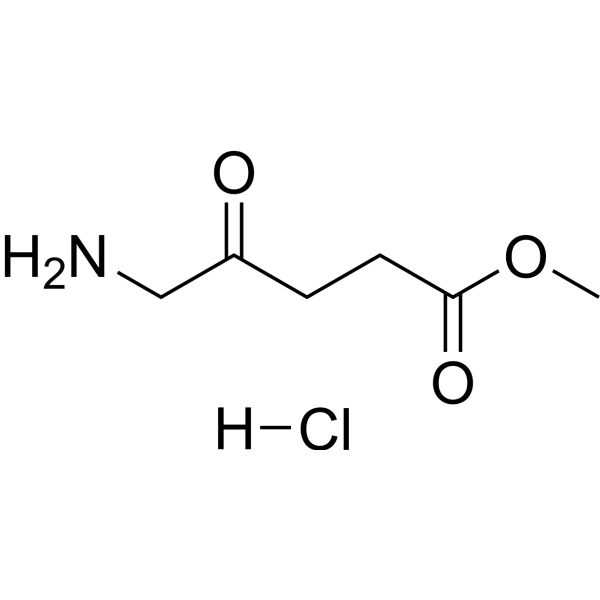
Methyl aminolevulinate hydrochloride is a sensitizer used in photodynamic therapy (PDT). Methyl aminolevulinate hydrochloride penetrates the skin and induces the production of photoactive porphyrins including protoporphyrin IX in cells; upon exposure to appropriate light, it generates ROS, which triggers cellular oxidation and cell death. Methyl aminolevulinate hydrochloride acts as a photo-damage reversing agent through epidermal reconstruction, cytokine-mediated activation of dermal fibroblasts, elastin breakdown, new collagen formation, and compression of dilated capillaries. Methyl aminolevulinate hydrochloride reduces the expression of the proliferation marker Ki-67 and the early skin carcinogenesis marker TP53. Methyl aminolevulinate hydrochloride delays the onset of ultraviolet-induced skin tumors and reduces tumor burden in hairless mice. Methyl aminolevulinate hydrochloride is applicable to research related to actinic keratosis and basal cell carcinoma .
loading...
    loading...
1
1 Cited Publications
Cat. No.: HY-W250127
CAS No.: 10028-70-3
Synonyms: Terephthalic acid disodium salt
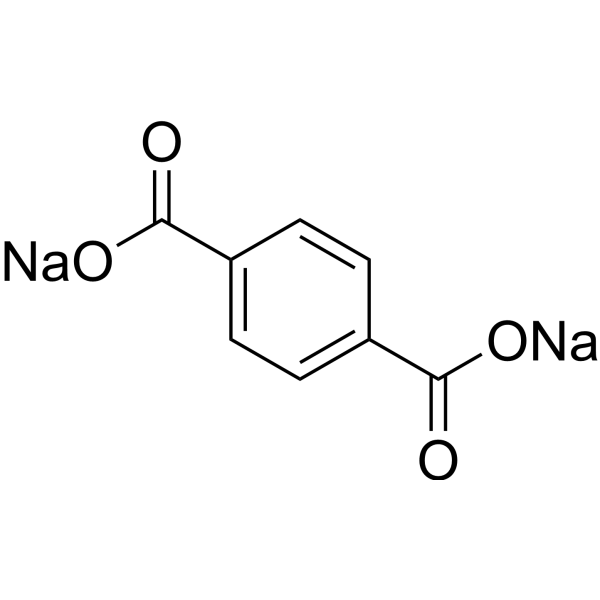
Disodium terephthalate (Terephthalic acid disodium salt) is an isomer and a precursor of polyester PET, which can be used to make clothing and plastics. Disodium terephthalate can be used to build skin tumor models .
loading...
    loading...
Cat. No.: HY-126573
CAS No.: 538-24-9
Purity:  ≥98.0%
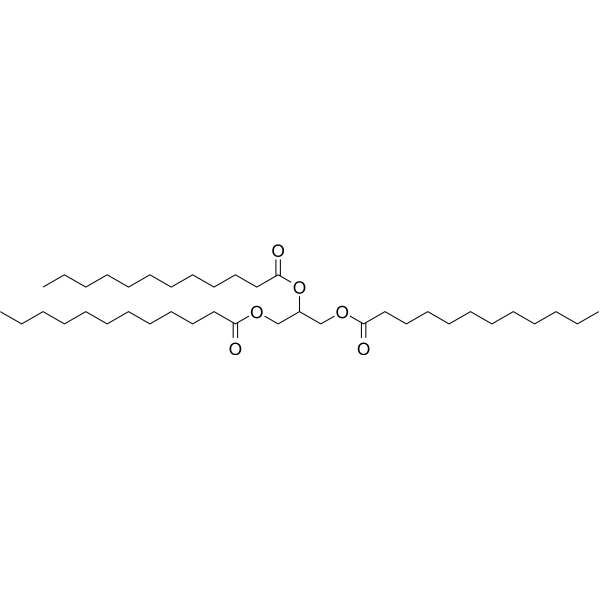
Trilaurin is an orally active triglyceride. Trilaurin inhibits DMBA-induced, croton oil-promoted skin tumor formation in Swiss Webster mice. Trilaurin increases plasma high-density lipoprotein cholesterol and apolipoprotein A-I concentrations. Trilaurin is used as an occlusive skin conditioning agent and/or non-aqueous thickener in cosmetics .
loading...
    loading...
Cat. No.: HY-N1677
CAS No.: 530-55-2
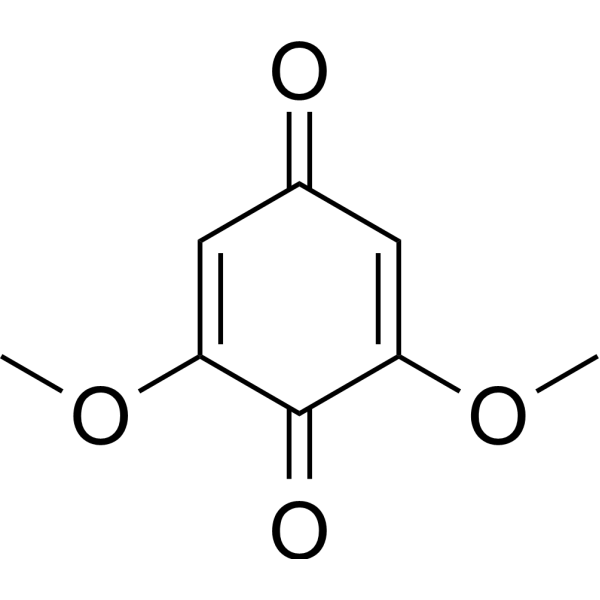
2,6-Dimethoxy-1,4-benzoquinone is a 1,4-benzoquinone derivative. 2,6-Dimethoxy-1,4-benzoquinone promotes phosphorylation of AKT, S6K, mTOR, 4E-BP1, and AMPK, and attenuates mTORC1 activity as part of the AKT/mTOR pathway. 2,6-Dimethoxy-1,4-benzoquinone stimulates myoblast differentiation, increases myotube size, elevates MHC protein expression, enhances mitochondrial biogenesis, respiration, and DNA content, and increases skeletal muscle weights, fiber size, grip strength, and treadmill performance. 2,6-Dimethoxy-1,4-benzoquinone exerts anti-cancer, anti-inflammatory, anti-adipogenic, antibacterial, and antimutagenic effects, inhibits adipogenic transcription factors, nitric oxide production, skin tumor development, Magnaporthe oryzae growth, spore germination, appressorium formation, and growth of select bacterial species, induces H2O2 generation and rice defense gene expression, and reduces rice blast lesion formation. 2,6-Dimethoxy-1,4-benzoquinone can be used for the research of obesity, skin tumorigenesis, rice blast disease, and food-borne illness .
loading...
    loading...
Cat. No.: HY-N0891
CAS No.: 115810-12-3
Synonyms: Tubeimoside-B
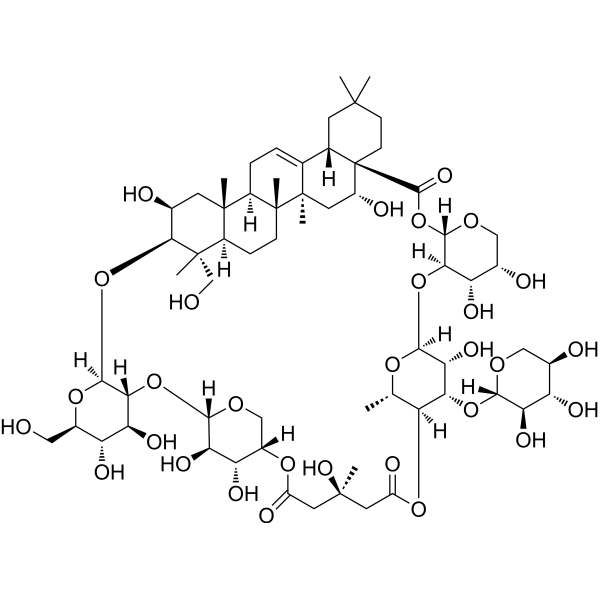
Tubeimoside II is an orally active triterpenoid saponin and antiviral agent that binds to PACT/PRKRA with Kd values of 5.37 μM and 133.1 μM, respectively. Tubeimoside II inhibits oxidase-dependent EGFR activation and reduces TGF-β1-induced oxidative stress. Tubeimoside II activates the RIG-I signaling pathway and increases IFN-β secretion. Tubeimoside II suppresses TPA-induced ear edema, mouse sarcoma 180 growth, and TPA-induced skin tumor formation. Tubeimoside II exerts broad-spectrum antiviral activity against SARS-CoV-2, HCoV-OC43, and IAV-H1N1/FM1. Tubeimoside II can be used in research related to retinoblastoma, respiratory viral infections, skin tumors, and sarcoma 180 .
loading...
    loading...
Cat. No.: HY-B0006C
CAS No.: 95093-99-5
Synonyms: (R)-BM 14190
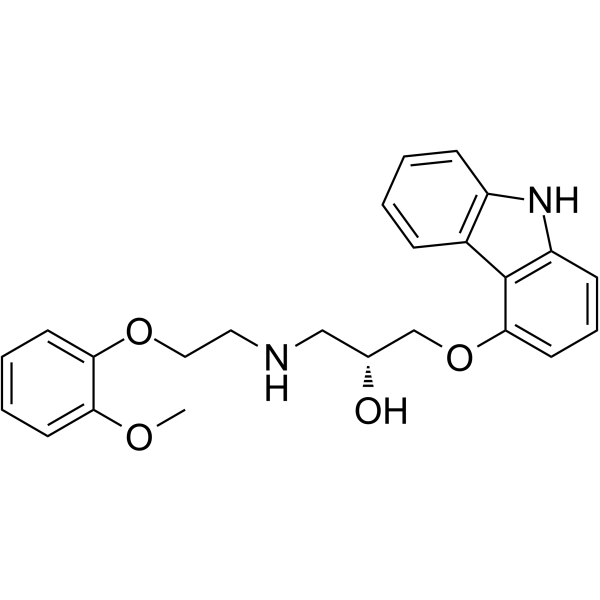
(R)-Carvedilol ((R)-BM 14190) is the orally active R-isomer of Carvedilol (HY-B0006). (R)-Carvedilol has α-receptor blocking activity but no β-receptor blocking activity. (R)-Carvedilol inhibits spontaneous Ca 2+ waves. (R)-Carvedilol inhibits stress-induced ventricular tachycardia and delays the development of UV-induced skin tumors and reduces their malignancy .
loading...
    loading...
Cat. No.: HY-W010098S
CAS No.: 60088-54-2
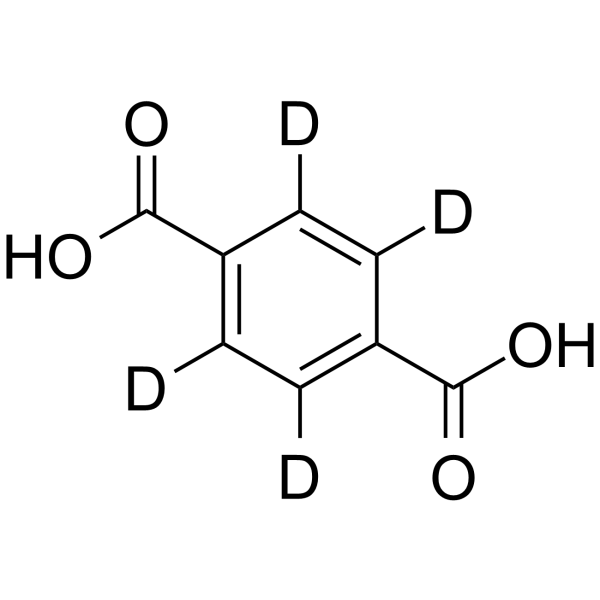
Terephthalic acid-d4 is the deuterium labeled Terephthalic acid. Terephthalic acid is an isomer and a precursor of polyester PET, which can be used to make clothing and plastics. Terephthalic acid can be used to build skin tumor models .
loading...
    loading...
Cat. No.: HY-W010098R
CAS No.: 100-21-0
Terephthalic acid (Standard) is the analytical standard of Terephthalic acid. This product is intended for research and analytical applications. Terephthalic acid is an isomer and a precursor of polyester PET, which can be used to make clothing and plastics. Terephthalic acid can be used to build skin tumor models .
loading...
    loading...
Cat. No.: HY-113326
CAS No.: 540-04-5
Synonyms: trans-Phytoene
Phytoene (trans-Phytoene) is a carotene pigment. Phytoene is the precursor of all carotenoids. Phytoene is the predominant PT isomer in most carotenogenic organisms. Phytoene can delay the skin tumors appearance and reduce their number in mice that are induced the tumors with UV-B light. Phytoene leads to protection against oxidative stress and malignant transformation. Phytoene inhibits the proliferation of breast cancer cells .
loading...
    loading...
Cat. No.: HY-N6861
CAS No.: 95311-95-8
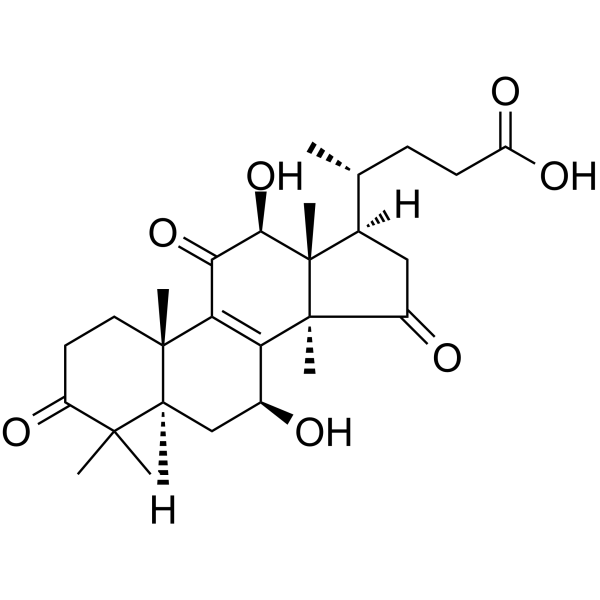
Lucidenic acid B is a triterpenoid compound. Lucidenic acid B inhibits the activities of ERK1/2, AP-1, NF-kB, and IKK, suppresses PMA (Phorbol 12-myristate 13-acetate) (HY-18739)-induced MMP-9 expression and cell invasion, and induces apoptosis in leukemia cells via the mitochondrial pathway. Lucidenic acid B inhibits the growth of various cancer cell lines without affecting normal lymphocytes and does not induce G1 phase arrest or necrosis. Lucidenic acid B can be used in research on hepatocellular carcinoma, human acute promyelocytic leukemia, and skin tumor promotion .
loading...
    loading...
Cat. No.: HY-W115818
CAS No.: 9005-67-8
Polyoxyethylene Sorbitan Monostearate is a nonionic polysorbate surfactant. Polyoxyethylene Sorbitan Monostearate acts as an emulsifier, stabilizer, gastrointestinal hydrolysis substrate, and skin tumor promoter/carcinogen in mice. Polyoxyethylene Sorbitan Monostearate can be used in the study of skin tumors .
loading...
    loading...
Cat. No.: HY-18985G
CAS No.: 37558-16-0
Synonyms: Phorbol dibutyrate (GMP); PDBu (GMP)
Phorbol 12,13-dibutyrate (Phorbol dibutyrate) (GMP) is Phorbol 12,13-dibutyrate (HY-18985) produced by using GMP guidelines. GMP small molecules works appropriately as an auxiliary reagent for cell therapy manufacture. Phorbol 12,13-dibutyrate is a PKC activator and a potent skin tumor promoter .
loading...
    loading...
Cat. No.: HY-P11417
CAS No.: 106678-69-7
Target:  

DNA/RNA Synthesis

Research Areas:  

Cancer

Epidermal mitosis inhibiting pentapeptide is a five-peptide that acts as a physiological inhibitor of epidermal cell proliferation. This pentapeptide can significantly reduce the DNA synthesis rate and mitotic rate of epidermal keratinocytes. Epidermal mitosis inhibiting pentapeptide moderately enhances the occurrence of skin tumors in skin cancer models, but also shows a higher tendency to promote the regression of already formed tumors. Epidermal mitosis inhibiting pentapeptide can be hydrolyzed by angiotensin-converting enzyme (ACE). Epidermal mitosis inhibiting pentapeptide can be used in cancer process research .
loading...
    loading...
Cat. No.: HY-N1687
CAS No.: 125305-73-9
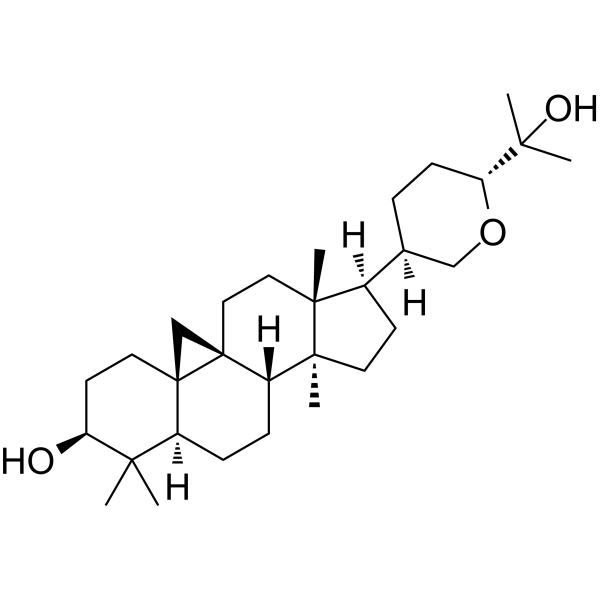
21,24-Epoxycycloartane-3,25-diol (compound 15 or 16) is a cycloartanoid triterpene that can be isolated from the leaves of Lansium domesticum. 21,24-Epoxycycloartane-3,25-diol inhibits skin-tumor promotion .
loading...
    loading...
Cat. No.: HY-W543743
CAS No.: 17088-21-0
Synonyms: 1-Vinylpyrene
Research Areas:  

Cancer

1-Ethenylpyrene (1-Vinylpyrene) is an anti-chemical carcinogen that inhibits the formation of skin tumors initiated by either DMBA (HY-W011845) or Benzo[a]pyrene (HY-107377) .
loading...
    loading...
Cat. No.: HY-N15758
CAS No.: 139006-28-3
Amorphispironone (Compound 1) is a rotenoid that can be isolated the leaves of A. fruticosa. Amorphispironone exhibits remarkable inhibitory effects on EBV-EA activation induced by TPA. Amorphispironone exhibits potent anti-tumor-promotion activity on mouse skin tumor promotion in vivo .
loading...
    loading...

