




101 Results for "

starch

" in MedChemExpress (MCE) Product Catalog:
Products (101)

101 Results for "starch" in MCE Product Catalog:

12
12 Publications Verification
Cat. No.: HY-128868E
CAS No.: 60842-46-8
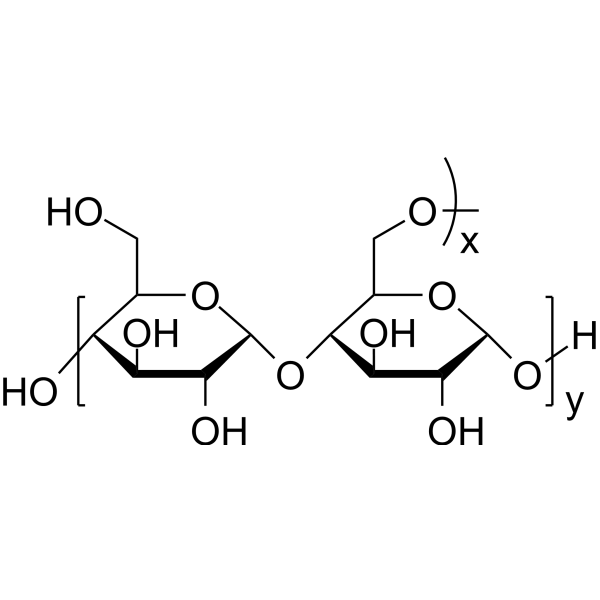
FITC-Dextran (MW 70000) is a compound belonging to the class of fluorescent dyes. It is commonly used in biomedical research as a tracer molecule to label and track cells or other biological matter. FITC-Dextran consists of fluorescein isothiocyanate (FITC) and dextran, a complex carbohydrate derived from starch. The combination of the two creates a stable fluorescent tracer that can be viewed under a microscope or quantified using specialized detection instruments.
loading...
    loading...
4
4 Cited Publications
Cat. No.: HY-128868C
CAS No.: 60842-46-8
FITC-Dextran (MW 20000) is a compound belonging to the class of fluorescent dyes. It is commonly used in biomedical research as a tracer molecule to label and track cells or other biological matter. FITC-Dextran consists of fluorescein isothiocyanate (FITC) and dextran, a complex carbohydrate derived from starch. The combination of the two creates a stable fluorescent tracer that can be viewed under a microscope or quantified using specialized detection instruments.
loading...
    loading...
2
2 Cited Publications
Cat. No.: HY-B2193
CAS No.: 9000-90-2
α-Amylase is a hydrolase enzyme that catalyses the hydrolysis of internal α-1, 4-glycosidic linkages in starch to yield products like glucose and maltose.
loading...
    loading...
1
1 Cited Publications
Cat. No.: HY-128868I
CAS No.: 60842-46-8
FITC-Dextran (MW 2000000) is a compound belonging to the class of fluorescent dyes. It is commonly used in biomedical research as a tracer molecule to label and track cells or other biological matter. FITC-Dextran consists of fluorescein isothiocyanate (FITC) and dextran, a complex carbohydrate derived from starch. The combination of the two creates a stable fluorescent tracer that can be viewed under a microscope or quantified using specialized detection instruments.
loading...
    loading...
1
1 Cited Publications
Cat. No.: HY-N2024
CAS No.: 69-79-4
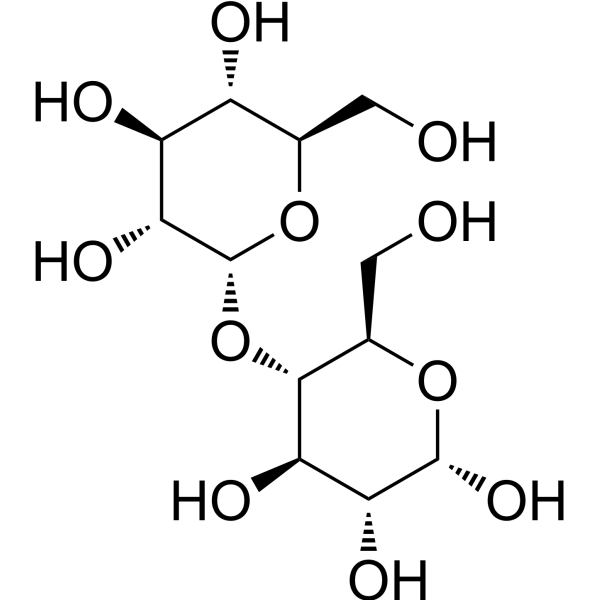
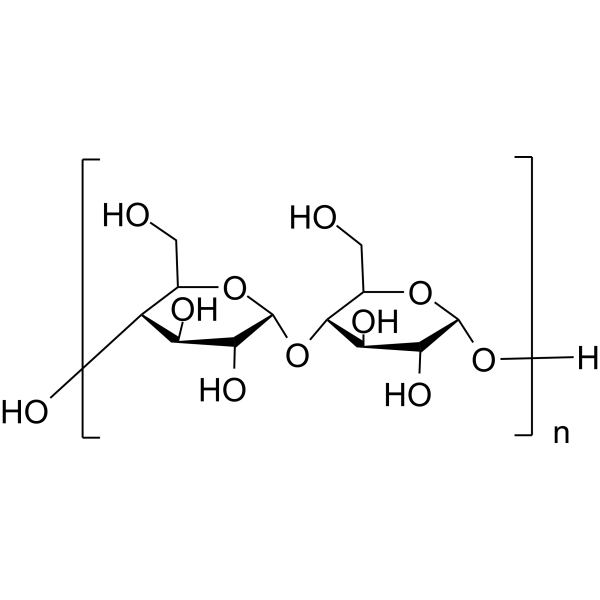
Maltose is a disaccharide composed of two glucose molecules linked together. Maltose is an endogenous metabolic product in plants, yeast, or bacteria, and it participates in carbon source storage and metabolism. Maltose is a key core metabolite and main transport form in the temporary starch degradation, carbon output, and subsequent sucrose synthesis metabolism of the night chloroplast. In X. dendrorhous, maltose can act as a sugar donor and is converted into isomaltulose by α-glucosidase). Maltose can act as a osmotic agent, supporting continuous capillary ultrafiltration and preventing severe metabolic disorders .
loading...
    loading...
1
1 Cited Publications
Cat. No.: HY-N2024A
CAS No.: 6363-53-7
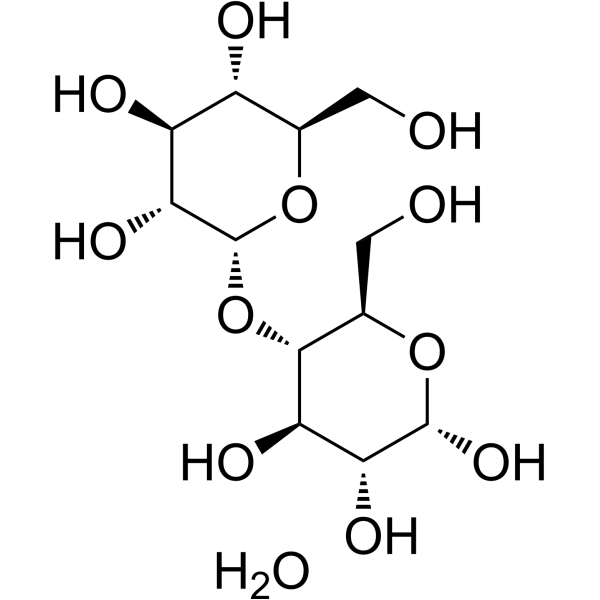
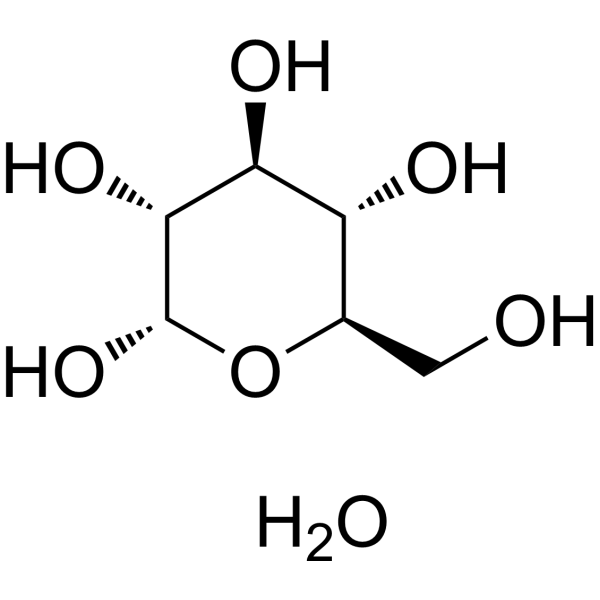
Maltose monohydrate is a disaccharide composed of two glucose molecules linked together. Maltose monohydrate is an endogenous metabolic product in plants, yeast, or bacteria, and it participates in carbon source storage and metabolism. Maltose monohydrate is a key core metabolite and main transport form in the temporary starch degradation, carbon output, and subsequent sucrose synthesis metabolism of the night chloroplast. In X. dendrorhous, maltose can act as a sugar donor and is converted into isomaltulose by α-glucosidase. Maltose monohydrate can act as a osmotic agent, supporting continuous capillary ultrafiltration and preventing severe metabolic disorders .
loading...
    loading...
1
1 Cited Publications
Cat. No.: HY-N7948
CAS No.: 35997-20-7
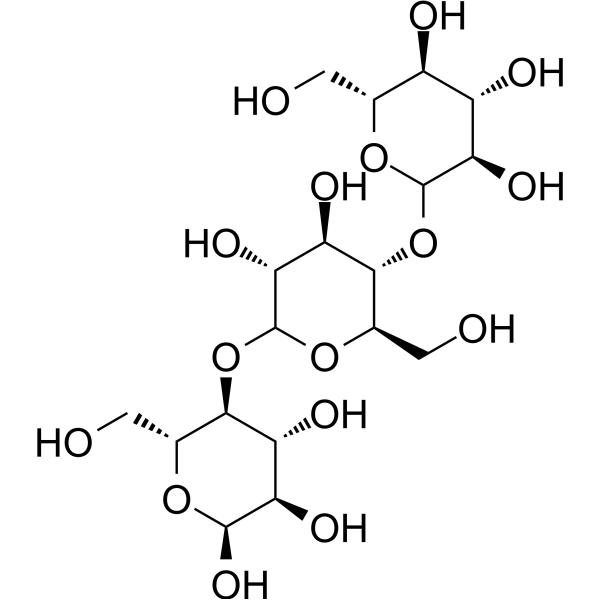
Isomaltotetraose is an orally active branched isomaltooligosaccharide with α-(1,6) glycosidic linkages. Isomaltotetraose is a prebiotic oligosaccharide present in honey and also a component of isomaltooligosaccharide mixtures. Isomaltotetraose maintains the growth of Prevotella or sustains the *Prevotella* enterotype in both in vitro systems and mouse models .
loading...
    loading...
1
1 Cited Publications
Cat. No.: HY-W754777
CAS No.: 68054-73-9
Domaines de recherche:  

Others

IPPD-Q is a p-phenylenediamine quinone and also Environmental pollutant. IPPD-Q can be present in tires, fine particulate matter and urban water bodies. IPPD-Q increases the activities of antioxidant enzymes (SOD, CAT), alters photosynthesis and energy metabolism pathways, and changes gene expression and metabolic profiles. IPPD-Q exhibits phytotoxic effects. IPPD-Q shows acute toxicity to zebrafish embryos and reduces their survival rate .
loading...
    loading...
Cat. No.: HY-151862
CAS No.: 88192-19-2
Pureté:  99.57%
Domaines de recherche:  

Others

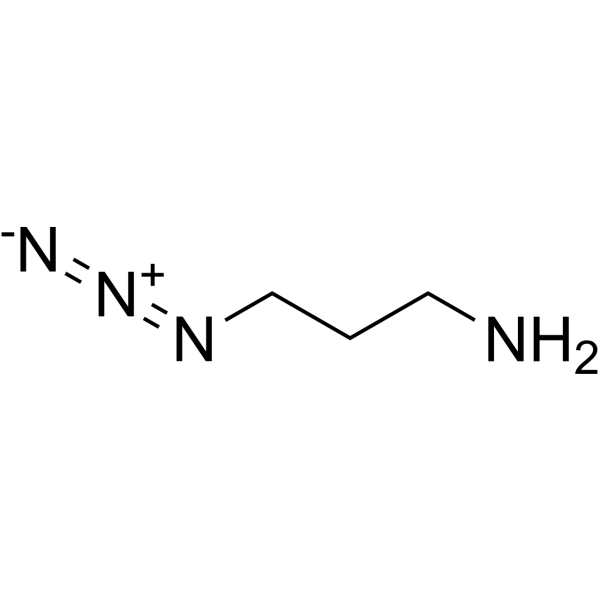
3-Azidopropylamine is a click chemistry reagent containing an azide group. 3-Azidopropylamine can react with the starch sugar of potato starch for complexation and transfection of plasmid DNA . It contains an azide group and can undergo copper-catalyzed azide-alkyne cycloaddition (CuAAc) with molecules containing alkyne groups. It can also undergo ring strain-promoted alkyne-azide cycloaddition (SPAAC) with molecules containing DBCO or BCN groups.
loading...
    loading...
Cat. No.: HY-P2857
CAS No.: 9032-08-0
Synonyms: Amyloglucosidase, Aspergillus niger
Amyloglucosidase, Aspergillus niger (Amyloglucosidase, Aspergillus niger) is a starch-hydrolyzing enzyme with high catalytic efficiency towards soluble starch and raw starch. Amyloglucosidase, Aspergillus niger hydrolyzes α-1,4 and α-1,6 glycosidic linkages in starch and similar substrates, and primarily releases β-glucose molecules from the non-reducing ends. Amyloglucosidase, Aspergillus niger participates in glycogen metabolism and is associated with type II glycogen storage disease. Amyloglucosidase, Aspergillus niger converts starch into glucose, and is applicable to the industrial production of high-fructose syrup, ethanol and other fermented products .
loading...
    loading...
Cat. No.: HY-128868H
CAS No.: 60842-46-8
FITC-Dextran (MW 500000) is a compound belonging to the class of fluorescent dyes. It is commonly used in biomedical research as a tracer molecule to label and track cells or other biological matter. FITC-Dextran consists of fluorescein isothiocyanate (FITC) and dextran, a complex carbohydrate derived from starch. The combination of the two creates a stable fluorescent tracer that can be viewed under a microscope or quantified using specialized detection instruments.
loading...
    loading...
Cat. No.: HY-W145519
CAS No.: 9005-27-0
Hydroxyethyl starch (MW170-230 kDa) is a type of hydroxyethyl starch with a molecular weight of 170-230 kDa. A medium-molecular-weight hydroxyethyl starch (HES 200/0.62) exhibits minimal intravascular hydrolysis. The rapidly degradable medium-molecular-weight Hydroxyethyl starch 200/0.5 causes almost no coagulation disorders and improves hemorheological parameters .
loading...
    loading...
Cat. No.: HY-145942
CAS No.: 26680-54-6
Pureté:  99.69%
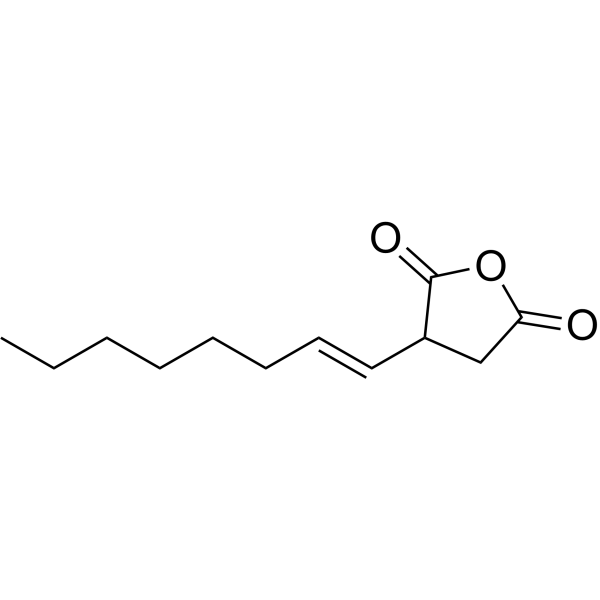
Octenyl succinic anhydride is a versatile chemical intermediate. Octenyl succinic anhydride can undergo esterification with polysaccharides such as starch and Inulin (HY-N7075). Octenyl succinic anhydride affects the intermolecular interactions on the outer surfaces of two starch granules by altering the molecular surface structure. Octenyl succinic anhydride modifies the properties of polysaccharides. Octenyl succinic anhydride can be used for starch esterification to produce OS-starch, an amphiphilic hydrocolloid .
loading...
    loading...
Cat. No.: HY-W250795
CAS No.: 9050-36-6
Synonyms: Maltodextrin; Dextrin maize starch
Maltodextrin, dextrose equivalent 16.5-19.5 can be used as an excipient. Pharmaceutical excipients, or pharmaceutical auxiliaries, refer to other chemical substances used in the pharmaceutical process other than pharmaceutical ingredients. Pharmaceutical excipients generally refer to inactive ingredients in pharmaceutical preparations, which can improve the stability, solubility and processability of pharmaceutical preparations. Pharmaceutical excipients also affect the absorption, distribution, metabolism, and elimination (ADME) processes of co-administered drugs .
loading...
    loading...
Cat. No.: HY-B2225A
CAS No.: 9005-25-8
Synonyms: Edible corn starch (from potato)
Starch (from potato) (Edible corn starch (from potato)) is a type of starch derived from potatoes. Starch (from potato) consists of amylose and amylopectin, and has properties such as easy gelatinization and high viscosity. Starch (from potato) is the main carbohydrate in potatoes and an important raw material for the food industry .
loading...
    loading...
Cat. No.: HY-W115731
CAS No.: 9004-53-9
Dextrins are a group of low molecular weight carbohydrates produced by the hydrolysis of starch. Dextrin is commonly used as a thickener, stabilizer or binder in a variety of foods including baked goods, beverages and confectionary. In addition, it is used in the production of adhesives, paper and textiles. Its unique chemical properties make it an important ingredient in a variety of industrial processes, especially in construction and packaging.
loading...
    loading...
Cat. No.: HY-W040040
CAS No.: 17465-86-0
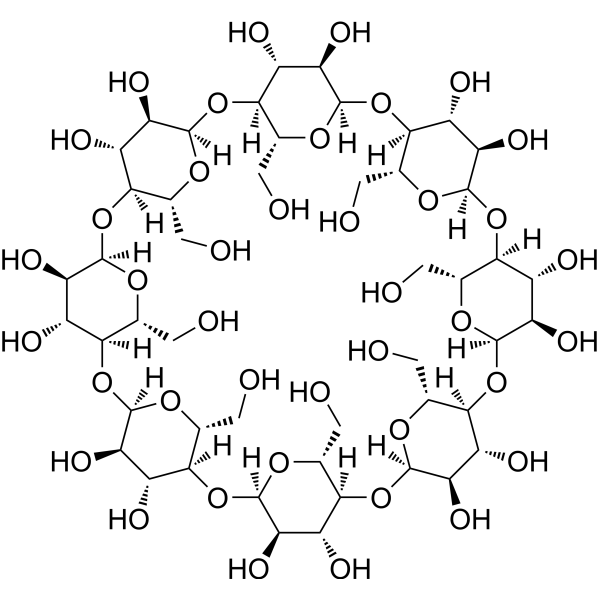
γ-Cyclodextrin is an orally active cyclic oligosaccharide composed of eight glucose molecules, which can be formed by bacteria digesting starch. γ-Cyclodextrin can form water-soluble inclusion complexes with a variety of poorly soluble compounds and is widely used in fields such as pharmacy and food. In addition, γ-Cyclodextrin has good safety .
loading...
    loading...
Cat. No.: HY-42680
CAS No.: 87-81-0
Synonyms: D-(-)-Tagatose
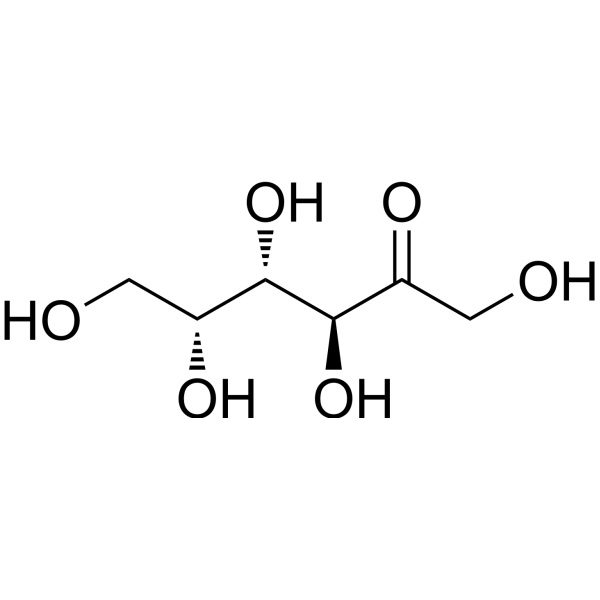
D-Tagatose (D-(-)-Tagatose) is a natural low-calorie rare sugar. D-Tagatose inhibits the activities of sucrase, maltase and intestinal disaccharidases, reduces the digestion of sucrose and starch, and blocks the absorption of sucrose, maltose and glucose. D-Tagatose promotes glucokinase activity and inhibits glycogen phosphorylase activity via tagatose-1-phosphate, regulates the synthesis and decomposition of hepatic glycogen, reduces postprandial and fasting blood glucose levels, and improves hyperinsulinemia. D-Tagatose regulates lipid profiles, stimulates GLP-1 secretion, and exhibits prebiotic effects. D-Tagatose is a bulking sweetener. D-Tagatose can be used in research related to diabetes, hyperlipidemia, dental caries, atherosclerosis and type 2 diabetes .
loading...
    loading...
Cat. No.: HY-B2192
CAS No.: 9000-92-4
Amylase is an enzyme produced by pancreas and salivary glands, catalyzing the hydrolysis of starch into sugars. Amylase are broadly classified into α, β, and γ subtypes .
loading...
    loading...
Cat. No.: HY-W145665
CAS No.: 9005-82-7
Amylose is not a typical small-molecule ligand with a specific traditional receptor-binding target. It is a polysaccharide. In food science and biological systems, amylose can interact with proteins and free fatty acids through non-covalent forces like hydrophobic interactions and electrostatic interactions. For example, it can form a ternary complex with them, which is related to the structure and digestion of starch. It is widely studied in the fields of food science, carbohydrate metabolism, and is also relevant in research on controlling glycemic responses, as it affects starch digestion rate .
loading...
    loading...

