Search Result
Results for "
volatile compounds
" in MedChemExpress (MCE) Product Catalog:
4
Biochemical Assay Reagents
17
Isotope-Labeled Compounds
| Cat. No. |
Product Name |
Target |
Research Areas |
Chemical Structure |
-
- HY-W004263
-
|
Arachidyl alcohol
|
Environmental Pollutants
Fungal
|
Infection
|
|
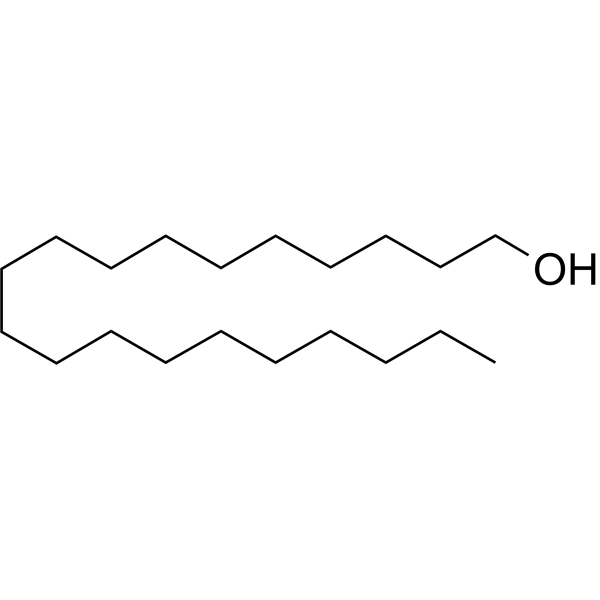
1-Eicosanol (Arachidyl alcohol) is a long-chain fatty alcohol and volatile organic compound that can be isolated from the leaves of Leea indica and produced by Bacillus velezensis ZJ1. 1-Eicosanol inhibits mycelial growth of Alternaria solani and Botrytis cinerea. 1-Eicosanol is applicable to research related to tomato early blight and tomato gray mold .
|
-
-
- HY-128429
-
|
(E)-2-Hexenal
|
Environmental Pollutants
Biochemical Assay Reagents
Fungal
|
Infection
|
|
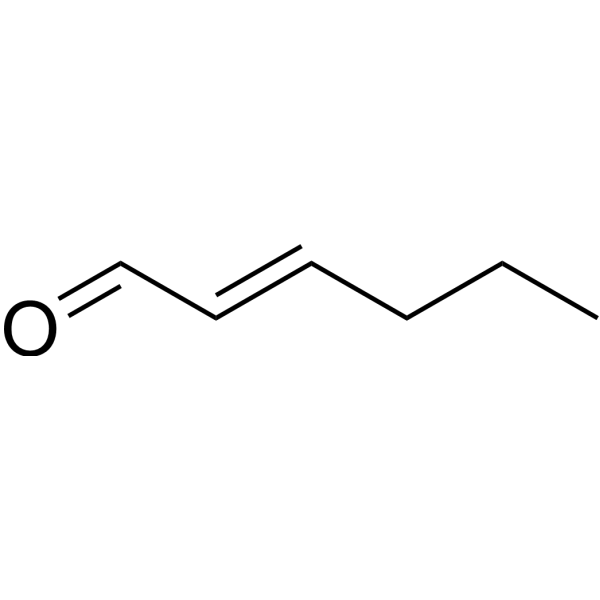
trans-2-Hexenal ((E)-2-Hexenal) is a volatile compound widely present in fresh plants, vegetables, and fruits, with a unique leafy aroma. trans-2-Hexenal has antifungal activity and can also inhibit the germination of soybean seeds and the growth of seedlings. In addition, trans-2-Hexenal can be used to determine low-molecular-weight carbonyl compounds that are reactive with biological nucleophiles in biological samples .
|
-
-
- HY-34487
-
|
Resorcinol dimethyl ether
|
Environmental Pollutants
Drug Intermediate
|
Others
|
|
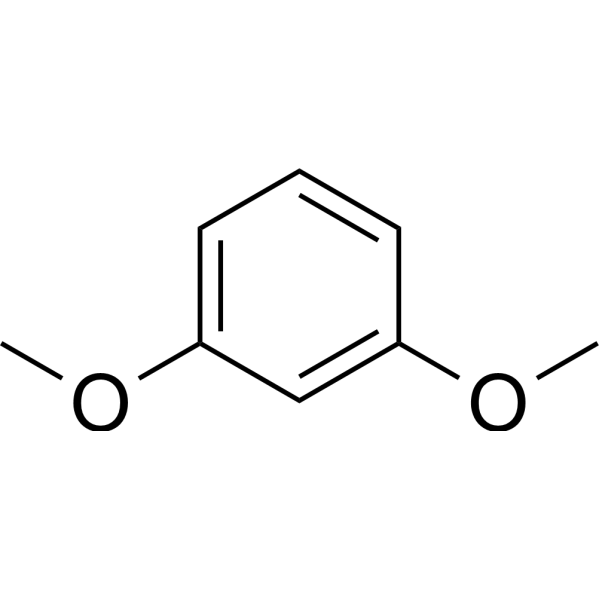
1,3-Dimethoxybenzene (Resorcinol dimethyl ether) is a volatile compound with a sweet medicinal odour carrying hazelnut, resinous, and woody notes. 1,3-Dimethoxybenzene is identified as a new volatile component of Douro region grape musts and port wines .
|
-
-
- HY-W004461
-
|
MMTS
|
Endogenous Metabolite
Bacterial
|
Infection
|
|
S-Methyl thiomethanesulfonate (MMTS) is a sulfur-containing volatile organic compound produced by plants and bacteria and is an effective anti-oomycete agent .
|
-
-
- HY-W012836
-
|
|
Environmental Pollutants
Endogenous Metabolite
|
Neurological Disease
|
|
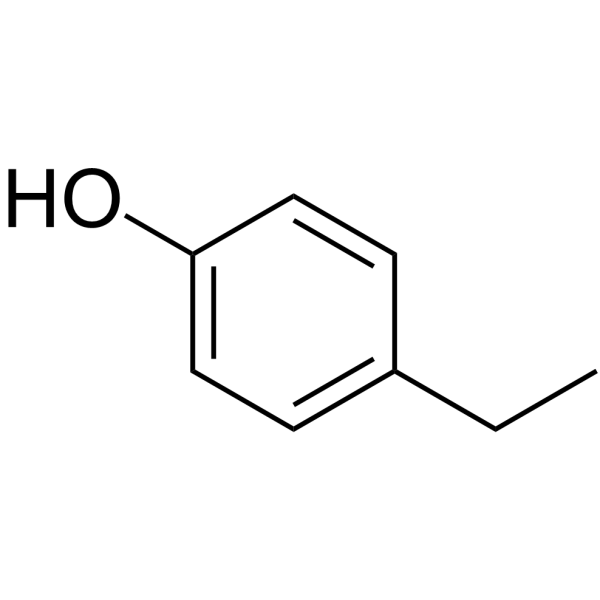
4-Ethylphenol is a volatile phenolic compound associated with off-odour in wine. 4-Ethylphenol is a phenolic compound that can be synthesized by intestinal flora. 4-Ethylphenol will be converted to 4-ethylphenyl sulfate (HY-W674241) by Lactobacillus plantarum .
|
-
-
- HY-W012653
-
|
|
Environmental Pollutants
|
Others
|
|
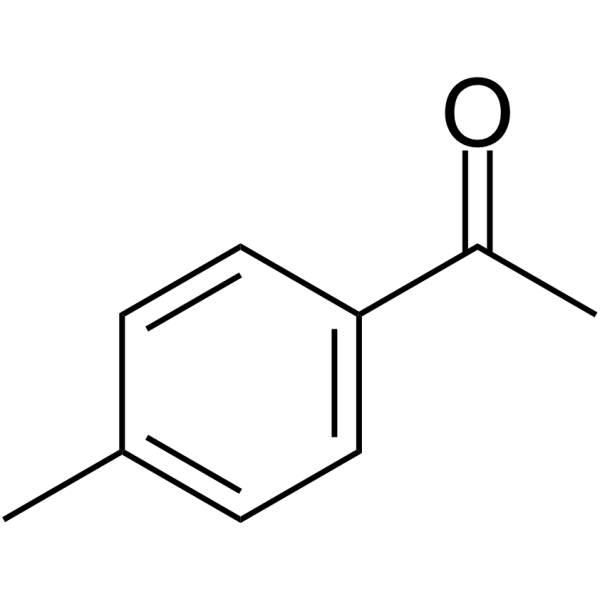
4′-Methylacetophenone is a phenolic compound that can be used as a fragrance material. 4′-Methylacetophenone is wildly occurs in volatile compounds in food and in some natural complex substances (NCS). 4′-Methylacetophenone can be used to study the Bayer-Villiger reaction and to synthesize functionalized terpolymers .
|
-
-
- HY-W041080
-
|
|
Fungal
Reactive Oxygen Species (ROS)
Bacterial
|
Infection
|
|
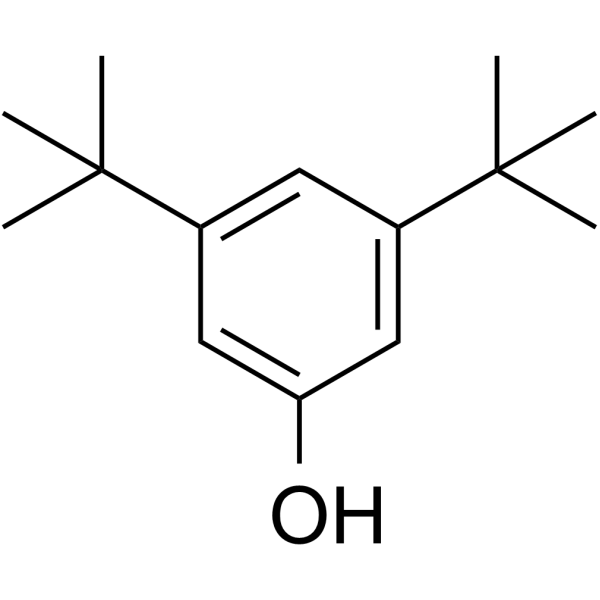
3,5-Di-tert-butylphenol is an volatile organic compound with anti-biofilm and antifungal activities. 3,5-Di-tert-butylphenol induces accumulation of reactive oxygen species (ROS) in C. albicans cells. 3,5-Di-tert-butylphenol also has antibacterial activities .
|
-
-
- HY-W010435
-
-
-
- HY-134900
-
-
-
- HY-N7398
-
-
-
- HY-W012657
-
|
|
Environmental Pollutants
Parasite
|
Infection
|
|
4-Ethylbenzaldehyde is an aldehyde type organic compound with an almond-like odor. 4-Ethylbenzaldehyde is naturally present in various foods such as grilled meat, black tea, peanuts, etc. 4-Ethylbenzaldehyde has significant effects in controlling plant parasitic nematodes. 4-Ethylbenzaldehyde has genotoxicity and potential for liver damage in zebrafish models .
|
-
-
- HY-W009811
-
-
-
- HY-W088037
-
|
|
Environmental Pollutants
|
Others
|
|
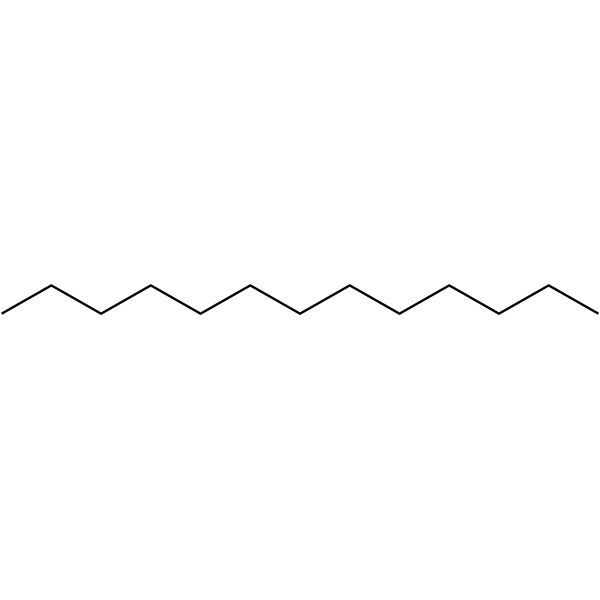
Tridecane is a short chain aliphatic hydrocarbon containing 13 carbon atoms. Tridecane is an volatile oil component isolated from essential oil of Piper aduncum L. Tridecane is a stress compound released by the brown marmorated stink bugs stress compound .
|
-
-
- HY-W001663
-
|
|
Bacterial
|
Infection
|
|
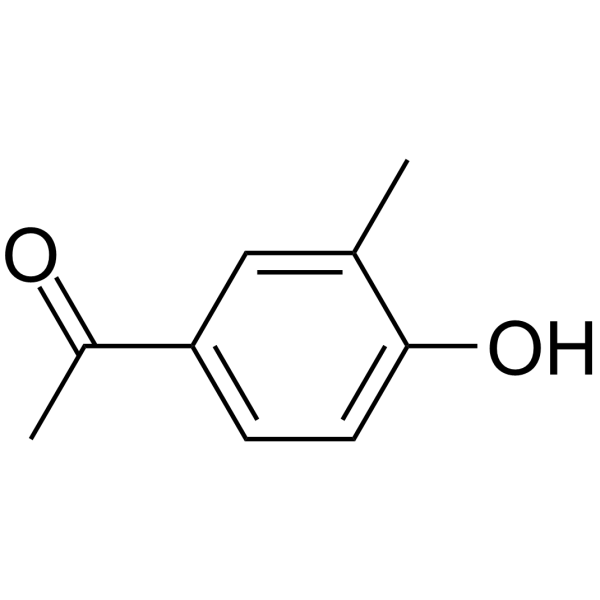
4'-Hydroxy-3'-methylacetophenone is a phenolic volatile compound. 4'-Hydroxy-3'-methylacetophenone can be isolated from Hawaiian green coffee beans (Coffea Arabica L.). 4'-Hydroxy-3'-methylacetophenone is believed to possess potent antioxidant activity similar to that of other phenolic volatile compounds, Thymol (HY-N6810) and Eugenol (HY-N0337). 4'-Hydroxy-3'-methylacetophenone also can be used to synthesize heterocyclic compounds which have antimycobacterial activity .
|
-
-
- HY-W018156
-
-
-
- HY-N7259A
-
|
|
Others
|
Others
|
|
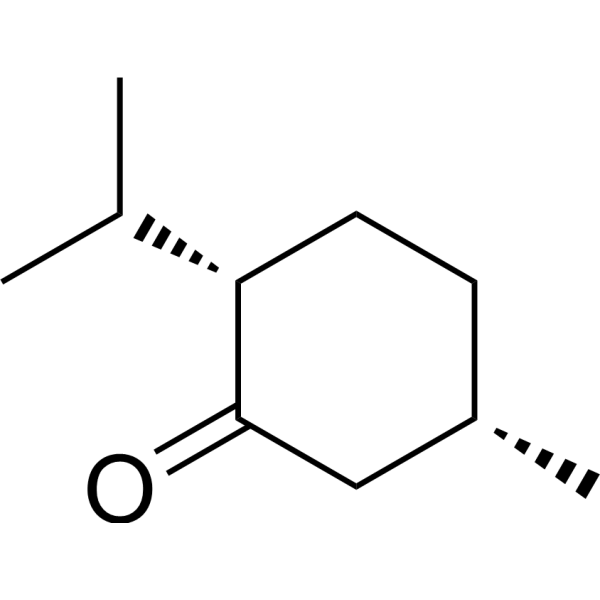
(-)-Isomenthone is a natural active compound, can be isolated from Mentha haplocalyx. (-)-Isomenthone is a volatile component and relative content of 2.53% in Peppermint from Qinghai .
|
-
-
- HY-W007708
-
|
|
Drug Derivative
|
Others
|
|
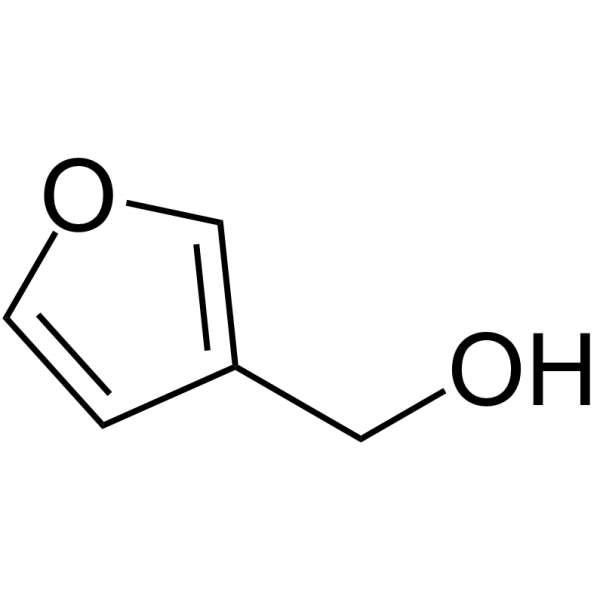
3-Furanmethanol, a volatile furan compound, can be detected in malt beverages fermented with Bifidobacterium breve. 3-Furanmethanol exhibits roasty, popcorn-like flavors .
|
-
-
- HY-W088037S
-
|
|
Isotope-Labeled Compounds
|
Others
|
|
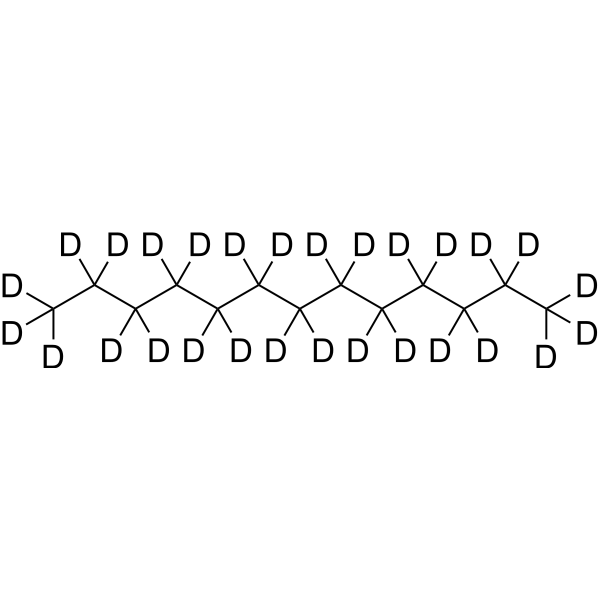
Tridecane-d28 is the deuterium labeled Tridecane . Tridecane is a short chain aliphatic hydrocarbon containing 13 carbon atoms. Tridecane is an volatile oil component isolated from essential oil of Piper aduncum L. Tridecane is a stress compound released by the brown marmorated stink bugs stress compound .
|
-
-
- HY-W576589
-
|
|
Bacterial
|
Others
|
|
(±)-Myrtenol is a volatile compound found in Ips shangrila Cognato .
|
-
-
- HY-115051
-
|
|
Others
|
Others
|
|
2-Hydroxymethyltetrahydropyran is a volatile compound in Sambucus williamsii (SW) seed oil. SW seed oil has potential antioxidant activity .
|
-
-
- HY-200541
-
|
|
Others
|
Metabolic Disease
|
|
Dihydro-α-ionone is a volatile compound found in the essential oil of Persicaria hydropiper L. leaves. The essential oil can inhibit α-glucosidase and α-amylase activities .
|
-
-
- HY-W127442
-
|
Ethyl 2-Ethylbutyrate
|
Bacterial
|
Others
|
|
Etzadroxil (Ethyl 2-Ethylbutyrate) is a volatile ester compound. Sulopenem Etzadroxil is an orally available ester proagent form of Sulopenem, an antibiotic with broad-spectrum activities against Gram-positive and Gram-negative bacteria .
|
-
-
- HY-N0349S1
-
|
Methyl 4-hydroxybenzoate-13C6
|
Isotope-Labeled Compounds
Bacterial
Endogenous Metabolite
|
Infection
|
|
Methyl Paraben- 13C6 (Methyl 4-hydroxybenzoate- 13C6) is a 13C labeled Methyl Paraben (HY-N0349) . Methyl Paraben, isolated from the barks of Tsuga dumosa the methyl ester of p-hydroxybenzoic acid, is a standardized chemical allergen. Methyl Paraben is a stable, non-volatile compound used as an antimicrobial preservative in foods, agents and cosmetics. The physiologic effect of Methyl Paraben is by means of increased histamine release, and cell-mediated immunity .
|
-
-
- HY-W041080R
-
|
|
Reference Standards
Fungal
Reactive Oxygen Species (ROS)
Bacterial
|
Infection
|
|
3,5-Di-tert-butylphenol (Standard) is the analytical standard of 3,5-Di-tert-butylphenol (HY-W041080). This product is intended for research and analytical applications. 3,5-Di-tert-butylphenol is an volatile organic compound with anti-biofilm and antifungal activities. 3,5-Di-tert-butylphenol induces accumulation of reactive oxygen species (ROS) in C. albicans cells. 3,5-Di-tert-butylphenol also has antibacterial activities.
|
-
-
- HY-W087943
-
|
|
Environmental Pollutants
Fungal
|
Infection
|
|
Methyl octanoate is an ester volatile compound with an odor activity value greater than 1. Methyl octanoate helps impart brandy-like and fruity characteristics to persimmon wine. Methyl octanoate has a strong odor of citrus holly, camphor and menthol. Methyl octanoate can serve as an early marker for grape infection by *Coniella vitis*. Methyl octanoate can be used in studies related to grape white rot .
|
-
-
- HY-W088425
-
-
-
- HY-W007894
-
|
|
Endogenous Metabolite
|
Others
|
|
Dimethylmalonic acid is a short-chain dicarboxylic acid in human serum. Dimethylmalonic acid is also a volatile organic compound detected in alveolar breath .
|
-
-
- HY-N11261
-
|
|
Drug Derivative
|
Others
|
|
α-Selinene is a natural product that can be extracted from Psidium guajava L.. α-Selinene is a sesquiterpene compound with volatility .
|
-
-
- HY-W012857
-
|
|
Drug Intermediate
|
Others
|
|
4-Methylethylbenzene is a volatile aromatic hydrocarbon compound. 4-Methylethylbenzene can be isolated from the essential oil of the peels of Juglans nigra L. .
|
-
-
- HY-W038795
-
|
|
Environmental Pollutants
|
Infection
|
|
(S)-Ethyl lactate ((S)-(-)-ethyl lactate) is a volatile compound produced by plant fermentation. (S)-Ethyl lactate cansynergistically attracts palm weevils with specific pheromones and is mainly used for pest monitoring and control research .
|
-
-
- HY-22167
-
|
|
Others
|
Others
|
|
Methyl 2-hydroxy-4-methylvalerate is one of dominant volatile compounds in Zhenjiang aromatic vinegar. Methyl 2-hydroxy-4-methylvalerate is used for charting flavour biosynthesis networks of vinegar microbiota .
|
-
-
- HY-W017611
-
|
|
Environmental Pollutants
Reactive Oxygen Species (ROS)
Fungal
DNA/RNA Synthesis
|
Infection
|
|
4-Propylphenol is a plant-derived phenolic compound. 4-Propylphenol causes an increase in ROS within the Fusarium graminearum cells, leading to damage to the DNA and cell membranes of the mycelia, effectively inhibiting the growth of the mycelia. 4-Propylphenol also has a growth inhibitory effect on walnut pathogenic fungi (C. gloeosporioides, C. siamense, A. alternata), with its EC50 ranging from 29.11 to 31.89 mg/L, and it also inhibits spore germination, with EC50 being 55.04-71.85 mg/L. 4-Propylphenol can be used in the research of fungal diseases in walnuts and wheat Fusarium head blight .
|
-
-
- HY-W087058
-
|
|
Topoisomerase
|
Infection
|
|
1,4-Di-tert-butylbenzene is a volatile compound identified in the hexane extracts of corn cob and green millet. 1,4-Di-tert-butylbenzene shows potent inhibition against receptor proteins of Bacterial type II topoisomerase (4PLB and LpxC) in docking analysis .
|
-
-
- HY-W012836S1
-
|
|
Isotope-Labeled Compounds
Endogenous Metabolite
|
Neurological Disease
|
|
4-Ethylphenol-d10 is the deuterium labeled 4-Ethylphenol (HY-W012836). 4-Ethylphenol is a volatile phenolic compound associated with off-odour in wine. 4-Ethylphenol is a phenolic compound that can be synthesized by intestinal flora. 4-Ethylphenol will be converted to 4-ethylphenyl sulfate (HY-W674241) by Lactobacillus plantarum .
|
-
-
- HY-W012836S
-
|
|
Isotope-Labeled Compounds
Endogenous Metabolite
|
Neurological Disease
|
|
4-Ethylphenol-d5 is the deuterium labeled 4-Ethylphenol (HY-W012836). 4-Ethylphenol is a volatile phenolic compound associated with off-odour in wine. 4-Ethylphenol is a phenolic compound that can be synthesized by intestinal flora. 4-Ethylphenol will be converted to 4-ethylphenyl sulfate (HY-W674241) by Lactobacillus plantarum .
|
-
-
- HY-W012836R
-
|
|
Reference Standards
Endogenous Metabolite
|
Neurological Disease
|
|
4-Ethylphenol (Standard) is the analytical standard of 4-Ethylphenol (HY-W012836). This product is intended for research and analytical applications. 4-Ethylphenol is a volatile phenolic compound associated with off-odour in wine. 4-Ethylphenol is a phenolic compound that can be synthesized by intestinal flora. 4-Ethylphenol will be converted to 4-ethylphenyl sulfate (HY-W674241) by Lactobacillus plantarum .
|
-
-
- HY-41314
-
-
-
- HY-W611834
-
|
2-Propiovanillone; Methyl vanillyl ketone
|
Biochemical Assay Reagents
|
Others
|
|
Guaiacylacetone (2-Propiovanillone; Methyl vanillyl ketone) (Compound 20) is a volatile aromatic compound released from hardwoods. Guaiacylacetone helps to impart a unique flavor to wine .
|
-
-
- HY-W295313
-
|
|
Drug Derivative
|
Others
|
|
(+)-Neoisomenthol is one of the isomers of (±)-Neoisomenthol. (±)-Neoisomenthol is a compound that belongs to the class of monoterpenes. (±)-Neoisomenthol is a volatile constituent of Mentha arvensis with a peppermint odor and taste. It is a chiral compound, existing as a racemic mixture of two enantiomers, (+)-neoisomenthol and (-)-neoisomenthol.
|
-
-
- HY-W102525
-
|
|
Drug Derivative
|
Others
|
|
Rose oxide is a kind of monoterpenoid volatile organic compound with a distinctive rose fragrance. However, rose oxide does not have inhibitory activity against the formation of breast cancer stem cells .
|
-
-
- HY-W140224
-
|
|
Drug Derivative
|
Others
|
|
7-Ethyl-2-methylundecan-4-ol is a volatile compound. 7-Ethyl-2-methylundecan-4-ol can be isolated from skipjack tuna muscle tissue .
|
-
-
- HY-N0349S
-
|
Methyl 4-hydroxybenzoate-d4
|
Bacterial
Endogenous Metabolite
|
Infection
|
|
Methyl paraben-d4 is the deuterium labeled Methyl Paraben . Methyl Paraben, isolated from the barks of Tsuga dumosa the methyl ester of p-hydroxybenzoic acid, is a standardized chemical allergen. Methyl Paraben is a stable, non-volatile compound used as an antimicrobial preservative in foods, agents and cosmetics. The physiologic effect of Methyl Paraben is by means of increased histamine release, and cell-mediated immunity .
|
-
-
- HY-W102335
-
|
|
Amino Acid Derivatives
|
Inflammation/Immunology
Cancer
|
|
(Rac)-Threonine (Compound 19) is an amino acid derivative that can be found in the methanol (MeOH) extract of Rumex roseus L. The MeOH extract containing (Rac)-Threonine exhibits antioxidant and cytotoxic properties .
|
-
-
- HY-W160358
-
|
|
SARS-CoV
Virus Protease
Fungal
Apoptosis
Reactive Oxygen Species (ROS)
ATP Synthase
Glutathione Peroxidase
SOD
p38 MAPK
|
Infection
Cancer
|
|
2,5-Dimethylcyclohexanol, a volatile organic compound, is a fatty acid that can be isolated from Amphora sp.. 2,5-Dimethylcyclohexanol has significant antineoplastic and antiviral activities with inhibition of SARS-CoV-2 Mpro. 2,5-Dimethylcyclohexanol also has potent antifungal activity against Pseudogymnoascus destructans. 2,5-Dimethylcyclohexanol compromises cell wall and membrane integrity while perturbing energy metabolism, increases the levels of ROS, ATP, Superoxide anion and GSH, and decreases CAT and SOD activities. And 2,5-Dimethylcyclohexanol alters virulence ribosomal genes expression, and disrupts the MAPK signaling pathways, inducing fungal cell apoptosis .
|
-
-
- HY-W017375
-
|
|
Drug Derivative
|
Others
|
|
Homoveratrole is a phenolic compound and it is a volatile component of Juglans regia L. .
|
-
-
- HY-W150407
-
|
|
Sex Pheromone
|
Others
|
|
2-Tridecanol is a volatile compound found in extra virgin coconut oil (EVCO) .
|
-
-
- HY-W670990
-
-
-
- HY-W716334
-
|
|
Others
|
Others
|
|
β-Humulene is a compound that can be extracted from Monanthotaxis dichlina. β-Humulene is a volatile oil .
|
-
-
- HY-W658287
-
|
|
Others
|
Others
|
|
2,4-Diacetoxypentane is an active ingredient that can be extracted from cantaloupe. 2,4-Diacetoxypentane is an ester compound with volatility .
|
-
-
- HY-W167708
-
|
|
Drug Derivative
|
Others
|
|
2-Ethyl-5-methylphenol is an aromatic compound that can be detected in breakfast cereals, cereals and grain products .
|
-
- HY-W615780
-
-
- HY-W087943S
-
|
|
Isotope-Labeled Compounds
|
Others
|
|
Methyl octanoate-d15 is the deuterium labeled Methyl octanoate. Methyl octanoate, a volatile compound, is an aroma component persimmon wine .
|
-
- HY-W559929
-
|
|
Drug Intermediate
|
Others
|
|
3,3-Dimethylcyclohexanol is a major odor-active compound. 3,3-Dimethylcyclohexanol can be isolated from the volatile extracts of Mayapan and Jaguar .
|
-
- HY-W087943R
-
|
|
Reference Standards
Others
|
Others
|
|
Methyl octanoate (Standard) is the analytical standard of Methyl octanoate. This product is intended for research and analytical applications. Methyl octanoate, a volatile compound, is an aroma component persimmon wine .
|
-
- HY-W178699
-
|
|
Drug Derivative
|
Others
|
|
(±)-Neoisomenthol is a monoterpene. (±)-Neoisomenthol is a volatile constituent of Mentha arvensis with a peppermint odor and taste. (±)-Neoisomenthol is a chiral compound, existing as a racemic mixture of two enantiomers, (+)-Neoisomenthol and (-)-Neoisomenthol .
|
-
- HY-W007894R
-
|
Dimethylpropanedioic acid (Standard)
|
Reference Standards
Endogenous Metabolite
|
Others
|
|
Dimethylmalonic acid (Standard) is the analytical standard of Dimethylmalonic acid. This product is intended for research and analytical applications. Dimethylmalonic acid is a short-chain dicarboxylic acid in human serum. Dimethylmalonic acid is also a volatile organic compound detected in alveolar breath[1].
|
-
- HY-W700062
-
|
|
Isotope-Labeled Compounds
|
Others
|
|
β-Cyclocitral-d5 is the deuterium labeled β-Cyclocitral (HY-W010231). β-Cyclocitral, a volatile oxidized derivative of β-carotene, is a grazer defence signal unique to the Cyanobacterium Microcystis. β-Cyclocitral, one of the predominant volatile terpenoid compounds, can upregulate the expression of defence genes to enhance excess light (EL) acclimation. β-Cyclocitral is a powerful repellent .
|
-
- HY-N7436S
-
|
|
Isotope-Labeled Compounds
|
Cancer
|
|
Methyl propyl disulfide-d3 is deuterated labeled Methyl propyl disulfide (HY-N7436). Methyl propyl disulfide is an volatile sulfur-containing compound produced in garlic and onions with anticaner effect .
|
-
- HY-N7436R
-
|
|
Reference Standards
Others
|
Cancer
|
|
Methyl propyl disulfide (Standard) is the analytical standard of Methyl propyl disulfide. This product is intended for research and analytical applications. Methyl propyl disulfide is an volatile sulfur-containing compound produced in garlic and onions with anticaner effect[1][2].
|
-
- HY-W088037R
-
|
|
Reference Standards
Others
|
Others
|
|
Tridecane (Standard) is the analytical standard of Tridecane. This product is intended for research and analytical applications. Tridecane is a short chain aliphatic hydrocarbon containing 13 carbon atoms. Tridecane is an volatile oil component isolated from essential oil of Piper aduncum L. Tridecane is a stress compound released by the brown marmorated stink bugs stress compound .
|
-
- HY-N15444
-
|
|
Fungal
|
Infection
Inflammation/Immunology
|
|
Bullatenone is a volatile bioactive compound that can be found in Lophomyrtus bullata. It has insect - repellent, anti - ulcer, anti - UV, and antifungal activities. Bullatenone can inhibit the growth of fungi such as Candida albicans and Cladosporium resinae. Bullatenone can be used in the research of diseases such as inflammation and infections .
|
-
- HY-W001663R
-
|
|
Reference Standards
Bacterial
|
Infection
|
|
4'-Hydroxy-3'-methylacetophenone (Standard) is an analytical standard of 4'-Hydroxy-3'-methylacetophenone (HY-W001663). This product is intended for research and analytical applications. 4'-Hydroxy-3'-methylacetophenone is a phenolic volatile compound. 4'-Hydroxy-3'-methylacetophenone can be isolated from Hawaiian green coffee beans (Coffea Arabica L.). 4'-Hydroxy-3'-methylacetophenone is believed to possess potent antioxidant activity similar to that of other phenolic volatile compounds, Thymol (HY-N6810) and Eugenol (HY-N0337). 4'-Hydroxy-3'-methylacetophenone also can be used to synthesize heterocyclic compounds which have antimycobacterial activity .
|
-
- HY-117089R
-
|
|
Reference Standards
Fungal
|
Infection
|
|
Tetraconazole (Standard) is the analytical standard of Tetraconazole. This product is intended for research and analytical applications. Tetraconazole, a chiral triazole fungicide, is widely used for the prevention of plant disease in wheat fields . Tetraconazole alters the methionine and ergosterol biosynthesis pathways in Saccharomyces yeasts promoting changes on volatile derived compounds .
|
-
- HY-W747972
-
|
|
Drug Intermediate
|
Infection
|
|
Hydrosorbaldehyde is a green leaf volatile and also the main contributor to the fresh, grassy aroma of tea leaves. Hydrosorbaldehyde undergoes irreversible conversion to (E)-2-hexenal via (Z)-3:(E)-2-hexenal isomerase (CsHI). Hydrosorbaldehyde plays a key role in protecting plants against biotic stresses (such as pathogens and insects) and acting as a signaling chemical .
|
-
- HY-N7398S
-
|
|
Isotope-Labeled Compounds
Phytohormone
|
Others
|
|
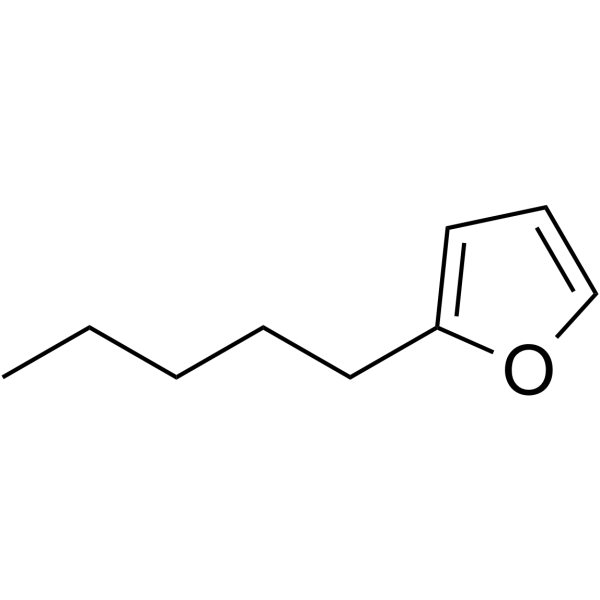
2-Pentylfuran- 13C2 is the 13C2 labeled 2-Pentylfuran (HY-N7398). 2-Pentylfuran is the compound isolated from steam volatile oils obtained from potatoes at atmospheric pressure. 2-Pentylfuran is a phytohormone .
|
-
- HY-N7398R
-
|
|
Reference Standards
Phytohormone
|
Others
|
|
2-Pentylfuran (Standard) is the analytical standard of 2-Pentylfuran (HY-N7398). This product is intended for research and analytical applications. 2-Pentylfuran is the compound isolated from steam volatile oils obtained from potatoes at atmospheric pressure. 2-Pentylfuran is a phytohormone .
|
-
- HY-W127497
-
|
|
Biochemical Assay Reagents
|
Others
|
|
Methyl 12-Methyltetradecanoate is a methylated fatty acid methyl ester that has been found in vermicompost of cow dung, papaya leaves, and cuticle wax of K. africana. It is a volatile compound in lipid-reducing granule tea. The levels of methyl 12-methylmyristate were reduced in T. cruzi treated with nifurtimox compared to untreated controls.
|
-
- HY-W016969R
-
|
|
Bacterial
Reference Standards
|
Infection
Cancer
|
|
2-Undecanone (Standard) is the analytical standard of 2-Undecanone. This product is intended for research and analytical applications. 2-Undecanone is a volatile organic compound, which inhibits the DnaKJE-ClpB bichaperone dependent refolding of heat-inactivated bacterial luciferases. 2-Undecanone inhibits lung tumorigenesis[1][2].
|
-
- HY-W739771
-
-
- HY-W753473
-
|
|
Isotope-Labeled Compounds
Endogenous Metabolite
|
Neurological Disease
|
|
4-Ethylphenol-d9 is the deuterium labeled 4-Ethylphenol (HY-W012836). 4-Ethylphenol is a volatile phenolic compound associated with off-odour in wine. 4-Ethylphenol is a phenolic compound that can be synthesized by intestinal flora. 4-Ethylphenol will be converted to 4-ethylphenyl sulfate (HY-W674241) by Lactobacillus plantarum .
|
-
- HY-W012836S2
-
|
|
Isotope-Labeled Compounds
Endogenous Metabolite
|
Neurological Disease
|
|
4-Ethylphenol-d2 is deuterated labeled 4-Ethylphenol (HY-W012836). 4-Ethylphenol is a volatile phenolic compound associated with off-odour in wine. 4-Ethylphenol is a phenolic compound that can be synthesized by intestinal flora. 4-Ethylphenol will be converted to 4-ethylphenyl sulfate (HY-W674241) by Lactobacillus plantarum .
|
-
- HY-W012653S
-
|
|
Isotope-Labeled Compounds
Biochemical Assay Reagents
|
Others
|
|
4'-Methylacetophenone-d10 is the deuterium labeled 4'-Methylacetophenone (HY-W012653) . 4′-Methylacetophenone is a phenolic compound that can be used as a fragrance material. 4′-Methylacetophenone is wildly occurs in volatile compounds in food and in some natural complex substances (NCS). 4′-Methylacetophenone can be used to study the Bayer-Villiger reaction and to synthesize functionalized terpolymers .
|
-
- HY-W012653R
-
|
|
Reference Standards
Biochemical Assay Reagents
|
Others
|
|
4'-Methylacetophenone (Standard) is the analytical standard of 4'-Methylacetophenone (HY-W012653). This product is intended for research and analytical applications. 4′-Methylacetophenone is a phenolic compound that can be used as a fragrance material. 4′-Methylacetophenone is wildly occurs in volatile compounds in food and in some natural complex substances (NCS). 4′-Methylacetophenone can be used to study the Bayer-Villiger reaction and to synthesize functionalized terpolymers.
|
-
- HY-N11526
-
|
|
Others
|
Inflammation/Immunology
|
|
3-Hydroxy-2-(palmitoyloxy)propyl stearat is a non-volatile compound. 3-Hydroxy-2-(palmitoyloxy)propyl stearat can be isolated from less polar fractions of the brown macroalga Fucus virsoides J. Agardh. This part of the substance has a good ability to scavenge free radicals and has a protective effect on the oxidative stress induced by hydrogen peroxide in zebrafish embryos .
|
-
- HY-22167R
-
|
|
Reference Standards
Biochemical Assay Reagents
|
Others
|
|
Methyl 2-hydroxy-4-methylvalerate (Standard) is the analytical standard of Methyl 2-hydroxy-4-methylvalerate. This product is intended for research and analytical applications. Methyl 2-hydroxy-4-methylvalerate is one of dominant volatile compounds in Zhenjiang aromatic vinegar. Methyl 2-hydroxy-4-methylvalerate is used for charting flavour biosynthesis networks of vinegar microbiota[1].
|
-
- HY-128429S
-
|
(E)-2-Hexenal-d2-1
|
Isotope-Labeled Compounds
Fungal
Biochemical Assay Reagents
|
Infection
|
|
trans-2-Hexenal-d2-1 is the deuterium labeled trans-2-Hexenal (HY-128429). trans-2-Hexenal ((E)-2-Hexenal) is a volatile compound widely present in fresh plants, vegetables, and fruits, with a unique leafy aroma. trans-2-Hexenal has antifungal activity and can also inhibit the germination of soybean seeds and the growth of seedlings. In addition, trans-2-Hexenal can be used to determine low-molecular-weight carbonyl compounds that are reactive with biological nucleophiles in biological samples .
|
-
- HY-76217
-
|
2,5-Diformylfuran
|
Drug Derivative
|
Others
|
|
2,5-Furandicarboxaldehyde (2,5-Diformylfuran), a furan derivative, is a volatile organic compound. 2,5-Furandicarboxaldehyde the aerobic oxidation product of 5-Hydroxymethylfurfural (HY-Y0051), and can be used in organic synthesis and functional polymer manufacture, such as fluorescent material, surfactants, and vitrimer .
|
-
- HY-W102349
-
|
|
Parasite
|
Infection
|
|
S-Methyl thioacetate is a toxicant with fumigant activity, can be found in emissions from Bacillus oshimensis, Burkholderia gladioli, Burkholderia cepacia, and Pseudomonas oryzihabitans. S-Methyl thioacetate exerts fumigant toxicity against Caenorhabditis elegans and root-knot nematode Meloidogyne incognita. S-Methyl thioacetate functions as a bacterial volatile organic compound. S-Methyl thioacetate can be used for the research of plant-parasitic nematode infection .
|
-
- HY-W1121897
-
|
|
Others
|
Others
|
|
3-Octylacetate is a ester volatile compound found in the volatile oil of certain mint species (such as creeping mint and American mint) .
|
-
- HY-W587485
-
|
|
Drug Metabolite
|
Others
|
|
N-acetyl-S-(trichlorovinyl)-L-cysteine is a metabolite of the volatile organic compound (VOC) .
|
-
- HY-W341834
-
|
|
Others
|
Others
|
|
1-Vinylpentanol is a volatile compound found in Leucas cephalotes Spreng. Inflorescence .
|
-
- HY-W540078
-
|
|
Others
|
Others
|
|
1,2,3-Trimethylcyclohexane is a volatile compound found in potato tubers (Solanum tuberosum CV: Maris Piper) .
|
-
- HY-W540405
-
|
|
Others
|
Others
|
|
2,3-Dimethyl-1-pentene is volatile compound produced by the thermal oxidation of Cholesterol (HY-N0322) .
|
-
- HY-Z16647
-
|
|
Others
|
Others
|
|
(-) -Neoisomenthol is one of the isomers of (±) -Neoisomenthol. (±) -Neoisomenthol is a compound that belongs to the class of monoterpenes. (±) -Neoisomenthol is a volatile constituent of Mentha arvensis with a peppermint odor and taste. It is a chiral compound, existing as a racemic mixture of two enantiomers, (+) -neoisomenthol and (-) -neoisomenthol.
|
-
- HY-W009811R
-
|
|
Insecticide
Reference Standards
|
Others
|
|
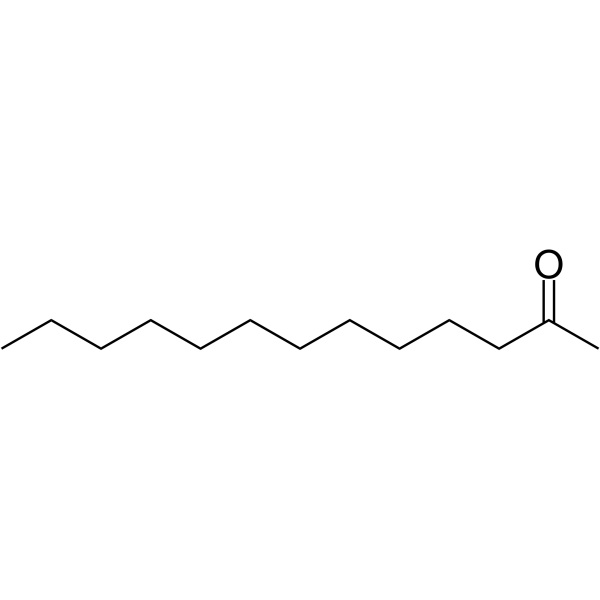
2-Tridecanone, a nonalkaloid insecticide, is isolated from the wild tomato Lycopersicon hirsutum f. glabratum. 2-Tridecanone is a volatile organic compound .
|
-
- HY-N18784
-
|
|
Others
|
Neurological Disease
|
|
Valeriana wallichii extract is rich in various bioactive compounds, such as volatile oils, iridoids, alkaloids, flavonoids, and gamma-aminobutyric acid (GABA). Valeriana wallichii extract has sedative and tranquilizing effects.
|
-
- HY-N18689
-
|
|
Others
|
Inflammation/Immunology
|
|
Melon extract, derived from the cantaloupe or muskmelon (Cucumis melo L.), is a versatile botanical extract rich in bioactive compounds such as vitamin A, vitamin C, flavonoids, volatile oils, pectin, fructose, and Superoxide Dismutase (SOD).
|
-
- HY-W720758
-
|
|
Sex Pheromone
|
Others
|
|
3,7,11-Trimethyl-1-dodecanol is a volatile organic compound. 3,7,11-Trimethyl-1-dodecanol can be isolated from Spirulina platensis.
|
-
- HY-N18760
-
|
|
Bacterial
|
Infection
Inflammation/Immunology
|
|
Vitex negundo extract is rich in bioactive compounds such as alkaloids, flavonoids, glycosides, volatile oils, triterpenoids, tannins, polyphenols, flavonoids, and iridoid glycosides. Vitex negundo extract possesses anti-inflammatory, antioxidant, antibacterial, and detoxifying properties.
|
-
- HY-W094881
-
|
|
Fungal
|
Infection
|
|
1,5-Dimethylnaphthalene is a volatile organic compound. 1,5-Dimethylnaphthalene is a good marker for B. cinerea quantification. 1,5-dimethylnaphthalene is highly positively correlated to B. cinerea infection levels in Chardonnay berries .
|
-
- HY-W344377
-
|
|
Fungal
|
Infection
|
|
3,5-Dimethyl-4-octanone volatile compound found in Lippia alba. 3,5-Dimethyl-4-octanone has potential antifungal activity and can be used for the research of infection .
|
-
- HY-N7818
-
|
|
Drug Derivative
|
Others
|
|
3-(Methylthio)propyl acetate is a heavy volatile sulfur compound with mushroom, onion, garlic odour. 3-(Methylthio)propyl acetate can be found in Vinhos Verdes wines. 3-(Methylthio)propyl acetate occurs in high content in Trajadura wines and low content in Azal Branco wines .
|
-
- HY-W002049
-
|
Ethyl hydrocinnamate
|
Environmental Pollutants
|
Inflammation/Immunology
|
|
Ethyl 3-phenylpropanoate (Ethyl hydrocinnamate) is a heavy organic compound (HOC) found in the essential oil of the aerial parts of cultivated Artemisia judaica L. from the northern coast of Egypt, which exhibits significant antioxidant activity .
|
-
- HY-W016969S
-
|
|
Isotope-Labeled Compounds
Bacterial
|
Infection
Cancer
|
|
2-Undecanone-d5 is the deuterium labeled 2-Undecanone (HY-W016969). 2-Undecanone is a volatile organic compound, which inhibits the DnaKJE-ClpB bichaperone dependent refolding of heat-inactivated bacterial luciferases. 2-Undecanone inhibits lung tumorigenesis .
|
-
- HY-W007708R
-
|
|
Others
Reference Standards
|
Others
|
|
3-Furanmethanol (Standard) is the analytical standard of 3-Furanmethanol (HY-W007708). This product is intended for research and analytical applications. 3-Furanmethanol, a volatile furan compound, can be detected in malt beverages fermented with Bifidobacterium breve. 3-Furanmethanol exhibits roasty, popcorn-like flavors .
|
-
- HY-W012653S1
-
|
|
Isotope-Labeled Compounds
Biochemical Assay Reagents
|
Others
|
|
4'-Methylacetophenone-d3 is the deuterium labeled 4'-Methylacetophenone (HY-W012653) . 4′-Methylacetophenone is a phenolic compound that can be used as a fragrance material. 4′-Methylacetophenone is wildly occurs in volatile compounds in food and in some natural complex substances (NCS). 4′-Methylacetophenone can be used to study the Bayer-Villiger reaction and to synthesize functionalized terpolymers .
|
-
- HY-W158616
-
|
|
Fungal
|
Infection
|
|
3-Methyl-1-hexanol, a volatile organic compound, is a microbial antagonist that can be isolated from Aureobasidium pullulans. 3-Methyl-1-hexanol has antifungal activities against Alternaria alternate and Botrytis cinerea. 3-Methyl-1-hexanol can be used for microbial infections research .
|
-
- HY-W012475
-
|
|
Fungal
|
Infection
|
|
cis-3-Hexenyl benzoate is a volatile organic compound with a grassy aroma, widely used in the fragrance and cosmetic industries. It exhibits weak antifungal activity. cis-3-Hexenyl benzoate shows no significant risks in genotoxicity, reproductive toxicity, or environmental toxicity, and its skin sensitization potential is controllable within defined concentration limits .
|
-
- HY-W612164
-
|
|
Drug Derivative
|
Infection
|
|
2-Methyl-3-phenylpropanal is a volatile aromatic compound found in the flowers of legume host plants such as cowpeas and lentils. 2-Methyl-3-phenylpropanal can specifically bind to the odor-binding protein MvitOBP3 of the bean pod moth and exert potential oviposition attraction activity. 2-Methyl-3-phenylpropanal can be used for pest control .
|
-
- HY-W707148
-
|
|
Endogenous Metabolite
|
Infection
|
|
4-Methyltridecane is a volatile substance specifically released by cabbage root flies (Delia radicum) after feeding. 4-Methyltridecane might be a key signal for the parasitoid bee Trybliographa rapae (Delia radicum’s specific parasitic predator) to locate the host. 4-Methyltridecane can serve as a specific marker for root damage in turnips (Brassica rapa subsp. Rapa) .
|
-
- HY-W016638
-
|
1-Butyl-1-methylpyrrolidin-1-ium chloride
|
Biochemical Assay Reagents
|
Others
|
|
1-Butyl-1-methylpyrrolidin-1-ium chloride, also known as BMIM chloride, belongs to the class of ionic liquids and consists of a positively charged pyrrolidine cation and a negatively charged chloride anion. This compound is commonly used as a solvent for various chemical reactions, especially those involving organic compounds and metals. Its unique physical and chemical properties, such as low volatility, high thermal stability, and tunable solubility, make it useful in a range of applications in catalysis, electrochemistry, and separation science. Furthermore, 1-butyl-1-methylpyrrolidin-1-ium chloride may have potential applications as a green solvent in energy storage devices and various industrial processes.
|
-
- HY-W010176
-
|
3,7-Dimethyloctan-1-ol
|
Environmental Pollutants
Biochemical Assay Reagents
|
Others
|
|
3,7-Dimethyloctan-1-ol, 3,7-Dimethyloctan-1-ol is commonly used as a flavor and fragrance ingredient due to its pleasant aroma, it can also be used as a solvent, and in the synthesis of various organic compounds (including pharmaceuticals and agrochemicals), in addition, due to its high energy content and low volatility, 3,7-Dimethyloctan-1-ol has been investigated for its potential use as a biofuel, due to its toxicity to some pests, it has also been studied as a potential repellent and insecticide,
|
-
- HY-W010435R
-
-
- HY-W588249
-
|
|
Bacterial
Endogenous Metabolite
|
Infection
|
|
Sabinene hydrate is a volatile organic compound of a bicyclic monoterpene alcohol. Sabinene hydrate, as a plant secondary metabolite, is naturally present in various plants and their essential oils. Sabinene hydrate exhibits broad-spectrum but varying-intensity antibacterial activity, with the greatest sensitivity to Gram-positive bacteria, especially Bacillus subtilis (MIC = 0.0312 mg/mL) and Staphylococcus aureus (MIC = 0.0625 mg/mL). Sabinene hydrate also shows certain sensitivity to Escherichia coli and Candida albicans, with MIC values of 0.125 mg/mL for both. Sabinene hydrate can be used in the research of the ecological functions of plant defense substances .
|
-
- HY-N18750
-
|
|
Bacterial
|
Cardiovascular Disease
Infection
Inflammation/Immunology
|
|
Celery Extract, derived from celery seeds (Apium graveolens), is a natural extract rich in bioactive compounds such as flavonoids, phenolic acids, and volatile oils. It is known for its antihypertensive, anti-inflammatory, antimicrobial, and antioxidant properties. This extract has been used in traditional medicine to manage hypertension and inflammation, and modern research supports its potential health benefits. In addition to its medicinal uses, Celery Extract is also utilized in the food industry for flavor enhancement and in cosmetics for its skin-protecting and soothing effects. While generally safe, a patch test is recommended to avoid potential allergic reactions.
|
-
- HY-W039379
-
|
trans-2-Octenoic acid methyl ester
|
Biochemical Assay Reagents
|
Others
|
|
Methyl (E)-oct-2-enoate is commonly used as an ingredient in perfume, cologne, and food flavor in the perfume and fragrance industry. Its pleasant fragrance and low volatility make it a good choice for adding fruit to various products. A popular choice for incense, in addition to its application in the fragrance and fragrance industry, Methyl (E)-oct-2-enoate is also used as a raw material for the synthesis of other organic compounds, it can be oxidized to form methyl 3-oxobutyrate, Used in the production of pharmaceuticals and agrochemicals. Overall, Methyl (E)-oct-2-enoate is a versatile compound that is used in various industries for its pleasant aroma and reactivity, its fruity and floral notes in fragrances and essences Industry is highly sought after, and its ability to serve as a starting material for other compounds makes it useful in organic synthesis.
|
-
- HY-W782193
-
-
- HY-34439
-
|
NSC 49139
|
Environmental Pollutants
Endogenous Metabolite
|
Metabolic Disease
|
|
2,5-Dimethylpyrazine (NSC 49139) is an endogenous metabolite. 2,5-Dimethylpyrazine in produced in food systems of two whey protein hydrolysates, obtained using either trypsin or proteinase from Aspergillus melleus. 2,5-Dimethylpyrazine can be qualitatively monitored using a stable isotope dilution assay. 2,5-Dimethylpyrazine can also be generated via microbial mechanisms using Bacillus subtilis. 2,5-Dimethylpyrazine can be oxidized to form 5-methylpyrazine-2-carboxylic acid, which is the intermediate in the synthesis of antilipoltic agent. 2,5-Dimethylpyrazine is a volatile compound that can give a roasted peanut flavor .
|
-
- HY-N19843
-
|
|
Drug Derivative
|
Others
|
|
α-Thujenal is a derivative of Thujene that can be isolated from the leaves of Laurus nobilis L. .
|
-
- HY-N1968
-
|
Quercetin-3-O-beta-D-glucose-7-O-beta-D-gentiobioside
|
Parasite
|
Infection
|
|
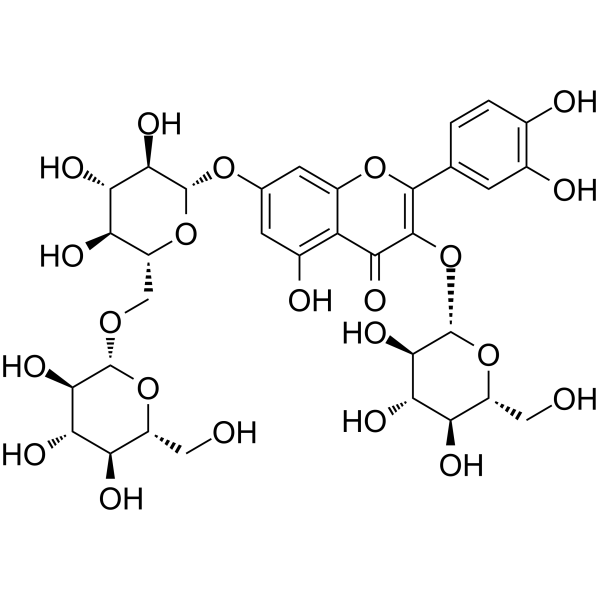
Quercetin-3-O-β-D-glucose-7-O-β-D-gentiobiosiden (Quercetin-3-O-beta-D-glucose-7-O-beta-D-gentiobioside) is a flavonoid compound. In Cylas formicarius, Quercetin-3-O-β-D-glucose-7-O-β-D-gentiobioside can bind to chemosensory proteins such as CforCSP5 (Ki: 1.429 μM) and CforOBP3 (Ki: 3.697 μM), potentially participating in the recognition process of insect host plant volatiles. Quercetin-3-O-β-D-glucose-7-O-β-D-gentiobiosiden is also an inhibitor of Sb28GST (IC50: 0.13 mM) and can be used in the research of anti-schistosome agents .
|
-
| Cat. No. |
Product Name |
Type |
-
- HY-W016638
-
|
1-Butyl-1-methylpyrrolidin-1-ium chloride
|
Biochemical Assay Reagents
|
|
1-Butyl-1-methylpyrrolidin-1-ium chloride, also known as BMIM chloride, belongs to the class of ionic liquids and consists of a positively charged pyrrolidine cation and a negatively charged chloride anion. This compound is commonly used as a solvent for various chemical reactions, especially those involving organic compounds and metals. Its unique physical and chemical properties, such as low volatility, high thermal stability, and tunable solubility, make it useful in a range of applications in catalysis, electrochemistry, and separation science. Furthermore, 1-butyl-1-methylpyrrolidin-1-ium chloride may have potential applications as a green solvent in energy storage devices and various industrial processes.
|
-
- HY-W039379
-
|
trans-2-Octenoic acid methyl ester
|
Biochemical Assay Reagents
|
|
Methyl (E)-oct-2-enoate is commonly used as an ingredient in perfume, cologne, and food flavor in the perfume and fragrance industry. Its pleasant fragrance and low volatility make it a good choice for adding fruit to various products. A popular choice for incense, in addition to its application in the fragrance and fragrance industry, Methyl (E)-oct-2-enoate is also used as a raw material for the synthesis of other organic compounds, it can be oxidized to form methyl 3-oxobutyrate, Used in the production of pharmaceuticals and agrochemicals. Overall, Methyl (E)-oct-2-enoate is a versatile compound that is used in various industries for its pleasant aroma and reactivity, its fruity and floral notes in fragrances and essences Industry is highly sought after, and its ability to serve as a starting material for other compounds makes it useful in organic synthesis.
|
-
- HY-W010176
-
|
3,7-Dimethyloctan-1-ol
|
Biochemical Assay Reagents
|
|
3,7-Dimethyloctan-1-ol, 3,7-Dimethyloctan-1-ol is commonly used as a flavor and fragrance ingredient due to its pleasant aroma, it can also be used as a solvent, and in the synthesis of various organic compounds (including pharmaceuticals and agrochemicals), in addition, due to its high energy content and low volatility, 3,7-Dimethyloctan-1-ol has been investigated for its potential use as a biofuel, due to its toxicity to some pests, it has also been studied as a potential repellent and insecticide,
|
-
- HY-W127497
-
|
|
Biochemical Assay Reagents
|
|
Methyl 12-Methyltetradecanoate is a methylated fatty acid methyl ester that has been found in vermicompost of cow dung, papaya leaves, and cuticle wax of K. africana. It is a volatile compound in lipid-reducing granule tea. The levels of methyl 12-methylmyristate were reduced in T. cruzi treated with nifurtimox compared to untreated controls.
|
| Cat. No. |
Product Name |
Category |
Target |
Chemical Structure |
-
- HY-W004263
-
-
-
- HY-128429
-
-
-
- HY-N1968
-
-
-
- HY-W012836
-
-
-
- HY-W012653
-
-
-
- HY-W041080
-
-
-
- HY-W010435
-
-
-
- HY-134900
-
-
-
- HY-N7398
-
-
-
- HY-W012657
-
-
-
- HY-W009811
-
-
-
- HY-W088037
-
-
-
- HY-W001663
-
-
-
- HY-34439
-
-
-
- HY-N7259A
-
-
-
- HY-W007708
-
-
-
- HY-115051
-
-
-
- HY-200541
-
-
-
- HY-W041080R
-
-
-
- HY-W087943
-
-
-
- HY-W088425
-
-
-
- HY-W007894
-
-
-
- HY-N11261
-
-
-
- HY-W012857
-
-
-
- HY-W038795
-
-
-
- HY-22167
-
-
-
- HY-W012836R
-
-
-
- HY-W010435R
-
-
-
- HY-W588249
-
|
|
Structural Classification
Other Monoterpenes
Juniperus communis L.
Cupressaceae
Terpenoids
Plants
Source Classification
|
Bacterial
Endogenous Metabolite
|
|
Sabinene hydrate is a volatile organic compound of a bicyclic monoterpene alcohol. Sabinene hydrate, as a plant secondary metabolite, is naturally present in various plants and their essential oils. Sabinene hydrate exhibits broad-spectrum but varying-intensity antibacterial activity, with the greatest sensitivity to Gram-positive bacteria, especially Bacillus subtilis (MIC = 0.0312 mg/mL) and Staphylococcus aureus (MIC = 0.0625 mg/mL). Sabinene hydrate also shows certain sensitivity to Escherichia coli and Candida albicans, with MIC values of 0.125 mg/mL for both. Sabinene hydrate can be used in the research of the ecological functions of plant defense substances .
|
-
-
- HY-41314
-
-
-
- HY-W140224
-
-
-
- HY-W160358
-
|
|
Structural Classification
Natural Products
Cyperus esculentus L.
Cyperaceae
Plants
Source Classification
|
SARS-CoV
Virus Protease
Fungal
Apoptosis
Reactive Oxygen Species (ROS)
ATP Synthase
Glutathione Peroxidase
SOD
p38 MAPK
|
|
2,5-Dimethylcyclohexanol, a volatile organic compound, is a fatty acid that can be isolated from Amphora sp.. 2,5-Dimethylcyclohexanol has significant antineoplastic and antiviral activities with inhibition of SARS-CoV-2 Mpro. 2,5-Dimethylcyclohexanol also has potent antifungal activity against Pseudogymnoascus destructans. 2,5-Dimethylcyclohexanol compromises cell wall and membrane integrity while perturbing energy metabolism, increases the levels of ROS, ATP, Superoxide anion and GSH, and decreases CAT and SOD activities. And 2,5-Dimethylcyclohexanol alters virulence ribosomal genes expression, and disrupts the MAPK signaling pathways, inducing fungal cell apoptosis .
|
-
-
- HY-W017375
-
-
-
- HY-W670990
-
-
-
- HY-W716334
-
-
-
- HY-W658287
-
-
-
- HY-W615780
-
-
-
- HY-W559929
-
-
-
- HY-W087943R
-
-
-
- HY-W178699
-
-
-
- HY-W007894R
-
-
-
- HY-N7436R
-
-
-
- HY-W088037R
-
|
|
Natural Products
Piper aduncum L.
Piperaceae
Plants
Source Classification
|
Reference Standards
Others
|
|
Tridecane (Standard) is the analytical standard of Tridecane. This product is intended for research and analytical applications. Tridecane is a short chain aliphatic hydrocarbon containing 13 carbon atoms. Tridecane is an volatile oil component isolated from essential oil of Piper aduncum L. Tridecane is a stress compound released by the brown marmorated stink bugs stress compound .
|
-
-
- HY-N15444
-
-
-
- HY-W001663R
-
|
|
Structural Classification
Monophenols
Ketones, Aldehydes, Acids
Rubiaceae
Phenols
Plants
Coffea arabica L.
Source Classification
|
Reference Standards
Bacterial
|
|
4'-Hydroxy-3'-methylacetophenone (Standard) is an analytical standard of 4'-Hydroxy-3'-methylacetophenone (HY-W001663). This product is intended for research and analytical applications. 4'-Hydroxy-3'-methylacetophenone is a phenolic volatile compound. 4'-Hydroxy-3'-methylacetophenone can be isolated from Hawaiian green coffee beans (Coffea Arabica L.). 4'-Hydroxy-3'-methylacetophenone is believed to possess potent antioxidant activity similar to that of other phenolic volatile compounds, Thymol (HY-N6810) and Eugenol (HY-N0337). 4'-Hydroxy-3'-methylacetophenone also can be used to synthesize heterocyclic compounds which have antimycobacterial activity .
|
-
-
- HY-W747972
-
-
-
- HY-N7398R
-
-
-
- HY-W016969R
-
-
-
- HY-W012653R
-
-
-
- HY-22167R
-
-
- HY-76217
-
|
2,5-Diformylfuran
|
Structural Classification
Natural Products
Animals
Source Classification
|
Drug Derivative
|
|
2,5-Furandicarboxaldehyde (2,5-Diformylfuran), a furan derivative, is a volatile organic compound. 2,5-Furandicarboxaldehyde the aerobic oxidation product of 5-Hydroxymethylfurfural (HY-Y0051), and can be used in organic synthesis and functional polymer manufacture, such as fluorescent material, surfactants, and vitrimer .
|
-
- HY-W102349
-
|
|
Structural Classification
Natural Products
Morinda citrifolia Linn.
Rubiaceae
Plants
Source Classification
|
Parasite
|
|
S-Methyl thioacetate is a toxicant with fumigant activity, can be found in emissions from Bacillus oshimensis, Burkholderia gladioli, Burkholderia cepacia, and Pseudomonas oryzihabitans. S-Methyl thioacetate exerts fumigant toxicity against Caenorhabditis elegans and root-knot nematode Meloidogyne incognita. S-Methyl thioacetate functions as a bacterial volatile organic compound. S-Methyl thioacetate can be used for the research of plant-parasitic nematode infection .
|
-
- HY-W1121897
-
-
- HY-W341834
-
-
- HY-W540078
-
-
- HY-W540405
-
-
- HY-W009811R
-
-
- HY-N18784
-
|
|
Structural Classification
Extract
|
Others
|
|
Valeriana wallichii extract is rich in various bioactive compounds, such as volatile oils, iridoids, alkaloids, flavonoids, and gamma-aminobutyric acid (GABA). Valeriana wallichii extract has sedative and tranquilizing effects.
|
-
- HY-N18689
-
|
|
Structural Classification
Extract
|
Others
|
|
Melon extract, derived from the cantaloupe or muskmelon (Cucumis melo L.), is a versatile botanical extract rich in bioactive compounds such as vitamin A, vitamin C, flavonoids, volatile oils, pectin, fructose, and Superoxide Dismutase (SOD).
|
-
- HY-W720758
-
-
- HY-N18760
-
|
|
Structural Classification
Extract
|
Bacterial
|
|
Vitex negundo extract is rich in bioactive compounds such as alkaloids, flavonoids, glycosides, volatile oils, triterpenoids, tannins, polyphenols, flavonoids, and iridoid glycosides. Vitex negundo extract possesses anti-inflammatory, antioxidant, antibacterial, and detoxifying properties.
|
-
- HY-W344377
-
-
- HY-W002049
-
-
- HY-W007708R
-
-
- HY-W158616
-
-
- HY-W612164
-
-
- HY-W707148
-
-
- HY-N18750
-
|
|
Structural Classification
Extract
|
Bacterial
|
|
Celery Extract, derived from celery seeds (Apium graveolens), is a natural extract rich in bioactive compounds such as flavonoids, phenolic acids, and volatile oils. It is known for its antihypertensive, anti-inflammatory, antimicrobial, and antioxidant properties. This extract has been used in traditional medicine to manage hypertension and inflammation, and modern research supports its potential health benefits. In addition to its medicinal uses, Celery Extract is also utilized in the food industry for flavor enhancement and in cosmetics for its skin-protecting and soothing effects. While generally safe, a patch test is recommended to avoid potential allergic reactions.
|
-
- HY-N19843
-
-
| Cat. No. |
Product Name |
Chemical Structure |
-
- HY-W088037S
-
|
|
|
Tridecane-d28 is the deuterium labeled Tridecane . Tridecane is a short chain aliphatic hydrocarbon containing 13 carbon atoms. Tridecane is an volatile oil component isolated from essential oil of Piper aduncum L. Tridecane is a stress compound released by the brown marmorated stink bugs stress compound .
|
-
-
- HY-N0349S1
-
|
|
|
Methyl Paraben- 13C6 (Methyl 4-hydroxybenzoate- 13C6) is a 13C labeled Methyl Paraben (HY-N0349) . Methyl Paraben, isolated from the barks of Tsuga dumosa the methyl ester of p-hydroxybenzoic acid, is a standardized chemical allergen. Methyl Paraben is a stable, non-volatile compound used as an antimicrobial preservative in foods, agents and cosmetics. The physiologic effect of Methyl Paraben is by means of increased histamine release, and cell-mediated immunity .
|
-
-
- HY-W012836S1
-
|
|
|
4-Ethylphenol-d10 is the deuterium labeled 4-Ethylphenol (HY-W012836). 4-Ethylphenol is a volatile phenolic compound associated with off-odour in wine. 4-Ethylphenol is a phenolic compound that can be synthesized by intestinal flora. 4-Ethylphenol will be converted to 4-ethylphenyl sulfate (HY-W674241) by Lactobacillus plantarum .
|
-
-
- HY-W012836S
-
|
|
|
4-Ethylphenol-d5 is the deuterium labeled 4-Ethylphenol (HY-W012836). 4-Ethylphenol is a volatile phenolic compound associated with off-odour in wine. 4-Ethylphenol is a phenolic compound that can be synthesized by intestinal flora. 4-Ethylphenol will be converted to 4-ethylphenyl sulfate (HY-W674241) by Lactobacillus plantarum .
|
-
-
- HY-N0349S
-
|
|
|
Methyl paraben-d4 is the deuterium labeled Methyl Paraben . Methyl Paraben, isolated from the barks of Tsuga dumosa the methyl ester of p-hydroxybenzoic acid, is a standardized chemical allergen. Methyl Paraben is a stable, non-volatile compound used as an antimicrobial preservative in foods, agents and cosmetics. The physiologic effect of Methyl Paraben is by means of increased histamine release, and cell-mediated immunity .
|
-
-
- HY-W087943S
-
|
|
|
Methyl octanoate-d15 is the deuterium labeled Methyl octanoate. Methyl octanoate, a volatile compound, is an aroma component persimmon wine .
|
-
-
- HY-W700062
-
|
|
|
β-Cyclocitral-d5 is the deuterium labeled β-Cyclocitral (HY-W010231). β-Cyclocitral, a volatile oxidized derivative of β-carotene, is a grazer defence signal unique to the Cyanobacterium Microcystis. β-Cyclocitral, one of the predominant volatile terpenoid compounds, can upregulate the expression of defence genes to enhance excess light (EL) acclimation. β-Cyclocitral is a powerful repellent .
|
-
-
- HY-N7436S
-
|
|
|
Methyl propyl disulfide-d3 is deuterated labeled Methyl propyl disulfide (HY-N7436). Methyl propyl disulfide is an volatile sulfur-containing compound produced in garlic and onions with anticaner effect .
|
-
-
- HY-N7398S
-
|
|
|
2-Pentylfuran- 13C2 is the 13C2 labeled 2-Pentylfuran (HY-N7398). 2-Pentylfuran is the compound isolated from steam volatile oils obtained from potatoes at atmospheric pressure. 2-Pentylfuran is a phytohormone .
|
-
-
- HY-W739771
-
|
|
|
Ethyl 3-Methyl-2-butenoate-d6 is the deuterium labeled Ethyl 3-methyl-2-butenoate (HY-41314). Ethyl 3-methyl-2-butenoate is a volatile compound that can be isolated from sea buckthorn .
|
-
-
- HY-W753473
-
|
|
|
4-Ethylphenol-d9 is the deuterium labeled 4-Ethylphenol (HY-W012836). 4-Ethylphenol is a volatile phenolic compound associated with off-odour in wine. 4-Ethylphenol is a phenolic compound that can be synthesized by intestinal flora. 4-Ethylphenol will be converted to 4-ethylphenyl sulfate (HY-W674241) by Lactobacillus plantarum .
|
-
-
- HY-W012836S2
-
|
|
|
4-Ethylphenol-d2 is deuterated labeled 4-Ethylphenol (HY-W012836). 4-Ethylphenol is a volatile phenolic compound associated with off-odour in wine. 4-Ethylphenol is a phenolic compound that can be synthesized by intestinal flora. 4-Ethylphenol will be converted to 4-ethylphenyl sulfate (HY-W674241) by Lactobacillus plantarum .
|
-
-
- HY-W012653S
-
|
|
|
4'-Methylacetophenone-d10 is the deuterium labeled 4'-Methylacetophenone (HY-W012653) . 4′-Methylacetophenone is a phenolic compound that can be used as a fragrance material. 4′-Methylacetophenone is wildly occurs in volatile compounds in food and in some natural complex substances (NCS). 4′-Methylacetophenone can be used to study the Bayer-Villiger reaction and to synthesize functionalized terpolymers .
|
-
-
- HY-128429S
-
|
|
|
trans-2-Hexenal-d2-1 is the deuterium labeled trans-2-Hexenal (HY-128429). trans-2-Hexenal ((E)-2-Hexenal) is a volatile compound widely present in fresh plants, vegetables, and fruits, with a unique leafy aroma. trans-2-Hexenal has antifungal activity and can also inhibit the germination of soybean seeds and the growth of seedlings. In addition, trans-2-Hexenal can be used to determine low-molecular-weight carbonyl compounds that are reactive with biological nucleophiles in biological samples .
|
-
-
- HY-W782193
-
|
|
|
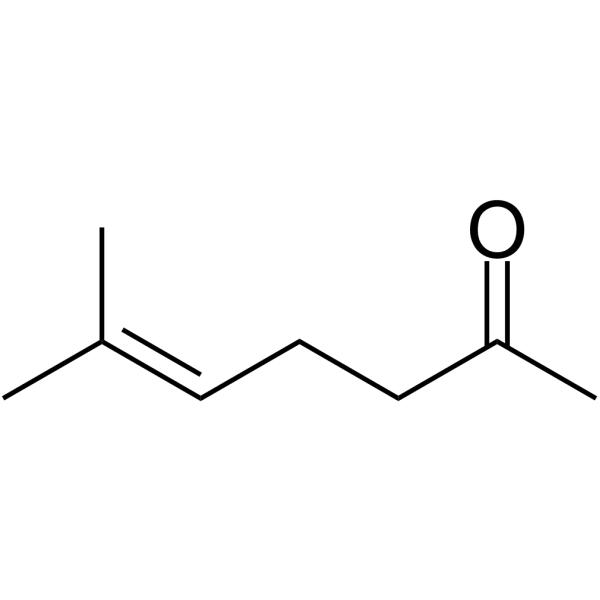
Sulcatone-d5 (6-Methyl-5-hepten-2-one-d5) is the deuterium labeled Sulcatone (HY-W010435). Sulcatone (6-Methyl-5-hepten-2-one) is a plant-derived volatile organic compound with activities such as insecticidal, antifungal, and blood pressure-lowering effects. Sulcatone also serves as an insect pheromone and an endogenous metabolite, which can be found in feces. Changes in Sulcatone levels can be used for the auxiliary diagnosis of ulcerative colitis .
|
-
-
- HY-W016969S
-
|
|
|
2-Undecanone-d5 is the deuterium labeled 2-Undecanone (HY-W016969). 2-Undecanone is a volatile organic compound, which inhibits the DnaKJE-ClpB bichaperone dependent refolding of heat-inactivated bacterial luciferases. 2-Undecanone inhibits lung tumorigenesis .
|
-
-
- HY-W012653S1
-
|
|
|
4'-Methylacetophenone-d3 is the deuterium labeled 4'-Methylacetophenone (HY-W012653) . 4′-Methylacetophenone is a phenolic compound that can be used as a fragrance material. 4′-Methylacetophenone is wildly occurs in volatile compounds in food and in some natural complex substances (NCS). 4′-Methylacetophenone can be used to study the Bayer-Villiger reaction and to synthesize functionalized terpolymers .
|
-
Your information is safe with us. * Required Fields.
Inquiry Information
- Product Name:
- Cat. No.:
- Quantity:
- MCE Japan Authorized Agent:

