

978 Results for "

weight

" in MedChemExpress (MCE) Product Catalog:
Products (978)

978 Results for "weight" in MCE Product Catalog:

360
360 Publications Verification
Cat. No.: HY-14648C
CAS No.: 50-02-2
Purity:  ≥98.0%
Synonyms: Dexamethasone cyclodextrin complex
Dexamethasone (Hexadecadrol) Water Soluble is a water-soluble form of Dexamethasone (HY-14648). Dexamethasone is a glucocorticoid receptor agonist, apoptosis inducer, and a common disease inducer in experimental animals. It can be used to construct models of muscle atrophy, hypertension, and depression. Dexamethasone can inhibit the production of inflammatory miRNA-155 exosomes in macrophages and significantly reduce the expression of inflammatory factors in neutrophils and monocytes. Dexamethasone also has the potential to be used in COVID-19 research .(Sale size is the weight of dexamethasone)
189
189 Cited Publications
Cat. No.: HY-Y0873
CAS No.: 25322-68-3
Synonyms: Polyethylene glycol 300
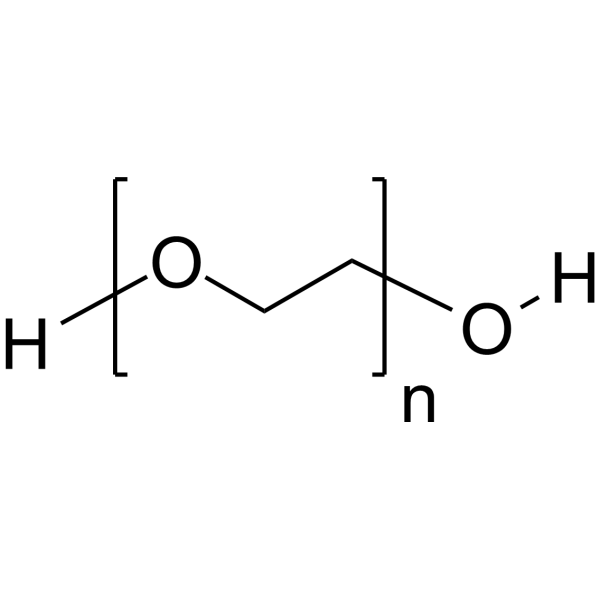
PEG300 (Polyethylene glycol 300), a neutral polymer of molecular weight 300, is a water-soluble, low immunogenic and biocompatible polymer formed by repeating units of ethylene glycol .
41
41 Cited Publications
Cat. No.: HY-114118
CAS No.: 910463-68-2
Purity:  99.84%
Semaglutide is a long-acting, selective, competitive GLP-1R agonist that can penetrate the blood-brain barrier. After activating GLP-1R, Semaglutide promotes insulin secretion, inhibits gastric emptying and appetite, and at the same time enhances autophagy, inhibits oxidative stress and apoptosis. Semaglutide also regulates mitochondrial function and lipid metabolism (such as reducing de novo lipogenesis in the liver). Semaglutide has activities such as lowering blood sugar, reducing weight, neuroprotection (such as improving motor function in Parkinson's disease models, reducing α-synuclein aggregation) and improving hepatic steatosis. Semaglutide can be used for the study of neurodegenerative diseases and liver diseases such as type 2 diabetes, obesity, Parkinson's disease, metabolic associated fatty liver disease (MASLD), and cancer .
41
41 Cited Publications
Cat. No.: HY-114118B
CAS No.: 1997361-85-9
Purity:  99.92%
Semaglutide acetate is a long-acting, selective, competitive GLP-1R agonist that can penetrate the blood-brain barrier. After activating GLP-1R, Semaglutide acetate promotes insulin secretion, inhibits gastric emptying and appetite, and at the same time enhances autophagy, inhibits oxidative stress and apoptosis. Semaglutide acetate also regulates mitochondrial function and lipid metabolism (such as reducing de novo lipogenesis in the liver). Semaglutide acetate has activities such as lowering blood sugar, reducing weight, neuroprotection (such as improving motor function in Parkinson's disease models, reducing α-synuclein aggregation) and improving hepatic steatosis. Semaglutide acetate can be used for the study of neurodegenerative diseases and liver diseases such as type 2 diabetes, obesity, Parkinson's disease, metabolic associated fatty liver disease (MASLD), and cancer .
41
41 Cited Publications
Cat. No.: HY-114118A
Purity:  99.92%
Semaglutide TFA is a long-acting, selective, competitive GLP-1R agonist that can penetrate the blood-brain barrier. After activating GLP-1R, Semaglutide TFA promotes insulin secretion, inhibits gastric emptying and appetite, and at the same time enhances autophagy, inhibits oxidative stress and apoptosis. Semaglutide TFA also regulates mitochondrial function and lipid metabolism (such as reducing de novo lipogenesis in the liver). Semaglutide TFA has activities such as lowering blood sugar, reducing weight, neuroprotection (such as improving motor function in Parkinson's disease models, reducing α-synuclein aggregation) and improving hepatic steatosis. Semaglutide TFA can be used for the study of neurodegenerative diseases and liver diseases such as type 2 diabetes, obesity, Parkinson's disease, metabolic associated fatty liver disease (MASLD), and cancer .
32
32 Cited Publications
Cat. No.: HY-112288
CAS No.: 432001-19-9
Purity:  99.90%
Synonyms: TTI-101
C188-9 (TTI-101) is a STAT3 inhibitor with a Kd value of 4.7 nM. C188-9 targets the SH2 domain of STAT3, blocks the processes of STAT3 ligand binding, receptor recruitment, homodimerization and phosphorylation, and regulates STAT3-mediated genes associated with tumorigenesis and radioresistance. C188-9 regulates STAT1-mediated genes related to radioresistance and reduces the activation level of STAT1. C188-9 downregulates the expression of DNMT1, enhances DAC-induced demethylation and re-expression of RASSF1A, and simultaneously potentiates the anti-tumor effect of DAC on pancreatic cancer cells. C188-9 inhibits both anchorage-dependent and anchorage-independent growth of cancer cells, induces Apoptosis, blocks the growth of tumor xenografts, and suppresses muscle atrophy. C188-9 maintains muscle mass, increases body weight and improves grip strength in tumor-bearing mice. C188-9 can be used in research related to head and neck squamous cell carcinoma, pancreatic cancer, sepsis-related skeletal muscle wasting, non-small cell lung cancer, acute myeloid leukemia and cancer cachexia .
29
29 Cited Publications
Cat. No.: HY-B1102
CAS No.: 314-13-6
Synonyms: Direct Blue 53; T-1824; C.I. 23860
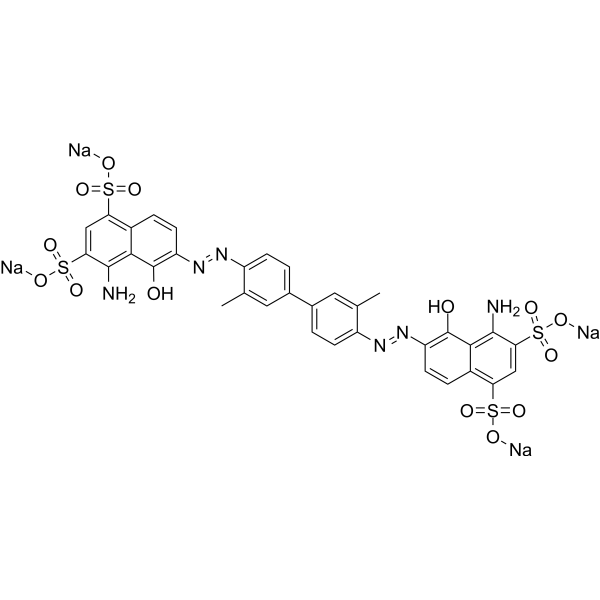
Evans Blue (Direct Blue 53) is a potent inhibitor of L-glutamate uptake via the membrane bound excitatory amino acid transporter (EAAT). Evans Blue is a L-glutamate and kainate receptor-mediated currents inhibitor. Evans Blue has a strong affinity towards serum albumin, making it a high molecular weight protein tracer. Evans Blue is also used to study BBB (blood-brain barrier) permeability .
25
25 Cited Publications
Cat. No.: HY-12836
CAS No.: 844882-93-5
Target:  

IFNAR

Research Areas:  

Inflammation/Immunology

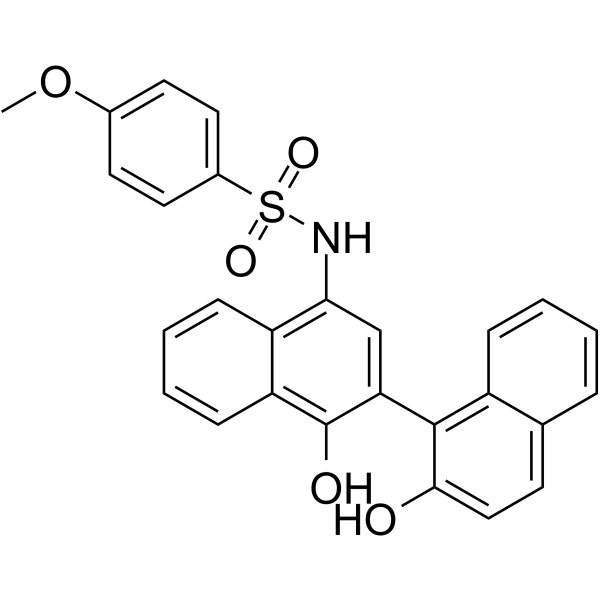
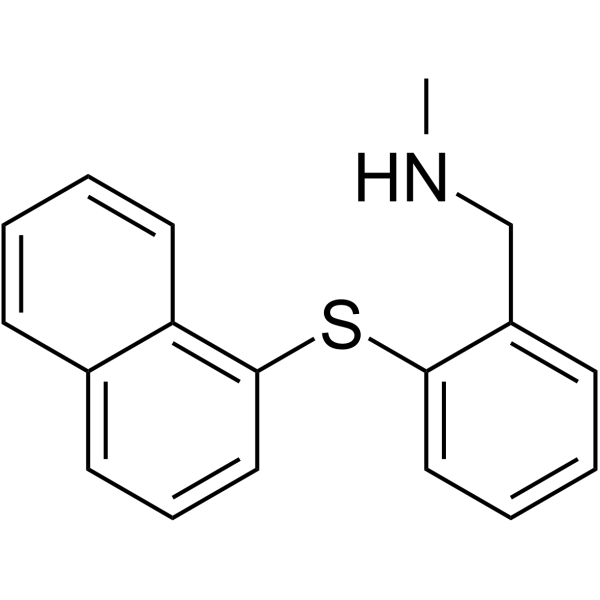
IFN alpha-IFNAR-IN-1 is a nonpeptidic, low-molecular-weight inhibitor of the interaction between IFN-α and IFNAR. IFN alpha-IFNAR-IN-1 inhibits modified Vaccinia virus ankara (MVA)-induced IFN-α responses in murine bone-marrow-derived, Flt3- L-differentiated pDC cultures (BM-pDCs) (IC50=2-8 μM) .
25
25 Cited Publications
Cat. No.: HY-12836A
CAS No.: 2070014-98-9
Purity:  99.76%
Target:  

IFNAR

Research Areas:  

Inflammation/Immunology

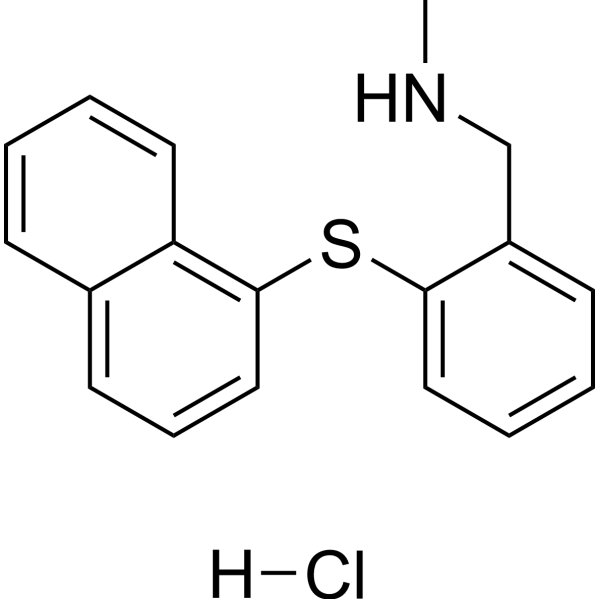
IFN alpha-IFNAR-IN-1 hydrochloride is a nonpeptidic, low-molecular-weight inhibitor of the interaction between IFN-α and IFNAR. IFN alpha-IFNAR-IN-1 hydrochloride inhibits modified Vaccinia virus ankara (MVA)-induced IFN-α responses in murine bone-marrow-derived, Flt3- L-differentiated pDC cultures (BM-pDCs) (IC50=2-8 μM) .
17
17 Cited Publications
Cat. No.: HY-P0233
CAS No.: 20449-79-0
Target:  

Phospholipase

Research Areas:  

Inflammation/Immunology Cancer

Melittin is a PLA2 activator, stimulates the activity of the low molecular weight PLA2, while it does not the increase activity of the high molecular weight PLA2 .
17
17 Cited Publications
Cat. No.: HY-P0233A
Target:  

Phospholipase

Research Areas:  

Infection Cancer

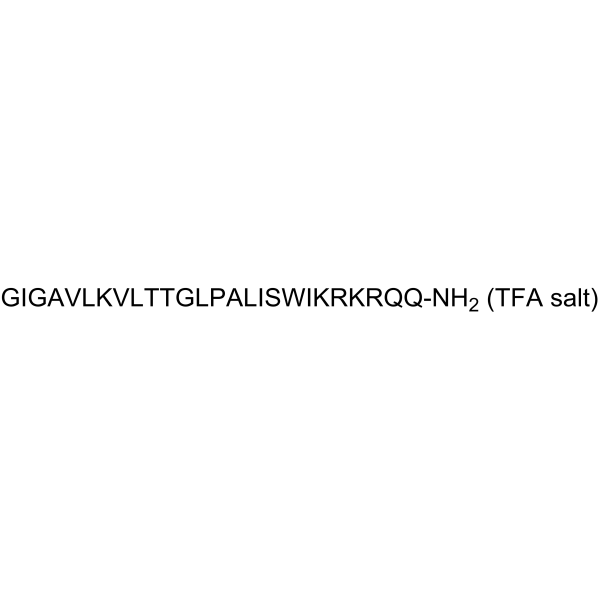
Melittin TFA is a PLA2 activator, stimulates the activity of the low molecular weight PLA2, while it does not the increase activity of the high molecular weight PLA2 .
15
15 Cited Publications
Cat. No.: HY-128612
CAS No.: 70-25-7
Purity:  99.96%
Synonyms: MNNG
Research Areas:  

Cancer

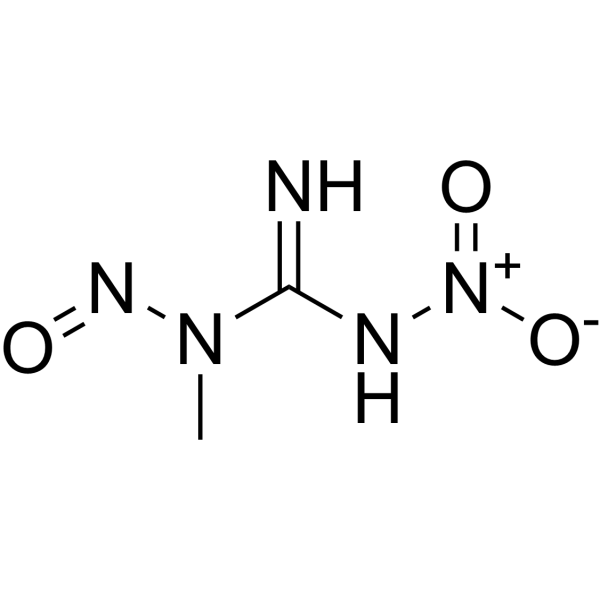
Methylnitronitrosoguanidine (MNNG) is an orally active alkylating agent with toxic and mutagenic effects. Methylnitronitrosoguanidine can as a carcinogen and mutagen . 50% water content, specifications are based on dry weight.
11
11 Cited Publications
Cat. No.: HY-14734
CAS No.: 249921-19-5
Purity:  99.94%
Synonyms: RC-1291; ONO-7643
Target:  

GHSR

Research Areas:  

Endocrinology Cancer

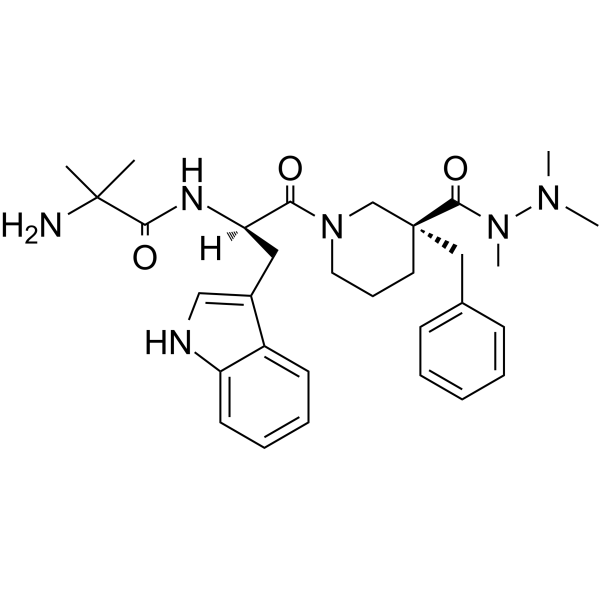
Anamorelin (RC-1291) is an orally active Ghrelin receptor agonist with an EC50 of 0.74 nM. Anamorelin can promote appetite, increase body weight, and stimulate the secretion of growth hormone and insulin-like growth factor-1. Anamorelin can be used in the research of anorexia and cancer cachexia .
11
11 Cited Publications
Cat. No.: HY-14734A
CAS No.: 861998-00-7
Purity:  99.59%
Synonyms: RC-1291 hydrochloride; ONO-7643 hydrochloride
Target:  

GHSR

Research Areas:  

Endocrinology Cancer

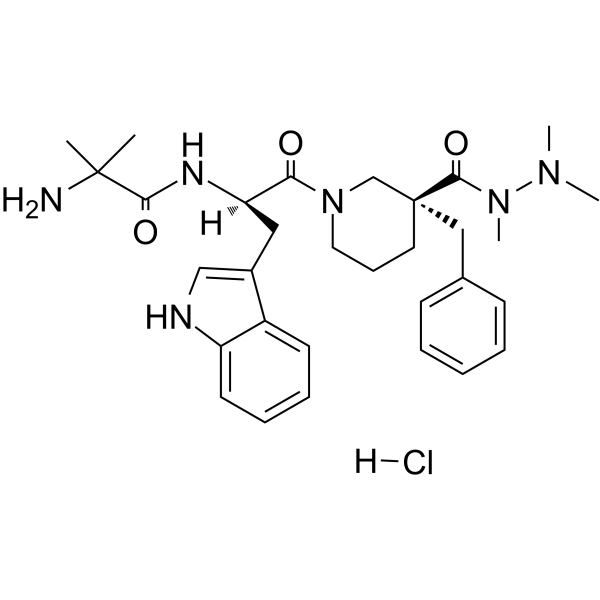
Anamorelin (RC-1291) hydrochloride is an orally active Ghrelin receptor agonist with an EC50 of 0.74 nM. Anamorelin hydrochloride can promote appetite, increase body weight, and stimulate the secretion of growth hormone and insulin-like growth factor-1. Anamorelin hydrochloride can be used in the research of anorexia and cancer cachexia .
9
9 Cited Publications
Cat. No.: HY-116282C
CAS No.: 9011-18-1
Synonyms: DSS (MW 35000-45000); DXS (MW 35000-45000)
Target:  

Apoptosis

Dextran sulfate sodium salt (DSS) (MW 35000-45000) is a polymer of dehydrated glucose with a molecular weight of approximately 35000-45000. DSS with different molecular weights exhibits different biological activities. Dextran sulfate sodium salt (DSS) (MW 35000-45000) is a potent inducer of colitis. Dextran sulfate sodium salt (DSS) (MW 35000-45000) can be used to induce model acute colitis, chronic colitis, and colitis-related colon cancer. Dextran sulfate sodium salt (DSS) (MW 35000-45000) may be related to macrophage dysfunction, intestinal flora dysbiosis, and is particularly toxic to the colonic epithelium .
9
9 Cited Publications
Cat. No.: HY-112584
CAS No.: 7150-23-4
Purity:  99.94%
Synonyms: 6-Methoxynicotinamide
Research Areas:  

Metabolic Disease

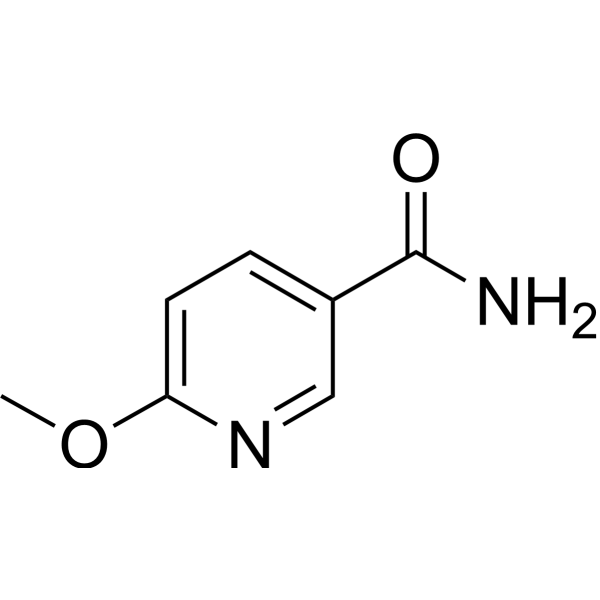
JBSNF-000088 (6-Methoxynicotinamide), a analog of nicotinamide (NA), is a potent and orally active Nicotinamide N-methyltransferase (NNMT) inhibitor with IC50s of 1.8 µM, 2.8 µM, and 5.0 µM for human NNMT, monkey NNMT and mouse NNMT, respectively. JBSNF-000088 inhibits NNMT activity, reduces MNA levels and drives insulin sensitization, glucose modulation and body weight reduction in animal models of metabolic disease .
8
8 Cited Publications
Cat. No.: HY-19870C
CAS No.: 2759937-80-7
Synonyms: RM-493 monoacetate; BIM-22493 monoacetate; IRC-022493 monoacetate
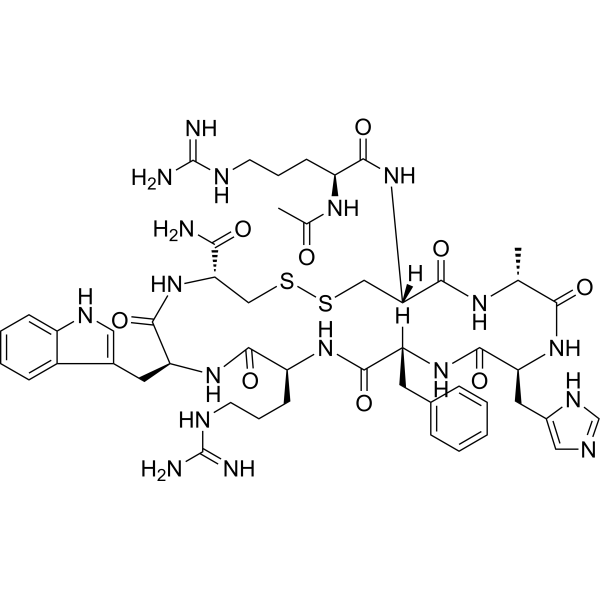
Setmelanotide monoacetate (RM-493 monoacetate) is a blood-brain barrier-permeable, selective MC4R agonist with a Ki value of 2.1 nM for hMC4R. Setmelanotide monoacetate activates the CaMKK2/AMPK signaling pathway. Setmelanotide monoacetate mediates body weight homeostasis, feeding regulation and energy expenditure modulation; it reduces food intake, induces weight loss, decreases obesity severity, increases daytime activity and energy expenditure, lowers levels of leptin, triglycerides, fasting insulin and diastolic blood pressure, improves insulin sensitivity, glucose tolerance and fatty liver condition, and reverses respiratory depression. Setmelanotide monoacetate is applicable to research related to obesity, hyperinsulinemia, fatty liver and respiratory depression .
5
5 Cited Publications
Cat. No.: HY-116282
CAS No.: 9011-18-1
Purity:  99.20%
Synonyms: DSS (MW 5000); DXS (MW 5000)
Dextran sulfate sodium salt (DSS) (MW 5000) is a polymer of dehydrated glucose with a molecular weight of approximately 5000. Dextran sulfate sodium salt (DSS) with different molecular weights exhibits different biological activities. Dextran sulfate sodium salt (MW 5000) is an inhibitor of complement and coagulation pathways, and belongs to the glycosaminoglycans (GAG) family. Dextran sulfate sodium salt (MW 5000) acts as an anticoagulant, antiviral, and anti-lipemic agent. Dextran sulfate sodium salt (DSS) stops HIV-1 virus adsorption to host cells. Dextran sulfate sodium salt (MW 5000) prevents NK cell-mediated cytotoxicity. Dextran sulfate sodium salt (MW 5000) inhibits instant blood-mediated inflammatory reaction (IBMIR) .
5
5 Cited Publications
Cat. No.: HY-130208
CAS No.: 51555-87-4
Purity:  99.97%
Synonyms: TDG
Target:  

Galectin

Thiodigalactoside (TDG) is an orally active and potent galectin (GAL) inhibitor with Kd values of 24 μM, 49 μM for GAL1 and GAL3, respectively . Thiodigalactoside, a non-metabolizable disaccharide, has anti-inflammatory and anti-cancer activity. Thiodigalactoside dramatically reduces body weight gain in diet-induced obese rats .
5
5 Cited Publications
Cat. No.: HY-P990545
CAS No.: 2065212-40-8
Synonyms: ANX005

Target:  

Complement System

Research Areas:  

Neurological Disease

Tanruprubart (ANX005) is a C1q inhibitor and C1q depleter. Tanruprubart is a human antibody expressed in CHO cells, with huIgG1 heavy chains and huκ light chains, and its predicted molecular weight (MW) is 145 kDa. For the isotype control of Tanruprubart, refer to Human IgG1 kappa, Isotype Control (HY-P99001). The IC50 of Tanruprubart is 346 ng/mL for humans and 259 ng/mL for rats; its EC50 is 3.8 ng/mL for humans, 5.2 ng/mL for rats, and 9.9 ng/mL for mice. Tanruprubart is applicable to the research of Guillain-Barré syndrome and Alzheimer's disease .

