



Pilaralisib
Based on 6 publication(s) in Google Scholar
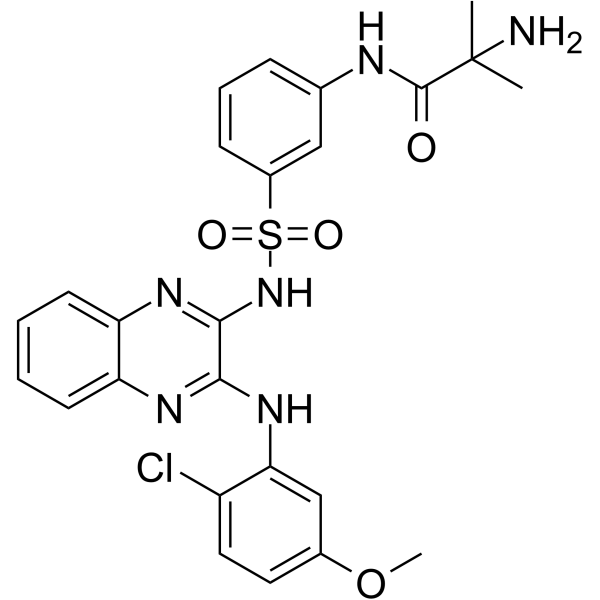
Pilaralisib (XL147; SAR245408) is a potent and highly selective class I PI3Ks inhibitor with IC50s of 39 nM, 383 nM, 23 nM and 36 nM for PI3Kα, PI3Kβ, PI3Kγ, and PI3Kδ.
For research use only. We do not sell to patients.
- Purity: 98.81%
- CAS No.: 934526-89-3
- Formula: C25H25ClN6O4S
- Molecular Weight:541.02
-
Storage:Powder -20°C, 3 years , 4°C, 2 years ; In solvent -80°C, 2 years , -20°C, 1 year

To place orders, for customer services and technical support, please contact: MedChemExpress USA
Tel: 609-228-6898 E-mail: [email protected] [email protected]


-
 Biological Activity
-
Chemical Information
-
Solvent & Solubility
- Protocol
- Purity & Documentation
- References
-
 Help & FAQs


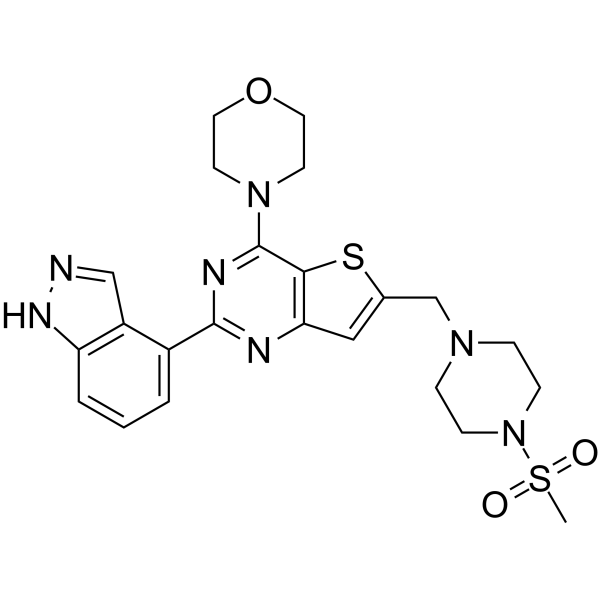
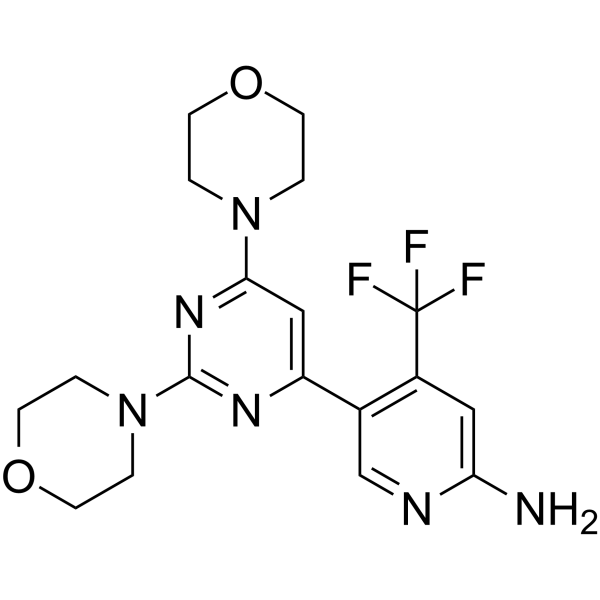
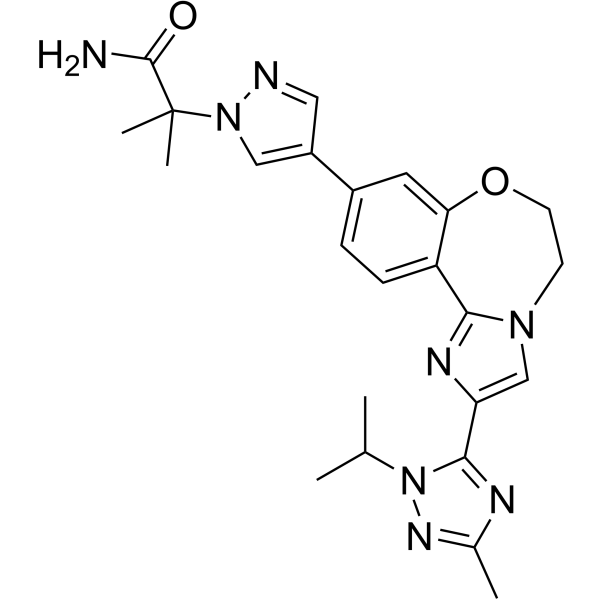
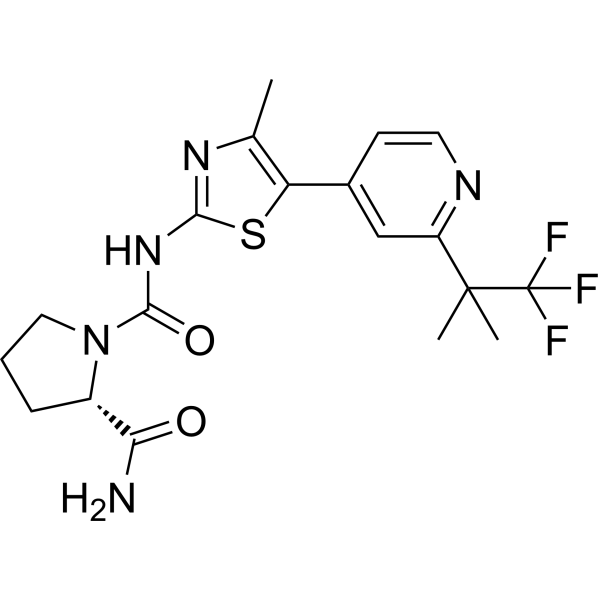
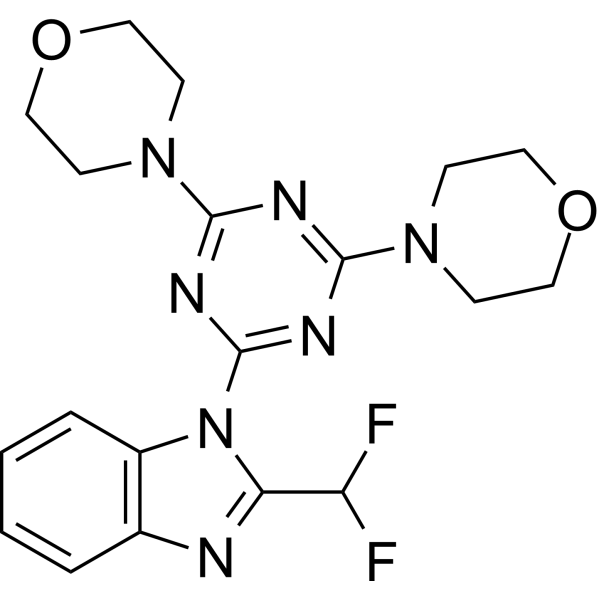
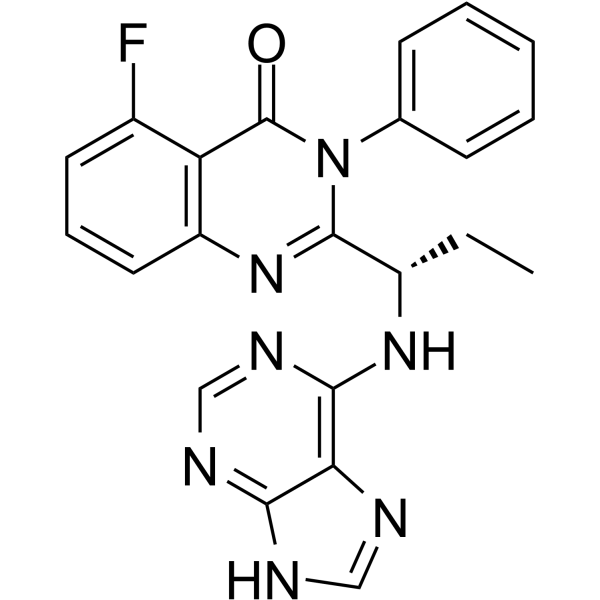
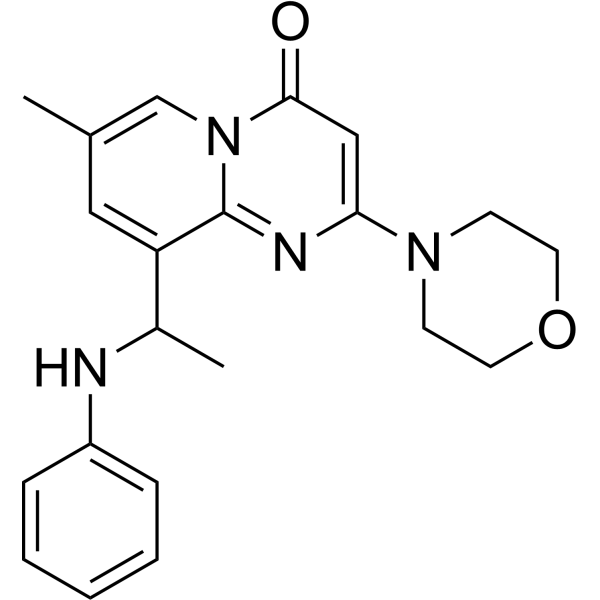
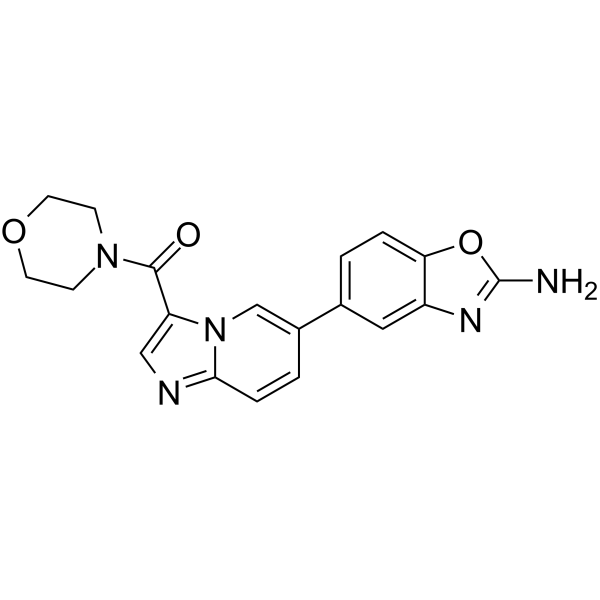
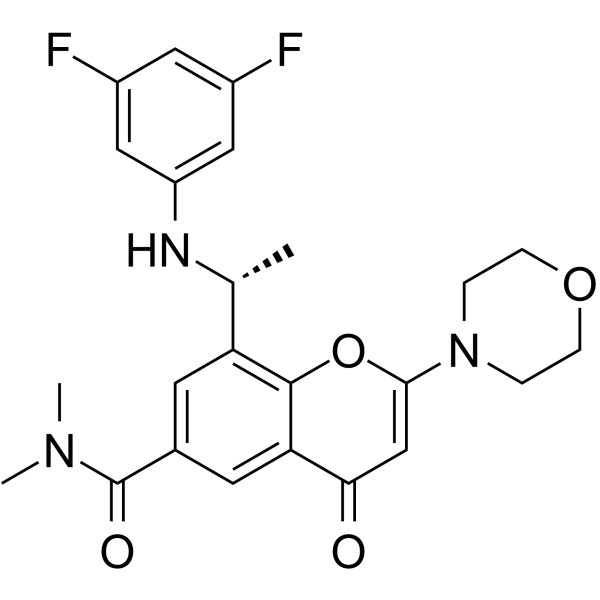
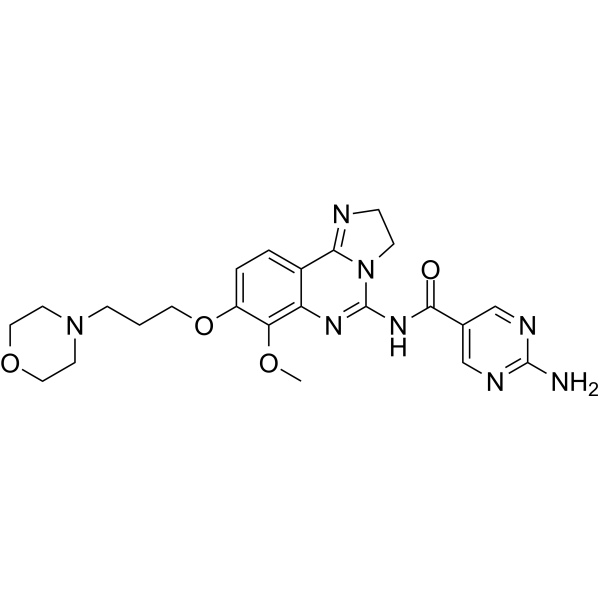
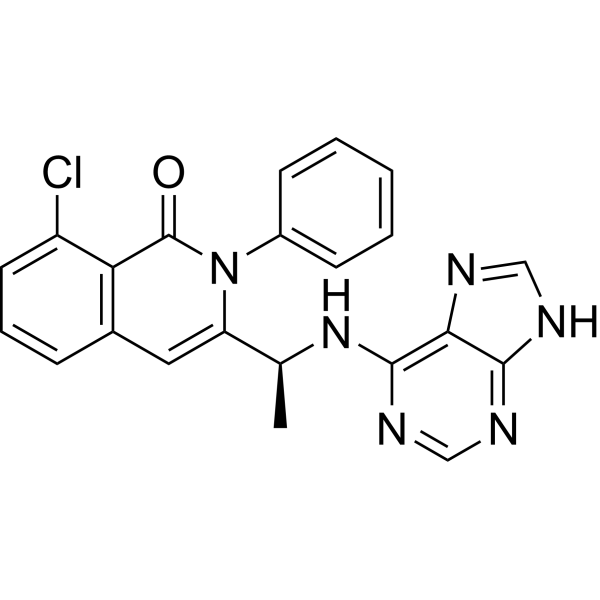
Publications Citing Use of MedChemExpress (MCE) Pilaralisib
More

Biological Activity
Description
IC50 & Target
[1]|
PI3Kγ 23 nM (IC50) |
PI3Kδ 36 nM (IC50) |
PI3Kα 39 nM (IC50) |
PI3Kβ 383 nM (IC50) |
Vps34 6974 nM (IC50) |
DNA-PK 4750 nM (IC50) |
In Vitro
Pilaralisib (XL147) displays potent inhibitory activity against Class I PI3K isoforms p110α, p110δ, and p110γ, with IC50s of 39, 36, and 23 nM, respectively. Pilaralisib (XL147) is less potent against the remaining Class I isoform, p110β, with an IC50 value of 383 nM. The IC50 value for inhibition of PI3Kα by Pilaralisib (XL147) is determined at various concentrations of ATP, revealing XL147 to be an ATP-competitive inhibitor with an equilibrium inhibition constant (Ki) value of 42 nM. Pilaralisib (XL147) has relatively weak inhibitory activity toward the class III PI3K vacuolar sorting protein 34 (VPS34; IC50 value of ~7.0 M) and the PI3K-related DNA-dependent protein kinase (DNA-PK; IC50 value of 4.75 μM). In an mTOR kinase immunoprecipitation assay using cell lysates, Pilaralisib (XL147) does not inhibit mTOR activity toward the physiologic substrate protein eukaryotic translation initiation factor 4E-binding protein 1 (4EBP1; IC50>15 μM). Consistent with its inhibitory activity against purified PI3K proteins, Pilaralisib (XL147) inhibits EGF-induced PIP3 production in PC-3 and MCF7 cells in serum-free medium with IC50s of 220 and 347 nM, respectively. The ability of Pilaralisib (XL147) to inhibit phosphorylation of key signaling proteins downstream of PI3K is examined by assessing its effects on EGF-stimulated phosphorylation of AKT and on nonstimulated phosphorylation of S6 in PC-3 cells in serum-free media by cell-based ELISA. Pilaralisib (XL147) inhibits these activities with IC50s of 477 and 776 nM, respectively[1].
MedChemExpress (MCE) has not independently confirmed the accuracy of these methods. They are for reference only.
In Vivo
MedChemExpress (MCE) has not independently confirmed the accuracy of these methods. They are for reference only.
Clinical Trial
| NCT Number | Sponsor | Condition | Start Date |
Phase

|
|---|---|---|---|---|
| NCT01329991 | Plexxikon| | 2011-05 | PHASE1 |


Chemical Information
-
CAS No. 934526-89-3
-
Appearance Solid
-
Molecular Weight 541.02
-
Formula C25H25ClN6O4S
-
Color Light yellow to yellow
-
SMILES
CC(C)(N)C(NC1=CC=CC(S(=O)(NC2=NC3=CC=CC=C3N=C2NC4=CC(OC)=CC=C4Cl)=O)=C1)=O
-
Synonyms
XL-147; SAR245408
-
Shipping
Room temperature in continental US; may vary elsewhere.
-
Storage
Powder -20°C 3 years 4°C 2 years In solvent -80°C 2 years -20°C 1 year


Publications (6)
-
Journal Impact Factor
-
Most Recent
-
Sci Transl Med
PP2A inhibition is a druggable MEK inhibitor resistance mechanism in KRAS-mutant lung cancer cells. [Abstract]2018 Jul 18;10(450):eaaq1093. PMID: 30021885 -
Cell Syst
Torin2 Exploits Replication and Checkpoint Vulnerabilities to Cause Death of PI3K-Activated Triple-Negative Breast Cancer Cells. [Abstract]2020 Jan 22;10(1):66-81.e11. PMID: 31812693 -
-
Immunotargets Ther
Upregulated BLM and RECQL4 in Osteosarcoma: Association with Poor Prognosis, Immune Cell Infiltration, and Inhibitory Effects of Sphingosine Kinase 1 Inhibitor II/Pilaralisib. [Abstract]2026 Jan 22:15:569823. PMID: 41878019 -
-
Methods Mol Biol
2018:1711:351-398. PMID: 29344898


Solvent & Solubility
In Vitro:
DMSO : ≥ 100 mg/mL (184.84 mM; Hygroscopic DMSO has a significant impact on the solubility of product, please use newly opened DMSO)
* "≥" means soluble, but saturation unknown.
Please refer to the solubility information to select the appropriate solvent. Once prepared, please aliquot and store the solution to prevent product inactivation from repeated freeze-thaw cycles.
Storage method and period of stock solution: -80°C, 2 years; -20°C, 1 year. When stored at -80°C, please use it within 2 years. When stored at -20°C, please use it within 1 year.
Please refer to the solubility information to select the appropriate solvent. Once prepared, please aliquot and store the solution to prevent product inactivation from repeated freeze-thaw cycles.
Storage method and period of stock solution: -80°C, 2 years; -20°C, 1 year. When stored at -80°C, please use it within 2 years. When stored at -20°C, please use it within 1 year.
Concentration (start) × Volume (start) = Concentration (final) × Volume (final)
In Vivo:
Select the appropriate dissolution method based on your experimental animal and administration route.
- For the following dissolution methods, please ensure to first prepare a clear stock solution using an In Vitro approach and then sequentially add co-solvents:
- To ensure reliable experimental results, the clarified stock solution can be appropriately stored based on storage conditions. As for the working solution for In Vivo experiments, it is recommended to prepare freshly and use it on the same day.
- The percentages shown for the solvents indicate their volumetric ratio in the final prepared solution. If precipitation or phase separation occurs during preparation, heat and/or sonication can be used to aid dissolution.
Add each solvent one by one: 10% DMSO 40% PEG300 5% Tween-80 45% Saline
Solubility: ≥ 2.5 mg/mL (4.62 mM); Clear solution
This protocol yields a clear solution of ≥ 2.5 mg/mL (saturation unknown).
Taking 1 mL working solution as an example, add 100 μL DMSO stock solution (25.0 mg/mL) to 400 μL PEG300, and mix evenly; then add 50 μL Tween-80 and mix evenly; then add 450 μL Saline to adjust the volume to 1 mL.
Preparation of Saline: Dissolve 0.9 g sodium chloride in ddH₂O and dilute to 100 mL to obtain a clear Saline solution.
Add each solvent one by one: 10% DMSO 90% (20% SBE-β-CD in Saline)
Solubility: 2.5 mg/mL (4.62 mM); Suspended solution; Need ultrasonic
This protocol yields a suspended solution of 2.5 mg/mL. Suspended solution can be used for oral and intraperitoneal injection.
Taking 1 mL working solution as an example, add 100 μL DMSO stock solution (25.0 mg/mL) to 900 μL 20% SBE-β-CD in Saline, and mix evenly.
Preparation of 20% SBE-β-CD in Saline (4°C, storage for one week): 2 g SBE-β-CD powder is dissolved in 10 mL Saline, completely dissolve until clear.
In Vivo Dissolution Calculator
Please enter the basic information of animal experiments:
-
-
-
-
Recommended: Prepare an additional quantity of animals to account for potential losses during experiments.
Please enter your animal formula composition:
-
%DMSO +
Recommended: Keep the proportion of DMSO in working solution below 2% if your animal is weak.
-
%+
-
+%Tween-80 + +
-
%Saline +
The co-solvents required include: DMSO, . All of co-solvents are available by MedChemExpress (MCE). , Tween 80. All of co-solvents are available by MedChemExpress (MCE).
Working solution concentration: 0.22 mg/mL
Method for preparing stock solution: mg drug dissolved in μL DMSO. Stock solution concentration: mg/mL.
1. Take μL DMSO stock solution;
2. Add μL .
μL , mix evenly;
3. Then add μL Tween 80, mix evenly;
4. Then add μL
Please ensure that the stock solution in the first step is dissolved to a clear state, and add co-solvents in sequence. You can use ultrasonic heating (ultrasonic cleaner, recommended frequency 20-40 kHz), vortexing, etc. to assist dissolution.

Protocol
Cell Assay[1]
MCF7 human mammary carcinoma cells and PC-3 human prostate adenocarcinoma cells are maintained in culture conditions at 37°C under 5% CO2. For PI3K pathway status assessment following EGF treatment, the culture medium is replaced with test compounds dissolved in serum-free DMEM containing 0.3% DMSO. After incubation for 3 hours, cells are stimulated with 100 ng/mL of EGF for 10 minutes and Western immunoblot analysis of cell lysates is performed. Assessment of mTOR pathway status in Ramos cells is performed. Cellular proliferation is assessed using the Cell Proliferation ELISA, bromodeoxyuridine (BrdUrd) chemiluminescence kit. Cytotoxicity, apoptosis (caspases-3/7), anchorage-independent growth, and PC-3 cell migration assays are performed. Hepatocyte growth factor (HGF)-induced chemotaxis is assessed. Theendothelial cell tube formation assay is performed, with minor modifications. Total tube length is quantified with Image Pro Plus software[1].
MedChemExpress (MCE) has not independently confirmed the accuracy of these methods. They are for reference only.
Animal Administration[1]
Mice[1]
Female athymic nude mice and male nude mice are used. Tumor cells are cultured and established as xenografts in mice, and body and tumor weights assessed. Statistical significance is determined using the two-tailed Student ttest (significance defined as P<0.05). Pilaralisib (XL147) is formulated in sterile water/10 mmol/L HCl or water and administered at the indicated doses and regimens by oral gavage at a dose volume of 10 mL/kg.
MedChemExpress (MCE) has not independently confirmed the accuracy of these methods. They are for reference only.


Purity & Documentation
-
Data Sheet (285 KB)
-
SDS (393 KB)
- English - EN (393 KB)
- Français - FR (393 KB)
- Deutsch - DE (393 KB)
- Norwegian - NO (393 KB)
- Español - ES (393 KB)
- Swedish - SV (393 KB)
- Italian - IT (393 KB)
- Korean - KR (393 KB)
- Portuguese - PT (393 KB)
-
Handling Instructions (2659 KB)
References


Complete Stock Solution Preparation Table
Please refer to the solubility information to select the appropriate solvent. Once prepared, please aliquot and store the solution to prevent product inactivation from repeated freeze-thaw cycles.
Storage method and period of stock solution: -80°C, 2 years; -20°C, 1 year. When stored at -80°C, please use it within 2 years. When stored at -20°C, please use it within 1 year.
| Optional Solvent | Concentration Solvent Mass | 1 mg | 5 mg | 10 mg | 25 mg |
|---|---|---|---|---|---|
| DMSO | 1 mM | 1.8484 mL | 9.2418 mL | 18.4836 mL | 46.2090 mL |
| 5 mM | 0.3697 mL | 1.8484 mL | 3.6967 mL | 9.2418 mL | |
| 10 mM | 0.1848 mL | 0.9242 mL | 1.8484 mL | 4.6209 mL | |
| 15 mM | 0.1232 mL | 0.6161 mL | 1.2322 mL | 3.0806 mL | |
| 20 mM | 0.0924 mL | 0.4621 mL | 0.9242 mL | 2.3105 mL | |
| 25 mM | 0.0739 mL | 0.3697 mL | 0.7393 mL | 1.8484 mL | |
| 30 mM | 0.0616 mL | 0.3081 mL | 0.6161 mL | 1.5403 mL | |
| 40 mM | 0.0462 mL | 0.2310 mL | 0.4621 mL | 1.1552 mL | |
| 50 mM | 0.0370 mL | 0.1848 mL | 0.3697 mL | 0.9242 mL | |
| 60 mM | 0.0308 mL | 0.1540 mL | 0.3081 mL | 0.7702 mL | |
| 80 mM | 0.0231 mL | 0.1155 mL | 0.2310 mL | 0.5776 mL | |
| 100 mM | 0.0185 mL | 0.0924 mL | 0.1848 mL | 0.4621 mL |


Pilaralisib Related Classifications
HY-16526 Related Classifications
 Powered by Bioz