



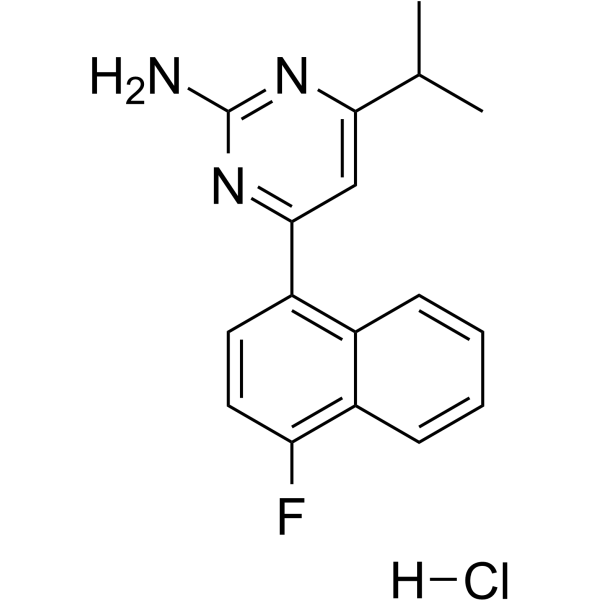
RS-127445 hydrochloride
Based on 5 publication(s) in Google Scholar
RS-127445 hydrochloride is a selective, high affinity, orally bioavailable 5-HT2B receptor antagonist with a pKi of 9.5. RS-127445 hydrochloride shows 1000 fold selectivity for this receptor as compared to numerous other receptor and ion channel binding sites.
For research use only. We do not sell to patients.
- Purity : 99.85%
- CAS No.: 199864-86-3
- Formula: C17H17ClFN3
- Molecular Weight:317.79
-
Storage:
4°C, sealed storage, away from moisture
* In solvent : -80°C, 6 months; -20°C, 1 month (sealed storage, away from moisture)

To place orders, for customer services and technical support, please contact: MedChemExpress USA
Tel: 609-228-6898 E-mail: [email protected] [email protected]


-
 Biological Activity
-
Chemical Information
-
Solvent & Solubility
- Protocols
- Purity & Documentation
- References
-
 Help & FAQs


-
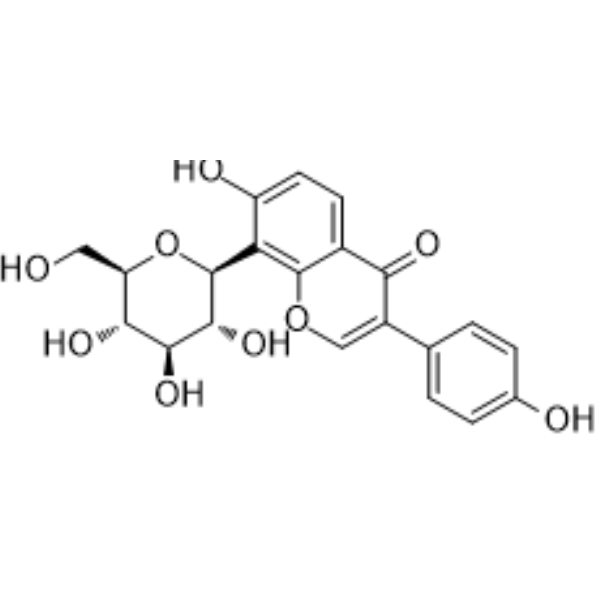
HY-N0145
Puerarin5-HT Receptor Antagonist -
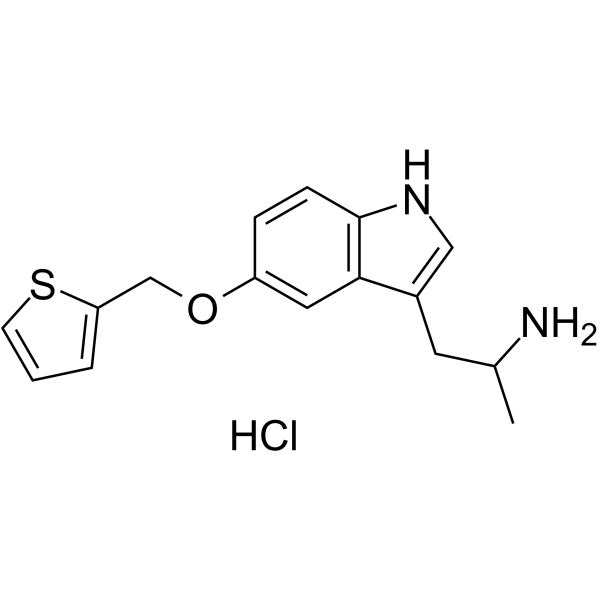
HY-101369
BW-723C865-HT2B Agonist -
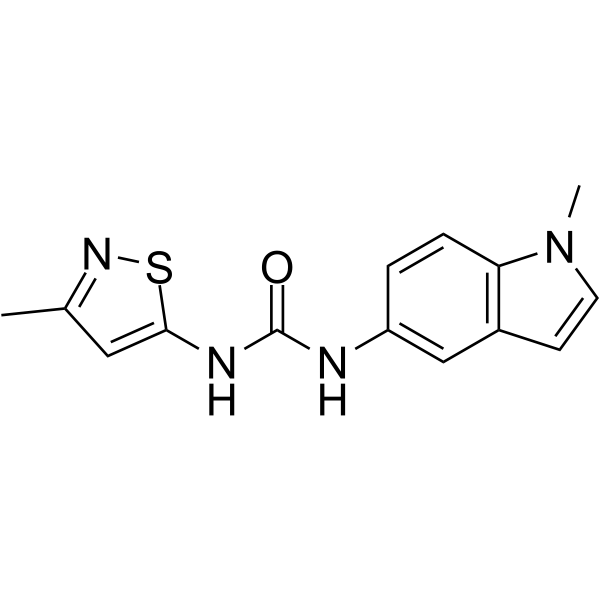
HY-103153
SB 2047415-HT2B Antagonist -
HY-10562A
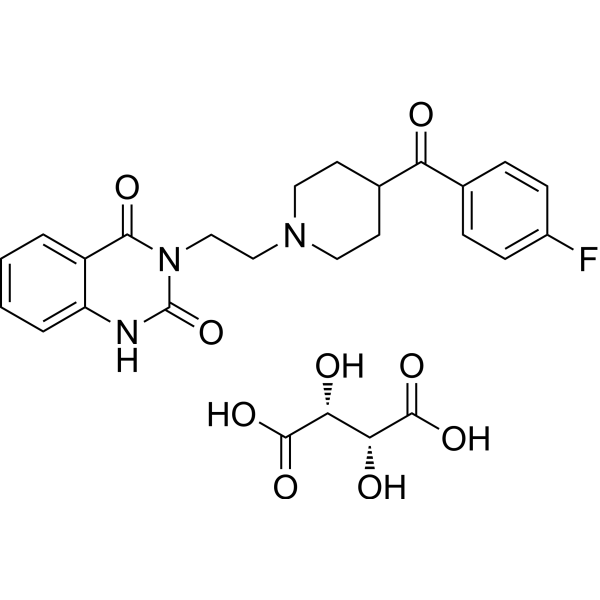
Ketanserin tartrate5-HT2 Receptor Antagonist -

HY-15419R
RS-127445 hydrochloride (Standard)5-HT2B Antagonist -
HY-15443
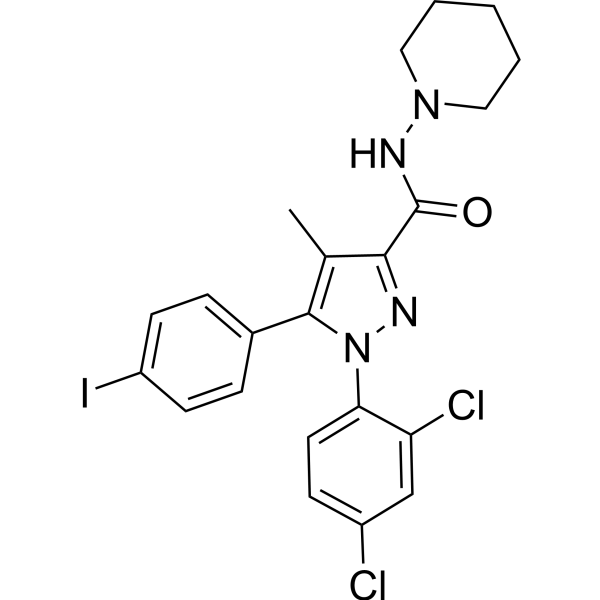
AM251CB1 Receptor Antagonist -
HY-B0189A
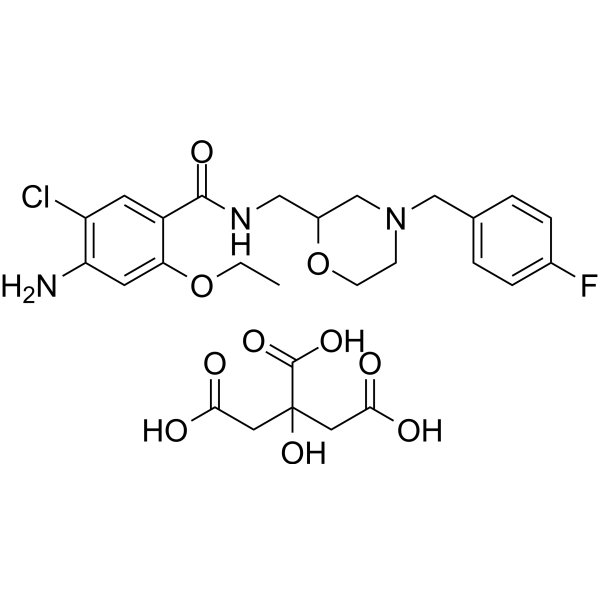
Mosapride citrate5HT4 Agonist -
HY-B0731
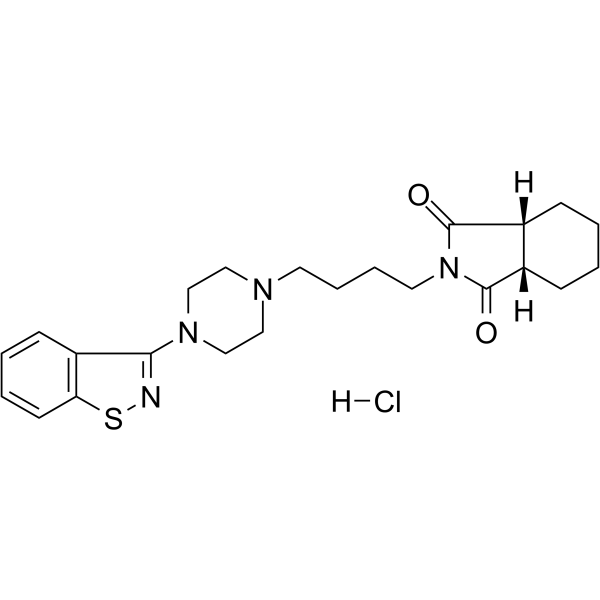
Perospirone hydrochlorideAntipsychotic Agent -

HY-15443R
AM251 (Standard)CB1 Receptor Antagonist -

HY-B0189AR
Mosapride citrate (Standard)5HT4 Agonist -

HY-B0731R
Perospirone hydrochloride (Standard)Antipsychotic Agent
Publications Citing Use of MedChemExpress (MCE) RS-127445 hydrochloride
MoreAll 5-HT Receptor Isoforms
More

Biological Activity
Description
IC50 & Target
|
sPLA2 5.5 (pKi) |
5-HT2B Receptor |
5-HT3 Receptor <6 (pKi) |
5-HT5 Receptor <6 (pKi) |
5-HT6 Receptor <6 (pKi) |
5-HT2A Receptor 6.3 (pKi) |
5-HT2C Receptor 6.4 (pKi) |
5-HT2B Receptor 9.5 (pKi) |
In Vitro
RS-127445 is found to has nanomolar affinity for the 5-HT2B receptor (pKi=9.5±0.1) and 1,000 fold selectivity for this receptor as compared to numerous other receptor and ion channel binding sites. RS-127445 potently displaces [3H]-5-HT from human recombinant 5-HT2B receptors expressed in CHO-K1 cells. The affinity (pKi value) of RS-127445 for the 5-HT2B receptor is 9.5±0.1 (n=9). RS-127445 is selective for the 5-HT2B receptor, having approximately 1000 fold lower affinity for the human recombinant 5-HT2A, 5-HT2C, 5-HT5, 5-HT6 and 5-HT7 receptors, a 5-HT1A receptor in rat brain membranes, a 5-HT1B/D receptor in bovine caudate, and a monoamine uptake site in rabbit platelets. RS-127445 potently blocks the 5-HT (10 nM) evoked increases in intracellular calcium concentrations in the HEK-293 cells expressing the 5-HT2B receptor (pIC50 of 10.4±0.1). In cells expressing human recombinant 5-HT2B receptors, RS-127445 potently antagonizes 5-HT-evoked formation of inositol phosphates (pKB=9.5±0.1) and 5-HT-evoked increases in intracellular calcium (pIC10=10.4±0.1). RS-127445 also blocks 5-HT-evoked contraction of rat isolated stomach fundus (pA2B=9.5±1.1) and (±)α-methyl-5-HT-mediated relaxation of the rat jugular vein (pA2=9.9±0.3)[1].
MedChemExpress (MCE) has not independently confirmed the accuracy of these methods. They are for reference only. Further protocols information, click here.
In Vivo
MedChemExpress (MCE) has not independently confirmed the accuracy of these methods. They are for reference only.


Chemical Information
-
CAS No. 199864-86-3
-
Appearance Solid
-
Molecular Weight 317.79
-
Formula C17H17ClFN3
-
Color White to light yellow
-
SMILES
NC1=NC(C(C)C)=CC(C2=C3C=CC=CC3=C(F)C=C2)=N1.[H]Cl
-
Shipping
Room temperature in continental US; may vary elsewhere.
-
Storage
4°C, sealed storage, away from moisture
* In solvent : -80°C, 6 months; -20°C, 1 month (sealed storage, away from moisture)


Publications (5)
-
Journal Impact Factor
-
Most Recent
-
Adv Sci (Weinh)
Activation of HTR2B Suppresses Osteosarcoma Progression through the STAT1-NLRP3 Inflammasome Pathway and Promotes OASL1+ Macrophage Production to Enhance Antitumor Immunity. [Abstract]2025 Aug;12(29):e15276. PMID: 40387572 -
Mol Neurobiol
Htr2b Promotes M1 Microglia Polarization and Neuroinflammation after Spinal Cord Injury via Inhibition of Neuregulin-1/ErbB Signaling. [Abstract]2024 Mar;61(3):1643-1654. PMID: 37747614 -
-
-


Solvent & Solubility
In Vitro:
DMSO : 125 mg/mL (393.34 mM; Need ultrasonic; Hygroscopic DMSO has a significant impact on the solubility of product, please use newly opened DMSO)
Please refer to the solubility information to select the appropriate solvent. Once prepared, please aliquot and store the solution to prevent product inactivation from repeated freeze-thaw cycles.
Storage method and period of stock solution: -80°C, 6 months; -20°C, 1 month (sealed storage, away from moisture). When stored at -80°C, please use it within 6 months. When stored at -20°C, please use it within 1 month.
Please refer to the solubility information to select the appropriate solvent. Once prepared, please aliquot and store the solution to prevent product inactivation from repeated freeze-thaw cycles.
Storage method and period of stock solution: -80°C, 6 months; -20°C, 1 month (sealed storage, away from moisture). When stored at -80°C, please use it within 6 months. When stored at -20°C, please use it within 1 month.
Concentration (start) × Volume (start) = Concentration (final) × Volume (final)
In Vivo:
Select the appropriate dissolution method based on your experimental animal and administration route.
- For the following dissolution methods, please ensure to first prepare a clear stock solution using an In Vitro approach and then sequentially add co-solvents:
- To ensure reliable experimental results, the clarified stock solution can be appropriately stored based on storage conditions. As for the working solution for In Vivo experiments, it is recommended to prepare freshly and use it on the same day.
- The percentages shown for the solvents indicate their volumetric ratio in the final prepared solution. If precipitation or phase separation occurs during preparation, heat and/or sonication can be used to aid dissolution.
Add each solvent one by one: 10% DMSO 40% PEG300 5% Tween-80 45% Saline
Solubility: ≥ 2.5 mg/mL (7.87 mM); Clear solution
This protocol yields a clear solution of ≥ 2.5 mg/mL (saturation unknown).
Taking 1 mL working solution as an example, add 100 μL DMSO stock solution (25.0 mg/mL) to 400 μL PEG300, and mix evenly; then add 50 μL Tween-80 and mix evenly; then add 450 μL Saline to adjust the volume to 1 mL.
Preparation of Saline: Dissolve 0.9 g sodium chloride in ddH₂O and dilute to 100 mL to obtain a clear Saline solution.
Add each solvent one by one: 10% DMSO 90% (20% SBE-β-CD in Saline)
Solubility: ≥ 2.5 mg/mL (7.87 mM); Clear solution
This protocol yields a clear solution of ≥ 2.5 mg/mL (saturation unknown).
Taking 1 mL working solution as an example, add 100 μL DMSO stock solution (25.0 mg/mL) to 900 μL 20% SBE-β-CD in Saline, and mix evenly.
Preparation of 20% SBE-β-CD in Saline (4°C, storage for one week): 2 g SBE-β-CD powder is dissolved in 10 mL Saline, completely dissolve until clear.
In Vivo Dissolution Calculator
Please enter the basic information of animal experiments:
-
-
-
-
Recommended: Prepare an additional quantity of animals to account for potential losses during experiments.
Please enter your animal formula composition:
-
%DMSO +
Recommended: Keep the proportion of DMSO in working solution below 2% if your animal is weak.
-
%+
-
+%Tween-80 + +
-
%Saline +
The co-solvents required include: DMSO, . All of co-solvents are available by MedChemExpress (MCE). , Tween 80. All of co-solvents are available by MedChemExpress (MCE).
Working solution concentration: 0.22 mg/mL
Method for preparing stock solution: mg drug dissolved in μL DMSO. Stock solution concentration: mg/mL. * In solvent : -80°C, 6 months; -20°C, 1 month (sealed storage, away from moisture)
1. Take μL DMSO stock solution;
2. Add μL .
μL , mix evenly;
3. Then add μL Tween 80, mix evenly;
4. Then add μL
Please ensure that the stock solution in the first step is dissolved to a clear state, and add co-solvents in sequence. You can use ultrasonic heating (ultrasonic cleaner, recommended frequency 20-40 kHz), vortexing, etc. to assist dissolution.

Protocols
-
Two-electrode voltage clamp in Xenopus oocytes
Two-electrode voltage clamp measures whole-oocyte membrane current from Xenopus oocytes expressing exogenous ion channels, receptors, or transporters; one intracellular microelectrode senses membrane voltage, and the second injects current so the amplifier can hold the membrane at command voltages while recording the compensating current as the functional readout. The method is suited to Xenopus oocytes because their large size supports microinjection and intracellular electrode impalement, but the large membrane area can limit voltage-clamp speed and accuracy, especially for large or fast currents.


Purity & Documentation
-
Data Sheet (282 KB)
-
SDS (480 KB)
- English - EN (480 KB)
- Français - FR (480 KB)
- Deutsch - DE (480 KB)
- Norwegian - NO (480 KB)
- Español - ES (480 KB)
- Swedish - SV (480 KB)
- Italian - IT (480 KB)
- Korean - KR (480 KB)
- Portuguese - PT (480 KB)
-
Handling Instructions (2659 KB)
References
[1]. Bonhaus DW, et al. RS-127445: a selective, high affinity, orally bioavailable 5-HT2B receptor antagonist. Br J Pharmacol. 1999 Jul;127(5):1075-82. [Content Brief]
[2]. Bassil AK, et al. Inhibition of colonic motility and defecation by RS-127445 suggests an involvement of the 5-HT2B receptor in rodent large bowel physiology. Br J Pharmacol. 2009 Sep;158(1):252-8 [Content Brief]


Complete Stock Solution Preparation Table
Please refer to the solubility information to select the appropriate solvent. Once prepared, please aliquot and store the solution to prevent product inactivation from repeated freeze-thaw cycles.
Storage method and period of stock solution: -80°C, 6 months; -20°C, 1 month (sealed storage, away from moisture). When stored at -80°C, please use it within 6 months. When stored at -20°C, please use it within 1 month.
| Optional Solvent | Concentration Solvent Mass | 1 mg | 5 mg | 10 mg | 25 mg |
|---|---|---|---|---|---|
| DMSO | 1 mM | 3.1467 mL | 15.7337 mL | 31.4673 mL | 78.6683 mL |
| 5 mM | 0.6293 mL | 3.1467 mL | 6.2935 mL | 15.7337 mL | |
| 10 mM | 0.3147 mL | 1.5734 mL | 3.1467 mL | 7.8668 mL | |
| 15 mM | 0.2098 mL | 1.0489 mL | 2.0978 mL | 5.2446 mL | |
| 20 mM | 0.1573 mL | 0.7867 mL | 1.5734 mL | 3.9334 mL | |
| 25 mM | 0.1259 mL | 0.6293 mL | 1.2587 mL | 3.1467 mL | |
| 30 mM | 0.1049 mL | 0.5245 mL | 1.0489 mL | 2.6223 mL | |
| 40 mM | 0.0787 mL | 0.3933 mL | 0.7867 mL | 1.9667 mL | |
| 50 mM | 0.0629 mL | 0.3147 mL | 0.6293 mL | 1.5734 mL | |
| 60 mM | 0.0524 mL | 0.2622 mL | 0.5245 mL | 1.3111 mL | |
| 80 mM | 0.0393 mL | 0.1967 mL | 0.3933 mL | 0.9834 mL | |
| 100 mM | 0.0315 mL | 0.1573 mL | 0.3147 mL | 0.7867 mL |


RS-127445 hydrochloride Related Classifications
HY-15419 Related Classifications
 Powered by Bioz