



Cancer Immunotherapy
Cancer immunotherapy (CIT) is a type of biological therapy, aiming to improve anti-tumor immune responses with fewer off-target effects than chemotherapy. Several types of immunotherapy include: oncolytic virus therapies, cancer vaccines, cytokine therapies, adoptive cell transfer (ACT), and immune checkpoint inhibitors (ICIs). In particular, ICIs and ACT have obtained immense clinical response, but their efficacy varies from person to person. Immune cells can be harnessed to eliminate tumor cells, such as T cells, B cells, NK cells, and myeloid cells. T cells have potent tumor-killing capability, therefore, a plethora of cancer immunotherapy research have focused on inducing T-cell-mediated anti-tumor responses. CTLA-4 and PD-1 are found on the cell surface of T cells as co-inhibitory receptors. The breakthrough in cancer immunotherapy results from the identification and subsequent targeting of checkpoint mechanisms in T cells with monoclonal antibodies against CTLA-4 and programmed death-ligand 1/programmed death-1 (PD-L1/PD-1).
Several types of cancers (e.g., melanoma, mismatch repair-deficient cancers, bladder cancer, and non-small cell lung cancer) have achieved significant clinical responses in T-cell checkpoint blockade therapies. However, single-mode immunotherapy faces challenges such as low immune response, low tumor infiltration, and complex immunosuppressive tumor microenvironment. Recently, combined therapies based on tumor immunity have received extensive attention in the research of enhancing tumor cells immunogenicity and inhibiting their growth. For example, anti CTLA-4 and PD-1, immune checkpoint blockade (ICB) combined with chemotherapy, anti-angiogenic drugs and kinase inhibitors.
-
7-Methoxy-4H-chromen-4-one-o-carborane
 0 ImagesCat. No.: HY-183188CAS No.: 3097646-97-1
-
PROTAC FLT-3 degrader 5
 0 ImagesCat. No.: HY-175040
PROTAC FLT-3 degrader 5 is an orally active FLT3 PROTAC degrader with a DC50 of 1.2 nM. PROTAC FLT-3 degrader 5 also acts as a molecular glue to degrade GSPT1 and IKZF1/3, with DC50 values of 8.54 nM, 0.02 nM and 0.79 nM, respectively. PROTAC FLT-3 degrader 5 mediates the degradation of FLT3, GSPT1 and IKZF1/3 through interaction with the cereblon E3 ubiquitin ligase complex. PROTAC FLT-3 degrader 5 can be used in the research of acute myeloid leukemia.
-
DGK-IN-11
 0 ImagesCat. No.: HY-177601CAS No.: 3023735-36-3
DGK-IN-11 (Compound 1) is a diacylglycerol kinase (DGK) inhibitor. DGK-IN-11 exhibits inhibitory activity against DGKα and DGKγ. DGK-IN-11 regulates intracellular diacylglycerol levels and enhances T cell activation, cytokine production, and proliferation. DGK-IN-11 can be used for the study of cancer.
-
Enzelkitug (FUT8-KO)
 0 ImagesCat. No.: HY-P991135ASynonyms: RO-7502175 (FUT8-KO); RG-6411 (FUT8-KO)
Enzelkitug (RO-7502175; RG-6411) (FUT8-KO) is an anti-CCR8 monoclonal antibody expressed by CHO cells with the fucosyltransferase 8 gene (FUT8) knocked out. Fucose deficiency enhances the antibody-dependent cellular cytotoxicity (ADCC) effect of the antibody. Enzelkitug (FUT8-KO) can be used for the research of various solid tumors and hematological malignancies.
-
Triphenyltin(IV) diisopropyl dithiocarbamate
 0 ImagesCat. No.: HY-180782
Triphenyltin(IV) diisopropyl dithiocarbamate (Compound OC2) is an anti-leukemia agent. Triphenyltin(IV) diisopropyl dithiocarbamate exhibits extremely strong cytotoxicity towards Jurkat cells, with an IC₅₀ value of 0.1 μM. Triphenyltin(IV) diisopropyl dithiocarbamate causes DNA damage, which subsequently leads to mitochondrial dysfunction, a large amount of ROS production, and ultimately results in the activation of the mitochondrial apoptosis pathway (involving the activation of Caspase-9/-3) and the G0/G1 phase cell cycle arrest, all of which jointly lead to the death of leukemia cells.
-
BTK V416L Recombinant Human Active Protein Kinase
 0 ImagesCat. No.: HY-E70809
Bruton's tyrosine kinase (BTK) plays a vital role in B-cell antigen receptor (BCR) signalling transduction pathway. BTK can be used for the study of lymphomas and autoimmune diseases. BTK has multiple mutants. BTK V416L Recombinant Human Active Protein Kinase is a recombinant BTK V416L protein that can be used to study BTK V416L-related functions.
-
Bryostatin 3
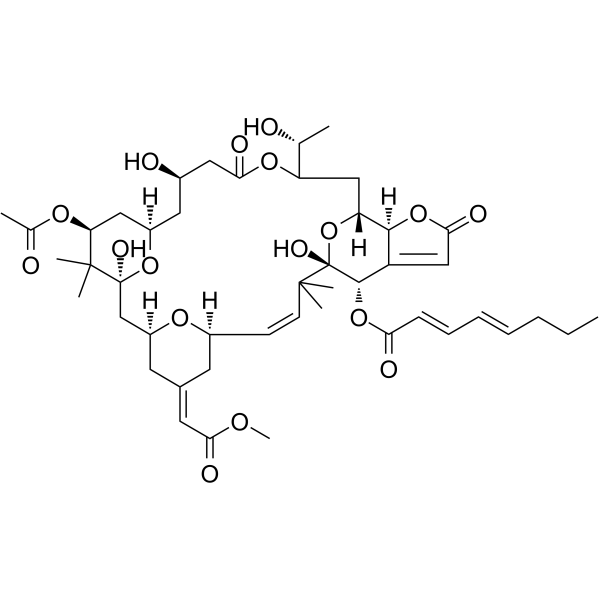 0 ImagesCat. No.: HY-108602CAS No.: 143370-84-7
Bryostatin 3, a macrocyclic lactone, is a protein kinase C activator, with a Ki of 2.75 nM. Bryostatin 3 can block 12-O-tetradecanoylphorbol-13-acetate (TPA) inhibition of cell proliferation, yet did not block TPA-enhanced cell-substratum adhesion.
-
PDIC-NN
 0 ImagesCat. No.: HY-169225CAS No.: 932740-48-2Synonyms: PDIC-NS free base
PDIC-NN (PDIC-NS free base) is a STING activator with anticancer activity. PDIC-NN promotes the content and biostability of endogenous cyclic dinucleotides (CDNs). PDIC-NN triggers ROS burst and causes serious damage to mitochondria. PDIC-NN induces cell apoptosis and inhibits DNA replication. PDIC-NN activates cGAS-STING signaling pathway, enhances the immunogenicity of tumor cells and activates a robust innate immune response.
-
FM213
 0 ImagesCat. No.: HY-P11891
FM213 is a PD-L1 inhibitor with a human IC50 of 323 nM. FM213 blocks PD-1/PD-L1 protein-protein interactions, and promotes endocytosis and lysosome-dependent degradation of PD-L1 on the surface of cancer cells. FM213 binds to PD-L1 on cancer cells and exosomes, and enhances the recognition and killing of cancer cells by human PBMC. Combination of FM213 with the TIGIT inhibitor DTBP-3 (HY-P11903) enhances anti-tumor immunity. FM213 can be used in research related to non-small cell lung cancer.
-
PI3K/mTOR-IN-22
 0 ImagesCat. No.: HY-183327
PI3K/mTOR-IN-22 is an orally active PI3K/mTOR kinase dual inhibitor with IC50 values of 400.5 nM and 8.2 nM. PI3K/mTOR-IN-22 downregulates phosphorylation of the AKT and mTOR, upregulates pro-apoptotic proteins Bax and caspase-3 and downregulates anti-apoptotic protein Bcl-2. PI3K/mTOR-IN-22 exhibits antiproliferative activity against cancer cells, induces apoptosis and ROS production, and reduces mitochondrial membrane potential. PI3K/mTOR-IN-22 exhibits antitumor activity in breast cancer mice models.
-
D-Mannitol-d
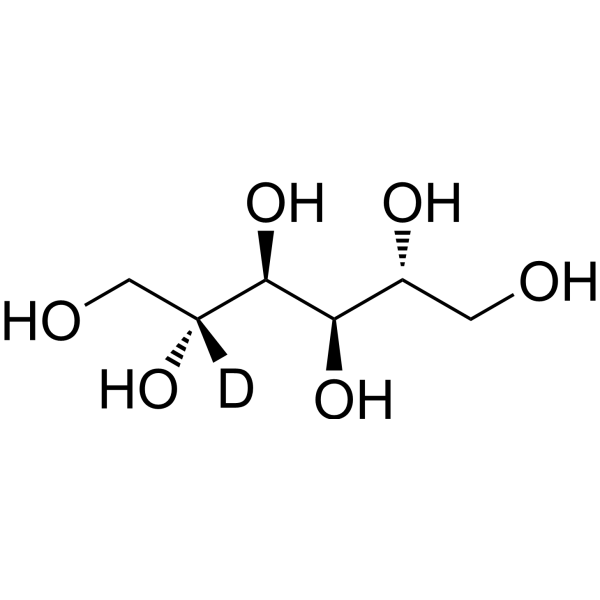 0 ImagesCat. No.: HY-N0378S5CAS No.: 75607-68-0Synonyms: Mannitol-d1; Mannite-d1
D-Mannitol-d is the deuterium labeled D-Mannitol (HY-N0378). D-Mannitol (Mannitol) is an oral, resistant sugar widely used in the food and pharmaceutical industries to promote the absorption and retention of calcium and magnesium through cecal fermentation, while acting as a osmotic diuretic to reduce tissue edema. D-Mannitol can enhance brown fat formation, improve insulin effect, reduce blood sugar levels, And through the start the β3-adrenergic receptor (β3-AR), PGC1α and PKA induced by means of white fat cells into brown fat cells. D-Mannitol is commonly used to maintain osmotic pressure between the plant cytoplasm and the culture medium and protect cells when the cell wall is weakened or even removed.
-
DGKα-IN-3
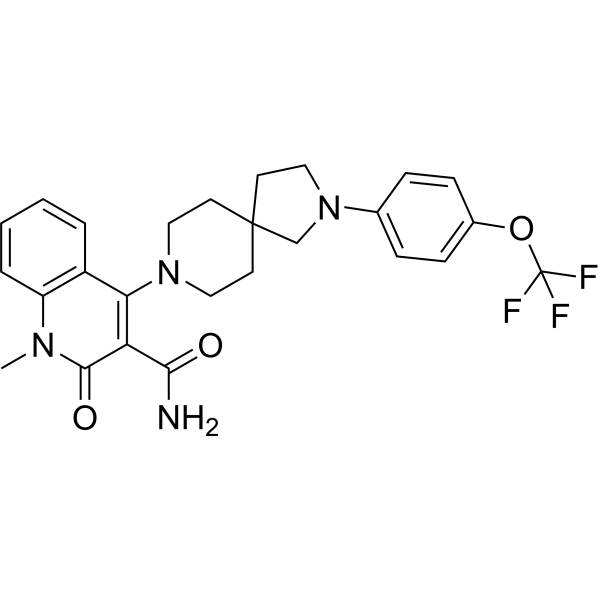 0 ImagesCat. No.: HY-156570CAS No.: 2648418-86-2
DGKα-IN-3 (example 25) is a DGKα inhibitor with the IC50 of 283 nM, extracted from patent WO2021105115. DGKα-IN-2 significantly enhances the anti-tumor effect of anti-PD-1 by increasing the proliferation and function of T cells. DGKα-IN-2 has the potential for cancer and immunology study.
-
Pantoprazole sodium hydrate (Standard)
 0 ImagesSynonyms: BY1023 sodium hydrate (Standard); SKF96022 sodium hydrate (Standard)
Pantoprazole (sodium hydrate) (Standard) is the analytical standard of Pantoprazole (sodium hydrate). This product is intended for research and analytical applications. Pantoprazole sodium hydrate (BY10232 sodium hydrate) is an orally active and potent proton pump inhibitor (PPI). Pantoprazole sodium hydrate, a substituted benzimidazole, is a potent H+/K+-ATPase inhibitor with an IC50 of 6.8 μM. Pantoprazole sodium hydrate improves pH stability and has anti-secretory, anti-ulcer activities. Pantoprazole sodium hydrate significantly increased tumor growth delay combined with Doxorubicin (HY-15142).
-
Bis-PEG2-PFP ester
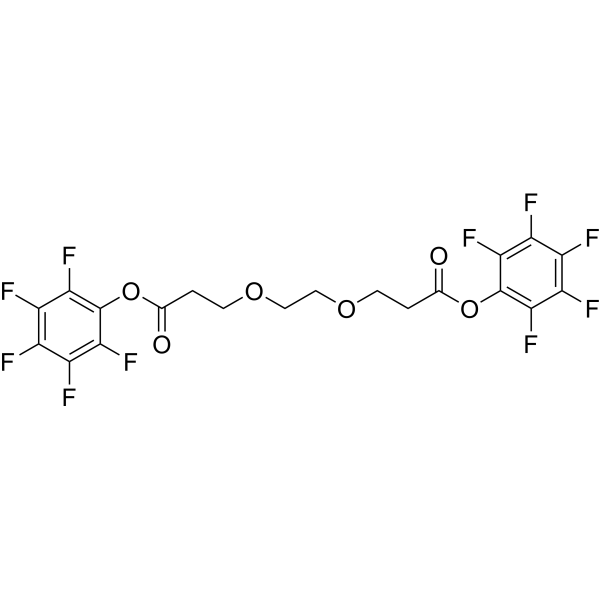 0 Images
Bis-PEG2-PFP ester is also a non-cleavable 2 unit PEG ADC linker used in the synthesis of antibody-drug conjugates (ADCs). Bis-PEG2-PFP ester is also a PEG-based PROTAC linker that can be used in the synthesis of PROTACs.

-
ZK 756326
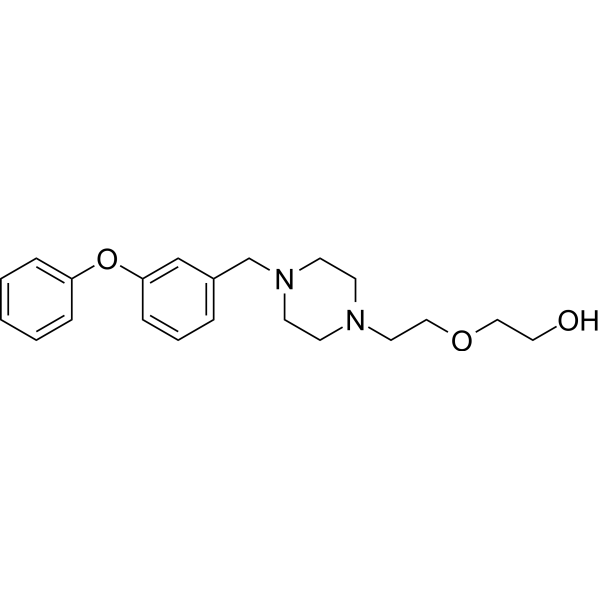 0 ImagesCat. No.: HY-101038CAS No.: 874911-96-3
ZK756326 is a nonpeptide chemokine receptor agonist for the CC chemokine receptor CCR8.
-
Glucocamelinin
 0 ImagesCat. No.: HY-N20735CAS No.: 67884-10-0Synonyms: 10-(Methylsulfinyl)decylglucosinolate; GSL 10
Glucocamelinin (GSL 10) is a sulfinyl glucosinolate identified from seeds of Camelina sativa and an upregulator of quinone reductase (NQO1). Glucocamelinin upregulates the activity of phase II detoxifying enzymes, exhibits selective cytotoxic activity against lung cancer cells, and possesses in vitro antioxidant activity. Glucocamelinin can be used in studies related to non-small cell lung cancer.
-
Anti-Mouse TCRβ Antibody (HB218)
 0 ImagesCat. No.: HY-P990159
Anti-Mouse TCRβ Antibody (HB218) is an anti-mouse TCRβ IgG2b monoclonal antibody. Anti-Mouse TCRβ Antibody (HB218) can deplete TCRβ+ T cells. Anti-Mouse TCRβ Antibody (HB218) can be used for research on inflammation conditions and cancer such as spontaneous dermatitis and squamous cell carcinoma (SCC).
-
BMS-1233
 0 ImagesCat. No.: HY-151066CAS No.: 2447065-99-6
-
Nelitolimod sodium
 0 ImagesCat. No.: HY-177648A
Nelitolimod sodium, a CpG oligonucleotide, is a TLR9 agonist.



