Cancer Targeted Therapy
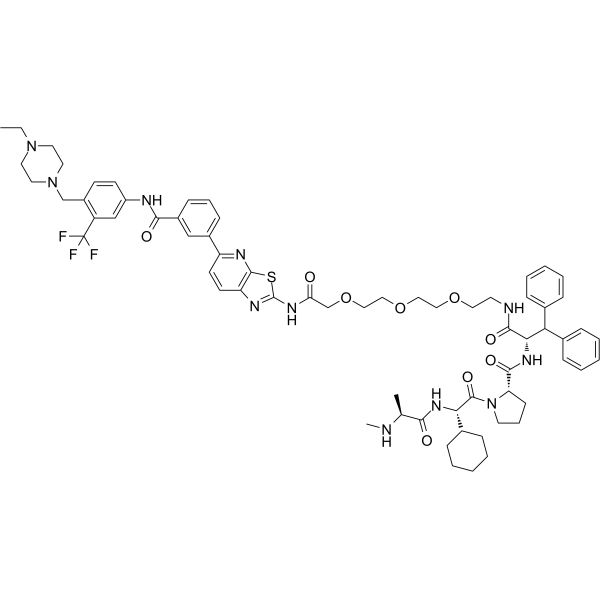
Cancer targeted therapy is the foundation of precision medicine; it uses drugs or other substances to target specific genes and proteins that control cancer cells’ growth, division and spreading. Compared to traditional chemotherapy drugs, targeted-drugs can specifically act on cancer cells with high efficacy without damaging normal cells. Drugs used in cancer targeted therapy mainly includes small molecules and macromolecules (e.g., monoclonal antibodies), which can target cancer cells and constituents in the tumor microenvironment to activate the immune system. Anti-angiogenesis drugs, such as those targeting vascular endothelial growth factor (VEGF), epidermal growth factor receptor (EGFR), transforming growth factor (TGF)-α, TGF-β, Tumor necrosis factor (TNF)-α, and platelet-derived endothelial growth factor (PDGFR) inhibit the proliferation and metastasis of cancer cells. In recent years, the proportion of antibody drugs in cancer treatment has gradually become prominent. Antibody-drug conjugates (ADCs) are a new type of targeted drugs that are composed of monoclonal antibody, cytotoxic drug and linker. ADCs can deliver drugs to tumor cells and minimize the toxicity to normal tissues. Proteolysis-targeting chimera (PROTAC) is a useful technology for targeted protein degradation. PROTAC exploits the ubiquitin-proteasome system and forms a ternary complex with a hijacked E3 ubiquitin ligase and target protein, leading to polyubiquitination and degradation of the target protein.
Targeted therapy is a useful strategy in treatment of cancer either alone or in combination with standard chemotherapy. At present, targeted therapy has proved significant clinical success in the treatment of many types of cancer, including breast cancer, colorectal cancer, leukemia, ovarian cancer and lung cancer.
-
AMRI-59
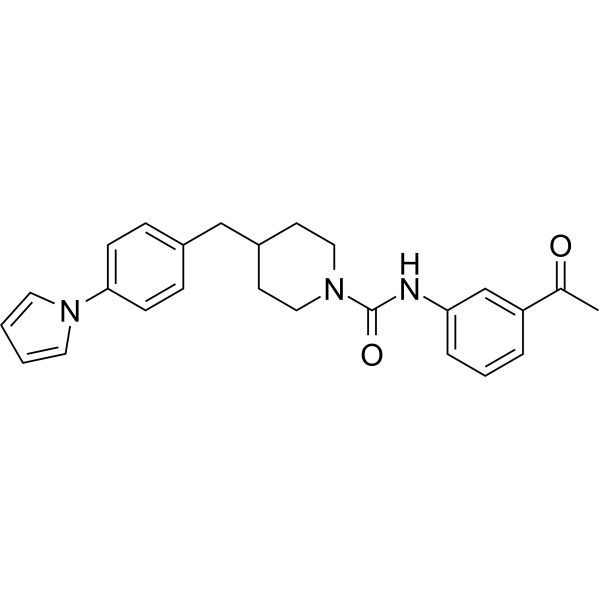 0 ImagesCat. No.: HY-111125CAS No.: 923515-92-8
AMRI-59 is a potent inhibitor of PrxI used for parasitic infections. AMRI-59 can increase cellular ROS, leading to activation of signaling pathways mediated by mitochondria and apoptosis signal-regulated kinase 1, thereby leading to apoptosis in A549 human lung adenocarcinoma. AMRI-59 exhibits significant antitumor activity without apparent acute toxicity.
-
hsa-miR-4687-3p antagomir
 0 ImagesCat. No.: HY-RI01259A
hsa-miR-4687-3p antagomirs are chemically-modified oligonucleotides that hybridize with mature miRNAs. The miRNA antagomirs have 2 phosphorothioates at the 5' end, 4 phosphorothioates at the 3' end, 1 cholesterol group at the 3' end, and full-length nucleotide 2'-methoxy modification. The miRNA antagomirs strongly compete with mature miRNAs to prevent the complementary pairing of miRNAs and their target genes, thereby inhibiting miRNAs from functioning. Stability of miRNA antagomirs appears to be significantly higher than miRNA inhibitors, they exhibits enhanced cellular uptake, stability and regulatory activity in vivo.
-
hsa-miR-614 inhibitor
 0 ImagesCat. No.: HY-RI01880
hsa-miR-614 inhibitors are chemically-modified oligonucleotides that hybridize with mature miRNAs. The miRNA inhibitors have full-length nucleotide 2'-methoxy modification. The miRNA inhibitors strongly compete with mature miRNAs to prevent the complementary pairing of miRNAs and their target genes, thereby inhibiting miRNAs from functioning.
-
hsa-miR-890 antagomir
 0 ImagesCat. No.: HY-RI02500A
hsa-miR-890 antagomirs are chemically-modified oligonucleotides that hybridize with mature miRNAs. The miRNA antagomirs have 2 phosphorothioates at the 5' end, 4 phosphorothioates at the 3' end, 1 cholesterol group at the 3' end, and full-length nucleotide 2'-methoxy modification. The miRNA antagomirs strongly compete with mature miRNAs to prevent the complementary pairing of miRNAs and their target genes, thereby inhibiting miRNAs from functioning. Stability of miRNA antagomirs appears to be significantly higher than miRNA inhibitors, they exhibits enhanced cellular uptake, stability and regulatory activity in vivo.
-
mmu-miR-383-5p antagomir
 0 ImagesCat. No.: HY-RI03122A
mmu-miR-383-5p antagomirs are chemically-modified oligonucleotides that hybridize with mature miRNAs. The miRNA antagomirs have 2 phosphorothioates at the 5' end, 4 phosphorothioates at the 3' end, 1 cholesterol group at the 3' end, and full-length nucleotide 2'-methoxy modification. The miRNA antagomirs strongly compete with mature miRNAs to prevent the complementary pairing of miRNAs and their target genes, thereby inhibiting miRNAs from functioning. Stability of miRNA antagomirs appears to be significantly higher than miRNA inhibitors, they exhibits enhanced cellular uptake, stability and regulatory activity in vivo.
-
mmu-miR-7006-5p antagomir
 0 ImagesCat. No.: HY-RI03747A
mmu-miR-7006-5p antagomirs are chemically-modified oligonucleotides that hybridize with mature miRNAs. The miRNA antagomirs have 2 phosphorothioates at the 5' end, 4 phosphorothioates at the 3' end, 1 cholesterol group at the 3' end, and full-length nucleotide 2'-methoxy modification. The miRNA antagomirs strongly compete with mature miRNAs to prevent the complementary pairing of miRNAs and their target genes, thereby inhibiting miRNAs from functioning. Stability of miRNA antagomirs appears to be significantly higher than miRNA inhibitors, they exhibits enhanced cellular uptake, stability and regulatory activity in vivo.
-
rno-miR-345-3p antagomir
 0 ImagesCat. No.: HY-RI04368A
rno-miR-345-3p antagomirs are chemically-modified oligonucleotides that hybridize with mature miRNAs. The miRNA antagomirs have 2 phosphorothioates at the 5' end, 4 phosphorothioates at the 3' end, 1 cholesterol group at the 3' end, and full-length nucleotide 2'-methoxy modification. The miRNA antagomirs strongly compete with mature miRNAs to prevent the complementary pairing of miRNAs and their target genes, thereby inhibiting miRNAs from functioning. Stability of miRNA antagomirs appears to be significantly higher than miRNA inhibitors, they exhibits enhanced cellular uptake, stability and regulatory activity in vivo.
-
4-Hydroxy-1-(2,3,5-tri-O-benzoyl-β-D-ribofuranosyl)-2(1H)-pyridinone
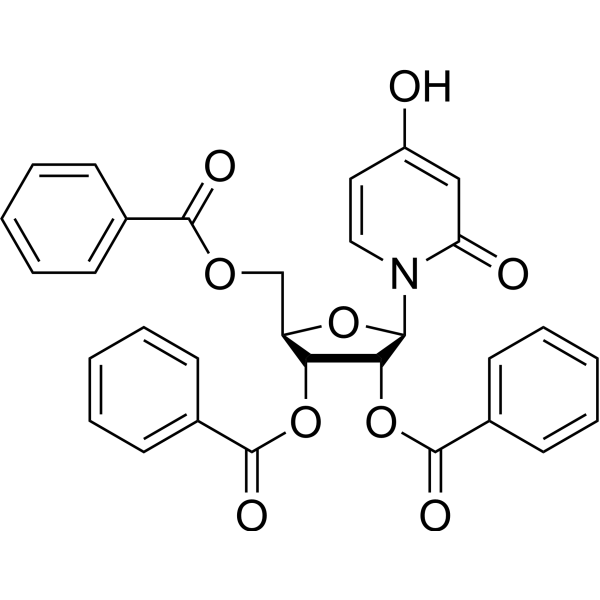 0 ImagesCat. No.: HY-W547585CAS No.: 23220-74-8
4-Hydroxy-1-(2,3,5-tri-O-benzoyl-β-D-ribofuranosyl)-2(1H)-pyridinone is a purine nucleoside analog. Purine nucleoside analogs have broad antitumor activity targeting indolent lymphoid malignancies. Anticancer mechanisms in this process rely on inhibition of DNA synthesis, induction of apoptosis, etc.
-
AKN-028 TFA
 0 ImagesCat. No.: HY-118304ACAS No.: 1175017-91-0
AKN-028 TFA, a novel tyrosine kinase (TK) inhibitor, is a potent, orally active FMS-like receptor tyrosine kinase 3 (FLT3) inhibitor with an IC50 value of 6 nM. AKN-028 TFA inhibits FLT3 autophosphorylation. AKN-028 TFA induces dose-dependent cytotoxic response (mean IC50=1 μM). AKN-028 TFA induces apoptosisby activation of caspase 3. AKN-028 TFA can be used in research of acute myeloid leukemia (AML).
-
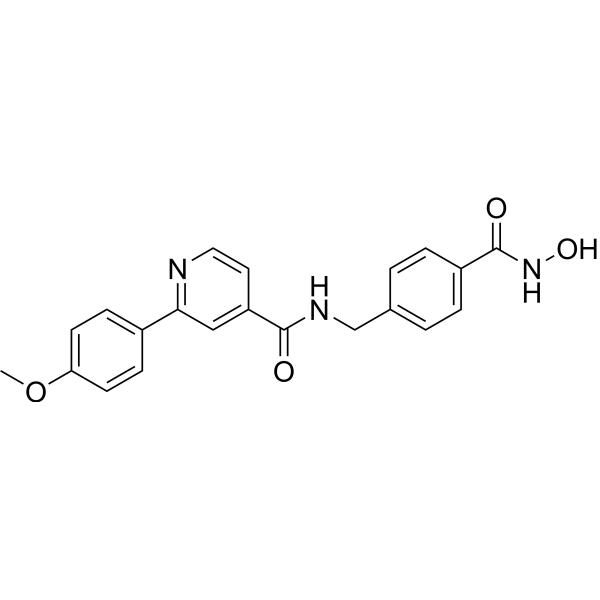
EGFR-IN-27
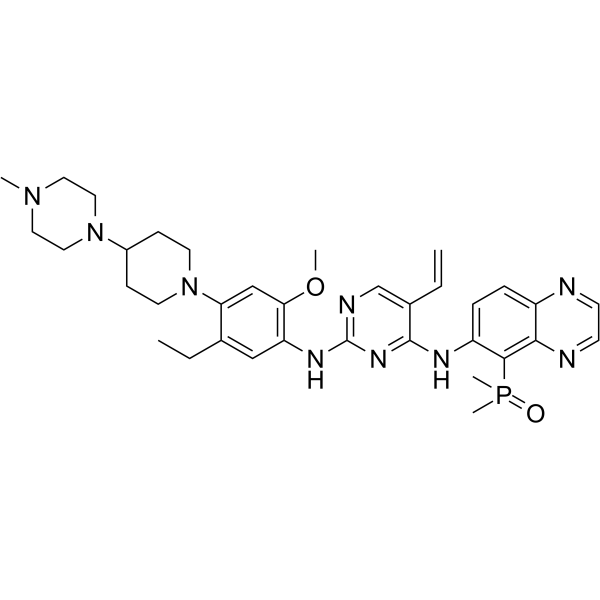 0 ImagesCat. No.: HY-142519CAS No.: 2752328-62-2
-
hsa-let-7d-3p inhibitor
 0 ImagesCat. No.: HY-RI00008
hsa-let-7d-3p inhibitors are chemically-modified oligonucleotides that hybridize with mature miRNAs. The miRNA inhibitors have full-length nucleotide 2'-methoxy modification. The miRNA inhibitors strongly compete with mature miRNAs to prevent the complementary pairing of miRNAs and their target genes, thereby inhibiting miRNAs from functioning.
-
hsa-miR-3174 antagomir
 0 ImagesCat. No.: HY-RI00630A
hsa-miR-3174 antagomirs are chemically-modified oligonucleotides that hybridize with mature miRNAs. The miRNA antagomirs have 2 phosphorothioates at the 5' end, 4 phosphorothioates at the 3' end, 1 cholesterol group at the 3' end, and full-length nucleotide 2'-methoxy modification. The miRNA antagomirs strongly compete with mature miRNAs to prevent the complementary pairing of miRNAs and their target genes, thereby inhibiting miRNAs from functioning. Stability of miRNA antagomirs appears to be significantly higher than miRNA inhibitors, they exhibits enhanced cellular uptake, stability and regulatory activity in vivo.


-
Necroptosis inducer 2
 0 ImagesCat. No.: HY-183538
Necroptosis inducer 2 is a necroptosis inducer and copper chelator. Necroptosis inducer 2 chelates intracellular free copper ions, disrupts redox homeostasis, elevates ROS levels, disrupts mitochondrial membrane potential, and induces cancer cell necroptosis. Necroptosis inducer 2 upregulates the necroptosis markers p-MLKL and p-RIP3 expression. Necroptosis inducer 2 exhibits anti-tumor activity in mice. Necroptosis inducer 2 can be used for the research of cancer, such as triple-negative breast cancer.
-
Biguanide-4-(p-tolylethynyl)aniline
 0 ImagesCat. No.: HY-189542CAS No.: 3112754-10-3
Biguanide-4-(p-tolylethynyl) aniline is an amphiphilic cation and AMPK pathway phosphorylation inducer that crosses phospholipid membranes and accumulates in mitochondria, inhibiting pancreatic cancer cell proliferation by altering COXII and NDUFB8 protein levels. Biguanide-4-(p-tolylethynyl) aniline can be used in the study of pancreatic cancer.
-
Bromo-PEG7-amine hydrobromide
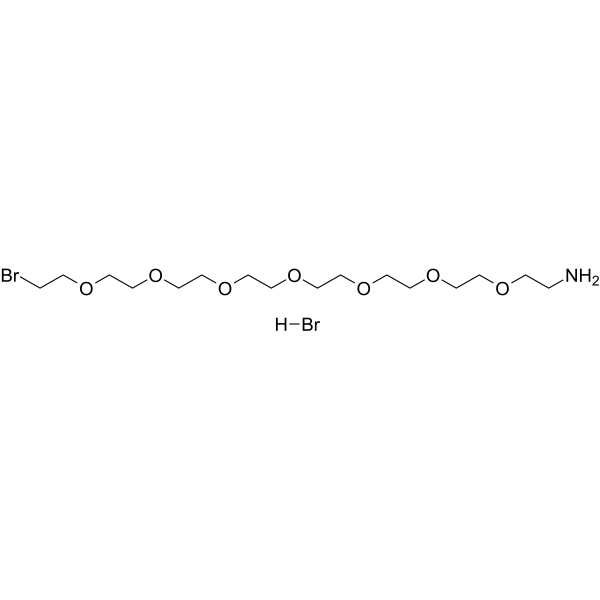 0 ImagesCat. No.: HY-143844B
-
Apalutamide-d7
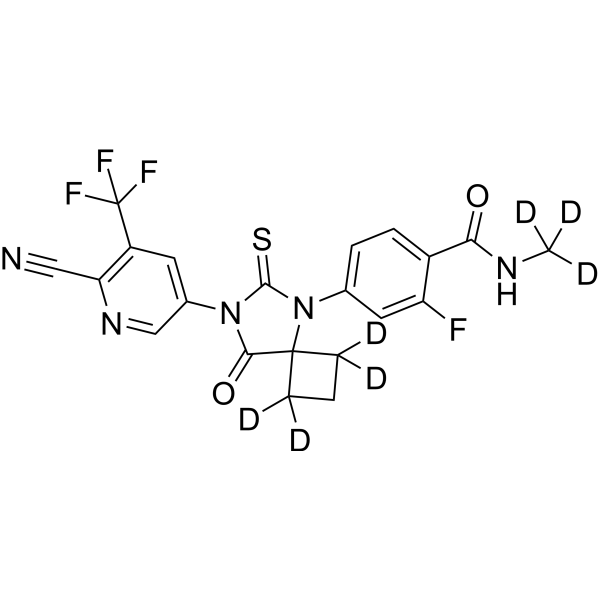 0 ImagesCat. No.: HY-16060S3Synonyms: ARN-509-d7
Apalutamide-d7 is deuterated labeled Apalutamide (HY-16060). Apalutamide (ARN-509) is a potent and competitive androgen receptor (AR) antagonist, binding AR with an IC50 of 16 nM.