Infection
-
Infection Related Products (18904)
Related Products (18904)

-
Antibodies (22)
-
Propylparaben (Standard)
 0 ImagesSynonyms: Propyl parahydroxybenzoate (Standard); Propyl 4-hydroxybenzoate (Standard)
Propylparaben (Propyl parahydroxybenzoate) (Standard) is the analytical standard of Propylparaben (HY-N2026). Propylparaben (Propyl parahydroxybenzoate) is an antibacterial preservative that can be produced by plants and bacteria. Propylparaben is an orally active weak estrogen receptor agonist. Propylparaben regulates the PI3K-AKT and JNK signaling pathways, and induces oxidative stress. Propylparaben is commonly used in cosmetics, pharmaceuticals and foods, and can be used in studies related to ovarian aging and myocardial ischemia-reperfusion injury.
-
Polymyxin B1-d7 TFA
 0 ImagesCat. No.: HY-A0248ASPurity: 98.18%
Polymyxin B1-d7 TFA is the deuterium labeled Polymyxin B1 TFA (HY-A0248A). Polymyxin B1 is a potent antimicrobial lipopeptide first derived from Bacilus polymyxa. Polymyxin B1 is the major component in Polymyxin B (HY-A0248). Polymyxin B1 can induce lysis of bacterial cells through interaction with their membranes. Polymyxin B1 has the potential for multidrug-resistant Gram-negative bacterial infections treatment.
-
(±)-Triadimefon-d4
 0 ImagesCat. No.: HY-W706180
(±)-Triadimefon-d4 is deuterium labeled Triadimefon. Triadimefon is a triazole fungicide used to control powdery mildew, rusts, and other fungal pests on grains, fruit and vegetable crops, turf, shrubs, and trees. Triadimefon inhibits lanosterol 14α-demethylase, interfering with oxidative demethylation reactions in the ergosterol biosynthesis pathway of fungi, and also blocks gibberellin biosynthesis.
-
NVC-422
 0 ImagesCat. No.: HY-111311CAS No.: 846056-87-9
NVC-422 is a N-chlorotaurine analog, virucidal agent, antibacterial agent. NVC-422 exhibits virucidal activity against Ad5 by the oxidative inactivation of key viral proteins (fiber and hexon), leading to the loss of viral integrity and infectivity. NVC-422 is shown to be highly effective in killing all microbial strains tested, including antibiotic-resistant S. aureus and E. faecium. NVC-422 can be used in the research of adenoviral conjunctivitis.
-
(Z)-9-Propenyladenine
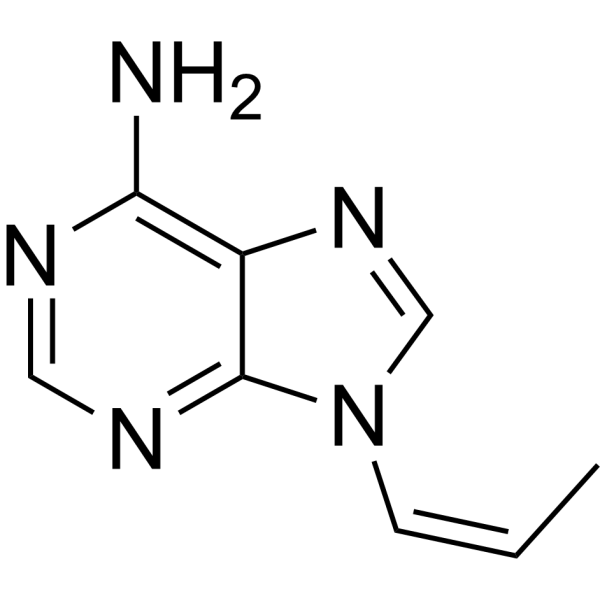 0 ImagesCat. No.: HY-100079ACAS No.: 1464851-21-5Synonyms: (Z)-Mutagenic Impurity of Tenofovir Disoproxil
(Z)-9-Propenyladenine is a mutagenic impurity in tenofovir disoproxil fumarate. Tenofovir is an antiretroviral agent known as nucleotide analogue reverse transcriptase (NtART) inhibitor, which blocks reverse transcriptase, a crucial virus enzyme in HIV-1 and HBV.
-
(E)-Fenpyroximate (Standard)
 0 Images
(E)-Fenpyroximate (Standard) is the analytical standard of (E)-Fenpyroximate. This product is intended for research and analytical applications. (E)-Fenpyroximate is a potent acaricide.
-
1-Methoxyphaseollidin
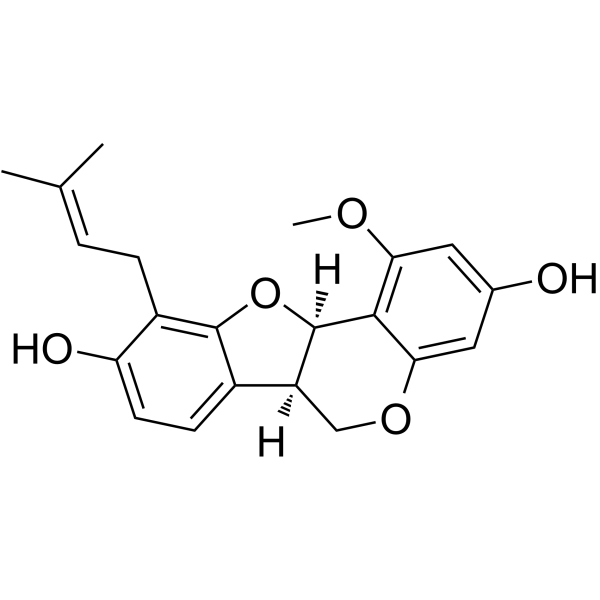 0 Images
1-Methoxyphaseollidin, a flavonoid compound, is a lysoPAF acetyltransferase inhibitor, with an IC50 of 48 μM. 1-Methoxyphaseollidin exhibits anti-H.pylori activity against the CLAR and AMOX-resistant strain as well as four CLAR (AMOX)-sensitive strains.
-
Tilbroquinol
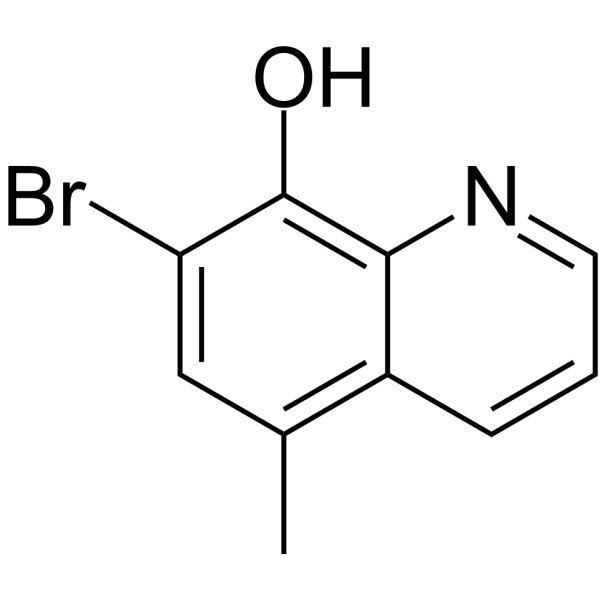 0 Images
Tilbroquinol is an orally active halogenated hydroxyquinoline antiprotozoal agent, mainly used for anti-amoebic infections. Tilbroquinol targets intestinal protozoa and Entamoeba histolytica to eliminate parasites in the intestinal lumen. Tilbroquinol can be used in research related to intestinal infections, intestinal amoebiasis and hepatic amoebiasis.
-
Cas12a mRNA
 0 ImagesCat. No.: HY-185053
Cas12a mRNA is the messenger RNA encoding Cas12a. Cas12a mRNA undergoes translation-dependent degradation triggered by the anti-CRISPR protein AcrVA2, which recognizes and binds to the N-terminal polypeptide of Cas12a. AcrVA2-triggered Cas12a mRNA degradation is independent of promoter or codon sequences, requiring only the first 100 amino acids of the Cas12a polypeptide. The down-regulation of Cas12a mRNA by AcrVA2 inhibits the biosynthesis of Cas12a.
-
Imidazole-4-pyruvic acid
 0 Images
Imidazole-4-pyruvic acid (Imidazolepyruvic acid) is a metabolic precursor for histidine synthesis and selective stable isotope labeling of histidine residues. Imidazole-4-pyruvic acid serves as a precursor for selective histidine labeling in overexpressed proteins of Escherichia coli. Imidazole-4-pyruvic acid can be used in studies related to cancer and fungal mold infections.
-
(+)-trans-Chrysanthemic acid
 0 Images
(+)-trans-Chrysanthemic acid is a component of pyrethroids that inhibits Orlando strain mosquitoes.
-
CBA-4
 0 ImagesCat. No.: HY-207462CAS No.: 2114983-08-1
CBA-4 is an L,D-transpeptidase inhibitor. CBA-4 covalently acylates the active site of L,D-transpeptidase to form a stable acylenzyme adduct. CBA-4 can be used for research on bacterial resistance.
-
L-Phenylalanyl-L-glutamic acid
 0 Images
L-Phenylalanyl-L-glutamic acid (H-Phe-Glu-OH) is a dipeptide present in the exudates of alfalfa seedlings, which exhibits high affinity for PEPT2. L-Phenylalanyl-L-glutamic acid can serve as the peptide scaffold of a tyrosyl-tRNA synthetase inhibitor against Staphylococcus aureus.
-
SIK2-IN-4
 0 Images
SIK2-IN-4 (Compound 4) is a highly selective SIK1/2 inhibitor (IC50s 0.143 and 0.076 μM, respectively). SIK2-IN-4 reduces the phosphorylation of transcription coactivator 3 (CRTC3) by targeting SIK1/2, thereby regulating cAMP response element binding protein (CREB)-dependent transcriptional activity. SIK2-IN-4 inhibits the production of pro-inflammatory cytokines such as TNF (IC50: 0.11 µM), IL-12/23 p40 (IC50: 0.25 µM), and IL-23 (IC50: 0.47 µM), while inducing the expression of the anti-inflammatory cytokine IL-10. SIK2-IN-4 can be used to study intestinal inflammation and other chronic inflammatory diseases.
-
SDH-IN-5
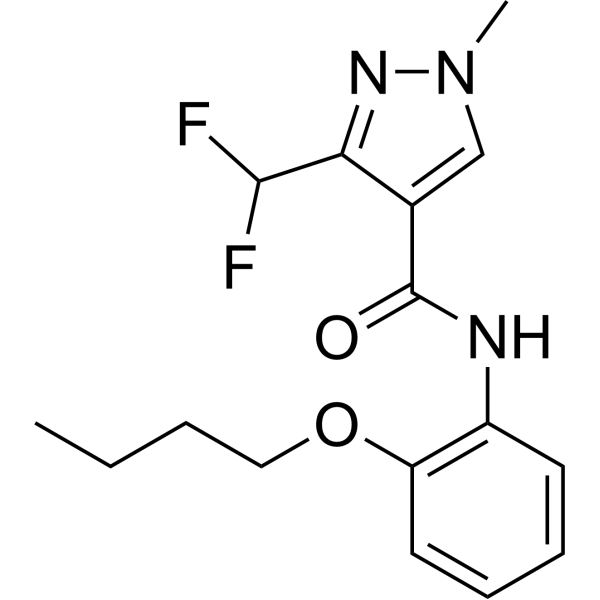 0 Images
SDH-IN-5 (compound 7d) is a potent succinate dehydrogenase (SDH) inhibitor, with an IC50 of 3.293 μM. SDH-IN-5 is also exhibits antifungal activity, with an EC50 of 0.046 μg/mL against R. solani. SDH-IN-5 could significantly inhibit the growth of R. solani in rice leaves with excellent protective and curative efficacies.
-
DL-Lanthionine
 0 Images
DL-Lanthionine is a distinctive amino acid and a monosulfide counterpart to cystine, playing a vital role as a component of peptide antibiotics known as lantiobiotics, which encompass well-known examples such as nisin and subtilin.
-
Farrerol (Standard)
 0 ImagesSynonyms: (-)-Farrerol (Standard)
Farrerol (Standard) is the analytical standard of Farrerol. This product is intended for research and analytical applications. Farrerol is a bioactive constituent of Rhododendron, with broad activities such as anti-oxidative, anti-inflammatory, anti-tumor, neuroprotective and hepatoprotective effects.
-
9(S),12(S),13(S)-TriHODE
 0 ImagesCat. No.: HY-168398CAS No.: 95341-44-9
9(S),12(S),13(S)-TriHODE is a plant oxylipin and trihydroxylated fatty acid. 9(S),12(S),13(S)-TriHODE can be used in research on bacterial infection and fungal infection.
-
Glycozolidal
 0 Images
Glycozolidal (compound 12) is a carbazole alkaloid with antibacterial activity against P. gingivalis. Glycozolidal is cytotoxic against human gingival fibroblasts (HGFs) and monocytes (U937) in vitro with IC50 values of 120.86 µg/mL and 97.74 µg/mL, respectively.
-
(10E,12E)-9-Oxo-10,12-octadecadienoic acid
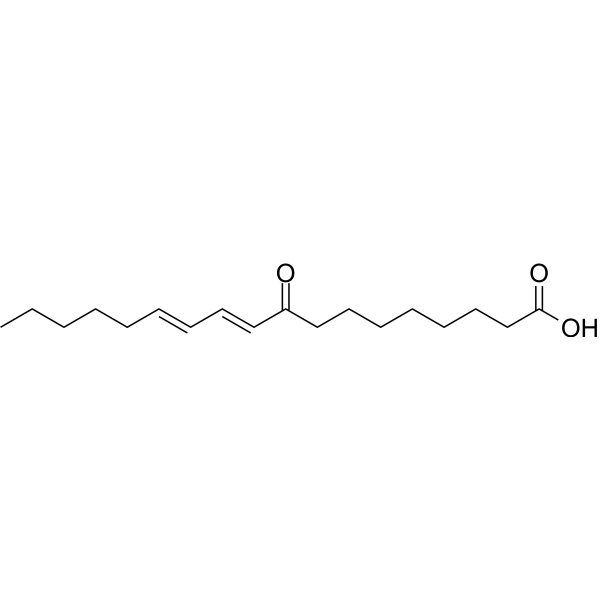 0 ImagesCat. No.: HY-N9768CAS No.: 54232-58-5Synonyms: 9-oxo-ODA
(10E,12E)-9-Oxo-10,12-octadecadienoic acid (9-oxo-ODA) is a PPARα agonist that can be isolated from the basidiomycete Gomphus floccosus. (10E,12E)-9-Oxo-10,12-octadecadienoic acid enhances fatty acid oxidation through PPARα activation, thereby inhibiting triglyceride accumulation. (10E,12E)-9-Oxo-10,12-octadecadienoic acid also has antifungal (Fungal) activity.