



Cholinesterase (ChE) Inhibitor
-
AChE-IN-25
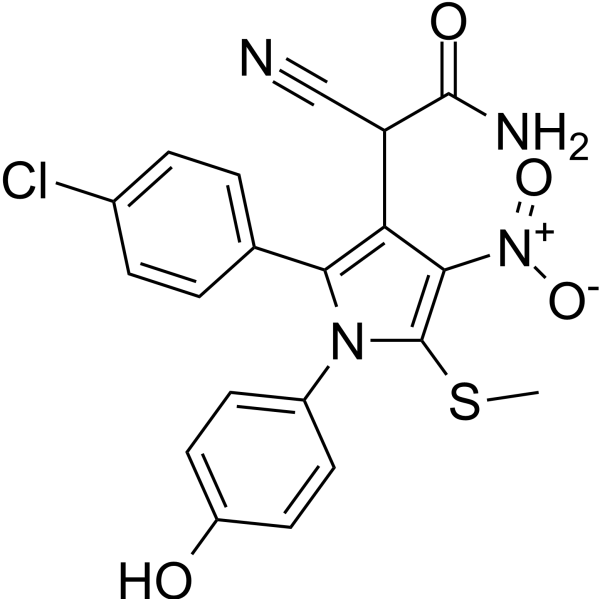 0 ImagesCat. No.: HY-151338CAS No.: 2835538-69-5
AChE-IN-25 is a potent, selective and uncompetitive acetylcholinesterase (AChE) inhibitor (IC50=2.95 µM). AChE-IN-25 can be used in Alzheimer's disease research.
-
Temephos-d12
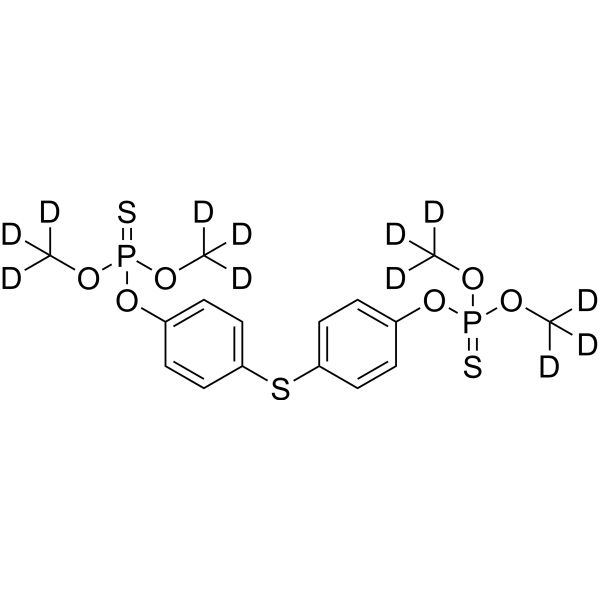 0 ImagesCat. No.: HY-B1120SCAS No.: 1219795-39-7Synonyms: Temefos-d12
Temephos-d12 is the deuterium labeled Temephos. Temephos (Temefos) is an orally active, blood-brain barrier-permeable organophosphate insecticide and AChE inhibitor. By irreversibly inhibiting AChE to induce cholinergic overactivation, Temephos effectively blocks larval development of Aedes aegypti (yellow fever mosquito) and Aedes albopictus (Asian tiger mosquito), and is commonly used in studies related to Dengue Virus, Zika Virus and other relevant pathogens. Temephos exhibits genotoxicity and neurodevelopmental toxicity, and may also cause liver injury, reproductive system abnormalities and cholinergic poisoning symptoms in mammals. Temephos tends to accumulate in adipose tissues and aquatic organisms, and is excreted via feces after metabolism through oxidation and hydrolysis. Note that CYP-mediated metabolic detoxification may reduce the actual larvicidal efficacy of Temephos against some mosquito species. Temephos can be used in research related to dengue fever, Zika virus disease, chikungunya and dracunculiasis.
-
BChE/p38-α MAPK-IN-1
 0 ImagesCat. No.: HY-175655CAS No.: 3077831-11-6
BChE/p38-α MAPK-IN-1 is a selective dual inhibitor of hBChE (IC50 = 772 nM) and p38α MAPK (IC50 = 191 nM). BChE/p38-α MAPK-IN-1 reduces the production of pro-inflammatory cytokines (IL-1β, IL-6, IL-8, TNF-α) in cells. BChE/p38-α MAPK-IN-1 improves Scopolamine (HY-N0296)-induced cognitive impairment, as well as alleviates LPS (HY-D1056)-induced spatial learning impairment and exerts anti-neuroinflammatory effects in mice. BChE/p38-α MAPK-IN-1 can be used for the study of Alzheimer’s disease (AD) by targeting both cholinergic deficit and neuroinflammation.
-
AChE-IN-37
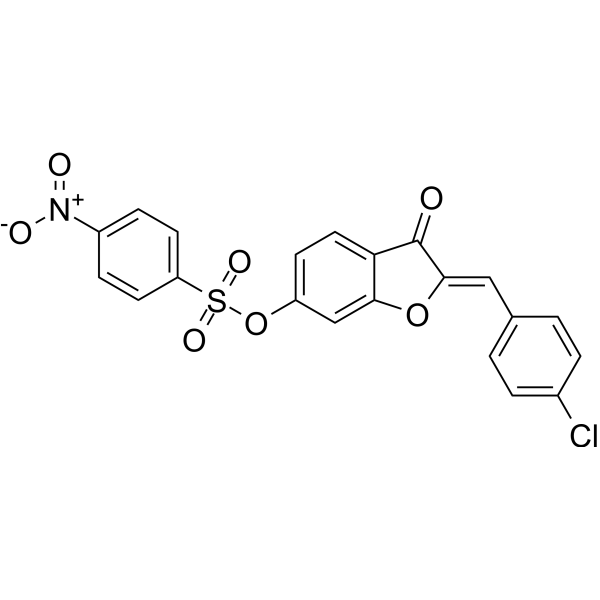 0 Images
AChE-IN-37 (compound A2) is anacetylcholinesterase inhibitorswith an IC50 of 0.23 μM. AChE-IN-37 effects ROS levels and gene expression of NRF2.
-
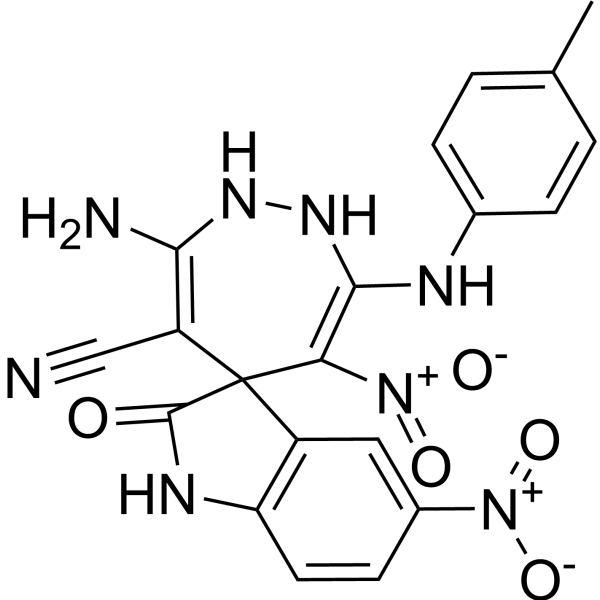
Z164597606
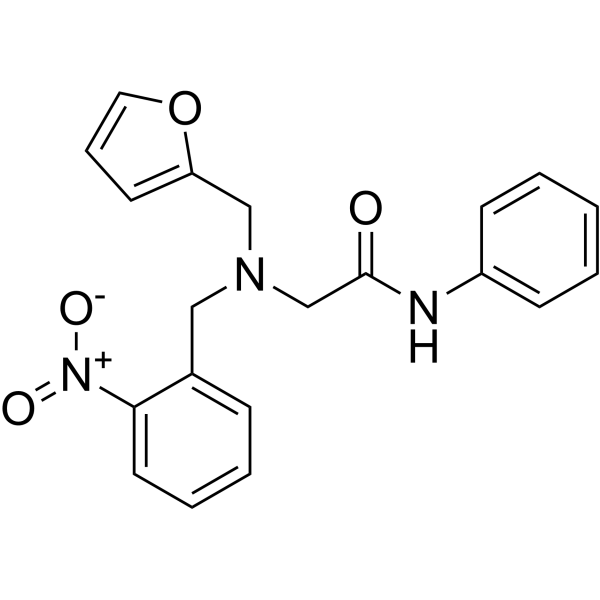 0 ImagesCat. No.: HY-151405CAS No.: 1050587-57-9
-
AChE/BuChE-IN-7
 0 ImagesCat. No.: HY-178141
AChE/BuChE-IN-7 is a dual-action inhibitor with an IC50 valueof 0.15 μM for AChE and 0.7 μM for BuChE, SI of 4.7. AChE/BuChE-IN-7 shows anti-oxidant activity and can mitigate H2O2-induced cytotoxicity. AChE/BuChE-IN-7 has genomic stability and prolonged systemic availability. AChE/BuChE-IN-7 can be used for the research of neurological disease, such as Alzheimer's disease.

-
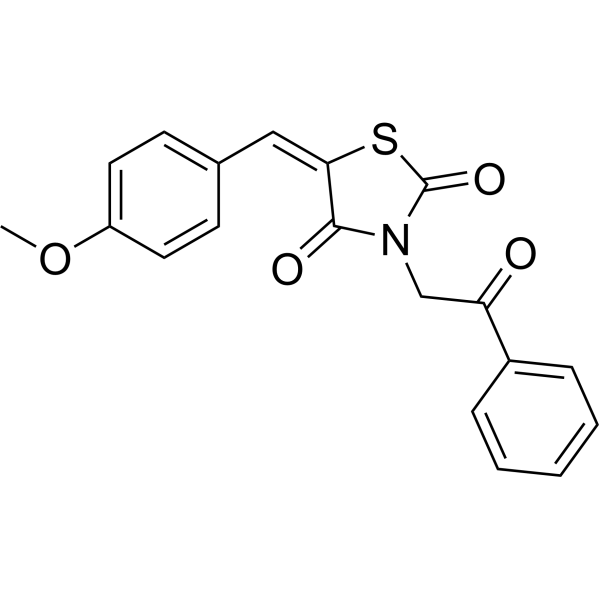
AChE-IN-91
 0 ImagesCat. No.: HY-175006CAS No.: 1171708-92-1
AChE-IN-91 (Compound 8u) is a AChE inhibitor with an IC50 of 0.05 μM. AChE-IN-91 has significant anticholinesterase activity, promising for neurological diseases like Alzheimer's disease (AD) research.
-
Neuroprotective agent 18
 0 ImagesCat. No.: HY-184935
Neuroprotective agent 18 is a potent neuroprotective agent. Neuroprotective agent 18 inhibits the activity of NF-κB thereby significantly downregulating the expression of downstream pro-inflammatory mediators (TNF-α, IL-6) and inflammatory enzymes (COX-2) in the hippocampus. Neuroprotective agent 18 binds to AChE thereby partially inhibiting it and modulating cholinergic neurotransmission. Neuroprotective agent 18 can be used in research on Alzheimer's disease.
-
Poskine
 0 Images
Poskine is an anticholinergic agent and a central nervous system depressant. Poskine can be utilized in research related to Parkinson's disease and travel sickness .
-
Demecarium Bromide (Standard)
 0 ImagesCat. No.: HY-B1626ARCAS No.: 56-94-0Synonyms: BC-48 (Standard)
Demecarium Bromide (Standard) is the analytical standard of Demecarium Bromide. This product is intended for research and analytical applications. Demecarium Bromide (BC-48) is a potent cholinesterase inhibitor, with an apparent affinity (Kiapp) of 0.15 μM. Demecarium Bromide (BC-48) is used as a glaucoma agent.
-
TFSeB
 0 ImagesCat. No.: HY-174419CAS No.: 3017240-62-6
TFSeB is an orally active neuroprotective agent. TFSeB can reduce Streptozotocin (STZ) (HY-13753) induced MAO-B and AChE activity. TFSeB exerts neuroprotective effects by increasing the expression of BCL-2, BDNF, NRF2, and decreasing the expression of BAX. TFSeB can reduce lipid peroxidation (TBARS) and reactive oxygen species (ROS) levels. TFSeB can reduce neuroinflammation. TFSeB can be used for research on Alzheimer’s disease.
-
Sinapine thiocyanate (Standard)
 0 Images
Sinapine (thiocyanate) (Standard) is the analytical standard of Sinapine (thiocyanate). This product is intended for research and analytical applications. Sinapine thiocyanate is an alkaloid isolated from seeds of the cruciferous species. Sinapine thiocyanate exhibits anti-inflammatory, anti-oxidant, anti-tumor, anti-angiogenic and radio-protective effects. Sinapine thiocyanate is also an acetylcholinesterase (AChE) inhibitor and can be used for the research of Alzheimer’s disease, ataxia, myasthenia gravis, and Parkinson’s disease.
-
Fenitrothion-d6
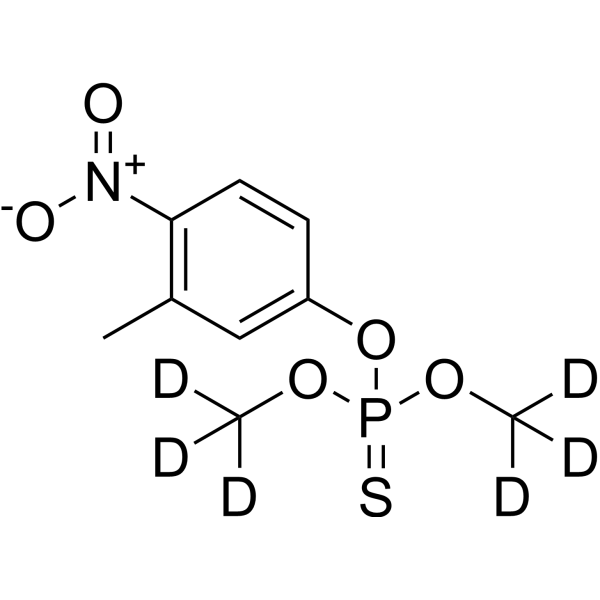 0 ImagesCat. No.: HY-B1885SCAS No.: 203645-59-4
Fenitrothion-d6 is the deuterium labeled Fenitrothion (HY-B1885). Fenitrothion is a broad-spectrum and orally active insecticide/acaricide. Fenitrothion inhibits cholinesterase, AMPKα and IRS1/PI3K/AKT. Fenitrothion causes Apoptosis, reduces SOD activity. Fenitrothion shows insecticidal effect against Rhyzopertha dominica and Tribolium castaneum adults. Fenitrothion is widely used in cotton crops, vegetable crops, fruit crops and field crops, especially rice. Fenitrothion can be used for brain and spleen toxicology studies.
-
Isocorydine N-oxide
 0 ImagesCat. No.: HY-N15707CAS No.: 25405-80-5Synonyms: (+)-Isocorydine N-oxide
Isocorydine N-oxide ((+)-Isocorydine N-oxide), an alkaloidal, a acetylcholinesterase (AChE) inhibitor. Isocorydine N-oxide can be used for the study of Alzheimer's disease.
-
AChE-IN-109
 0 ImagesCat. No.: HY-181851
AChE-IN-109 is a potent mixed-type cholinesterase inhibitor with significantly stronger inhibitory activity against AChE than BChE. AChE-IN-109 has IC50 values of 0.55 μM and 12.45 μM against AChE and BChE, respectively. AChE-IN-109 inhibits cholinesterases through a mixed-type mechanism, binds to both the catalytic active site (CAS) and peripheral anionic site (PAS) of AChE. AChE-IN-109 can be used for the study of Alzheimer’s disease (AD).
-
BChE-IN-41
 0 ImagesCat. No.: HY-174381
BChE-IN-41 is a highly selective Butyrylcholinesterase (BChE) inhibitor (IC50 =12 nM, Ki = 6.6 nM). BChE-IN-41 has high brain penetration with a brain-to-plasma ratio of 9.0. BChE-IN-41 has pro-cognitive effects on mice with AD-like symptoms induced by Scopolamine (HY-N0296) and Aβ1-42.
-
SBN-284
 0 ImagesCat. No.: HY-159482
SBN-284 (compound 3x) is a dual inhibitor of blood-brain permeable Cholinesterases and the NLRP3 inflammasome and is effective against EeAChE, hAChE and eqBChE, the IC50 values of are 0.37, 0.31, 0.29 μM respectively, and the EC50 of NLRP3 inflamm is 1 μM. SBN-284 can be used in Alzheimer's disease research.



