



Cholinesterase (ChE) Inhibitor
-
Pridinol mesylate (Standard)
 0 Images
Pridinol mesylate (Standard) is the analytical standard of Pridinol mesylate (HY-B1343). This product is intended for research and analytical applications. Pridinol mesylate is an orally active, blood-brain permeable, muscarinic acetylcholine receptor (mAChR)-directed muscle relaxant. Pridinol mesylate reduces the conduction of impulses to spinal motor neurons and exerts muscle relaxant activity. Pridinol mesylate inhibits skeletal muscle contractures in diseases of both central and peripheral origin and can be used in research in the field of musculoskeletal diseases.
-
Thunberginol C
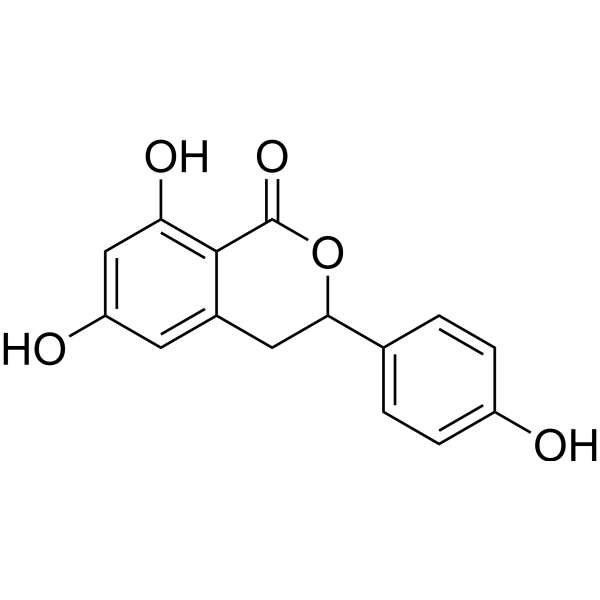 0 ImagesCat. No.: HY-N1151CAS No.: 147517-06-4
Thunberginol C is an orally active, selective, and non-competitive inhibitor of AChE and BChE, with IC50 values of 41.96 and 42.36 μM, respectively. Thunberginol C exerts cytoprotective, pro-collagen type I restorative, MMP-1 inhibitory, hyaluronic acid restorative, anti-photoaging effects in skin cells. Thunberginol C exerts neuroprotective, anxiolytic, TNF-α inhibitory, neuroinflammation inhibitory, and oxidative stress inhibitory effects. Thunberginol C can be used for the research of Alzheimer’s disease, UVB-induced skin photoaging, allergic reactions, oral bacterial infections, and stress-induced anxiety.
-
Chlorphoxim
 0 ImagesCat. No.: HY-W747601CAS No.: 14816-20-7
Chlorphoxim is a broad-spectrum and highly efficient insecticide. Chlorphoxim kills pests by inhibiting AChE. Chlorphoxim inhibits the activities of SOD and CAT in zebrafish embryos. Chlorphoxim induces oxidative stress in zebrafish embryos by activating ROS. Chlorphoxim induces apoptosis by upregulating the expression levels of Bax, Bcl2 and p53 in zebrafish embryos. Chlorphoxim exhibits neurotoxicity and developmental toxicity. Chlorphoxim is used in agricultural research for the control of various pests.
-
Isomalathion
 0 ImagesCat. No.: HY-W707749CAS No.: 3344-12-5
Isomalathion is an isomer and impurity of Malathion (HY-B0943). Isomalathion inhibits Carboxyesterase and AChE, with an IC50 value of 3.2 μM against bovine acetylcholinesterase. Isomalathion moderately reduces CYP1A2 transcript levels, increases CYP2B6 transcript levels, and induces dose-dependent DNA damage. Malathion is an organophosphorus insecticide.
-
Buxbodine B
 0 ImagesCat. No.: HY-N2971CAS No.: 390362-51-3
Buxbodine B is an inhibitor for acetylcholinesterase (AChE) with an IC50 of 50 μM. Buxbodine B can be used in research of Alzheimer's disease.
-
Arisugacin D
 0 ImagesCat. No.: HY-N13924CAS No.: 261950-94-1
Arisugacin D is an acetylcholinesterase (AChE) inhibitor with an IC50 of 3.5 μM.

-
Aspulvinone H
 0 ImagesCat. No.: HY-N14093CAS No.: 57744-69-1
Aspulvinone H is an orally active inhibitor of AChE, pancreatic lipase, glutamic-oxaloacetic transaminase 1, and α-glucosidase, with IC50 values of 25.95 μM, 47.06 μM, 5.91/6.91 μM, and 4.6 μM, respectively. It has a Ka of 2.14 μM against GOT1 and a Ki of 6.58 μM against α-glucosidase. Aspulvinone H inhibits cancer cell proliferation, interferes with glutamine metabolism, elevates ROS levels, and induces cell apoptosis and S-phase arrest. Aspulvinone H exhibits antibacterial activity against Staphylococcus aureus. Aspulvinone H inhibits the growth of pancreatic ductal adenocarcinoma xenografts. Aspulvinone H reduces postprandial blood glucose in mice. Aspulvinone H can be used in research related to pancreatic ductal adenocarcinoma, diabetes, and Staphylococcus aureus infection.
-
Amprolium hydrochloride (Standard)
 0 Images
Amprolium (hydrochloride) (Standard) is the analytical standard of Amprolium (hydrochloride) (HY-B0937A). This product is intended for research and analytical applications. Amprolium hydrochloride is a thiamine transporter inhibitor and antiparasitic agent with oral activity and blood-brain barrier penetration. Amprolium hydrochloride blocks thiamine transport at the blood-brain barrier and intestine, and competitively inhibits thiamine pyrophosphokinase, inducing thiamine pyrophosphate deficiency and impairing carbohydrate synthesis. Amprolium hydrochloride induces oxidative stress, alters antioxidant enzyme activity, and inhibits acetylcholinesterase (AchE) activity. Amprolium hydrochloride disrupts reproductive organs and gametogenesis, and causes histopathological and ultrastructural damage to multiple organs. Amprolium hydrochloride induces thiamine deficiency, reduces body weight gain in mice, and causes psychomotor behavioral changes and nephropathy. Amprolium hydrochloride exhibits molluscicidal activity against the terrestrial snail Eobania vermiculata, and reduces the shedding of Eimeria meleagrimitis oocysts in feces and litter. Amprolium hydrochloride can be used for research on thiamine deficiency and coccidiosis.
-
Sinapine (Standard)
 0 ImagesCat. No.: HY-N5077RCAS No.: 18696-26-9
Sinapine is an alkaloid isolated from seeds of the cruciferous species. Sinapine exhibits anti-inflammatory, anti-oxidant, anti-tumor, anti-angiogenic and radio-protective effects. Sinapine is also an acetylcholinesterase (AChE) inhibitor and can be used for the research of Alzheimer’s disease, ataxia, myasthenia gravis, and Parkinson’s disease.
-
Aloveroside A
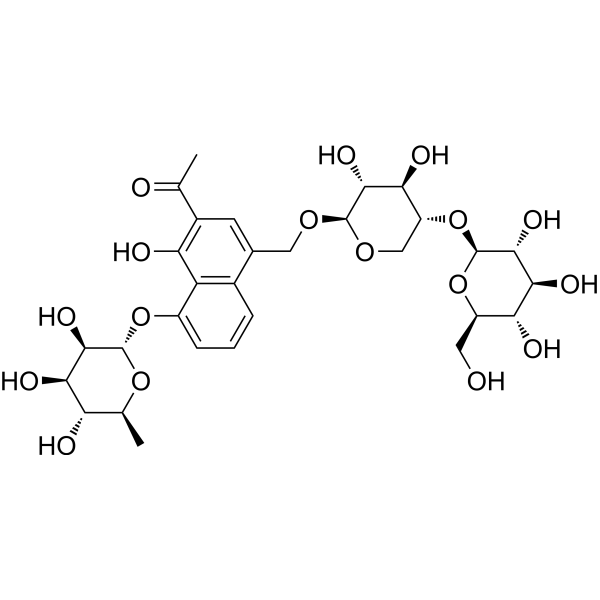 0 ImagesCat. No.: HY-N11993CAS No.: 1246930-65-3
Aloveroside A is a triglucosylnaphthalene derivative isolated from ethanolic extract of aloe vera. Aloveroside A has weak bACE inhibitory activity (inhibition rate at a dose of 100 μg/mL is approximately 18.68%).
-
AL284
 0 ImagesCat. No.: HY-169173CAS No.: 2270876-07-6
AL284 is a potent anopheles gambiae acetylcholinesterase 1 (AgAChE1) inhibitor. AL284 interactions with Tyr489Ag in the α-helix next to loop 2, and Trp441Ag at the top of the gorge. AL284 has the potential for the research of disease-transmitting mosquitoes.
-
BChE-IN-53
 0 ImagesCat. No.: HY-W1058380CAS No.: 25870-73-9
BChE-IN-53 is a butyrylcholinesterase (BChE) inhibitor with an IC50 value of 119.0 μM and is inactive against α-glucosidase. BChE-IN-53 can be used for the research of alzheimer's disease, type 2 diabetes mellitus.
-
Neostigmine hydroxide
 0 ImagesCat. No.: HY-119792ACAS No.: 588-17-0
Neostigmine hydroxide is a cholinesterase inhibitor and can be used for study of myasthenia gravis.
-
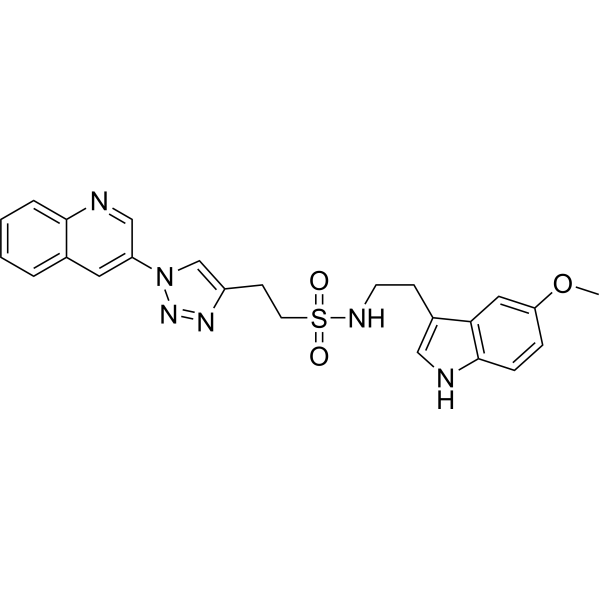
4'-O-Methylcatechin
 0 ImagesCat. No.: HY-W740798CAS No.: 69912-75-0
4'-O-Methylcatechin acts as a lipase and acetylcholinesterase inhibitor, with an IC50 of 149.93 μM against lipase and an IC50 of 230.89 μM against electric eel-derived acetylcholinesterase. 4'-O-Methylcatechin possesses free radical scavenging activity and can be used in studies on antioxidation, antilipase activity and dementia.
-
Heptenophos
 0 ImagesCat. No.: HY-120042CAS No.: 23560-59-0
Heptenophos is an inhibitor of AChE and plasma carboxylesterase (CES). By inhibiting AChE activity, Heptenophos causes the accumulation of acetylcholine at cholinergic synapses, thereby triggering typical symptoms of organophosphate poisoning. Heptenophos exhibits rapid lethal toxicity in male albino mice, but its toxic effects are effectively antagonized by obidoxime, and Memantine (HY-B0591) further enhances the detoxification efficacy of obidoxime. Therefore, Heptenophos is commonly used in studies related to the mechanism of organophosphate poisoning and detoxification strategies.
-
Pirimiphos-methyl (Standard)
 0 ImagesCat. No.: HY-B1881RCAS No.: 29232-93-7
Pirimiphos-methyl (Standard) is the analytical standard of Pirimiphos-methyl (HY-B1881). This product is intended for research and analytical applications. Pirimiphos-methyl is an organophosphorus insecticide and acaricide that can inhibit AChE in target organisms. Pirimiphos-methyl is often used for prevention and control of beetles, snout beetles, moths and Ephestia cautella during storage of agricultural grains.
-
Salvianolic acid H
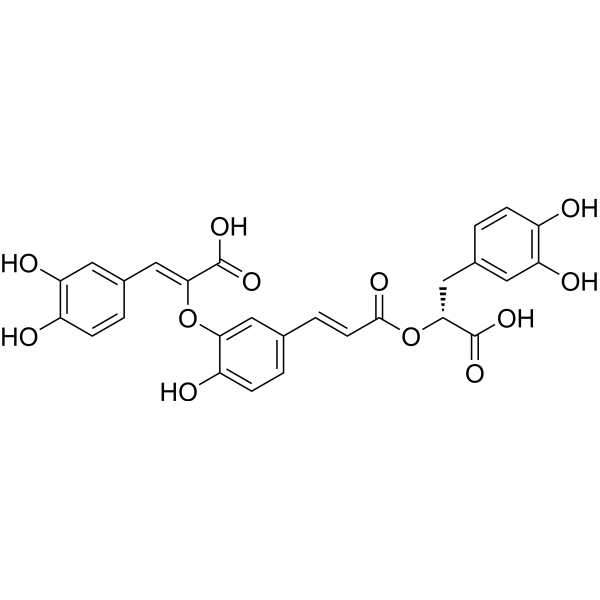 0 ImagesCat. No.: HY-W782096CAS No.: 444179-57-1
Salvianolic acid H is a potent acetylcholinesterase (AChE) inhibitor.
-
D-Ribose-L-cysteine
 0 Images
D-Ribose-L-cysteine is an orally active cysteine analog. D-Ribose-L-cysteine improves cellular antioxidant capacity by enhancing intracellular glutathione (GSH) biosynthesis. In addition, D-Ribose-L-cysteine has a memory-enhancing effect and can reverse Scopolamine (HY-N0296)-induced memory impairment by inhibiting oxidative stress and acetylcholinesterase (AChE) activity. D-Ribose-L-cysteine can be used in the study of neurodegenerative and cardiovascular diseases.



