



Amyloid-β
β-amyloid peptide; Aβ; Abeta
Amyloid-β (Aβ) denotes peptides of 36–43 amino acids that are crucially involved in Alzheimer's disease as the main component of theamyloid plaques found in the brains of Alzheimer patients. The peptides result from the amyloid precursor protein (APP), which is being cut by certain enzymes to yield Aβ. Amyloid-β molecules can aggregate to form flexible soluble oligomers which may exist in several forms. Amyloid-β peptide is due to overproduction of Aβ and/or the failure of clearance mechanisms. Amyloid-β self-aggregates into oligomers, which can be of various sizes, and forms diffuse and neuritic plaques in the parenchyma and blood vessels. Amyloid-β oligomers and plaques are potent synaptotoxins, block proteasome function, inhibit mitochondrial activity, alter intracellular Ca2+levels and stimulate inflammatory processes. Loss of the normal physiological functions of Aβ is also thought to contribute to neuronal dysfunction.
All Product Categories
-
Amyloid-β Inhibitors
(494)
View all products
-
Amyloid-β Agonists
(2)
View all products
-
Amyloid-β Antagonists
(5)
View all products
-
Amyloid-β Activators
(5)
View all products
-
Amyloid-β Modulators
(4)
View all products
-
Amyloid-β Chemicals
(7)
View all products
-
Amyloid-β Inducers
(5)
View all products
-
Amyloid-β Degraders
(6)
View all products
-
Amyloid-β Controls
(3)
View all products
-
Amyloid-β Substrate
(1)
View all products
-
Amyloid-β Ligands
(11)
View all products
-
Amyloid-β Related Products (773)
Related Products (773)

-
Antibodies (9)
-
RU-505
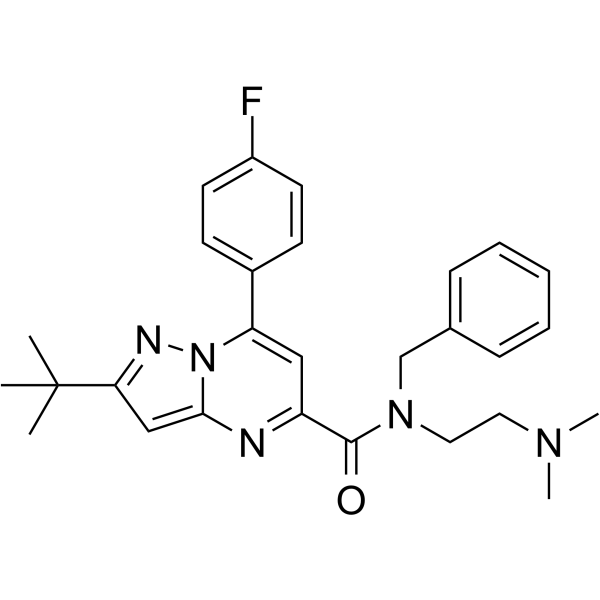 0 ImagesCat. No.: HY-117983CAS No.: 1314206-29-5RU-505 is an effective β-amyloid (Aβ)-fibrinogen interaction inhibitor with IC50s of 5.00 and 2.72 μM in fluorescence polarization (FP) and AlphaLISA assays, respectively. RU-505 is highly permeable to the BBB. RU-505 reduces cerebral amyloid angiopathy (CAA). RU-505 can be used for the research of Alzheimer’s disease (AD).
-
Silybin B (Standard)
 0 ImagesCat. No.: HY-N7046RCAS No.: 142797-34-0Synonyms: Silibinin B (Standard)Silybin (Silibinin B) (Standard) is the analytical standard of Silybin B (HY-N7046). This product is intended for research and analytical applications. Silybin B (Silibinin B) is an orally active amyloid-β aggregation inhibitor and ATR pathway activator, that can cross the blood-brain barrier. Silybin B inhibits Aβ fibril formation and promotes amorphous aggregate formation, while activating the ATR-mediated DNA damage repair pathway and inhibiting JNK/p38 MAPK signaling. Silybin B can reduce Cisplatin (HY-17394)-induced neuronal DNA damage and apoptosis. Silybin B has anti-oxidative stress, cell cycle regulation and neuroprotective activities. Silybin B is mainly used in the study of Alzheimer's disease and Cisplatin chemotherapy-related neurotoxicity.
-
Citrullinated amyloid-β (1-40) peptide (human)
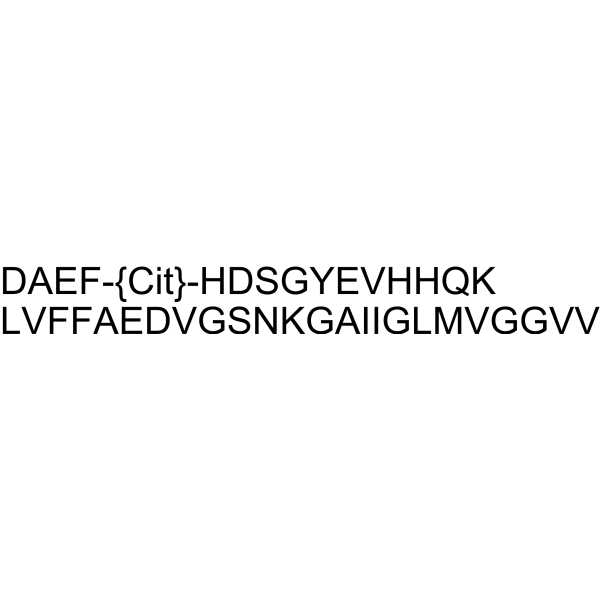 0 ImagesCat. No.: HY-P5906Synonyms: Citrullinated Aβ (1-40); Citrullinated Aβ40Citrullinated amyloid-β (1-40) peptide (human) (Citrullinated Aβ (1-40)) is a modified form of β-Amyloid (1-40) (HY-P0265) with a citrullination at the Arg5 site. Citrullinated amyloid-β (1-40) peptide (human) exhibits increased transient formation of soluble oligomers and insoluble aggregates composed of distorted parallel β-sheets compared with unmodified β-Amyloid (1-40).
-
FAM labled Lepodisiran sodium
 0 ImagesCat. No.: HY-177640CFAM labled Lepodisiran (LY3819469) sodiumis a FAM labled Lepodisiran sodium. Lepodisiran sodium is a GalNAc-conjugated small interfering RNA lipid-lowering agent. Lepodisiran sodium targets the hepatic LPA gene and degrades apolipoprotein (a) mRNA to silence its expression, thereby effectively reducing the production of apolipoprotein (a) and serum lipoprotein (a) in a dose-dependent manner. Lepodisiran sodium can be used in studies related to atherosclerotic cardiovascular disease.

-
Saikosaponin C (Standard)
 0 ImagesCat. No.: HY-N0249RCAS No.: 20736-08-7Saikosaponin C (Standard) is the analytical standard of Saikosaponin C. This product is intended for research and analytical applications. Saikosaponin C is a bioactive component found in radix bupleuri, targets amyloid beta and tau in Alzheimer's disease. Saikosaponin C inhibits the secretion of both Aβ1-40 and Aβ1-42, and suppresses abnormal tau phosphorylation, but shows no effect on BACE1 activity and expression.
-
BIIB042
 0 ImagesCat. No.: HY-103537ACAS No.: 1257396-73-8BIIB042 is a potent, orally active, brain-penetrant, and selective γ-secretase modulator (GSM). BIIB042 reduces Aβ42 and increases Aβ38 levels in cells. BIIB042 significantly reduces brain Aβ42 levels in CF-1 mice and Fischer rats, as well as plasma Aβ42 levels in cynomolgus monkeys. BIIB042 reduces Aβ42 levels and Aβ plaque burden in Tg2576 mice. BIIB042 can be used for alzheimer's disease (AD) research.
-
RS-0466
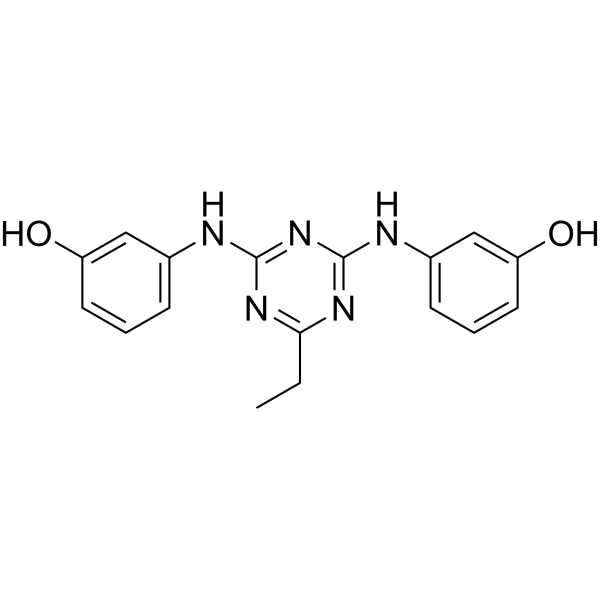 0 ImagesCat. No.: HY-123469CAS No.: 536993-37-0RS-0466, a neuroprotective compound, inhibits β-amyloid-induced cytotoxicity. RS-0466 can be used for research of Alzheimer’s disease.
-
γ-Secretase modulator 13
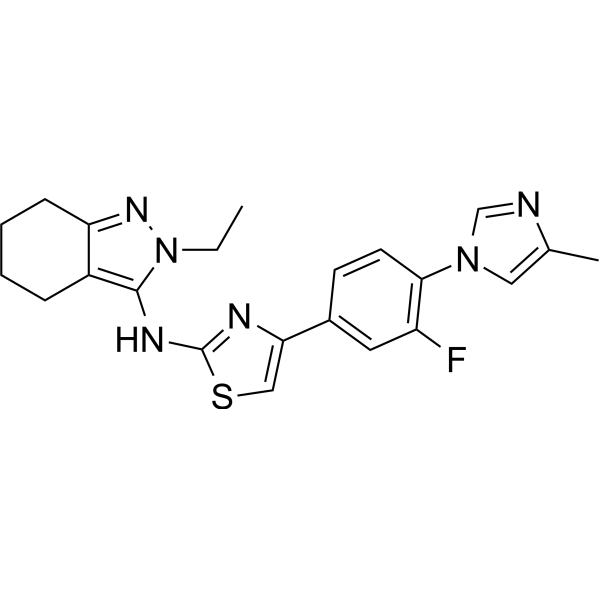 0 ImagesCat. No.: HY-150049CAS No.: 1353570-40-7γ-Secretase modulator 13 (compound 4) is a gamma-secretase modulator (GSMs) that inhibits the production of the aggregated amyloid β-peptide Aβ42 with an IC50 value of 163 nM. γ-Secretase modulator 13 can be used in the study of Alzheimer's disease.
-
hAChE-IN-3
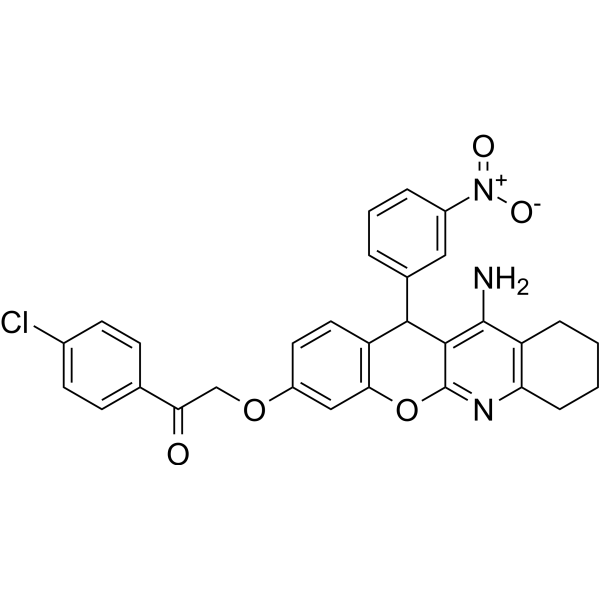 0 ImagesCat. No.: HY-155085CAS No.: 2983723-56-2hAChE-IN-3 (compounds 5c) is a potent and blood-brain barrier permeable AChE, BuChE, MAO-B-IN-1 and BACE-1 inhibitor, with IC50 values of 0.44, 0.08, 5.15 and 0.38 μM, respectively. hAChE-IN-3 has antioxidant activity and metal chelating ability. In addition, hAChE-IN-3 can bind to peripheral anion sites, and affect β amyloid and reduce Alzheimer's-associated neurodegeneration. hAChE-IN-3 has the potential for the research of Alzheimer's disease.
-
Ginsenoside Rg1 (Standard)
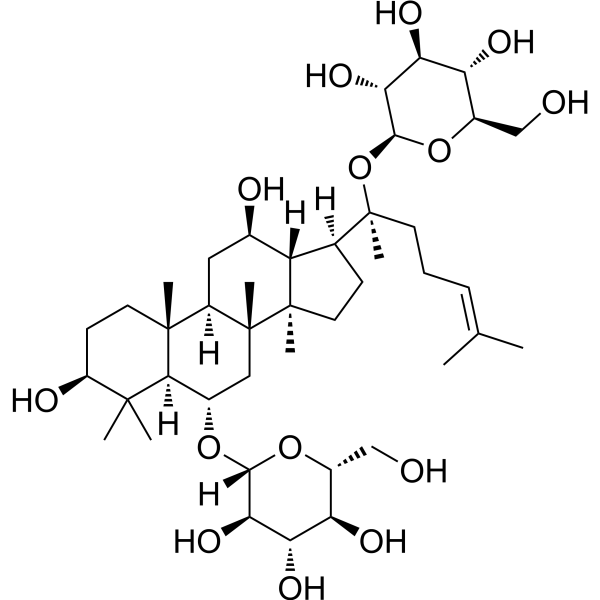 0 ImagesSynonyms: Panaxoside A (Standard); Panaxoside Rg1 (Standard)Ginsenoside Rg1 (Standard) is the analytical standard of Ginsenoside Rg1. This product is intended for research and analytical applications. Ginsenoside Rg1 is one of the major active components of Panax ginseng. Ginsenoside Rg1 ameliorates the impaired cognitive function, displays promising effects by reducing cerebral Aβ levels. Ginsenoside Rg1 also reduces NF-κB nuclear translocation.
-
Methoxy-X04 (solution)
 0 ImagesCat. No.: HY-DY1045CAS No.: 863918-78-9Methoxy-X04 (solution) is a fluorescent dye that crosses the blood-brain barrier and selectively binds to beta-pleated sheets found in dense core amyloid Aβ plaques. Methoxy-X04 retains in vitro binding affinity for amyloid b (Ab) fibrils (Ki= 26.8 nM). Methoxy-X04 is fluorescent and stains plaques, tangles, and cerebrovascular amyloid in postmortem sections of AD brain with good specificity.
Solvent and concentration: DMSO: 5 mg/mL
-
β-Amyloid (1-43)(human)
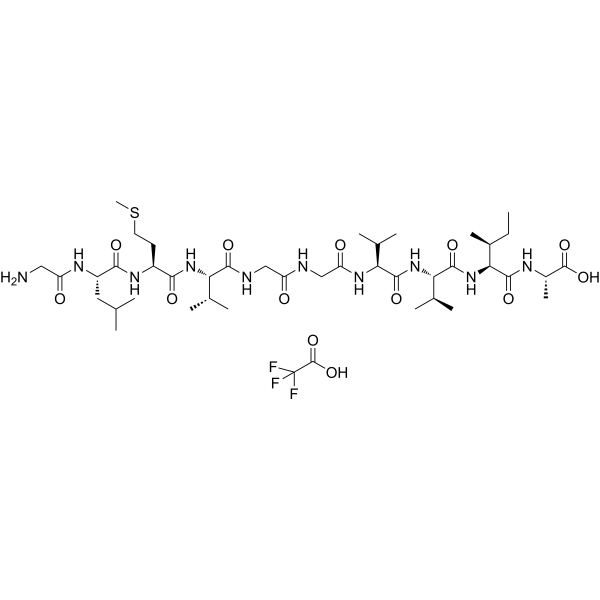
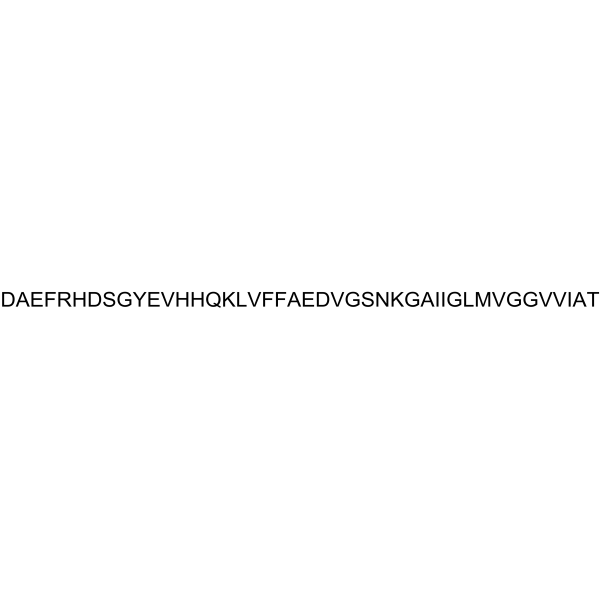 0 ImagesCat. No.: HY-P1378CAS No.: 134500-80-4β-Amyloid (1-43)(human) is more prone to aggregation and has higher toxic properties than the long-known Aβ1-42. β-Amyloid (1-43)(human) shows a correlation with both sAPPα and sAPPβ. β-Amyloid (1-43)(human) could be considered an added Alzheimer's disease (AD) biomarker together with the others already in use.
-
3-O-Methyltolcapone-d4
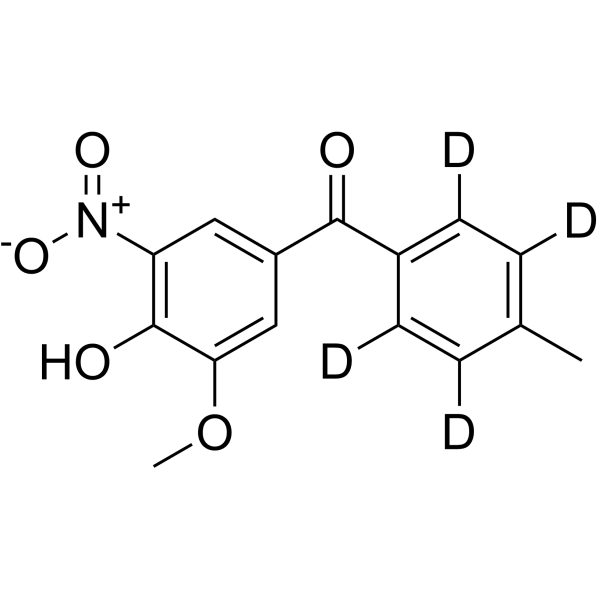 0 ImagesCat. No.: HY-100642S1CAS No.: 2469274-07-3Synonyms: Ro 40-7591-d43-O-Methyltolcapone-d4 (Ro 40-7591 d4) is a deuterium labeled 3-O-Methyltolcapone (HY-174062). 3-O-Methyltolcapone (Ro 40-7591) is a metabolite of Tolcapone (HY-17406). Tolcapone (Ro 40-7592) is a selective, potent and orally active COMT inhibitor with an IC50of 773 nM. Tolcapone can inhibits α-syn and Aβ42 oligomerization and fibrillogenesis. Tolcapone can cause oxidative stress and induce cancer cells apoptosis and ROS production. Tolcapone can be used for the researches of cancer and neurological disease, such as Parkinson disease and neuroblastoma.
-
AChE-IN-63
 0 ImagesCat. No.: HY-158261CAS No.: 876685-78-8AChE-IN-63 (Compound 5AD) is a selective inhibitor of hAChE (IC50=0.103 μM). AChE-IN-63 also inhibits hBChE and hBACE-1 (IC50= 10 μM (hBChE); 1.342 μM (hBACE-1)). AChE-IN-63 inhibits Aβ aggregation, preventing the formation and deposition of Aβ1-42. AChE-IN-63 can effectively penetrate the blood-brain barrier and is orally effective. It is primarily used in Alzheimer's disease research.
-
Ciliatoside A
 0 ImagesCat. No.: HY-N21694CAS No.: 303084-57-3Ciliatoside A is a naturally bioactive compound that exhibits significant anti-inflammatory, antiviral, and neuroprotective activities. Ciliatoside A serves as a mitophagy inducer and NLRP3 inflammasome inhibitor, activating AMPK, SIRT1, and the PINK1/Parkin axis, and inhibiting pyroptosis and apoptosis. Ciliatoside A promotes autophagic flux, autophagosome-lysosome fusion, mTOR inhibition, and p62-dependent HBc degradation; reduces Aβ aggregation, plaque deposition, microglial/astrocyte activation, and bacterial load; and maintains neuronal integrity, mitochondrial membrane potential, and ATP production. Ciliatoside A is used in research on Alzheimer's disease, Klebsiella pneumoniae-induced pneumonia, hepatitis B virus infection, and inflammation.
-
(R)-(+)-Anatabine
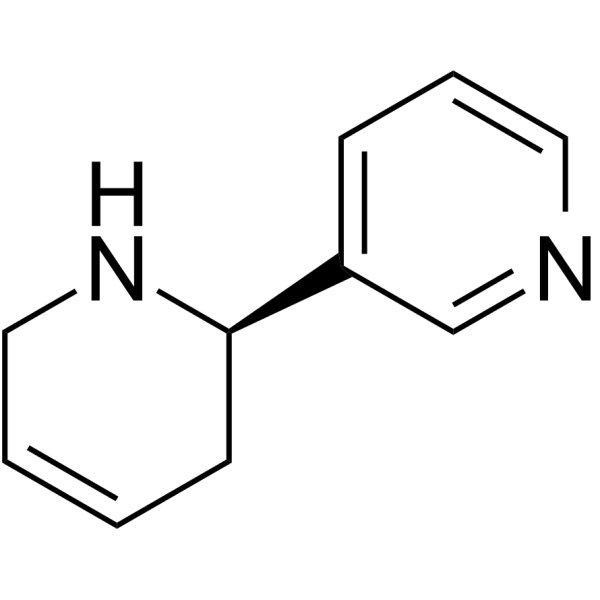 0 ImagesCat. No.: HY-126047BCAS No.: 126454-22-6(R)-(+)-Anatabine is an less active R-enantiomer of Anatabine. Anatabine is a potent α4β2 nAChR agonist. Anatabine inhibits NF-κB activation lower amyloid-β (Aβ) production by preventing the β-cleavage of amyloid precursor protein (APP). Anatabine has anti-inflammatory effects and has the potential for neurodegenerative disorders treatment.
-
2002-H20
 0 ImagesCat. No.: HY-116942CAS No.: 351520-91-72002-H20 is an inhibitor of Aβ42-induced cytotoxicity, with the activity of reducing the cytotoxicity of Alzheimer's disease Aβ peptide by binding to it. 2002-H20 protects cells and reduces Aβ toxicity by promoting fibril formation, possibly by accelerating Aβ aggregation. The screening method of 2002-H20 effectively identifies compounds that reduce Aβ toxicity and presents potential inhibitory leads.
-
CL121
 0 ImagesCat. No.: HY-181797CL121 is a Glutaminyl Cyclase inhibitor with an IC50 of 0.07 μM against human sQC and an IC50 of 0.54 μM against human gQC. CL121 reduces the level of pyroglutamate (pE)-modified CD47 on the surface of cancer cells. CL121 exhibits anti-tumor activity against triple-negative breast cancer.




