



Bacterial
Anything that destroys bacteria or suppresses their growth or their ability to reproduce. Heat, chemicals such as chlorine, and antibiotic drugs all have antibacterial properties. Many antibacterial products for cleaning and handwashing are sold today. Such products do not reduce the risk for symptoms of viral infectious diseases in otherwise healthy persons. This does not preclude the potential contribution of antibacterial products to reducing symptoms of bacterial diseases in the home.
All Product Categories
-
Bacterial Inhibitors
(7553)
View all products
-
Bacterial Agonists
(3)
View all products
-
Bacterial Antagonists
(9)
View all products
-
Bacterial Activators
(25)
View all products
-
Bacterial Modulators
(27)
View all products
-
Bacterial Chemicals
(2)
View all products
-
Bacterial Inducers
(6)
View all products
-
Bacterial Controls
(14)
View all products
-
Bacterial Substrates
(2)
View all products
-
Bacterial Ligand
(1)
View all products
-
Bacterial Produits associés (8893)
Produits associés (8893)

-
Anticorps (14)
-
Related Compound Screening Libraries (1)
-
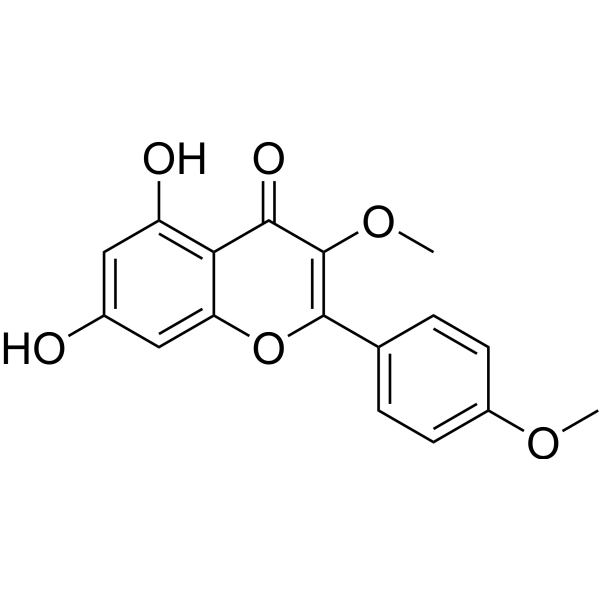
Telomycin
 0 ImagesCat. No.: HY-P1720CAS No.: 19246-24-3Telomycin is a calcium-dependent antibiotic, which can be produced by Streptomyces. Telomycin inhibits gram-positive bacteria, including multidrug-resistant (MDR) pathogens.
-
Lariatin A
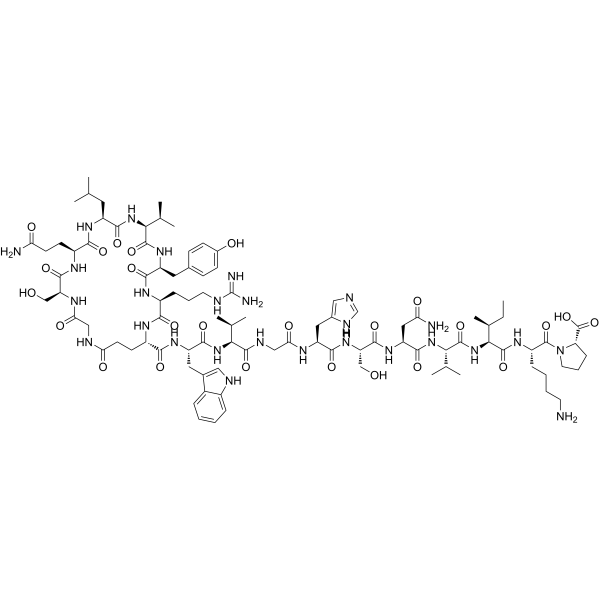 0 ImagesCat. No.: HY-P2064CAS No.: 732286-09-8Lariatins is a novel anti-mycobacterial peptides with a lasso structure produced by Rhodococcus jostii K01-B0171.
-
Plantaricin F
 0 ImagesCat. No.: HY-P11547CAS No.: 159605-63-7Plantaricin F is an antibacterial peptide. Plantaricin F strongly inhibits several gram-negative bacteria including the foodbome pathogens Salmonella enteritidis and Pseudomonas aeruginosa. Plantaricin F inhibits several Lactobacillus, Pediococcus and Leuconostoc species.
-
MtTMPK-IN-8
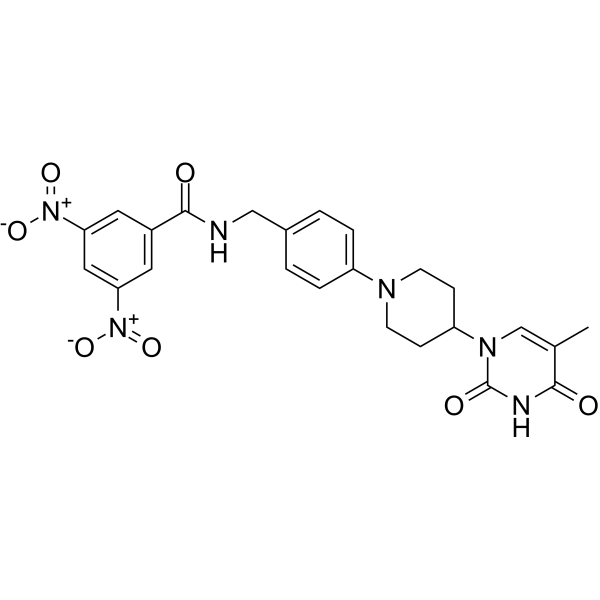 0 ImagesCat. No.: HY-146702CAS No.: 2990619-92-4MtTMPK-IN-8 (compound 27) is a moderate M. tuberculosis thymidylate kinase (MtbTMPK) inhibitor. MtTMPK-IN-8 has sub-micromolar activity against mycobacteria (MICs = 0.78~9.4 μM) without significant cytotoxicity. MtTMPK-IN-8 can be used for researching tuberculosis.
-
7-O-Isopentenyl-γ-fagarine
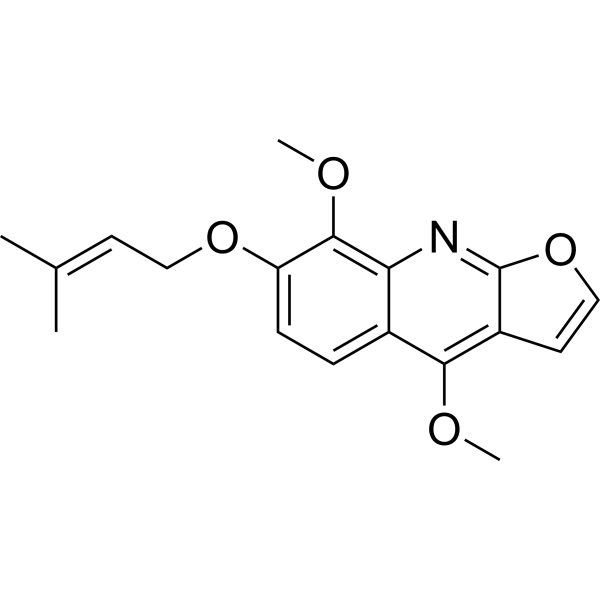 0 ImagesCat. No.: HY-N2759CAS No.: 23417-92-77-O-Isopentenyl-γ-fagarine is an alkaloid that can be isolated from Peltostigma guatemalense. 7-O-Isopentenyl-γ-fagarine has antibacterial and antimalarial activities in vitro.
-
Catestatin (mouse)
 0 ImagesCat. No.: HY-P11478CAS No.: 1461673-77-7Catestatin (mouse) is an antimicrobial peptide. Catestatin (mouse) robustly activates Mrgprb2 with an EC50 of 59.73 μM. Catestatin (mouse) is effective in promoting MRSA clearance from wound infections. Catestatin (mouse) dampens the inflammatory immune response to MRSA infection.
-
Ganorbiformin B
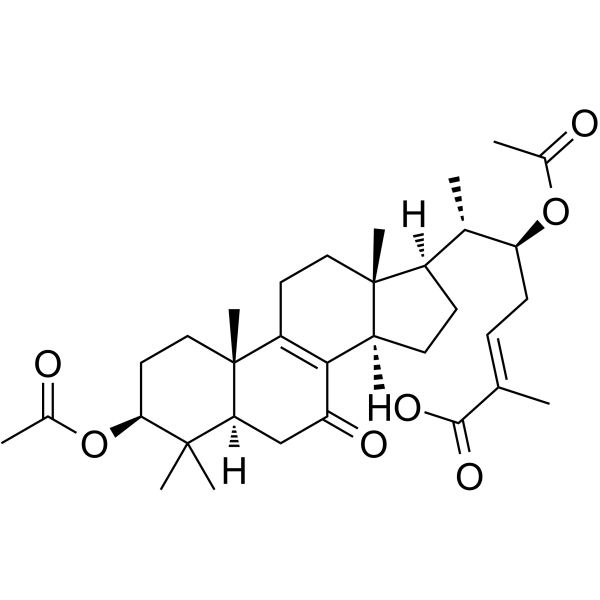 0 ImagesCat. No.: HY-N11646CAS No.: 1421611-59-7Ganorbiformin B is a lanostane triterpenoid. Ganorbiformin B shares the same lanostane skeleton with known ganoderic acids. The C-3 epimer of ganoderic acid T exhibits potent antimycobacterial activity against Mycobacterium tuberculosis H37Ra.
-
Aurein 2.5
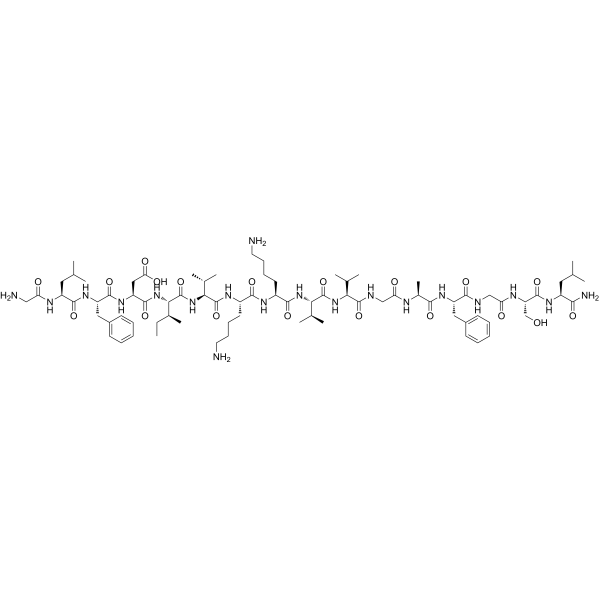 0 ImagesCat. No.: HY-P5572CAS No.: 302343-09-5Aurein 2.5 is an antibiotic antimicrobial peptide. Aurein 2.5 has antibacterial and antifungal activity
-
Tizoxanide (Standard)
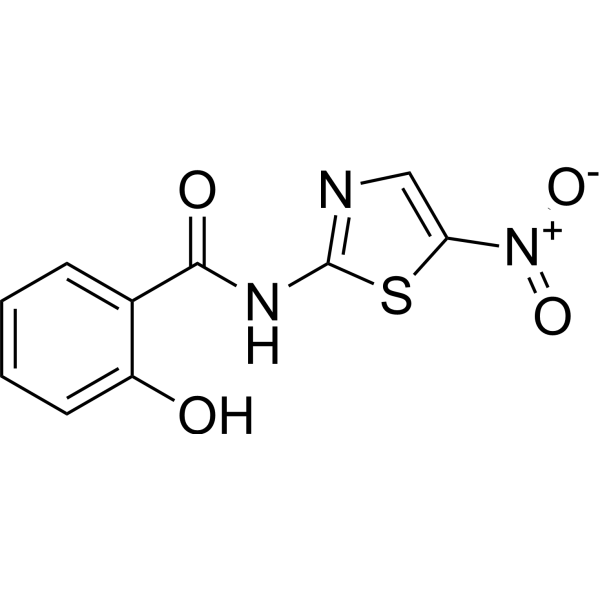 0 ImagesCat. No.: HY-12687RCAS No.: 173903-47-4Synonyms: TIZ (Standard)Tizoxanide (Standard) is the analytical standard of Tizoxanide. This product is intended for research and analytical applications. Tizoxanide (TIZ) is the active metabolite of Nitazoxanide, which is a thiazolide anti-infective compound against anaerobic bacteria, protozoa, and a range of viruses. Tizoxanide (TIZ) has anti-HIV-1 activities and potent inhibition of both HBV and HCV replication with values EC50 of 0.46μM and 0.15 μM, respectively. Tizoxanide also exerts anti-inflammatory effects by inhibiting the production of pro-inflammatory cytokines and suppressing of the activation of the NF-κB and the MAPK signaling pathways in LPS-treated macrophage cells.
-
Methyl α-D-mannopyranoside (Standard)
 0 ImagesCat. No.: HY-W039897RCAS No.: 617-04-9Synonyms: α-Methyl-D-mannoside (Standard)Methyl α-D-mannopyranoside (Standard) is the analytical standard of Methyl α-D-mannopyranoside. This product is intended for research and analytical applications. Methyl α-D-mannopyranoside could target macrophages in anti-tuberculosis inhalation therapy[1].
-
Antimicrobial Peptide YD
 0 ImagesCat. No.: HY-P11913CAS No.: 2124174-65-6Antimicrobial Peptide YD is an Antimicrobial peptide. Antimicrobial Peptide YD attenuates the TLR4/MYD88/NF-κB signaling pathway, inhibits ROS production, upregulates the expression of antioxidant enzymes, reduces the levels of inflammation-related factors, and prevents the downregulation of E-cadherin and upregulation of Vimentin. Antimicrobial Peptide YD exhibits activity against Gram-positive bacteria, Gram-negative bacteria, and multidrug-resistant bacteria. Antimicrobial Peptide YD possesses anti-inflammatory, antifibrotic, and antioxidant effects. Antimicrobial Peptide YD can be used in pulmonary fibrosis research.
-
Albocycline
 0 ImagesCat. No.: HY-121000CAS No.: 25129-91-3Synonyms: IngramycinAlbocycline (Ingramycin) is a macrolide antibiotic, which exhibits antibacterial activities against methicillin-resistant Staphylococcus aureus (MRSA), Vancomycin (HY-B0671)-intermediate (VISA), and Vancomycin (HY-B0671)-resistant S. aureus (VRSA) strains with MICs ranging from 0.5 to 1.0 μg/mL. Albocycline exhibits no toxicity to human cells at concentration of ≤64 μg/mL.
-
Delafloxacin meglumine (Standard)
 0 ImagesSynonyms: ABT492 meglumine (Standard); RX-3341 meglumine (Standard); WQ-3034 meglumine (Standard)Delafloxacin (meglumine) (Standard) is the analytical standard of Delafloxacin (meglumine). This product is intended for research and analytical applications. Delafloxacin meglumine (ABT492 meglumine; RX-3341 meglumine; WQ-3034 meglumine) is a broad-spectrum fluoroquinolone antibiotic. Delafloxacin has a broad spectrum of activity that includes drug-resistant Staphylococcus aureus, Streptococcus pneumoniae, and Klebsiella pneumonia[1].
-
KSK-104
 0 ImagesCat. No.: HY-162508KSK-104 has potent antibacterial activity against Mycobacterium tuberculosis (MIC=0.78 μM). The role of KSK-104 is mainly involved in the synthesis and recovery pathways of pyridoxal 5'-phosphate (PLP), PLP-dependent enzymes and oxidative stress networks. KSK-104, as a candidate molecule for novel anti-tuberculosis drugs, can be used to develop research against drug-resistant mycobacterium tuberculosis.
-
Antibacterial agent 73
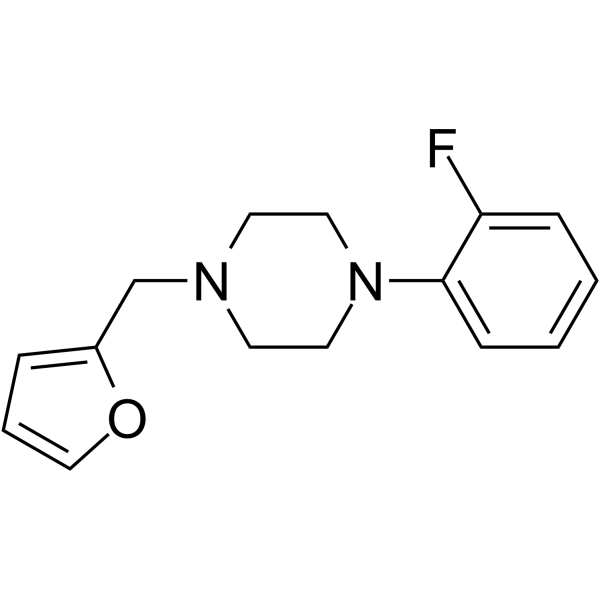 0 ImagesCat. No.: HY-143232CAS No.: 414885-92-0Antibacterial agent 73 (compound 7a) is a potent antimicrobial agent. Antibacterial agent 73 exhibits very good antitubercular activity (MIC=0.65 µg/mL) against Mtb H37Rv. Antibacterial agent 73 shows good activity against fungal and bacterial. Antibacterial agent 73 also shows cytotoxicity in MCF-7 breast cancer cell lines, with IC50 of 8.20 μM.
-
SGNLTKYWKKIWKPGIKKWIK
 0 ImagesCat. No.: HY-P11600SGNLTKYWKKIWKPGIKKWIK is a thymidylate kinase (TMK)-targeting antimicrobial peptide with a KD value of 4.721 μM. SGNLTKYWKKIWKPGIKKWIK exerts antimicrobial effects through multiple mechanisms, including membrane disruption, induction of ROS, and DNA binding. SGNLTKYWKKIWKPGIKKWIK shows remarkable activity against Gram-negative bacteria, possesses good biocompatibility, and rarely induces drug resistance. SGNLTKYWKKIWKPGIKKWIK can be used for research on Gram-negative bacterial infections.
-
Narasin sodium
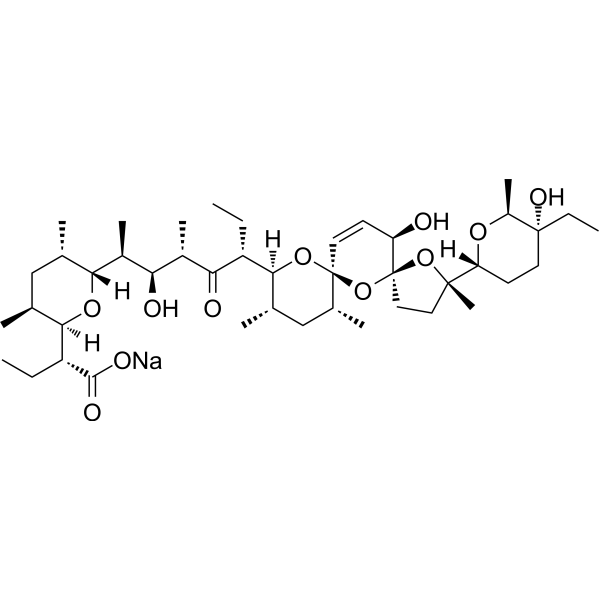 0 ImagesCat. No.: HY-112225CAS No.: 58331-17-2Narasin sodium is a cationic ionophore and coccidiostat agent. Narasin inhibits NF-κB signaling and induces tumor cells apoptosis. Narasin sodium has antimicrobial and anticancer activity.
-
JSF-2827
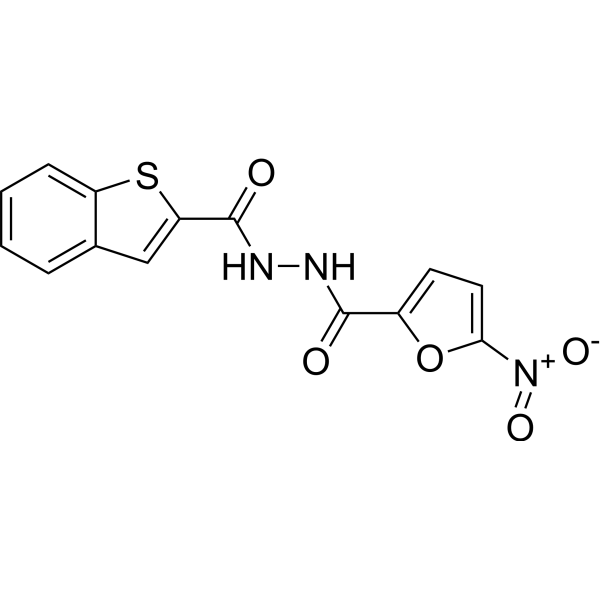 0 ImagesCat. No.: HY-163197CAS No.: 3032932-67-2JSF-2827 is a benzothiophene with antibacterial activity against Enterococcus faecium.
-
Anti-infective agent 7
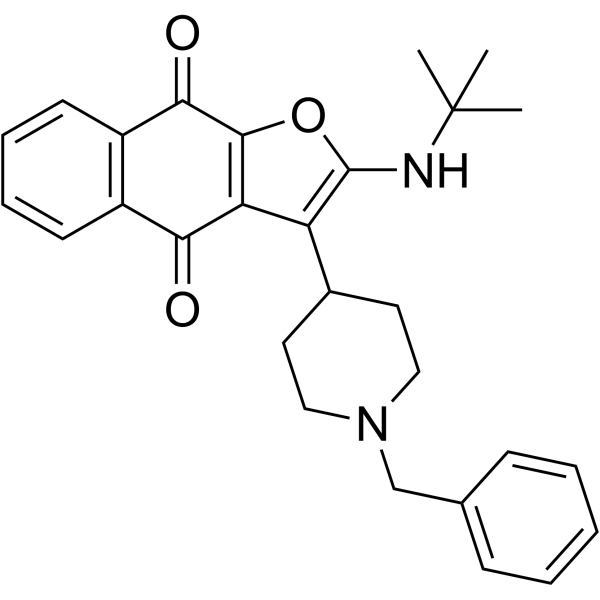 0 ImagesCat. No.: HY-151614CAS No.: 2839192-25-3Anti-infective agent 7 is a potent anti-infectious agent. Anti-infective agent 7 has anti-infection activity against P. falciparum (IC50=2.5 μM) and M. tuberculosis (MIC=9 μM).




