



Bacterial
Anything that destroys bacteria or suppresses their growth or their ability to reproduce. Heat, chemicals such as chlorine, and antibiotic drugs all have antibacterial properties. Many antibacterial products for cleaning and handwashing are sold today. Such products do not reduce the risk for symptoms of viral infectious diseases in otherwise healthy persons. This does not preclude the potential contribution of antibacterial products to reducing symptoms of bacterial diseases in the home.
All Product Categories
-
Bacterial Inhibitors
(7553)
View all products
-
Bacterial Agonists
(3)
View all products
-
Bacterial Antagonists
(9)
View all products
-
Bacterial Activators
(25)
View all products
-
Bacterial Modulators
(27)
View all products
-
Bacterial Chemicals
(2)
View all products
-
Bacterial Inducers
(6)
View all products
-
Bacterial Controls
(14)
View all products
-
Bacterial Substrates
(2)
View all products
-
Bacterial Ligand
(1)
View all products
-
Bacterial Related Products (8893)
Related Products (8893)

-
Antibodies (14)
-
Related Compound Screening Libraries (1)
-
V-161
 0 ImagesCat. No.: HY-W436428CAS No.: 69570-95-2V-161 is the orally active inhibitor for Na+-V-ATPase with an IC50 of 144 nM. V-161 inhibits Enterococcus hirae and Vancomycin-resistant Enterococcus faecium (VRE) under alkaline condition with MIC of 4 µg/mL and 4 µg/mL. V-161 inhibits colonization of VRE in mouse small intestine.
-
AcrB-IN-3
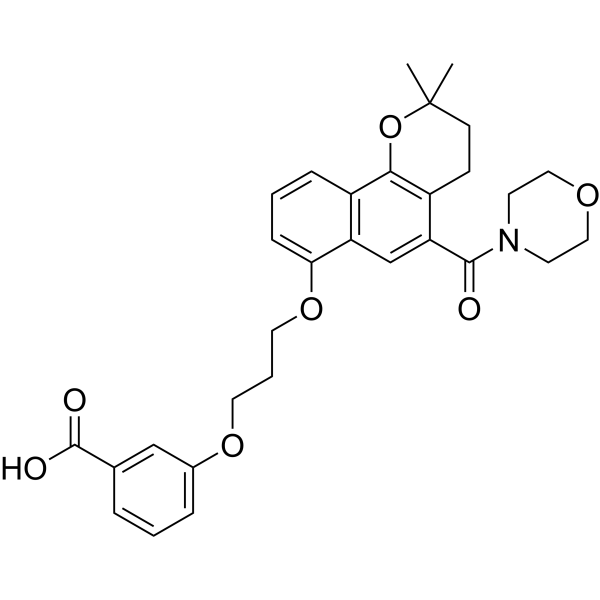 0 ImagesCat. No.: HY-149811CAS No.: 2890177-94-1Efflux pump-IN-3 is an AcrB efflux pump inhibitor, with ability to potentiate the effect of antibiotics. Efflux pump-IN-3 inhibits Nile Red (a known substrate of AcrB) efflux. Efflux pump-IN-3 does not disrupts the bacterial outer membrane nor display toxicity in a nematode model.
-
Aurein 3.3
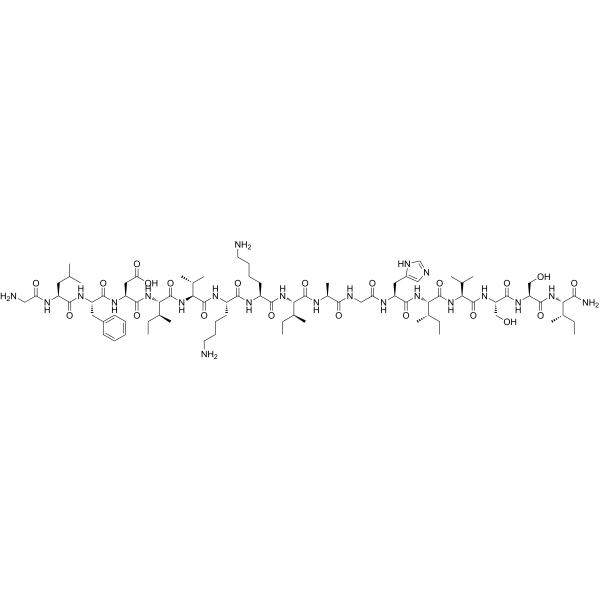 0 ImagesCat. No.: HY-P5576CAS No.: 302343-15-3Aurein 3.3 is an antibiotic antimicrobial peptide. Aurein 3.3 also has anticancer activity.
-
MenA-IN-1
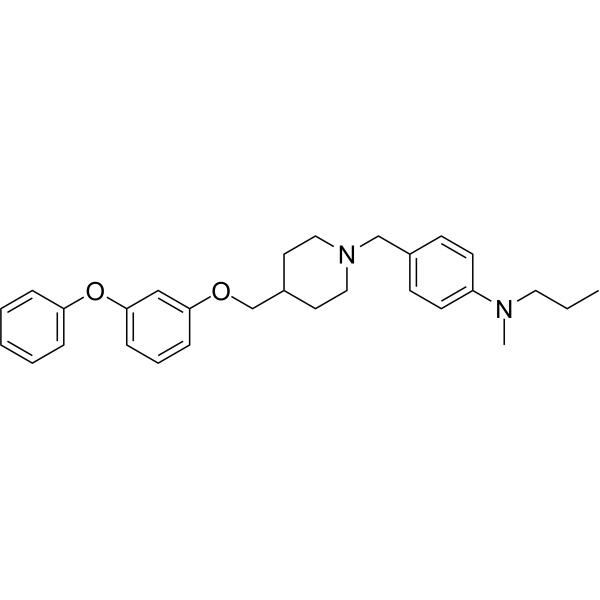 0 ImagesCat. No.: HY-152495CAS No.: 3041997-97-8MenA IN-1 is an effective inhibitor of 1,4-dihydroxy-2-naphthoate isoprenyltransferase (MenA) from Mycobacterium tuberculosis (MTB) with an IC50 value of 13 µM and an GIC50 value of 8 µM. MenA IN-1 can be used to curb the continuous spread of tuberculosis.
-
2,4-Dihydroxyphenylacetylasparagine
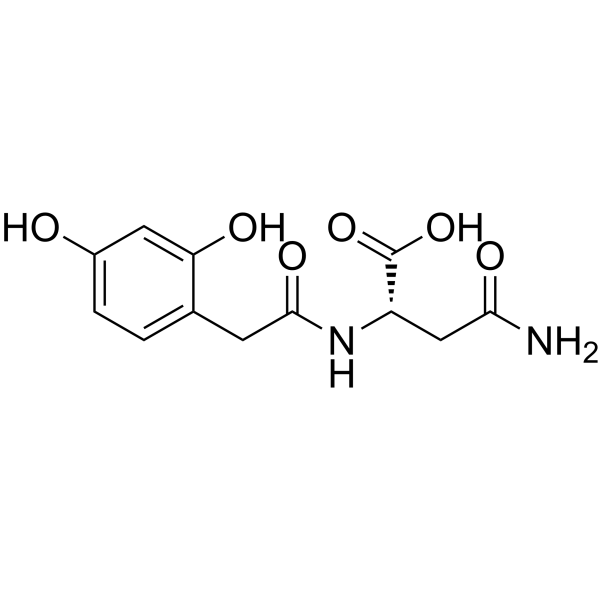 0 ImagesCat. No.: HY-100821CAS No.: 111872-98-12,4-Dihydroxyphenylacetylasparagine is a potent and selective antagonist of glutamate. 2,4-Dihydroxyphenylacetylasparagine inhibits glutamate binding to rat brain synaptic membranes.
-
9-Oxonerolidol
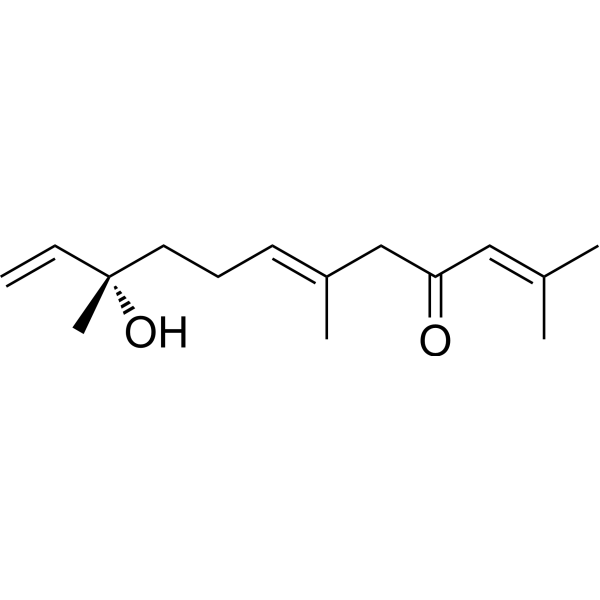 0 ImagesCat. No.: HY-N2805CAS No.: 58865-88-69-Oxonerolidol is a farnesane-type sesquiterpenoid with anti-pathogens activity. 9-Oxonerolidol can be isolated from Chiliadenus lopadusanus. 9-Oxonerolidol acts as a post-infectional inhibitor from plants, and inhibits Gram+ and Gram? bacteria resistant to the antibiotic.
-
RMR-Tre
 0 ImagesCat. No.: HY-D3391RMR-Tre is a fluorescent probe targeting the mycobacterial acyltransferase Ag85. Under the catalysis of Ag85, RMR-Tre undergoes 6-position mycoloylation and anchors to the mycobacterial membrane, while achieving fluorescence activation by inhibiting the intramolecular twisted charge transfer state transition. RMR-Tre can distinguish live mycobacteria from dead ones through metabolism-driven labeling, enabling rapid, wash-free, low-background detection of viable bacteria. RMR-Tre reports the drug resistance of Mycobacterium tuberculosis via the trehalose catalytic shift activity readout associated with TreS. In addition, RMR-Tre can be combined with flow cytometry or high-content imaging techniques to visualize and quantitatively analyze the metabolic heterogeneity of Mycobacterium tuberculosis related to persistence and drug resistance. RMR-Tre is widely used in tuberculosis-related research.
-
Ascamycin
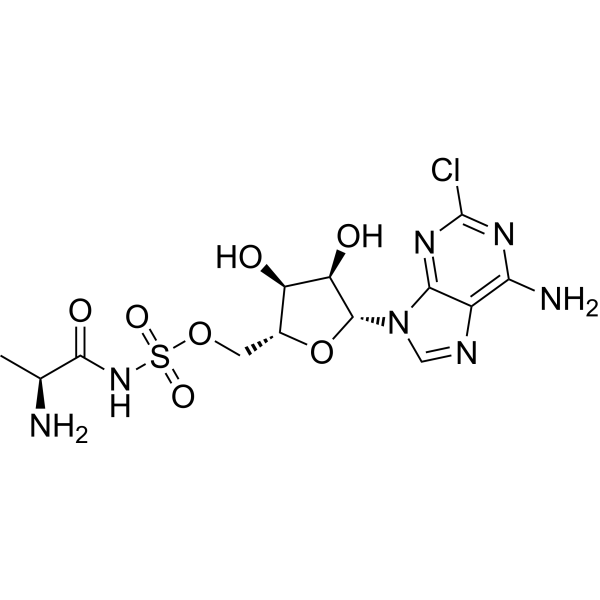 0 ImagesCat. No.: HY-121071CAS No.: 91432-48-3Ascamycin is a 5'-O-sulfonamide ribonucleoside antibiotic produced by Streptomyces sp. JCM9888. Ascamycin has a selective antibacterial activity against Xanthomonas species with MIC values of 0.4 μg/mL, 12.5 μg/mL and 12.5 μg/mL for Xanthomonas citri, Xanthomonas oryzae and Mycobacterium phlei, respectively.
-
Nifuroxazide-d4
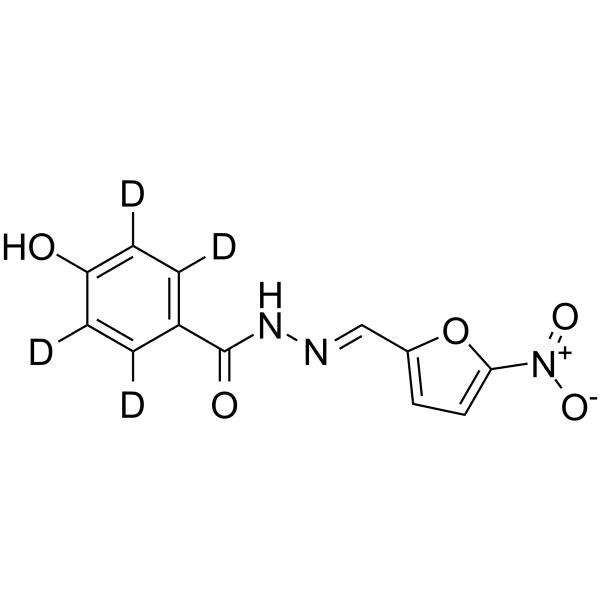 0 ImagesCat. No.: HY-B1436SCAS No.: 1188487-83-3Nifuroxazide-d4 is the deuterium labeled Nifuroxazide. Nifuroxazide is an effective inhibitor of STAT3, also exerts potent anti-tumor and anti-metastasis activity.
-
(7S,8R)-Dihydrodehydrodiconiferyl alcohol-9-β-D-glucopyranoside
 0 ImagesCat. No.: HY-N17584CAS No.: 126371-34-4(7S,8R)-Dihydrodehydrodiconiferyl alcohol-9-β-D-glucopyranoside (compound 1) is a lignan found in the dried roots of Pulsatilla koreana and Sortase A inhibitor with an IC50 of 67.7 μM against Streptococcus mutans OMZ65 Sortase A. (7S,8R)-Dihydrodehydrodiconiferyl alcohol-9-β-D-glucopyranoside can be used for the research of dental caries.
-
DNA Gyrase-IN-1
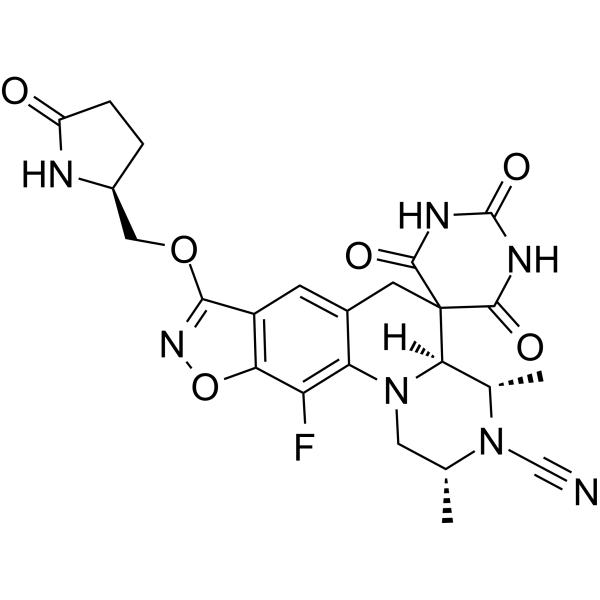 0 ImagesCat. No.: HY-147000CAS No.: 3031486-11-7DNA Gyrase-IN-1 (compound 42) is a potent and selective DNA gyrase inhibitor with an IC50 value of 2.6 µM. DNA Gyrase-IN-1 has high inhibitory activity against Mycobacterium tuberculosis (Mtb) with MIC of 0.49 µM. DNA Gyrase-IN-1 can be used for researching tuberculosis.
-
Antibacterial agent 185
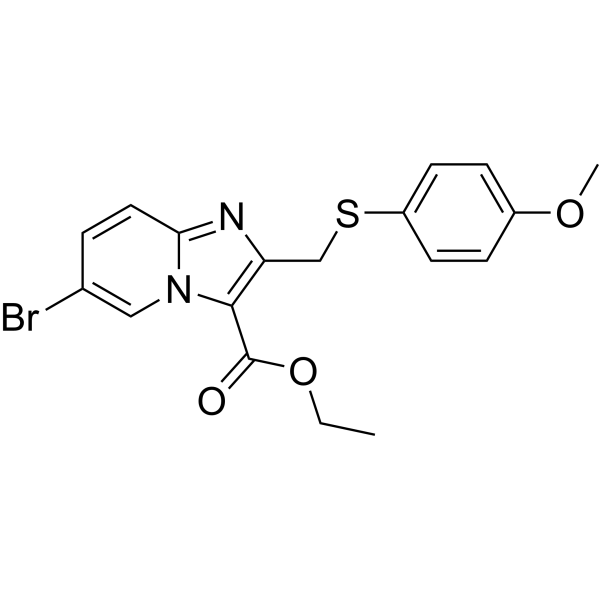 0 ImagesCat. No.: HY-157808Antibacterial agent 185 (compound IP-01) is a potent antibacterial agent. Antibacterial agent 185 inhibits filamentous temperature-sensitive mutant Z (FtsZ) polymerization and bundling by increasing GTP hydrolysis. Antibacterial agent 185 inhibits Streptococcus pneumoniae and shows narrow-spectrum activity.
-
14α-Demethylase/DNA Gyrase-IN-2
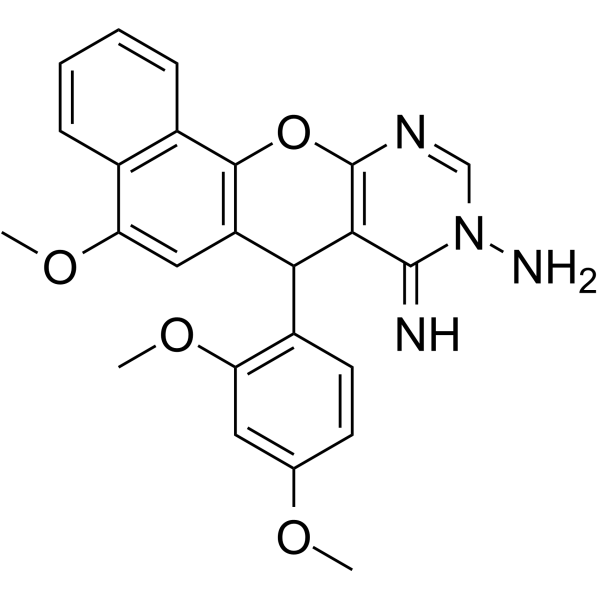 0 ImagesCat. No.: HY-147777CAS No.: 2330812-64-914α-Demethylase/DNA Gyrase-IN-2 (Compound 6a) is a potent inhibitor of 14α-Demethylase/DNA Gyrase. 14α-Demethylase/DNA Gyrase-IN-2 has antimicrobial activities.
-
Mt KARI-IN-5
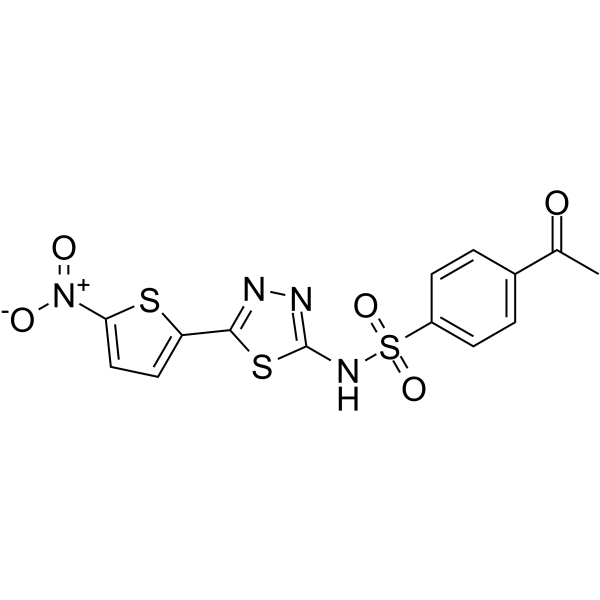 0 ImagesCat. No.: HY-146301CAS No.: 2413974-69-1Mt KARI-IN-5 (compound 6c) is a potent Mycobacterium tuberculosis ketol-acid reductoisomerase (Mtb KARI) inhibitor with a Ki value of 4.72 μM. Mt KARI-IN-5 has inhibitory activity against Mtb H37Rv (MIC = 1.56 μM) and low cytotoxicity (HEK IC50 > 64 μg/mL)
-
Anti-MRSA agent 11
 0 ImagesCat. No.: HY-163505CAS No.: 3029704-83-1Anti-MRSA agent 11 suppresses fluoroquinolone-sensitive strain USA500 and -resistant MRSA isolate Mu50 (MIC =0.39 μg/mL). Anti-MRSA agent 11 displayes favorable in vivo half-life and safety profiles.
-
Ribocil B
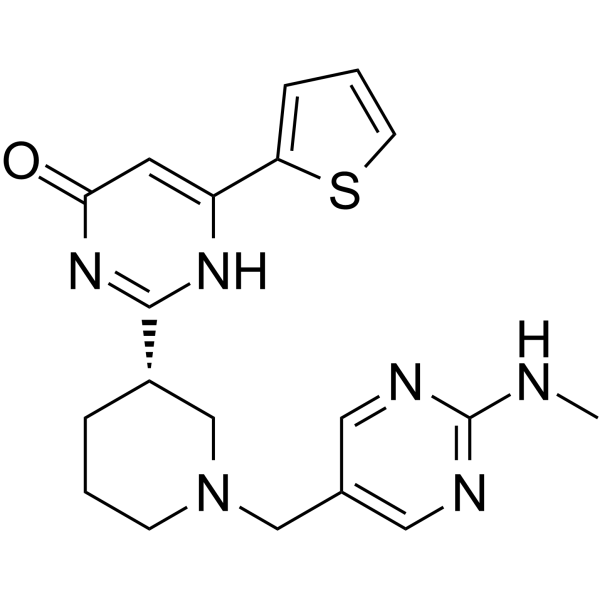 0 ImagesCat. No.: HY-19487ACAS No.: 1825355-55-2Synonyms: Ribocil S enantiomer; ent-Ribocil ARibocil-B is the active S-isomer of ribocil which can inhibit flavin mononucleotide (FMN) with a KD of 6.6 nM.
-
Brevinin-2EC
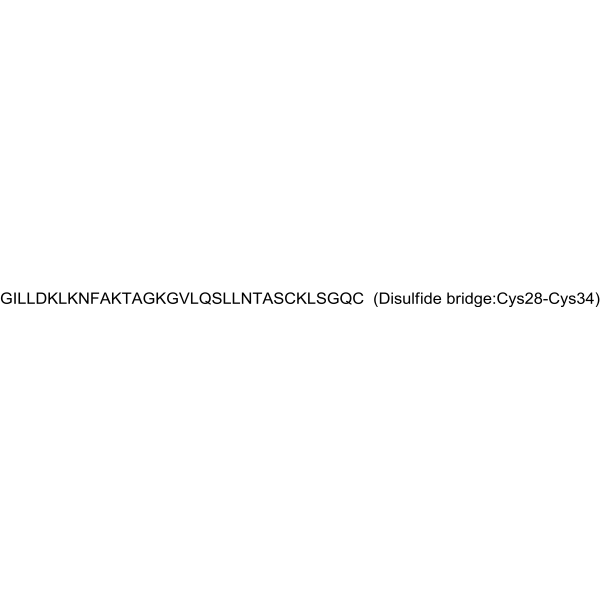 0 ImagesCat. No.: HY-P5662CAS No.: 156549-28-9Brevinin-2EC is an antimicrobial peptide derived from the skin secretions of Rana esculenta.
-
HA5
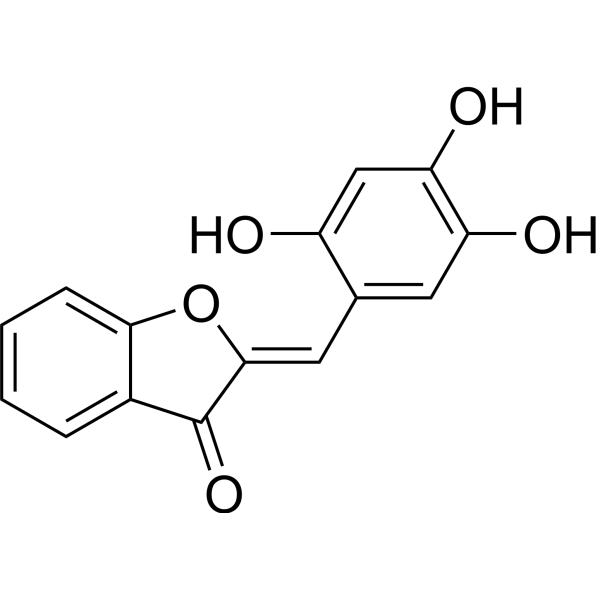 0 ImagesCat. No.: HY-149330CAS No.: 2378406-17-6HA5 inhibits Streptococcus mutans biofilm with an IC50 value of 6.42 μM, without affecting its growth. HA5 also inhibits Streptococcus mutans glucan production and eDNA levels.
-
Tebipenem pivoxil (Standard)
 0 ImagesSynonyms: L084 (Standard)Tebipenem pivoxil (Standard) (L084 (Standard)) is the analytical standard of Tebipenem pivoxil (HY-B0396). This product is intended for research and analytical applications. Tebipenem pivoxil (L084 hydrobromide) is an orally active carbapenem Antibiotic. Tebipenem pivoxil acts as a substrate of OATP1A2 with high affinity for this transporter (Km = 41.1 μM). Tebipenem pivoxil achieves intestinal absorption via carrier-mediated uptake and simple diffusion. Tebipenem pivoxil inhibits the growth of Gram-positive bacteria, Gram-negative bacteria, multidrug-resistant bacteria, and pathogens producing extended-spectrum β-lactamases. Tebipenem pivoxil eliminates intestinal infection pathogens and reduces mortality in septic mice. Tebipenem pivoxil can be used in research related to bacterial pneumonia, severe gastrointestinal infections, bacterial sepsis, complicated urinary tract infections, and acute pyelonephritis.
-
Ehrlich's Reagent
 0 ImagesCat. No.: HY-DY2030Ehrlich's Reagent is an indicator with p-dimethylaminobenzaldehyde (HY-Y0015) as its core component. Ehrlich's Reagent is mainly used for the identification of enterobacteria, non-fermentative bacteria, fastidious bacteria and anaerobic bacteria, as well as the detection of indole derivatives and amines. It turns pink, red or purple when a positive reaction occurs. Ehrlich's Reagent undergoes colorimetric reactions with urobilinogen, indican, phenol, allantoin, tryptophan and uric acid, and forms yellow-green products when reacting with sulfur derivatives.




