



Bacterial
Anything that destroys bacteria or suppresses their growth or their ability to reproduce. Heat, chemicals such as chlorine, and antibiotic drugs all have antibacterial properties. Many antibacterial products for cleaning and handwashing are sold today. Such products do not reduce the risk for symptoms of viral infectious diseases in otherwise healthy persons. This does not preclude the potential contribution of antibacterial products to reducing symptoms of bacterial diseases in the home.
All Product Categories
-
Bacterial Inhibitors
(7547)
View all products
-
Bacterial Agonists
(3)
View all products
-
Bacterial Antagonists
(9)
View all products
-
Bacterial Activators
(25)
View all products
-
Bacterial Modulators
(27)
View all products
-
Bacterial Chemicals
(2)
View all products
-
Bacterial Inducers
(6)
View all products
-
Bacterial Controls
(14)
View all products
-
Bacterial Substrates
(2)
View all products
-
Bacterial Ligand
(1)
View all products
-
Bacterial Related Products (8884)
Related Products (8884)

-
Antibodies (14)
-
Related Compound Screening Libraries (1)
-
Eukovoside
 0 ImagesCat. No.: HY-N17566CAS No.: 83475-36-9Eukovoside is a cinnamic acid derivative found in Euphrasia regelii with anti-inflammatory, antioxidant, antibacterial, antiallergic, and antihistamine activity. Eukovoside can be used for the research of hyperglycemic diseases, eye inflammation, upper respiratory passages inflammation, hay fever, conjunctivitis, colds, influenza, sinusitis.
-
Aspergillumarin A
 0 ImagesCat. No.: HY-N16400CAS No.: 1392495-06-5Aspergillumarin A is a dihydroisocoumarin derivative with various biological activity. Aspergillumarin A inhibits cell proliferation by inducing G0/G1 phase arrest in HepG2 hepatocellular carcinoma cells.. Aspergillumarin A exhibits weak antibacterial activity against Staphylococcus aureus and Bacillus subtilis. Aspergillumarin A can be used for the study of hepatocellular carcinoma (HCC)
-
Antibacterial synergist 1
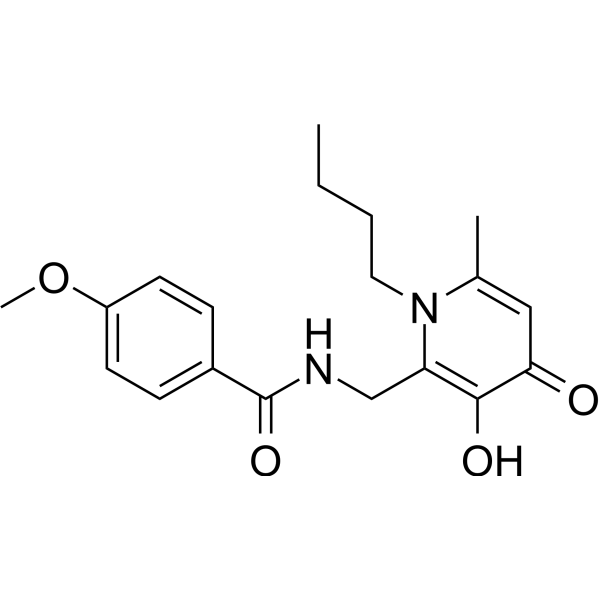 0 ImagesCat. No.: HY-142695CAS No.: 2885170-11-4Antibacterial synergist 1 (compound 20P) is a bacterial biofilm inhibitor. Antibacterial synergist 1 inhibits the production of pyocyanin and biofilm formation with IC50s of 8.6 and 4.5 μM, respectively. Antibacterial synergist 1 has the potential for the research of P. aeruginosa infections.
-
Cucurbitacin F
 0 ImagesCucurbitacin F is a tetracyclic protostane-type triterpenoid with low toxicity, antibacterial and anti-inflammatory activities, and is also a related compound of Cucurbitacin B (HY-N0416). Cucurbitacin F widely exists in plants such as Cucurbitaceae plants, Quisqualis indica and Sorbaria sorbifolia. Cucurbitacin F acts as an actin aggregator and reduces cell viability in a dose-dependent manner. Cucurbitacin F induces apoptosis by triggering G2/M phase cell cycle arrest and activating the caspase-3-dependent apoptosis.
-
Eupatarone
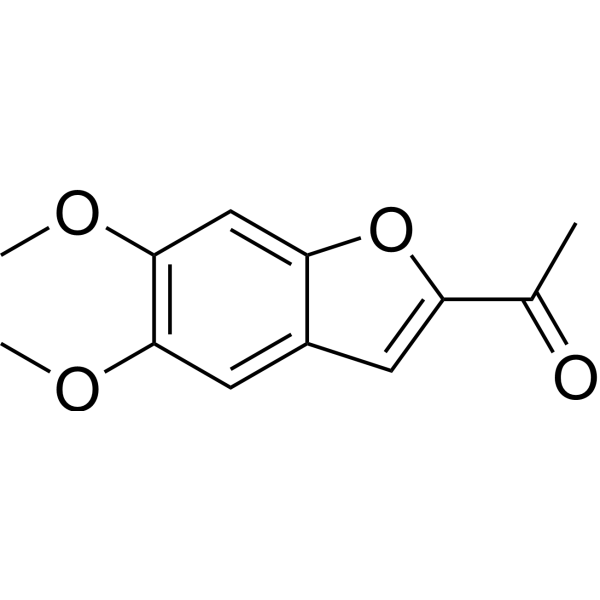 0 ImagesCat. No.: HY-119901CAS No.: 17249-61-5Synonyms: Caleprunin BEupatarone (Caleprunin B) is a bacterial inhibitor. Eupatarone can be obtained from Calea platylepis.
-
Decoralin
 0 ImagesCat. No.: HY-P11169CAS No.: 1001886-94-7Decoralin is a short cationic alpha-helical antimicrobial peptide that can be isolated from the venom of Oreumenes decorates wasps. Decoralin exhibits selective and rapid activity against bacteria by destroying membranes. Decoralin can be used for antimicrobial research.
-
LasR-IN-6
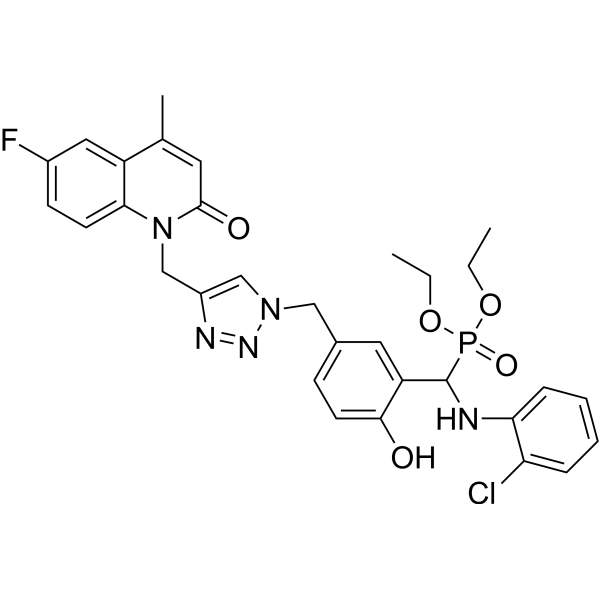
 0 ImagesCat. No.: HY-184715CAS No.: 872546-39-9LasR-IN-6 is a LasR inhibitor with an IC50 of 0.261 μM, and exhibits antibacterial activity against Pseudomonas aeruginosa. LasR-IN-6 stably binds to the active site of LasR via hydrophobic interactions, disrupts receptor dimerization, and interferes with quorum sensing. LasR-IN-6 inhibits protease production, biofilm formation, twitching motility and swarming motility in Pseudomonas aeruginosa. LasR-IN-6 can be used in studies related to Pseudomonas aeruginosa infection.
-
Carrot seed oil
 0 ImagesCarrot seed oil is a natural essential oil with antioxidant, anti-inflammatory, and antibacterial properties.
-
3,6-Diaminoacridine sulfate
 0 ImagesProflavine sulfate is a multifunctional acridine compound. 3,6-Diaminoacridine sulfate is an acridine dye and also a DNA inserter. Proflavine sulfate is a potent broad-spectrum antibacterial agent, and its mechanism is to insert into bacterial DNA, interfering with replication and transcription, causing bacterial lysis. 3,6-Diaminoacridine sulfate is a Kir3.2 potassium channel blocker and can be used to study the neurological phenotype of Down syndrome. 3,6-Diaminoacridine sulfate can penetrate the stratum corneum of the skin and accumulate in the cell nucleus and long-term exposure may induce skin cancer or other malignant tumors.
-
Plectasin
 0 ImagesCat. No.: HY-P10721Purity: 99.97%Plectasin is a peptide antibiotic derived from saprophytic fungi. Plectasin can kill pneumococcus in vitro. Plectasin can alleviate experimental peritonitis and pneumonia caused by pneumococcus in mice.
-
Isochlorogenic acid A (Standard)
 0 ImagesSynonyms: 3,5-Dicaffeoylquinic acid (Standard); 3,5-CQA (Standard)Isochlorogenic acid A (Standard) is the analytical standard of Isochlorogenic acid A. This product is intended for research and analytical applications. Isochlorogenic acid A (3,5-Dicaffeoylquinic acid) is a natural phenolic acid with anti-mutagenicity, anti-HBV, anti-HIV, anti-oxidant, anti-bacterial, and anti-inflammatoryy activities.
-
AK-968-11563024
 0 ImagesCat. No.: HY-168461CAS No.: 3056223-03-8AK-968-11563024 is an inhibitor of marine V. vulnificus NAT [ (VIBVN)NAT] with an IC50 of 18.86 µM. NATs (Arylamine N-acetyltransferases) in marine V. vulnificus plays a role in drug metabolism, contributing to the development of drug resistance. Therefore, AK-968-11563024 can be utilized in research related to drug resistance.
-
Wychimicin A
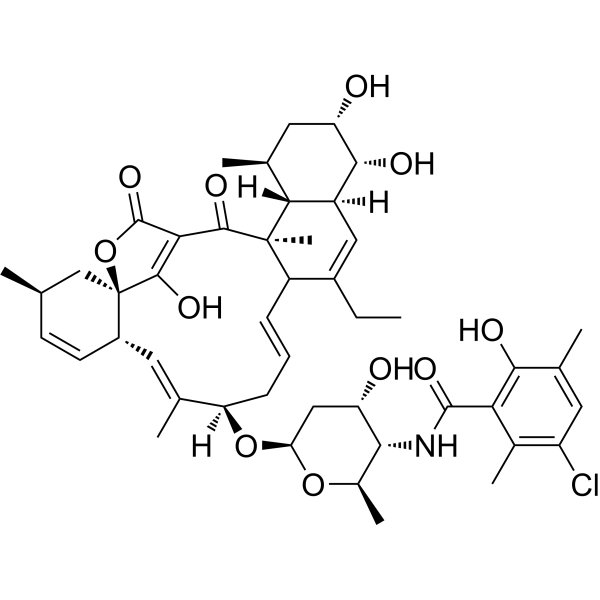 0 ImagesCat. No.: HY-N10561Wychimicin A is a spirotetronate polyketide, can be isolated from the rare actinomycete Actinocrispum wychmicini strain MI503-AF4. Wychimicin A shows strong antibacterial activity against methicillin-resistant Staphylococcus. aureus (IC50=0.125-0.5 μg/mL) and Enterococcus. faecalis/faecium (IC50=0.125-0.25 μg/mL).
-
Antibacterial agent 133
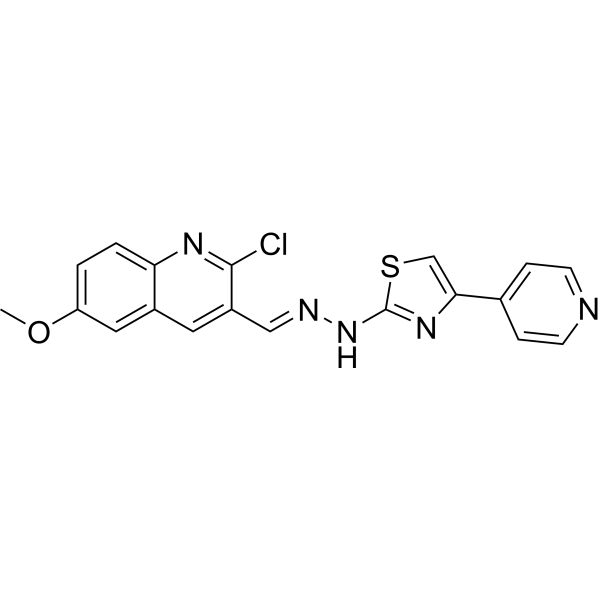 0 ImagesCat. No.: HY-152252Antibacterial agent 133 (4l) is an antimicrobial agent that has shown anti-Candida activity, particularly through LMD enzyme inhibition. Antibacterial agent 133 shows MIC90 values of 1.95 μg/mL against Candida albicans ATCC 24433, Candida smoothis ATCC 90030 and Candida subtilis ATCC 22019.
-
Aurachin D (Standard)
 0 ImagesCat. No.: HY-N7151RCAS No.: 108354-13-8Aurachin D (Standard) is the analytical standard of Aurachin D (HY-N7151). This product is intended for research and analytical applications. Aurachin D is an antibiotic and selective cytochrome bd oxidase inhibitor. Aurachin D exhibits inhibitory effects against Gram-positive bacteria and a small number of fungi, with an IC50 value of 0.1 μM against Escherichia coli and an IC50 value ranging from 0.13 to 33 μM against Mycobacterium tuberculosis. Aurachin D binds to and inhibits cytochrome bd oxidase, thereby blocking the electron transfer process, disrupting the respiratory chain and energy metabolism of pathogens. Aurachin D can be used in research related to leishmaniasis, malaria, Chagas disease, African trypanosomiasis, and tuberculosis[2].
-
Maximin H39
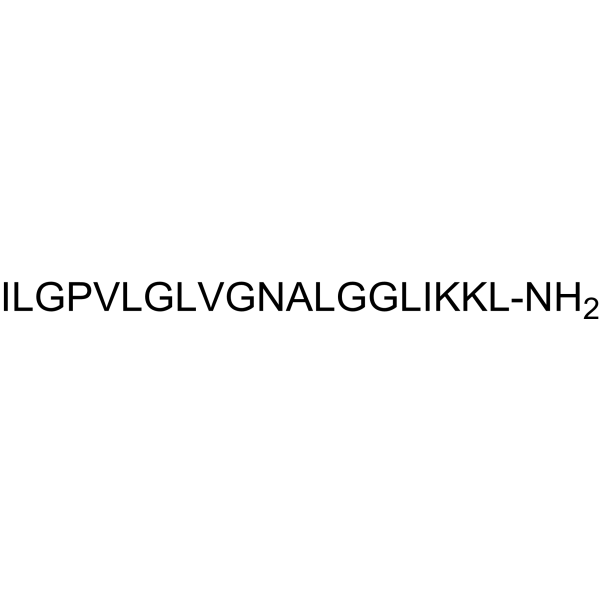 0 ImagesCat. No.: HY-P5684Maximin H39 is an antimicrobial peptide. MaximinH39 has antibacterial activity against C. albicans, S. aureus, B. subtilis (MIC: 9.4, 9.4, 18.8 μg/mL). Maximin H39 has hemolytic activities against human and rabbit red cells.
-
MsbA-IN-6
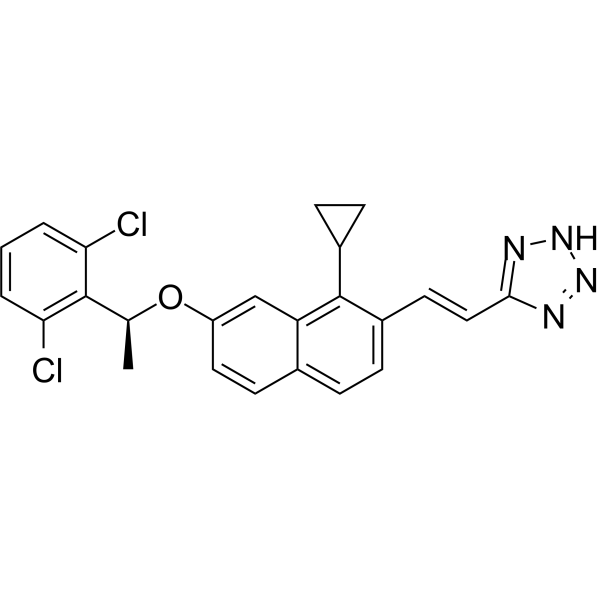 0 ImagesCat. No.: HY-130004CAS No.: 2909443-13-4MsbA-IN-6 is a potent inhibitor of MsbA. MsbA-IN-6 is an antibiotic. Gram-negative ATP-binding cassette (ABC) transporter MsbA, an essential inner membrane protein, transports lipopolysaccharide from the inner leaflet to the periplasmic face of the inner membrane. MsbA-IN-6 kills Escherichia coli through inhibition of its ATPase and transport activity, with no loss of activity against clinical multidrug-resistant strains.
-
Antibacterial agent 106
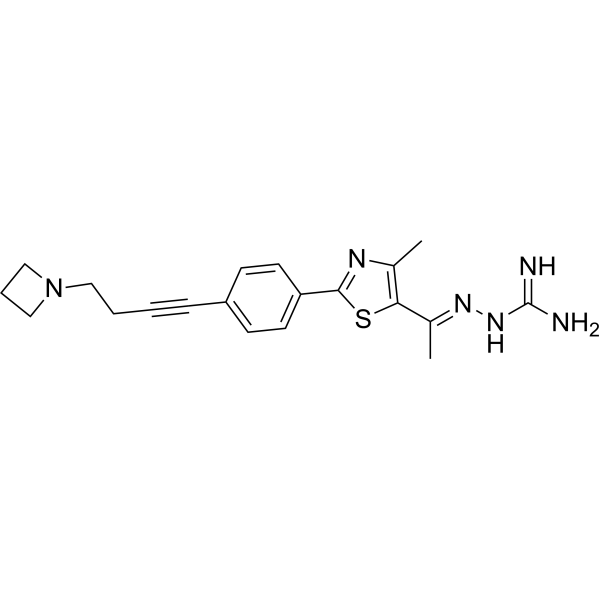 0 ImagesCat. No.: HY-147531CAS No.: 2459657-11-3Antibacterial agent 106 (compound 8) is an orally active and potent antibacterial agent with antibiofilm activity. Antibacterial agent 106 shows potent antibacterial effect against multi-agent resistant (MDR)-Gram positive pathogens. Antibacterial agent 106 is highly effective in clearing 99.7% of the intracellular methicillin-resistant S. aureus (MRSA) harbored inside macrophages. Antibacterial agent 106 is a click chemistry reagent, it contains an Alkyne group and can undergo copper-catalyzed azide-alkyne cycloaddition (CuAAc) with molecules containing Azide groups.
-
L-161240
 0 ImagesCat. No.: HY-124334CAS No.: 183298-68-2L-161240 is an antibiotic, which exhibits antibacterial activity against Escherichia coli, through inhibition of LpxC enzyme (Ki is 50 nM).




