



Bcl-2 Family Modulator
-
UE01
 0 ImagesCat. No.: HY-184501CAS No.: 486440-74-8
UE01 is an orally active, selective small-molecule modulator targeting both ULK1/ERK1/2. UE01 activates hULK1 with an EC50 of 695.30 nM and a KD of 114.3 nM for ULK1; it inhibits hERK1 with an IC50 of 179.90 nM and a KD of 114 nM for ERK1; it shows weak binding to ERK2 with a KD of 2.8 mM. UE01 induces the conformational transition of ULK1 from an inactive to an active state, enhances the phosphorylation of ULK1 Ser317 and mAtg13 Ser355, and reduces the phosphorylation of ULK1 Ser757. UE01 competitively occupies the ATP-binding pocket of ERK1, inhibits ERK1 kinase activity, and reduces the activity of the ERK1/2 signaling pathway. UE01 induces complete autophagy flux and apoptosis, upregulates Atg5, Atg7, LC3-II/LC3-I, Bax, cytochrome C (Cyt c), Cleaved-Caspase 3, Cleaved-PARP1 and E-cadherin, downregulates p62, Bcl-2, MMP-2 and MMP-9, reduces the phosphorylation of Exo70 Ser250, and promotes the proteasome-dependent degradation of Cav-1, thereby inhibiting EMT-related phenotypes and extracellular matrix degradation. UE01 can be used in studies related to triple-negative breast cancer.
-
Meayamycin B
 0 ImagesCat. No.: HY-15867CAS No.: 1020210-12-1Synonyms: (+)-Meayamycin B
Meayamycin B ((+)-Meayamycin B) is a potent SF3B1 inhibitor. Meayamycin B upregulates the proapoptotic Mcl-1S and downregulates Mcl-1L at the pre-mRNA splicing level. Meayamycin B does not regulate the alternative splicing of Bcl-x. Meayamycin B and ABT-737 (HY-50907) synergistically causes Apoptosis. Meayamycin B exhibits anticancer activity against non-small cell lung cancer.
-
GGW
 0 ImagesCat. No.: HY-187115CAS No.: 20762-32-7
GGW is a tripeptide with neuroprotective activity. GGW blocks the mitochondria-mediated apoptosis pathway, reverses glutamate-induced upregulation of the pro-apoptotic protein Bax and downregulation of the anti-apoptotic protein Bcl-2. GGW reduces ROS production, reverses the depletion of SOD and Glutathione Peroxidase, decreases intracellular calcium concentration, and reverses the collapse of mitochondrial membrane potential. GGW can be used in studies related to memory impairment induced by sleep deprivation.
-
2-Methoxyjuglone
 0 ImagesCat. No.: HY-N17440CAS No.: 15127-94-3
2-Methoxyjuglone, a naphthoquinone, is an apoptosis inducer. 2-Methoxyjuglone activates caspase-9 and caspase-3 via the mitochondrial cytochrome c-dependent intrinsic apoptosis cascade. 2-Methoxyjuglone increases pro-apoptotic Bax levels, decreases anti-apoptotic Bcl-2 levels, and promotes mitochondrial cytochrome c release. 2-Methoxyjuglone induces apoptosis morphological features, early apoptosis, S-phase and G2/M-phase cell cycle arrest, and DNA double-strand breaks. 2-Methoxyjuglone exerts activity against Gram-positive bacteria, pathogenic fungi, and phytopathogenic fungi. 2-Methoxyjuglone can be used for the research of hepatocellular carcinoma, osteosarcoma, colon adenocarcinoma, breast cancer, fungal infection, bacterial infection.
-
EGFR-IN-217
 0 ImagesCat. No.: HY-189142
EGFR-IN-217 is an ATP-competitive EGFR kinase inhibitor, with an IC50 of 60.7 nM against EGFR. EGFR-IN-217 exhibits kinase inhibitory activity against PI3K-α and mTOR. EGFR-IN-217 upregulates pro-apoptotic factors including P53, Bax, PUMA, and caspase-7, -8 and -9, and downregulates the anti-apoptotic protein BCL-2, thereby inducing cell apoptosis and cycle arrest. EGFR-IN-217 shows tumor growth inhibitory effects in the solid Ehrlich ascites carcinoma xenograft mouse model. EGFR-IN-217 can be applied in the research of solid Ehrlich ascites carcinoma, hepatocellular carcinoma, and breast cancer.
-
Sargachromanol E
 0 ImagesCat. No.: HY-123364CAS No.: 856414-54-5
Sargachromanol E is an apoptosis inducer, anti-inflammatory agent, and anti-aging agent. Sargachromanol E activates caspase-3, mediates PARP cleavage, downregulates Bcl-xL and upregulates Bax levels, and drives sub-G1 phase cell cycle arrest, inhibits LPS-induced COX-2 and iNOS transcription and expression (NO: IC50 = 6.99 μg/mL), reduces p38 MAPK and ERK1/2 phosphorylation levels, and suppresses the release of pro-inflammatory mediators such as TNF-α, IL-1β, and prostaglandin E2 (PGE2). Sargachromanol E can be used for research on skin aging, leukemia, oral squamous cell carcinoma, and inflammation-related studies.
-
Lobetyol
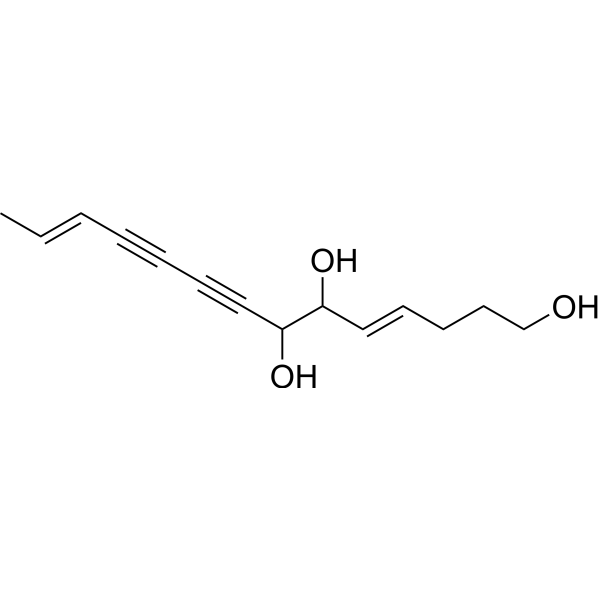 0 ImagesCat. No.: HY-117652CAS No.: 136171-87-4
Lobetyol is a natural compound that can be isolated from Lobelia chinensis. Lobetyol induces apoptosis and cell cycle arrest in MKN45 cells. Lobetyol shows anti-virus, anti-inflammation and anti-tumor activity. Lobetyol is a click chemistry reagent, it contains an Alkyne group and can undergo copper-catalyzed azide-alkyne cycloaddition (CuAAc) with molecules containing Azide groups.
-
Metuzumab
 0 ImagesCat. No.: HY-P991883Synonyms: Licartin; Metuximab; Mehuzumab
Metuzumab (Licartin) is a human-mouse chimeric IgG1 monoclonal antibody targeting CD147. Metuzumab induces Apoptosis, reduces levels of Cyclin D1, full-length Caspase-3, and Bcl-2, and increases Bax expression. Metuzumab enhances the sensitivity of non-small cell lung cancer (NSCLC) cells to Gemcitabine (HY-17026). Metuzumab is applicable for research on hepatocellular carcinoma and non-small cell lung cancer [1] [2].
-
Dimebutic acid (Standard)
 0 ImagesSynonyms: NSC-16045 (Standard); NSC-741804 (Standard)
Dimebutic acid (Standard) is an analytical standard of Dimebutic acid (HY-W015881). This product is intended for research and analytical applications. Dimebutic acid is an orally active short-chain fatty acid. Dimebutic acid stimulates fetal globin production and alters the balance of Bcl family proteins. Dimebutic acid prolongs red blood cell survival. Dimebutic acid exhibits toxicity in rats. Dimebutic acid can be used in the study of β-thalassemia and sickle cell disease.
-
YVPGP
 0 ImagesCat. No.: HY-P10992CAS No.: 2095286-57-8
YVPGP is an oligopeptide exacted from Anthopleura anjunae. YVPGP has a significant antitumor activity by mediating PI3K/AKT/mTOR signaling pathway. YVPGP arrests DU-145 cells in the S phase and induces apoptosis via mitochondrial and death receptor pathways (caspase3, 7, 8, 9). YVPGP effectively inhibits tumor growth in DU-145 xenografts mice model, promising for prostate cancer research.
-
IKKβ-IN-7
 0 ImagesCat. No.: HY-181837CAS No.: 3117527-92-8
IKKβ-IN-7 is an IKKβ inhibitor with an IC50 value of 9.44 μM. IKKβ-IN-7 induces DNA damage, S-phase cell cycle arrest, ROS accumulation, mitochondrial membrane potential loss, and apoptosis. IKKβ-IN-7 inhibits phosphorylation of p65 and IκBα, suppresses p65 nuclear translocation, and regulates NF-κB-controlled genes. IKKβ-IN-7 suppresses tumor growth in xenograft models and shows activity against colorectal cancer with low normal cell cytotoxicity. IKKβ-IN-7 can be used for the research of colorectal cancer.
-
BRD4 Inhibitor-15
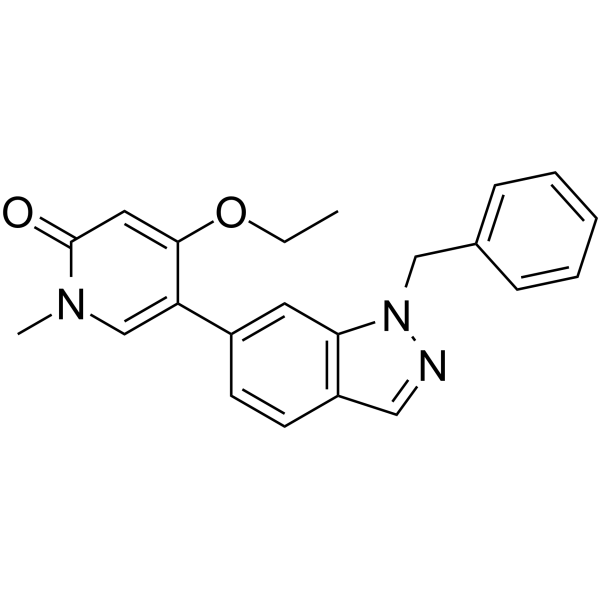 0 ImagesCat. No.: HY-143235CAS No.: 2761366-60-1
BRD4 Inhibitor-15 (compound 13) is a potent BRD4 inhibitor, with an IC50 of 18 nM. BRD4 Inhibitor-15 induces apoptosis of 22RV1 cells by regulating Bcl-2/Bax proteins and activating caspase-3 signaling pathway. BRD4 Inhibitor-15 down-regulates the c-Myc level in 22RV1 cells. BRD4 Inhibitor-15 can be used for prostate cancer research.
-
A2AR/EGFR-IN-1
 0 ImagesCat. No.: HY-184116
A2AR/EGFR-IN-1 is a dual A2AR/EGFR inhibitor, with an IC50 of 0.037 μM against A2AR and an IC50 of 8.37 μM against EGFR. A2AR/EGFR-IN-1 induces cell cycle arrest at S and G2/M phases. A2AR/EGFR-IN-1 upregulates the expression of TP53, Caspase3 and Bax, downregulates the expression of Bcl2, and promotes cell Apoptosis. A2AR/EGFR-IN-1 restores colon crypt structure in an azoxymethane (HY-111375)-induced colorectal cancer model in vivo. A2AR/EGFR-IN-1 can be used for research related to colorectal cancer.
-
CIB-Q22
 0 Images
CIB-Q22 is a potent pyruvate carboxylase (PC) inhibitor with an IC50 of 1.74 nM. CIB-Q22 suppresses hepatocellular carcinoma (HCC) cell proliferation, migration, and invasion. CIB-Q22 induces apoptosis and ferroptosis, promotes mitochondrial oxidative stress and dysfunction, inhibits glycolysis and anaplerotic flux, and reverses epithelial-mesenchymal transition (EMT). CIB-Q22 can be used for the study of hepatocellular carcinoma.
-
ZSNI-21
 0 ImagesCat. No.: HY-172394
ZSNI-21 is a ADAM17/HDAC2 inhibitor with ADAM17 IC50 0.939 μM and HDAC2 IC50 0.844 μM. ZSNI-21 regulates the expression of apoptosis-related proteins (Bax, Bcl-2) and Cyclin D1, and induces apoptosis.. ZSNI-21 can be used for the research of hepatocellular carcinoma, breast cancer, and non-small cell lung cancer.
-
Calactin
 0 ImagesCat. No.: HY-167237CAS No.: 20304-47-6
Calactin is a glycoside that can be isolated from Asclepias curassavica L.. Calactin activates caspase-3, caspase-8, caspase-9, and phosphorylates ERK. Calactin induces DNA damage, apoptosis, PARP cleavage, G2/M phase cell cycle arrest, shifts Bax/Bcl-2 expression, and shows anti-proliferation effects in leukemia cells. Calactin can be used for the research of leukemia.
-
Glycocholic acid-13C2,d4N
 0 ImagesCat. No.: HY-W754548
Glycocholic acid-13C2,d4 is the deuterium labeled and 13C-labeled Glycocholic acid (HY-N1423). Glycocholic acid is a bile acid derivative. Glycocholic acid downregulates MDR1, Bcl-2, MRP1, MRP2 and FXR, upregulates Bax, p53, caspase-9, caspase-3, TGR5 and S1PR2. Glycocholic acid inhibits multidrug resistance and efflux pumps, induces mitochondrial apoptosis, and enhances chemosensitivity. Glycocholic acid modulates related bile acid receptor signaling. Glycocholic acid suppresses growth and conjugation of Enterobacteriaceae and increases their antibiotic susceptibility. Glycocholic acid can be used for the research of colon adenocarcinoma and cholangiocarcinoma (CCA).
-
TBC1D2-IN-1
 0 ImagesCat. No.: HY-183772
TBC1D2-IN-1 is a potent orally active and selective TBC1D2 inhibitor with a Kd of 1.1 μM. TBC1D2-IN-1 selectively inhibits TBC1D2-mediated GTP hydrolysis on RAB7A-GTP, promotes RAB7A accumulation on lysosomal membranes, and induces apoptosis and autophagy. TBC1D2-IN-1 exerts selective antiproliferative activity cancer cells. TBC1D2-IN-1 can be used for the research of cervical carcinoma.
-
Oxychlororaphine (Standard)
 0 ImagesCat. No.: HY-W042191RCAS No.: 550-89-0
Oxychlororaphine (Standard) is the analytical standard of Oxychlororaphine. This product is intended for research and analytical applications. Oxychloroaphine could be isolated from the bacterium Pantoea agglomerans naturally present in soil. Oxychloroaphine has broad-spectrum antifungal activity. Oxychloroaphine has cytotoxicity in a dose-dependent manner and induces apoptosis. Oxychloroaphine can be used in research of cancer[1][2].
-
7-Epi 10-desacetyl paclitaxel (Standard)
 0 ImagesCat. No.: HY-77572RCAS No.: 78454-17-8Synonyms: 7-epi-10-deacetyltaxol (Standard); 10-Deacetyl-7-epipaclitaxel (Standard)
7-Epi 10-desacetyl paclitaxel (Standard) (7-epi-10-deacetyltaxol (Standard); 10-Deacetyl-7-epipaclitaxel (Standard)) is the analytical standard of 7-Epi 10-desacetyl paclitaxel (HY-77572). This product is intended for research and analytical applications. 7-Epi 10-desacetyl paclitaxel (7-epi-10-deacetyltaxol; 10-Deacetyl-7-epipaclitaxel) is a taxane diterpenoid that can be found in Taxus species and is also produced by the endophytic fungus Pestalotiopsis microspora. 7-Epi 10-desacetyl paclitaxel inhibits cancer cell proliferation and induces apoptosis and cell cycle arrest. 7-Epi 10-desacetyl paclitaxel induces apoptosis through the intrinsic mitochondrial pathway, a process associated with ROS generation, an increased Bax/Bcl-2 ratio, and PARP cleavage. 7-Epi 10-desacetyl paclitaxel can be used in research on hepatocellular carcinoma.



