



COX
Cyclooxygenase
Cyclooxygenase (COX), officially known as prostaglandin-endoperoxide synthase (PTGS), is an enzyme that is responsible for formation of important biological mediators called prostanoids, including prostaglandins, prostacyclin and thromboxane. Pharmacological inhibition of COX can provide relief from the symptoms of inflammation and pain. Drugs, like Aspirin, that inhibit cyclooxygenase activity have been available to the public for about 100 years. Two cyclooxygenase isoforms have been identified and are referred to as COX-1 and COX-2. Under many circumstances the COX-1 enzyme is produced constitutively (i.e., gastric mucosa) whereas COX-2 is inducible (i.e., sites of inflammation). Non-steroidal anti-inflammatory drugs (NSAID), such as aspirin and ibuprofen, exert their effects through inhibition of COX. The main COX inhibitors are the non-steroidal anti-inflammatory drugs (NSAIDs).
COX Isoform Specific Products
All Product Categories
-
COX Related Products (1315)
Related Products (1315)

-
Antibodies (6)
-
COX Isoform Comparison
-
Multiflorin A
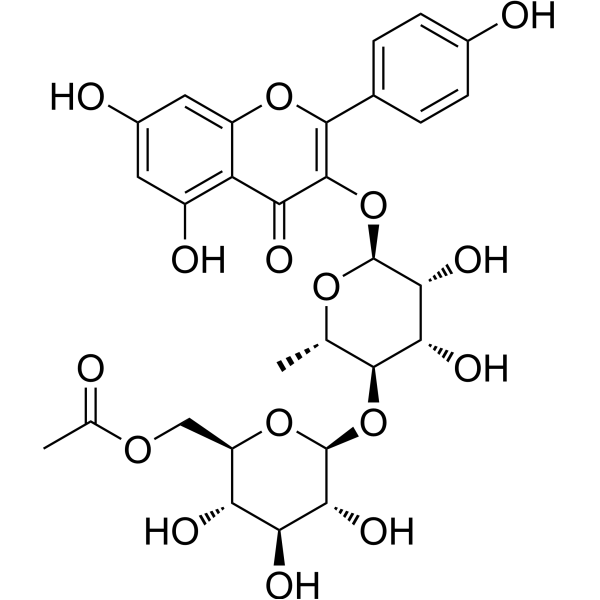 0 ImagesCat. No.: HY-N12326CAS No.: 1350028-90-8Multiflorin A is an orally active active ingredient of traditional herbal laxative, Pruni semen. Multiflorin A inhibits aromatase enzyme activity with an IC50 of 15.5 μM. Multiflorin A also inhibits quinone reductase 2 (QR2) and COX-2 enzyme. Multiflorin A has purgative activity and reduces postprandial blood glucose in mice. Multiflorin A modulates intestinal glucose transporters, tight junction proteins, and aquaporins, reshapes gut microbiota, and alters faecal metabolites. Multiflorin A can be used for the research of constipation and diabetes.

-
Sodium propionate-d5
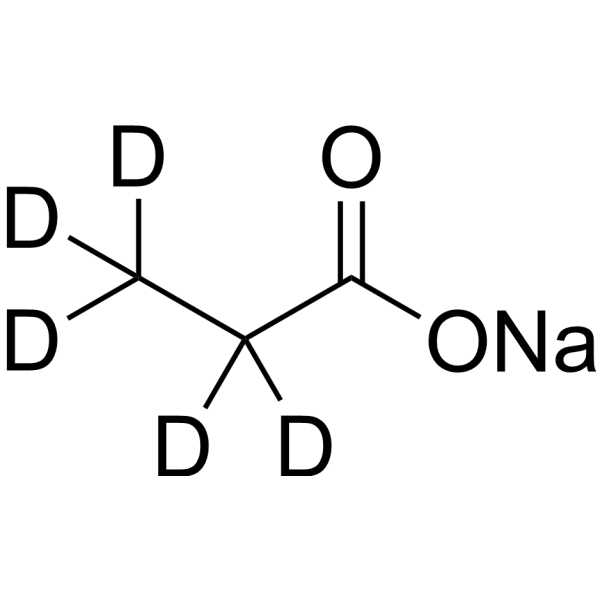 0 ImagesSodium propionate-d5 is the deuterium labeled Propionate sodium (HY-B1773A). Sodium propionate is an orally active short-chain fatty acid. Sodium propionate can be produced by intestinal bacteria from the metabolism of dietary fiber. Sodium propionate increases PPAR-γ, inhibits NF-κB activation, and reduces COX-2 expression and NO production. Sodium propionate also induces Apoptosis and Autophagy. Sodium propionate reduces HSV-1-induced keratitis. Sodium propionate has anticancer effects against glioblastoma. Sodium propionate exhibits neuroprotective, antioxidant, and anti-inflammatory activities. Sodium propionate can be used in the research of spinal cord injury and Alzheimer's disease.
-
3,3'-Diiodo-L-thyronine (Standard)
 0 ImagesCat. No.: HY-129974RCAS No.: 4604-41-5Synonyms: 3,3'-T2 (Standard)3,3'-Diiodo-L-thyronine (Standard) is the analytical standard of 3,3'-Diiodo-L-thyronine. This product is intended for research and analytical applications. 3,3'-Diiodo-L-thyronine (3,3'-T2) is an endogenous metabolite of thyroid hormone. 3,3'-Diiodo-L-thyronine significantly enhances COX activity.
-
Allyl thiosulfate
 0 ImagesAllyl thiosulfate (Sodium 2-propenyl thiosulfate) is found in Allium plants such as garlic and onion. Allyl thiosulfate can inhibit COX activity and reduce GSH concentration in platelets. Allyl thiosulfate exhibits anti-aggregatory and anti-cancer effects. Allyl thiosulfate can be used for the researches of cancer, inflammation and cardiovascular disease.
-
Ketorolac tromethamine salt (Standard)
 0 ImagesSynonyms: Ketorolac Tromethamine (Standard); Ketorolac tris salt (Standard); RS37619 tromethamine salt (Standard)Ketorolac (tromethamine salt) (Standard) is the analytical standard of Ketorolac (tromethamine salt). This product is intended for research and analytical applications. Ketorolac tromethamine salt (RS37619 tromethamine salt) is a non-steroidal anti-inflammatory agent, acting as a nonselective COX inhibitor, with IC50s of 20 nM for COX-1 and 120 nM for COX-2.
-
Flurbiprofen (Standard)
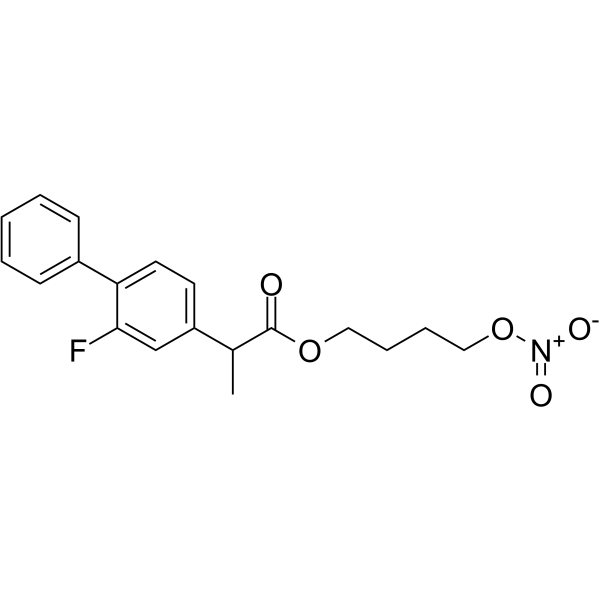
 0 ImagesFlurbiprofen (Standard) is the analytical standard of Flurbiprofen. This product is intended for research and analytical applications. Flurbiprofen (dl-Flurbiprofen) is a potent, orally active nonsteroidal anti-inflammatory agent (NSAIA/NSAID), with antipyretic and analgesic activities. Flurbiprofen is commonly used for the research of inflammatory diseases, including osteoarthritis and rheumatoid arthritis. Flurbiprofen is a non-selective cyclooxygenase (COX) inhibitor that can be used for the research of colorectal cancer.
-
Apyramide
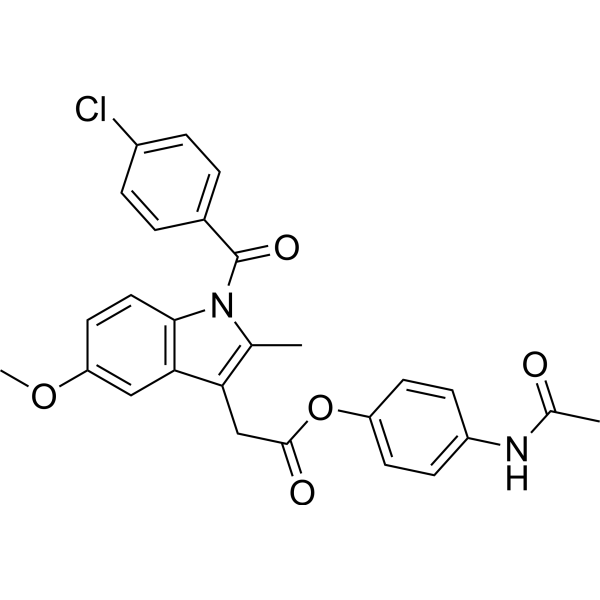 0 ImagesCat. No.: HY-U00046CAS No.: 68483-33-0Apyramide is an anti-inflammatory agent (NSAID) and behaves as a proagent of indomethacin (HY-14397). Indomethacin is a potent, blood-brain permeable and nonselective inhibitor of COX1 and COX2.
-
Bis[2-(4-hydroxyphenylthio)ethoxy]methane
![Bis[2-(4-hydroxyphenylthio)ethoxy]methane](https://file.medchemexpress.com/product_pic/hy-w744923.gif "Click to View Bis[2-(4-hydroxyphenylthio)ethoxy]methane Product Detail") 0 ImagesSynonyms: DD-70Bis[2-(4-hydroxyphenylthio) ethoxy]methane (DD-70) is a Bisphenol A (HY-18260) substitute and a COX-1 inhibitor. Bis[2-(4-hydroxyphenylthio) ethoxy]methane blocks platelet aggregation induced by Arachidonic acid (HY-109590) and U-46619 (HY-108566). Bis[2-(4-hydroxyphenylthio) ethoxy]methane alters hemostatic function. Bis[2-(4-hydroxyphenylthio) ethoxy]methane reduces embryonic survival rate, decreases embryonic mass and increases gallbladder mass in chicken embryos.
0 ImagesSynonyms: DD-70Bis[2-(4-hydroxyphenylthio) ethoxy]methane (DD-70) is a Bisphenol A (HY-18260) substitute and a COX-1 inhibitor. Bis[2-(4-hydroxyphenylthio) ethoxy]methane blocks platelet aggregation induced by Arachidonic acid (HY-109590) and U-46619 (HY-108566). Bis[2-(4-hydroxyphenylthio) ethoxy]methane alters hemostatic function. Bis[2-(4-hydroxyphenylthio) ethoxy]methane reduces embryonic survival rate, decreases embryonic mass and increases gallbladder mass in chicken embryos.
-
(S)-(+)-Ibuprofen (Standard)
 0 ImagesSynonyms: Dexibuprofen (Standard)(S)-(+)-Ibuprofen (Standard) is the analytical standard of (S)-(+)-Ibuprofen. This product is intended for research and analytical applications. (S)-(+)-Ibuprofen ((S)-Ibuprofen), a S(+)-enantiomer of Ibuprofen, is a potent COX-1 and COX-2 inhibitor with IC50s of 2.1 μM and 1.6 μM, respectively. (S)-(+)-Ibuprofen has analgesic, anti-inflammatory, anticancer and antipyretic effects.
-
Xanthohumol (Standard)
 0 ImagesXanthohumol (Standard) is the analytical standard of Xanthohumol. This product is intended for research and analytical applications. Xanthohumol is one of the principal flavonoids isolated from hops, the inhibitor of diacylglycerol acetyltransferase (DGAT), COX-1 and COX-2, and shows anti-cancer and anti-angiogenic activities. Xanthohumol also has antiviral activity against bovine viral diarrhea virus (BVDV), rhinovirus, HSV-1, HSV-2 and cytomegalovirus (CMV).
-
Sinapyl alcohol-d3
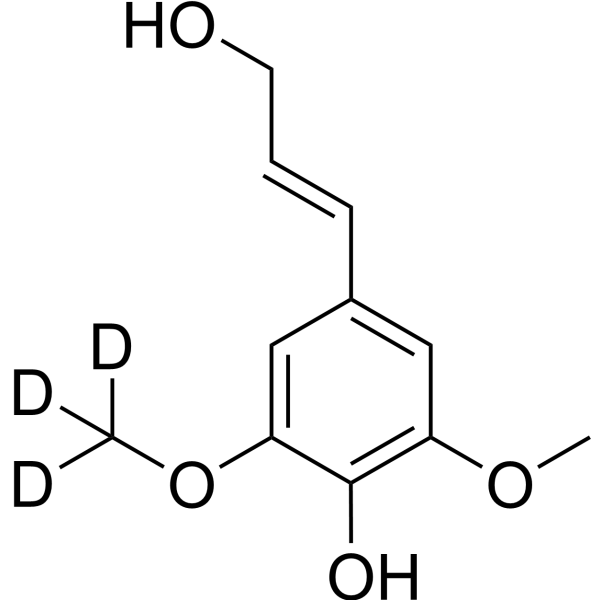 0 ImagesCat. No.: HY-W109812SCAS No.: 934634-29-4Sinapyl alcohol-d3 is the deuterated labeled Sinapyl alcohol (HY-W109812). Sinapyl alcohol is an orally active anti-inflammatory and antinociceptive agent. Sinapyl alcohol reduces the expression level of inducible NO synthase and COX-2.
-
Ketoprofen (lysinate)
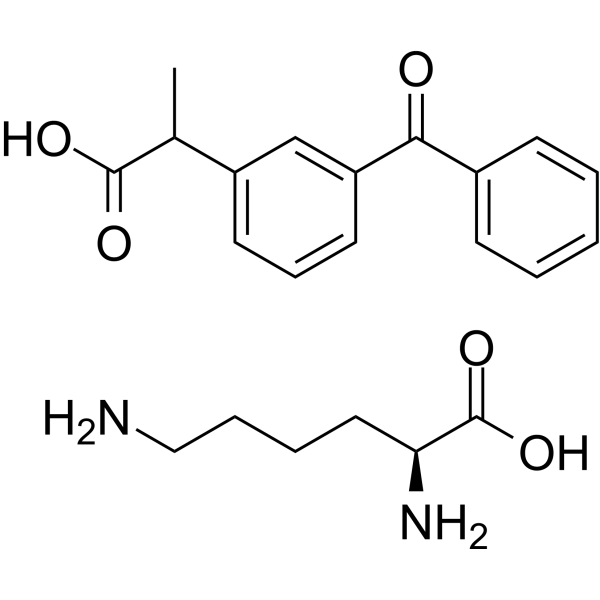 0 ImagesCat. No.: HY-B0227ACAS No.: 57469-78-0Synonyms: RP-19583 (lysinate)Ketoprofen (RP-19583) lysinate is a non-steroidal anti-inflammatory agent. Ketoprofen lysinate can inhibit the activity of cyclooxygenase with IC50 values of 2 nM (COX-1) and 26 nM (COX-2). which is potential in the research of inflammation, immunology, and metabolic disease such as obesity.
-
Etoricoxib-d3
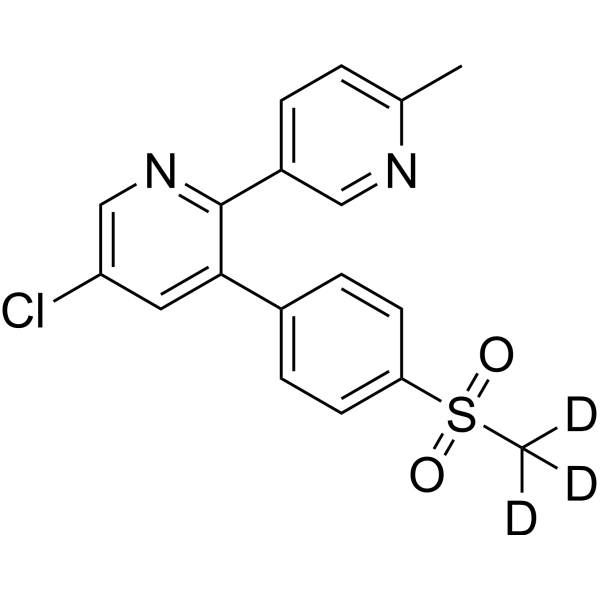 0 ImagesCat. No.: HY-15321S2CAS No.: 850896-71-8Synonyms: MK-0663-d3; L-791456-d3Etoricoxib-d3 is the deuterium labeled Etoricoxib. Etoricoxib (MK-0663) is a non steroidal anti-inflammatory agent, acting as a selective and orally active COX-2 inhibitor, with IC50s of 1.1 μM and 116 μM for COX-2 and COX-1 in human whole blood.
-
Aceclofenac-d4
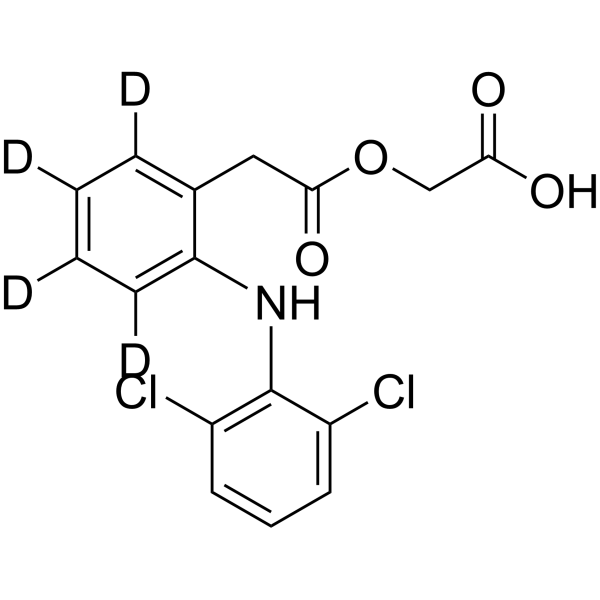 0 ImagesCat. No.: HY-B0634SCAS No.: 2748492-20-6Aceclofenac-d4 is the deuterium labeled Aceclofenac. Aceclofenac is an orally active nonsteroidal anti-inflammatory agent (NSAID), with analgesic and anti-inflammatory properties. Aceclofenac is used for the research of osteoarthritis, ankylosing spondylitis, rheumatoid arthritis.
-
3,3'-Diiodo-L-thyronine-13C6
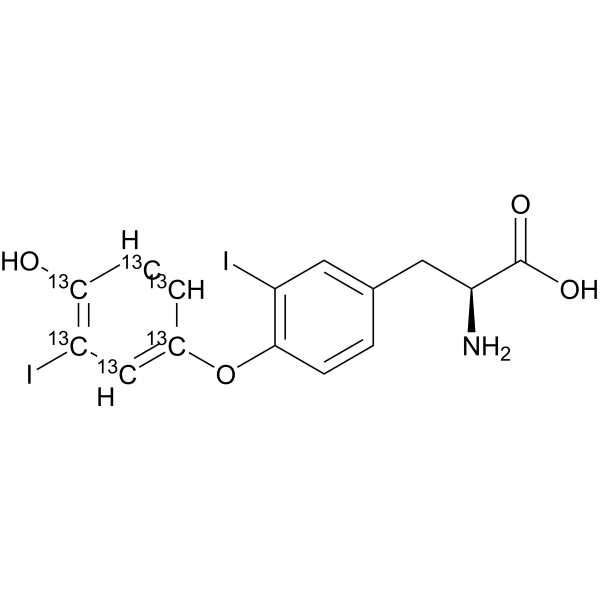 0 ImagesCat. No.: HY-129974SCAS No.: 1217459-13-6Synonyms: 3,3'-T2-13C63,3'-Diiodo-L-thyronine-13C6 is the 13C labeled 3,3'-Diiodo-L-thyronine. 3,3'-Diiodo-L-thyronine (3,3'-T2) is an endogenous metabolite of thyroid hormone. 3,3'-Diiodo-L-thyronine significantly enhances COX activity.
-
β-Elemonic acid (Standard)
 0 ImagesCat. No.: HY-N2454RCAS No.: 28282-25-9β-Elemonic acid (Standard) is the analytical standard of β-Elemonic acid. This product is intended for research and analytical applications. β-Elemonic acid is a triterpene isolated from Boswellia carterii. β-Elemonic acid induces cell apoptosis, reactive oxygen species (ROS) and COX-2 expression and inhibits prolyl endopeptidase. β-Elemonic acid exhibits anticancer and anti-inflammatory effects.




