



CaMK Inhibitor
-
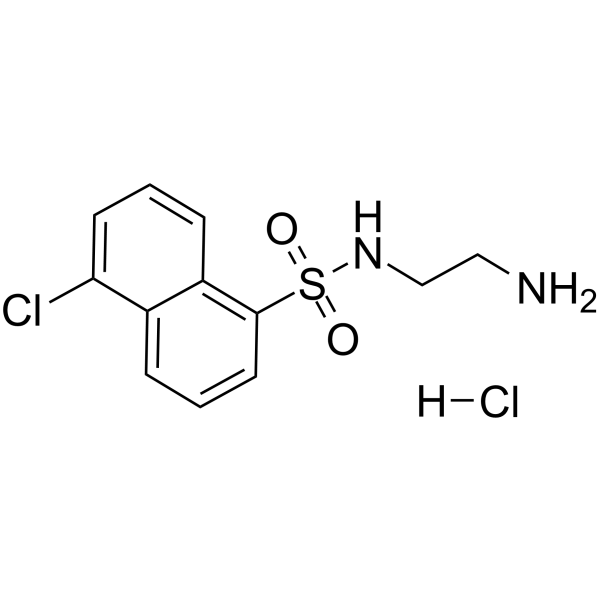
A-3 hydrochloride
 0 Images
A-3 hydrochloride is a potent, cell-permeable, reversible, ATP-competitive non-selective antagonist of various kinases. It against PKA (Ki=4.3 µM), casein kinase II (Ki=5.1 µM) and myosin light chain kinase (MLCK) (Ki=7.4 µM). A-3 hydrochloride also inhibits PKC and casein kinase I with Ki values of 47 µM and 80 µM, respectively.
-
8-Br-ADPR disodium
 0 ImagesCat. No.: HY-134261ASynonyms: 8-Bromoadenosine-5'-O-diphosphoribose disodium
8-Br-ADPR disodium (8-Bromoadenosine-5'-O-diphosphoribose) is a TRPM2 inhibitor and ADPR signaling pathway antagonist. 8-Br-ADPR disodium inhibits glucagon-mediated nuclear calcium signaling and downstream CaMKII/CREB phosphorylation by blocking ADPR-induced TRPM2 activation. 8-Br-ADPR disodium significantly reduces gluconeogenic gene expression and blood glucose levels in diabetic models. 8-Br-ADPR disodium effectively blocks ADPR-mediated calcium signal transduction in NK cells, inhibits immune synapse formation, granzyme B release and cytolytic activity against melanoma cells. 8-Br-ADPR disodium is widely used in studies related to diseases such as diabetes, melanoma and lymphoma.
-
STO-609 acetate
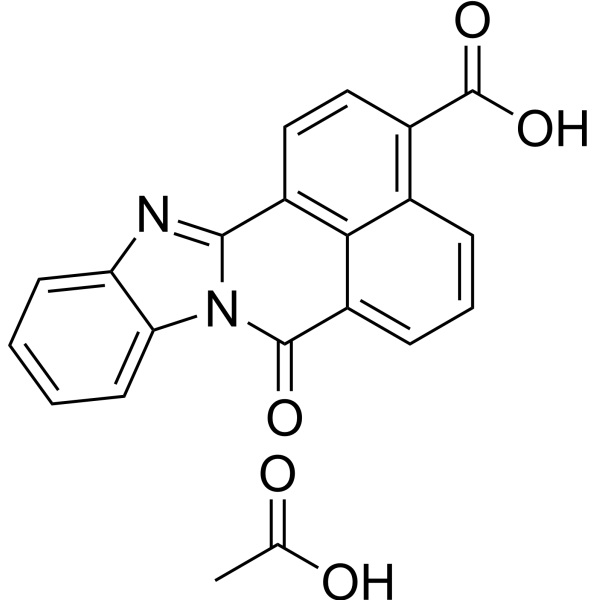 0 ImagesCat. No.: HY-19805ACAS No.: 1173022-21-3
STO-609 acetate is a selective and cell-permeable inhibitor of the Ca2+/calmodulin-dependent protein kinase kinase (CaM-KK), with Ki values of 80 and 15 ng/mL for recombinant CaM-KKα and CaM-KKβ, respectively. STO-609 acetate inhibits AMP-activated protein kinase kinase (AMPKK) activity in HeLa cell lysates with an IC50 ~0.02 g/ml.
-
Trifluoperazine dimaleate
 0 Images
Trifluoperazine dimaleate, an antipsychotic agent, acts by blocking central dopamine receptors. Trifluoperazine dimaleate is a potent α1-adrenergic receptor antagonist. Trifluoperazine dimaleate is a potent NUPR1 inhibitor exerting anticancer activity. Trifluoperazine dimaleate is a calmodulin inhibitor, and also inhibits P-glycoprotein. Trifluoperazine dimaleate can be used for the research of schizophrenia. Trifluoperazine dimaleate acts as a reversible inhibitor of influenza virus morphogenesis.
-
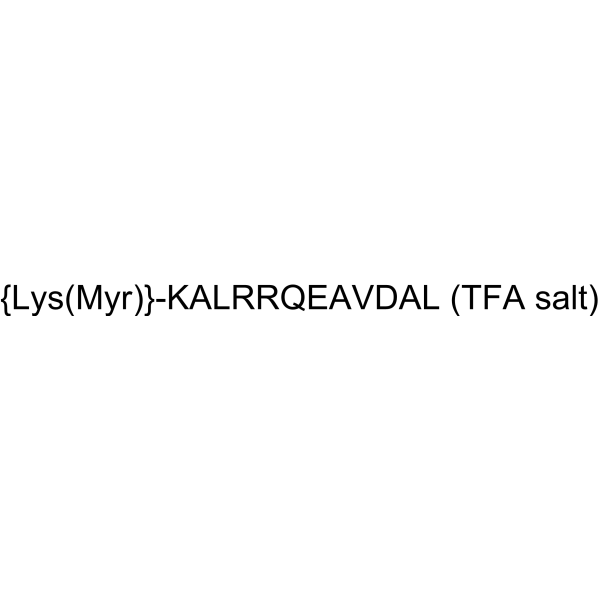
Autocamtide-2-related inhibitory peptide
 0 ImagesCat. No.: HY-P0214CAS No.: 167114-91-2
Autocamtide-2-related inhibitory peptide is a highly specific and potent inhibitor of CaMKII with an IC50 of 40 nM.
-
Prenylamine lactate (Standard)
 0 ImagesCat. No.: HY-A0257ARCAS No.: 69-43-2
Prenylamine (lactate) (Standard) is the analytical standard of Prenylamine (lactate). This product is intended for research and analytical applications. Prenylamine lactate is a calcium-modulating protein (CaM) antagonist that inhibits CaM-dependent enzymes and can slowly relax smooth muscle preparations. The effect of Prenylamine lactate on smooth muscle is not inhibited by the calcium agonist Bay K 8644 (HY-10588). Reports suggest that under low heart rate conditions, Prenylamine seems to enhance voltage-dependent transmembrane calcium currents.
-
TX-1123
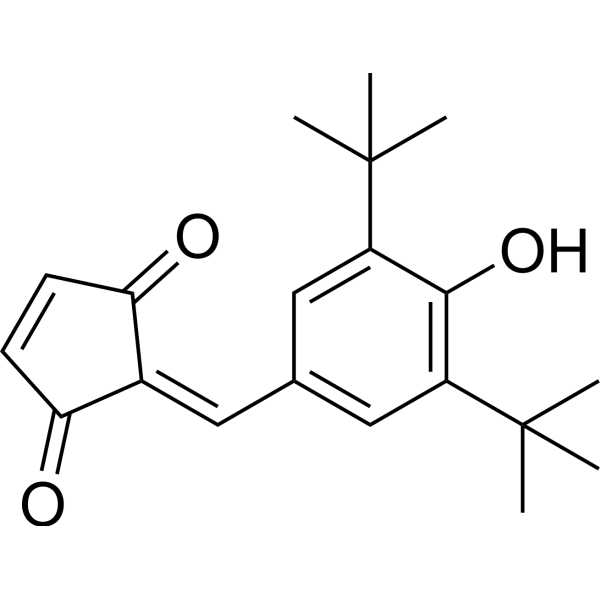 0 ImagesCat. No.: HY-121828CAS No.: 157397-06-3
TX-1123 is a potent protein tyrosine kinase (PTK) inhibitor for Src, eEF2-K, and PKA, and EGFR-K/PKC. TX-1123 is a cyclo-oxygenase (COX) inhibitor with IC50 values of 1.16 μM and 15.7 μM for COX2 and COX1, respectively. TX-1123 has low mitochondrial toxicity. TX-1123 can be used in research of cancer.
-
Oxoglaucine
 0 Images
Oxoglaucine (O-Methylatheroline) is a natural product with multiple activities including autophagy activation, anti-inflammation, antibacterial activity, and immunoregulation. Oxoglaucine inhibits the TRPV5/calmodulin/CAMK-II pathway, suppresses TGFβ-induced Smad2 phosphorylation by upregulating Smad7, blocks Ca2+ influx, activates autophagy, alleviates apoptosis and inflammation, inhibits ROS production and the expression of fibrosis markers in hepatocytes, and regulates immune cell populations and responses. Oxoglaucine protects against infections caused by Candida albicans and Klebsiella pneumoniae, and exerts effects on adjuvant-induced arthritis. Oxoglaucine can be used in studies related to arthritis, liver fibrosis, bacterial infections, and fungal infections.
-
Trifluoperazine-d3 dihydrochloride
 0 ImagesCat. No.: HY-B0532ASCAS No.: 1432064-02-2
Trifluoperazine-d3 (dihydrochloride) is deuterium labeled Trifluoperazine (dihydrochloride). Trifluoperazine dihydrochloride, an antipsychotic agent, acts by blocking central dopamine receptors. Trifluoperazine dihydrochloride is a potent α1-adrenergic receptor antagonist. Trifluoperazine dihydrochloride is a potent NUPR1 inhibitor exerting anticancer activity. Trifluoperazine dihydrochloride is a calmodulin inhibitor, and also inhibits P-glycoprotein. Trifluoperazine dihydrochloride can be used for the research of schizophrenia. Trifluoperazine dihydrochloride acts as a reversible inhibitor of influenza virus morphogenesis.
-
Calmodulin Kinase IINtide, Myristoylated
 0 ImagesCat. No.: HY-P5987Synonyms: Myr-CaMKIINtide
Calmodulin Kinase IINtide, Myristoylated (Myr-CaMKIINtide) is a selective and noncompetitive inhibitor of CaMKII.
-
8-Br-ADPR
 0 ImagesCat. No.: HY-134261CAS No.: 59259-77-7Synonyms: 8-Bromoadenosine-5'-O-diphosphoribose
8-Br-ADPR (8-Bromoadenosine-5'-O-diphosphoribose) is a TRPM2 inhibitor and ADPR signaling pathway antagonist. 8-Br-ADPR inhibits glucagon-mediated nuclear calcium signaling and downstream CaMKII/CREB phosphorylation by blocking ADPR-induced TRPM2 activation. 8-Br-ADPR significantly reduces gluconeogenic gene expression and blood glucose levels in diabetic models. 8-Br-ADPR effectively blocks ADPR-mediated calcium signal transduction in NK cells, inhibits immune synapse formation, granzyme B release and cytolytic activity against melanoma cells. 8-Br-ADPR is widely used in studies related to diseases such as diabetes, melanoma and lymphoma.
-
Cucurbitacin IIa (Standard)
 0 ImagesCat. No.: HY-N1988RCAS No.: 58546-34-2Synonyms: Hemslecin A (Standard)
Cucurbitacin IIa (Hemslecin A) (Standard) is the analytical standard for Cucurbitacin IIa (HY-N1988). This product is used for research and analytical applications. Cucurbitacin IIa is an orally active, blood-brain barrier-penetrating EGFR inhibitor with an IC50 of 1.455 nM for human EGFR. Cucurbitacin IIa induces caspase-3 dependent cell apoptosis, downregulates survivin expression, enhances autophagy levels, disrupts the actin cytoskeleton through actin aggregation, blocks the cell cycle at the G2/M phase, and inhibits the EGFR-MAPK signaling pathway to exert anti-inflammatory activity. Cucurbitacin IIa can be used in research on inflammatory-related diseases, depression, and non-small cell lung cancer and other cancers.
-
DY-9760e
 0 ImagesCat. No.: HY-19230CAS No.: 179185-73-0
DY-9760e is a calmodulin (CaM) inhibitor. DY-9760e selectively inhibits the activity of various calmodulin-dependent enzymes by antagonizing the Ca²⁺/CaM complex, exhibiting the strongest inhibitory activity against nNOS, CaM kinase II, and calcineurin (Ki: 0.9, 1.4, and 2.0 μM, respectively). DY-9760e inhibits excessive nitric oxide production and protein tyrosine nitration, as well as the activation of calpain and caspase-3. DY-9760e reduces infarct size, improves cardiac function, and inhibits oxidative stress and cell death. DY-9760e can be used in research on the treatment of myocardial infarction, cerebral ischemia, and other diseases.
-
CaMKII-IN-3
 0 ImagesCat. No.: HY-180951CAS No.: 2765717-63-1
CaMKII-IN-3 (Example 321) is a CaMKII inhibitor with an IC50 of less than 10 nM. CaMKII-IN-3 can be used for the study of heart diseases.
-
AC3-I, myristoylated
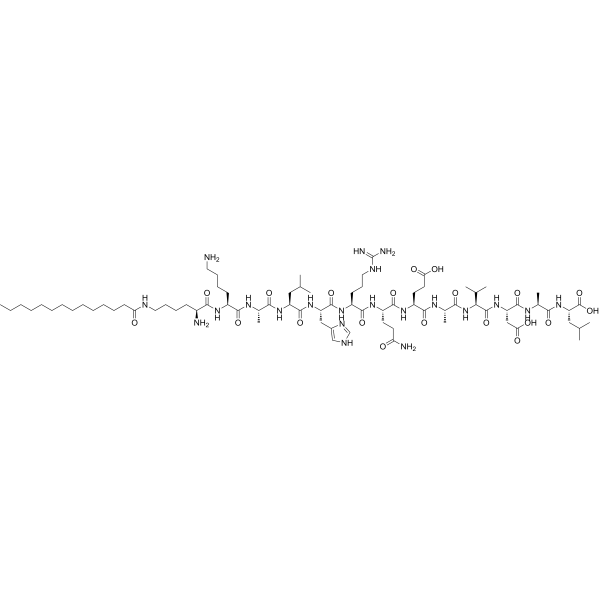 0 ImagesCat. No.: HY-P5525Synonyms: Autocamtide-3 Derived Inhibitory Peptide
AC3-I, myristoylated is a biological active peptide. (This is a myristoylated form of Autocamtide-3-Derived Inhibitory Peptide (AC3-I), a highly specific inhibitor of Calmodulin-Dependent Protein Kinase ll (CaMKII) that is resistant to proteolysis. AC3-I is derived from Autocamtide-3, a substrate for CaMKII, with the Thr-9 phosphorylation site substituted with Ala.)
-
LRRK2/JNK3-IN-1
 0 ImagesCat. No.: HY-184652
LRRK2/JNK3-IN-1 is a brain-penetrant multi-target inhibitor of LRRK2 (including G2019S mutant and wild-type) and JNK3, with enzymatic IC50 values of 3.90 nM against LRRK2G2019S, 3.24 nM against wild-type LRRK2, and 22.1 nM against JNK3. LRRK2/JNK3-IN-1 displays favorable selectivity in a 97-kinase profiling screen, and also shows inhibitory activity against JNK1, JNK2, and MKNK2. LRRK2/JNK3-IN-1 can be used for the research of Parkinson's disease.
-
CaMKII inhibitory peptide KIIN
 0 ImagesCat. No.: HY-P10071CAS No.: 508181-45-1Synonyms: Calmodulin Kinase IINtide; CaM-KIIN; CaM-KIINβ
CaMKII inhibitory peptide KIIN is a potent inhibitor of CaMKII.
-
Fluoxetine-Conjugated Platinum(IV) prodrug-1
 0 ImagesCat. No.: HY-176149
Fluoxetine-Conjugated Platinum(IV) prodrug-1 (Compound 8) is an eEF2K inhibitor. Fluoxetine-Conjugated Platinum(IV) prodrug-1 inhibits cancer cell proliferation, induces DNA damage, cell cycle arrest at S phase and apoptosis. Fluoxetine-Conjugated Platinum(IV) prodrug-1 induces ROS accumulation and mitochondrial dysfunction. Fluoxetine-Conjugated Platinum(IV) prodrug-1 inhibits TNBC cell migration and invasion by inhibiting MMP-2 activity. Fluoxetine-Conjugated Platinum(IV) prodrug-1 induces autophagy in TNBC cells by activating AMPK. Fluoxetine-Conjugated Platinum(IV) prodrug-1 has antitumor activity and activates immunosuppression in the 4T1-Luc mouse model. Fluoxetine-Conjugated Platinum(IV) prodrug-1 can be used in triple-negative breast cancer (TNBC) research.
-
ANDS
 0 ImagesCat. No.: HY-184486CAS No.: 16781-09-2Synonyms: 1-Amino-8-naphthol-2,4-disulfonic acid
ANDS (1-Amino-8-naphthol-2,4-disulfonic acid) is an orally active inhibitor of CaMKP (IC50 = 6.4 μM; Ki = 3.6 μM) and CaMKP‑N (IC50 = 6.6 μM). ANDS binds unacetylated p53 and restores p53 activity by disrupting ANP32B-p53 interaction. ANDS inhibits chronic myeloid leukemia (CML) cell proliferation, impairs leukemic stem cells (LSC) function and prolongs survival in CML mouse model while sparing normal progenitor cells. ANDS can be used to study the eradication of LSCs and the overcoming of tyrosine kinase inhibitor (TKI) resistance in CML. ANDS can be used to study breast cancer.



