



Caspase 7
Caspase 7 is an executioner cysteine protease that cleaves after aspartate residues and participates in programmed cell death and inflammation[1][2]. Mechanistically, death receptor and DNA-damage pathways activate caspase 7 through caspase 8 and caspase 9, placing it within apoptosis signaling cascades[1]. In Fas-stimulated Jurkat cells, caspase 8 activates caspase 3 and caspase 7, supporting a branched protease cascade during apoptotic execution[3]. In inflammatory models, caspase 1 inflammasomes activate caspase 7, and caspase 7 can mediate caspase 1-induced apoptosis upstream of caspase 3[1][4]. Disease and model evidence links caspase 7 to endotoxemia resistance in deficient mice, Salmonella-infected macrophages, neuropathic rat spinal cord apoptosis, and CHO-cell viability studies[1][4][5][6]. Compared with caspase 3, caspase 7 shares substrate recognition and some endogenous substrates, but specific substrates, caspase 1-dependent activation, and endotoxemia phenotypes distinguish the isoforms[1]. For experimental applications, isatin sulfonamides inhibit caspases 3 and 7 and serve as PET or SPECT apoptosis-imaging recognition units after radiolabeling[7].
References:
- [1]. Lamkanfi M, et al. Caspase-7: a protease involved in apoptosis and inflammation. Int J Biochem Cell Biol. 2010 Jan;42(1):21-4. [Content Brief]
- [2]. Denault JB, et al. Caspases. Curr Protoc Protein Sci. 2002 Feb;Chapter 21:21.8.1-21.8.16. [Content Brief]
- [3]. Hirata H, et al. Caspases are activated in a branched protease cascade and control distinct downstream processes in Fas-induced apoptosis. J Exp Med. 1998 Feb 16;187(4):587-600. [Content Brief]
- [4]. Mahib MR, et al. Caspase-7 mediates caspase-1-induced apoptosis independently of Bid. Microbiol Immunol. 2020 Feb;64(2):143-152. [Content Brief]
- [5]. Siniscalco D, et al. Involvement of subtype 1 metabotropic glutamate receptors in apoptosis and caspase-7 over-expression in spinal cord of neuropathic rats. Pharmacol Res. 2008 Mar;57(3):223-33. [Content Brief]
- [6]. Safari F, et al. Caspase-7 deficiency in Chinese hamster ovary cells reduces cell proliferation and viability. Biol Res. 2020 Nov 13;53(1):52. [Content Brief]
- [7]. Limpachayaporn P, et al. Isatin sulfonamides: potent caspases-3 and -7 inhibitors, and promising PET and SPECT radiotracers for apoptosis imaging. Future Med Chem. 2015;7(9):1173-96. [Content Brief]
All Product Categories
-
Caspase 7 Related Products (110)
Related Products (110)

-
Recombinant Proteins (1)
-
Antibodies (1)
-
MMP-9-IN-14
 0 ImagesCat. No.: HY-181272MMP-9-IN-14 is a MMP-9 inhibitor (IC50 = 34.46 μM). MMP-9-IN-14 induces G1-phase cell cycle arrest and caspase-dependent apoptosis in cancer cells. MMP-9-IN-14 promotes the accumulation of phosphorylated γH2AX. MMP-9-IN-14 inhibits the migration and invasion of cancer cells, and downregulates the expressions of MMP-2, MMP-9 and hTERT in cancer cells. MMP-9-IN-14 inhibits tumor growth and angiogenic spread in animal models. MMP-9-IN-14 can be used for the research of cancers such as lung adenocarcinoma, cervical cancer and colorectal cancer.
-
Ac-VEID-CHO
 0 ImagesCat. No.: HY-108312CAS No.: 319494-39-8Ac-VEID-CHO is a peptide-derived caspase inhibitor and has potency of inhibition for Caspase-6, Caspase-3 and Caspase-7 with IC50 values of 16.2 nM, 13.6 nM and 162.1 nM, respectively. Ac-VEID-CHO also inhibits VEIDase activity an IC50 value of 0.49 µM. Ac-VEID-CHO can be used for the research of neurodegenerative conditions including Alzheimer’s and Huntington’s disease.
-
4-Methoxycinnamic acid ethyl ester
 0 Images4-Methoxycinnamic acid ethyl ester (Ethyl p-methoxycinnamate) is an orally active natural compound found. 4-Methoxycinnamic acid ethyl ester exerts anti-inflammatory effects by inhibiting cyclooxygenase (COX-1 (IC50 = 1.12 μM) and COX-2 (IC50 = 0.83 μM)), NF-κB (IC50 = 88.7 μM) and cytokine production (TNF-α (IC50 = 96.84 μg/mL) and IL-1β (IC50 = 166.4 μg/mL)). 4-Methoxycinnamic acid ethyl ester inhibits tumor cell proliferation, migration and cancer metabolism and induces apoptosis.4-Methoxycinnamic acid ethyl ester inhibits VEGF expression, thereby inhibiting angiogenesis. 4-Methoxycinnamic acid ethyl ester has a significant inhibitory effect on dengue virus and Mycobacterium tuberculosis. 4-Methoxycinnamic acid ethyl ester has analgesic effects in rats.
-
Clerodin
 0 ImagesClerodin (3-Deoxycaryoptinol) is a natural diterpenoid compound that can be isolated from traditional Chinese medicinal plants such as Clerodendrum infortunatum. Clerodin exhibits caspase-3 regulation, apoptosis induction, cell cycle arrest, ROS induction and glutathione depletion effects, along with anti-cancer and antifeedant activities. It shows selective cytotoxicity against leukemia cells and breast cancer cells, but has no obvious toxicity to normal human blood cells and lymphocytes. Clerodin also reduces the feeding behavior of Helicoverpa armigera larvae on cabbage leaf discs, but has no significant contact toxicity to these larvae. Clerodin can be used in research related to acute monocytic leukemia and human breast cancer.
-
Pinusolide
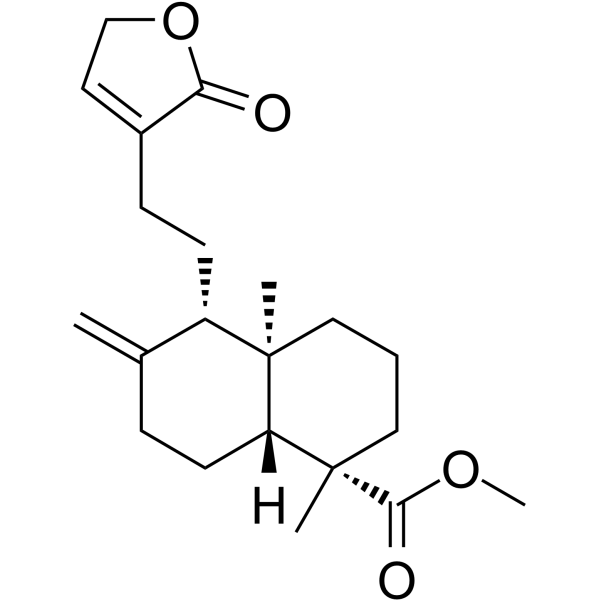 0 ImagesPinusolide is an AMPK activator and PAF receptor antagonist. Pinusolide activates AMPK, phosphorylates ACC, enhances IRS-1 tyrosine phosphorylation, boosts glucose uptake, and modulates insulin signaling. Pinusolide inhibits caspase-3/7 activation, intracellular calcium elevation, reactive oxygen species overproduction, lipid peroxidation, and tumor cell proliferation. Pinusolide stabilizes superoxide dismutase activity, reduces apoptotic hallmarks, induces mitochondrial pathway apoptosis, and triggers DNA fragmentation. Pinusolide can be used for the research of type 2 diabetes, neurodegenerative diseases, acute lymphoblastic leukemia, acute myeloid leukemia, and Burkitt lymphoma.
-
Benfluron hydrochloride
 0 ImagesCat. No.: HY-106419ACAS No.: 80427-58-3Synonyms: Benflurone hydrochlorideBenfluron hydrochloride is an Apoptosis inducer and inhibitor of the HIV-1 Rev-RRE complex, with an IC50 of 5.0 μM against the HIV-1 Rev-RRE complex. Benfluron hydrochloride induces p53 activation, and triggers phosphorylation of Chk1 at serine 345, Chk2 at threonine 68, as well as ERK1/2 at threonine 202 and tyrosine 204. Benfluron hydrochloride activates Caspase 8, Caspase 9 and Caspase 3/7, inhibits HIV-1 viral transcription, and acts as a substrate for 11β-HSD 1 and cytosolic carbonyl reductase. Benfluron hydrochloride can be used in research related to leukemia and HIV-1 infection.
-
HDAC-IN-82
 0 ImagesCat. No.: HY-169922HDAC-IN-82 (Compound 18b) is a histone deacetylase (HDAC) inhibitor with selective antiplasmodial and anticancer activity. HDAC-IN-82 shows potent antiproliferative activity and caspase 3/7 activation in cancer cells. HDAC-IN-82 causes hyperacetylation of histone H3 and α-tubulin.
-
TASIN-1 hydrochloride
 0 ImagesCat. No.: HY-116572CAS No.: 1678515-13-3TASIN-1 hydrochloride is a selective inhibitor of truncated APCTR (adenomatous polyposis coli gene) that exerts cytotoxic effects by inhibiting cholesterol biosynthesis. TASIN-1 hydrochloride specifically targets colorectal cancer (CRC) cells carrying APC truncated mutations, while having no significant toxicity to wild-type APC cells. TASIN-1 hydrochloride exerts cytotoxic effects by targeting Emopamil binding protein (EBP) to inhibit cholesterol biosynthesis, triggering endoplasmic reticulum (ER) stress, reactive oxygen species (ROS) generation, and JNK-mediated apoptosis, and inhibiting Akt survival signaling. TASIN-1 hydrochloride can be used to prevent and intervene in APC mutant colorectal cancer.
-
Orsellinic acid (Standard)
 0 ImagesOrsellinic acid (Standard) is an analytical standard of Orsellinic acid (HY-N3126). This product is intended for research and analytical applications. Orsellinic acid is a Benzoic acid (HY-N0216) derivative. Orsellinic acid can be isolated from Chaetomium globosum endophytic on Ephedra fasciculata (Mormon tea). Orsellinic acid blocks PAF-mediated Apoptosis, inhibits caspase-3/7 activation, and PARP cleavage. Orsellinic acid can be used in research of neurons and various tumors (non-small cell lung cancer, breast cancer, neuroblastoma, pancreatic cancer).
-
Linichlorin A
 0 ImagesCat. No.: HY-126757CAS No.: 62462-98-0Linichlorin A is a p27Kip1 ubiquitination inhibitor that blocks p27Kip1 degradation by inhibiting the Skp2-Cks1–p27Kip1 interaction. Linichlorin A shows selective antiproliferative activity against tumor cells. Linichlorin A induces apoptosis in leukemia cells via cytochrome c release, caspase activation and PARP cleavage. Linichlorin A can be used in the study of leukemia, melanoma, cervical cancer and breast cancer.




