



EGFR
Epidermal growth factor receptor; ErbB-1; HER1
The EGFR family of receptor tyrosine kinases (RTK) comprises four distinct receptors: the EGFR (also known as ErbB-1/HER1), ErbB-2 (neu, HER2), ErbB-3 (HER3) and ErbB-4 (HER4). All EGFR family members are characterized by a modular structure consisting of an extracellular ligand-binding domain, a single hydrophobic transmembrane region, and the intracellular part harbouring the highly conserved tyrosine kinase domain. The ErbB family of receptor tyrosine kinases (RTKs) couples binding of extracellular growth factor ligands to intracellular signaling pathways regulating diverse biologic responses, including proliferation, differentiation, cell motility, and survival. Ten growth factors and their ErbB specificities are: EGF, amphiregulin (AR), and TGF bind ErbB-1; betacellulin, and epiregulin bind both ErbB-1 and ErbB-4; the neuregulins (also called heregulins and Neu differentiation factors) NRG-1 and NRG-2 bind ErbB-3 and ErbB-4; and NRG-3 and NRG-4 bind ErbB-4. No known ligand binds ErbB-2. The three best characterized signaling pathways induced through ErbBs are Ras-mitogen-activated protein kinase (Ras-MAPK), phosphatidylinositol 3 kinase-protein kinase B (PI3K-PKB/Akt), and phospholipase C-protein kinase C (PLC-PKC) pathways.
EGFR Isoform Specific Products
All Product Categories
-
EGFR Inhibitors
(1054)
View all products
-
EGFR Agonists
(4)
View all products
-
EGFR Antagonists
(5)
View all products
-
EGFR Activators
(9)
View all products
-
EGFR Modulators
(7)
View all products
-
EGFR Chemicals
(3)
View all products
-
EGFR Inducers
(5)
View all products
-
EGFR Degraders
(54)
View all products
-
EGFR Controls
(6)
View all products
-
EGFR Substrate
(1)
View all products
-
EGFR Ligands
(20)
View all products
-
ErbB2/HER2 Proteins
(40)
View all products
-
ErbB3/HER3 Proteins
(15)
View all products
-
EGFR Proteins
(47)
View all products
-
ErbB4/HER4 Proteins
(10)
View all products
-
EGFR Related Products (1295)
Related Products (1295)

-
Recombinant Proteins (112)
-
Antibodies (19)
-
EGFR Isoform Comparison
-
Seribantumab
 0 ImagesCat. No.: HY-P99268CAS No.: 1334296-12-6Synonyms: SAR 256212; MM 121Seribantumab (MM 121) is a fully human IgG2 monoclonal antibody that targets HER3. Seribantumab blocks the activation of epidermal growth factor receptor (ErbB) family members and its downstream signal. Seribantumab inhibits neuregulin 1 (NRG1) fusion-dependent tumorigenesis in vitro and in vivo in breast, lung and ovarian patient-derived cancer models.
-
Mubritinib
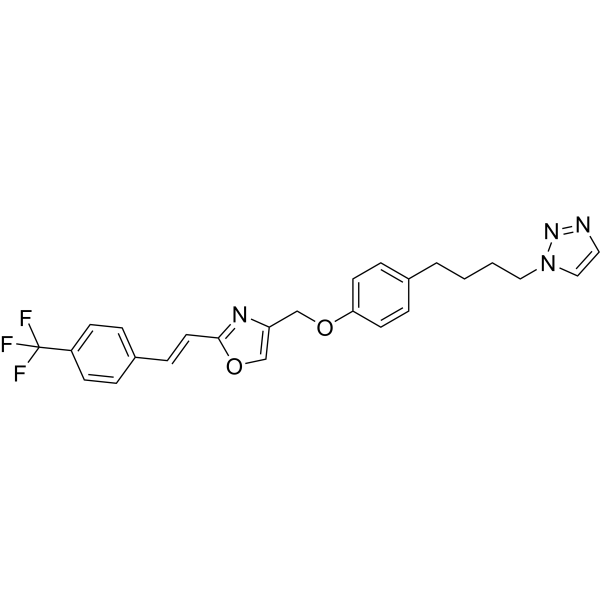 0 ImagesSynonyms: TAK-165Mubritinib (TAK-165) is a potent and selective EGFR2/HER2 inhibitor with an IC50 of 6 nM.
-
Vesencumab
 0 ImagesSynonyms: MNRP-1685AVesencumab (MNRP-1685A) is IG1 antibody against neuropilin-1 (NRP-1). Vesencumab binds to NRP-1 and prevents the subsequent coupling of NRP-1 to VEGFR-2. Vesencumab has anti-angiogenic and anti-neoplastic activities. Vesencumab can be used in the research of metastatic solid tumors, including ovarian cancer.
-
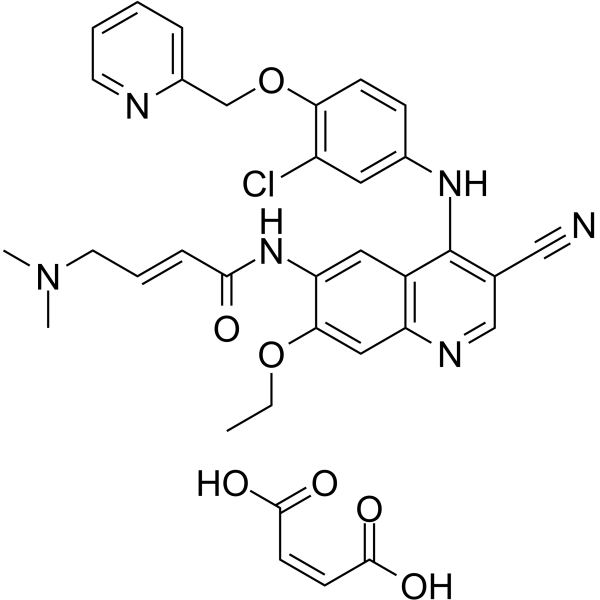
Icotinib
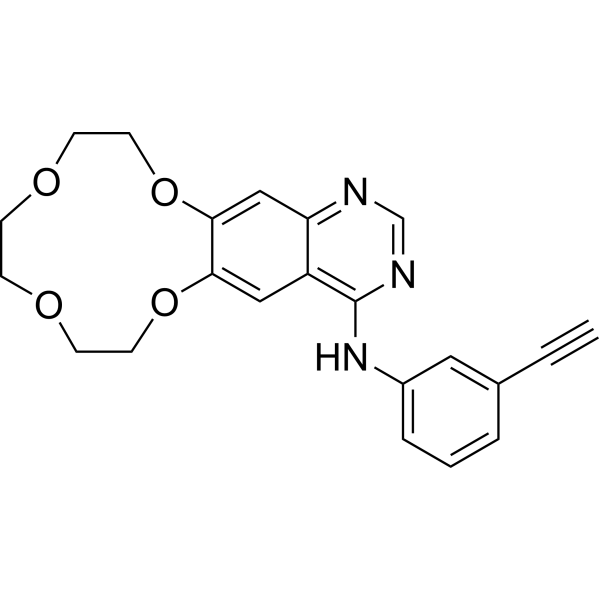 0 ImagesSynonyms: BPI-2009Icotinib (BPI-2009) is a potent, CNS-penetrant and specific EGFR inhibitor with an IC50 of 5 nM; also inhibits mutant EGFRL858R, EGFRL858R/T790M, EGFRT790M and EGFRL861Q. Icotinib is a click chemistry reagent, it contains an Alkyne group and can undergo copper-catalyzed azide-alkyne cycloaddition (CuAAc) with molecules containing Azide groups.
-
Disitamab
 0 ImagesSynonyms: RC48-0Disitamab (RC48-0) is a humanized monoclonal antibody targeting HER2. Disitamab can be used in the synthesis of antibody-drug conjugates (ADCs), Disitamab vedotin (HY-P9985).
-
Sevabertinib
 0 ImagesSynonyms: BAY 2927088Sevabertinib (BAY 2927088) is an orally active and reversible dual EGFR-HER2 inhibitor (IC50 <0.5 nM for wild-type HER2, HER2 A775insYVMA, wild-type EGFR, and EGFR D770_N771insSVD). Sevabertinib has anticancer activity against lung cancer.
-
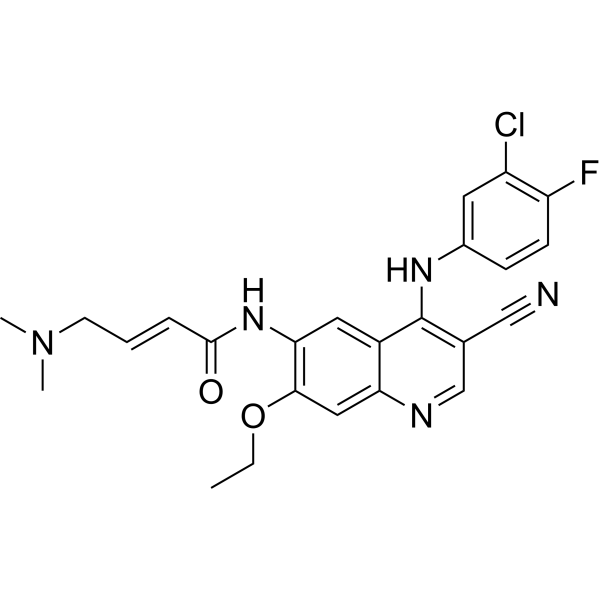
ORM-5029
 0 ImagesCat. No.: HY-164202ORM-5029 is a first-in-class human epidermal growth factor receptor 2 (HER2)-targeted antibody-drug conjugate (ADC) comprised of SMol006, a highly potent GSPT1 degrader, conjugated to Pertuzumab (HY-P9912). ORM-5029 exhibits robust efficacy across 14 HER2-positive breast cancer cell lines, with IC50 values ranging from 0.3 to 14.4 nM.ORM-5029 demonstrates anti-tumor activity in the BT474 xenograft model. ORM-5029 can be used for study of breast cancer.
-
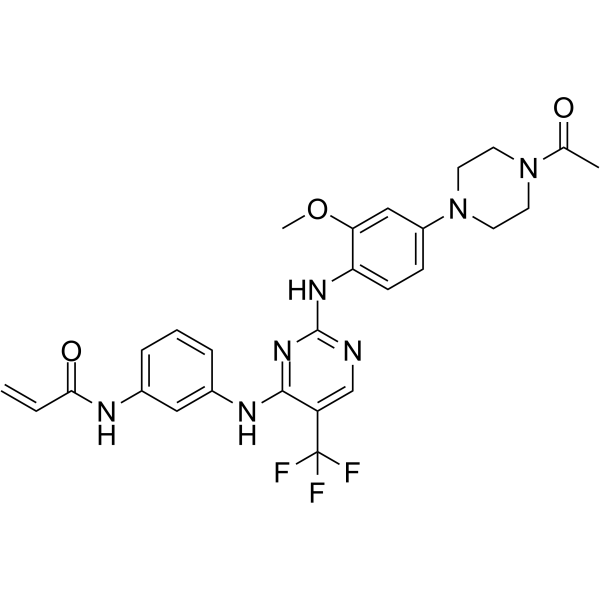
Panitumumab (anti-EGFR)
 0 ImagesCat. No.: HY-P99041APurity: 99.02%
-
Poziotinib
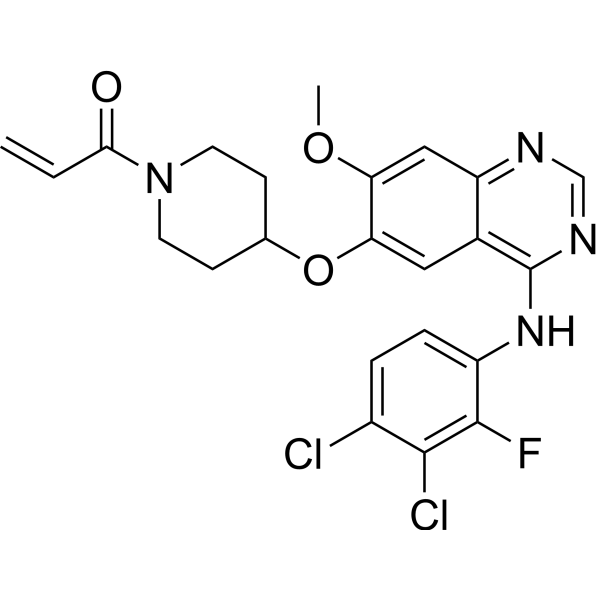 0 ImagesSynonyms: HM781-36B; NOV120101Poziotinib (HM781-36B) is an orally active, irreversible pan-HER inhibitor, which effectively inhibits EGFRwt, HER-2 and HER-4 with IC50s of 3.2, 5.3 and 23.5 nM, respectively. Poziotinib (HM781-36B) also shows excellent inhibitory activities against mutated EGFRs, including EGFRT790M and EGFRL858R/T790M, with IC50s of 4.2 and 2.2 nM, respectively. Excellent antitumor activity.
-
Lapatinib ditosylate
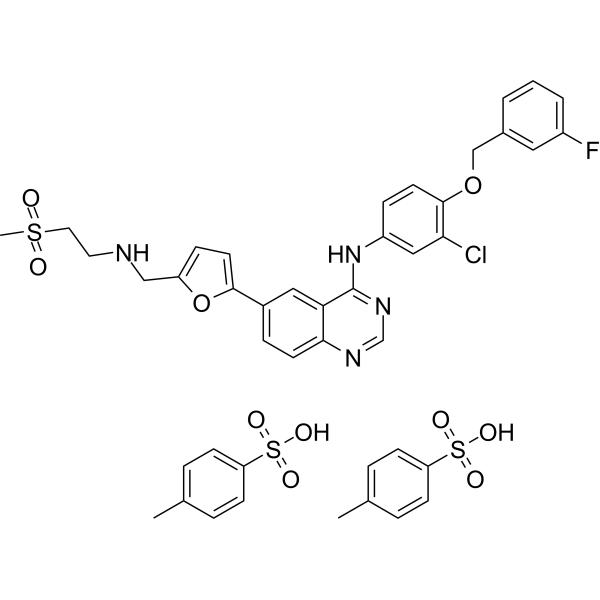 0 ImagesSynonyms: GW572016 ditosylate; GW2016 ditosylate

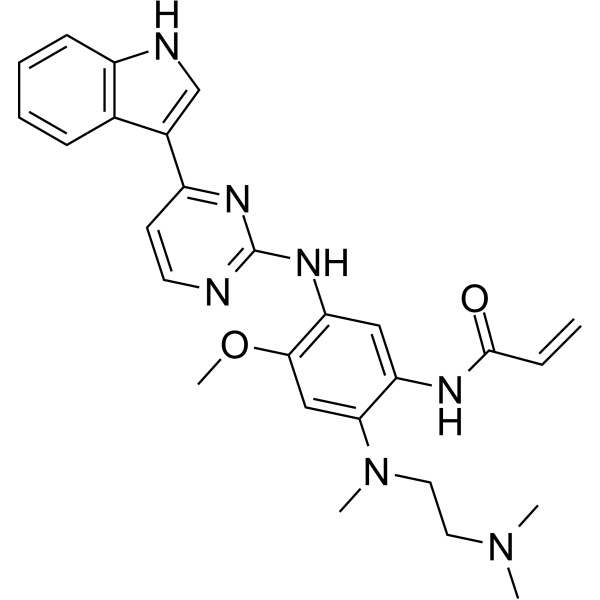
-
HJM-561
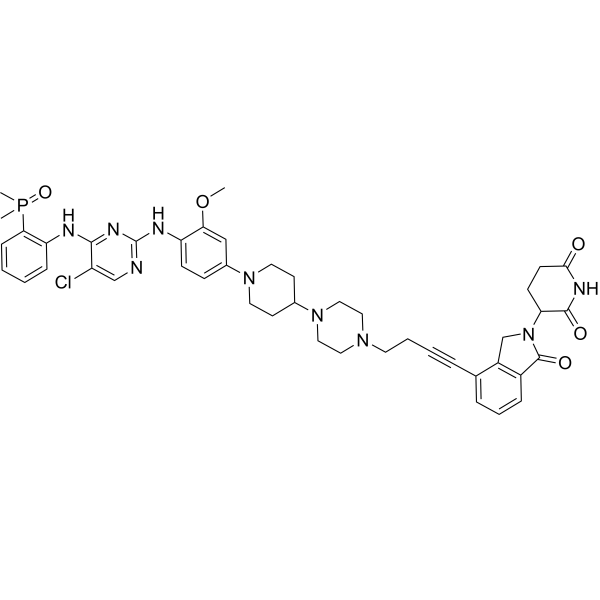 0 ImagesHJM-561 is a selective and effective orally active EGFR PROTAC degrader. HJM-561 is able to overcome the triple EGFR mutations that are resistant to Osimertinib (HY-15772). HJM-561 exhibits potent degradation of EGFR Del19/T790M/C797S (DC50: 9.2 nM) and L858R/T790M/C797S (DC50: 5.8 nM), and has anti-tumor activity (pink: EGFR ligand (HY-12857); blue: CRBN ligand (HY-A0003); black: linker).
-
Depatuxizumab
 0 ImagesSynonyms: ABT-806
-
Lifirafenib
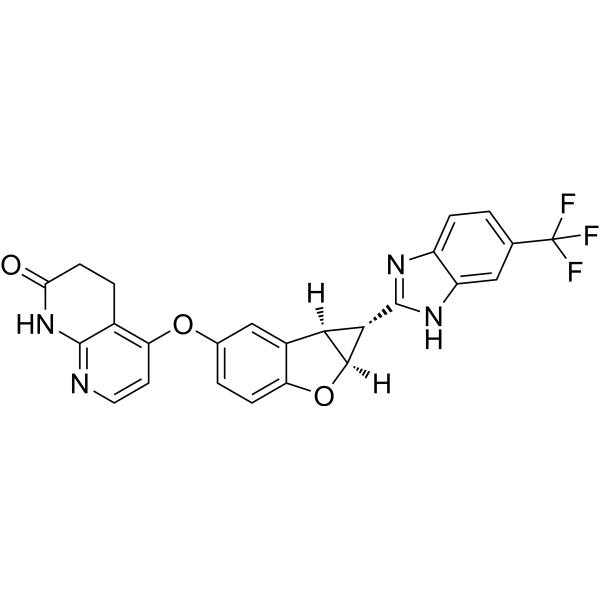 0 ImagesSynonyms: BGB-283Lifirafenib (BGB-283) is a novel and potent Raf Kinase and EGFR inhibitor with IC50 values of 23 and 29 nM for recombinant BRafV600E and EGFR, respectively.




