



ERK
Extracellular signal regulated kinases
ERKs (Extracellular-signal-regulated kinases) are widely expressed protein kinase intracellular signalling molecules that are involved in functions including the regulation of meiosis, mitosis, and postmitotic functions in differentiated cells. Many different stimuli, including growth factors, cytokines, virus infection, ligands for heterotrimeric G protein-coupled receptors, transforming agents, and carcinogens, activate the ERK pathway. In the MAPK/ERK pathway, Ras activates c-Raf, followed by mitogen-activated protein kinase kinase (abbreviated as MKK, MEK, or MAP2K) and then MAPK1/2 (below). Ras is typically activated by growth hormones through receptor tyrosine kinases and GRB2/SOS, but may also receive other signals. ERKs are known to activate many transcription factors, such as ELK1, and some downstream protein kinases. Disruption of the ERK pathway is common in cancers, especially Ras, c-Raf and receptors such as HER2.
ERK Isoform Specific Products
All Product Categories
-
ERK Inhibitors
(737)
View all products
-
ERK Agonists
(10)
View all products
-
ERK Activators
(248)
View all products
-
ERK Modulators
(17)
View all products
-
ERK Chemical
(1)
View all products
-
ERK Inducers
(16)
View all products
-
ERK Degraders
(2)
View all products
-
ERK Controls
(3)
View all products
-
ERK Ligands
(2)
View all products
-
ERK Related Products (1118)
Related Products (1118)

-
Antibodies (22)
-
ERK Isoform Comparison
-
Erlotinib-d8
 0 ImagesCat. No.: HY-50896S3CAS No.: 1266656-97-6Synonyms: CP-358774-d8; NSC 718781-d8; OSI-774-d8Erlotinib-d8 (CP-358774-d8) is the deuterated-labeled Erlotinib (HY-50896). Erlotinib (CP-358774) is a selective, orally active EGFR tyrosine kinase inhibitor. Erlotinib also acts as a substrate and inhibitor of OATP2B1, with an IC50 of approximately 0.079 μM for inhibiting OATP2B1-mediated uptake of estrone 3-sulfate. Erlotinib blocks EGFR phosphorylation, downstream signal transduction, as well as the growth and proliferation of cancer cells. Erlotinib inhibits MMP-10-mediated renal injury, fibrotic lesions, the ERK1/2, GSK-3β and β-catenin signaling pathways, as well as the deposition of fibronectin, α-SMA, collagen and renal injury markers. Erlotinib is metabolized via CYP3A to produce the active metabolite OSI-420. Erlotinib can be used in research related to non-small cell lung cancer, gastric cancer, papillary renal cell carcinoma, EGFR inhibitor resistance and renal fibrosis.
-
7-Acetoxycoumarin
 0 ImagesCat. No.: HY-N20744CAS No.: 10387-49-2Synonyms: Acetylumbelliferone7-Acetoxycoumarin (Acetylumbelliferone) is an anti-inflammatory inhibitor with antibacterial and amoebicidal activities. 7-Acetoxycoumarin reduces the phosphorylation levels of ERK, JNK, NF-κB and p38 MAPK. 7-Acetoxycoumarin downregulates the protein and mRNA expression levels of iNOS and COX-2. 7-Acetoxycoumarin inhibits the production of IL-1β, IL-6, TNF-α, NO and PG2. 7-Acetoxycoumarin reduces the degradation of IκBα. 7-Acetoxycoumarin can be used in studies related to amoebiasis and Bacillus lentus infection.
-
Avatrombopag maleate (Standard)
 0 ImagesSynonyms: AKR-501 maleate (Standard); E5501 maleate (Standard); YM477 maleate (Standard)Avatrombopag (maleate) (Standard) is the analytical standard of Avatrombopag (maleate). This product is intended for research and analytical applications. Avatrombopag maleate (AKR-501) is an orally active, nonpeptide thrombopoietin (TPO) receptor agonist (EC50=3.3 nM). Avatrombopag maleate mimics the biological activities of TPO. Avatrombopag maleate increases platelet production by activating the intracellular signaling system, and promotes production of platelets and megakaryocytes from hemopoietic precursor cells. Avatrombopag maleate is a substrate of cytochrome P450 (CYP) 2C9 and CYP3A.
-
Sorafenib tosylate (Standard)
 0 ImagesSynonyms: Bay 43-9006 tosylate (Standard)Sorafenib (tosylate) (Standard) (Bay 43-9006 (tosylate) (Standard)) is the analytical standard of Sorafenib (tosylate) (HY-10201A). This product is intended for research and analytical applications. Sorafenib (Bay 43-9006) tosylate is a potent oral active multikinase inhibitor. Sorafenib blocks autophosphorylation and activity of receptor tyrosine kinases (VEGFR-2, VEGFR-3) and RAF family kinases, thereby suppressing the RAF/MEK/ERK and PI3K/Akt pathways, inhibiting STAT3 phosphorylation, and selectively inhibiting the MAPK pathway in cancer cells. Sorafenib tosylate induces cell cycle arrest, autophagy, apoptosis, and PARP cleavage, reduces Bcl-2, Bcl-XL, cyclin D1 levels, and activates Bak and Bax. Sorafenib tosylate inhibits tumor growth and metastasis in mouse and rat models. Sorafenib tosylate can be used for cancer research, such as colon, breast, non-small-cell lung cancer (NSCLC), ovarian, pancreatic, melanoma, colorectal and hepatocellular carcinoma.
-
Bilobetin (Standard)
 0 ImagesBilobetin (Standard) is the analytical standard of Bilobetin. This product is intended for research and analytical applications. Bilobetin, an active component of Ginkgo biloba, can reduce blood lipids and improve the effects of insulin. Bilobetin ameliorated insulin resistance, increased the hepatic uptake and oxidation of lipids, reduced very-low-density lipoprotein triglyceride secretion and blood triglyceride levels, enhanced the expression and activity of enzymes involved in β-oxidation and attenuated the accumulation of triglycerides and their metabolites in tissues. Bilobetin also increased the phosphorylation, nuclear translocation and activity of PPARα accompanied by elevated cAMP level and PKA activity.
-
Cantharidic acid
 0 ImagesCat. No.: HY-137135CAS No.: 28874-45-5Cantharidic acid is a selective inhibitor for protein phosphatase 2 (PP2A) and protein phosphatase 1 (PP1). Cantharidic acid inhibits cell viability and arrest cell cycle at sub G1 phase, induces apoptosis in cells NPC-39 and HONE-1 through the upregulation of ERK1/2, p38, and JNK1/2 pathway.
-
Gallic aldehyde (Standard)
 0 ImagesGallic aldehyde (Standard) is an analytical standard of Gallic aldehyde (HY-W004486). This product is intended for research and analytical applications. Gallic aldehyde (3,4,5-Trihydroxybenzaldehyde) is a phenolic aldehyde. Gallic aldehyde can be isolated from Geum japonicum. Gallic aldehyde inhibits the gelatinolytic activity and expression of MMP-9. Gallic aldehyde also inhibits ERK1/2, p38, and JNK. Gallic aldehyde has potent anti-HSV-1 and antioxidant activities. Gallic aldehyde also exhibits antibacterial activity against Oenococcus oeni VF.
-
Famotidine-13C
 0 ImagesCat. No.: HY-B0377S1Synonyms: MK-208-13CFamotidine-13C (MK-208-13C) is the 13C-labeled Famotidine (HY-B0377). Famotidine (MK-208) is an orally active and highly selective histamine H2 receptor antagonist. It inhibits gastric acid secretion by blocking the Gs signaling pathway, and regulates intracellular cAMP and ERK pathways. Famotidine inhibits TLR3-mediated inflammatory pathways, and reduces the expression of various inflammatory mediators and interferon-related genes. Famotidine scavenges DPPH and nitric oxide free radicals, alleviates oxidative stress damage in gastric tissue, inhibits proMMP-9, improves vascular endothelial permeability, and restores the normal physiological functions of neutrophils and eosinophils. Famotidine crosses intestinal epithelial cells via facilitated diffusion and passive diffusion, blocks paracellular cation transport, and increases intestinal transepithelial electrical resistance. Famotidine reduces serum levels of transaminases and alkaline phosphatase, exerts analgesic effects and gastric protective effects simultaneously. Famotidine can be used in studies related to COVID-19, liver injury and acute gastric ulcer.
-
Neoandrographolide (Standard)
 0 ImagesCat. No.: HY-N0721RCAS No.: 27215-14-1Synonyms: Neoandrographiside (Standard)Neoandrographolide (Standard) is the analytical standard of Neoandrographolide. This product is intended for research and analytical applications. Neoandrographolide is a diterpenoid compound isolated from Andrographis paniculata. Neoandrographolide inhibits osteoclasts differentiation and bone resorption through inhibition of MAPK/NF-κB/PI3K/AKT/GSK3β/PPAR/CAMK signaling pathway. Neoandrographolide inhibits apoptosis in rat embryonic ventricular cardiomyocytes. Neoandrographolide inhibits iNOS and the generation of ROS, activates eNOS, exhibiting anti-inflammatory and hypolipidemic activity.
-
Fenoprofen Calcium
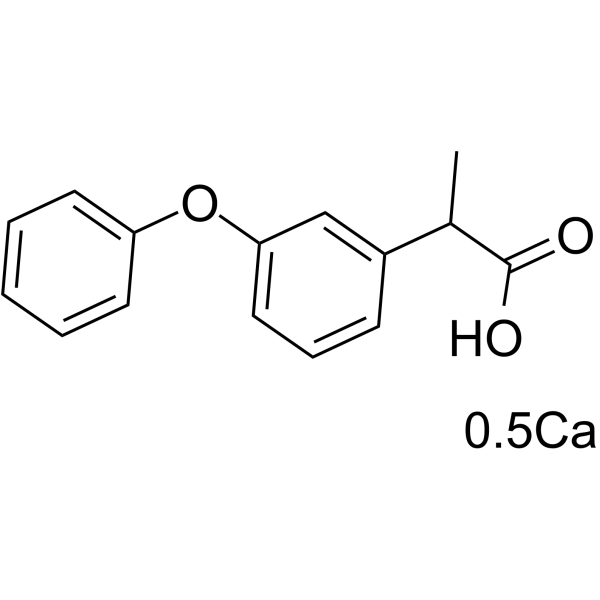 0 ImagesCat. No.: HY-B0288ACAS No.: 34597-40-5Synonyms: LILLY-53858 CalciumFenoprofen (LILLY-53858) Calcium is a nonsteroidal anti-inflammatory agent (NSAID) and inhibits cyclooxygenase (COX). Fenoprofen Calcium is a melanocortin receptors (MCRs) positive allosteric modulator (PAM). Fenoprofen Calcium also increases ERK1/2 activation in HEK293T cells. Fenoprofen Calcium has anti-arthritic activities and can be used for the study of rheumatoid arthritis and osteoarthritis.
-
Amsacrine lactate
 0 ImagesCat. No.: HY-13551DCAS No.: 80277-11-8Synonyms: m-AMSA lactate; Acridinyl anisidide lactateAmsacrine lactate (m-AMSA lactate) is a Topoisomerase II inhibitor. Amsacrine lactate intercalates into DNA. Amsacrine lactate induces Ca2+-mediated inactivation of ERK, and also downregulates AKT, promoting MCL1 downregulation mediated by GSK3β via reducing the phosphorylation level of GSK3β. Amsacrine lactate induces Apoptosis by activating Caspase-9 and Caspase-3. Amsacrine lactate blocks HERG potassium channels in the open/inactivated state. Amsacrine lactate induces chromosomal aberrations and sister chromatid exchanges, and inhibits the synthesis of RNA and DNA. Amsacrine lactate exhibits anti-leukemic activity. Amsacrine lactate causes cardiac repolarization disorders, QT interval prolongation, ventricular arrhythmias, and increases the risk of sudden cardiac death. Amsacrine lactate can be used in research related to acute myeloid leukemia, lymphoma and progressive malignancies.
-
CP-724714 succinate
 0 ImagesCat. No.: HY-14674ACAS No.: 543681-31-8CP-724714 succinate is an orally active and selective HER2 tyrosine kinase inhibitor with an IC50 of 10 nM. CP-724714 succinate inhibits HER2 receptor autophosphorylation and blocks the downstream Ras-Raf-Mek-Erk signaling pathway, thereby inducing cell cycle arrest and apoptosis in tumor cells. CP-724714 succinate exhibits antiviral activity and inhibits various porcine diarrheal coronaviruses, including SADS-CoV (IC50 of 0.91 μM). CP-724714 succinate is an inhibitor of the hepatic transport receptors OATP1B1/MDR1/BSEP, and can enter hepatocytes via active uptake and trigger the accumulation of drugs and bile acids within hepatocytes. CP-724714 succinate can be used in research related to HER2-overexpressing breast cancer and porcine diarrheal coronavirus infection.
-
Urea-13C,15N
 0 ImagesCat. No.: HY-Y0271S3CAS No.: 78405-35-3Synonyms: Carbonyl diamide-13C,15NUrea-13C,15N is the 13C- and 15N-labeled Urea (HY-Y0271). Urea is a powerful protein denaturant via both direct and indirect mechanisms. A potent emollient and keratolytic agent. Used as a diuretic agent. Blood urea nitrogen (BUN) has been utilized to evaluate renal function. Widely used in fertilizers as a source of nitrogen and is an important raw material for the chemical industry.
-
C16-PAF (Standard)
 0 ImagesCat. No.: HY-108635RCAS No.: 74389-68-7Synonyms: PAF (C16) (Standard)C16-PAF (Standard) is the analytical standard of C16-PAF. This product is intended for research and analytical applications. C16-PAF (PAF (C16)), a phospholipid mediator, is a platelet-activating factor and ligand for PAF G-protein-coupled receptor (PAFR). C16-PAF exhibits anti-apoptotic effect and inhibits caspase-dependent death by activating the PAFR. C16-PAF is a potent MAPK and MEK/ERK activator. C16-PAF induces increased vascular permeability.
-
Coelogin
 0 ImagesCat. No.: HY-167838CAS No.: 82358-31-4Coelogin is an orally active osteoprotective agent which activates the ER-Erk and Akt-dependent signaling pathways that stimulate the osteoblastogenesis in osteoblast cells. Coelogin can be utilized in osteoporosis research.
-
SHP2-IN-38
 0 ImagesCat. No.: HY-174322SHP2-IN-38 is a novel green-fluorescent SHP2 inhibitor with IC50 values of 2.89 μM (SHP2), 8.73 μM (SHP1), 11.08 μM (PTP1B), 33.07 μM (TCPTP). SHP2-IN-38 blocks the SHP2-mediated ERK signaling pathway and inhibits MV4-11 cells proliferation in vitro with IC50 of 7.90 μM. SHP2-IN-38 has an excitation wavelength of 360 nm, with a maximum emission wavelength of 550 nm in DMSO and 540 nm in DMF. SHP2-IN-38 shows green fluorescence imaging in HeLa cells and zebrafish.
-
DCZ3112
 0 ImagesCat. No.: HY-187653CAS No.: 2556837-25-1DCZ3112 is a Hsp90/Cdc37 protein-protein interaction inhibitor, with a Kd value of 4.98 µM against human Hsp90. DCZ3112 binds to the N-terminal domain of Hsp90, disrupts the Hsp90-Cdc37 interaction, and does not inhibit the ATPase activity of Hsp90. DCZ3112 induces G1 phase cell cycle arrest, apoptosis, reduces the phosphorylation levels of AKT and ERK, and inhibits the proliferation of HER2-positive breast cancer cells. DCZ3112 can be used in breast cancer-related research.
-
1,3,5-Tricaffeoylquinic acid
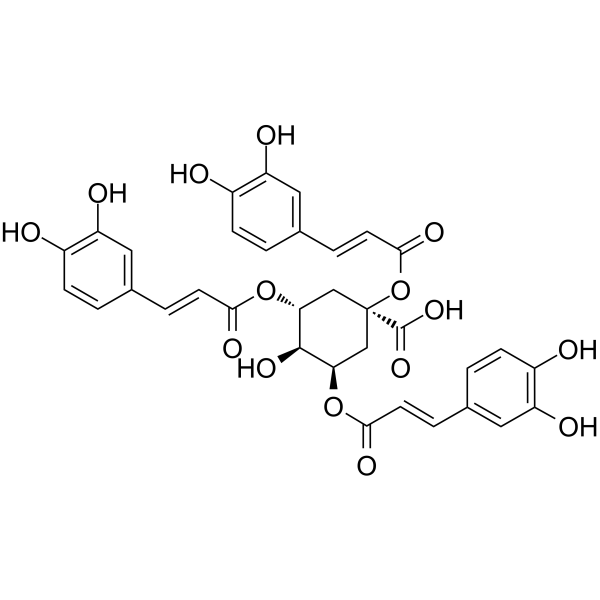 0 ImagesCat. No.: HY-N6926CAS No.: 1073897-80-91,3,5-Tricaffeoylquinic acid acts as an angiogenesis inhibitor and apoptosis inducer, and exhibits anti-HIV activity. 1,3,5-Tricaffeoylquinic acid inhibits the phosphorylation of VEGFR2, ERK, PI3K, Akt and mTOR in the angiogenesis signaling pathway. 1,3,5-Tricaffeoylquinic acid regulates apoptosis-related proteins, upregulates the levels of activated caspase-8, Bax, activated PARP and caspase-3/9, while downregulates the level of Bcl-2. 1,3,5-Tricaffeoylquinic acid inhibits tube formation and shows cytotoxicity against ovarian cancer cells. 1,3,5-Tricaffeoylquinic acid can be used in studies related to ovarian cancer.
-
Pectolinarigenin (Standard)
 0 ImagesPectolinarigenin (Standard) is the analytical standard of Pectolinarigenin. This product is intended for research and analytical applications. Pectolinarigenin is an orally active dual inhibitor of COX-2/5-LOX with anti-inflammatory, antioxidant, antitumor and neuroprotective activities. Pectolinarigenin exerts neuroprotective and anti-inflammatory effects on astrocyte inflammation via the NFκB and MAPK pathways. Pectolinarigenin inhibits LPS-induced phosphorylation of ERK1/2, N-FκB and p38MAPK, directly inhibits the enzymatic activity or binding of COX-2, 5-LOX and HIF-1α, and reduces the level of XIAP. Pectolinarigenin modifies Keap1 to promote nuclear accumulation of Nrf2, induces ARE-mediated antioxidant enzyme expression, and possesses direct free radical scavenging activity. Pectolinarigenin reduces the release of NO, proinflammatory mediators and leukotrienes, and increases the level of IL-10. Pectolinarigenin induces G2/M cell cycle arrest, apoptosis (Apoptosis) and autophagy (Autophagy) via the PI3K/AKT/mTOR signaling pathway. Pectolinarigenin reduces renal crystal deposition and inhibits melanin synthesis. Pectolinarigenin inhibits inflammation and alleviates allergy in mouse models of inflammation. Pectolinarigenin alleviates renal injury, inflammation and oxidative stress in mice by inhibiting HIF-1α activity. Pectolinarigenin can be used for the research of neurodegenerative diseases, inflammatory/allergic diseases, calcium oxalate nephrocalcinosis, gastric cancer, melasma, post-inflammatory diseases and chloasma.
-
HA-1004 dihydrochloride
 0 ImagesCat. No.: HY-123468ACAS No.: 92564-08-4HA-1004 dihydrochloride is a selective inhibitor of PKA, which can inhibit lipolysis and induce vascular relaxation. HA-1004 dihydrochloride is also a dual inhibitor of cyclic GMP-dependent protein kinase and cyclic AMP-dependent protein, and is involved in smooth muscle, second messenger, cyclic AMP and cyclic GMP regulation mechanisms. HA-1004 dihydrochloride is an antagonist for calcium, that can be used as a vasodilator to inhibit the contraction of rabbit aortic strips, or to antagonize ERK and tyrosine hydroxylase (TH) phosphorylation in morphine abstinence rat models.




