



Ferroptosis Inducer
-
Fentomycin-1
 0 ImagesCat. No.: HY-186196CAS No.: 3095435-04-1
Fentomycin-1 is a ferroptosis inducer. Fentomycin-1 activates lysosomal iron2+ under acidic conditions with hydrogen peroxide to form a reactive iron-oxo species, which induces oxidative degradation, oxidation, and lipolysis of membrane phospholipids, triggering ferroptosis. Fentomycin-1 can be used for the research of pancreatic ductal adenocarcinoma, breast cancer metastasis, and melanoma.
-
GPX4 (S)-9i
 0 ImagesCat. No.: HY-181447CAS No.: 3104351-76-7
GPX4 (S)-9i is a GPX4 inhibitor and ferroptosis inducer, with its (R) enantiomer exhibiting stronger activity. GPX4 (S)-9i can be used for the study of fibrosarcoma.
-
WMK-2
 0 ImagesCat. No.: HY-186144CAS No.: 2814563-63-6
WMK-2 is a 1,2,4,5-tetraoxane derivative and ferroptosis inducer with broad-spectrum anticancer activity. WMK-2 generates hydroxyl radicals and lipid ROS to induce ferroptosis in cancer cells and cancer stem cells. WMK-2 can be used for the research of cancer.
-
Ferroptosis/apoptosis inducer-5
 0 ImagesCat. No.: HY-183791ACAS No.: 2243423-32-5
Ferroptosis/apoptosis inducer-5 is an orally active inducer of Ferroptosis and Apoptosis. Ferroptosis/apoptosis inducer-5 downregulates GPX4, upregulates ACSL4, promotes ROS production, activates the Caspase cascade, induces Mitochondrial dysfunction, and alters the Bcl-2/Bax balance. Ferroptosis/apoptosis inducer-5 significantly inhibits tumor growth in a pancreatic cancer xenograft mouse model. Ferroptosis/apoptosis inducer-5 can be used for the research of pancreatic cancer.
-
L14-8
 0 ImagesCat. No.: HY-175000
L14-8 is a potent ferroptosis inducer. L14-8 promotes PLK1 degradation via ubiquitination, increasing TP53 phosphorylation to enhance SAT1 transcription, thereby triggering ferroptosis and cancer cell death. L14-8 can be used for the study of advanced prostate cancer.
-
GCLCi0
 0 ImagesCat. No.: HY-184266CAS No.: 2926699-71-8Synonyms: ONO-6428513
GCLCi0 (ONO-6428513) is a glutamate-cysteine ligase catalytic subunit (GCLC) inhibitor and ferroptosis inducer that blocks the rate-limiting step of glutathione synthesis and exerts anti-tumor activity. GCLCi0 specifically targets SMARCB1-deficient cancer cells, induces reactive oxygen species production and lipid peroxidation. In addition, GCLCi0 shows a significant synergistic effect with SLC7A11 inhibitors and Telaglenastat (HY-12248). GCLCi0 can be used in the research of smarcb1-deficient malignant rhabdoid tumors and smarcb1-deficient epithelioid sarcomas.
-
Ferroptosis inducer-11
 0 ImagesCat. No.: HY-175852
Ferroptosis inducer-11 is a ferroptosis inducer. Ferroptosis inducer-11 exhibits potent cytotoxicity against HCT-116, NCM-60 and HT-29 cells with IC50 values of 0.43 μM, 3.14 μM and 0.48 μM, respectively. Ferroptosis inducer-11 strongly suppresses GPX4 enzymatic activity with an IC50 of 1.86 μM. Ferroptosis inducer-11 induces ferroptosis, as well as increases intracellular lipid ROS, malondialdehyde (MDA), and Fe2+ levels, while decreasing glutathione (GSH) levels in colon cancer cells. Ferroptosis inducer-11 can be used for the study of colon cancer.
-
CQ-ER
 0 ImagesCat. No.: HY-168261
CQ-ER is a Coumarin (HY-N0709)-Quinazolinone based endoplasmic reticulum (ER)-targeted photosensitizer. CQ-ER can cause ferroptosis, thereby enhancing photodynamic therapy (PDT).
-
Cephaeline hydrochloride
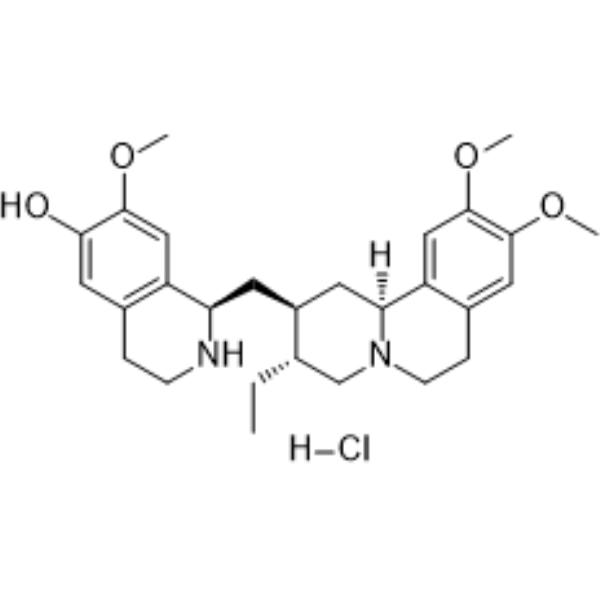 0 ImagesSynonyms: (-)-Cephaeline hydrochloride; NSC 32944 monohydrochloride
Cephaeline hydrochloride ((-)-Cephaeline (hydrochloride); NSC 32944 (monohydrochloride)) is a ferroptosis inducer, with broad-spectrum anticancer and antiviral activities. Cephaeline hydrochloride induces Ferroptosis by upregulating p53, inhibiting NRF2, activating ULK3, downregulating the expressions of SLC7A11 and GPX4 in a p53-dependent manner, reducing GSH and mitochondrial membrane potential, and increasing lipid peroxidation and iron accumulation. Cephaeline hydrochloride inhibits cancer cell proliferation, migration and tumor growth. Cephaeline hydrochloride inhibits Ebola virus (EBOV) VLP entry and infection, with IC50 values of 3.27 μM and 22.18 μM respectively; it also inhibits Zika virus (ZIKV) NS5 RdRp activity (IC50 = 976 nM), and binds to severe acute respiratory syndrome coronavirus 2 (SARS-CoV-2) RdRp and N protein, with Kd values of 8.9 μM and 53.8 μM respectively. Cephaeline hydrochloride can be used in studies related to breast cancer, lung cancer, COVID-19, EBOV and ZIKV infections.
-
Ru-Poma
 0 ImagesCat. No.: HY-161668
Ru-Poma is a Ru(II)-based photosensitizer, which attenuates Cisplatin (HY-17394)-resistant tumor through photodynamic therapy (PDT). Ru-Poma photodegrades CRBN through a Pomalidomide (HY-10984) moiety. Ru-Poma induces ferroptosis, through an increase in lipid peroxide, downregulation of GPX4 and GAPDH expression. Ru-Poma exhibits cytotoxicity in A549, with IC50 of 18.46 μM and 0.37 μM in dark and upon irradiation, respectively.
-
Cephaeline dihydrobromide
 0 ImagesSynonyms: (-)-Cephaeline dihydrobromide; NSC 32944 dihydrobromide
Cephaeline dihydrobromide ((-)-Cephaeline dihydrobromide; NSC 32944 dihydrobromide) is a ferroptosis inducer, with broad-spectrum anticancer and antiviral activities. Cephaeline dihydrobromide induces ferroptosis (Ferroptosis) by upregulating p53, inhibiting NRF2, activating ULK3, downregulating the expressions of SLC7A11 and GPX4 in a p53-dependent manner, reducing GSH and mitochondrial membrane potential, and increasing lipid peroxidation and iron accumulation. Cephaeline dihydrobromide inhibits cancer cell proliferation, migration and tumor growth. Cephaeline dihydrobromide inhibits Ebola virus (EBOV) VLP entry and infection, with IC50 values of 3.27 μM and 22.18 μM respectively; it also inhibits Zika virus (ZIKV) NS5 RdRp activity (IC50 = 976 nM), and binds to severe acute respiratory syndrome coronavirus 2 (SARS-CoV-2) RdRp and N protein, with Kd values of 8.9 μM and 53.8 μM respectively. Cephaeline dihydrobromide can be used in studies related to breast cancer, lung cancer, COVID-19, EBOV and ZIKV infections.
-
ML210-ansaFc
 0 ImagesCat. No.: HY-175633
ML210-ansaFc (Compound III-13) is a covalent GPX4 inhibitor with a -ferrocenophane group (IC50 of 3.4 μM). ML210-ansaFc potently induces ferroptosis by increasing the level of ROSand promoting lipid peroxidation (LPO) in cancers cells. ML210-ansaFc has an anticancer activity and suppresses tumor growth in tumor 3D spheroids. ML210-ansaFc can be used for cancer therapy resistance research.
-
Fluorescein-diisobutyrate-6-amide
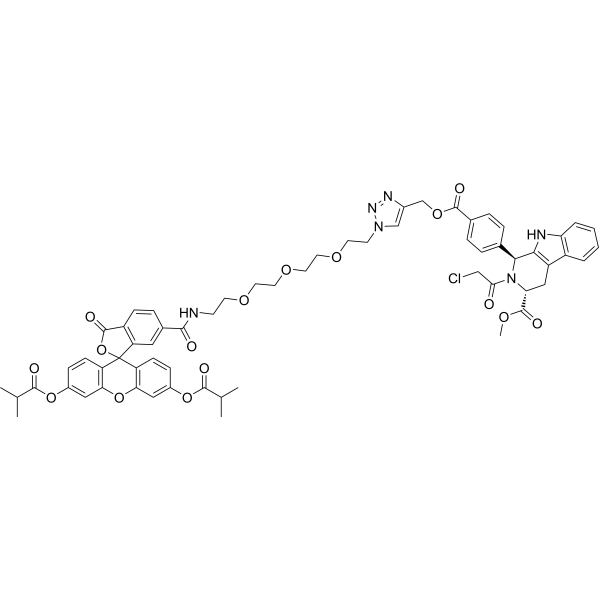 0 ImagesCat. No.: HY-135837CAS No.: 2375357-99-4
Fluorescein-diisobutyrate-6-amide is a potent ferroptosis inducer. Fluorescein-diisobutyrate-6-amide has the potential for the research of cancer.
-
Anticancer agent 272
 0 ImagesCat. No.: HY-173473
Anticancer agent 272 (Compound 2) is an anticancer agent. Anticancer agent 272 has significant anti-bladder cancer cell (T-24) activity (IC50: 2.81 μM). Anticancer agent 272 consumes glutathione (GSH) through Fenton-like reaction, produces reactive oxygen species (ROS) and hydroxyl radicals (?OH), and induces apoptosis and ferroptosis. Anticancer agent 272 can enhance chemodynamic therapy (CDT) and promote tumor cell death through mitochondrial dysfunction and autophagy. Anticancer agent 272 has potential in the study of bladder cancer.
-
Ferroptosis inducer-6
 0 ImagesCat. No.: HY-168097CAS No.: 2933939-15-0
Ferroptosis inducer 6 (6d) is a ferroptosis inducer with high potency for type I/-II photodynamic therapy by inducing ROS generation, oxidative stress and mitochondrial damage. Ferroptosis inducer 6 has anti-tumor activity.
-
ZX703
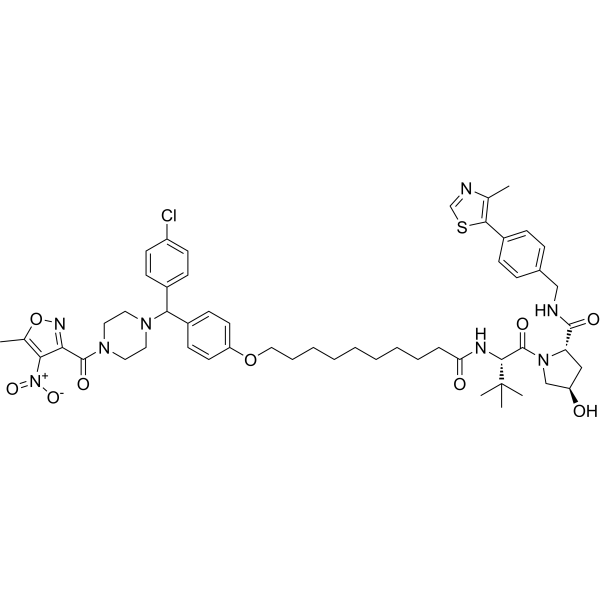 0 ImagesCat. No.: HY-157788
ZX703 is a GPX4 PROTAC degrader with a DC50 of 0.135 μM. ZX703 degrades GPX4 via the ubiquitin-proteasome and autophagy-lysosome pathways. ZX703 induces the accumulation of ROS, thereby triggering Ferroptosis. ZX703 can be used in studies related to fibrosarcoma and prostate cancer.
-
CS47
 0 ImagesCat. No.: HY-175806CAS No.: 1372792-51-2
CS47 is a Thioredoxin Reductase 1 (TRXR1) inhibitor and ferroptosis inducer. CS47 binds non-covalently to sites between the FAD and NADPH pockets of TRXR1. CS47 drives glutathione depletion, lipid reactive oxygen species accumulation, HMOX1-dependent iron overload, and selective cytotoxicity in lung cancer cells. CS47 can be used for the research of lung cancer.
-
Anticancer agent 178
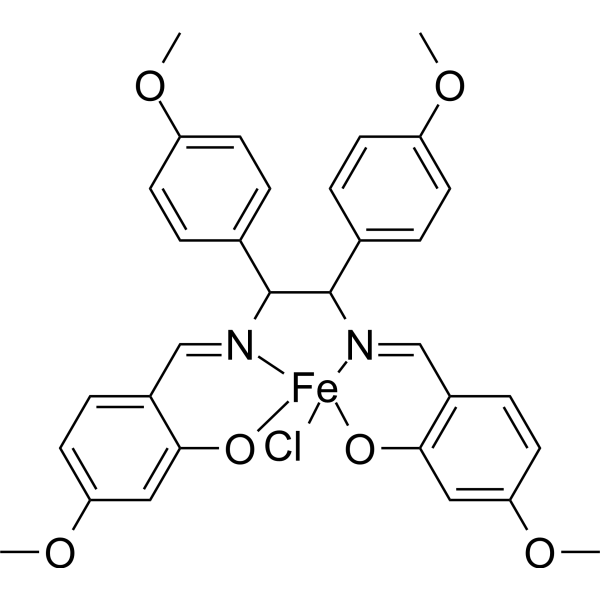 0 ImagesCat. No.: HY-162046
Anticancer agent 178 (compound C2) is a potent anticancer agent. Anticancer agent 178 inhibits MDA-MB 231 cells proliferation and metabolic activity with IC50s of 1.1 and 4.2 μM. Anticancer agent 178 induces ferroptosis and necroptosis in cells.
-
Angelic acid (Standard)
 0 Images
Angelic acid (Standard)) is the analytical standard of Angelic acid (HY-N6929). This product is intended for research and analytical applications. Angelic acid is a ferroptosis inducer, targeting NRF2 degradation. Angelic acid binds to NRF2 protein and promotes NRF2 degradation via ubiquitination-proteasome pathway, relieves the inhibitory effect of NRF2 on oxidative stress and lipid peroxidation. Then, Angelic acid induces ferroptosis in tumor cells. Angelic acid can enhance the accumulation of intracellular reactive oxygen species (ROS), upregulate ferroptosis-related markers CHAC1 and PTGS2, and synergize with ferroptosis inducers to enhance anti-tumor effects. Angelic acid also has the activity of scavenging UVA-induced ROS in vitro, inhibiting skin fibroblast senescence and extracellular matrix degradation. Angelic Acid helps wound healing with sedative activity.
-
CQ-Mito
 0 ImagesCat. No.: HY-168260
CQ-Mito is a Coumarin-Quinazolinone (CQ)-based derivative that targets mitochondria and exhibits profound phototherapeutic performances with an Phototoxic Index (PI) value of 167. CQ-Mito causes cell death by both apoptosis and ferroptosis. CQ-Mito mediates mitochondrial dysfunction, including mitochondrial morphology changed and the loss of MMP. CQ-Mito can efficiently inhibit the tumor growth in organoid tumor models.



