



Fungal
An antifungal agent is a drug that selectively eliminates fungal pathogens from a host with minimal toxicity to the host.
Classes: 1. Polyene Antifungal Drugs: Amphotericin, nystatin, and pimaricin interact with sterols in the cell membrane (ergosterol in fungi, cholesterol in humans) to form channels through which small molecules leak from the inside of the fungal cell to the outside. 2. Azole Antifungal Drugs: Fluconazole, itraconazole, and ketoconazole inhibit cytochrome P450-dependent enzymes (particularly C14-demethylase) involved in the biosynthesis of ergosterol, which is required for fungal cell membrane structure and function. 3. Allylamine and Morpholine Antifungal Drugs: lylamines (naftifine, terbinafine) inhibit ergosterol biosynthesis at the level of squalene epoxidase. The morpholine drug, amorolfine, inhibits the same pathway at a later step. 4. Antimetabolite Antifungal Drugs: 5-Fluorocytosine acts as an inhibitor of both DNA and RNA synthesis via the intracytoplasmic conversion of 5-fluorocytosine to 5-fluorouracil.
All Product Categories
-
Fungal Related Products (2768)
Related Products (2768)

-
Antibodies (1)
-
Related Compound Screening Libraries (1)
-
Sclerotiorin
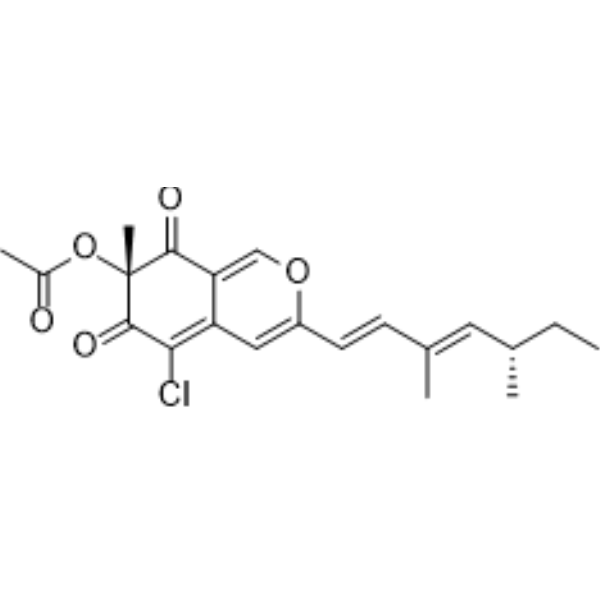 0 ImagesSclerotiorin is a reversible and uncompetitive inhibitor against soybean lipoxygenase-1 (LOX-1) (IC50: 4.2 μM). Sclerotiorin also shows antioxidant activity by scavenging free radical (ED50: 0.12 μM), and nonenzymatic lipid peroxidation inhibition activity. Sclerotiorin has antifungal activity, and also inhibits platelet aggregation. Sclerotiorin can be purified from the fermented broth of Penicillium frequentans.
-
6,7-Dehydro Norethindrone
 0 ImagesCat. No.: HY-W741987CAS No.: 31528-46-8Synonyms: 6,7-Didehydronorethisterone6,7-Dehydro Norethindrone (6,7-Didehydronorethisterone) (Compound 26) is a Norethisterone (HY-B0554) metabolite. 6,7-Dehydro Norethindrone can be produced by the biotransformation of Norethisterone using Rhizopus microsporus PT2906. 6,7-Dehydro Norethindrone induces Apoptosis, binds to p53 and inhibits the degradation of p53. 6,7-Dehydro Norethindrone selectively exhibits antitumor activity against cervical cancer.
-
Aldox-d6
 0 ImagesCat. No.: HY-W716702CAS No.: 2469039-16-3Synonyms: Lexamine M-13-d6; MAPD-d6Aldox-d6 (Lexamine M-13-d6; MAPD-d6) is the deuterium labeled Myristamidopropyl dimethylamine (HY-W099582). Myristamidopropyl dimethylamine (MAPD) is an antimicrobial agent (including against bacteria and fungi) and an insecticide, exhibiting inhibitory activity against Pseudomonas aeruginosa, Staphylococcus aureus, Candida albicans, Fusarium solani, and Acanthamoeba polyphaga. Myristamidopropyl dimethylamine can be used in research on microbial-induced keratitis .
-
Propiconazole-d3 nitrate
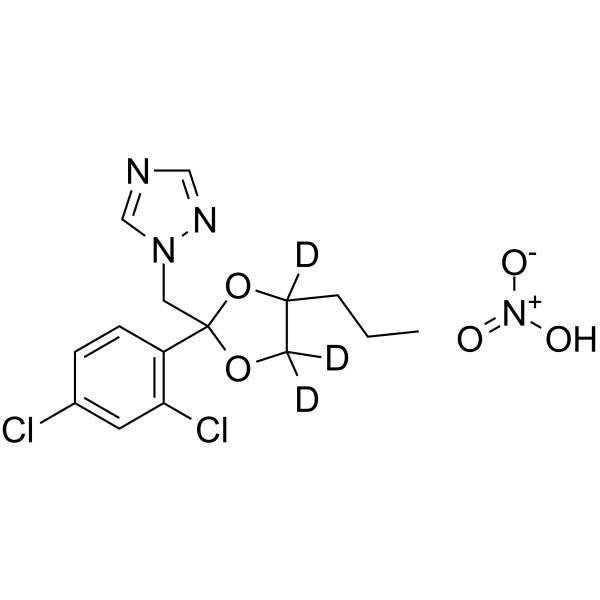 0 ImagesCat. No.: HY-B0847S1CAS No.: 2699607-26-4Propiconazole-d3 (nitrate) is the deuterium labeled Propiconazole nitrate. Propiconazole is a broad-spectrum triazole fungicide that inhibits the conversion of lanosterol to ergosterol, leading to fungal cell membrane disruption. Propiconazole inhibits S. cerevisiae, but not rat liver, microsomal cytochrome P450 (IC50s=0.04 and >200 µM, respectively). Propiconazole inhibits the growth of T. deformans and R. stolonifer (ED50s=0.073 and 4.6 µg/mL, respectively). Propiconazole increases production of reactive oxygen species (ROS).
-
Antifungal agent 47
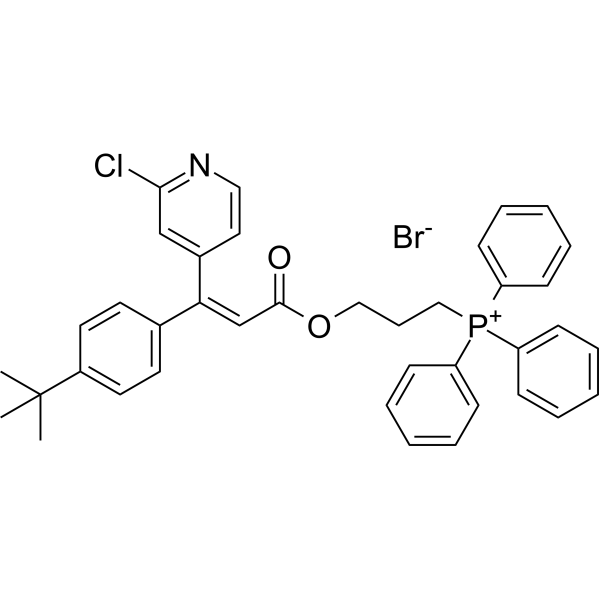 0 ImagesCat. No.: HY-149067CAS No.: 2719867-46-4Antifungal agent 47 (compound 3b) shows the highest and broad-spectrum fungicidal activity, strong respiratory inhibition activity, and adenosine 5′-triphosphate synthesis inhibition activity. Antifungal agent 47 is potential as a fungicide.
-
1,3,6-Trihydroxy-5-methoxyxanthone
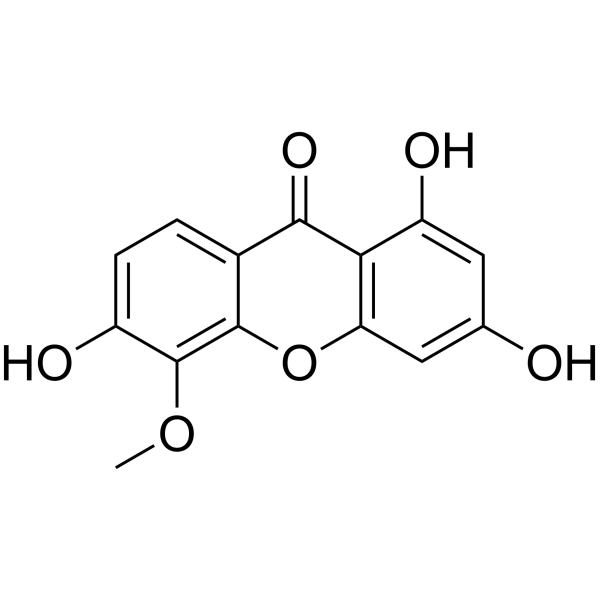 0 ImagesCat. No.: HY-N10786CAS No.: 41357-84-01,3,6-Trihydroxy-5-methoxyxanthone is a nature product that could be isolated form the root bark of Tovomita krukovii. 1,3,6-Trihydroxy-5-methoxyxanthone has anti-fungal effect.
-
V-ATPase-IN-2
 0 ImagesCat. No.: HY-183975V-ATPase-IN-2 is an inhibitor targeting the a-c subunits of vacuolar H+-ATPase (V-ATPase), with an EC50 of 8.449 μg/mL against Phytophthora capsici. V-ATPase-IN-2 causes significant vacuolar enlargement and ultrastructural damage in Phytophthora capsici cells, and also inhibits sporangium formation, zoospore release, and cyst germination of this pathogen. V-ATPase-IN-2 can be used in studies related to Phytophthora capsici infection.
-
Gymnin
 0 ImagesCat. No.: HY-P11158CAS No.: 1427515-26-1Gymnin is a defensin-like antifungal peptide. Gymnin has significant antifungal activities against phytopathogenic and mycotoxigenic fungi. Gymnin inhibits HIV-1 reverse transcriptase with an IC50 of 200 μM and the proliferation of tumor cells. Gymnin has a weak mitogenic activity toward murine splenocytes. Gymnin can be used for plant disease treatments research.
-
5-Chlorosalicylanilide
 0 Images5-Chlorosalicylanilide is a bactericidal and antifungal compound. 5-Chlorosalicylanilide exhibits antibacterial activity against bacteria and fungistatic activity against dermatophytes. 5-Chlorosalicylanilide inhibits the photosynthetic electron flow required for nitrite reduction while stimulating nitrate reduction, leading to nitrite accumulation and NOx release in soybean leaves. 5-Chlorosalicylanilide is used in the research of tinea capitis and dermatophytosis.
-
Antifungal agent 175
 0 ImagesCat. No.: HY-189073Antifungal agent 175 is a potent antifungal agent with an EC50 of 1.8 μg/mL against R. solani. Antifungal agent 175 Z17 exerts its effects primarily by disrupting the cell membranes of pathogenic fungi to trigger lipid peroxidation and oxidative stress, inhibiting pyruvate kinase (PK) to interfere with energy metabolism, and binding to the cytochrome bc1 complex. Antifungal agent 175 can be used in research on rice sheath blight.
-
LEX-SQ01
 0 ImagesCat. No.: HY-179250LEX-SQ01 (Compound D10) is an antifungal agent. LEX-SQ01 shows an EC50 of 1.6 μM for C. capsici. LEX-SQ01 can disrupt the cell membrane integrity of fungal. LEX-SQ01 can be used for the research of infection in crops.
-
Butenafine Hydrochloride (Standard)
 0 ImagesSynonyms: KP363 Hydrochloride (Standard)Rilpivirine (hydrochloride) (Standard) is the analytical standard of Rilpivirine (hydrochloride). This product is intended for research and analytical applications. Rilpivirine (R278474) hydrochloride is a potent and specific diarylpyrimidine (DAPY) non-nucleoside reverse transcriptase inhibitor (NNRTI). Rilpivirine hydrochloride has high antiviral activity against wild-type HIV (EC50=0.4 nM) and mutant viruses (EC50=0.1-2.0 nM). Rilpivirine hydrochloride has a high genetic barrier to resistance development of HIV.
-
(Rac)-Paclobutrazol-15N3
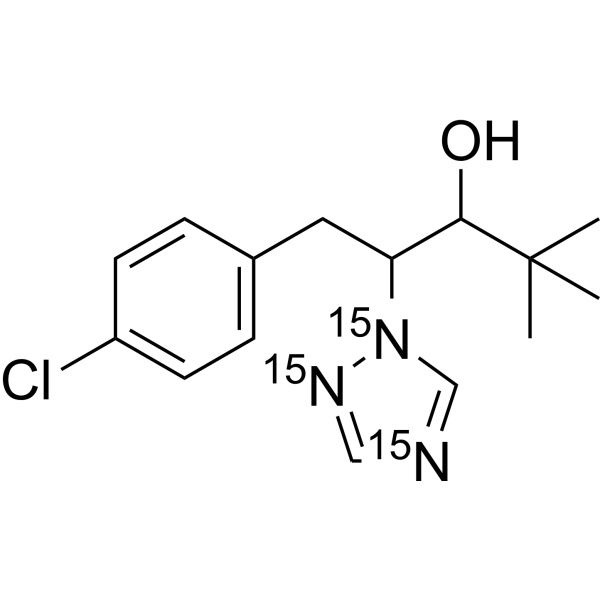 0 ImagesCat. No.: HY-B0853SCAS No.: 2642083-16-5(Rac)-Paclobutrazol-15N3 is the 15N-labeled Rac-Paclobutrazol.
-
Guignardone K
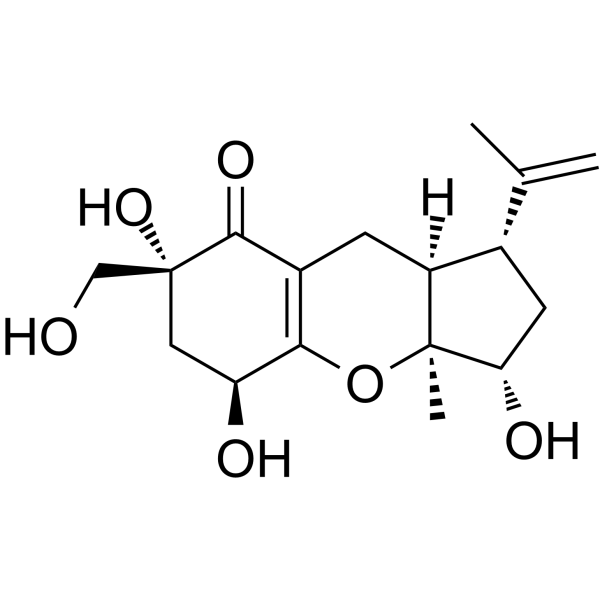 0 ImagesCat. No.: HY-N10300CAS No.: 1825374-58-0Guignardone K is a meroterpene compound isolated from solid cultures of the endophytic fungus Guignardia sp.. Guignardone K has antifungal activity.
-
Antibacterial agent 196
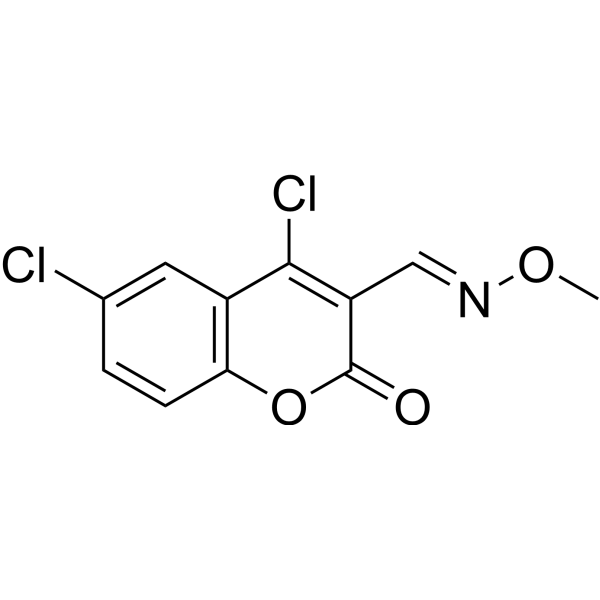 0 ImagesCat. No.: HY-163397Antibacterial agent 196 (compound 6b) is a coumarin derivative containing oxime ether structure, and shows antifungal activity, with the EC50 of 0.46 μg/mL against Rhizoctonia solani .
-
Myristinin A
 0 ImagesCat. No.: HY-N16849CAS No.: 145904-69-4Synonyms: YM 26567-1Myristinin A (YM 26567-1) is a trans-isomer flavan compound found in Horsfieldia amygdaline and Myristica cinnamomea. Myristinin A can selectively inhibit COX-2 activity with an IC50 of 16.9 μg/mL. Myristinin A can reduce the production of prostaglandin E2 (PGE2) and inhibit phospholipase A2 (PLA2), thereby blocking the release of inflammatory mediators. Myristinin A can inhibit Candida albicans with an IC50 of 8.8 μg/mL. Myristinin A can be used for the research of inflammation and infection, such as rheumatoid arthritis.
-
Carbendazimb-d3
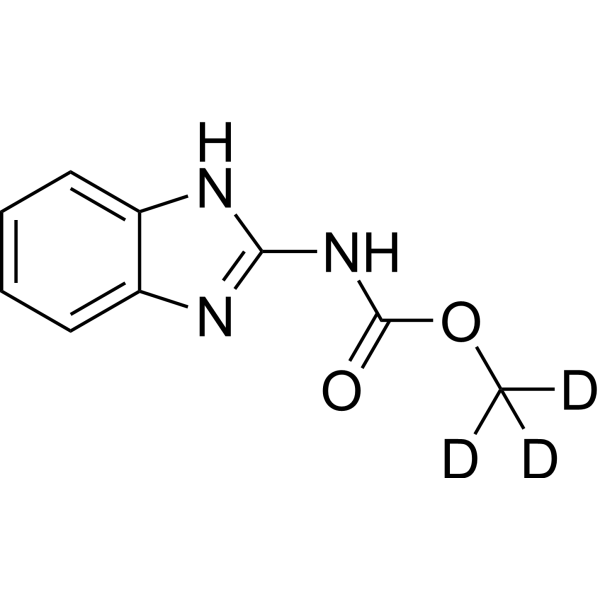 0 ImagesCat. No.: HY-13582S1CAS No.: 1255507-88-0Carbendazimb-d3 is the deuterium labeled Carbendazimb (HY-13582). Carbendazim is a potent and orally active broad-spectrum?benzimidazole fungicide and can be acts as a pesticide for fungal diseases research, such as Seproria,?Fusarium?and?Sclerotina. Carbendazim is a benzimidazole (HY-Y1825) derivative with antitumor activity and used for cancer research, especially advanced solid tumors and lymphoma.
-
3-O-α-L-Arabinopyranosyl hederagenin 28-O-α-L-rhamnopyranosyl ester
 0 ImagesCat. No.: HY-N18269CAS No.: 639515-41-63-O-α-L-Arabinopyranosyl hederagenin 28-O-α-L-rhamnopyranosyl ester is an anti-fungal triterpene saponin. 3-O-α-L-Arabinopyranosyl hederagenin 28-O-α-L-rhamnopyranosyl ester can be isolated from the aerial parts of Clematis tangutica. 3-O-α-L-Arabinopyranosyl hederagenin 28-O-α-L-rhamnopyranosyl ester exhibits antifungal activity against fungal strains (P. avellaneum, C. glabrata, S. cerevisiae, T. beigelii), with the strongest activity against S. cerevisiae.
-
Benzoic acid-d
 0 ImagesCat. No.: HY-N0216S7CAS No.: 406679-59-2Benzoic acid-d is the deuterium labeled Benzoic acid (HY-N0216). Benzoic acid is an aromatic alcohol existing naturally in many plants and is a common additive to food, drinks, cosmetics and other products. It acts as preservatives through inhibiting both bacteria and fungi.
-
Prothioconazole-d4
 0 ImagesCat. No.: HY-116568SSynonyms: JAU-6476-d4Prothioconazole-d4 (JAU-6476-d4) is the deuterium labeled Prothioconazole (HY-116568). Prothioconazole is a triazolinthione fungicide. Prothioconazole is a CYP51 inhibitor.




