



Glycosidase
Glycosidase
Glycosidase are a class of enzymes which catalyze the hydrolysis of glycosidic bonds. In living organisms, Glycosidase are involved in carbohydrate metabolism. They can degrade polysaccharides such as starch and glycogen into monosaccharides, providing energy for cells. Glycosidase also participate in the synthesis and modification of biological macromolecules such as glycoproteins and glycolipids, playing a crucial role in cell recognition and signal transduction. Additionally, in plants and microorganisms, Glycosidase are involved in the metabolism of cell wall polysaccharide components, affecting cell growth, differentiation, and morphogenesis. Gene mutations of Glycosidase can trigger genetic diseases, leading to abnormal metabolism in the body and damage to organ functions. Changes in their activity are associated with various diseases such as diabetes, infectious diseases, and tumors, and can influence the occurrence and development of diseases[1][2].
References:
- [1]. Wang X, et al. Metabolites extracted from microorganisms as potential inhibitors of glycosidases (α-glucosidase and α-amylase): A review. Front Microbiol. 2022 Nov 17;13:1050869.
- [2]. Ohtsubo K, et al. Glycosylation in cellular mechanisms of health and disease. Cell. 2006 Sep 8;126(5):855-67. [Content Brief]
All Product Categories
-
Glycosidase Inhibitors
(456)
View all products
-
Glycosidase Antagonist
(1)
View all products
-
Glycosidase Activators
(20)
View all products
-
Glycosidase Modulators
(8)
View all products
-
Glycosidase Chemical
(1)
View all products
-
Glycosidase Inducers
(2)
View all products
-
Glycosidase Degrader
(1)
View all products
-
Glycosidase Controls
(6)
View all products
-
Glycosidase Substrates
(25)
View all products
-
Glycosidase Ligands
(3)
View all products
-
Glycosidase Related Products (697)
Related Products (697)

-
Antibodies (3)
-
oligo-α-1,6-Glucosidase, Bacillus cereus ATCC7064
 0 Imagesoligo-α-1,6-Glucosidase, Bacillus cereus ATCC7064 is a hydrolase that mainly hydrolyzes oligosaccharides with α-1,6-glycosidic bonds. oligo-α-1,6-Glucosidase, Bacillus cereus ATCC7064 can catalyzes the exo hydrolysis of α-1,6-glucoside bonds from the nonreducing ends of panose, palatinose, α-limit dextrins, and isomaltooligosaccharides. oligo-α-1,6-Glucosidase, Bacillus cereus ATCC7064 participates in the degradation pathway of starch and glycogen, assisting enzymes such as α-amylase to completely hydrolyzes amylopectin.
-
(-)-6β-Hydroxy-5β,8β,9β,10α-cleroda-3,13-dien-16,15-olid-18-oic acid
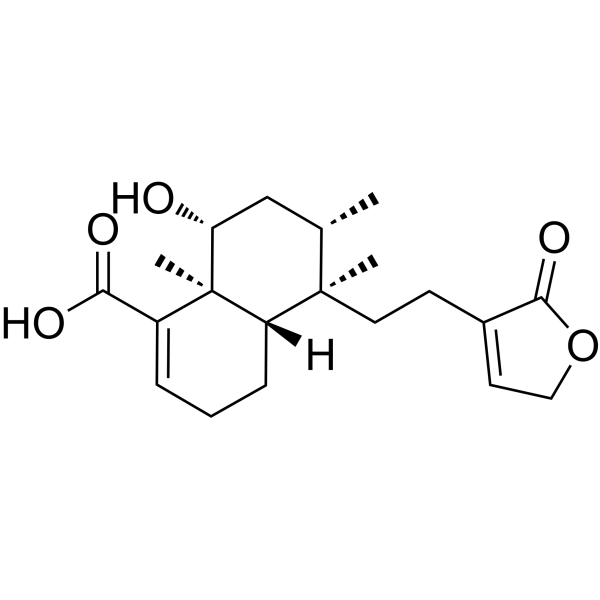 0 ImagesCat. No.: HY-N7170CAS No.: 771493-42-6(-)-6β-Hydroxy-5β,8β,9β,10α-cleroda-3,13-dien-16,15-olid-18-oic acid (compound 4) is a α-Glucosidase inhibitor with an IC50 value of 577.7 µM.
-
Ethyl-3,5-di-O-caffeoylquinate
 0 ImagesCat. No.: HY-N13813CAS No.: 143051-74-5Ethyl-3,5-di-O-caffeoylquinate is an ethyl caffeoylquinate (ECQ), and ECQ analogs are potential α-glucosidase (α-glucosidase) inhibitors and PTP1B inhibitors. Ethyl-3,5-di-O-caffeoylquinate, which can be isolated from the flower buds of Lonicera macranthoides, is an isomer of chlorogenic acid (ethyl dicaffeoylquinate).
-
Ganomycin I
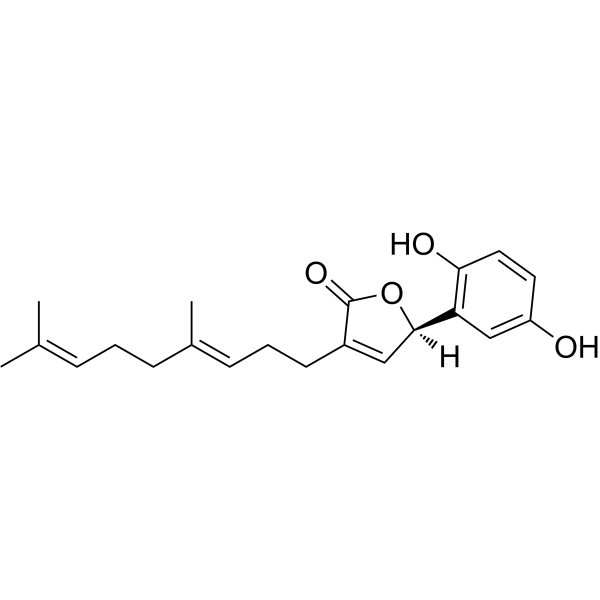 0 ImagesCat. No.: HY-N10076CAS No.: 1191255-15-8Ganomycin I is a non-competitive dual inhibitor of α-glucosidase and HMG-CoA reductase, with IC50 values of 0.3 μM and 12.3 μM, respectively. Ganomycin I inhibits HIV-1 protease, with an IC50 of 7.5 μg/mL. Ganomycin I also suppresses RANKL-induced osteoclast differentiation and bone resorption by inhibiting the activation of ERK, JNK and p38 MAPK, as well as downregulating the c-Fos/NFATc1 signaling pathway. Ganomycin I exhibits antibacterial activity against Gram-positive bacteria, and shows weak activity against Mycobacterium tuberculosis H37Ra. It can be used in research related to metabolic diseases, bone metabolism and anti-infection.
-
α-Glucosidase-IN-38
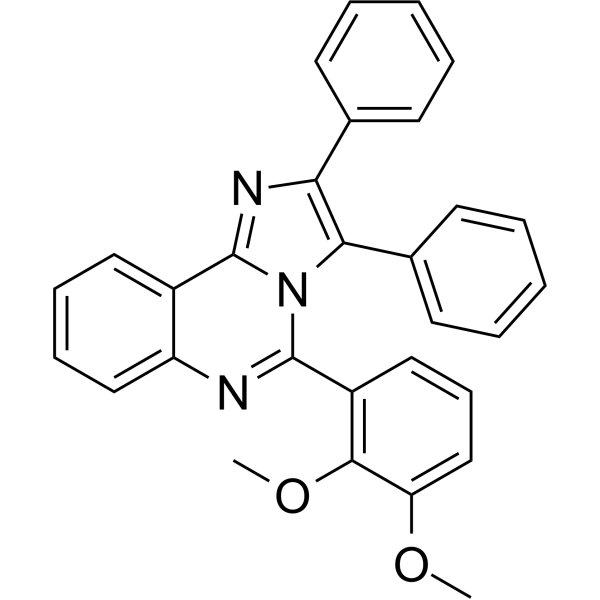 0 ImagesCat. No.: HY-155344CAS No.: 2991427-89-3α-Glucosidase-IN-38 (Compound 11j) is a potent inhibitor of α-glucosidase inhibitor with IC50 of 12.44±0.38 μM.α-Glucosidase-IN-38 plays an important role in Diabetes mellitus (DM).
-
α-Glucosidase-IN-24
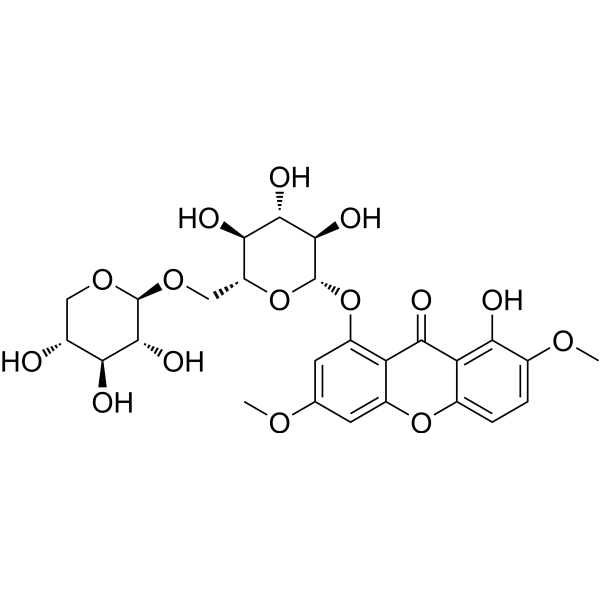 0 ImagesCat. No.: HY-N11512CAS No.: 60354-05-4α-Glucosidase-IN-24 (Compound 13) is an α-Glucosidase inhibitor with an IC50 of 451 μM. α-Glucosidase-IN-24 can be isolated from Swertia kouitchensis.
-
α-Glucosidase-IN-34
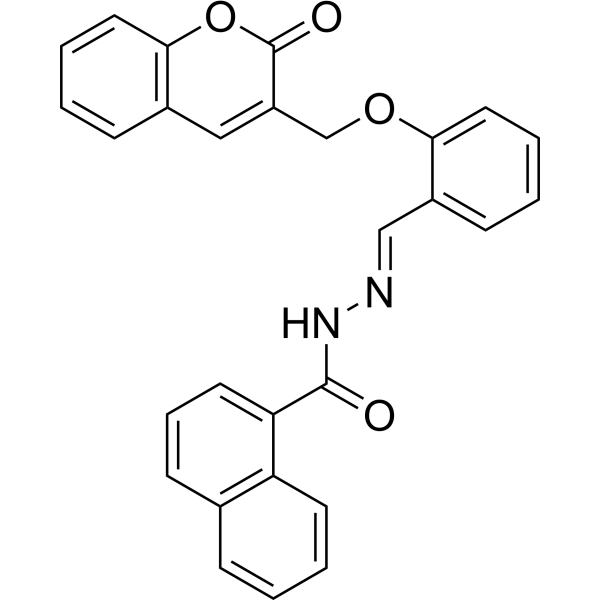 0 ImagesCat. No.: HY-149533α-Glucosidase-IN-34 (compound 7f) is a potent α-glucosidase inhibitor (IC50: 2.90 μM) and can be used in the study of type 2 diabetes and hyperglycemia.
-
Hyaluronidase, Streptomyces hyalurolyticus
 0 ImagesCat. No.: HY-108903BHyaluronidase, Streptomyces hyalurolyticus (EC 3.2.1.35) degrades hyaluronan and has been found to be inappropriately regulated during cancer progression. Hyaluronidase randomly cleaves β-N-acetylhexosamine-[1→4] glycosidic bonds in hyaluronic acid, chondroitin, and chondroitin sulfates.
-
α-Glucosidase-IN-113
 0 ImagesCat. No.: HY-181476CAS No.: 3095548-30-1α-Glucosidase-IN-113 is an α-glucosidase inhibitor with an IC50 of 17.52 μM. α-Glucosidase-IN-113 shows antiglycating activity and inhibits advanced glycation end-product formation. α-Glucosidase-IN-113 can be used for the research of type 2 diabetes.
-
5,4'-Dihydroxy-3,4,3'-trimethoxybibenzyl
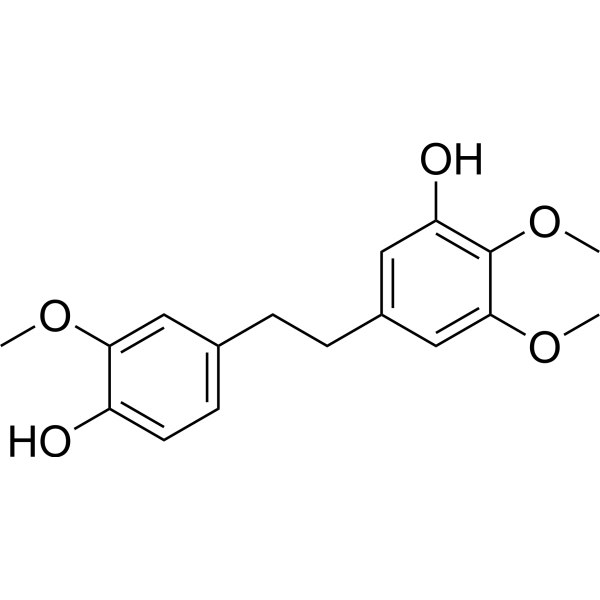 0 ImagesCat. No.: HY-N11999CAS No.: 838826-34-95,4'-Dihydroxy-3,4,3'-trimethoxybibenzyl (compound 8) can be isolated from Dendrobium infundibulum (D. infundibulum). 5,4'-Dihydroxy-3,4,3'-trimethoxybibenzyl has no inhibitory activity against α-glucosidase and pancreatic lipase.
-
α-Glucosidase-IN-27
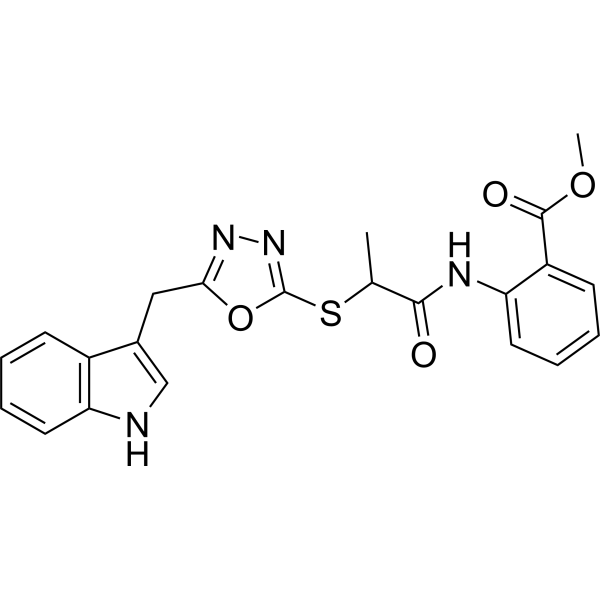 0 ImagesCat. No.: HY-154998α-Glucosidase-IN-27 (compound 8l) is an α-glucosidase inhibitor (IC50=25.78 μM). α-Glucosidase-IN-27 has the potential to study type 2 diabetes (D2M).
-
N-Formyldehydroanonaine
 0 ImagesCat. No.: HY-N17553CAS No.: 165900-12-9N-Formyldehydroanonaine is a potent α-glucosidase inhibitor with an IC50 of 104.6 μM against yeast α-glucosidase. N-Formyldehydroanonaine can be used for the research of diabetes mellitus.

-
α-Glucosidase-IN-98
 0 ImagesCat. No.: HY-178383α-Glucosidase-IN-98 is a potent orally active α-Glucosidase inhibitor with an IC50 of 18.1 μM. α-Glucosidase-IN-98 reversibly binds with α-Glucosidase via hydrogen bonds, electrostatic interactions and hydrophobic effects, which induces significant conformational alterations in the secondary structure of α-Glucosidase. α-Glucosidase-IN-98 decreases postprandial hyperglycemia in Starch (HY-B2225B)/Sucrose (HY-B1779)-challenged mice. α-Glucosidase-IN-98 can be used for type 2 diabetes mellitus (T2DM) research.
-
cis-3-O-Hydroxycinnamoyl-ursolic acid
 0 ImagesCat. No.: HY-N19933CAS No.: 331243-42-6cis-3-O-Hydroxycinnamoyl-ursolic acid is a cis-cinnamic acid ester derivative. cis-3-O-Hydroxycinnamoyl-ursolic acid exhibits no α-glucosidase inhibitory activity.
-
α-Amylase/α-Glucosidase-IN-23
 0 ImagesCat. No.: HY-179141CAS No.: 2093387-94-9α-Amylase/α-Glucosidase-IN-23 (Compound 5e) is a α-Amylase/α-Glucosidase inhibitor with IC50 values of 73.68 nM for α-glucosidase and 146.18 nM for α-amylase. α-Amylase/α-Glucosidase-IN-23 can be used in the research of hypoglycemia.
-
α-Amylase/α-Glucosidase-IN-12
 0 ImagesCat. No.: HY-163439α-Amylase/α-Glucosidase-IN-12 (compound 10k) is a dual inhibitor targeting α-glucosidase and α-amylase with IC50 of 34.52 nM and 24.62 nM, respectively. α-Amylase/α-Glucosidase-IN-12 is an inhibitor designed based on triazolo[4,3-b][1,2,4]triazine and has the potential to be used in diabetes research.
-
LY-23
 0 ImagesCat. No.: HY-182289LY-23 is an orally active α-glucosidase inhibitor (Ki = 0.05 μM), with IC50 values of 0.18 μM, 0.14 μM and 0.51 μM against maltase, sucrase and isomaltase, respectively. LY-23 reduces the level of postprandial blood glucose elevation. LY-23 is applicable to research related to postprandial hyperglycemia.
-
α-Amylase/α-Glucosidase-IN-17
 0 ImagesCat. No.: HY-172211α-Amylase/α-Glucosidase-IN-17 (Compound 3) is an inhibitor of α-amylase and α-glucosidase, with IC50 values of 14.61 μM and 25.38 μM, respectively. α-Amylase/α-Glucosidase-IN-17 has certain inhibitory activity against A549 cancer cells. α-Amylase/α-Glucosidase-IN-17 has anti-tumor and anti-diabetic effects.
-
α-Glucosidase-IN-32
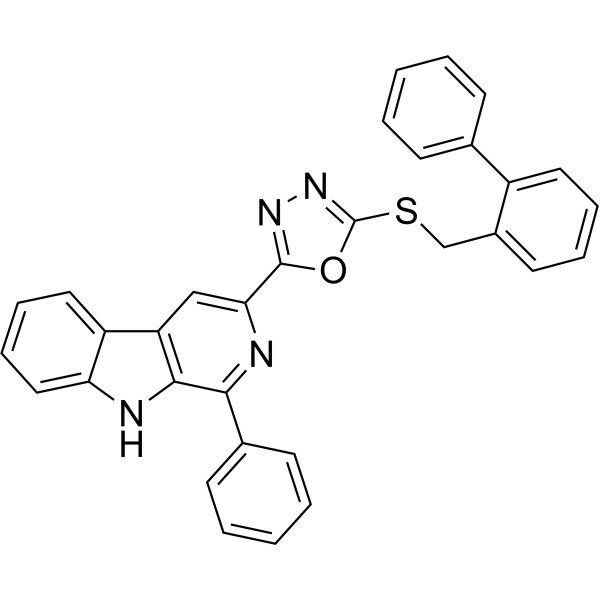 0 ImagesCat. No.: HY-156078α-Glucosidase-IN-32 (compound f26) is a reversible, noncompetitive and orally active α-glucosidase inhibitor with an IC50 value of 3.07 μM. α-Glucosidase-IN-32 complex with α-glucosidase through hydrogen bonds and hydrophobic interactions, led to changes in the conformation and secondary strictures of α-glucosidase and further the inhibition of the enzymatic activity. α-Glucosidase-IN-32 can be used for diabetic disease research.




