



IFNAR
Interferon-α/β receptor; Interferon-alpha/beta receptor
The interferon-α/β receptor (IFNAR) is composed of two subunits, IFNAR1 and IFNAR2, encoding transmembrane polypeptides. Type-I IFNs, interferon α (IFN-α) and interferon β (IFN-β), act through a shared receptor complex, IFNAR. Binding of type-I IFN to IFNAR1 will robustly activate Janus activated kinase-signal transducer and activator of transcription (JAK-STAT) signaling pathway. Aberrant activation of the type-I IFN response results in a spectrum of disorders called interferonopathies.
Type-I IFN response occurs when IFN-α/β binds to their receptor complex, IFNAR. The ligand-receptor complex is phosphorylated, presumably by pre-associated Janus activated kinases (JAKs) namely tyrosine kinase 2 (TYK2) on IFNAR1 and JAK1 on IFNAR2. The phosphorylated receptors are docking sites for signal transducers and activators of transcription (STAT) factors that dimerise and translocate to the nucleus. STATs 1, 2, 3, 4, and 5 are activated by type-I IFNs in many cell types. Other kinases (e.g., mitogen-activated protein kinases) and transcription factors (e.g., nuclear factor-κB) can also be activated in response to type-I IFNs. Multiple pathways and IFN-regulated genes are activated by IFNs, many of which remain unknown.
All Product Categories
-
IFNAR Inhibitors
(123)
View all products
-
IFNAR Agonists
(11)
View all products
-
IFNAR Antagonists
(6)
View all products
-
IFNAR Activators
(84)
View all products
-
IFNAR Modulators
(4)
View all products
-
IFNAR Inducers
(23)
View all products
-
IFNAR Degrader
(1)
View all products
-
IFNAR Control
(1)
View all products
-
IFNAR Ligand
(1)
View all products
-
IFN-α/β Receptor Proteins
(16)
View all products
-
IFN-alpha/beta R2 Proteins
(6)
View all products
-
IFNAR Related Products (325)
Related Products (325)

-
Recombinant Proteins (16)
-
Antibodies (14)
-
Fa-Au
 0 ImagesCat. No.: HY-183554Fa-Au is a TrxR inhibitor. Fa-Au downregulates GPX4, induces oxidative stress, mitochondria-associated ferroptosis (ferroptosis) and immunogenic cell death. Fa-Au induces ROS production in hepatoma cells. Fa-Au remodels the tumor immune microenvironment via M1 macrophage polarization, dendritic cell maturation, CD8+ T cell activation and reduction of regulatory T cells. Fa-Au induces an anti-tumor immune feedback loop through the IFNγ/STAT1/SLC7A11 axis. Fa-Au inhibits tumor growth. Fa-Au is applicable to hepatocellular carcinoma-related research.
-
STING-IN-17
 0 ImagesCat. No.: HY-178951CAS No.: 3069635-58-8STING-IN-17 (compound 10a) is an orally active STING (human STING IC50 = 29 nM, mouse STING IC50 = 15 nM) inhibitor. STING-IN-17 can inhibit the phosphorylation of STING, TBK1 and IRF3. STING-IN-17 dose dependently inhibits the mRNA expression of IP10, IFNB1 and ISG56. STING-IN-17 can reduce ROS and inhibit the expression of cleaved-PARP/caspase-3. STING-IN-17 can improve kidney function. STING-IN-17 can be used for research on inflammatory conditions such as acute kidney injury.
-
Anti-CD1a Antibody (OKT-6)
 0 ImagesCat. No.: HY-P990869Anti-CD1a Antibody (OKT-6) is an anti-human CD1a IgG1 monoclonal antibody. Anti-CD1a Antibody (OKT-6) blocks T cell activation by blocking CD1a function. Anti-CD1a Antibody (OKT-6) can reduce the production of IFN-γ. Anti-CD1a Antibody (OKT-6) can be used for researches on cancer and inflammation such as leukemia. The recommend isotype control of Anti-CD1a Antibody (OKT-6): Mouse IgG1 kappa, Isotype Control (HY-P99977).
-
StA-IFN-1
 0 ImagesCat. No.: HY-136945CAS No.: 300839-31-0StA-IFN-1 is an inhibitor for type I interferon (IFN), that inhibits the activation of IFNβ with an IC50 of 4.1 μM.
-
TLR7/8 agonist 14
 0 ImagesCat. No.: HY-179336TLR7/8 agonist 14 is a TLR7 and TLR8 agonist with EC50 values of 0.53 μM and 4.3 μM, respectively. TLR7/8 agonist 14 increases the secretion of the proinflammatory cytokines TNF-α, IL-1β, IL-8 and IFN-γ. TLR7/8 agonist 14 increases cytokine secretion and expression of CD86. LR7/8 agonist 14 can be used for research colorectal carcinoma.
-
YE6144 free base
 0 ImagesCat. No.: HY-150095ACAS No.: 3065657-01-1YE6144 free base is a selective prototypical interferon regulatory factor 5 (IRF5) inhibitor. YE6144 free base suppresses the disease course and is especially effective in remission maintenance in a mouse model of systemic lupus erythematosus (SLE). YE6144 free base can be used for SLE research.
-
Cassialoin
 0 ImagesCat. No.: HY-N21609CAS No.: 60462-09-1Cassialoin is an orally active anthrone-C-glucoside natural product with antitumor activity, which is found in the heartwood of Cassia garrettiana. Cassialoin is metabolized to the active substance Chrysophanol‑9‑anthrone. Cassialoin does not directly inhibit the activities of VEGFR‑2 and MMP‑9 in vitro, nor does it directly inhibit vascular lumen formation and cell migration in vitro. Cassialoin increases the number of IFN-γ-positive CD8+ T cells and natural killer cells in the small intestine or spleen, and enhances IFN-γ production by splenocytes induced by Concanavalin A (HY-P2149). Cassialoin inhibits tumor growth and peritoneal invasion in colon cancer xenograft models. Cassialoin can be used for research on colon cancer.
-
MBP (83-99)
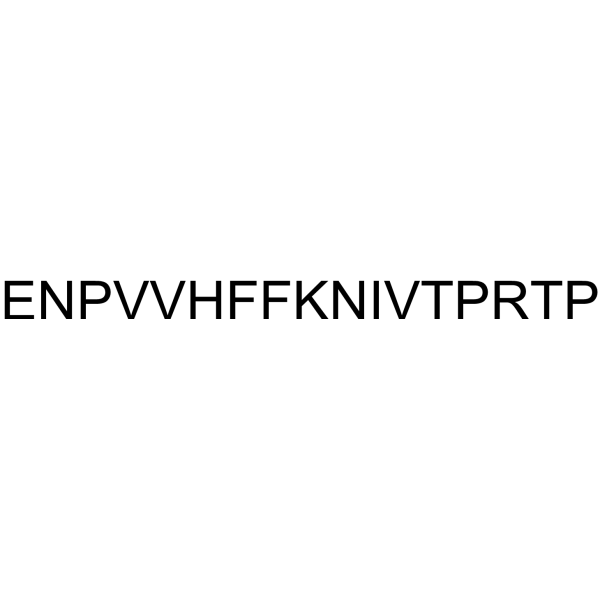 0 ImagesCat. No.: HY-P3723CAS No.: 178823-45-5MBP (83-99) is a MBP-specific T cell lines recognizing the immunodominant epitope. MBP (83-99) induces proliferation and IFN-γ secreting of T cells.
-
ST1072
 0 ImagesCat. No.: HY-133488CAS No.: 1402703-50-7ST1072 is an inhibitor of CerS4 and CerS6. ST1072 preferentially inhibits CerS6 over CerS4, and reduces the production of C16 ceramide. ST1072 impairs TCR-mediated N-RAS activation, ERK signaling pathway, and the colocalization of CD3/PKCθ. ST1072 decreases the production of IFN-γ as well as the migration of donor cells to target organs. ST1072 regulates immune cell populations and the expression of co-stimulatory molecules. ST1072 can be used in research related to colon cancer, cervical cancer, graft-versus-host disease, and hematologic malignancies.
-
UM-203
 0 ImagesCat. No.: HY-180120UM-203 is a reversible covalent STING antagonist. UM-203 is effective against both mouse and human STING, and in particular, it inhibits the most common human STING R232 variant. UM-203 can inhibit STING oligomerization and reduce phosphorylation of downstream TBK1 and IRF3, thereby blocking the IRF3 and NF-κB-mediated signaling pathways and inhibiting IFNβ and IL-6 secretion. UM-203 can be used for the research of inflammation and immunology, such as systemic lupus erythematosus.
-
TAT-327
 0 ImagesCat. No.: HY-P10995TAT-327 is cell-penetrating peptide. TAT-327 selectively inserts into cancer cell membranes and shows potent antitumor activity. TAT-327 effectively inhibits cancer cells proliferation, induces apoptosis and disrupts EGFR signal pathway by inhibiting downstream signals (such as IL-2, TNF-α and IFN-γ) expression and the Eps8/EGFR interaction. TAT-327 significantly inhibits tumor growth in HT-29 xenograft mcie models.
-
2',3'-cGAMP sodium (Standard)
 0 ImagesCat. No.: HY-100564ARCAS No.: 2734858-36-5Synonyms: 2'-3'-cyclic GMP-AMP sodium (Standard)2',3'-cGAMP sodium (Standard) is the analytical standard of 2',3'-cGAMP sodium (HY-100564A). This product is intended for research and analytical applications. 2',3'-cGAMP sodium (2'-3'-cyclic GMP-AMP sodium) is a endogenous cGAMP in mammalian cells. 2',3'-cGAMP sodium binds to STING with a high affinity and is a potent inducer of interferon-β (IFNβ). 2',3'-cGAMP sodium is produced in mammalian cells in response to DNA in the cytoplasm.
-
Noraramtide
 0 ImagesCat. No.: HY-P10563CAS No.: 2580150-96-3Synonyms: BHV-1100Noraramtide (BHV-1100) is an antibody-recruiting molecule. Noraramtide binds to CD38 and recruits natural killer (NK) cells to mediate antibody-dependent cellular cytotoxicity. Noraramtide enhances the capacity of autologous cytokine-induced memory-like (CIML) NK cells to produce IFNγ and CD107a, thereby improving their cytotoxicity against multiple myeloma cells. Noraramtide can be used in the research of multiple myeloma.
-
d-T101 peptide
 0 ImagesCat. No.: HY-P11298CAS No.: 2120397-85-3d-T101 peptide, a human hormone-peptide, is a T1/ST2 receptor ligand. d-T101 peptide binds to the T1/ST2 receptor and activates caspases 8, 9 and 3 mediated apoptosis, together with activation of JNKinase and p38 MAPKinase. d-T101 peptide also changes Golgi structural with function loss and downregulation of the endoplasmic reticulum (ER) stress repair mechanism. d-T101 peptide has immunostimulatory and anticancer activity, selectively induces apoptosis in proliferating cancer cells and increases IL-2 and IFN-γ expression as well as the recruitment of NK cells and M1 macrophages to the tumor site.
-
RTDLDSLRTYTL TFA
 0 ImagesCat. No.: HY-P10417BRTDLDSLRTYTL TFA is an Alpha (v) beta (6) integrin (avb6) inhibitor with high affinity and specificity. RTDLDSLRTYTL TFA binds to avb6 integrin, a peptide sequence that activates cytotoxicity and cytokine production in T cells, such as interferon-gamma. RTDLDSLRTYTL TFA is designed through a chimeric T cell antigen receptor (CAR) so that T cells can be redirected to specifically recognize and attack tumor cells. RTDLDSLRTYTL TFA can be used in the research of cancer immunotherapy and targeted drug development.
-
SMU-3k
 0 ImagesCat. No.: HY-183607SMU-3k is a STING activator and PD-L1 inhibitor, with a PD-L1 IC50 of 106 nM, a KD of 386 nM for human PD-L1, and a KD of 352 nM for murine PD-L1. SMU-3k activates the STING pathway, induces phosphorylation of TBK1 and IRF3, and promotes the expression of IFN-β, IL-6 and CXCL10. SMU-3k blocks the PD-1/PD-L1 interaction, reduces PD-L1 levels and induces PD-L1 internalization. Through dual immunomodulation, SMU-3k exerts synergistic tumor growth inhibitory effects in a mouse colon cancer model. SMU-3k can be used for the research of colon cancer.
-
ITA-5
 0 ImagesCat. No.: HY-178915CAS No.: 2374162-36-2
-
Centaurein
 0 ImagesCat. No.: HY-N13614CAS No.: 35595-03-0Centaurein, a flavonoid, is an IFN-γ promoter enhancer. Centaurein up-regulates the activity of NFAT and NF-κB enhancers. Centaurein increases the IFN-γ expression in T and NK cells and the serum IFN-γ level in mice. Centaureidin completely relaxes the contractions in intact rat aortic rings. Centaurein effectively protects mice against Listeria infection[1][2][3][4].
-
MEDI-5083
 0 ImagesCat. No.: HY-P992408MEDI-5083 is an Fc fusion protein that targets CD40 and is a CD40 agonist. MEDI-5083 stimulates CD40 signaling via NF-κB activation. MEDI-5083 upregulates MHCII, CD80, and CD86 expression, induces pro-inflammatory cytokine secretion, and enhances IFN-γ secretion by memory CD8+ T cells. MEDI-5083 can be used for the research of melanoma, colon carcinoma, and advanced solid tumors[1][2].
-
TP1L
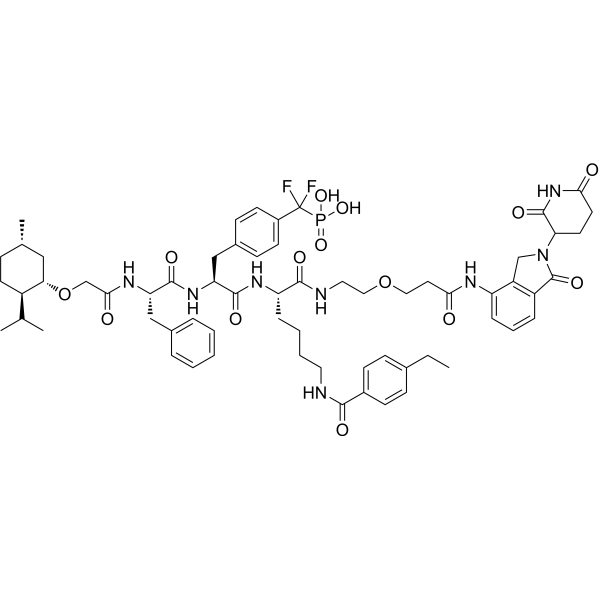 0 ImagesCat. No.: HY-160151TP1L is a potent and selective T-cell protein tyrosine phosphatase (TC-PTP) PROTAC degrader, with a DC50 value of 35.8 nM. TP1L elevates the phosphorylation level of TC-PTP substrates including pSTAT1 and pJAK1. TP1L selectively enhances IFN-γ signaling and increases MHC-I expression. TP1L activates TCR signaling through increases phosphorylation of LCK. TP1L enhances CAR-T cell mediated tumor killing efficacy through activation of the CAR-T cells. TP1L can be used for the study of cancer. (Pink: TC-PTP ligand: (HY-138964), Blue: E3 ligase CRBN Ligand (HY-A0003), Black: Linker: (HY-140002)).




