



JNK Activator
-
β-Zearalenol-13C18
 0 ImagesCat. No.: HY-N6741S
β-Zearalenol-13C18 is the 13C-labeled β-Zearalenol (HY-N6741). β-Zearalenol is a zearalenone metabolite and Estrogen receptor binder (Kd = 0.406 nM) that induces apoptosis through activation of p53, JNK, and p38 kinases and the mitochondrial apoptosis pathway, while inhibiting CYP19A1 and inducing autophagy via SIRT1. β-Zearalenol is used in research on cardiotoxicity, mycotoxin-induced reproductive toxicity, and breast cancer.
-
Estrogen receptor-IN-2
 0 ImagesCat. No.: HY-184982
Estrogen receptor-IN-2 is a potent estrogen receptor inhibitor formed by the conjugation of Tam (HY-13757)-NHC and gold (I). Estrogen receptor-IN-2 significantly downregulates estrogen receptor (ER) levels, inhibits ER-mediated downstream signaling pathways, and induces immunogenic cell death (ICD) mediated by damage-associated molecular patterns (DAMPs). Estrogen receptor-IN-2 can overcome drug resistance in MCF-7Y537S mutant cells via the RAMP3/CALCR signaling pathway. It is suitable for research on endocrine-resistant breast cancer.
-
β-Zearalenol (Standard)
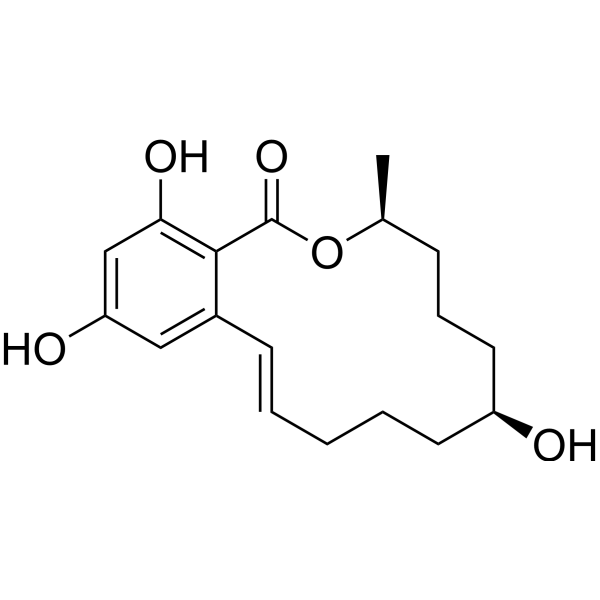 0 ImagesCat. No.: HY-N6741RCAS No.: 71030-11-0
β-Zearalenol (Standard) is the analytical standard of β-Zearalenol (HY-N6741). This product is intended for research and analytical applications. β-Zearalenol is a zearalenone metabolite and Estrogen receptor binder (Kd = 0.406 nM) that induces apoptosis through activation of p53, JNK, and p38 kinases and the mitochondrial apoptosis pathway, while inhibiting CYP19A1 and inducing autophagy via SIRT1. β-Zearalenol is used in research on cardiotoxicity, mycotoxin-induced reproductive toxicity, and breast cancer.
-
Dimethoxycurcumin-d6
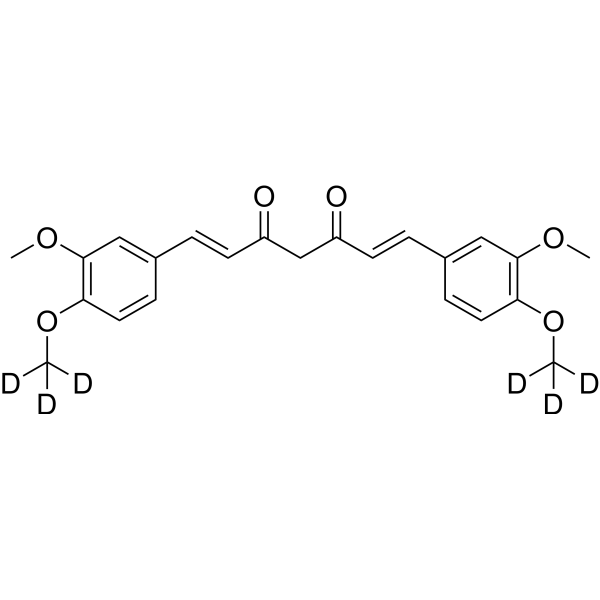 0 ImagesCat. No.: HY-100977SCAS No.: 3006902-95-7Synonyms: DiMC-d6; CHC 004-d6; Di-O-methylcurcumin-d6
Dimethoxycurcumin-d6 (DiMC-d6; CHC 004-d6; Di-O-methylcurcumin-d6) is the deuterated-labeled Dimethoxycurcumin (HY-100977). Dimethoxycurcumin (DiMC) is a curcuminoid compound found in Curcuma longa. Dimethoxycurcumin is also an orally active thioredoxin reductase inhibitor (IC50 = 5.4 μM) and androgen receptor antagonist. Dimethoxycurcumin inhibits thioredoxin reductase, leading to oxidized thioredoxin accumulation, ROS production, DNA damage, glutathione depletion, mitochondrial membrane potential decrease, ATP depletion, S phase arrest, and apoptosis. Dimethoxycurcumin inhibits NF-κB, NADPH oxidase subunits, ATP synthase subunits, CDK4, cyclin-D1, FASN, ACC, and the IRS2-PI3K-Akt pathway, while activating AMPK, ERK, and JNK. Dimethoxycurcumin can be used for research on cancer, arsenic-induced hepatotoxicity, and tuberculosis.
-
Parbendazole (Standard)
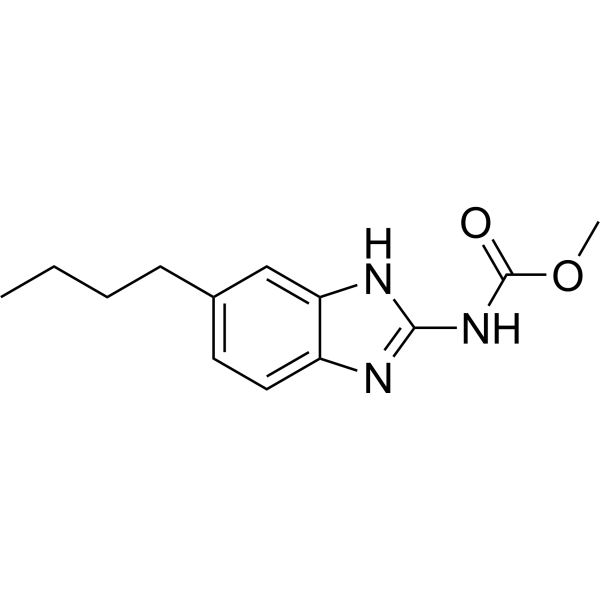 0 ImagesSynonyms: SKF 29044 (Standard)
Parbendazole (Standard) (SKF 29044 (Standard)) is the analytical standard of Parbendazole (HY-115364). This product is intended for research and analytical applications. Parbendazole (SKF‑29044) is an orally active benzimidazole carbamate compound with multiple biological activities. Parbendazole binds to free tubulin and inhibits microtubule polymerization; it also activates the JNK/c‑Jun signaling axis and upregulates the expression of the downstream axonal repulsion factor Sema3A. Parbendazole upregulates KAL-1 mRNA expression, reduces nerve growth factor levels, and promotes the terminal differentiation of normal human epidermal keratinocytes. Parbendazole induces apoptosis in differentiated acute myeloid leukemia monocytes and exerts antileukemic activity in a mouse xenograft model of acute myeloid leukemia. Parbendazole exhibits broad-spectrum anthelmintic activity against various animal nematodes. Parbendazole is used in research related to acute myeloid leukemia and parasitic infections.

-
Dehydrocrenatine
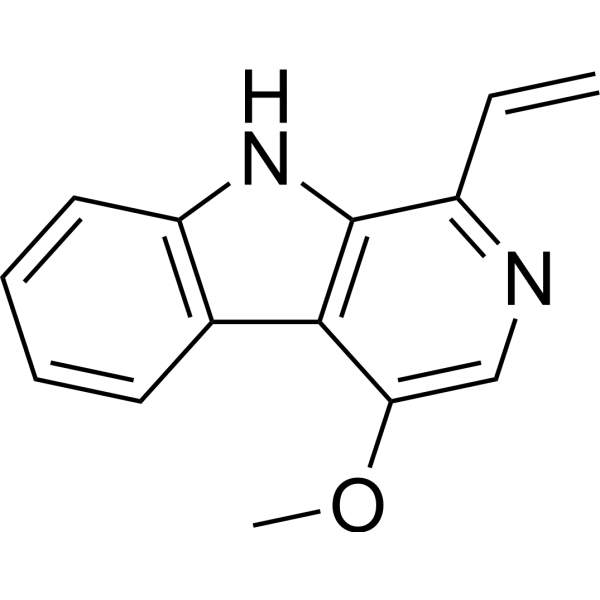 0 ImagesCat. No.: HY-N3711CAS No.: 26585-13-7
-
Chloramphenicol/BSA
 0 ImagesCat. No.: HY-161586
Chloramphenicol/BSA is the antigen-adjuvant conjugate formed by the coupling of Chloramphenicol (HY-B0239) with Bovine Serum Albumin (BSA). By conjugating the antigen with a protein adjuvant, the production of antigen-specific antibodies in vaccine models can be enhanced. The conjugate does not affect protein folding or disrupt major epitopes, and it can enhance cross-presentation and the generation of antigen-specific T cells.
-
Actein (Standard)
 0 ImagesCat. No.: HY-N6872RCAS No.: 18642-44-9
Actein (Standard) is the analytical standard of Actein. This product is intended for research and analytical applications. Actein, a triterpene glycoside, shows an inhibitory effect on cancer cells, which is isolated from the rhizomes of Cimicifuga foetida. Actein suppresses cell proliferation, induces autophagy and apoptosis through promoting ROS/JNK activation, and blunting AKT pathway in bladder cancer. Actein has little toxicity in vivo.
-
Buforin IIb TFA
 0 ImagesCat. No.: HY-P12127APurity: 98.01%Synonyms: BF2-B TFA
Buforin IIb TFA (BF2-B TFA) is an anticancer peptide, as well as an Antibacterial and Antifungal agent. Buforin IIb TFA is derived from histone H2A. Buforin IIb TFA activates SAPK/JNK and p38 MAPK. Buforin IIb TFA induces mitochondria-dependent Apoptosis. Buforin IIb TFA achieves selective targeting by interacting with gangliosides on the surface of cancer cells, and can penetrate cancer cell membranes without causing damage. Buforin IIb TFA exhibits antibacterial activity against Gram-negative bacteria, Gram-positive bacteria and fungi. Buforin IIb TFA can be used in the research of cervical cancer, as well as cancers including leukemia, central nervous system cancer, ovarian cancer, breast cancer, melanoma, colon cancer, non-small cell lung cancer, renal cancer and prostate cancer.
-
αMβ2 integrin agonist-1
 0 ImagesCat. No.: HY-175288
αMβ2 integrin agonist-1 (Compound 8) is a highly selective αMβ2 integrin agonist with anti-inflammatory activity (EC50=1.4 nM). αMβ2 integrin agonist-1 activates integrin-mediated cell adhesion and JNK/ERK signaling. αMβ2 integrin agonist-1 induces tumor-associated macrophage repolarization and enhances antitumor T-cell immune responses. αMβ2 integrin agonist-1 is promising for research of cancers and chronic inflammatory diseases (e.g., pancreatic cancer, rheumatoid arthritis).
-
NSF-951
 0 ImagesCat. No.: HY-189513CAS No.: 1291868-53-5Synonyms: ZINC67299692
NSF-951 (ZINC67299692) is a TLR4 agonist (Kd = 16.01 μM). NSF-951 activates the p38 and JNK kinase pathways. NSF-951 induces IL-6 and TNF-α responses and upregulates CD80 and CD86 expression. In mouse immunization studies, NSF-951 alone or in combination with Alum enhances antigen-specific antibody and T cell responses.
-
MT-21
 0 ImagesCat. No.: HY-136602CAS No.: 186379-49-7
-
IDB-003
 0 ImagesCat. No.: HY-186311CAS No.: 3079716-11-0
IDB-003 is an orally active inhibitor of the human ribosomal peptidyl transferase center (PTC). IDB-003 exhibits antiproliferative activity against MYC-dependent cancer cells. IDB-003 binds to PTC, maintains ribosomal RNA interactions, blocks translation via context-dependent nascent polypeptide chain interactions, depletes MYC and CCND1, activates JNK phosphorylation through ribosomal collision, and downregulates the MYC target pathway. IDB-003 inhibits the growth of triple-negative breast cancer xenografts in mice. IDB-003 can be used for the research of triple-negative breast cancer.
-
Buforin IIb
 0 ImagesCat. No.: HY-P12127CAS No.: 233273-63-7Synonyms: BF2-B
Buforin IIb (BF2-B) is an anticancer peptide, as well as an Antibacterial and Antifungal agent. Buforin IIb is derived from histone H2A. Buforin IIb activates SAPK/JNK and p38 MAPK. Buforin IIb induces mitochondria-dependent Apoptosis. Buforin IIb achieves selective targeting by interacting with gangliosides on the surface of cancer cells, and can penetrate cancer cell membranes without causing damage. Buforin IIb exhibits antibacterial activity against Gram-negative bacteria, Gram-positive bacteria and fungi. Buforin IIb can be used in the research of cervical cancer, as well as cancers including leukemia, central nervous system cancer, ovarian cancer, breast cancer, melanoma, colon cancer, non-small cell lung cancer, renal cancer and prostate cancer.
-
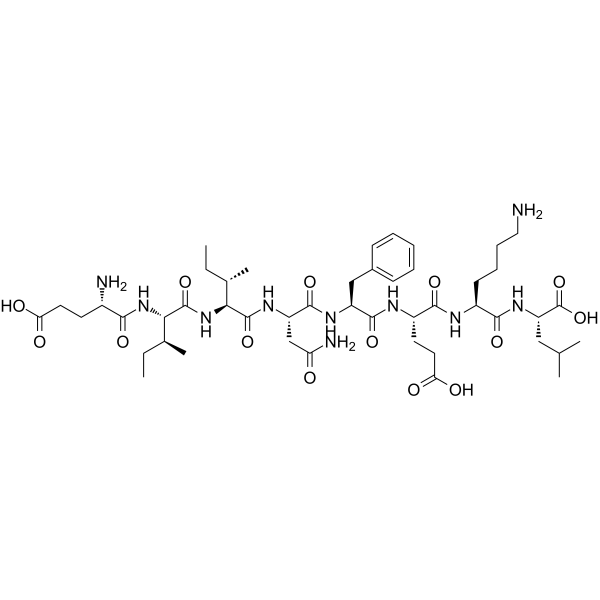
OVA-E1 peptide
 0 ImagesCat. No.: HY-P2319CAS No.: 153316-01-9
OVA-E1 peptide, is an antagonist variant of SIINFEKL [OVA (257-264). OVA-E1 peptide, activates the p38 and JNK cascades similarly in mutant and wild-type thymocytes.
-
BSO-07
 0 ImagesCat. No.: HY-162886
BSO-07 is a ROS/JNK activator with significant anticancer effects, having an IC50 value of 24.81 μM against human breast cancer (BC) cells. BSO-07 induces apoptosis (Apoptosis) and paraptosis by activating JNK and increasing ROS levels, including enhancing the expression of apoptosis-associated proteins such as PARP, Bax, phosphorylated p53, ATF4, and CHOP, while decreasing the levels of anti-apoptotic proteins like Bcl-2, Bcl-xL, and Survivin. BSO-07 holds promise for research in the field of breast cancer.
-
Polyphyllin I (Standard)
 0 ImagesCat. No.: HY-N0047RCAS No.: 50773-41-6
Polyphyllin I (Standard) is the analytical standard of Polyphyllin I. This product is intended for research and analytical applications. Polyphyllin I is a bioactive constituent extracted from Paris polyphylla, has strong anti-tumor activity. Polyphyllin I is an activator of the JNK signaling pathway and is an inhibitor of PDK1/Akt/mTOR signaling. Polyphyllin I induces autophagy, G2/M phase arrest and apoptosis.
-
Lonchocarpin
 0 ImagesCat. No.: HY-119590CAS No.: 31501-55-0Synonyms: Lonchocarpine
Lonchocarpin (Lonchocarpine) is a Wnt/β-catenin signaling pathway inhibitor. The IC50 of Lonchocarpin in SW480 pBAR/Renilla cells is 4 μM. Acting downstream of β-catenin stabilization, Lonchocarpin inhibits β-catenin nuclear localization and TCF-mediated transcription, as well as the proliferation and migration of colorectal cancer cells. Lonchocarpin enhances Nrf2/ARE-mediated antioxidant responses in primary astrocytes via AMPK and JNK-related signaling, reduces H2O2-induced ROS production, and increases the expression of HO-1, NQO1 and MnSOD. Lonchocarpin can be used in research on colorectal cancer and oxidative stress.
-
Gy-CATH
 0 ImagesCat. No.: HY-P11467
Gy-CATH is an anionic antimicrobial peptide. Gy-CATH activates MAPK and NF-κB signaling pathways (elevated levels of phospho-ERK, -p38, -JNK, -p65, and -IκBα). Gy-CATH upregulates the expression levels of three physiological anticoagulant pathways. Gy-CATH inhibits ADP-, Collagen-, and PMA-induced platelet aggregation. Gy-CATH has no direct antimicrobial activity, but shows significant preventive abilities against mice infected with Staphylococcus aureus, Escherichia coli, and Methicillin (HY-121544)-resistant Staphylococcus aureus. Gy-CATH exhibits potent immunomodulatory activity, enhancing macrophage-and neutrophil-mediated bactericidal functions. Gy-CATH significantly reduces the extent of pulmonary fibrin deposition and prevents thrombosis in mice.



