



Endogenous Metabolite
Endogenous metabolites refer to the collective set of small-molecule chemical substances present within organelles, cells, organs, biological fluids, or entire organisms; their molecular weights are typically less than 1500 Da. These endogenous metabolites—including lipids, amino acids, short peptides, nucleic acids, carbohydrates, alcohols, and organic acids—not only participate in signal transduction governing genomic function but also receive upstream signals from the environment, thereby bridging the interrelationships among genotype, environment, and phenotype.
Based on their biological functions, microbial endogenous metabolites can be broadly classified into two categories: primary metabolites and secondary metabolites. Primary metabolites are the core molecules essential for supporting microbial growth and proliferation; they serve to provide energy to the microbes or act as precursors and cofactors for the synthesis of biological macromolecules. In contrast, microbial secondary metabolites are a class of low-molecular-weight products that are not strictly essential for microbial growth. Nevertheless, microbial secondary metabolites include numerous substances—such as antibiotics, anti-tumor agents, and cholesterol-lowering agents—that are of critical importance to human health[1][2][3]. Furthermore, the metabolome of a biological organism is influenced by a variety of endogenous factors, including age, sex, body composition, genetic background, and underlying pathological states. The small-molecule metabolites within an organism are diverse and highly distinct; their levels are typically subject to the synergistic regulation of a vast array of enzymes and transport proteins, undergoing processes of synthesis, transformation, degradation, and compartmentalized distribution. Metabolomics research based on endogenous metabolites has been widely applied in the fields of metabolic disorders, neurodegenerative diseases, cancer, cardiovascular diseases, and infectious diseases, where these metabolites hold potential utility as biomarkers or therapeutic targets[1][2][3].
References:
- [1]. Seyedsayamdost MR. Toward a global picture of bacterial secondary metabolism. J Ind Microbiol Biotechnol. 2019 Mar;46(3-4):301-311. [Content Brief]
- [2]. Ruiz B, et al. Production of microbial secondary metabolites: regulation by the carbon source. Crit Rev Microbiol. 2010 May;36(2):146-67. [Content Brief]
- [3]. Wishart DS. Metabolomics for Investigating Physiological and Pathophysiological Processes. Physiol Rev. 2019 Oct 1;99(4):1819-1875. [Content Brief]
Endogenous Metabolite Isoform Specific Products
All Product Categories
-
Endogenous Metabolite Related Products (8409)
Related Products (8409)

-
Antibodies (477)
-
Endogenous Metabolite Isoform Comparison
-
D-Glutamic acid-13C5
 0 ImagesCat. No.: HY-100805S2CAS No.: 1202063-54-4Synonyms: (R)-Glutamic acid-13C5D-Glutamic acid-13C5 ((R)-Glutamic acid-13C5) is 13C labeled D-Glutamic acid. D-glutamic acid, an enantiomer of L- glutamic acid, is widely used in pharmaceuticals and foods.
-
2-Tridecanol
 0 Images2-Tridecanol is a metabolite that can be found in extra virgin coconut oil, and serves as a growth substrate for Pseudomonas multivorans. 2-Tridecanol can be metabolized by Pseudomonas multivorans and Pseudomonas aeruginosa to produce 2-tridecanone, undecyl acetate, and 1-undecanol, and acts as a metabolic intermediate in their 2-tridecanone catabolic pathway.
-
(E/Z)-Linoleoyl-CoA
 0 ImagesCat. No.: HY-137411CAS No.: 40757-80-0Synonyms: (E/Z)-Linoleoyl Coenzyme A; (E/Z)-9,12-Octadecadienoyl Coenzyme A(E/Z)-Linoleoyl-CoA is a substrate used to study the specificity and kinetics of acyl-CoA. (E/Z)-Linoleoyl-CoA has the ability to replace substrates, and its specificity can be changed by amino acid substitution, thereby affecting the reaction with different desaturases. The study of (E/Z)-Linoleoyl-CoA helps to understand the substrate specificity of mammalian front-end fatty acid desaturases and provides support for the efficient production of value-added fatty acids.
-
p-Toluic acid-d7
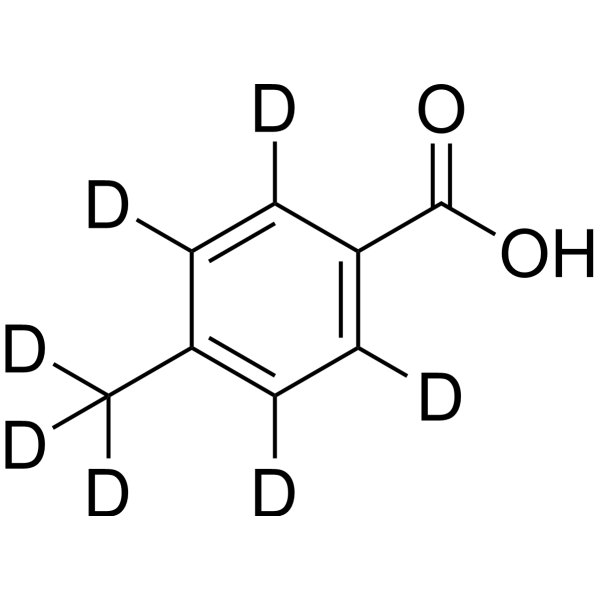 0 ImagesSynonyms: 4-Methylbenzoic acid-d7p-Toluic acid-d7 is the deuterium labeled p-Toluic acid. p-Toluic acid (4-Methylbenzoic acid) is a substituted benzoic acid and can be used as an intermediate for the synthesis of para-aminomethylbenzoic acid (PAMBA), p-tolunitrile, etc.
-
3-Hydroxyglutaric acid (Standard)
 0 ImagesCat. No.: HY-113411RCAS No.: 638-18-63-Hydroxyglutaric acid (Standard) is the analytical standard of 3-Hydroxyglutaric acid. This product is intended for research and analytical applications. 3-Hydroxyglutaric acid is a glutaric acid derivative.
-
DL-Mevalonolactone (Standard)
 0 ImagesCat. No.: HY-107855RCAS No.: 674-26-0Synonyms: (±)-Mevalonolactone (Standard); Mevalolactone (Standard)DL-Mevalonolactone (Standard) is the analytical standard of DL-Mevalonolactone. This product is intended for research and analytical applications. DL-Mevalonolactone ((±)-Mevalonolactone;Mevalolactone) is the δ-lactone form of mevalonic acid, a precursor in the mevalonate pathway. DL-Mevalonolactone is orally active against HMGCR mutation and statin caused myopathy. DL-Mevalonolactone induces inflammation and oxidative stress response with decreased mitochondrial membrane potential (MMP) and induces mitochondrial swelling.
-
L-Dopa-d3
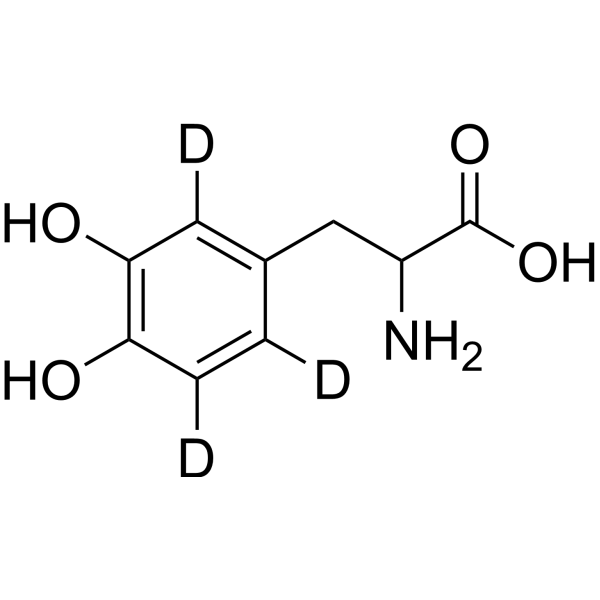 0 ImagesCat. No.: HY-113404S1CAS No.: 157929-66-3
-
Bisphenol A-d4
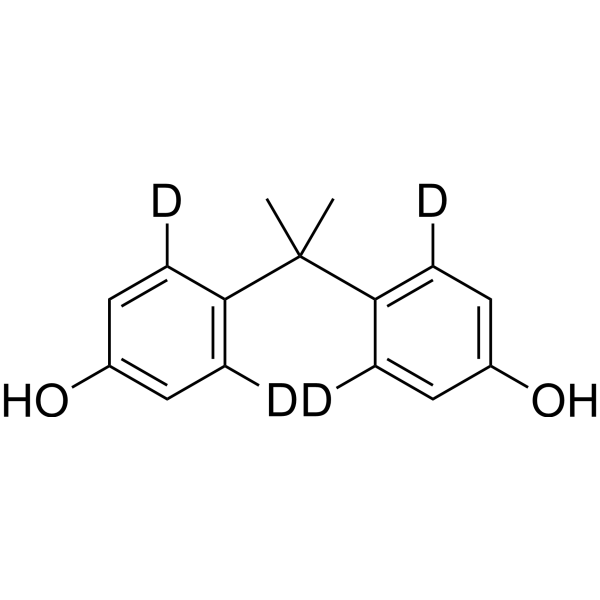 0 ImagesCat. No.: HY-18260S4CAS No.: 102438-62-0Bisphenol A-d4 is the deuterium labeled Bisphenol A. Bisphenol A is a phenolic, organic synthetic compound widely used in the production of polycarbonate plastics and epoxy resins. Bisphenol A is a reproductive, developmental, and systemic toxicant, often classified as an endocrine-disrupting compound (EDC). Bisphenol A is associated with many diseases, including cardiovascular diseases, respiratory diseases, diabetes, kidney diseases, obesity, and reproductivedisorders.
-
8-Aminoinosine
 0 ImagesCat. No.: HY-W743023CAS No.: 13389-16-78-Aminoinosine is a purine nucleoside phosphorylase (PNPase) inhibitor with a Ki value of 35 μM for the human target. 8-Aminoinosine exerts indirect competitive inhibition through two mechanisms: competitive substrate occupancy and metabolic conversion to the PNPase inhibitor (8-Aminohypoxanthine). 8-Aminoinosine induces increased urine output, sodium excretion, and glucose excretion, without altering potassium excretion. 8-Aminoinosine can be used in research related to hypertension, heart failure, and chronic kidney disease.
-
Maltose monohydrate-13C
 0 ImagesCat. No.: HY-N2024AS2Maltose monohydrate-13C is the 13C labeled isotope of Maltose monohydrate. Maltose monohydrate is a disaccharide composed of two glucose molecules linked together. Maltose monohydrate is an endogenous metabolic product in plants, yeast, or bacteria, and it participates in carbon source storage and metabolism. Maltose monohydrate is a key core metabolite and main transport form in the temporary starch degradation, carbon output, and subsequent sucrose synthesis metabolism of the night chloroplast. In X. dendrorhous, maltose can act as a sugar donor and is converted into isomaltulose by α-glucosidase. Maltose monohydrate can act as a osmotic agent, supporting continuous capillary ultrafiltration and preventing severe metabolic disorders.
-
3-Methylsalicylic acid (Standard)
 0 ImagesSynonyms: o-Cresotic acid (Standard); Hydroxytoluic acid (Standard)3-Methylsalicylic acid (Standard) is the analytical standard of 3-Methylsalicylic acid. This product is intended for research and analytical applications. 3-Methylsalicylic acid (o-Cresotic acid) is a derivative of salicylic acid. 3-Methylsalicylic acid exhibits significant fibrinolytic activity in human plasma by activating the fibrinolytic system. 3-Methylsalicylic acid can be used as an intermediate for the synthesis of other compounds. 3-Methylsalicylic acid inhibits the feeding of midges.
-
22-Hydroxy mifepristone
 0 ImagesCat. No.: HY-131543CAS No.: 105012-15-5Synonyms: RU 4269822-Hydroxy Mifepristone (RU 42698) is an orally active hydroxylated alcoholic metabolite with antiprogestational and antiglucocorticoidal activities, which contains an Alkyne group and can undergo copper-catalyzed azide-alkyne cycloaddition (CuAAc) with molecules containing Azide groups. The relative binding affinity of 22-Hydroxy Mifepristone to the human glucocorticoid receptor is 48%.
-
3-(3-Methoxyphenyl)propionic acid (Standard)
 0 ImagesCat. No.: HY-W016482RCAS No.: 10516-71-93-(3-Methoxyphenyl)propionic acid (Standard) is the analytical standard of 3-(3-Methoxyphenyl)propionic acid (HY-W016482). This product is intended for research and analytical applications. 3-(3-Methoxyphenyl) propionic acid is an organic acid and endogenous metabolite. 3-(3-Methoxyphenyl) propionic acid is excreted in urine.
-
13-SAHSA
 0 ImagesCat. No.: HY-158582CAS No.: 2108907-29-3Synonyms: 13-[(1-Oxooctadecyl)oxy]-octadecanoic acid13-SAHSA is an endogenous lipid that belongs to branched fatty acid esters of hydroxy fatty acids (FAHFAs)
-
3-Amino-4-hydroxybenzoic acid (Standard)
 0 Images3-Amino-4-hydroxybenzoic acid (Standard) is the analytical standard of 3-Amino-4-hydroxybenzoic acid (HY-W010224). This product is intended for research and analytical applications. 3-Amino-4-hydroxybenzoic acid is an endogenous metabolite.
-
Isotretinoin-d5
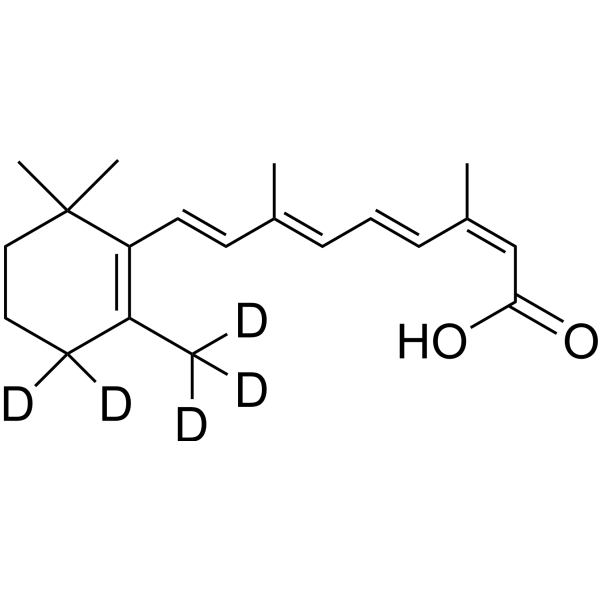 0 ImagesCat. No.: HY-15127SIsotretinoin-d5 is the deuterium labeled Isotretinoin. Isotretinoin is an orally active vitamin A derivative and is often be used for the research of severe acne. Isotretinoin also shows anticancer activity.
-
N-Acetylciprofloxacin
 0 ImagesCat. No.: HY-N8606CAS No.: 93594-20-8N-Acetylciprofloxacin is the metabolite of Ciprofloxacin (HY-B0356).
-
(Rac)-Norepinephrine-d3 formate
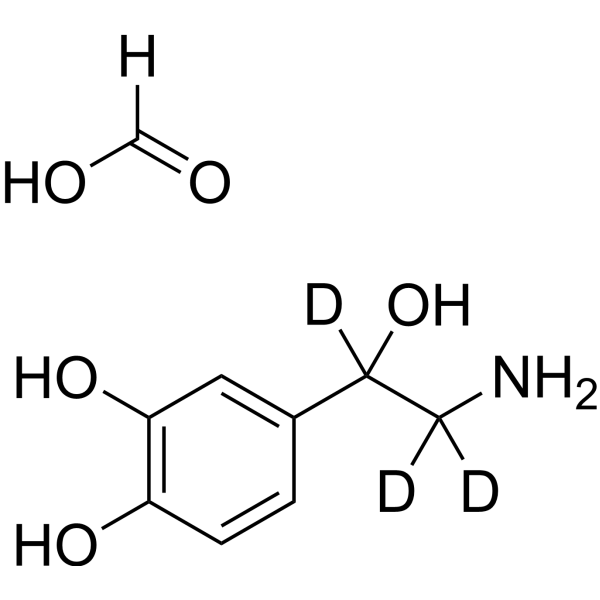 0 ImagesCat. No.: HY-13715S(Rac)-Norepinephrine-d3 (formate) is deuterium labeled Norepinephrine. Norepinephrine (Levarterenol; L-Noradrenaline) is a potent adrenergic receptor (AR) agonist. Norepinephrine activates α1, α2, β1 receptors.
-
(2E,13Z)-Octadecadienal
 0 ImagesCat. No.: HY-W741191CAS No.: 99577-57-8(2E,13Z)-Octadecadienal is an insect sex pheromone capable of attracting clearwing moths (Synanthedon tipulformis (Clerck)) or raspberry crown borers (Pennisetia marginata (Harris))). (2E,13Z)-Octadecadienal can be isolated from (2E,13Z)-Octadecadienyl acetate, which induces strong responses in male antennae.
-
3-Acetyldeoxynivalenol (Standard)
 0 ImagesCat. No.: HY-N6685RCAS No.: 50722-38-8Synonyms: 3-AcDON (Standard); 3-ADON (Standard)3-Acetyldeoxynivalenol (3-AcDON; 3ADON) (Standard) is the analytical standard of 3-Acetyldeoxynivalenol (HY-N6685). This product is intended for research and analytical applications. 3-Acetyldeoxynivalenol, a trichothecene mycotoxin deoxynivalenol (DON) acetylated derivative, is a brain-penetrant Fusarium mycotoxin. 3-Acetyldeoxynivalenol induces mRNA expression and production of inflammatory chemokine IL-8 in intestinal cells.




