



RIPK1 Inhibitor
-
RIPK1-IN-41
 0 ImagesCat. No.: HY-183781
RIPK1-IN-41 is an orally active RIPK1 inhibitor with an IC50 of 92 nM and a KD of 106.8 nM. RIPK1-IN-41 reduces the phosphorylation level of RIPK1, inhibits necrosome formation, blocks the activation of RIPK3 and MLKL, maintains mitochondrial and lysosomal functions, preserves cell membrane integrity, and suppresses necroptosis. RIPK1-IN-41 alleviates hypothermia and multi-organ damage in a mouse model of systemic inflammatory response syndrome induced by mTNF-α. RIPK1-IN-41 is applicable to research related to systemic inflammatory response syndrome.
-
RIPK1-IN-40
 0 ImagesCat. No.: HY-181944
RIPK1-IN-40 (Compound 51) is a RIPK1 inhibitor and anti-necroptotic agent (with an EC50 of 0.07 μM against necroptosis). RIPK1-IN-40 binds to the kinase domain of RIPK1, forms hydrogen bond interactions with Met95, and establishes additional polar contacts with Asp156 to stabilize binding, thereby inhibiting necroptosis. RIPK1-IN-40 can be used for the research of colorectal cancer.
-
RIPK1-IN-42
 0 ImagesCat. No.: HY-184686
RIPK1-IN-42 is an orally active RIPK1 inhibitor with a Kd of 21 nM. RIPK1-IN-42 inhibits the phosphorylation of RIPK1, suppresses the phosphorylation of downstream RIPK3 and MLKL, blocks necrosome formation, and inhibits necroptosis. RIPK1-IN-42 alleviates hypothermia, suppresses the elevation of pro-inflammatory cytokine levels, and reduces organ damage. RIPK1-IN-42 can be used for the research of systemic inflammatory response syndrome.
-
Necrostatin-21
 0 ImagesCat. No.: HY-W319332CAS No.: 169136-33-8
Necrostatin-21 (Compound Nec-21) is a necroptosis inhibitor with an EC50 of 0.5 μM. Necrostatin-21 has a dual inhibitory effect on the RIP1 and JNK3 kinases. Necrostatin-21 can be used for the researches of infection, cardiovascular and neurological disease, such as Alzheimer disease .
-
RIPK1-IN-39
 0 ImagesCat. No.: HY-180806CAS No.: 3065634-42-3
RIPK1-IN-39 (compound 2) is a potent and selective RIPK1 inhibitor (IC50 = 69.40 nM) exhibiting >100-fold selectivity over RIPK3 (IC50 = 6946 nM). RIPK1-IN-39 protects HT-22 and HT-29 cells from necroptosis by inhibiting the phosphorylation and activation of the RIPK1-RIPK3-MLKL pathway. RIPK1-IN-39 demonstrates neuroprotective effects in a rat model of middle cerebral artery occlusion (MCAO). RIPK1-IN-39 can be used for acute ischemic stroke (AIS) research.
-
WJH-C19
 0 ImagesCat. No.: HY-181596Purity: 98.65%
WJH-C19 is an orally active RIPK1 inhibitor with an IC50 of 5.7 nM. WJH-C19 inhibits the RIPK1/RIPK3/MLKL signaling axis, blocks RIPK1 phosphorylation, suppresses the phosphorylation of downstream RIPK3 and MLKL, disrupts necrosome formation, and exhibits protective effects against necroptosis (Apoptosis) in multiple cell lines. WJH-C19 ameliorates symptoms of inflammatory bowel disease in a mouse colitis model by regulating the necroptosis pathway. WJH-C19 alleviates inflammation and bone destruction in a mouse model of rheumatoid arthritis. WJH-C19 is applicable to research related to inflammatory bowel disease and rheumatoid arthritis.
-
RIPK1-IN-29
 0 ImagesCat. No.: HY-170232
RIPK1-IN-29 (Compound 22) is a RIPK1 inhibitor, with an IC50 of 6.9 nM. RIPK1-IN-29 exerts anti-necroptotic (Apoptosis) activity by inhibiting RIPK1. In a TNF-α-induced in vivo inflammation model, at a dose of 10 mg/kg, RIPK1-IN-29 can protect mice from hypothermia and death. RIPK1-IN-29 can be applied to the research field of inflammatory diseases.
-
RIPK1-IN-23
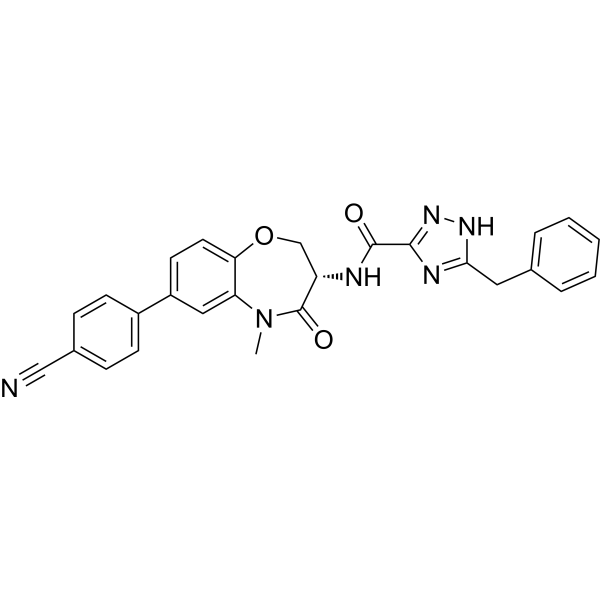 0 ImagesCat. No.: HY-157963CAS No.: 3031534-16-1
RIPK1-IN-23 (compound 19) is a RIPK1 inhibitor with potent anti-necroptotic effects in HT-29 cells (EC50 of 1.7 nM). RIPK1-IN-23 shows anti-inflammatory activities.
-
Nec-3a
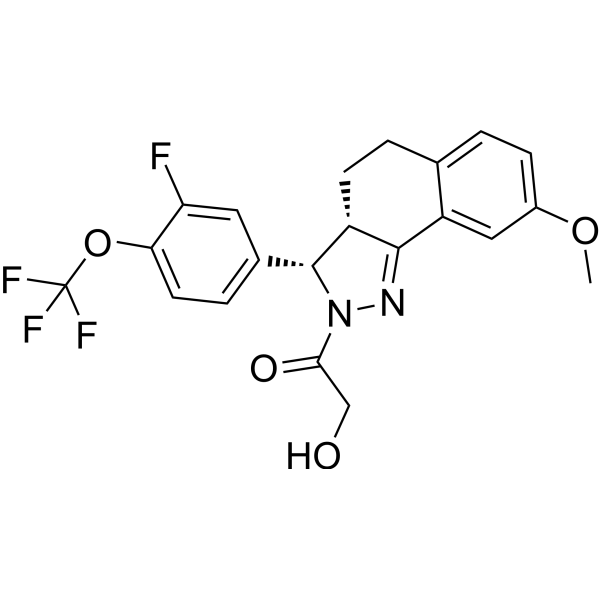 0 ImagesCat. No.: HY-18899CAS No.: 1504558-72-8
Nec-3a is a Necrostatin-3 analogue. Nec-3a is a RIP1 inhibitor (IC50: 0.44 μM). Nec-3a inhibits the autophosphorylation activity of the RIP1 kinase domain.
-
RIP1 kinase inhibitor 4
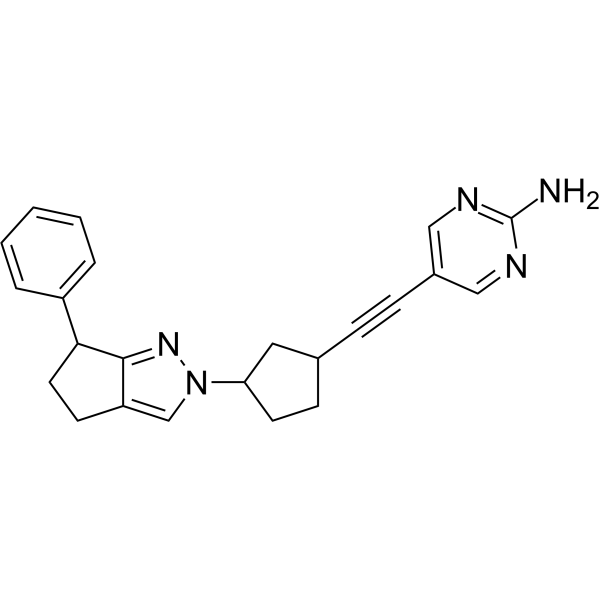 0 ImagesCat. No.: HY-153434CAS No.: 2919836-00-1
RIP1 kinase inhibitor 4 (Example 3) is a BBB-penetrable RIP1 kinase inhibitor (EC50: <100 nM). RIP1 kinase inhibitor 4 can be used for the research of cell programming necrosis-related diseases. RIP1 kinase inhibitor 4 is a click chemistry reagent, it contains an Alkyne group and can undergo copper-catalyzed azide-alkyne cycloaddition (CuAAc) with molecules containing Azide groups.
-
Necroptosis-IN-5
 0 ImagesCat. No.: HY-161911
Necroptosis-IN-5 (Compound 26) is an orally active necroptosis inhibitor. Necroptosis-IN-5 also exhibits potent inhibitory activity against receptor-interacting protein kinase 1 (RIPK1). Necroptosis-IN-5 can be used to study necroptosis-related inflammatory diseases, neurodegenerative diseases, and cancers.
-
RIPK1-IN-8
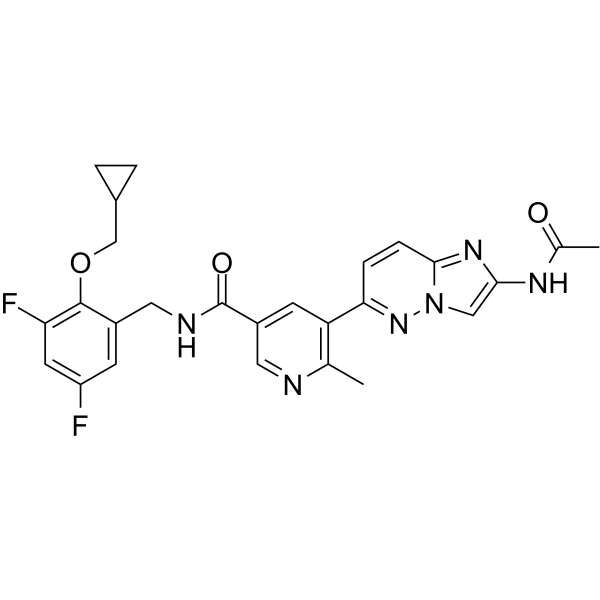 0 ImagesCat. No.: HY-143726CAS No.: 2319663-07-3
RIPK1-IN-8 (example 16), an aminoimidazopyridine, is a potent and selective RIPK1 inhibitor with an IC50 of 4 nM. RIPK1-IN-8 has the potential for inflammatory diseases research.
-
RIPK1-IN-35
 0 ImagesCat. No.: HY-178762SCAS No.: 3103886-96-7
RIPK1-IN-35 is a selective and orally active RIPK1 inhibitor with an IC50 of 5.33 nM. RIPK1-IN-35 has a potent protective effect against necroptosis in both human and murine cells. RIPK1-IN-35 shows good therapeutic effects in both TNF-α-induced systemic inflammatory response syndrome and DSS (HY-116282C)-induced inflammatory bowel disease models. RIPK1-IN-35 can be used to the study of inflammatory diseases related to necroptosis.
-
RIPK1-IN-32
 0 ImagesCat. No.: HY-175007
RIPK1-IN-32 is a RIPK inhibitor with anti-inflammatory activity. RIPK1-IN-32 inhibits nitric oxide (NO) release with an IC50 of 3.26 μM. RIPK1-IN-32 significantly alleviates acute liver injury associated with sepsis through the RIPK1/NF-κB/MAPK pathway, therefore preventing the nuclear translocation of p65 and c-fos, which results in reduced expression of TNF-α and IL-6. RIPK1-IN-32 can be used for the study of acute liver injury and sepsis.
-
Ligustroflavone (Standard)
 0 ImagesCat. No.: HY-N0546RCAS No.: 260413-62-5Synonyms: Nuezhenoside (Standard)
Ligustroflavone (Standard) is the analytical standard of Ligustroflavone (HY-N0546). This product is intended for research and analytical applications. Ligustroflavone is an orally active flavonoid compound. Ligustroflavone can be extracted from Ligustrum lucidum. Ligustroflavone antagonizes the calcium-sensing receptor (CaSR), inhibits the RIPK1/RIPK3/MLKL pathway, and downregulates TGF-β/Smad signaling. Ligustroflavone regulates calcium metabolism, protects bone tissue, reduces cerebral ischemic injury, and inhibits liver fibrosis. Ligustroflavone can be used in the study of diabetic osteoporosis, ischemic stroke, and liver fibrosis.




